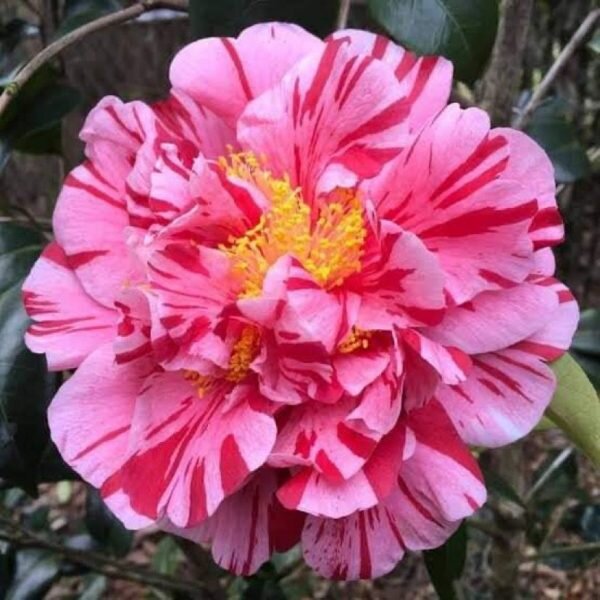
Light: Partial shade to dappled sunlight; avoid direct afternoon sun
Soil: Acidic, well-draining soil rich in organic matter (pH 5.5-6.5)
Watering: Regular; keep the soil consistently moist but not waterlogged
Ideal Planting Time:
Early spring or fall
Soil Preparation:
Amend soil with peat moss or pine bark to increase acidity and improve drainage
Watering Routine:
Water deeply once or twice a week; increase frequency during hot, dry periods
Fertilizing:
Use an acid-forming fertilizer for camellias, applying in spring and mid-summer
Pruning:
Prune after flowering to shape the plant and remove dead or diseased branches
Pest and Disease Control:
Watch for aphids, spider mites, and camellia petal blight; treat with appropriate insecticides or fungicides
Pollination Requirements:
Mostly self-pollinating but benefits from insect activity
Benefits and Uses:
Nutritional Value: Seeds are sometimes used to produce tea seed oil
Aesthetic Value: Adds elegance to gardens and landscapes; popular as a cut flower
Ecological Role: Attracts pollinators such as bees and provides shelter for small birds
Special Notes:
Discover more about unique and fascinating plants like the Camellia Flowering Plant at PlantsInfo, your go-to source for gardening tips and plant information!