How to Grow Shatavari: Complete Care Guide for Indian Gardens

Quick Answer: Shatavari is a hardy climber that grows well across most of India, from plains to lower hill stations. It is a moderate-difficulty plant — easy to establish, but it rewards patience, as the medicinal roots take 2–3 years to mature. The biggest mistake beginners make is harvesting roots too early.
See also: Shatavari plant profile, common problems, its flowering season, its benefits, and its varieties.
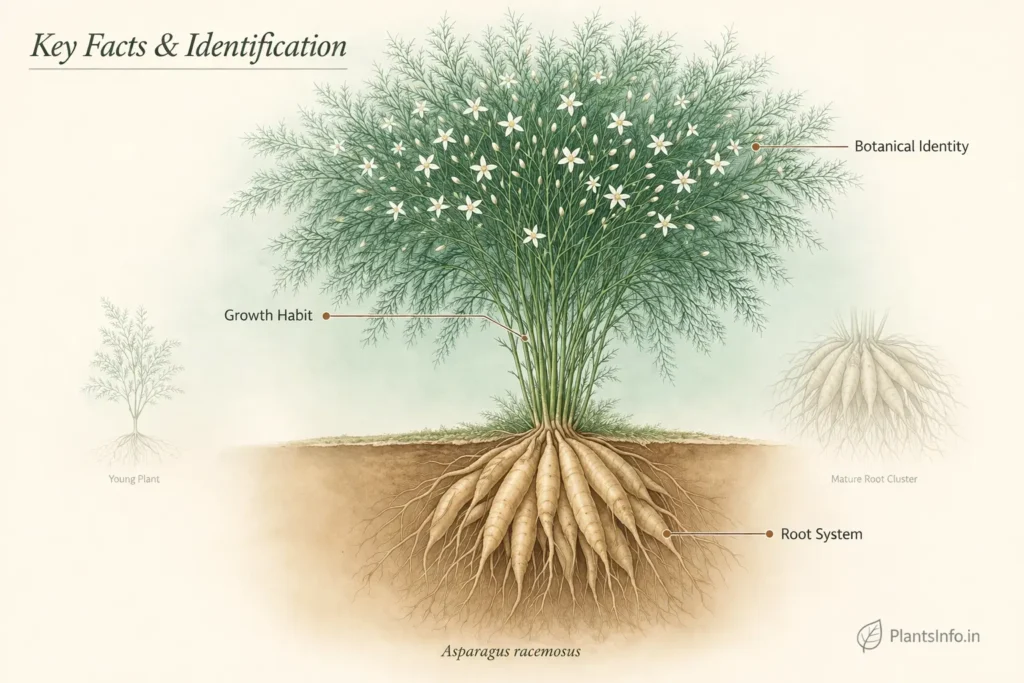
The fleshy roots of a mature Shatavari plant are what most gardeners are after, but what they see first is a feathery, cascading vine that looks nothing like a medicinal plant. That lightness is deceptive — below the soil, a dense cluster of tuberous roots is quietly building for years. Shatavari is grown primarily for those roots, and secondarily as a fast-growing screen or trellis climber. Difficulty level: Moderate — not because care is complex, but because patience is genuinely required.
Recommended Products
Disclosure: As an Amazon Associate, PlantsInfo may earn from qualifying purchases.
🌱 Growing Essentials
The following products can help with container gardening, potting, root development, soil management, and healthy plant growth.
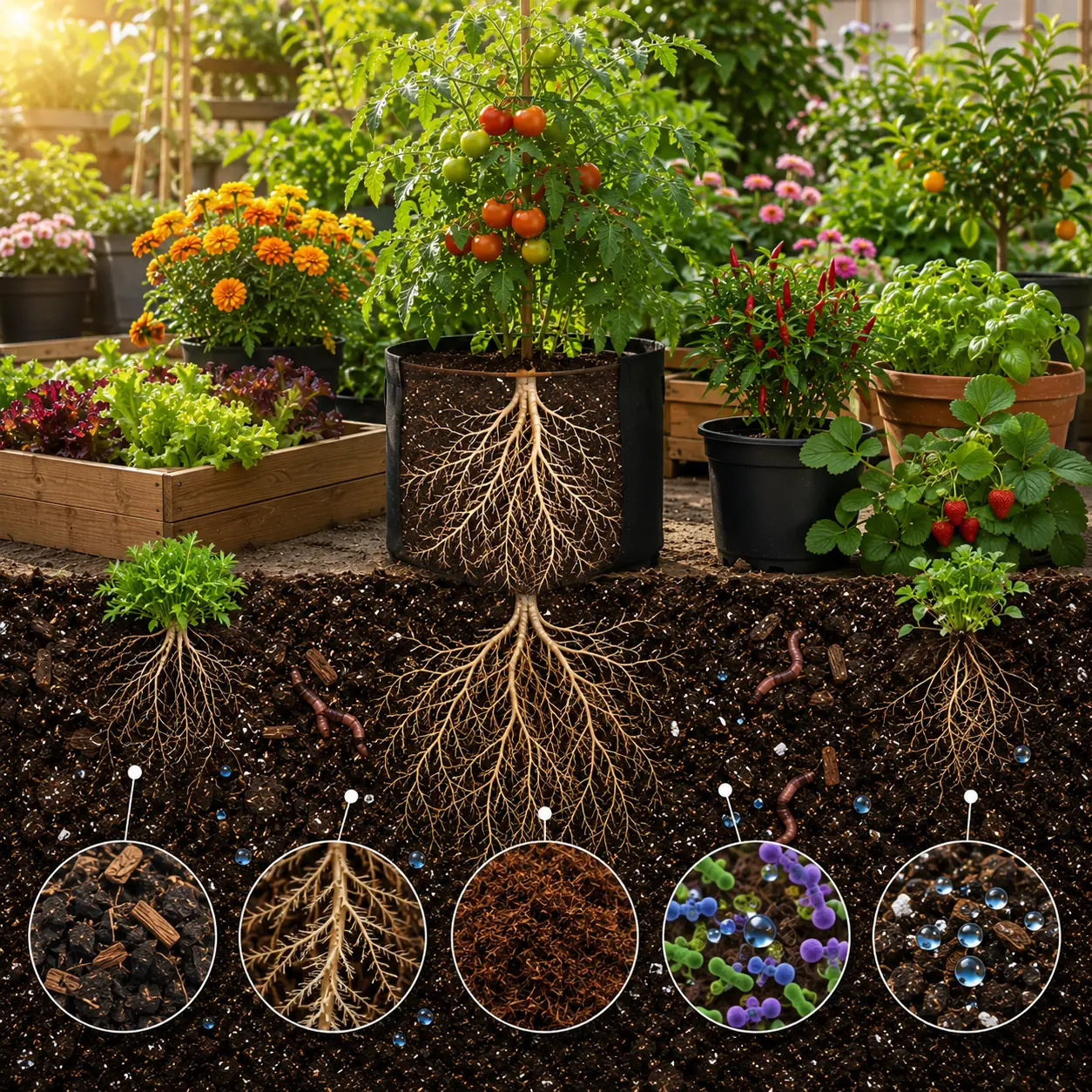
Organic Potting Soil Mix
Provides nutrients, structure, and healthy growing conditions for container plants.
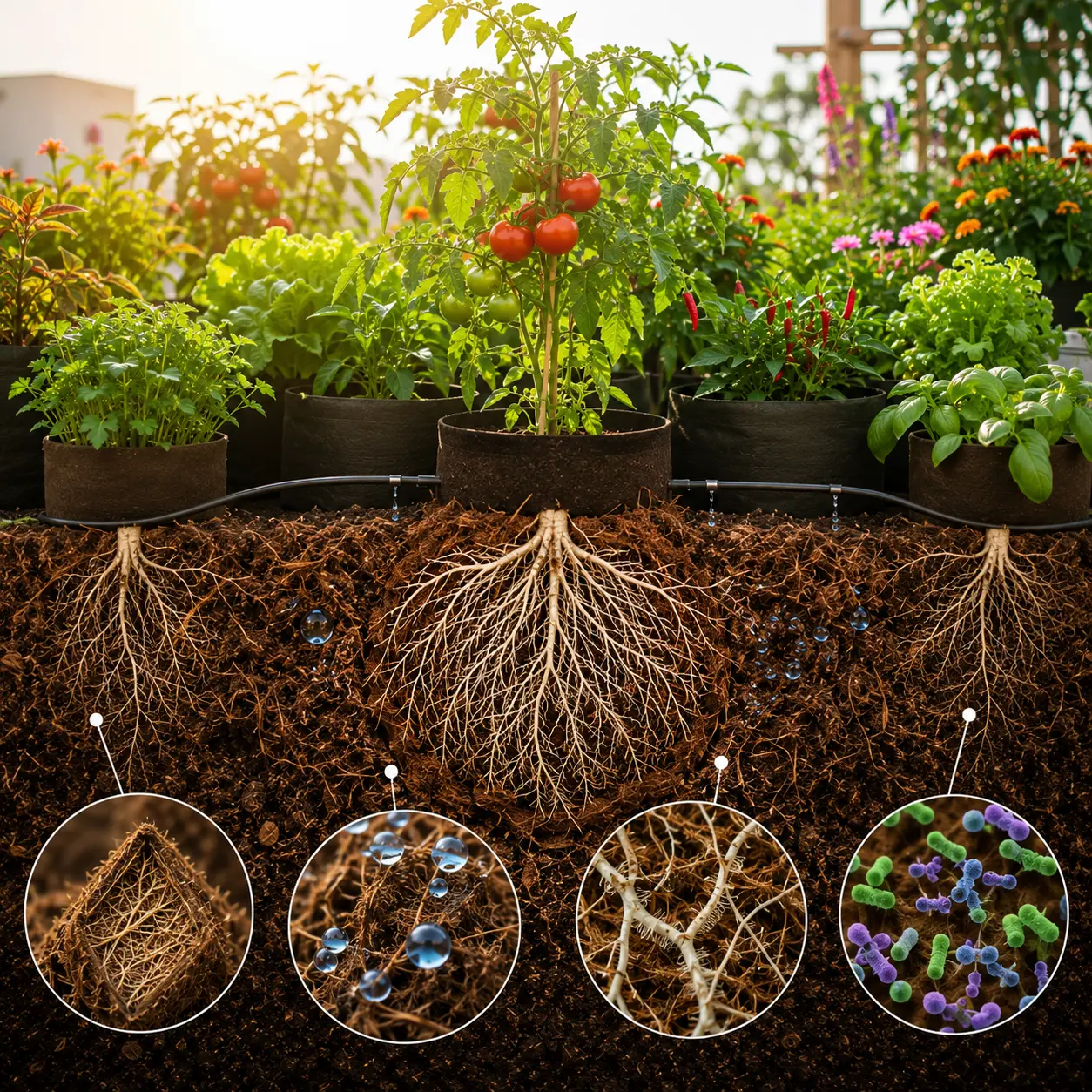
Coco Peat Growing Medium
Enhances moisture retention while maintaining excellent root-zone aeration.

Grow Bags for Plants
Improve drainage, root aeration, and vegetable production in limited spaces.

Plastic Pots for Plants
Ideal containers for seedlings, ornamentals, herbs, and balcony gardens.
Quick Facts
| Attribute | Detail |
|---|---|
| Common names | Shatavari, Satavar, Shatmuli, Satawar |
| Scientific name | Asparagus racemosus Willd. |
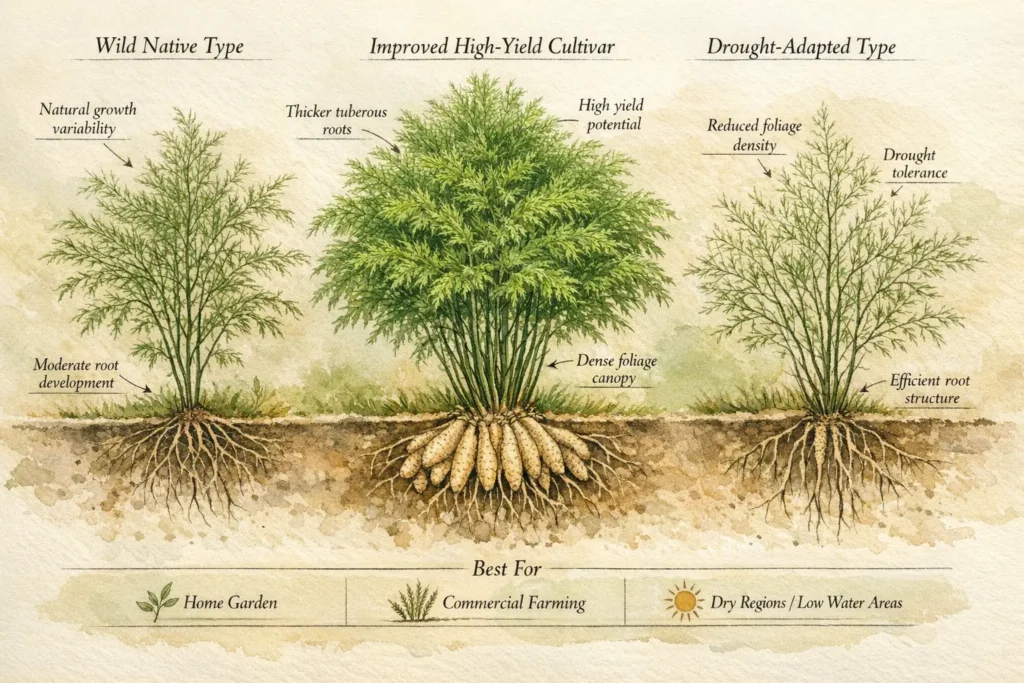
| Varieties | Wild type (most common), improved selections from CIMAP and CSIR; See Varieties Guide for full comparison. |
| Plant type | Perennial climbing shrub |
| Mature size | Vine reaches 1–2 m in height with support; root cluster spreads 30–60 cm |
| Sunlight | Full sun to partial shade |
| Water needs | Moderate; drought-tolerant once established |
| Best season to plant | Pre-monsoon (March–May) or early monsoon (June–July) |
| Suitable states | Rajasthan, Madhya Pradesh, Uttar Pradesh, Maharashtra, Karnataka, Andhra Pradesh, Tamil Nadu, and most of peninsular India |
Choosing the Right Spot
Shatavari thrives in full sun but tolerates partial shade — a south- or east-facing spot works well across most Indian plains. In the hotter zones of Rajasthan and interior Maharashtra, afternoon shade during peak summer (April–June) reduces stress on young plants without affecting root development.
Give the vine a trellis, fence, or bamboo frame of at least 1.5 m height. The plant’s tendrils are delicate but persistent — they will find and grip any nearby structure. Keep at least 60 cm of clearance from walls to allow air circulation.
Container growing is possible and increasingly popular on terraces. A deep container (minimum depth of 40–50 cm) is non-negotiable — the tuberous roots grow downward and will become stunted in shallow pots. Ground planting produces significantly larger root yields.
Soil and Potting Mix
Shatavari prefers well-drained, sandy loam to loamy soil with a pH in the range of 6.5–8.0. It is notably tolerant of slightly alkaline soils, which is one reason it naturalises across Rajasthan’s drier belts.
For regular garden soil in Indian conditions, add one part coarse river sand and one part vermicompost to two parts soil. This improves drainage while retaining enough moisture for root development.
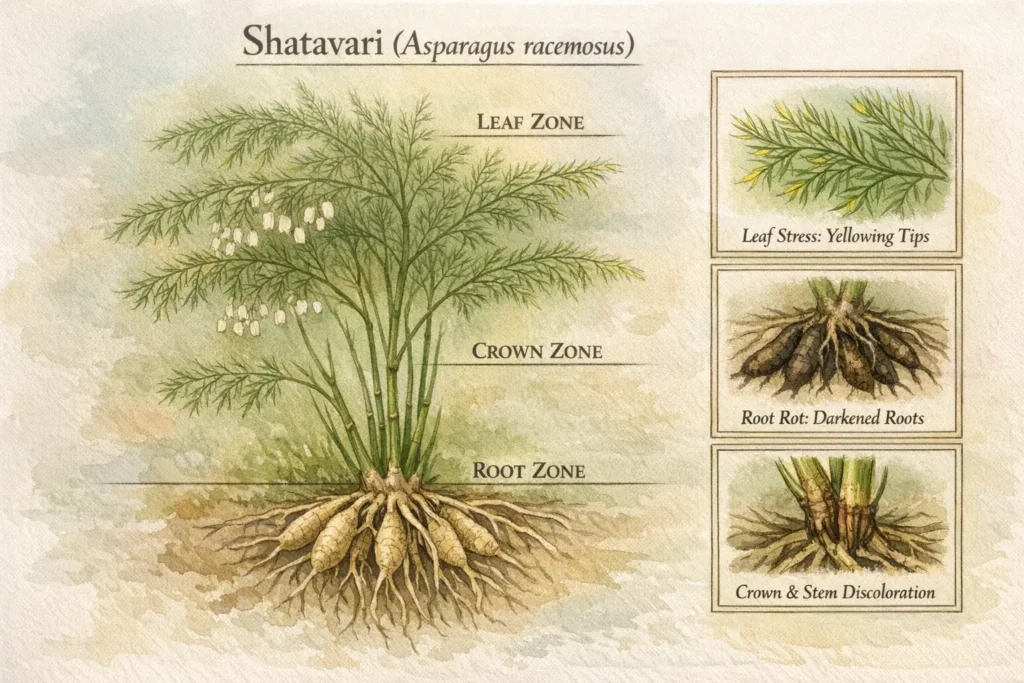
The single most common soil mistake Indian gardeners make with Shatavari is using dense, water-retentive clay soil without amendment. Standing water around the root zone triggers rapid root rot — the plant will wilt and decline within weeks of the monsoon onset if drainage is poor.
Planting — Season and Method
The best time to plant Shatavari is pre-monsoon (March–May), so the plant has established roots before the heavy rains. Early monsoon planting (June–July) also works well and reduces the watering burden during establishment, but ensure drainage is in place before the plant goes in.
Seeds are viable but slow — germination takes 3–6 weeks, and seedlings are fragile for the first two months. Root division or nursery-bought root cuttings are the more practical choice for home gardeners. Established root pieces with at least one visible bud can be transplanted reliably and shave 6–8 months off the growth timeline.
Plant root divisions 5–8 cm deep with the growing bud facing upward. Space plants 60–90 cm apart in ground plantings. Water thoroughly at planting and keep the soil evenly moist for the first 4 weeks.
Watering
For the first 4–6 weeks, water every 2–3 days — enough to keep the top 5 cm of soil moist but never waterlogged. Once established, Shatavari is surprisingly drought-tolerant and needs watering only when the top layer dries out completely.
Mature plants in the ground typically need watering once every 5–7 days in the dry season. Container plants dry out faster and need watering every 2–3 days during summer.
A specific sign of overwatering to watch for: the fine, needle-like cladodes (the leaf-like structures) begin yellowing from the base of the stem upward — not at the tips. Tip yellowing is usually a nutrient or sun issue; basal yellowing with soft, mushy stems at the soil level signals excess moisture.
During the monsoon, most ground-planted Shatavari in well-drained soil requires no supplemental watering at all. In containers, elevate pots slightly to prevent waterlogging from tray overflow.
Fertiliser
Shatavari responds well to organic inputs. Apply a 2–3 cm layer of vermicompost or well-rotted cow dung compost around the base at the start of the monsoon and again at the start of winter (October–November). These are the two primary growth phases.
For container plants, a monthly feed of diluted mustard cake water (soak 50g mustard cake in 1 litre water for 48 hours, dilute 1:5 before applying) supports consistent growth through the active months.
Avoid high-nitrogen chemical fertilisers — they promote lush aerial growth at the expense of root development, which is the plant’s primary value. Neem cake, applied once annually as a soil amendment, also doubles as a pest deterrent.
Common Problems and Fixes
The three most common problems Shatavari faces in Indian gardens are root rot (caused by waterlogged soil, particularly during monsoon), spider mite infestations (identifiable by fine webbing on the feathery stems in dry weather), and yellowing or dropping cladodes (usually caused by sudden temperature shifts or transplant stress).
For full diagnosis and treatment, see the Shatavari Problems Guide.
When Will You See Results?
In year one, expect vigorous aerial growth — the vine will establish quickly and may reach its trellis within one monsoon season. This is encouraging, but it does not mean the roots are ready.
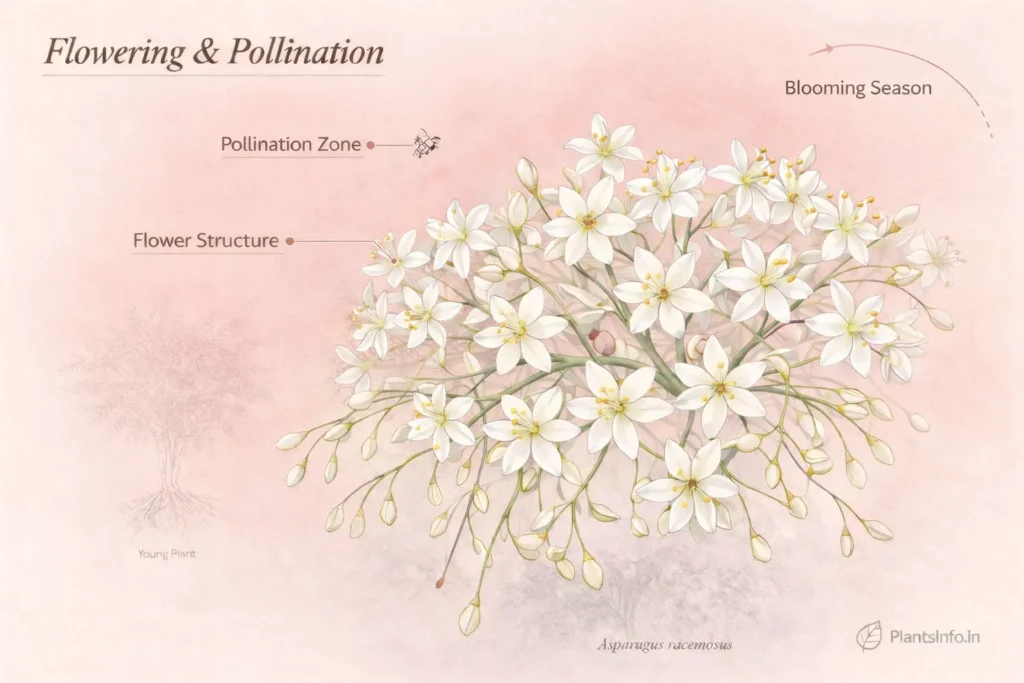
Flowering typically begins in the second year, around the winter season (December–February), when small white fragrant flowers appear along the stems. First modest root harvest is possible at the end of year two, but roots are at their medicinal and commercial best in year three and beyond.
The patience note most growers need: the aerial vine dying back in summer is normal, not a death. Shatavari is semi-deciduous in dry heat — the roots are alive underground and will reshoot with the pre-monsoon rains.
Propagation
Shatavari can be propagated by seed, root division, or root cutting. For home gardeners, root division is the most practical and reliable method.
Divide established clumps at the start of the pre-monsoon season (March–April). Each division should carry 2–3 healthy tubers and at least one visible bud. Replant immediately at the original soil depth.
Seeds can be sown in seedling trays in February–March. Germination success is reasonable (60–70% in fresh seed), but establishment is slow. Nursery-sourced root divisions give a 6–8 month head start and are widely available in herbal plant nurseries across Maharashtra, Karnataka, and Rajasthan.
Container Growing
A minimum container depth of 45 cm is required — 50–60 cm is better. Terracotta pots are preferable to plastic for Shatavari as they allow better moisture regulation and prevent root zone overheating in summer.
Use a mix of 40% garden soil, 30% coarse sand, and 30% vermicompost. Add a 3–4 cm layer of gravel at the bottom before filling to ensure drainage.
Repot every 2 years or when roots visibly push through drainage holes or circle the bottom of the pot. The best time to repot is at the start of the pre-monsoon season — the plant recovers quickly when growing conditions are about to improve.
Harvesting
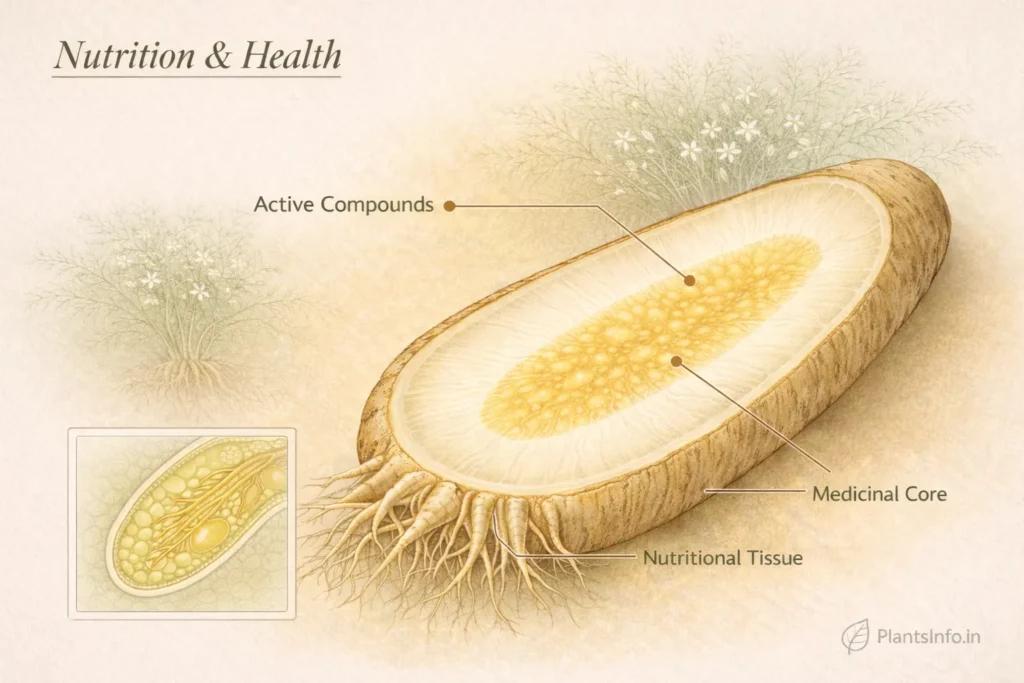
Roots are ready for harvest when the plant is at least 2 years old, and 3 years old produces noticeably fatter, more developed tubers. The right time to harvest is at the end of the dry season (February–March), just before new growth begins.
Dig carefully around the root zone with a hand fork, working outward from the stem base. Extract mature tubers while leaving a portion of the root cluster intact so the plant can regenerate. Never uproot the entire plant for harvest unless the plant is being retired.
Fresh roots can be washed, sliced, and sun-dried for 5–7 days for home use. Store dried roots in an airtight container away from moisture. For fresh root preparations, use within 2–3 days of harvest.
Conclusion
Shatavari asks for good drainage, a sturdy trellis, and a willingness to wait — offer those, and it will reward you with a vigorous climber and a root harvest that improves every year.