How Neem Benefits You: Uses, Properties, and What Research Says

Quick Answer: Neem (Azadirachta indica) is one of India’s most useful trees, valued for its antibacterial, antifungal, and pest-repellent properties. Almost every part — leaf, bark, seed, and oil — has a documented use. It works in your garden, your medicine cabinet, and your kitchen garden all at once.
See also: Neem Plant plant profile, how to grow it, common problems, its flowering season, and its varieties.
Walk past a neem tree on a warm morning, and the air carries a sharp, green bitterness that’s instantly recognisable. That bitterness is not a flaw — it’s the whole point.
Recommended Products
Disclosure: As an Amazon Associate, PlantsInfo may earn from qualifying purchases.
🌱 Growing Essentials
The following products can help with container gardening, potting, root development, soil management, and healthy plant growth.
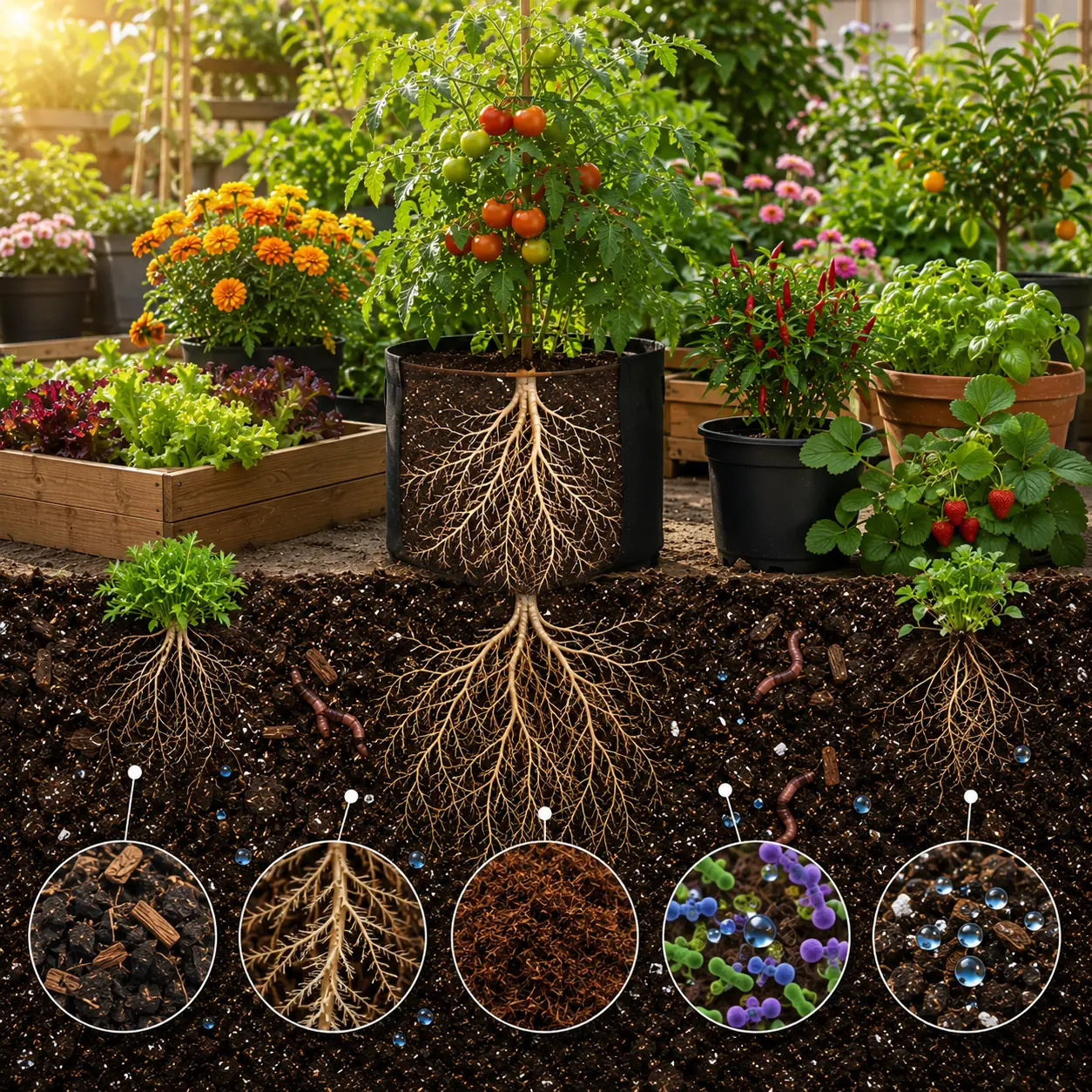
Organic Potting Soil Mix
Provides nutrients, structure, and healthy growing conditions for container plants.
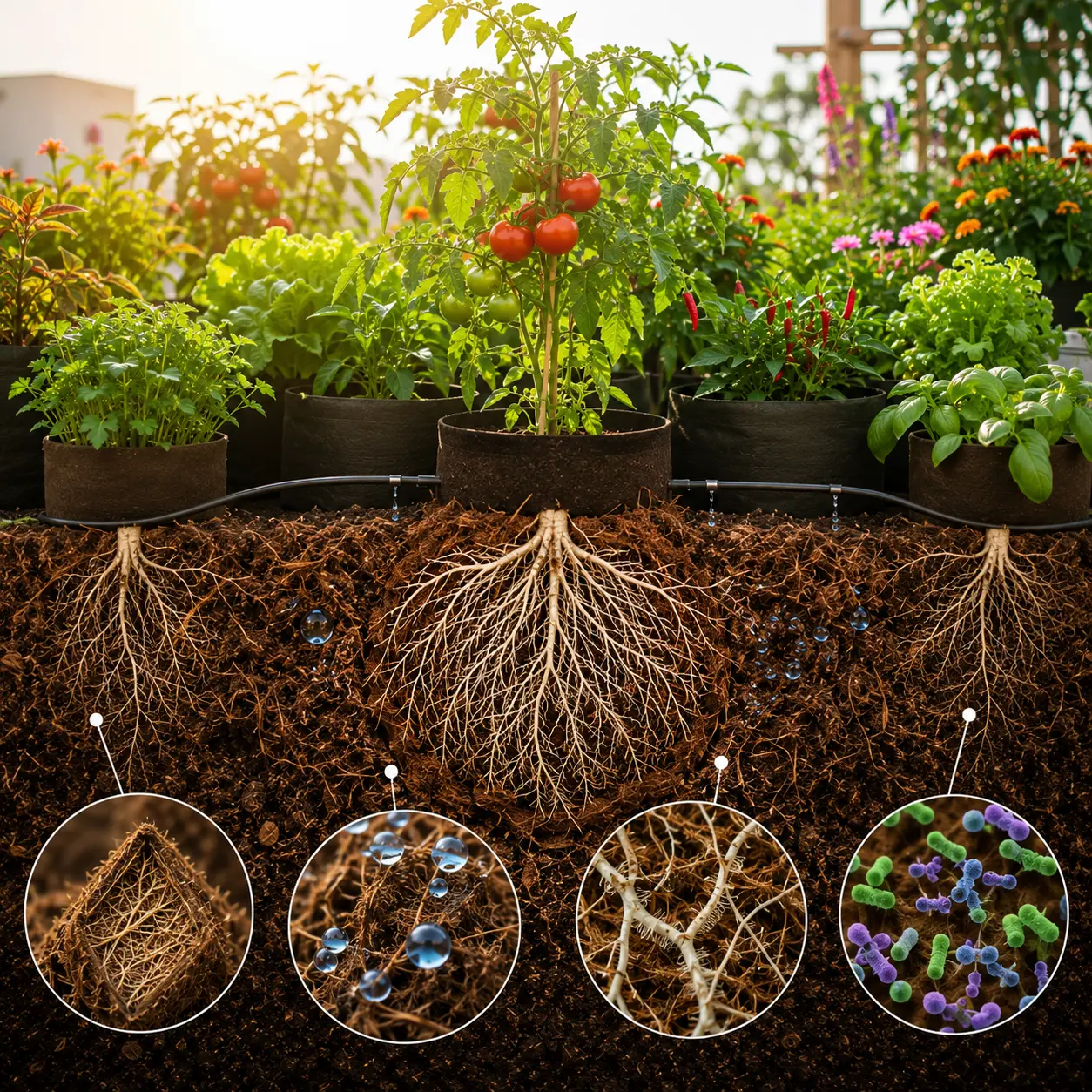
Coco Peat Growing Medium
Enhances moisture retention while maintaining excellent root-zone aeration.

Grow Bags for Plants
Improve drainage, root aeration, and vegetable production in limited spaces.

Plastic Pots for Plants
Ideal containers for seedlings, ornamentals, herbs, and balcony gardens.
What Makes Neem Medically Significant
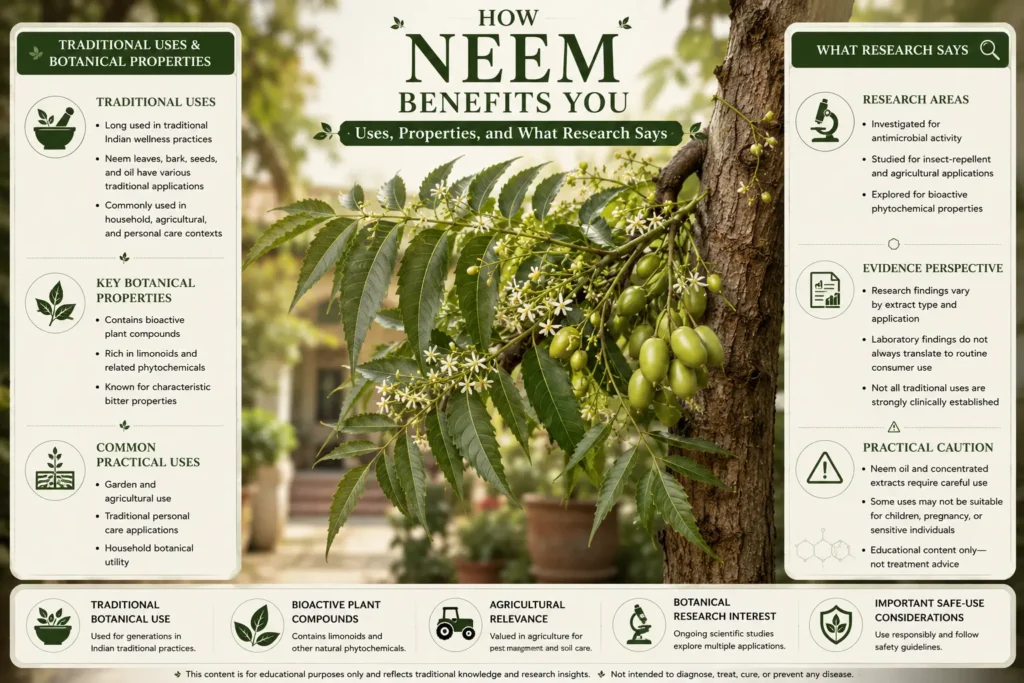
Neem’s therapeutic reputation rests on a group of compounds called limonoids, the most studied being azadirachtin. These give the plant its characteristic bitter taste and account for most of its biological activity.
Traditional Ayurvedic texts describe neem as tikta (bitter) and kashaya (astringent) — a cooling herb used to address heat-related conditions in the body.
Modern research has confirmed significant antibacterial and antifungal activity, particularly from leaf and bark extracts. Studies suggest neem leaf extracts are effective against a range of common bacterial strains, including Staphylococcus and E. coli.
Skin and Hair Uses
Neem is probably most widely used in India for skin complaints. Traditional practice records its use for acne, eczema, ringworm, and minor wounds — and this aligns reasonably well with its documented antimicrobial properties.
Neem oil, pressed from the seed, is thick, pungent, and deeply effective for dry, itchy scalp conditions. Mixed with coconut oil, it is a long-standing home remedy for dandruff and scalp fungal infections.
One thing nobody tells you: undiluted neem oil is strong enough to cause irritation on sensitive skin. Always dilute — a 2–5% concentration in a carrier oil is a practical starting point.
Oral Health
Neem twigs as a natural toothbrush (datun) predate modern dentistry in India by centuries. Ayurvedic texts describe the practice extensively, and contemporary dental research has largely validated it.
Research suggests neem extract reduces plaque formation and inhibits the bacteria most associated with gum disease and tooth decay. Several Indian toothpaste brands now include neem extract as an active ingredient — a rare case of traditional use being absorbed directly into mainstream commerce.
Digestive and Internal Uses
Traditional medicine records neem leaf as a remedy for intestinal worms, digestive sluggishness, and fever. Neem bark decoctions were used for malaria in folk practice across many Indian states.
Research suggests antiparasitic and antipyretic activity, though the evidence for internal use is less robust than for topical applications. For most internal uses, traditional practice is ahead of the clinical literature.
Agricultural and Garden Uses
For Indian home gardeners, neem is arguably most valuable as a natural pesticide. Neem cake (the residue after oil extraction) doubles as a soil amendment and a pest deterrent — it is widely available in Indian nurseries and garden supply shops.
Neem oil spray, diluted in water with a small amount of liquid soap as an emulsifier, controls a wide range of soft-bodied insects: aphids, whiteflies, mealybugs, and spider mites. It disrupts the insect’s hormone cycle rather than killing on contact, which means pests don’t develop resistance easily.
A common beginner mistake: spraying neem oil in direct afternoon sun. It can burn foliage. Always apply in the evening or early morning.
Neem in the Indian Home: Beyond the Garden
Dried neem leaves placed in grain storage containers have been used across rural India for generations to deter weevils and insects — a practice that is both effective and entirely chemical-free.
In parts of Tamil Nadu and Andhra Pradesh, neem flowers are eaten during Ugadi (Telugu and Kannada New Year) as part of a ritual mixture representing life’s mixed flavours. The bitterness is intentional — a reminder that the year ahead will contain difficulty alongside sweetness.
Neem branches are hung at doorways during certain festivals in South India to ward off disease and negative energy, a custom that carries both symbolic and, arguably, some antimicrobial logic.
Contrast: Traditional Knowledge vs. Modern Research
Traditional use is broader and bolder than what clinical research has confirmed so far. Ayurvedic texts attribute neem with blood-purifying, anti-diabetic, and even contraceptive properties.
Research suggests some support for blood glucose regulation in early studies, but evidence is preliminary. The anti-diabetic claim should not be acted on without medical guidance.
What research has confirmed most strongly: topical antimicrobial activity, pesticidal properties (azadirachtin is well-studied), and oral health benefits. These three overlap almost exactly with where traditional practice has been most consistent.
Key Takeaways
- Neem’s primary active compounds are limonoids, especially azadirachtin — responsible for its bitterness and most of its biological activity.
- Topical uses (skin, scalp, oral health) are the most research-supported applications.
- Neem oil must always be diluted before skin application; undiluted oil can irritate.
- In the garden, neem cake and neem oil spray are effective, pest-resistant management tools available in most Indian nurseries.
- Traditional internal uses are widely practised but less clinically confirmed — consult a qualified Ayurvedic practitioner before using neem medicinally.
⚠️ Health Disclaimer: The information in this article is for general educational purposes only. Neem has potent biological activity and is not appropriate for unsupervised internal use, particularly for children, pregnant women, or people on medication. Consult a qualified medical or Ayurvedic practitioner before using neem as a remedy for any health condition.
Conclusion
Few plants earn their place as completely as neem does — in the garden, the bathroom cabinet, and the kitchen shelf all at once. Understanding what it genuinely does well is the first step to using it wisely.