Neem Tree Problems: Symptoms, Causes and Fixes

Neem Tree Problems: Symptoms, Causes, and Fixes
Quick Answer: Neem is one of India’s hardiest trees, but young saplings, waterlogged soil, and scale insect infestations can cause serious damage. Most problems are preventable with good drainage, adequate sunlight, and early intervention. Established trees rarely face threats they cannot survive.
See also: Neem Plant plant profile, how to grow it, its flowering season, its benefits, and its varieties.
Neem (Azadirachta indica) has a reputation for looking after itself — and a mature tree in well-drained soil largely does. The problems arise in the first two to three years, in compacted urban soils, or when the tree is planted in partial shade. Catching issues at the sapling stage prevents the majority of long-term damage.
Recommended Products
Disclosure: As an Amazon Associate, PlantsInfo may earn from qualifying purchases.
🌱 Growing Essentials
The following products can help with container gardening, potting, root development, soil management, and healthy plant growth.
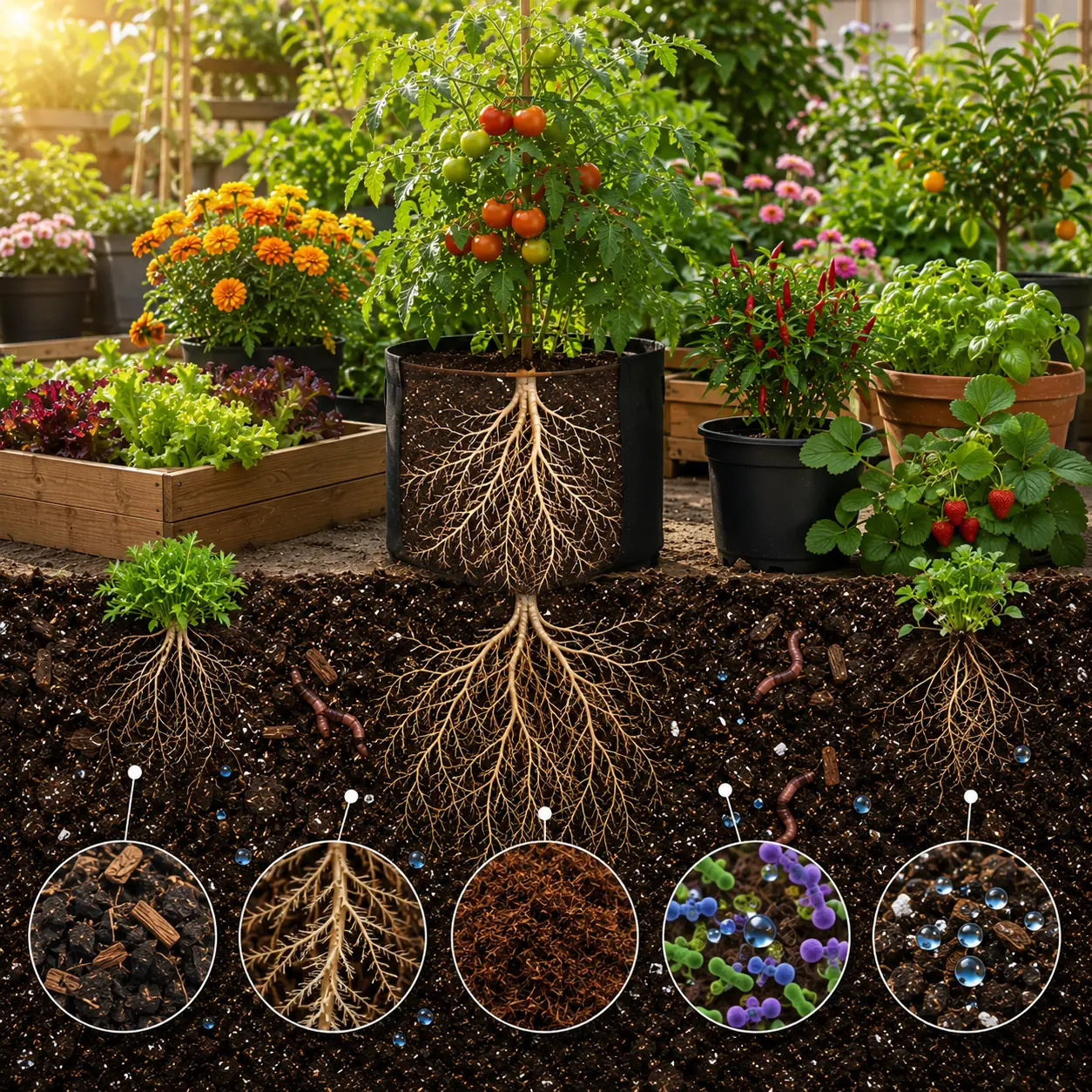
Organic Potting Soil Mix
Provides nutrients, structure, and healthy growing conditions for container plants.
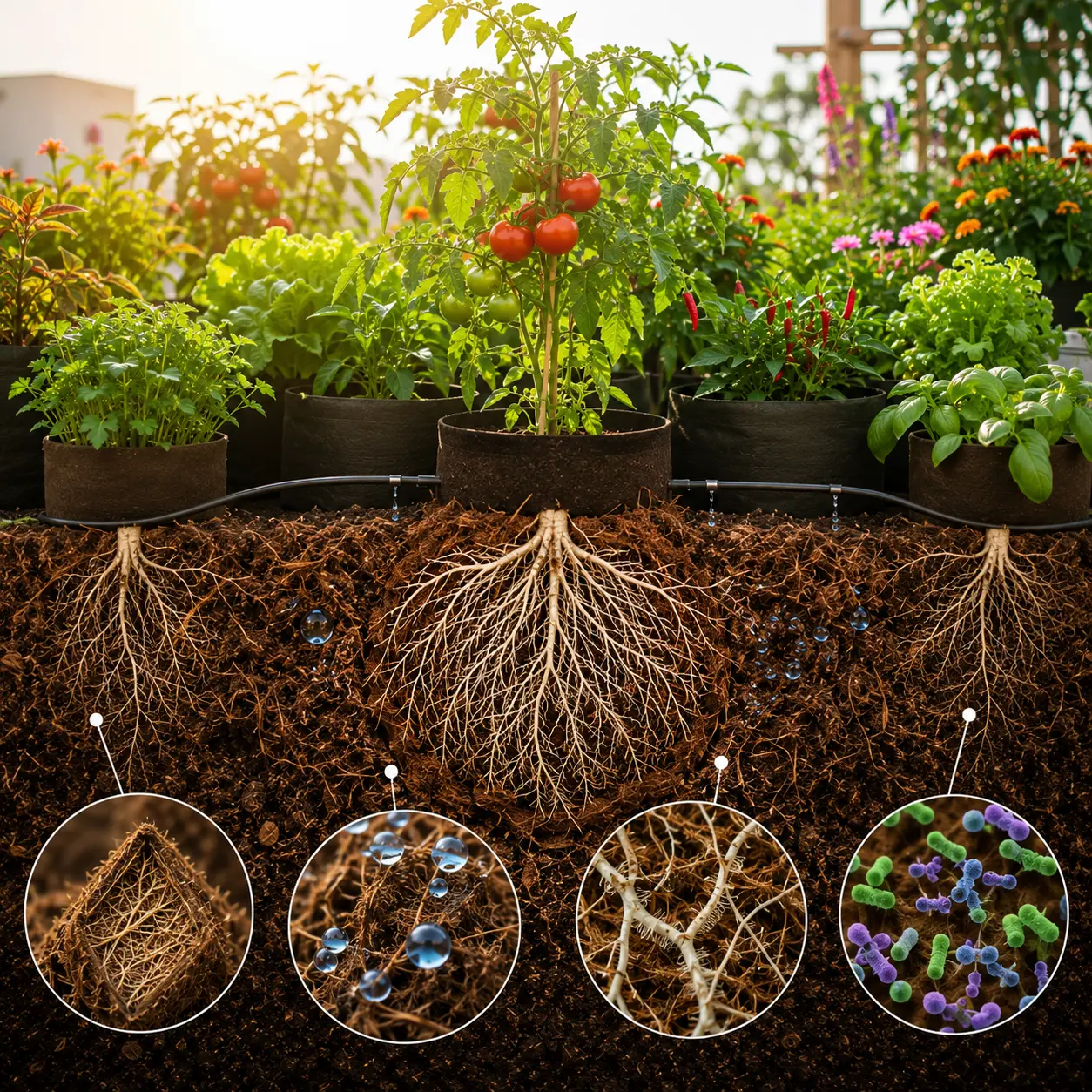
Coco Peat Growing Medium
Enhances moisture retention while maintaining excellent root-zone aeration.

Grow Bags for Plants
Improve drainage, root aeration, and vegetable production in limited spaces.

Plastic Pots for Plants
Ideal containers for seedlings, ornamentals, herbs, and balcony gardens.
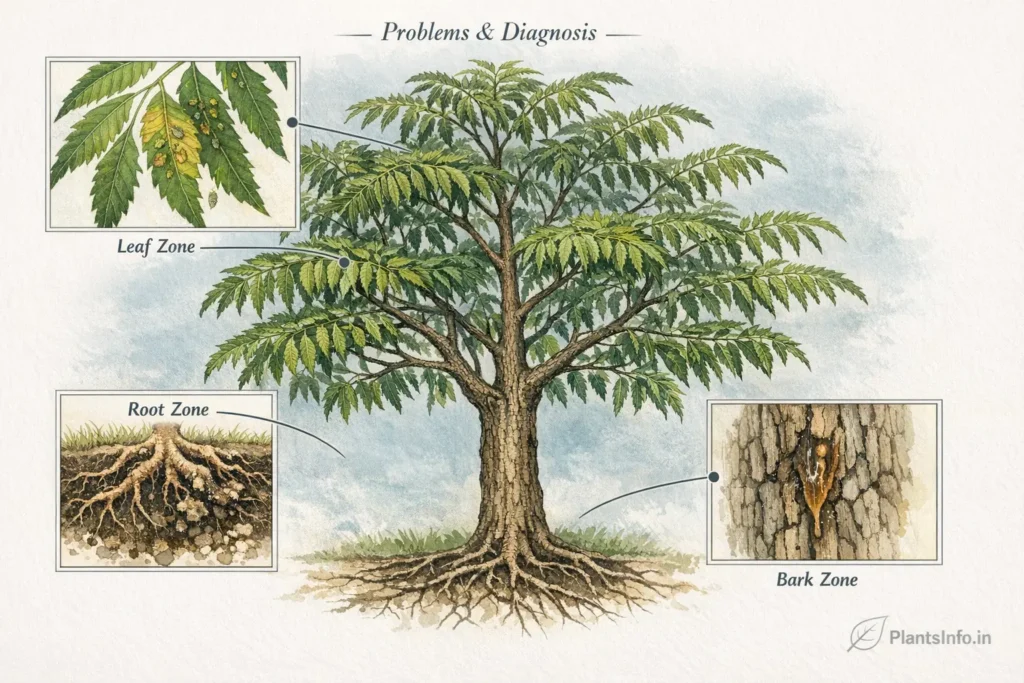
Quick Diagnosis
| Symptom | Most Likely Cause | First Action |
|---|---|---|
| Yellowing leaves on young saplings | Waterlogging or nitrogen deficiency | Check drainage; assess soil |
| Tip dieback on multiple branches | Dieback disease (Phoma/Lasiodiplodia) | Prune to healthy wood; apply copper paste |
| Examine the root zone for dark, mushy tissue | Sooty mould following scale or mealybug | Treat the insect first; mould clears on its own |
| White cottony masses on stems | Mealybug infestation | Apply neem oil or imidacloprid drench |
| Bark cracking with gum oozing | Gummosis from fungal infection or borer | Check for borer entry; apply Bordeaux paste |
| Pale, stippled leaves, fine webbing | Spider mite infestation | Apply water jet; neem oil spray |
| Wilting despite adequate watering | Root rot or collar rot | Examine root zone for dark, mushy tissue |
Diseases
Dieback (Lasiodiplodia theobromae / Phoma spp.)
Dieback is the most common disease problem of neem in India, particularly affecting trees under stress — drought, waterlogging, or physical injury. It begins at branch tips, which turn brown and dry progressively downward. In severe cases, entire branches die back to the main stem. The fungi responsible are opportunistic — they colonise weakened tissue rather than attacking healthy trees.
Prune all affected branches to clean, healthy wood, cutting at least 10–15 cm below the visible infection. Apply copper oxychloride paste to all cut surfaces immediately. Trees in full sun with good drainage rarely experience dieback; most cases trace back to a correctable stress factor.
Powdery Mildew (Oidium spp.)
Powdery mildew appears as a white, talcum-like coating on young leaves and new shoots, most commonly during the transition between winter and summer — February through April in most of India. It is rarely life-threatening to a neem tree but can distort new growth and weaken saplings during their critical establishment period.
Wettable sulphur or potassium bicarbonate sprays applied at first appearance provide effective control. Ensure the tree is not crowded by other vegetation — poor air circulation is the primary enabling condition.
Root Rot and Collar Rot (Phytophthora spp.)
Root and collar rot in neem is almost always caused by poor drainage, particularly in heavy clay soils or where irrigation water pools at the base. The tree wilts progressively, with yellowing that does not respond to watering. Cutting into affected roots reveals dark brown to black, mushy tissue with a foul smell.
Early-stage infection can sometimes be reversed by drastically improving drainage and applying Metalaxyl-based fungicide drench at the root zone. Advanced cases — where the collar is fully girdled — are unrecoverable. Prevention is the only reliable strategy; see the planting section of the Neem Growing Guide.
Leaf Spot (Cercospora and Pestalotiopsis spp.)
Various leaf spot pathogens cause irregular brown spots on neem leaves, typically during and just after the monsoon. Spots may have yellow halos and coalesce under heavy infection. The disease rarely causes significant damage to established trees but can defoliate young saplings under sustained wet conditions.
Copper oxychloride sprays at 15-day intervals during high-humidity periods provide adequate control. Remove and destroy fallen infected leaves to reduce the inoculum load going into the next season.
Pest Problems
Scale Insects (various Coccidae spp.)
Scale insects are the most economically significant pest of neem in Indian conditions. They appear as small, brown, oval or rounded bumps fixed to stems and leaf undersides — individually small, but colonies can coat entire branches. They feed by sucking plant sap and excrete honeydew, which promotes sooty mould growth that turns leaves and stems black. Young trees under heavy scale attack show yellowing, stunted growth, and branch dieback.
Scrubbing light infestations with a soft brush dipped in soapy water is effective for small trees. For larger infestations, neem oil spray or imidacloprid soil drench — which provides systemic uptake — gives the most complete control. Sooty mould on leaves clears naturally once the scale colony is eliminated.
Mealybugs (Phenacoccus solenopsis and related spp.)
Mealybugs colonise stem junctions, leaf axils, and the underside of bark flaps, leaving cottony white deposits. Like scale, they produce honeydew and promote sooty mould. They are more mobile than scale insects and spread rapidly between plants in a garden, particularly during the hot, dry pre-monsoon months.
Neem oil spray at 5 ml per litre of water, applied fortnightly, provides good organic control. For severe infestations on young trees, imidacloprid drench is the most reliable chemical option. Inspect neem saplings monthly between March and June — this is the peak mealybug season.
Leaf Webber (Lopha (Ortholepis) castanealis)
The leaf webber caterpillar ties young neem leaves together with silk threads, feeding on the enclosed tissue. Affected shoot tips show a cluster of webbed, browned leaves. Infestations are most common during the monsoon flush, when rapid new growth provides abundant feeding material. The damage looks alarming, but it rarely threatens a mature tree.
Remove and destroy webbed leaf clusters by hand on small trees. Chlorpyrifos or quinalphos sprays are effective for larger infestations where manual removal is impractical.
The webbed, browned leaves caused by leaf webber are frequently mistaken for dieback disease. The distinction: leaf webber shows silk webbing and the browning is confined to the webbed cluster; dieback shows progressive tip browning with no webbing.
This information is for general guidance only. Always read product labels before applying any pesticide or fungicide. Follow state agriculture department guidelines for food crops. Keep children and pets away during and after application.
Environmental and Care Mistakes
Planting in Shade
Neem is an obligate full-sun tree. Planted under or near larger trees, against north-facing walls, or in narrow urban plots that receive fewer than five hours of direct sun, neem saplings grow slowly, develop weak stems, and are significantly more susceptible to dieback and mildew. This is the most common establishment mistake in urban Indian gardens. If the chosen spot receives less than five hours of direct sun daily, choose a different tree.
Overwatering Established Trees
Mature neem trees are drought-adapted and need very little supplemental irrigation. Gardeners who continue watering established trees on a vegetable-garden schedule — daily or every other day — progressively waterlog the root zone. The tree responds with yellowing and premature leaf drop that is consistently misread as drought stress, prompting yet more watering. For trees older than three years in Indian conditions, monsoon rainfall is generally sufficient. See the Neem Growing Guide for irrigation details.
Topping and Excessive Pruning
Neem trees are frequently “topped” in urban settings to manage height, cutting the main leader entirely. This does not kill the tree but produces multiple weak, fast-growing water shoots from the cut point and permanently alters the tree’s natural architecture. If height management is necessary, directional pruning of side branches is far preferable to topping the leader.
Transplanting Large Saplings
Neem develops a deep taproot quickly. Saplings transplanted after six months in a nursery bag suffer significant root disturbance and may take a full year to re-establish — showing pale leaves, minimal growth, and susceptibility to disease throughout that period. Plant neem young, directly from a small nursery bag, and avoid disturbing the root ball at planting.
Prevention Protocol
Ensure full sun and well-drained soil before planting — these two conditions prevent the majority of neem problems. Inspect saplings monthly for scale and mealybug through the pre-monsoon season; treat at first appearance before colonies establish. Before monsoon, apply a copper oxychloride paste to the lower 50 cm of the trunk to reduce collar rot risk and deter bark pests. After the monsoon, check all branch tips for dieback and prune to clean wood immediately — do not leave dead wood on the tree through winter. Avoid wetting the trunk base during irrigation; water at the drip line, not at the base.
When to Give Up on a Plant
Neem trees virtually never need to be abandoned once established past their third year. The exception is advanced collar rot, where the entire root crown is girdled — the tree will decline progressively and cannot be saved at this stage.
Remove completely, improve drainage substantially, and wait at least one full season before replanting any tree species in that spot. For saplings in their first year that show complete wilting, root blackening, and no viable growing tip, replacement is more practical than prolonged treatment.
Frequently Asked Questions
My neem tree drops most of its leaves in February — is it dying?
No. Neem is briefly semi-deciduous in late winter across most of North and Central India. Leaf drop in January–February, followed by a fresh flush in March, is completely normal and not a sign of disease.
Can I use neem leaves from a pest-affected tree for home remedies or garden sprays?
Leaves from a tree with sooty mould or scale infestation are less suitable — the honeydew and mould residue affects extraction quality. Leaves from the inner, healthy canopy of the same tree are usable; wash thoroughly before use.
Is the yellowing after transplanting a disease or normal stress?
Almost always, transplant stress is particularly high if the sapling was in a nursery bag for more than a few months. Hold fertiliser, water lightly, and give it 6–8 weeks before concluding there is a disease problem.
Neem problems are the exception, not the rule. Fix the drainage, plant in full sun, and check for scale every spring — that covers ninety percent of what this tree will ever need from you.