Neem Tree: Facts, Names, and Where It Grows in India
Neem (Azadirachta indica) is a fast-growing, drought-hardy evergreen tree native to the Indian subcontinent. It grows across almost all of India except high-altitude regions, and is one of the most culturally and ecologically significant trees in the country.
See also: Neem Plant plant profile, how to grow it, common problems, its flowering season, and its benefits.
You can find neem growing on roadsides, in temple courtyards, beside railway tracks, and in home gardens from Rajasthan to Tamil Nadu — few trees are as comfortable in as many places.
Recommended Products
Disclosure: As an Amazon Associate, PlantsInfo may earn from qualifying purchases.
🌱 Growing Essentials
The following products can help with container gardening, potting, root development, soil management, and healthy plant growth.
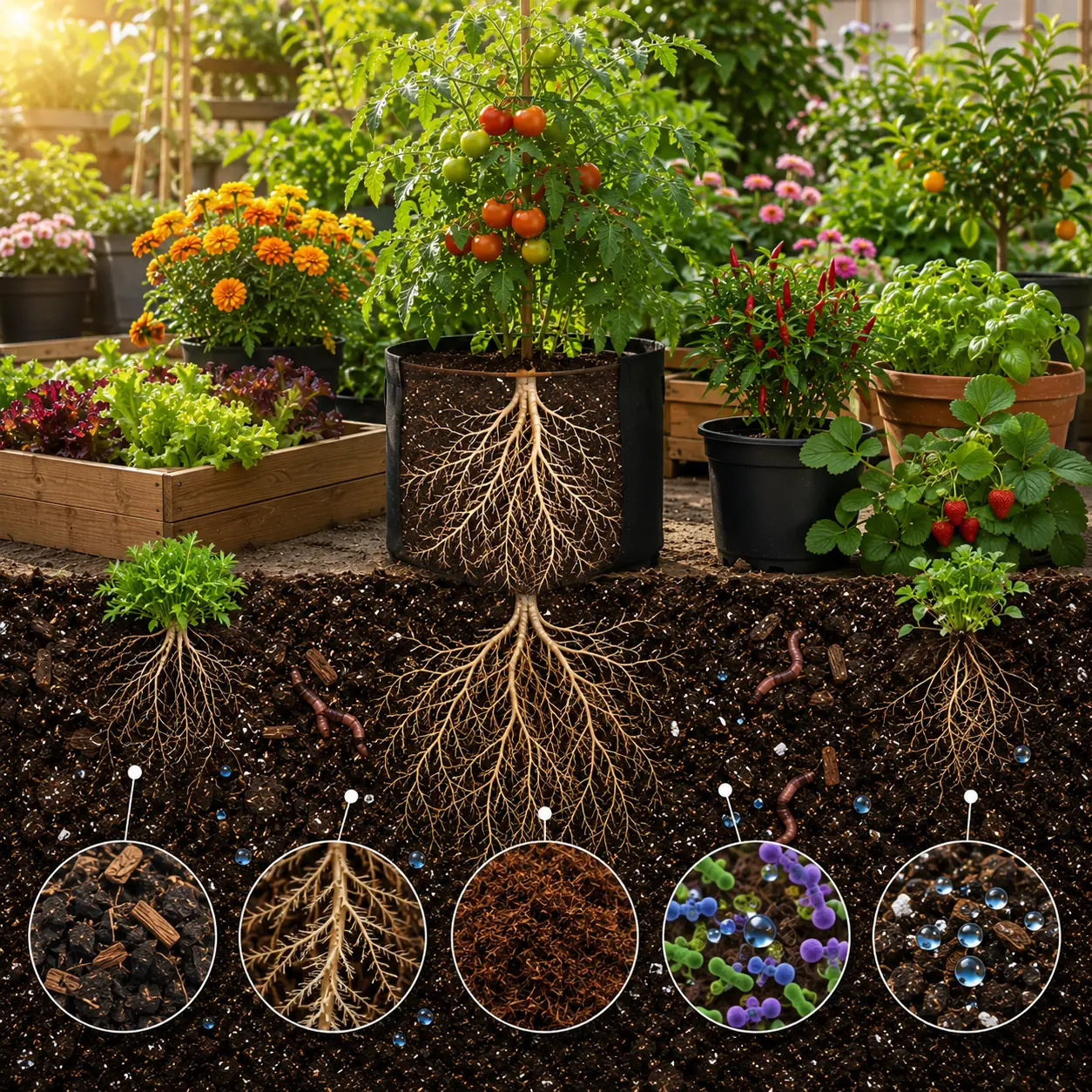
Organic Potting Soil Mix
Provides nutrients, structure, and healthy growing conditions for container plants.
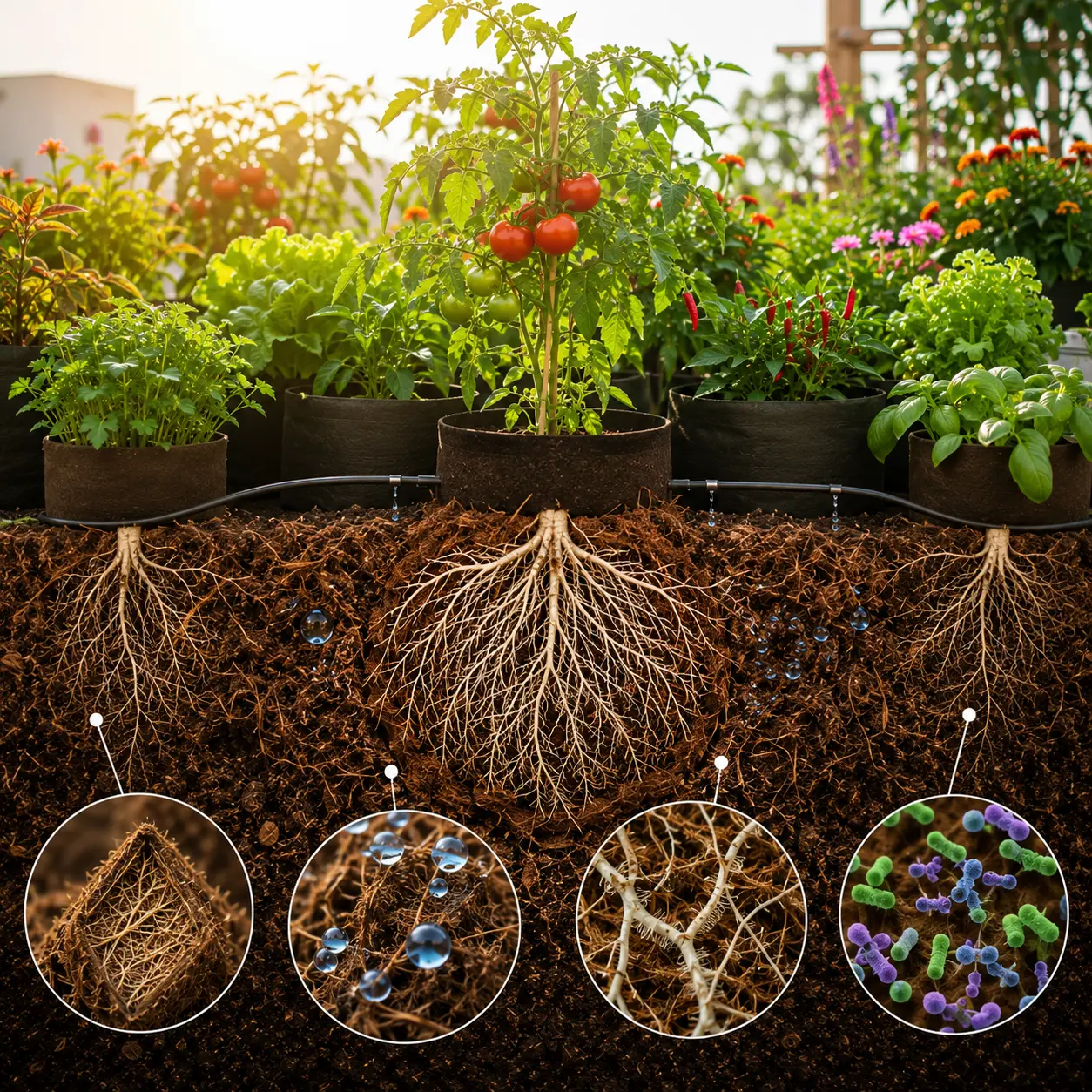
Coco Peat Growing Medium
Enhances moisture retention while maintaining excellent root-zone aeration.

Grow Bags for Plants
Improve drainage, root aeration, and vegetable production in limited spaces.

Plastic Pots for Plants
Ideal containers for seedlings, ornamentals, herbs, and balcony gardens.
At a Glance
| Attribute | Detail |
|---|---|
| Common names | Neem, Nim, Nimba, Veppai (Tamil), Bevu (Kannada), Vepa (Telugu), Nimbay (Marathi) |
| Scientific name | Azadirachta indica A.Juss. |
| Family | Meliaceae (Mahogany family) |
| Plant type | Evergreen tree (semi-deciduous in drier regions) |
| Mature height | 15–20 metres; up to 30 m in ideal conditions |
| Canopy spread | 8–12 metres |
| Lifespan | 150–200 years |
| Native range | Indian subcontinent, Myanmar |
| Distribution in India | Throughout; most prolific in plains and semi-arid zones |
Names Across India
The word neem derives from the Sanskrit nimba, meaning “bestower of good health.” In Hindi and Urdu, it is simply neem; in Tamil, it is veppai; in Telugu, vepa; in Kannada, bevu; in Bengali, neem or nim; in Marathi, kadu-nimbay (bitter neem, distinguishing it from sweet neem/curry leaf).
This last point causes genuine confusion: sweet neem (curry leaf, Murraya koenigii) and neem (Azadirachta indica) are entirely different plants. They are not related, not interchangeable, and the shared “neem” name is one of the most common mix-ups among beginner gardeners.
What the Tree Looks Like
Neem is a medium-to-large tree with a rounded or spreading crown and fissured, grey-brown bark that becomes more deeply grooved with age.
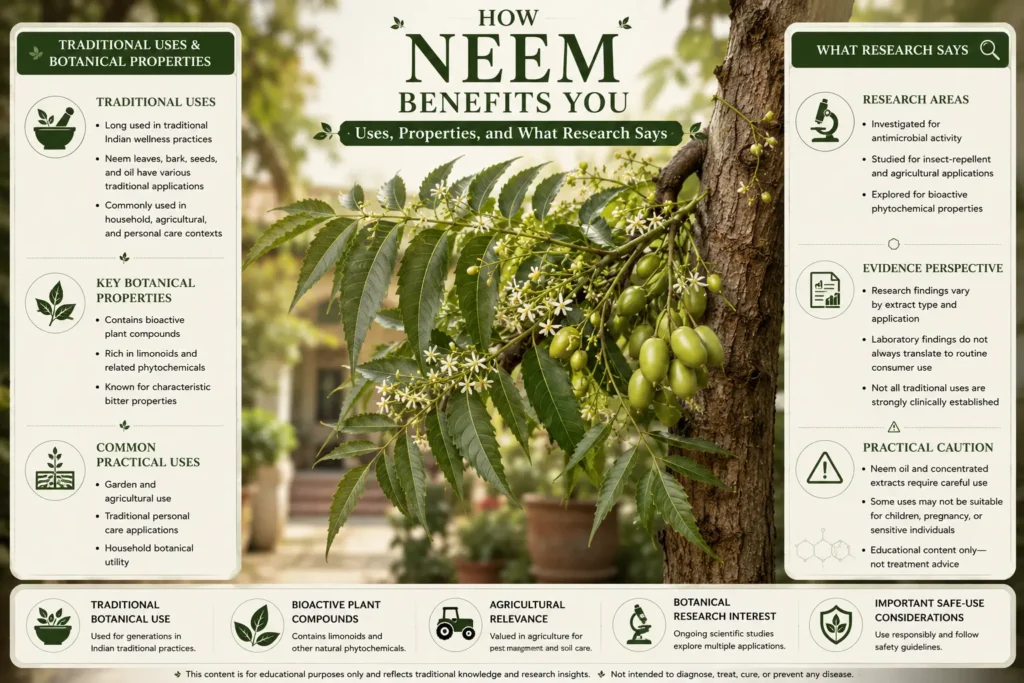
The leaves are pinnate — long central stems carrying 8–18 pairs of curved, toothed leaflets. They are bright green, slightly glossy, and release that characteristic sharp scent when crushed.
Flowers are small, white, and intensely fragrant — clusters of tiny five-petalled blooms that attract bees in large numbers. The fruit is an olive-shaped drupe, green turning yellow as it ripens, with a thin sweet pulp covering a hard seed.
Where It Grows in India
Neem is one of India’s most widely distributed trees. It thrives in hot, dry, and semi-arid conditions and is found naturally across the Deccan Plateau, Rajasthan, Gujarat, Madhya Pradesh, Uttar Pradesh, and the coastal plains of South India.
It grows well in Tamil Nadu, Karnataka, Andhra Pradesh, and Telangana — states with hot summers and moderate rainfall. It is common in Maharashtra and Bihar.
Neem does not do well above approximately 1,500 metres. It is absent from the higher Himalayas, dislikes prolonged waterlogging, and performs poorly in consistently cold climates. The Northeast states, with their heavier rainfall and cooler conditions, are not ideal neem territory — though it can be found in lower-lying parts.
Ecological Role
Neem trees provide dense shade and are a favoured roadside planting across North and South India because they establish quickly and tolerate poor, compacted soil.
The tree is a significant nectar source. During the flowering season, a single mature neem tree can support substantial bee activity. Birds eat the ripe fruit and disperse the seeds — mynahs and parakeets are particularly common visitors.
Neem improves degraded soil over time. The leaf litter is nitrogen-rich, and neem roots help break up compacted earth. In agroforestry systems across Maharashtra and Karnataka, neem is deliberately intercropped for this reason.
Cultural and Traditional Significance
Few trees are as embedded in Indian cultural life as neem. It has been described in Ayurvedic texts for over 2,000 years — Charaka Samhita and Sushruta Samhita both reference it in detail.
In Hindu tradition, neem is associated with the goddess Mariamman (and her various regional forms — Yellamma in Karnataka, Pochamma in Telangana). Neem branches and garlands are central to festival practices in her honour across South India. The tree itself is considered sacred and is planted near temples.
In Tamil culture, neem flowers eaten on Ugadi represent life’s bitterness — a ritual acknowledgement that difficulty is part of existence. Dried leaves are used as a natural insect repellent in stored grain, a practice common across rural India.
Is It Easy to Grow?
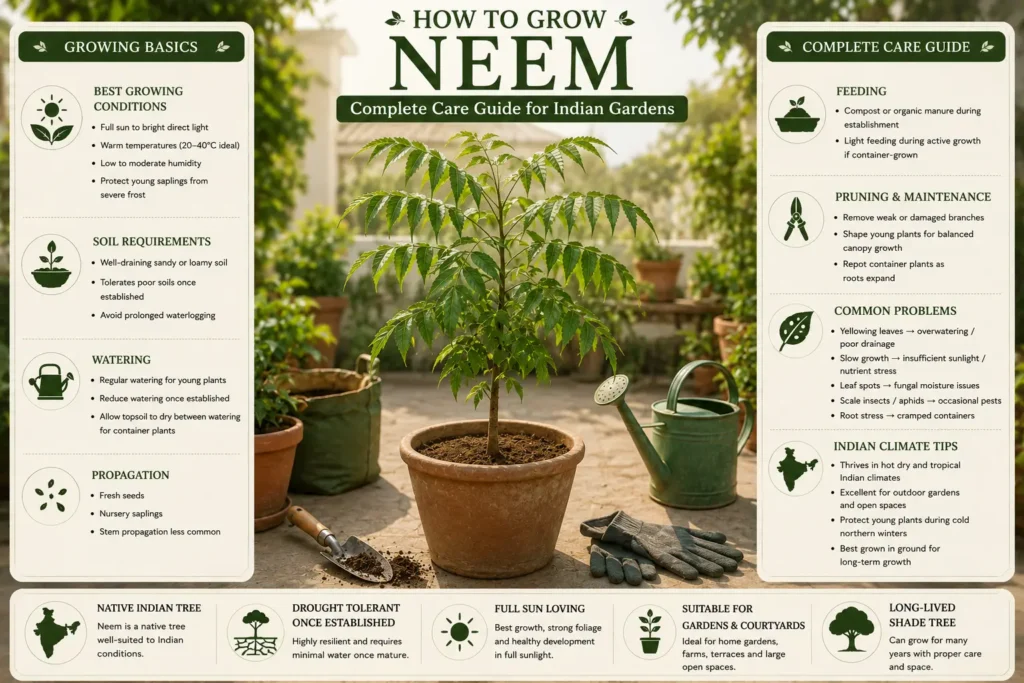
Very. Neem is one of the least demanding trees you can plant in India. It grows fast, tolerates drought, poor soil, and neglect, and asks for little once established. In the plains and semi-arid zones, it is essentially grow-and-forget.
The main constraint is space — a mature neem tree has a wide canopy and deep roots, so it is not a plant for small urban plots or containers. It belongs in a garden with ground space, a farmyard, or a roadside.
Frequently Asked Questions
Is neem the same as curry leaf?
No — they are entirely different plants. Curry leaf is Murraya koenigii, while neem is Azadirachta indica. The “sweet neem” nickname for curry leaf causes widespread confusion.
Can neem be grown in a pot?
A young neem can be kept in a large container for a few years, but it will outgrow it. Neem is a full-sized tree and is not suited to long-term container growing.
Is neem toxic to pets?
Neem oil and seed extract can be toxic to cats and dogs if ingested in significant quantities. The leaves in small amounts are generally considered low-risk, but keep concentrated neem products away from pets.
Conclusion
Neem is not just a useful tree — it is part of the fabric of Indian landscape, medicine, and culture. Understanding it is understanding a piece of the subcontinent itself.