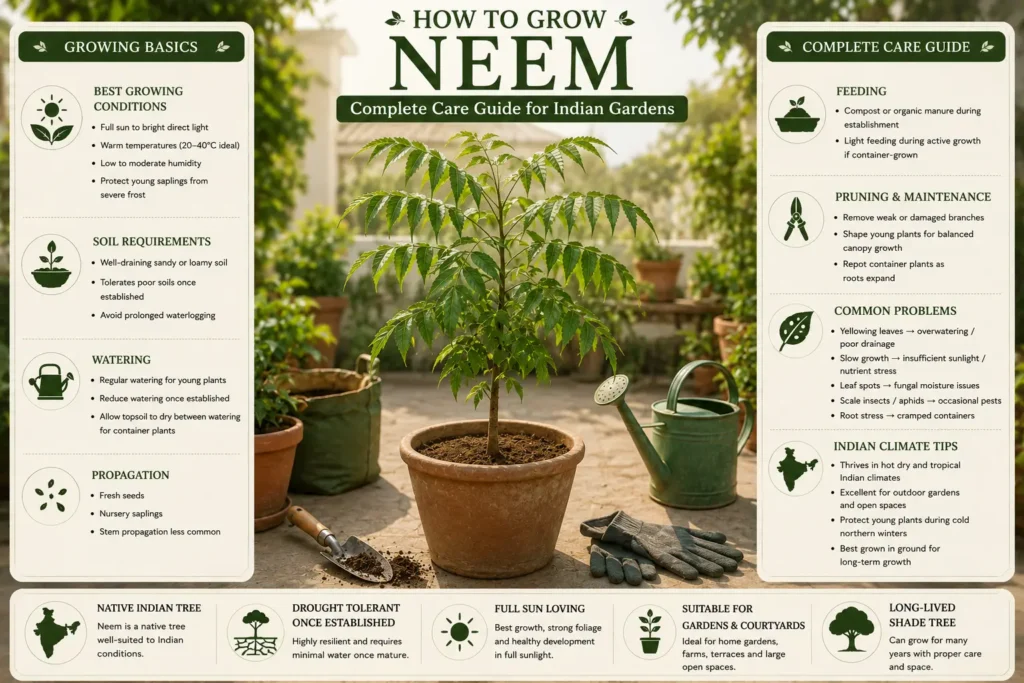
How to Grow Neem: Complete Care Guide for Indian Gardens

Quick Answer: Neem grows easily across most of India with minimal care once established. Plant during monsoon, give it full sun and well-drained soil, and water regularly only in the first year. After that, it survives on rainfall alone in most regions.
See also: Neem Plant plant profile, common problems, its flowering season, its benefits, and its varieties.
Most people think neem needs no care at all because it grows wild everywhere. That’s half-true — mature neem trees are nearly indestructible, but young saplings die quietly in their first summer if you treat them like adults too soon. The trick is knowing when to step back.
Recommended Products
Disclosure: As an Amazon Associate, PlantsInfo may earn from qualifying purchases.
🌱 Growing Essentials
The following products can help with container gardening, potting, root development, soil management, and healthy plant growth.
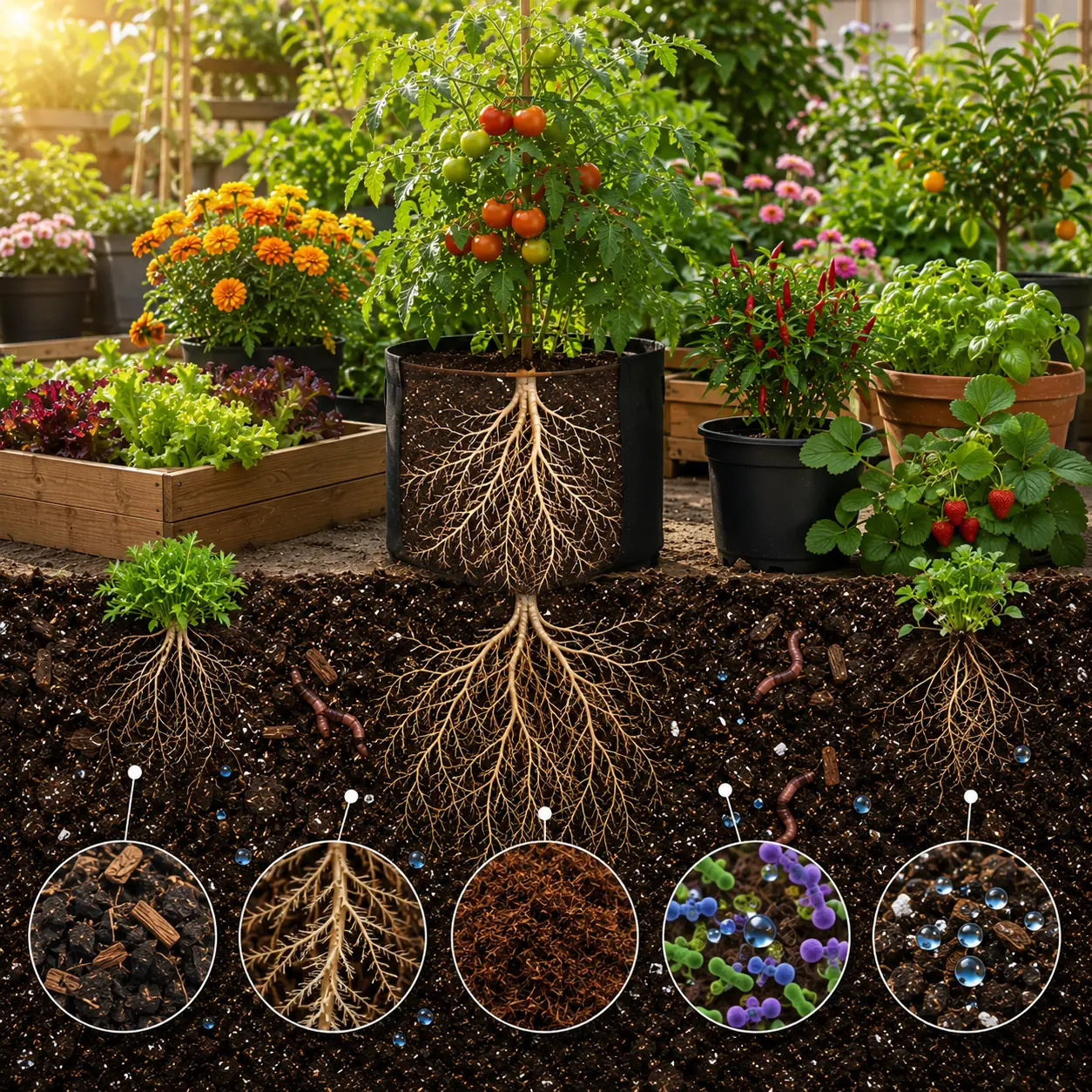
Organic Potting Soil Mix
Provides nutrients, structure, and healthy growing conditions for container plants.
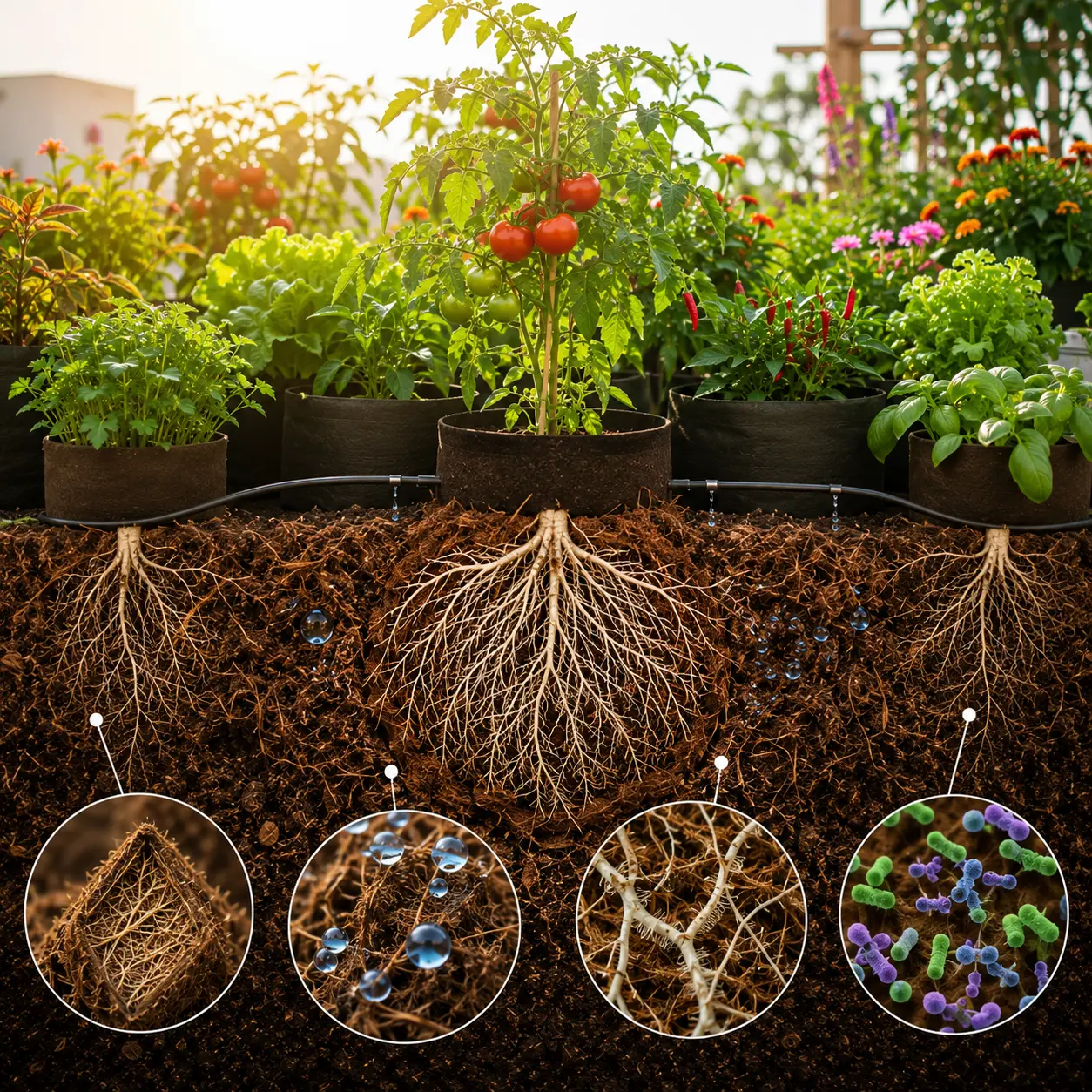
Coco Peat Growing Medium
Enhances moisture retention while maintaining excellent root-zone aeration.

Grow Bags for Plants
Improve drainage, root aeration, and vegetable production in limited spaces.

Plastic Pots for Plants
Ideal containers for seedlings, ornamentals, herbs, and balcony gardens.
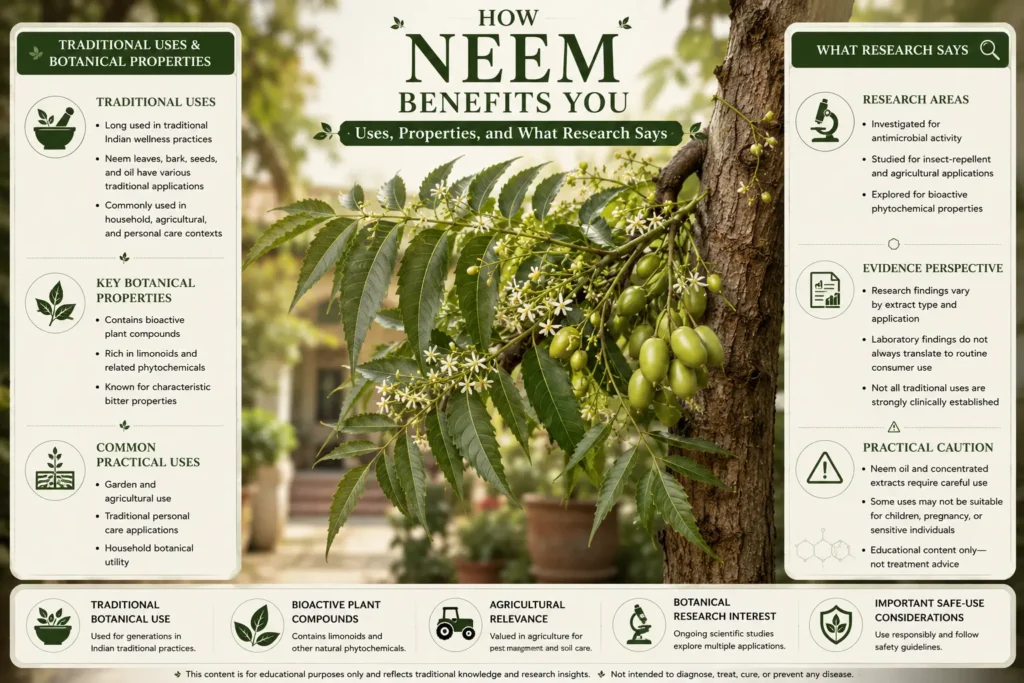
Indian gardeners grow neem for shade, pest control, and medicinal leaves. It’s one of the easiest trees you can plant if you have space and patience. Difficulty level: Easy for anyone with a patch of ground; not suitable for permanent container growing due to its deep taproot and eventual size.
The honest mistake: planting it too close to the house or other trees. Neem grows 40–50 feet tall with a spread nearly as wide, and its roots are aggressive.
Quick Facts
| Attribute | Detail |
|---|---|
| Common names | Neem, Nimba, Vepa, Vembu, Arista, Kadunimb |
| Scientific name | Azadirachta indica |
| Plant type | Deciduous to semi-evergreen tree |
| Mature size | 40–50 feet tall, 30–40 feet spread |
| Sunlight | Full sun (6+ hours daily) |
| Water needs | Low once established; regular in first year |
| Best season to plant | Early monsoon (June–July) |
| Suitable states | All states except high-altitude cold regions (above 1,500 m) |
Choosing the Right Spot
Neem needs full sun — at least 6 hours of direct sunlight daily. It tolerates partial shade when young, but won’t grow vigorously or produce the bitter compounds that make its leaves medicinally useful.
Plant it at least 15–20 feet from buildings, compound walls, or other large trees. The canopy spreads wide, and the root system competes aggressively for water and nutrients. Don’t plant near septic tanks or underground pipelines.
Container vs. ground: Ground only. Neem develops a deep taproot in the first year and grows rapidly. Container-grown neem becomes root-bound quickly, stunts badly, and rarely survives transplanting after 2–3 years.
Soil and Potting Mix
Neem is unfussy about soil type. It grows in red laterite, black cotton soil, sandy loam, and even degraded or saline soils. The only non-negotiable: good drainage. Waterlogged roots kill young saplings within weeks.
The ideal pH range is 6.0–7.5, but neem tolerates mildly alkaline soil (up to 8.0) better than most trees.
If your garden soil is heavy clay, dig a 2×2-foot pit, mix the excavated soil with river sand (1:1 ratio), and backfill. Don’t add compost or manure at planting time — neem establishes faster in lean soil and grows stronger roots.
Common mistake: Overfeeding young neem with rich compost or chemical fertilisers in the first year. This produces soft, leggy growth that’s vulnerable to wind damage and pest attacks. Let the tree toughen up first.
Planting — Season and Method
Best season: Early monsoon (June–July), right after the first heavy rains. The soil is moist, temperatures are moderate, and the sapling has 3–4 months of gentle weather to establish before winter.
Seed vs. sapling: Sapling is more practical. Neem seeds germinate easily but lose viability within 2–3 weeks of falling from the tree. Fresh seeds are hard to source unless you have a mature tree nearby. Nursery saplings (6–12 months old, 2–3 feet tall) establish quickly and are widely available.
Planting depth and spacing: Dig a hole twice the width and depth of the nursery bag. Place the sapling so the soil level matches what it was in the bag — don’t bury the stem deeper. Backfill gently, firm the soil around the base, and water thoroughly to settle it.
If planting multiple trees, space them 25–30 feet apart minimum.
First watering: Soak the root zone thoroughly immediately after planting. Let water pool around the base and soak in slowly. This settles air pockets and kickstarts root growth.
Watering
First 4–6 weeks: Water every 2–3 days if rain doesn’t come. Give 10–15 litres per session, enough to wet the soil 12–18 inches deep. Don’t sprinkle lightly every day — deep, infrequent watering forces roots downward.
Mature plant needs: After the first monsoon, neem survives on rainfall alone in most of India. In summer (March–May), water once a week if the tree is under 3 years old. After that, supplemental watering is unnecessary unless you’re in an arid zone with less than 400 mm annual rainfall.
Overwatering sign: Yellowing of older leaves that drop prematurely, combined with wilting despite wet soil. This indicates root rot. Pull back on watering immediately and improve drainage around the base.
Monsoon adjustment: Stop all watering during the monsoon. If your site floods or holds water for more than 6–8 hours after heavy rain, create a raised berm around the sapling or dig drainage channels.
Fertiliser
Neem doesn’t need much feeding, but a yearly dose speeds growth in the first 5 years.
Year 1: No fertiliser. Let the tree focus on roots.
Year 2 onwards: Apply 5–10 kg of well-decomposed cow dung or vermicompost once a year in early monsoon (June). Spread it in a ring 2–3 feet away from the trunk, not touching the stem.
Organic alternative: Neem cake. It sounds circular, but neem cake (the residue from neem seed oil extraction) is an excellent slow-release fertiliser. Use 2–3 kg per tree, applied the same way.
Skip chemical fertilisers (DAP, NPK) unless the tree shows clear nutrient deficiency — pale leaves, stunted growth despite adequate water. Even then, a single dose of 100 grams of NPK 10:26:26 in the monsoon is enough.
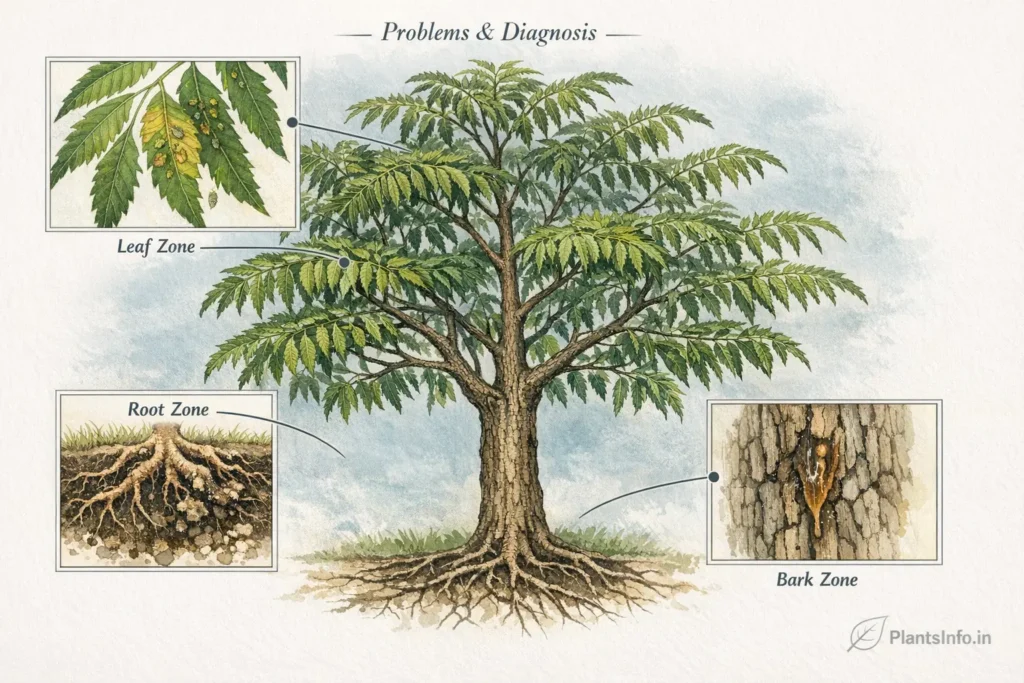
Common Problems and Fixes
1. Scale insects on young leaves and stems
White or brown crusty bumps that secrete sticky honeydew. Wipe them off with a cloth soaked in soapy water (1 teaspoon dish soap in 1 litre of water). Spray neem oil (ironic but effective) at 3 ml per litre of water weekly for 3 weeks.
2. Leaf webber caterpillars
Green caterpillars that bind leaves together with silk and feed inside. Handpick and destroy webbed leaves. For heavy infestations, spray Bacillus thuringiensis (Bt) in the evening.
3. Sudden wilting in summer despite watering
Often mistaken for drought stress, but actually root damage from white grubs or termites feeding underground. Dig gently around the base — if you find fat white larvae, drench the soil with chlorpyrifos solution (2 ml per litre, 10 litres per tree). For termites, apply termite-control powder around the trunk base.
Commonly misdiagnosed: Leaf drop in late winter (January–February). People panic and overwater, thinking the tree is dying. Neem is semi-deciduous — it naturally sheds 30–50% of its leaves before new growth flushes in February–March. Don’t water more; just wait.
When Will You See Results?
Year 1: Slow visible growth. The tree invests in taproot development and may add only 1–2 feet of height. Don’t judge progress by what you see above ground.
Year 2–3: Rapid vertical growth — 3–5 feet per year. The canopy fills out, and the tree starts looking like an actual tree instead of a stick.
First flowers: Typically appear in Year 4–5 (February–March), depending on growing conditions. Fruiting follows in May–June in the same year.
Patience note: Neem doesn’t give shade or abundant leaves worth harvesting until Year 5–6. If you want medicinal leaves next year, buy a semi-mature tree (8–10 feet tall) from a nursery instead of a sapling.
Pruning and Training
When to prune: Late winter (January–February), after the tree has shed leaves naturally but before the spring flush begins.
How hard to cut: Remove dead or crossing branches, and thin out the canopy if it becomes too dense. Neem responds well to hard pruning — you can cut back up to one-third of the canopy if needed to control size or shape. New growth flushes vigorously within 4–6 weeks.
What to avoid: Don’t prune during active growth (March–November). Open cuts attract borers and fungal infections in the rainy season.
For a single-trunk form, remove all side shoots below 6–8 feet in the first 3 years. For a multi-trunk bushy form (useful for hedges or screening), let low branches develop naturally.
Propagation
Methods available: Seed, cutting, root suckers.
Most practical for home gardeners: Seed, but only if you have access to fresh seed from a tree in your neighbourhood. Collect ripe yellow fruits in May–June, extract the seed, and plant immediately in moist soil. Germination happens in 1–2 weeks. Viability drops sharply after 3 weeks.
Cuttings rarely succeed without mist propagation setups. Root suckers (shoots emerging from the base of mature trees) can be separated and transplanted, but the success rate is under 50%.
Success rate and timing: Fresh seed germination: 70–80%. Plant seeds in the early monsoon for best results.
Key Takeaways
- Neem needs space — plant at least 15–20 feet from structures and expect a 40-foot spread at maturity.
- Water regularly only in the first year; after that, rainfall is enough in most regions.
- Avoid fertilising in Year 1 — let the tree build strong roots in lean soil first.
- Leaf drop in late winter is normal, not a sign of distress or drought.
- First useful harvest of leaves comes in Year 5–6; don’t expect medicinal-quality foliage earlier.
Conclusion
Neem rewards patience more than effort. Give it the right start — monsoon planting, deep watering in Year 1, and space to spread — and it’ll outlive you with almost no care.