How to Grow Kalmegh: Complete Care Guide for Indian Gardens

How to Grow Kalmegh: Complete Care Guide for Indian Gardens
Quick Answer: Kalmegh is surprisingly easy to grow from seed during the monsoon season and thrives with minimal attention in most Indian states. It is an annual or short-lived perennial that reaches harvest-ready height within three to four months. The most common mistake is overwatering — this plant is built for India’s variable rainfall and handles dry spells far better than waterlogged soil.
See also: Kalmegh plant profile, common problems, its flowering season, its benefits, and its varieties.
Snap a fresh kalmegh leaf and hold it to your nose — the sharp, intensely bitter smell is unmistakable, and it tells you immediately why this plant has been in Indian medicine for centuries. It grows like a weed in the right season, asks for almost nothing, and gives back a harvest that most Indian households find genuinely useful. Difficulty level: Easy.
Recommended Products
Disclosure: As an Amazon Associate, PlantsInfo may earn from qualifying purchases.
🌱 Growing Essentials
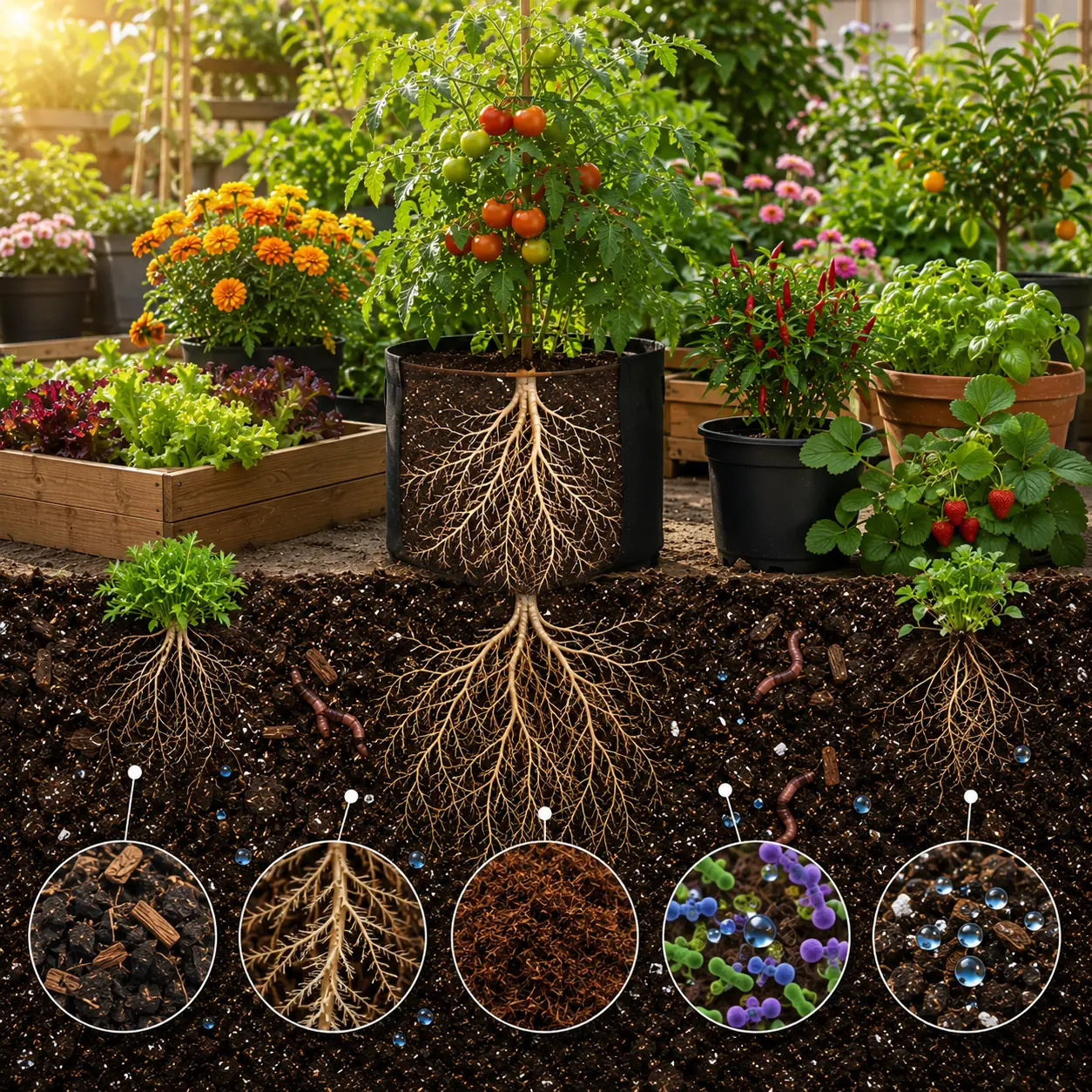
The following products can help with container gardening, potting, root development, soil management, and healthy plant growth.
Organic Potting Soil Mix
Provides nutrients, structure, and healthy growing conditions for container plants.
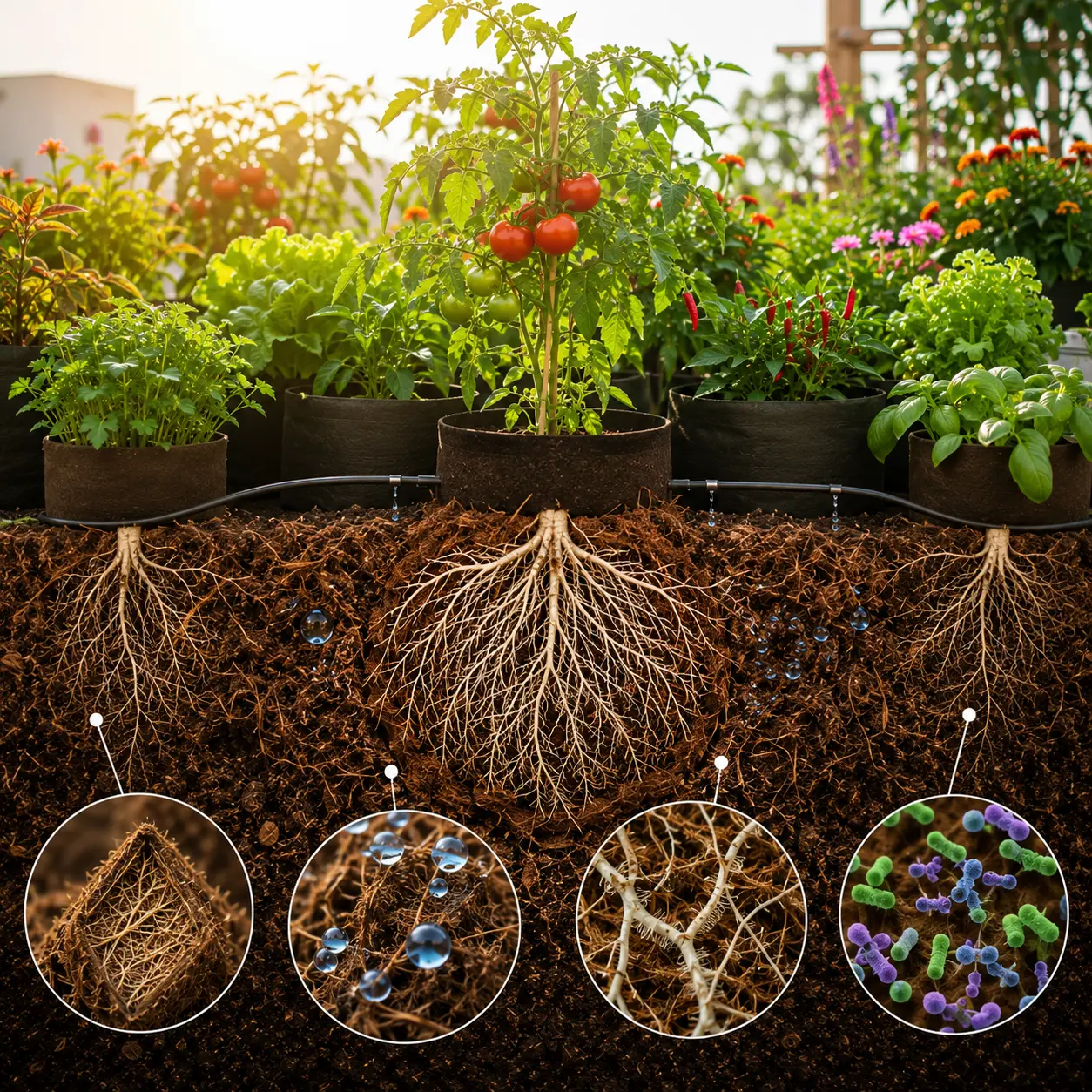
Coco Peat Growing Medium
Enhances moisture retention while maintaining excellent root-zone aeration.

Grow Bags for Plants
Improve drainage, root aeration, and vegetable production in limited spaces.

Plastic Pots for Plants
Ideal containers for seedlings, ornamentals, herbs, and balcony gardens.
Quick Facts
| Attribute | Detail |
|---|---|
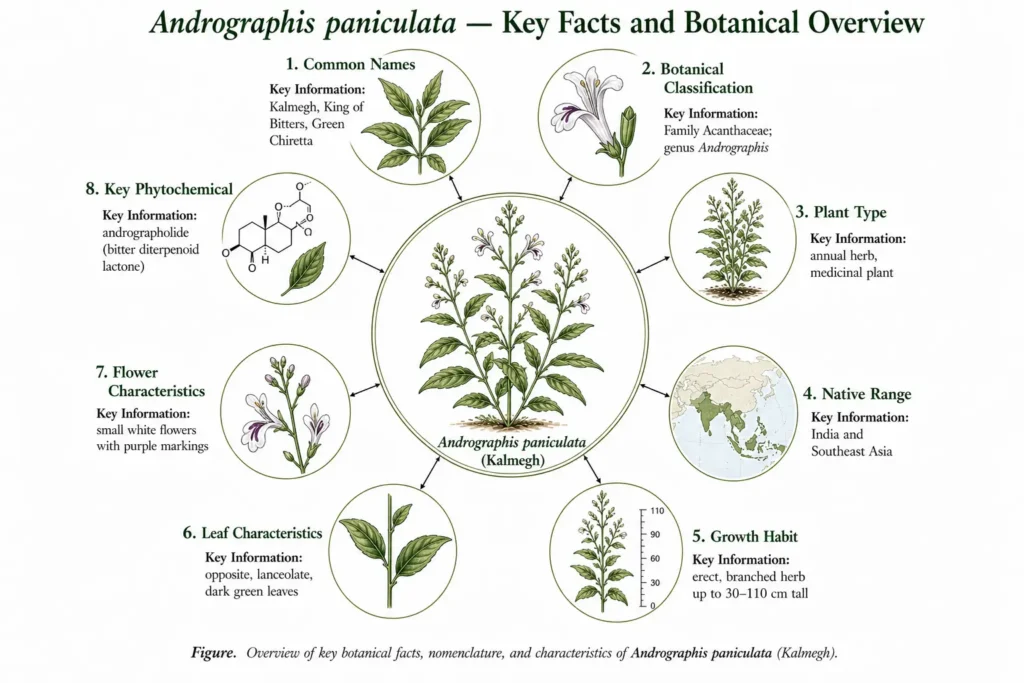
| Common names | Kalmegh, King of Bitters, Creat, Green Chiretta |
| Scientific name | Andrographis paniculata (Burm. f.) Nees |
| Regional names | Kalmegh (Bengali, Hindi), Nilavembu (Tamil), Nela Bevu (Kannada), Kiriyath (Malayalam), Bhunimba (Sanskrit), Chirayta (Marathi), Kariyatu (Gujarati) |
| Plant type | Annual herb (occasionally short-lived perennial in tropical conditions) |
| Mature size | 60–90 cm tall, 30–50 cm spread |
| Sunlight | Full sun to partial shade |
| Water needs | Low to moderate; drought-tolerant once established |
| Best season to plant | Early monsoon (June–July) |
| Suitable states | All Indian states; particularly common in West Bengal, Tamil Nadu, Kerala, Andhra Pradesh, and Odisha |
| Varieties | Most cultivated material is unimproved landrace; CIMAP has released improved selections. See Varieties Guide for full comparison. |
Choosing the Right Spot
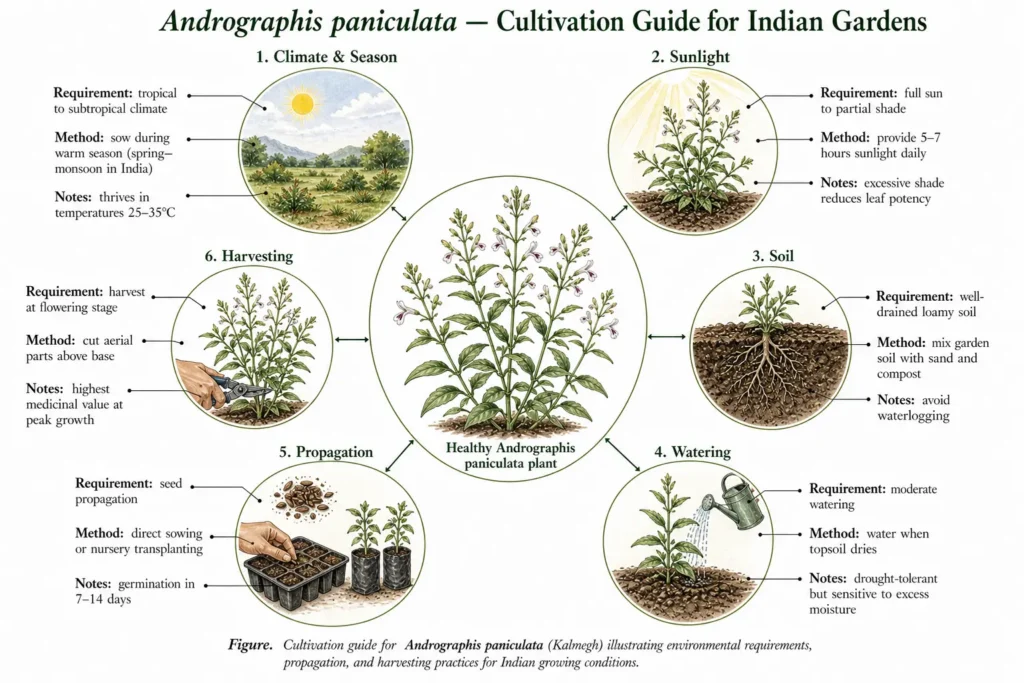
Kalmegh is not fussy about location. It grows naturally along roadsides, forest margins, and disturbed ground across India — conditions that tell you it tolerates partial shade, compacted soil, and intermittent drought without complaint.
In home gardens, a spot with at least four to five hours of direct sunlight produces stockier, more branched plants with higher leaf yield. Partial shade produces taller, slightly leggier growth but is perfectly acceptable for home medicinal use.
Container growing is entirely practical — a 10–12 litre pot or grow bag handles one plant comfortably to maturity. This is a useful option for apartment balconies, and kalmegh on a sunny balcony in Bengal or Kerala will grow enthusiastically through the monsoon months with no supplemental watering at all.
Soil and Potting Mix
Kalmegh grows naturally in a wide range of soils, from sandy loam to moderately heavy clay. For home gardens, well-drained loamy soil with reasonable organic matter content is ideal. A pH of 6.0–7.5 suits it well.
In containers, use a mix of garden soil, coarse sand, and compost in roughly equal thirds. Avoid potting mixes that retain moisture heavily — kalmegh is susceptible to root problems in waterlogged soil, just as it is in the field.
The one soil mistake Indian gardeners commonly make is planting kalmegh in the same dense, dark nursery soil used for moisture-loving plants like tomatoes or brinjal. That soil stays wet for too long between waterings and slows establishment noticeably. Adding 20–30% coarse sand or perlite corrects this immediately.
Planting — Season and Method
The ideal time to sow kalmegh is at the onset of the monsoon — June in most Indian states, slightly earlier in Kerala and the Northeast. Monsoon sowing uses natural rainfall for establishment and produces plants ready for the first harvest by September to October.
A second sowing window exists in late February to March in states with mild winters, allowing a pre-monsoon crop under irrigation. This is common in Tamil Nadu and Andhra Pradesh for commercial production.
Direct sowing is the most practical method for home gardeners. Scatter seeds on prepared soil and cover lightly with a thin layer of fine compost or soil — no more than 3–4 mm. Seeds are small and need light for germination. Keep the surface consistently moist until germination, which typically occurs within seven to twelve days under warm, humid conditions.
Transplanting seedlings raised in trays is also effective. Space plants 30 cm apart in rows 45 cm apart for ground planting. For containers, one plant per 10–12 litre pot.
Watering
For the first two weeks after germination, keep the soil surface consistently moist but not saturated — seedlings are small and dry out faster than established plants, but they also rot quickly in stagnant water.
Once established — typically after the first month — kalmegh is remarkably drought-tolerant. In field conditions across India, it often receives only rainfall without supplemental irrigation and performs well. For container-grown plants, water when the top 3–4 cm of soil dries out.
The overwatering sign that trips up most growers is not yellowing but a sudden wilting that doesn’t recover after watering — this usually means the roots are compromised from sitting in wet soil. Healthy kalmegh wilts visibly in afternoon heat and recovers by evening; a plant that remains wilted after the temperature drops needs the roots checked.
During the monsoon, outdoor and balcony plants typically need no supplemental watering at all. Scale back container watering sharply from June through September.
Fertiliser
Kalmegh is a light feeder and performs well in moderately fertile soil without heavy fertilisation. Excessive nitrogen produces lush, soft growth that is lower in the bitter compounds — andrographolides — that make the plant medicinally valuable.
At planting, incorporate well-rotted compost or vermicompost into the bed or pot at about a handful per plant. One application of diluted mustard cake water (soak 50 g mustard cake in 1 litre water for 24 hours, dilute 1:5 before use) applied four to six weeks after establishment supports steady growth without pushing excess vegetative softness.
For container plants, a light top-dressing of neem cake at six weeks provides slow-release nutrition with the added benefit of pest suppression in the root zone.
Avoid DAP or high-nitrogen NPK fertilisers — they push leaf growth at the expense of the bitter compound concentration that gives the plant its value.
Common Problems and Fixes
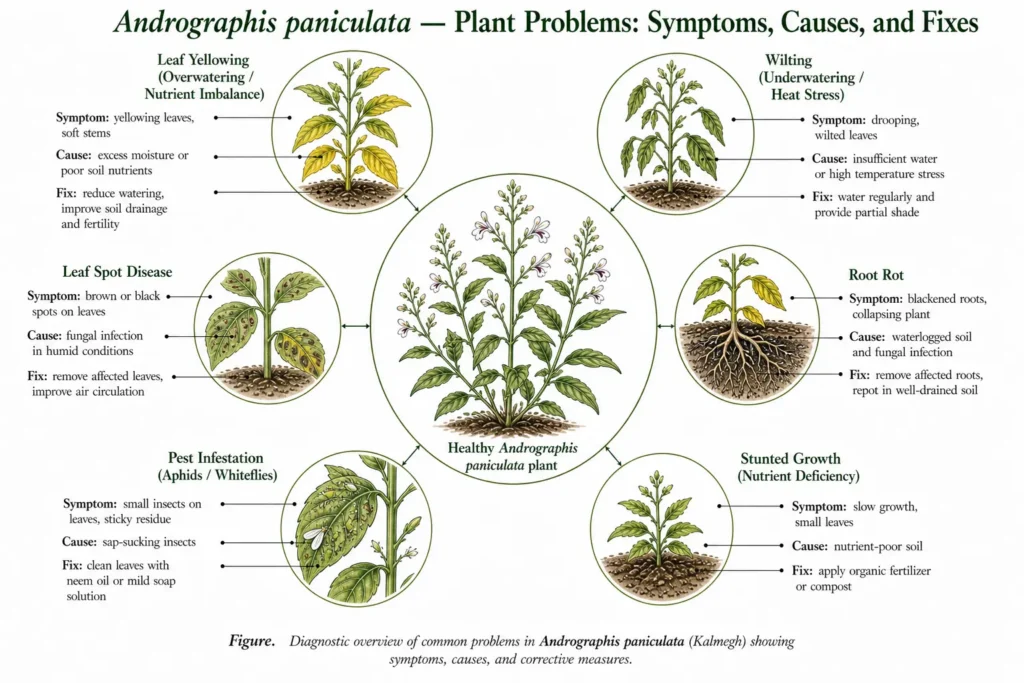
Kalmegh is one of the more pest and disease-resistant herbs in the Indian home garden. The three problems you are most likely to encounter are:
Damping off — seedlings collapsing at the soil level in the first two weeks, caused by fungal pathogens in overwatered, poorly drained soil.
Leaf spot — brown or dark spots on leaves, typically fungal, appearing during humid monsoon conditions with poor airflow.
Aphid clusters — small green or black insects on new growth and flower buds, more common in the post-monsoon period.
For full diagnosis and treatment, see the Kalmegh Problems Guide.
When Will You See Results?
Kalmegh grows quickly under monsoon conditions. By six to eight weeks from sowing, plants are typically 30–40 cm tall and branching well. First harvest — of outer leaves and stem tips — is possible from eight to ten weeks onward.
The plant reaches full height and begins flowering from September to November in most Indian states, which is when andrographolide concentration in the leaves peaks. This is the optimal harvest window.
Year one expectation is realistic and rewarding: a single well-grown plant produces several hundred grams of fresh leaf material across the season. Kalmegh is an annual in most Indian conditions, so the plant completes its life cycle and declines after flowering and seed set. Collect seeds before the plant dies back and store them for next season’s sowing.
Propagation
Kalmegh is propagated almost exclusively from seed; stem cuttings are possible but rarely practised for home growing. Seeds remain viable for one to two seasons if stored in a cool, dry place away from humidity.
Collect seeds when the capsules turn brown and begin to split — typically from October onward. The capsules open quickly and scatter seeds, so check daily once they begin browning. A paper bag placed loosely over a seed head catches seeds as they disperse.
For home gardeners, saving seeds from the healthiest, most productive plants each year is the simplest and most cost-effective approach. No special storage treatment is required beyond keeping seeds dry.
Harvesting
The first harvest of leaves and tender stem tips can begin from eight to ten weeks after sowing. Pinch or cut stem tips to encourage branching and delay flowering — once the plant flowers heavily, leaf quality and bitterness decline slightly.
The primary harvest window is immediately before and during early flowering, when andrographolide concentration is highest. Cut the entire plant back to 15–20 cm above ground level; it will regrow for a second harvest in favourable conditions.
Fresh leaves can be used directly. For drying, spread harvested material in a single layer in shade — not in direct sun, which degrades the active compounds. Dried material stored in an airtight container retains potency for six to twelve months.
Seasonal Protection
Kalmegh is a warm-season plant and does not tolerate frost. In North India, plants grown for seed should be protected or harvested before night temperatures drop below 10°C — typically November in Delhi and surrounding areas.
In South India and coastal regions, kalmegh may persist as a short-lived perennial if winter temperatures remain above 15°C, but most gardeners treat it as an annual and resow each monsoon season.
No significant summer protection is needed for established plants — they handle Indian heat well, though container plants on exposed terraces may need afternoon shade in May before the monsoon breaks.
Conclusion
Kalmegh rewards minimal effort with a generous harvest and genuine medicinal value. Sow at the first monsoon rain, water carefully through establishment, and let India’s heat and humidity do the rest.