Kalmegh Plant: Key Facts, Names, and What You Should Know
Kalmegh Plant: Key Facts, Names, and What You Should Know
Quick Answer: Kalmegh (Andrographis paniculata) is a small annual herb native to South and Southeast Asia, best known in India for its intensely bitter leaves and deep roots in Ayurvedic and Siddha medicine. It grows wild across most of India and is easily cultivated at home during the monsoon season.
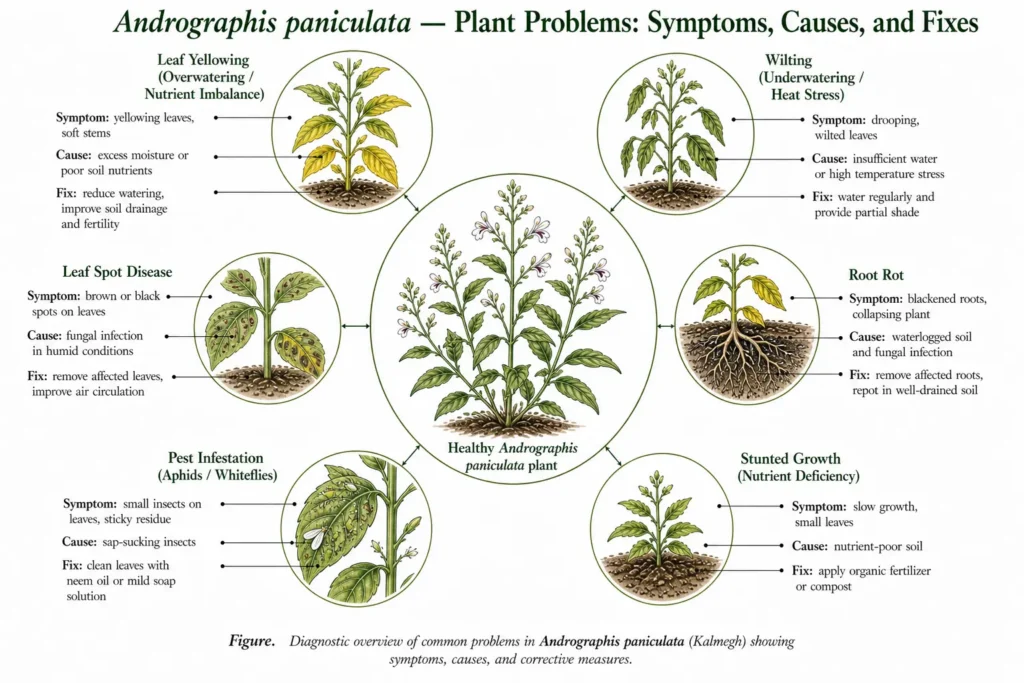
See also: Kalmegh plant profile, how to grow it, common problems, its flowering season, and its benefits.
There is a plant growing along the roadside in rural Bengal, Tamil Nadu, and Odisha right now that most people walk past without a second glance — a knee-high herb with modest white flowers and leaves so bitter that a single small piece makes most people reach for water. That plant is kalmegh, and it has been one of India’s most consistently used medicinal herbs for well over a thousand years.
Recommended Products
Disclosure: As an Amazon Associate, PlantsInfo may earn from qualifying purchases.
🌱 Growing Essentials
The following products can help with container gardening, potting, root development, soil management, and healthy plant growth.
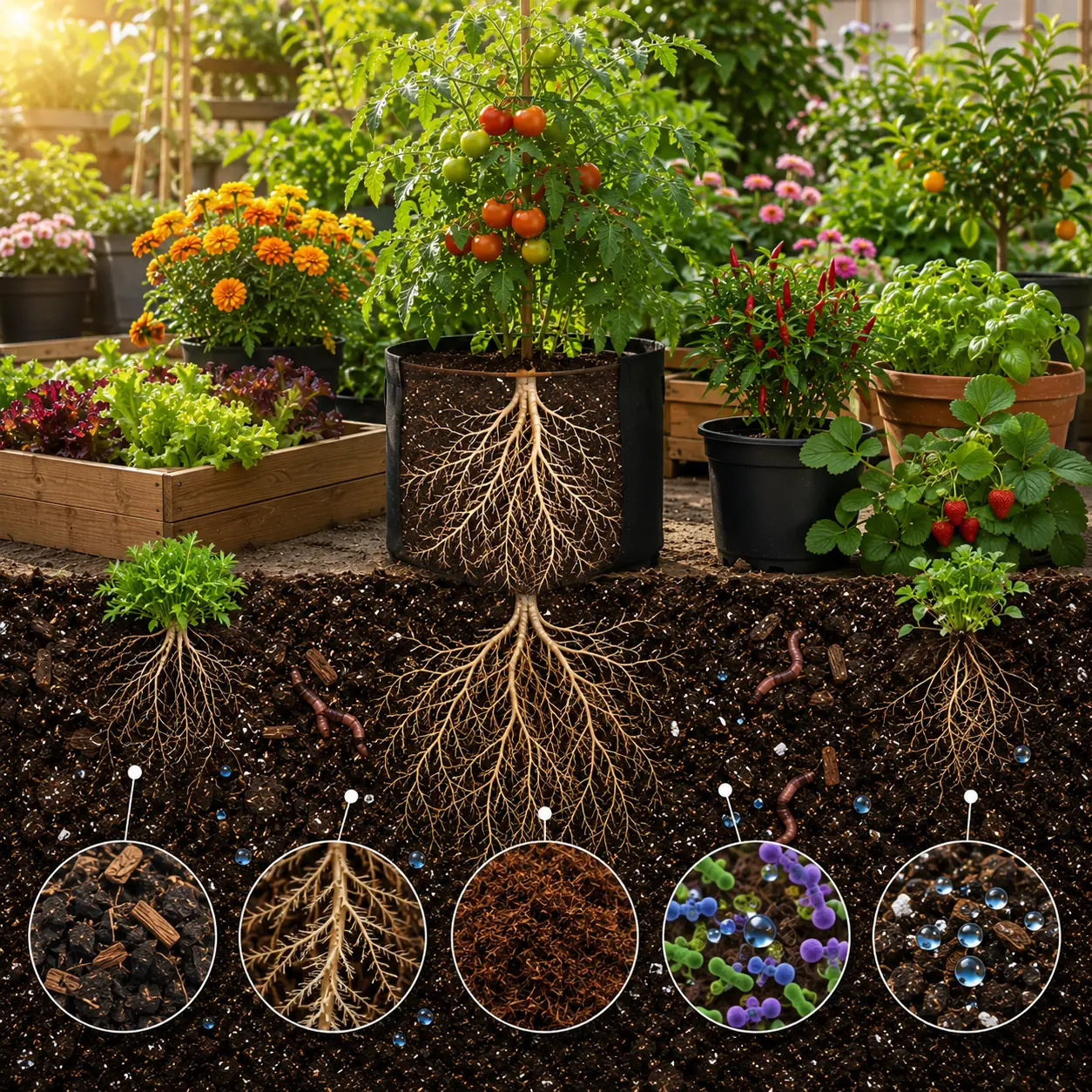
Organic Potting Soil Mix
Provides nutrients, structure, and healthy growing conditions for container plants.
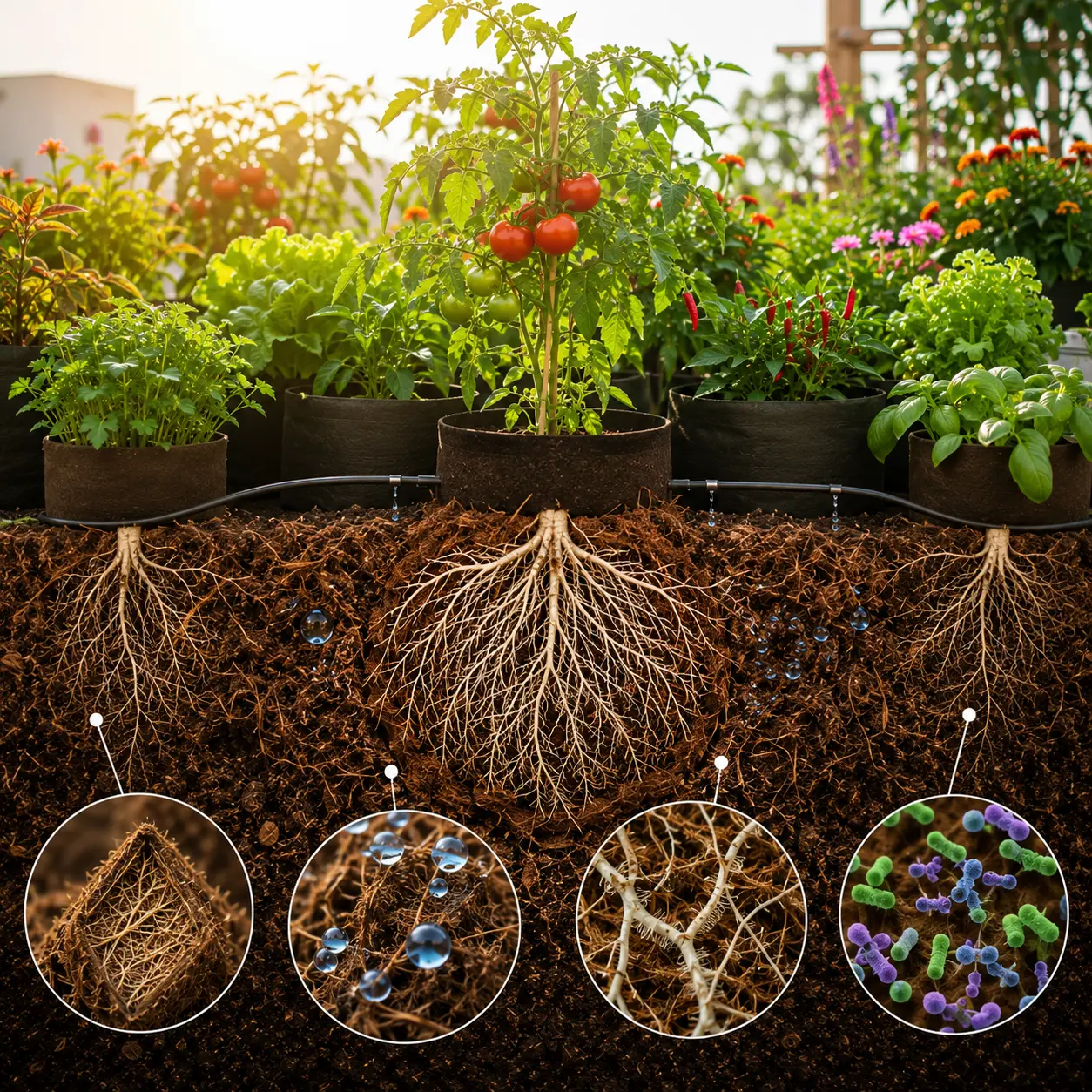
Coco Peat Growing Medium
Enhances moisture retention while maintaining excellent root-zone aeration.

Grow Bags for Plants
Improve drainage, root aeration, and vegetable production in limited spaces.

Plastic Pots for Plants
Ideal containers for seedlings, ornamentals, herbs, and balcony gardens.
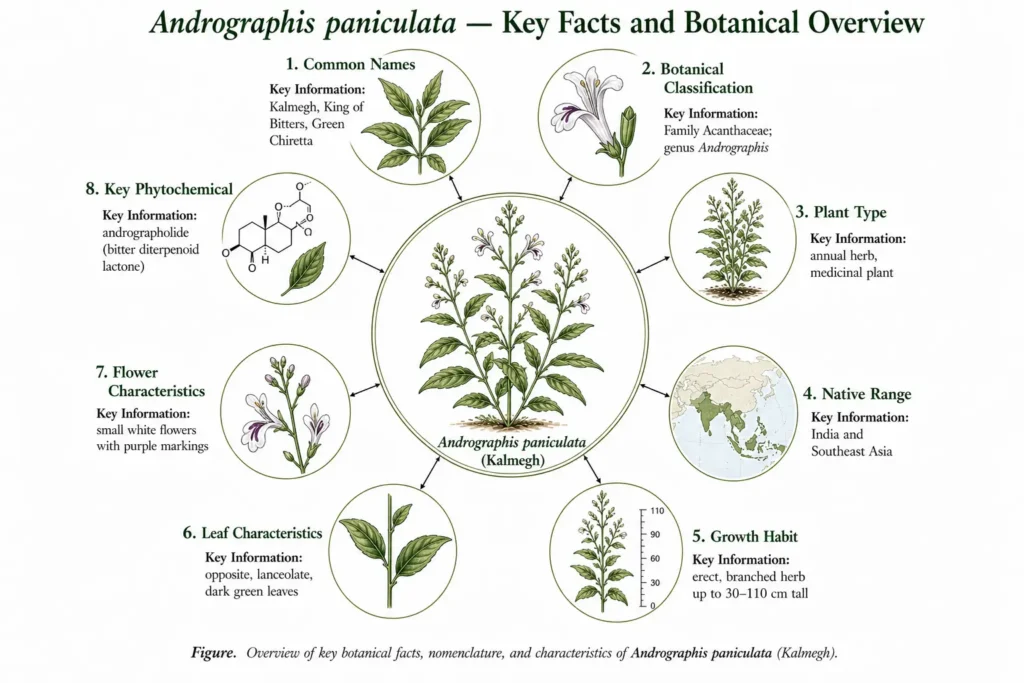
Names in Different Languages
| Language | Name |
|---|---|
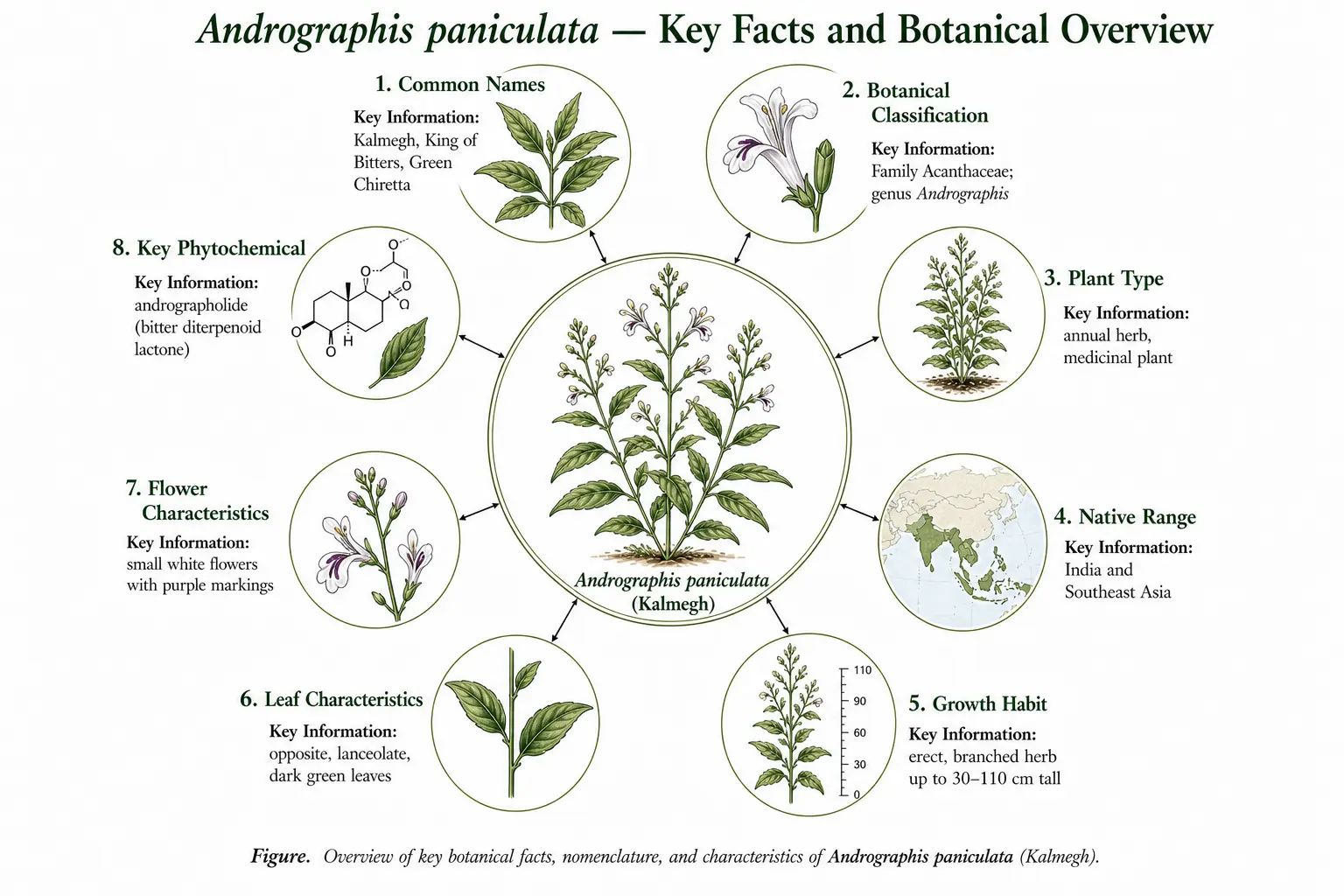
| English | King of Bitters, Green Chiretta, Creat |
| Hindi | Kalmegh, Mahatita |
| Bengali | Kalmegh |
| Tamil | Nilavembu, Siriyaanangai |
| Telugu | Nelavemu, Nilaavembu |
| Marathi | Oli-kiryata, Bhunimba |
| Kannada | Nela Bevu, Kiriyath |
| Malayalam | Kiriyath, Nilaveppu |
| Gujarati | Kariyatu, Lilo Chirayto |
| Punjabi | Kalmegh, Kirayat |
| Scientific name | Andrographis paniculata (Burm. f.) Nees |
| Family | Acanthaceae |
The name most searched in India is Kalmegh — used across Hindi and Bengali-speaking regions and widely understood across the country. The Tamil name Nilavembu is equally well-known in South India and carries particular recognition due to the Nilavembu Kudineer fever formulation.
What Does It Look Like?
Kalmegh is a slender, upright annual herb growing 60–90 cm tall with a spread of 30–50 cm. The stem is distinctly four-angled — square in cross-section — which is one of the simplest ways to identify it in the field.
Leaves are lance-shaped, 3–8 cm long, dark green on the upper surface and paler beneath, with a slightly glossy finish. They are arranged in opposite pairs along the stem and have a short stalk. Crushed or broken leaves release the characteristic intensely bitter smell immediately.
Flowers are small — roughly 8–10 mm — white with purple streaking on the lower petals, borne in loose, branching clusters called panicles. They appear from September through November across most of India, giving the plant its genus name: Andrographis relates to the stamens’ appearance, while paniculata refers to these branched flower clusters.
The seed capsule is narrow, oblong, about 1.5–2 cm long, and splits open sharply when mature to scatter small, pale brown seeds. The splitting capsule is the one unmistakable characteristic that makes field identification certain — no other common Indian roadside herb has quite the same narrow, snapping capsule.
Where Does It Grow in India?
Kalmegh is native to South and Southeast Asia and naturalised broadly across India. It is not an introduced species — it has been part of India’s flora and traditional medicine systems for centuries before systematic botanical recording began.
It grows most abundantly in West Bengal, Odisha, Tamil Nadu, Kerala, Andhra Pradesh, and the Northeast. It is common in Bihar, Jharkhand, and Maharashtra, and less frequent but present in drier northern and northwestern states.
It grows from sea level to approximately 1,000 metres altitude. It favours warm, humid conditions and is characteristically a plant of the plains and lower hill slopes rather than high-altitude zones. It thrives in secondary vegetation — roadsides, field margins, degraded forest edges, and the margins of cultivated land — rather than deep, undisturbed forest.
Urban populations have declined in many cities as concrete coverage expands, but kalmegh remains a common plant in peri-urban agricultural margins and is widely cultivated by home gardeners and Ayurvedic farmers across its range.
What Is It Used For?
Kalmegh is used primarily as a medicinal herb — for fever management, liver support, and respiratory infections — with a well-documented presence in Ayurvedic, Siddha, and folk medicine traditions. For full medicinal details, see the Kalmegh Benefits Guide.
It is a component of numerous classical and proprietary Ayurvedic formulations, including Kalmeghāsava, and is the primary herb in the Siddha fever preparation Nilavembu Kudineer.
Standardised kalmegh extracts are commercially produced in India for pharmaceutical use — tablets and capsules containing quantified andrographolide are sold widely in Indian pharmacies under various brand names as immune support and liver tonic preparations.
The dried leaf and whole plant powder are traded as a raw commodity through Ayurvedic raw material markets, with significant commercial cultivation in West Bengal, Tamil Nadu, and Andhra Pradesh.
In agricultural contexts, kalmegh leaf extract has traditional and some research-backed use as a biopesticide in organic farming systems.
In Mythology and Ancient Texts
Kalmegh appears in classical Ayurvedic literature under the Sanskrit name Bhunimba — literally “earth neem,” a reference to its bitter taste paralleling neem’s therapeutic character. It is described in both the Charaka Samhita and the Sushruta Samhita, two of the foundational texts of Ayurvedic medicine, where it is classified among herbs for liver disorders, fevers, and conditions involving excess pitta.
The name Bhunimba itself carries interpretive significance: by comparing it to neem — one of Ayurveda’s most important bitter herbs — the classical authors were explicitly placing kalmegh in a category of purifying, fever-reducing, and liver-supporting plants. This is a naming convention rather than a mythological reference, but it reflects the plant’s integration into classical medical thinking as a plant of serious therapeutic standing rather than minor or regional use.
Regional folk traditions in tribal communities of Odisha, Jharkhand, and the Northeast attribute protective and purifying properties to the plant, with use during community fever episodes documented in ethnobotanical studies of these regions. These traditions parallel the classical Ayurvedic application but evolved independently within non-Sanskritic healing systems, suggesting a broad indigenous recognition of the plant’s properties across different cultural frameworks.
Is It Easy to Grow?
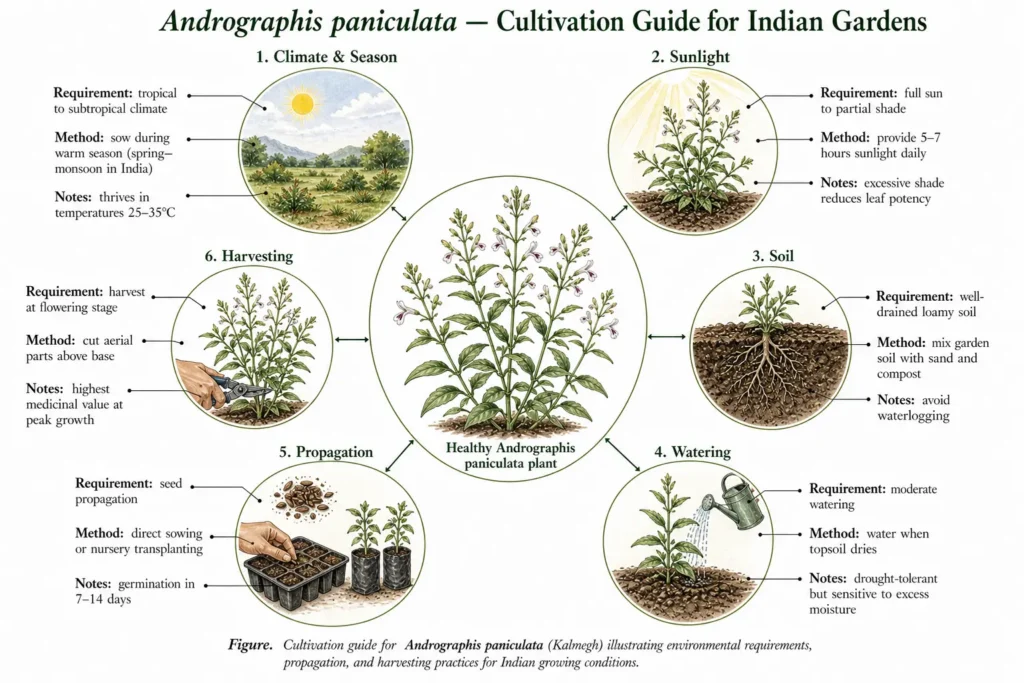
Yes — kalmegh is among the easiest medicinal herbs to grow in Indian conditions. It germinates reliably from seed sown at monsoon onset, tolerates partial shade, handles drought once established, and grows to harvest size within three to four months without demanding fertiliser, special soil, or close attention.
It is an annual, which means it completes its life cycle and dies within one growing season — gardeners who expect a perennial plant may be surprised. Resowing each monsoon season is necessary but simple.
Space requirements are modest. A 10-litre container on a balcony or a small corner of a kitchen garden is sufficient for a useful harvest.
⚠ Special Flags
Caution during pregnancy: Kalmegh is contraindicated during pregnancy. It has documented uterine-stimulant properties and should not be used medicinally in any form by pregnant women.
Drug interactions: It may interact with antihypertensive and antidiabetic medications. People on these medications should consult a healthcare professional before medicinal use.
Not to be confused with: Kalmegh is occasionally confused with Chirata (Swertia chirata), another intensely bitter Indian medicinal herb. Chirata is a different plant from a different family — it has four-petalled flowers and a different leaf structure. Both are used for fever and liver complaints in traditional medicine, which creates confusion in herb markets. The square stem of kalmegh is the fastest field distinction.
Frequently Asked Questions
Is the kalmegh sold in Indian pharmacies the same as what I can grow at home?
Pharmaceutical kalmegh products are standardised extracts with a specified andrographolide content — they are more concentrated and consistent than home-prepared decoctions from leaf material. Home-grown kalmegh is appropriate for traditional preparations; for clinical use or specific dosing, standardised preparations are more reliable.
Can kalmegh be grown year-round indoors?
Kalmegh is a warm-season annual and does not persist well indoors through winter. It can be grown on a sunny windowsill from a winter sowing, but it grows slowly without warmth and humidity. Monsoon-season outdoor or balcony growing is significantly more productive.
Is kalmegh safe for children?
Traditional practice records use of mild kalmegh decoctions for childhood fevers, but dosage for children differs from adults and should be determined by a qualified Ayurvedic practitioner rather than approximated from adult preparations.
Kalmegh is a plant that asks very little and carries centuries of documented use — an annual monsoon herb worth growing for anyone interested in India’s medicinal plant heritage.