Kalmegh Varieties: Which One Should You Grow in India?

Quick Answer: Most kalmegh grown in Indian homes and farms is unimproved landrace material — seeds passed down informally with no variety name. This works, but improved varieties released by Indian research institutions offer meaningfully higher andrographolide content, better yield, and disease resistance. For home medicinal use, the difference is worth understanding even if you ultimately grow whatever is available locally.
See also: Kalmegh plant profile, how to grow it, common problems, its flowering season, and its benefits.
Pick up kalmegh seeds at most Indian nurseries or herb markets, and they will be sold simply as “kalmegh” — no variety name, no andrographolide specification, no yield data. That is the reality for most home growers. But improved varieties exist, they are accessible, and for anyone growing kalmegh specifically for medicinal use rather than casual interest, knowing what they offer changes the conversation.
Recommended Products
Disclosure: As an Amazon Associate, PlantsInfo may earn from qualifying purchases.
🌱 Growing Essentials
The following products can help with container gardening, potting, root development, soil management, and healthy plant growth.
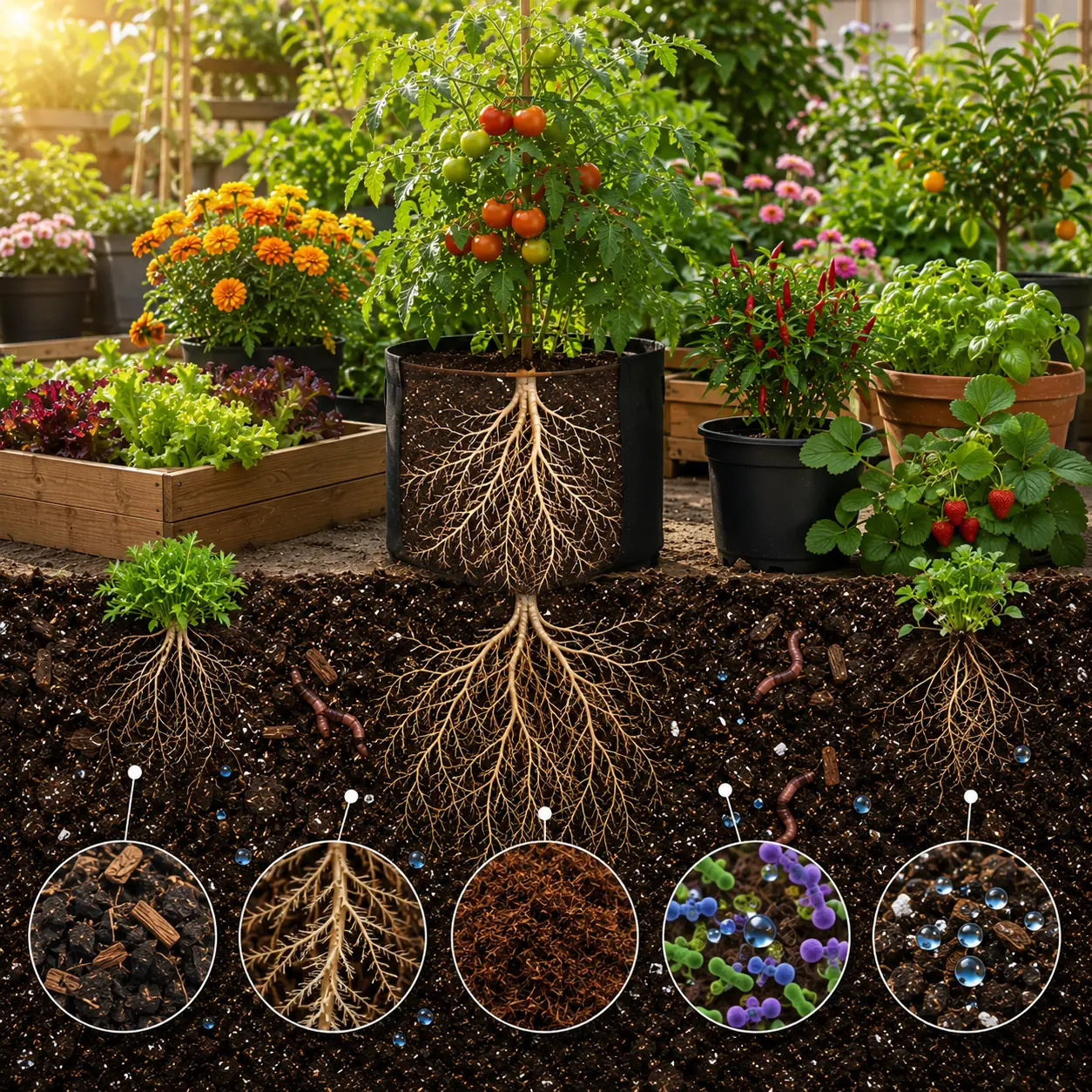
Organic Potting Soil Mix
Provides nutrients, structure, and healthy growing conditions for container plants.
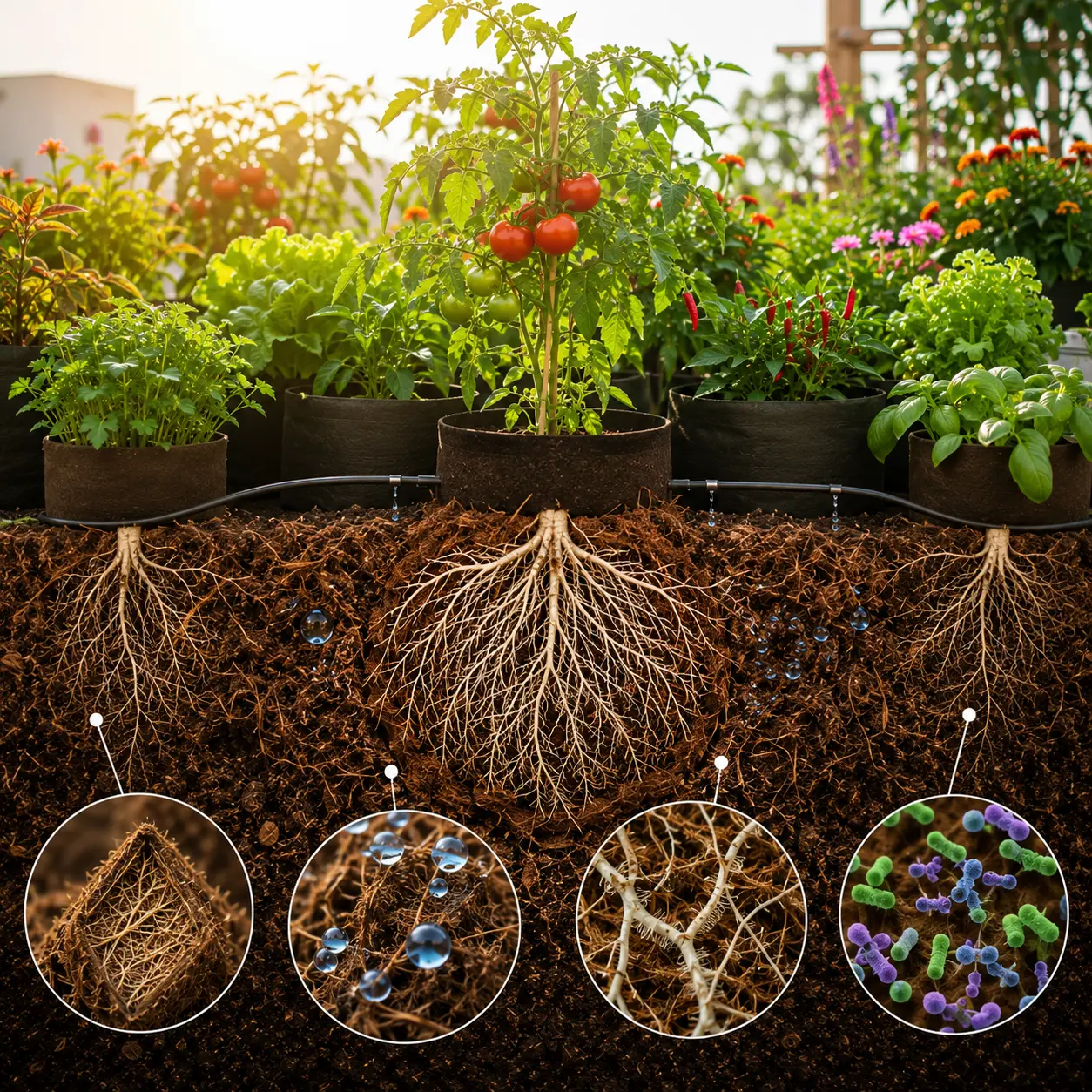
Coco Peat Growing Medium
Enhances moisture retention while maintaining excellent root-zone aeration.

Grow Bags for Plants
Improve drainage, root aeration, and vegetable production in limited spaces.

Plastic Pots for Plants
Ideal containers for seedlings, ornamentals, herbs, and balcony gardens.
Quick Variety Selector
| Variety | Type | Plant Size | Best For | Suited To |
|---|---|---|---|---|
| Landrace / unimproved local | Open-pollinated, unselected | Medium | General home growing, seed saving | All Indian regions |
| Anand-1 | Improved open-pollinated (Gujarat) | Medium | Higher andrographolide, home and farm use | Gujarat, Maharashtra, North India |
| CIM-Megha | Improved (CIMAP release) | Medium–large | High yield, medicinal production | All regions; especially North India plains |
| Haripriya | Improved (West Bengal selection) | Medium | Monsoon conditions, high humidity | West Bengal, Odisha, Northeast |
| Sona | Improved (Tamil Nadu selection) | Compact–medium | South India conditions, early maturity | Tamil Nadu, Kerala, Andhra Pradesh |
Varieties in Detail
Landrace / Unimproved Local Material
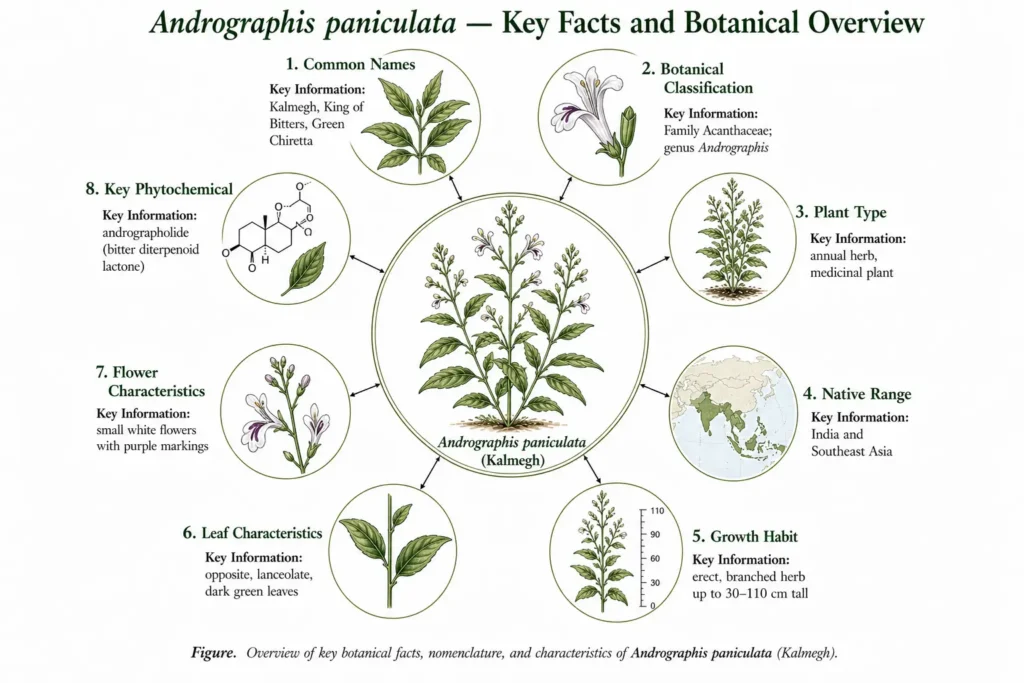
The kalmegh grown by most Indian home gardeners and small farmers is unimproved landrace material — seeds collected informally from year to year, selected only by survival and local adaptation rather than deliberate breeding. This material varies considerably in andrographolide content, plant height, branching habit, and disease resistance depending on where it originated.
Its strengths are accessibility — it is available everywhere, costs almost nothing, and is completely free to save and replant. Its weakness is inconsistency: two batches of “kalmegh seeds” from different market stalls in the same city may produce plants with noticeably different leaf yield and bitterness.
For home growing where the goal is a modest supply of dried leaf for household use, this inconsistency is acceptable. For anyone growing specifically for high andrographolide content, improved varieties deliver more reliably.
Anand-1
Developed at Anand Agricultural University in Gujarat, Anand-1 is one of the earliest formally released improved kalmegh varieties in India. It was selected for higher andrographolide content relative to common landrace material — research at the time of its development reported andrographolide content in the range of 2.5–3.5% of dry leaf weight, compared to 1–2% commonly found in unimproved material.
It performs well in the semi-arid conditions of Gujarat and Maharashtra and has proven adaptable to North Indian plains conditions. Its weakness is limited availability outside Gujarat — it is most readily sourced from agricultural universities and KVKs in western India.
CIM-Megha
CIM-Megha, released by the Central Institute of Medicinal and Aromatic Plants (CIMAP) in Lucknow, is the most widely cited improved kalmegh variety for North Indian conditions. It was developed specifically for higher biomass yield — more total leaf and stem material per plant — alongside acceptable andrographolide content.
It grows slightly taller and more vigorously than most landrace material under North Indian plains conditions and has demonstrated reasonably good performance across a range of soil types. CIM-Megha is available through CIMAP directly and through state KVK networks across North India.
For home growers in UP, Bihar, MP, and adjacent states who want improved performance over local landrace material, this is the most accessible improved variety.
Haripriya
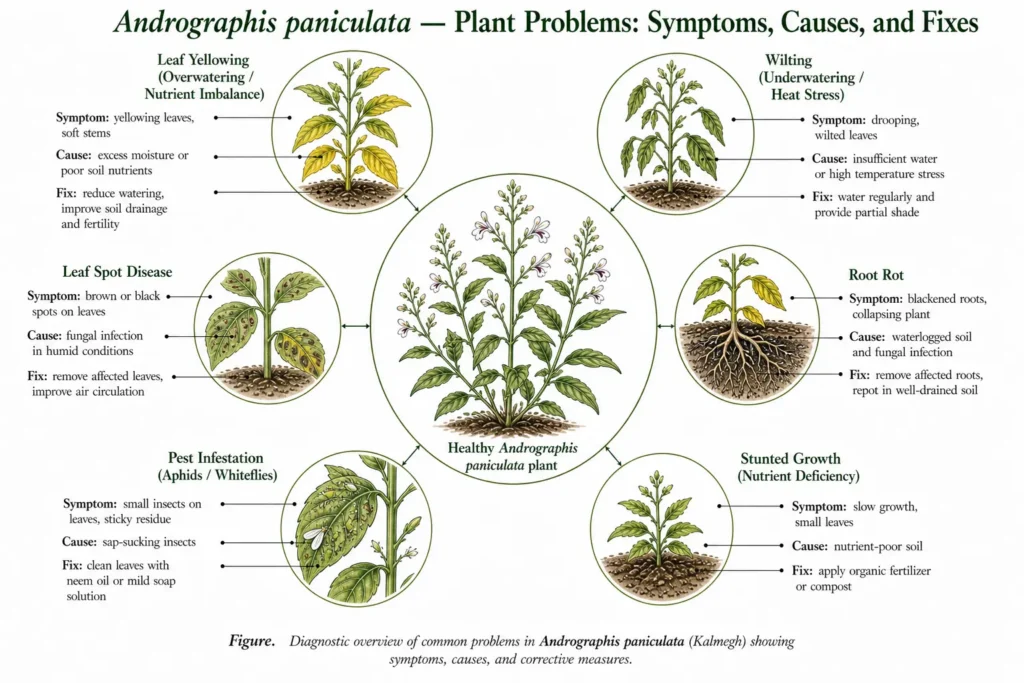
Haripriya is a selection developed for West Bengal and Odisha conditions — specifically for performance under the high-humidity, high-rainfall conditions of the eastern Indian monsoon, where common landrace material is more susceptible to fungal leaf disease.
It has shown improved field tolerance to Cercospora leaf spot, which is the primary foliar disease in humid eastern Indian conditions. For home growers in West Bengal, Odisha, and the Northeast — where monsoon conditions are most intense and disease pressure is highest — Haripriya is the logical improved choice if accessible. It is available through the state horticulture and agriculture department channels in West Bengal.
Sona
Sona is a selection developed for South Indian growing conditions, with earlier maturity than most other varieties — it reaches the flowering stage somewhat earlier than North Indian varieties, which is consistent with the earlier post-monsoon transition in South India.
It is compact and well-suited to home-scale container growing or small garden plots. It is available through Tamil Nadu Agricultural University (TNAU) channels and state KVK networks in Tamil Nadu and Kerala.
Head-to-Head Comparisons
Landrace vs. CIM-Megha (North India)
For a home gardener in North India growing kalmegh in a garden bed or large container, CIM-Megha offers a meaningful improvement over unnamed local landrace material in two practical respects: more total leaf yield per plant and more consistent andrographolide content.
The plant grows larger and branches more vigorously under North Indian conditions. The trade-off is sourcing effort — CIM-Megha requires a deliberate purchase from CIMAP or a KVK rather than picking up seeds at a local nursery. For someone making one trip to a KVK annually, this is a trivial inconvenience.
For casual growing where seed availability at the local level is the deciding factor, landrace material is entirely adequate for basic household use. CIM-Megha wins for anyone who wants to maximise medicinal output from a fixed number of plants.
Haripriya vs. Landrace (Eastern India)
In West Bengal, Odisha, and the Northeast, the high monsoon humidity creates consistent Cercospora leaf spot pressure on local landrace material. Haripriya’s improved disease tolerance translates directly into a cleaner, higher-yield harvest in humid conditions — less leaf loss to disease means more harvestable material.
For home growers in these regions who have experienced significant leaf spot damage on local material, Haripriya is a clear upgrade. The trade-off is the same as CIM-Megha: deliberate sourcing through state department channels rather than local markets.
How to Choose for Your Space
- Container or apartment balcony: Landrace or Sona (South India). Containers limit root zone and total plant size regardless of variety; the differences between improved and unimproved varieties are less pronounced in constrained growing conditions. Sona’s compact growth habit is the best fit for pots in South India. For North India balcony growing, any accessible material works at the container scale.
- Small garden plot (under 50 sq ft): CIM-Megha for North and Central India; Haripriya for East India; Sona for South India. The yield and disease tolerance advantages of improved varieties are most visible at the small plot scale, where every plant’s output matters.
- Larger kitchen garden or farm plot: Improved varieties are clearly worth the sourcing effort at this scale. CIM-Megha for North India plains; Haripriya for humid eastern conditions; Anand-1 for western India. Yield and andrographolide consistency differences become economically meaningful at a larger scale.
- Home medicinal use with focus on potency: Anand-1 or any improved variety over landrace material. The andrographolide content difference between good improved varieties and average landrace material is significant enough to matter for medicinal preparations.
Regional Suitability
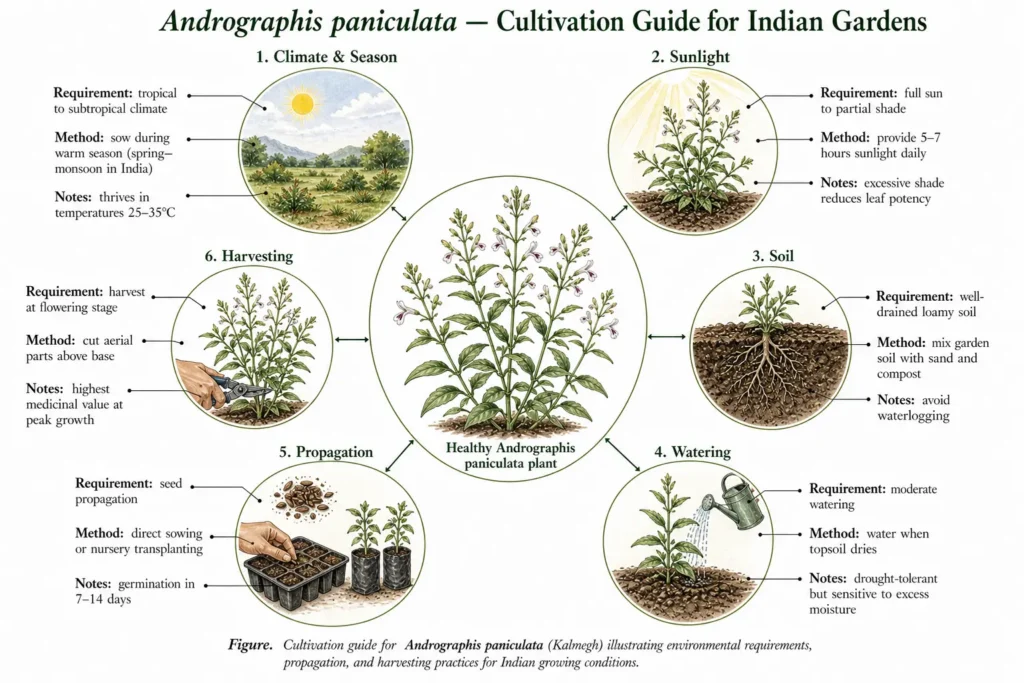
North India (Delhi, UP, Bihar, MP, Rajasthan): CIM-Megha is the recommended improved variety. Landrace material performs adequately in the right season. Avoid sowing too late — North Indian winters arrive abruptly, and plants sown after mid-July do not complete full vegetative development before day-length shortening triggers early flowering.
West Bengal, Odisha, Northeast: Haripriya is the recommended improved variety for its disease tolerance in humid conditions. Landrace material from local sources is often reasonably well-adapted to regional conditions but carries a higher Cercospora risk. Local agricultural department selections may also be available.
South India (Tamil Nadu, Kerala, Andhra Pradesh, Karnataka): Sona or local improved selections from TNAU. The earlier maturity of South Indian varieties matches the region’s earlier post-monsoon transition. Landrace material from local sources is widely used and generally performs well.
Gujarat, Maharashtra, Rajasthan: Anand-1 is the regional recommendation. These states have the driest conditions in Kalmegh’s Indian range; Anand-1 was developed for exactly these growing conditions and consistently outperforms unselected material here.
Where to Source These Varieties in India
Improved kalmegh varieties are not available in ordinary nurseries or seed shops. The reliable sources are:
State Krishi Vigyan Kendras (KVKs) — the most accessible point of contact for most home growers. KVKs in kalmegh-producing states typically maintain seed stocks of locally recommended improved varieties and often distribute them at nominal cost. Contact the nearest KVK for current availability.
CIMAP, Lucknow — the source institution for CIM-Megha. CIMAP distributes planting material through technology dissemination programs and can be contacted directly for seed availability.
Tamil Nadu Agricultural University (TNAU), Coimbatore — source for South Indian improved selections, including Sona.
State Horticulture and Agriculture Departments in West Bengal and Gujarat — contact through district offices for Haripriya and Anand-1 availability, respectively.
When purchasing seeds from any source, verify the variety name in writing if possible and ask for the harvest year of the seed lot — kalmegh seed viability declines after one to two seasons, and old stock from improperly stored batches germinates poorly.
The most important decision in growing kalmegh for medicinal use is not which variety to choose — it is whether to grow it from improved seed or accept whatever is locally available. For casual growing, local landrace material is entirely adequate. For anyone serious about andrographolide content and leaf yield, the effort to source an appropriate improved variety is repaid every season.