
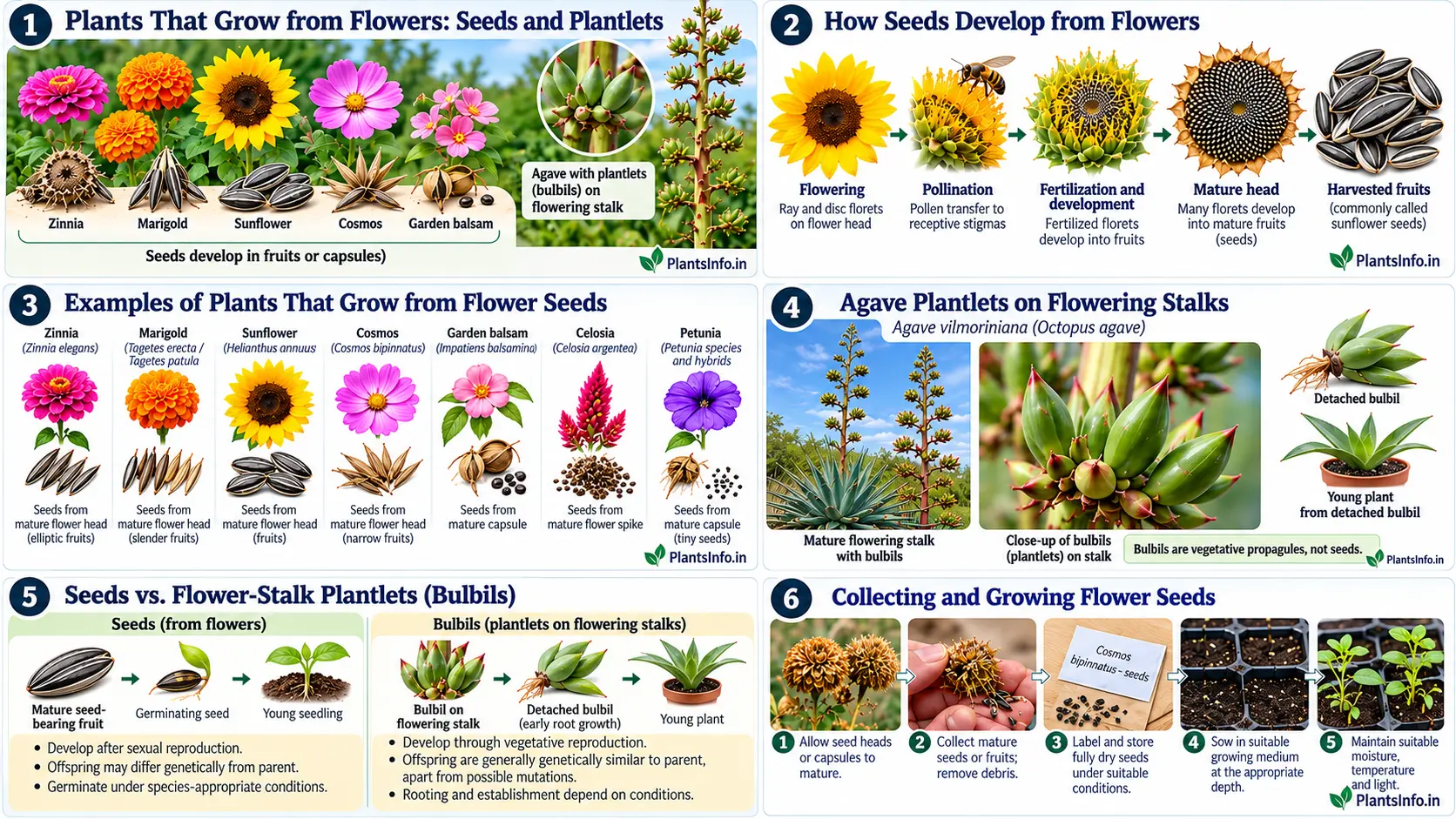
Some plants grow from seeds produced after their flowers are pollinated and fertilized, while others can produce small plantlets called bulbils on their flowering stalks. Zinnia, marigold, sunflower, cosmos, and garden balsam are examples of plants that can be grown from flower-produced seeds. Certain agave species, including Agave vilmoriniana, produce bulbils on their flowering stalks that can develop into new plants.
These are two different reproductive processes. Seeds form through sexual reproduction, whereas bulbils are produced through vegetative reproduction. Understanding the difference helps gardeners identify suitable propagation material and grow new plants successfully.
How Can New Plants Grow from Flowers?
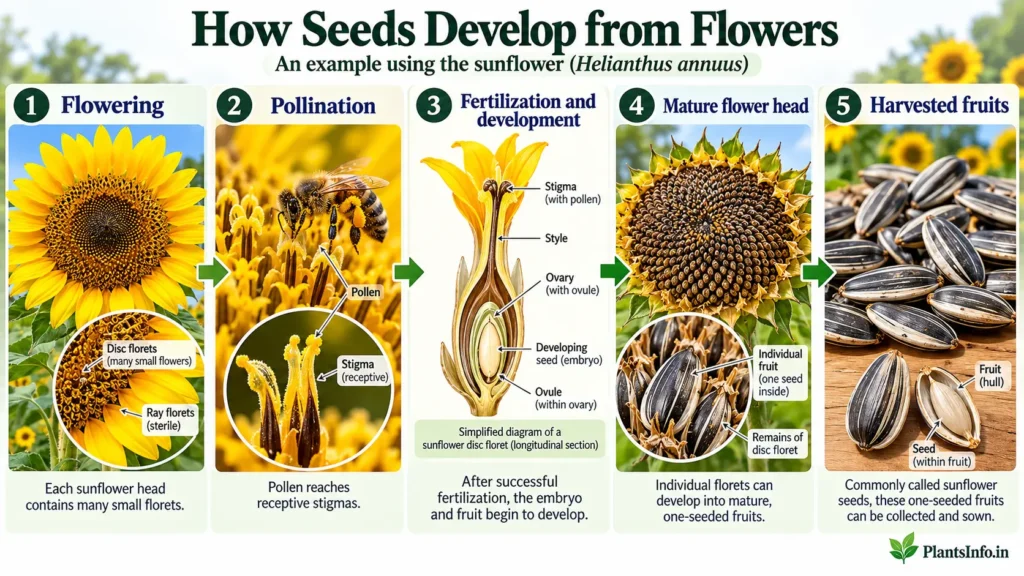
Flowers are the reproductive structures of flowering plants. In many species, pollination and fertilization lead to the development of seeds, often enclosed within a fruit or seed capsule. When mature seeds receive suitable moisture, temperature, oxygen, and other necessary conditions, they can germinate and develop into seedlings.
Some plants also reproduce vegetatively by producing small, independent plantlets on specialized structures. In certain species of agave, these plantlets develop on the flowering stalk after or alongside flowering. They are called bulbils and can grow into new plants without germinating from seeds.
Although both processes can produce new plants after flowering, they differ in how the next generation develops.
Plants That Grow from Flower Seeds
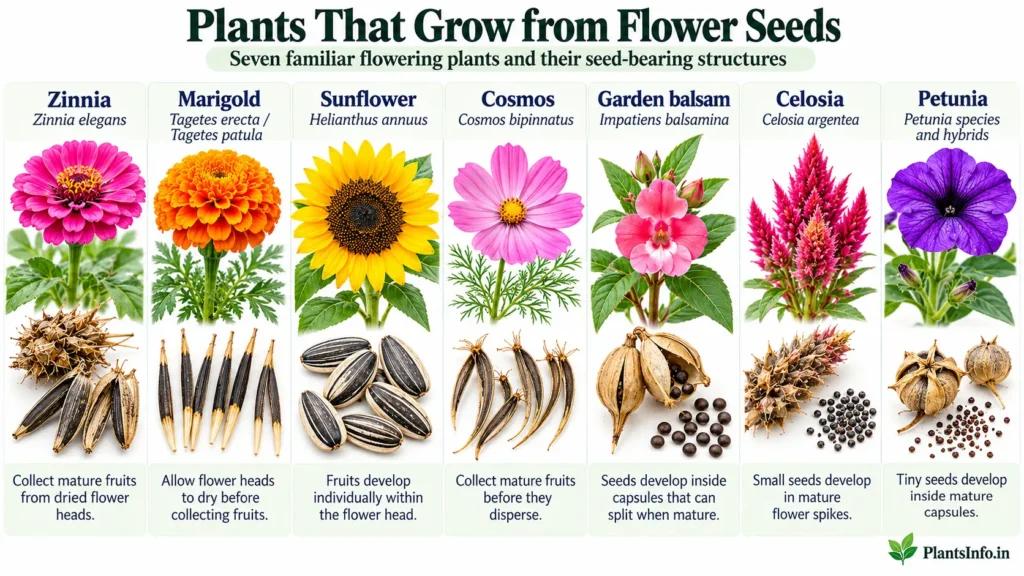
| Flowering plant | Scientific name | Where seeds develop | Useful growing note |
|---|---|---|---|
| Zinnia | Zinnia elegans | Dry flower heads | Collect mature, dry seeds; provide ample sunlight. |
| Marigold | Tagetes erecta, T. patula | Dried flower heads | Allow the flower heads to dry before collecting seeds. |
| Sunflower | Helianthus annuus | Central flower head | Seeds mature within the head after flowering. |
| Cosmos | Cosmos bipinnatus | Spent flower heads | Mature seeds can be collected for sowing in a suitable season. |
| Garden balsam | Impatiens balsamina | Seed capsules | Handle mature capsules carefully because they can split and release seeds. |
| Celosia | Celosia argentea | Mature flower spikes | Allow seed-bearing parts to mature and dry before collection. |
| Petunia | Petunia species and hybrids | Small seed capsules | Seeds are tiny; sow them near the surface rather than burying them deeply. |
Many familiar garden flowers produce seeds that can be collected and sown to raise new plants. The seeds generally develop as flowers mature, although the exact structure containing them varies by species. Some plants produce dry seed heads, while others form capsules or other fruits.
The following examples are suitable for gardeners interested in collecting seeds from their flowering plants.
1. Zinnia (Zinnia elegans)
Zinnia is a popular flowering annual grown for its colourful blooms and relatively straightforward cultivation. Its flower heads contain numerous small florets, and fertile florets can produce seeds as the flower head matures.
How to grow it from flower seeds: Allow selected flower heads to remain on the plant until they become dry and brown. Collect the mature seeds, remove loose plant debris, and store them in a cool, dry place until sowing. Sow them in a well-drained growing medium and maintain appropriate moisture during germination.
Zinnias are available in a wide range of colours, including pink, red, orange, yellow, and white. Seed-grown plants may differ in flower form or colour when the original plant is a hybrid or when cross-pollination has occurred.
2. Marigold (Tagetes erecta and Tagetes patula)
Marigolds are widely grown in Indian gardens, containers, and seasonal flower displays. Their mature flower heads contain slender seeds that can be collected after the blooms have faded and dried.
How to grow it from flower seeds: Leave a few healthy flowers on the plant rather than removing every spent bloom. Once the flower heads are dry, gently separate the seeds and sow them in a suitable potting mix. Keep the medium lightly moist until germination.
African marigold (Tagetes erecta) generally produces larger flower heads, while French marigold (Tagetes patula) usually has a more compact growth habit. Seed-grown offspring from hybrid cultivars may not reproduce all the characteristics of the parent plant.
3. Sunflower (Helianthus annuus)
Sunflowers produce prominent flower heads containing numerous small florets. Following successful pollination and fertilization, many of these florets can develop into fruits commonly called sunflower seeds.
How to grow it from flower seeds: Allow the flower head to mature on the plant. As the back of the head changes colour and the seeds become filled, protect it from birds if necessary. Harvest the mature head, allow it to dry in a well-ventilated place, and remove the seeds.
Sow suitable seeds in a sunny location. Choose a container deep and stable enough for the selected sunflower variety, particularly when growing taller cultivars on balconies.
4. Cosmos (Cosmos bipinnatus)
Cosmos is an ornamental annual known for its delicate foliage and daisy-like flowers. It can produce abundant seeds, and plants may self-sow when mature seeds fall onto suitable soil.
How to grow it from flower seeds: Allow some flower heads to fade and dry on the plant. Collect the mature seeds before they disperse, then store them in a dry, labelled envelope. Sow them in a suitable growing medium and provide sufficient light for healthy seedling development.
Cosmos is useful for informal gardens and containers with enough room for its growth habit. Different varieties vary in height, flower colour, and suitability for small pots.
5. Garden Balsam (Impatiens balsamina)
Garden balsam is a flowering annual that grows well in warm conditions and is often cultivated in Indian home gardens. After flowering, it develops seed capsules that contain the next generation of seeds.
How to grow it from flower seeds: Allow a few flowers to develop mature capsules. These capsules can split suddenly when touched or disturbed, dispersing their seeds. Collect them carefully when mature but before they open, where practical. Sow the seeds in moist, well-drained growing medium.
Garden balsam can produce flowers in pink, red, purple, white, and other colour combinations, depending on the variety. It is particularly suitable for seasonal container displays in warm climates.
6. Celosia (Celosia argentea)
Celosia is grown for its colourful flower structures, which may form feathery plumes or dense, crested heads. As the flowers mature, they can produce small seeds.
How to grow it from flower seeds: Allow selected flower heads to dry on the plant. Collect the mature seeds, remove excess dried plant material, and sow them in a suitable growing medium. Provide adequate warmth and light for establishment.
Celosia offers an interesting example of a plant whose ornamental flower structure differs considerably from the familiar daisy-like flower heads of zinnia and cosmos.
7. Petunia (Petunia species and hybrids)
Petunias are popular flowering plants for containers, window boxes, and hanging baskets. Their flowers can develop seed capsules after successful pollination, although seed production and the characteristics of the resulting seedlings vary among cultivars.
How to grow it from flower seeds: Allow selected flowers to remain on the plant until the seed capsules mature and begin to dry. Collect the seeds carefully and sow them according to the requirements of the variety.
Many modern petunias are hybrids. Seedlings raised from hybrid plants may differ from the original cultivar in colour, flower form, and growth habit. Vegetative propagation is used commercially for some cultivars when exact characteristics need to be maintained, but that is a separate propagation method.
Plants That Produce Plantlets on Flowering Stalks
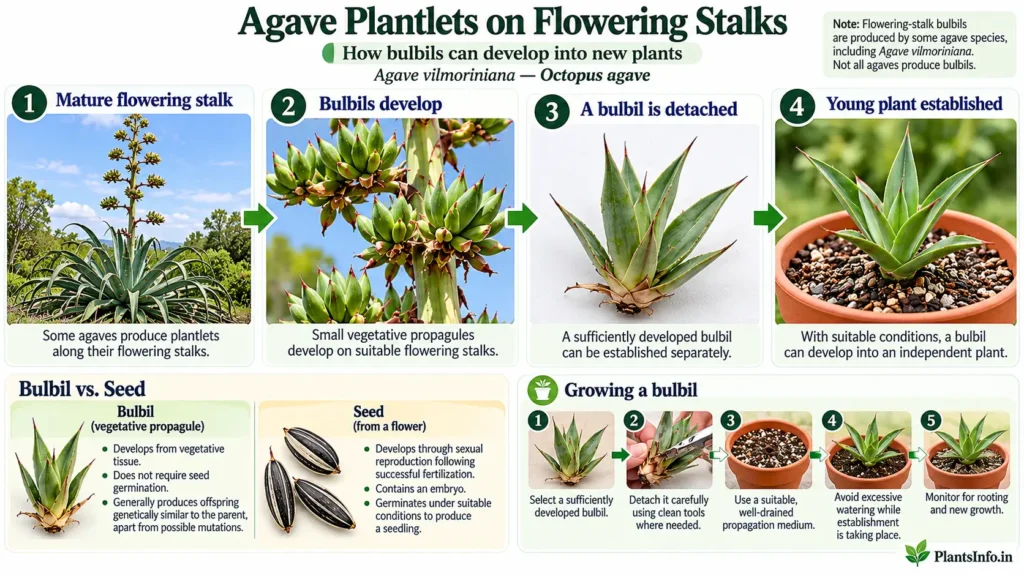
| Plant | Scientific name | What develops on the flowering stalk? | What happens next? |
|---|---|---|---|
| Octopus agave | Agave vilmoriniana | Small bulbils along the inflorescence | Bulbils can be collected and grown into new plants. |
| Other bulbil-producing agaves | Agave species | Bulbils on some flowering stalks | Depending on the species, bulbils may detach, root, and establish independently. |
Not all plants rely exclusively on seeds to reproduce. Certain species can produce small vegetative structures on their flowering stalks. These structures are commonly called bulbils when they develop into small, plant-like propagules.
A bulbil is not a seed. It develops from vegetative tissue and can grow into a new plant without the seed-germination process. Flowering-stalk bulbils are particularly notable in certain agave species.
1. Octopus Agave (Agave vilmoriniana)
Octopus agave is a succulent native to Mexico, recognised by its long, curved leaves and tall flowering stalk. Under suitable conditions, it can produce bulbils on its inflorescence—the structure that bears its flowers.
How it produces new plants: Small plantlets develop along the flowering stalk. As they mature, they may form structures that allow them to detach and establish roots after planting in a suitable growing medium.
How to grow it from bulbils: Wait until the bulbils are sufficiently developed to handle. Separate them carefully from the stalk, allow any fresh wounds to dry where appropriate, and place them in a sharply drained propagation medium. Avoid excessive watering, which can encourage rot before roots become established.
This is a clear example of a plant that can produce new individuals directly on its flowering structure rather than exclusively through seeds.
2. Agave (Agave species)
Agave is a genus of succulent plants that includes species cultivated for ornamental, landscape, and other uses. Many agaves reproduce through seeds or basal offsets, while certain species also produce bulbils on their flowering stalks.
The presence of flowering-stalk bulbils depends on the species. It should not be assumed that every agave will produce them.
How to grow it from bulbils: When a species produces well-developed bulbils, these can be removed and planted separately in a well-drained medium. Handle spiny species with care, and allow damaged tissue to dry as appropriate before planting.
Agave bulbils are genetically similar to the parent plant because they arise through vegetative reproduction. This makes them useful for producing additional plants with characteristics similar to those of the original individual.
Why Do Some Agaves Produce Bulbils?
Many agaves invest considerable resources in producing a large flowering stalk after years of vegetative growth. Some species die after flowering, although the life cycle varies across the genus.
Bulbils provide an additional route for reproduction. If seeds fail to develop or conditions are unfavourable for seedling establishment, vegetative plantlets may still help the plant produce a new generation.
However, not every agave species produces bulbils, and the number and development of these structures vary. The feature is best understood as a reproductive strategy found in certain species rather than a universal characteristic of the genus.
How to Collect and Grow Seeds from Flowers
| Stage | Recommended action | Avoid |
|---|---|---|
| Identify a suitable bulbil | Choose a healthy, sufficiently developed bulbil from a plant known to produce them. | Assuming every agave produces bulbils. |
| Detach | Remove the bulbil carefully when it is sufficiently developed and can be handled without excessive damage. | Pulling forcefully or damaging the parent plant. |
| Prepare the growing medium | Use a suitable, well-drained medium appropriate for the species. | Persistently waterlogged soil. |
| Establish the bulbil | Place it in the medium with appropriate support and provide suitable light and moisture. | Excessive watering before roots are established. |
| Monitor establishment | Look for signs of rooting and new growth; adjust care to the species. | Assuming all bulbils root at the same rate. |
Collecting seeds from garden flowers is a practical way to raise new plants, but success depends on harvesting mature seeds and storing them properly.
1. Choose Healthy Parent Plants
Select plants with healthy foliage and flowers that show the expected characteristics of the variety. Avoid collecting seeds from plants with obvious disease symptoms.
Remember that seedlings from hybrid plants may not look identical to the parent.
2. Allow the Flowers to Mature
Do not collect seeds from flowers that have only recently opened. Allow pollination, fertilization, and seed development to take place.
Depending on the plant, mature seeds may be found in dried flower heads, seed capsules, or other fruits.
3. Collect the Seeds Carefully
Harvest mature seed structures before they disperse naturally. Some capsules open suddenly when touched, while other seed heads remain intact after drying.
Keep seeds from different plants or varieties separate and label them clearly.
4. Dry and Store the Seeds
Where appropriate for the species, dry the collected seeds in a shaded, well-ventilated location. Store fully dry seeds in labelled paper envelopes or other suitable containers in a cool, dry place.
Seed longevity varies considerably among species, so not all collected seeds remain viable for the same length of time.
5. Sow in a Suitable Growing Medium
Use a clean, well-drained seed-starting medium. Sow seeds at a depth appropriate for their size and species, since some seeds require light for germination while others germinate better when covered.
Maintain the appropriate temperature and moisture level. Avoid waterlogging, which can damage seeds and young seedlings.
6. Care for the Seedlings
Once seeds germinate, provide suitable light, moisture, and growing space. Gradually acclimatise seedlings to stronger outdoor conditions when necessary, and transplant them when they are sufficiently established.
How to Grow Plants from Flower-Stalk Plantlets
Growing plants from bulbils is different from raising plants from seeds. Because bulbils are already developing vegetative structures, they do not need to pass through the seed-germination stage.
For suitable agave species, the following general approach can be used.
- Identify mature bulbils. Look for small, recognisable plantlets developing along the flowering stalk. Do not confuse them with flowers, immature buds, or basal offsets.
- Wait until they are sufficiently developed. Plantlets that are too small or poorly formed may be difficult to establish.
- Separate them carefully. Use clean tools where needed, taking care not to damage the plantlet or yourself.
- Prepare a well-drained medium. A suitable propagation mix should allow excess water to drain freely.
- Plant and establish. Position the plantlet securely and avoid keeping the medium excessively wet. Follow species-specific guidance for watering and light.
- Monitor new growth. Once roots become established and the plant begins growing independently, gradually provide the conditions required by the species.
Agaves can have sharp leaf tips and margins, so protective gloves and careful handling are advisable.
These instructions apply to suitable flowering-stalk bulbils, particularly those of agave. They should not be treated as a universal method for every plant that produces vegetative propagules.
Seeds vs. Flower-Stalk Plantlets
Although both mechanisms can produce new plants, they differ in origin, development, and genetic characteristics.
| Feature | Seeds Produced by Flowers | Plantlets on Flowering Stalks |
|---|---|---|
| Reproductive process | Sexual reproduction | Vegetative reproduction |
| How they develop | Usually following pollination and fertilization | From vegetative tissue on the flowering structure |
| Initial development | Germination produces a seedling | A plantlet grows into an independent plant |
| Genetic characteristics | Offspring may differ from the parent | Usually genetically similar to the parent |
| Examples | Zinnia, marigold, sunflower, cosmos | Bulbils produced by certain agave species |
| Main requirement | Viable seeds and suitable germination conditions | A sufficiently developed plantlet and suitable establishment conditions |
The distinction is important when choosing a propagation method. Seeds allow genetic variation and are useful for raising many flowering annuals. Bulbils allow certain plants to reproduce vegetatively and may preserve the characteristics of the parent plant more consistently.
Frequently Asked Questions
Can a new plant grow directly from a flower?
A new plant can develop from a seed produced by a flower, provided the seed is viable and receives suitable conditions for germination. In some species, vegetative plantlets also develop on flowering stalks. An ordinary flower petal, however, does not usually develop into a complete plant.
Which flowers produce seeds that are easy to collect?
Zinnia, marigold, sunflower, cosmos, and garden balsam are useful examples. Their mature seeds can be collected from dried flower heads or seed capsules. The timing and method of collection depend on the species.
Can plants grow from bulbils on flowering stalks?
Yes. Certain agave species produce bulbils on their flowering stalks. These small vegetative plantlets can develop into independent plants when they mature and are established under suitable growing conditions.
Are plants grown from seeds identical to their parents?
Not necessarily. Seedlings inherit genetic material through sexual reproduction and may differ from their parent plants. Differences can be particularly noticeable in hybrid ornamental varieties.
What is the difference between seeds, bulbils, and plantlets?
Seeds develop through sexual reproduction and contain an embryo. Bulbils are vegetative propagules that can develop into new plants. A plantlet is a broader term for a small plant that can become independent; bulbils are one type of vegetative propagule.
Do all agave plants produce bulbils on their flowering stalks?
No. Bulbil production varies among agave species. Some produce bulbils on their inflorescences, while others reproduce through seeds, basal offsets, or other vegetative structures.
Conclusion
Flowers can contribute to the production of new plants in more than one way. In many familiar garden flowers, pollination and fertilization lead to seed development, allowing gardeners to collect mature seeds and raise new plants. In certain agaves, flowering stalks can also produce bulbils—vegetative plantlets capable of developing into independent individuals.
Zinnia, marigold, sunflower, cosmos, and garden balsam illustrate seed-based propagation, while octopus agave (Agave vilmoriniana) demonstrates the production of plantlets on flowering stalks.
Understanding these reproductive mechanisms helps gardeners choose appropriate propagation methods and recognise the difference between a seed and a vegetative plantlet. It also reveals an important aspect of plant diversity: flowering plants do not all reproduce in exactly the same way, even when their reproductive structures appear superficially similar.
References and Further Reading
- University of California Agriculture and Natural Resources. “Fireworks in the Garden: Octopus Agave in Bloom.”
https://ucanr.edu/blog/uc-cooperative-extension-ventura-county/article/fireworks-garden-octopus-agave-bloom - North Carolina State University Extension. “Agave.” Extension Gardener Plant Toolbox.
https://plants.ces.ncsu.edu/plants/agave/ - University of Arizona Cooperative Extension. “How to Propagate Agaves and Cacti from Cuttings and Seed.”
https://extension.arizona.edu/sites/default/files/2025-03/How-to-Propagate-Agaves-and-Cacti-From-Cuttings-and-Seed.pdf - University of Nebraska–Lincoln Extension. “Annual Flowers for Sunny Locations.”
https://newsroom.unl.edu/announce/lancasterextension/18765/101761 - Utah State University Extension. “Cosmos in the Garden.”
https://extension.usu.edu/yardandgarden/research/cosmos-in-the-garden - University of Minnesota Extension. “Zinnia.”
https://extension.umn.edu/garden-and-home/yard-and-garden/gardening-in-minnesota/zinnia