
Mango Varieties: Which One Should You Grow in India?

Quick Answer: India has over a thousand named mango varieties, but fewer than twenty dominate home garden and orchard planting. The right choice depends on your region, available space, and whether you want to eat the fruit fresh, process it, or simply enjoy a productive garden tree.
See also: Mango plant profile, how to grow it, common problems, its flowering season, and its benefits.
The most common mango-buying mistake in India is choosing by name recognition — Alphonso because it is famous, Dasheri because a neighbour has one — without checking whether that variety suits the local climate or the available space. Alphonso in Delhi underperforms. A full-sized Langra in a 200 sq ft garden overwhelms everything around it. Variety choice is the first decision, and it is the one that most determines the next twenty years.
Recommended Products
Disclosure: As an Amazon Associate, PlantsInfo may earn from qualifying purchases.
🌱 Growing Essentials
The following products can help with container gardening, potting, root development, soil management, and healthy plant growth.
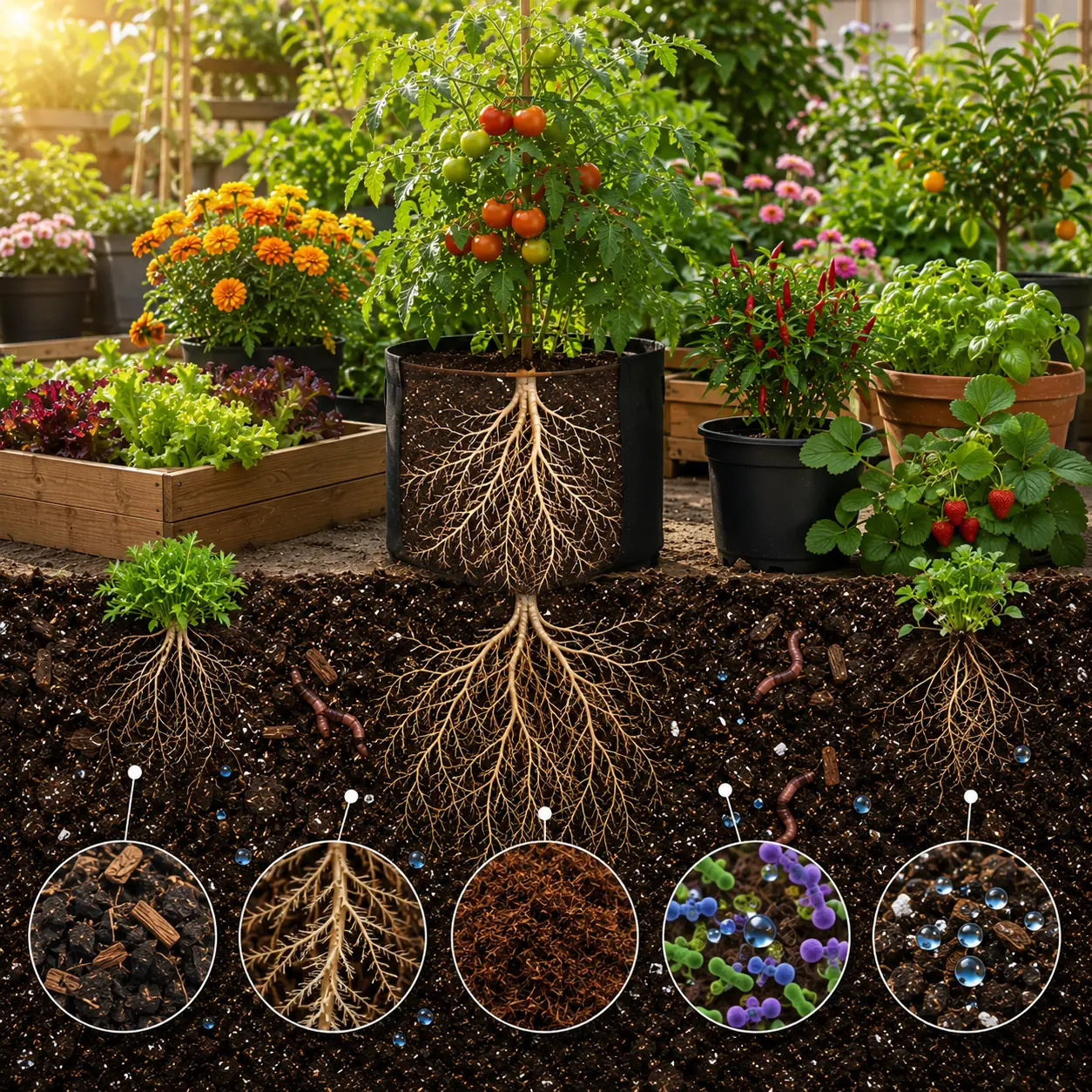
Organic Potting Soil Mix
Provides nutrients, structure, and healthy growing conditions for container plants.
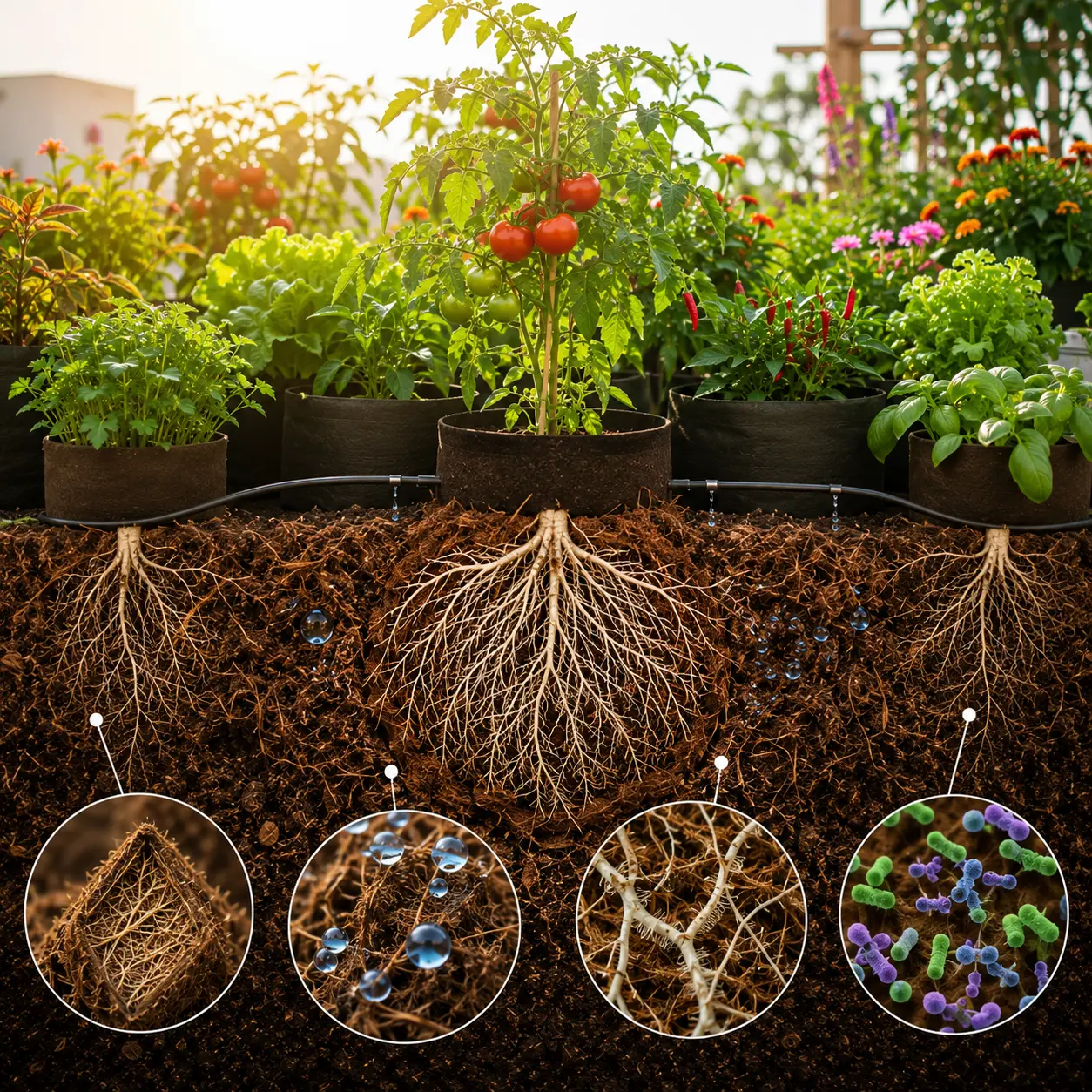
Coco Peat Growing Medium
Enhances moisture retention while maintaining excellent root-zone aeration.

Grow Bags for Plants
Improve drainage, root aeration, and vegetable production in limited spaces.

Plastic Pots for Plants
Ideal containers for seedlings, ornamentals, herbs, and balcony gardens.
Quick Variety Selector
| Variety | Type | Plant Size | Best For | Suited To |
|---|---|---|---|---|
| Alphonso (Hapus) | Traditional | Large | Fresh eating, export quality | Konkan coast, Maharashtra, Goa |
| Dasheri | Traditional | Large | Fresh eating, North Indian markets | UP, Uttarakhand, North India |
| Langra | Traditional | Large | Fresh eating, fibreless pulp | UP, Bihar, North India |
| Kesar | Traditional | Medium-large | Fresh eating, processing, gifting | Gujarat, Saurashtra, South Rajasthan |
| Amrapali | Dwarf hybrid | Compact | Home gardens, containers, high yield | Pan-India |
| Mallika | Hybrid | Medium | Home gardens, regular bearing | Pan-India |
| Totapuri | Traditional | Large | Processing, pickling, commercial | South India, AP, Karnataka, TN |
| Neelam | Traditional | Medium | Late season, South India fresh use | TN, AP, Karnataka, Kerala |
| Sindhuri (Ratna) | Traditional | Medium-large | Fresh eating, South India | AP, Karnataka, TN |
| Banganapalli (Safeda) | Traditional | Large | Fresh eating, commercial South India | AP, Telangana, Karnataka |
Varieties in Detail
Alphonso (Hapus)
Alphonso is India’s most internationally recognised mango and commands the highest market price of any Indian variety. The fruit is medium-sized, deep yellow-orange when ripe, with a rich, non-fibrous pulp and a distinctive floral aroma that no other variety fully replicates.
It is grown almost exclusively on the Konkan coast — the laterite soil and the specific combination of sea breeze and dry summer heat of coastal Maharashtra and Goa produce fruit that cannot be matched when the same variety is grown elsewhere.
Alphonso planted in North India, the Deccan interior, or humid South India, produces inferior fruit — smaller, less aromatic, with a compromised flavour profile. The tree is large and takes 5–6 years from grafting to first meaningful fruit. For home gardeners outside the Konkan region, Alphonso is a poor choice regardless of its reputation.
Dasheri
Dasheri is the dominant variety of the UP mango belt — the Malihabad region near Lucknow is considered its home, and it has been cultivated there for centuries. The fruit is medium-sized, oblong, pale yellow when ripe, with fibreless, sweet pulp and a mild, honey-like flavour.
It is a mid-season variety ripening in June–July in North India. The tree is vigorous and large but tends toward alternate bearing — heavy crop one year, light the next — which is a consistent frustration for home gardeners. For North Indian gardeners who want a traditional variety with a strong cultural connection and excellent flavour, Dasheri is deeply rewarding despite the alternate-bearing tendency.
Langra
Langra is one of UP’s most beloved varieties and, along with Dasheri, defines the North Indian mango season. The fruit remains green even when fully ripe — distinctive and frequently mistaken for unripe fruit by the uninitiated.
The pulp is fibreless, richly flavoured with a slight tartness that balances its sweetness, and considered by many North Indian mango enthusiasts to be the finest eating variety. It ripens slightly later than Dasheri — July in North India.
The tree is large and vigorous, with the same alternate-bearing tendency as Dasheri. Langra performs poorly outside North India — it requires the cool winters of the Indo-Gangetic plain to flower reliably.
Kesar
Kesar is Gujarat’s signature mango — the Gir region of Saurashtra is its traditional home, and it carries a GI tag. The fruit is medium-sized, round to oval, with a distinctive saffron-yellow pulp that gives the variety its name. Flavour is rich, sweet, and slightly spiced — distinct from both North Indian and Konkan varieties.
It is more tolerant of the semi-arid Gujarat climate than most other premium varieties and performs reliably in Rajasthan and parts of Madhya Pradesh as well. The tree is medium-large and a reasonably consistent bearer. For home gardeners in Gujarat, Rajasthan, or western MP, Kesar is the natural first choice.
Amrapali
Amrapali is the most important mango variety for Indian home gardeners with limited space. It is an IARI-developed dwarf hybrid (Dasheri × Neelam) that grows to 3–4 metres — less than half the height of most traditional varieties — and is the only widely available mango variety suited to large containers and terrace gardens.
It is a regular bearer, producing fruit annually without the alternate-bearing problem that afflicts Dasheri and Langra. The fruit is small to medium, deep red-orange, sweet, and slightly fibrous — not the finest eating mango, but perfectly good. Its compact size, annual bearing, and pan-India adaptability make it the default recommendation for any gardener whose primary constraint is space.
Mallika
Mallika is another IARI hybrid (Neelam × Dasheri) that combines the regular-bearing habit of Neelam with improved flavour. The fruit is medium to large, elongated, with fibreless, sweet, aromatic pulp that is genuinely good for fresh eating.
The tree is medium-sized and a consistent annual bearer — a significant advantage over traditional alternate-bearing varieties. It is well-adapted across most of India and is increasingly available in nurseries nationwide. For home gardeners who want good fruit quality, a reliable annual harvest, and a tree that does not overwhelm a medium-sized garden, Mallika is one of the best available choices.
Totapuri
Totapuri is the dominant commercial processing variety of South India — recognisable by its elongated, beak-tipped shape and firm, pale yellow pulp with a mild, slightly tart flavour. It is eaten fresh in South India but is primarily valued for its shelf life, firmness, and high pulp recovery for juice, pickle, and mango slice processing.
The tree is large and productive. For home gardeners in Andhra Pradesh, Karnataka, and Tamil Nadu who want a productive, low-maintenance tree primarily for culinary use — raw mango dishes, pickles, and juice — Totapuri is practical and widely available.
Neelam
Neelam is the late-season mango of South India, ripening in July–August when most other varieties are finished. The fruit is small to medium, golden-yellow, with sweet, slightly fibrous pulp and a distinctive aroma. Its primary value for home gardeners is season extension — a Neelam tree alongside an earlier variety stretches the fresh mango season by 6–8 weeks. It is a regular annual bearer and is one of the parent varieties of both Amrapali and Mallika. It performs best in South India but adapts reasonably well to Central India.
Banganapalli (Safeda)
Banganapalli is Andhra Pradesh’s most commercially important variety — large, golden-yellow fruit with firm, fibreless, mildly sweet pulp. It is the mango of the AP and Telangana summer markets. The tree is large, productive, and relatively consistent in bearing. For home gardeners in AP and Telangana who want a traditional, commercially relevant variety with good fresh eating quality, Banganapalli is the standard recommendation.
Head-to-Head Comparisons
Amrapali vs Mallika for Home Gardens
Both are IARI hybrids, both bear annually, and both are pan-India adapted. Amrapali wins decisively on space — its dwarf habit makes it the only choice for containers or terraces. Mallika wins on fruit quality and tree productivity per square metre in a ground planting — the fruit is larger, less fibrous, and better flavoured. For any gardener with ground space of even 20–30 sq ft, Mallika is the better eating mango. For terrace and container gardeners, Amrapali is the only practical option.
Dasheri vs Langra
These two define the North Indian debate, and an honest answer is: grow both if space allows. Dasheri is milder, sweeter, and ripens earlier. Langra is more complex in flavour — tart-sweet balance, fibreless, green-skinned — and ripens later, extending the season. If only one is possible, Langra’s flavour profile is more distinctive; Dasheri is more approachable for children and those who prefer sweeter fruit without tartness.
Alphonso vs Kesar
Outside their home regions, this comparison is straightforward: Kesar is more geographically versatile. Alphonso depends on Konkan laterite and coastal microclimate to deliver its best fruit. Grown elsewhere, it is a good mango but not a great one. Kesar performs reliably across a wider range of semi-arid and moderate climates. For gardeners in Gujarat, Rajasthan, and western MP choosing between the two, Kesar is the rational choice. For Konkan gardeners, the question does not arise.
How to Choose for Your Space
- Container or terrace garden: Amrapali is the only widely available variety suited to long-term container growing. Use a minimum 100-litre container, and expect reduced yield relative to ground planting. No other standard variety is compact enough for container culture without aggressive management.
- Small ground plot (under 200 sq ft): Amrapali or Mallika. Both remain manageable with annual post-harvest pruning. Plant at least 4–5 metres from structures to allow for mature spread.
- Medium to large garden: Full variety choice. Match variety to the climate region above all else. In North India: Dasheri, Langra, or Mallika. In Gujarat: Kesar. In Konkan: Alphonso. In South India: Banganapalli, Totapuri, Neelam, or Mallika.
- Extending the harvest season: Plant two varieties with staggered ripening windows. In North India, Dasheri (June) plus Langra (July) gives six to eight weeks of fresh fruit. In South India, an early variety plus Neelam (July–August) achieves the same.
Regional Suitability
- North India (UP, Bihar, Uttarakhand): Dasheri and Langra are the traditional home varieties. Mallika and Amrapali perform well throughout. Alphonso and Kesar underperform significantly in North Indian conditions.
- Gujarat and Rajasthan: Kesar is the signature variety. Amrapali and Mallika are reliable pan-India options. Alphonso does not perform well in the arid Gujarat interior; it is only suited to the Konkan-adjacent coastal strip.
- Maharashtra: Alphonso for the Konkan coast. Kesar and Mallika for the Deccan interior and Vidarbha. Amrapali for space-constrained urban gardens across the state.
- South India (AP, Telangana, Karnataka, Tamil Nadu): Banganapalli and Totapuri for commercial and traditional use. Neelam for the late season. Mallika for quality home eating, Amrapali for compact gardens.
- Kerala: Mango is widely grown in Kerala, but the high-humidity coastal climate favours local varieties — Mulgoa, Olour, and Pri-yoor — that are regionally specific and rarely available outside Kerala nurseries. Standard North Indian varieties like Dasheri and Langra underperform significantly in Kerala conditions.
Desi vs Hybrid — What Nobody Tells You
The traditional Indian mango varieties — Alphonso, Dasheri, Langra, Kesar — are not hybrids. They are ancient clonal selections propagated by grafting for generations, genetically fixed but not bred. IARI hybrids like Amrapali and Mallika are true crosses with deliberately combined parent traits.
The real trade-off is not flavour versus yield — Mallika has excellent flavour — but regional adaptation versus versatility. Traditional varieties are deeply adapted to their home regions and produce their best fruit there.
Hybrids are bred for pan-India performance, consistent bearing, and compact growth. For a home gardener outside a traditional variety’s home region, a well-chosen hybrid will almost always outperform an ill-adapted traditional variety regardless of reputation.
Watch Out for Mislabelling
Mango mislabelling in Indian nurseries is endemic and consequential — a mislabelled tree takes 5–7 years to reveal itself at first fruiting. The most commonly mislabelled varieties are Alphonso (frequently substituted for any yellow-fleshed variety), Kesar (substituted for inferior Gujarat seedlings), and Dasheri (substituted for any pale-yellow North Indian variety).
The most reliable verification step is to buy only grafted plants from nurseries that can name both the scion variety and the rootstock, and to purchase from state horticulture department nurseries, KVK outlets, or ICAR institute-linked nurseries where variety authentication is part of the supply chain.
Avoid buying mango saplings from roadside vendors or markets where variety verification is impossible. If buying from a private nursery, ask to see the mother tree or the variety documentation — a reputable nursery will have both.
Where to Source These Varieties in India
IARI (Indian Agricultural Research Institute) in New Delhi is the originating institution for Amrapali and Mallika and licenses planting material through state horticulture departments.
Central Institute for Subtropical Horticulture (CISH) in Lucknow is the premier institution for North Indian mango varieties — Dasheri, Langra, and related UP selections are most reliably sourced through CISH-linked nurseries and UP state horticulture outlets.
For Alphonso, the Maharashtra state horticulture department nurseries in Ratnagiri and Sindhudurg are the most reliable source. For Kesar, the Gujarat state horticulture nurseries in Junagadh district. For South Indian varieties, ICAR-IIHR (Indian Institute of Horticultural Research) in Bengaluru and state horticulture department outlets in AP and Tamil Nadu are the recommended sources.
Match the variety to your region first, your space second, and your flavour preference third — in that order. A correctly chosen, well-grafted mango tree planted this monsoon will be feeding your household for the next thirty years.
Conclusion
Choosing the right mango variety is one of the most important decisions a gardener can make, as it influences tree size, fruit quality, productivity, and long-term success. While famous cultivars such as Alphonso, Dasheri, Langra, and Kesar excel in their traditional growing regions, modern hybrids like Amrapali and Mallika offer excellent alternatives for smaller gardens and a wider range of climates. By selecting a variety that matches your local conditions, available space, and intended use, you can enjoy healthier trees and more reliable harvests for many years. For guidance on cultivation, flowering, common problems, and the botanical characteristics of Mangifera indica, explore the related Mango guides available on PlantsInfo.


