Introduction
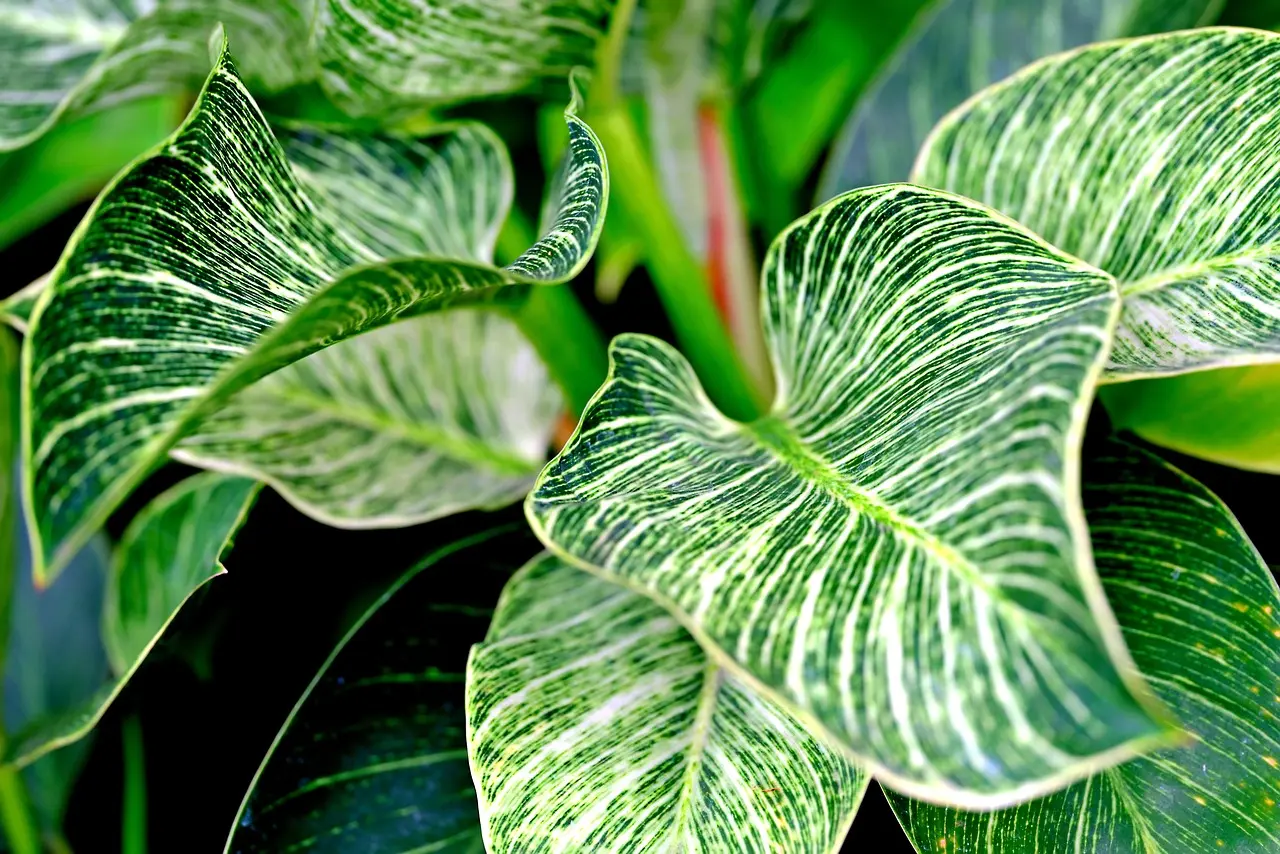
Philodendron ‘Birkin’, commonly called Birkin philodendron, is a cultivated ornamental selection in the family Araceae, distinguished by dark-green leaves marked with creamy-white, yellowish, or pale-green pinstripes. It has no established wide native range as a cultivar; its precise origin and parentage remain uncertain in the institutional horticultural literature.
Classification
As a cultivated selection, ‘Birkin’ has no independently established native ecosystem role. Its biological context is best understood through its relationship to the broader diversity of Philodendron, a genus of tropical American aroids, rather than through an assumed wild habitat or species-specific ecological function.
The plant entered horticultural circulation as an ornamental foliage plant, with its variegation providing its principal distinguishing feature. Its cultivation history is poorly documented, and the sources reviewed provide no cultivar-specific conservation assessment.
Quick Plant Information
| Field | Information |
|---|---|
| Accepted profile name | Philodendron ‘Birkin’ |
| Primary common name | Birkin philodendron |
| Family | Araceae |
| Genus | Philodendron |
| Horticultural status | Cultivated ornamental selection |
| Life form | Evergreen, herbaceous perennial |
| Growth habit | Compact and upright; self-heading |
| Distinguishing feature | Dark-green foliage with pale pinstriped variegation |
| Flowering structure | Spadix enclosed by a spathe, reported in mature plants |
| Native range | No established wild native range for the cultivar |
| Origin | Uncertain |
| Parentage | Unresolved; proposed relationships to cultivated philodendrons remain unconfirmed |
| Conservation status | No cultivar-specific wild conservation category assigned |
| Cytogenetic status | No verified cultivar-specific chromosome count established in the sources reviewed |
Classification and Taxonomy
| Rank or field | Classification |
|---|---|
| Kingdom | Plantae |
| Clade | Angiosperms |
| Clade | Monocots |
| Order | Alismatales |
| Family | Araceae |
| Genus | Philodendron |
| Species-level identification | Not established for the cultivar |
| Cultivar designation | ‘Birkin’ |
| Full horticultural name | Philodendron ‘Birkin’ |
The classification above follows the accepted higher-level placement of Philodendron within Araceae. ‘Birkin’ is treated as a cultivated selection within the genus, not as a separate species. The cultivar designation does not itself establish a botanical hybrid formula or formal parentage.
Related Species of Significance
| Taxon or cultivar | Relationship to ‘Birkin’ | Significance |
|---|---|---|
| Philodendron ‘Rojo Congo’ | Proposed parent or source of a spontaneous mutation | Frequently cited in accounts of the origin of ‘Birkin’; the precise relationship remains uncertain |
| Philodendron ‘Congo’ | Proposed contributor in an alternative parentage hypothesis | North Carolina State University Extension identifies this cultivar in one reported origin hypothesis |
| Philodendron ‘Imperial Green’ | Proposed contributor in an alternative parentage hypothesis | Also included in the alternative origin hypothesis; confirmed parentage has not been established |
| Philodendron (genus) | Parent taxonomic group | Provides the broader systematic context for the cultivated selection |
The listed cultivars are included because they are directly relevant to the reported origin hypotheses. Their inclusion does not imply that a documented cross produced ‘Birkin’.
Taxonomic Context
The main identification risk is confusion between a cultivar designation and a species name. Philodendron ‘Birkin’ is the appropriate working horticultural name; assigning a species epithet or a botanical author citation would imply a level of taxonomic identification not established by the available evidence.
‘White Measure’ appears in Royal Horticultural Society records as an alternative name associated with this plant. The RHS records differing name-status information across its relevant entries, so this alternative should not be interpreted as proof that ‘White Measure’ is the formally accepted name. North Carolina State University Extension additionally lists “Birkin White Wave” and “White Wave” among common names.
For researchers reviewing older horticultural literature, the names ‘Birkin’, ‘White Measure’, ‘White Wave’ and ‘Birkin White Wave’ are useful search terms. Records should be checked against plant descriptions and provenance before being consolidated under a single identity, because shared trade naming does not independently establish nomenclatural equivalence.
Cytogenetics
No cytogenetic detail is presented because a verified, cultivar-specific source establishing chromosome number, ploidy level, or genome size was not identified.
Cytogenetic note: The chromosome complement and ploidy of Philodendron ‘Birkin’ remain unverified for this profile. General cytogenetic information for Philodendron or related cultivars cannot establish these values for ‘Birkin’ without direct evidence. The present absence reflects the limits of the sources reviewed, not proof that such data do not exist.
Scientific Stability and Nomenclature
Philodendron ‘Birkin’ is documented in institutional horticultural references as a cultivated ornamental plant, but its formal nomenclatural status is not uniformly represented across the available RHS records. The RHS lists ‘White Measure’ as an alternative name and records differing status labels in separate entries. Consequently, the profile retains Philodendron ‘Birkin’ as its working horticultural name without asserting that the cultivar has a fully resolved nomenclatural history.
No verified formal reclassification or synonymisation event specific to ‘Birkin’ was established in this review. Its reported relationship to ‘Rojo Congo’, ‘Congo’ and ‘Imperial Green’ concerns uncertain horticultural origin, not a demonstrated taxonomic revision. Researchers should therefore distinguish cultivar names, trade names and proposed parentage when searching historical and contemporary literature.
Growth Habit and Architecture
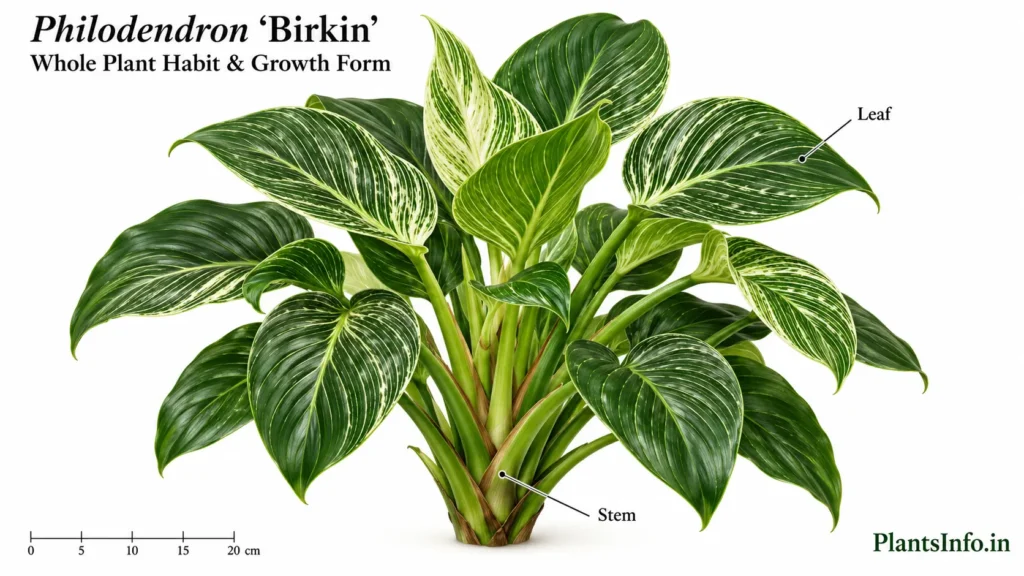
Philodendron ‘Birkin’ exhibits a compact, self-heading growth strategy rather than the elongated climbing architecture characteristic of many other philodendrons. Its leaves emerge from a relatively concentrated growing region, producing a dense ornamental silhouette. This structural arrangement is useful for distinguishing it from vining philodendrons, although growth form alone cannot establish cultivar identity.
The principal recognition feature is the combination of upright architecture and individually variable, pale pinstriping on dark-green foliage. This combination provides a useful visual gestalt for horticultural identification. The available descriptions do not establish a species-specific ecological advantage or quantify architectural trade-offs; such interpretations should therefore remain limited.
| Character | Documented description |
|---|---|
| Life form | Evergreen herbaceous perennial |
| Mature height | Approximately 15–91 cm in the North Carolina State University Extension description; the RHS gives a larger potential height of 1–1.5 m under its stated horticultural conditions |
| Canopy spread | Approximately 15–91 cm in the North Carolina State University Extension description; the RHS lists a potential spread of 0.5–1 m |
| Stem type | Thick, upright stem |
| Branching pattern | Compact, self-heading growth; detailed branching measurements are unavailable |
| Root morphology overview | Cultivar-specific mature root architecture is insufficiently described in the institutional sources reviewed |
| Growth rate | Described as slow-growing by North Carolina State University Extension |
| Distinguishing architectural feature | Compact, erect, non-climbing habit |
The differing height and spread figures reflect differences between source descriptions and horticultural conditions; they should not be combined into a single universal mature-size estimate.
Stem
The stem supports the compact leaf-bearing structure and helps distinguish ‘Birkin’ from climbing philodendrons with elongated internodes and attachment roots. Its upright form is consistent with the self-heading growth category used in institutional horticultural descriptions. The available evidence supports a general structural description, but not a detailed anatomical account of stem tissues or cultivar-specific internal adaptations.
| Character | Documented description |
|---|---|
| Stem type | Upright, thick stem |
| Surface texture | Detailed cultivar-specific texture not established |
| Young colour | Not established in the sources reviewed |
| Mature colour | Not established in the sources reviewed |
| Cross-section shape | Not established |
| Mature diameter | Not established |
| Internode length | Not established |
| Thorn, spine or wing status | No cultivar-specific structural description identified |
| Internal structure | No cultivar-specific anatomical description identified |
Leaves
Leaf morphology is the most reliable readily visible feature of ‘Birkin’. The foliage combines a dark-green background with pale linear markings, but the intensity and distribution of those markings vary among leaves. The pattern is therefore best interpreted as a characteristic visual signature rather than an invariant diagnostic character. Leaf shape and growth habit provide supporting evidence, while pinstriped variegation is the single most useful feature for preliminary recognition.
| Character | Documented description |
|---|---|
| Leaf presence | Present |
| Leaf type | Simple |
| Leaf arrangement | Alternate |
| Shape | Heart-shaped to broadly ovate in institutional descriptions |
| Surface | Glossy |
| Ground colour | Dark green |
| Variegation | Creamy-white, yellowish or pale-green pinstripes |
| Margin | Entire |
| Hairiness | Described as hairless by North Carolina State University Extension |
| Pattern variability | Individual leaves differ; pinstripes may become more pronounced as leaves mature |
Flowers
The inflorescence follows the characteristic structural pattern of Araceae: a spadix bearing numerous small flowers is enclosed by a modified leaf called a spathe. In ‘Birkin’, the spathe is described as greenish-white. Flowering is possible, although institutional horticultural documentation notes that indoor plants rarely flower. The available evidence does not establish a cultivar-specific floral measurement series or a verified primary pollinator.
| Character | Documented description |
|---|---|
| Inflorescence type | Spadix enclosed by a spathe |
| Spathe colour | Greenish-white |
| Flowering indoors | Reported as uncommon |
| Flower diameter | No verified cultivar-specific measurement |
| Flower length | No verified cultivar-specific measurement |
| Sepals and petals | No separately documented cultivar-specific description |
| Stamens and pistil | No verified cultivar-specific structural measurements |
| Fragrance | Not established |
| Anthesis | Not established |
| Primary pollinator identity | Not established |
Fruit
No cultivar-specific fruit morphology was established in the institutional horticultural references reviewed. A fruit description should not be constructed from generic Araceae characteristics or from an assumption that an indoor ornamental plant has completed successful flowering and fruit development.
Seeds
No cultivar-specific seed morphology or seed-performance dataset was verified in the sources reviewed. Seed size, shape, colour, seed-coat structure, viability period and germination rate are therefore not characterized here.
Root System
The mature root system of Philodendron ‘Birkin’ requires further direct documentation. The available cultivar-specific propagation literature includes experiments using shoot tips, leaf lamina and stem nodal segments, with regenerated roots assessed under in vitro conditions. These experimental roots are not a substitute for a morphological description of the established plant’s complete root system.
Consequently, mature rooting depth, lateral spread, root branching architecture and anchorage characteristics cannot be specified reliably from the evidence reviewed. No field-based root dimensions are assigned.
Field Identification
Identify ‘Birkin’ provisionally by the combined presence of a compact, upright, self-heading habit and glossy, dark-green leaves with pale pinstriped variegation. The pattern varies among individual leaves, so an isolated leaf should not be treated as definitive evidence of cultivar identity.
The most important identification distinction is between this self-heading form and climbing philodendrons such as Philodendron erubescens. The latter is described by North Carolina State University Extension as a climbing type, whereas ‘Birkin’ has a compact, upright habit. This is a growth-form comparison, not evidence that the two plants are closely related cultivars or that they can be distinguished by a single character under every growing condition.
Best distinguishing feature: the combination of a compact, self-heading architecture and pale pinstriped variegation on dark-green leaves.
Recommended Products
Disclosure: As an Amazon Associate, PlantsInfo may earn from qualifying purchases.
🌱 Plant Care Essentials
The following tools can help with pruning, plant health, soil management, and fruit garden maintenance.

Neem Oil for Plant Care
Natural plant protection against aphids, whiteflies, mites, and other common garden pests.

Fungicide for Root Care
Helps suppress soil-borne fungal diseases and supports healthier root systems.

Spray Bottle for Plants
Ideal for applying foliar sprays, neem oil solutions, and liquid plant treatments.

Rubber Hand Gloves
Protects hands during pruning, planting, soil preparation, and garden maintenance.
Normal vs. Concerning Observations
| Observation | Status | Basis |
|---|---|---|
| Differences in pinstripe intensity among leaves | Normal | Institutional descriptions explicitly document leaf-to-leaf variation |
| Pinstripes becoming more pronounced as leaves mature | Normal | Described in the North Carolina State University Extension profile |
| A compact, upright silhouette | Normal | Characteristic growth form documented by institutional horticultural sources |
Cultivar Summary
‘Birkin’ is itself a named cultivated selection. The related cultivars listed below are included because they appear in documented hypotheses about its origin; they are not presented as a verified breeding lineage.
| Cultivar | Key Characteristic | Commercial Status | Origin |
|---|---|---|---|
| Philodendron ‘Birkin’ | Compact habit and pale pinstriped foliage | Commercially dominant within this profile’s scope as a recognized ornamental selection; no market-share data assessed | Precise origin unresolved |
| Philodendron ‘Rojo Congo’ | Cultivar proposed as a possible source of a spontaneous mutation | Commercially available horticultural cultivar; market rank not assessed | Proposed relationship to ‘Birkin’ remains unconfirmed |
| Philodendron ‘Congo’ | Cultivar named in an alternative parentage hypothesis | Commercial status not independently assessed here | Proposed contributor; parentage unconfirmed |
| Philodendron ‘Imperial Green’ | Cultivar named in an alternative parentage hypothesis | Commercial status not independently assessed here | Proposed contributor; parentage unconfirmed |
Functional Traits
The available cultivar-specific research provides evidence about how Philodendron ‘Birkin’ tissues respond to controlled in vitro regeneration conditions. Studies have investigated shoot multiplication, callus induction, root formation, and acclimatization of regenerated plantlets. These results demonstrate experimentally observed developmental responses under specified culture conditions, but they do not establish the plant’s complete physiological strategy under ordinary indoor or natural environmental conditions.
In particular, the evidence reviewed does not establish a cultivar-specific photosynthetic pathway, quantitative water-use strategy, nutrient-acquisition mechanism, or physiological stress-response mechanism. Such characteristics cannot be inferred solely from its ornamental growth form or from experimental responses to plant growth regulators.
| Trait | Documented evidence | Functional interpretation |
|---|---|---|
| In-vitro shoot regeneration | Shoot tips and stem nodal segments produced shoots under specified culture-medium and plant-growth-regulator treatments (Tasnim et al., 2025). | Demonstrates that these explants can support shoot regeneration under the tested laboratory conditions. |
| Callus formation | Leaf-lamina explants formed callus under a specified 2,4-D treatment (Tasnim et al., 2025). | Establishes a tissue-culture response under the tested conditions; it does not establish the frequency of callus formation in intact plants. |
| Adventitious root formation | Regenerated shoots formed roots under specified in-vitro treatments (Akramian et al., 2024). | Demonstrates root regeneration in tissue culture, not a quantified whole-plant rooting strategy. |
| Acclimatization of regenerated plantlets | Survival after transfer from culture conditions was assessed in the micropropagation study of Tasnim et al. (2025). | Provides evidence of successful transition to ex-vitro conditions in the experimental system; it does not define general stress tolerance. |
No additional trait rows are included because species-specific evidence for the other physiological domains has not been established in the sources reviewed.
Physiological Integration
The available experiments demonstrate developmental responses at different stages of in vitro propagation, but they do not establish how photosynthesis, water relations, nutrient acquisition, and stress responses interact in intact Philodendron ‘Birkin’ plants.
A system-level physiological synthesis would require direct measurements or experiments connecting these processes. Without such evidence, claims about trade-offs between growth and water use, coordination between variegation and photosynthetic efficiency, or integrated stress-response mechanisms would remain hypotheses rather than demonstrated cultivar-specific findings.
Phytochemistry
No cultivar-specific phytochemical profile for Philodendron ‘Birkin’ was identified in the research reviewed. The located cultivar-specific studies focus on micropropagation and developmental responses rather than metabolite identification, quantitative chemical analysis, or organ-specific chemical characterization.
Accordingly, no named compound or compound class is assigned to ‘Birkin’. Calcium oxalate crystals have been documented in examined leaves of multiple Philodendron taxa by Klimko et al. (2016), but that genus-level comparative study does not establish their presence, abundance, or distribution in ‘Birkin’ specifically. It cannot be used as a substitute for direct cultivar-level chemical evidence.
The current chemical characterization status is therefore insufficient for a cultivar-specific inventory. No chemotaxonomic conclusion about ‘Birkin’ can be drawn from the available evidence.
Phytochemical Organ Distribution
No organ-distribution detail is included. The available studies reviewed do not provide direct, cultivar-specific measurements of named phytochemicals across the leaves, stems, roots, flowers, or other organs of Philodendron ‘Birkin’.
Phytochemical Significance
The principal research limitation is the lack of a verified cultivar-specific chemical inventory. Consequently, the following aspects cannot currently be characterized from the sources reviewed:
- Commercially or pharmacologically significant compounds: No cultivar-specific compound identities were verified.
- Characterization maturity: Chemical characterization remains insufficient to establish a reliable inventory.
- Dominant organs: No comparative organ-level concentration data were identified.
- Synergistic or antagonistic relationships: No cultivar-specific chemical interaction studies were identified.
- Literature concentration bias: The research located is concentrated on in vitro propagation and ornamental production. Cultivar-specific metabolomics, organ-resolved chemical analysis, and comparative phytochemical studies are underrepresented in the reviewed evidence.
These are limits of the present evidence review, not proof that the cultivar contains no chemically significant compounds.
Evidence Hierarchy for Medicinal Use
Philodendron ‘Birkin’ is documented primarily as an ornamental foliage plant. No established medicinal, nutraceutical, or functional-food use specific to this cultivar was identified in the reviewed sources. In accordance with the template’s applicability rule, a medicinal-evidence hierarchy is not generated for this ornamental selection.
Evidence Assessment
The available evidence supports an ornamental-use profile and a precautionary safety assessment, not a medicinal-use profile. No cultivar-specific traditional medicinal use, human clinical study, or regulatory recognition for medicinal use was identified in the sources reviewed.
The strongest relevant evidence concerns plant identification and toxicity. The weakest categories are medicinal efficacy, clinical evaluation, and nutritional characterization. Any commercial claims that imply medicinal or therapeutic benefits would require independent, claim-specific evidence; none should be inferred from the plant’s ornamental value or its membership in the genus Philodendron.
Nutritional Composition
Nutritional composition does not apply to this profile because Philodendron ‘Birkin’ is treated as an ornamental cultivar rather than a documented food-use plant.
Nutritional Significance Note
No verified food-composition dataset for ‘Birkin’ was identified. Consequently, exceptional nutrients, bioavailability, processing effects, fresh-versus-dried composition, and cultivar-level nutritional variation cannot be assessed. The lack of nutritional data must not be interpreted as evidence that the plant is suitable for consumption.
Soil Ecology and Mycorrhizal Associations
The available sources do not establish a cultivar-specific mycorrhizal association, fungal partner, rhizosphere bacterial community, or allelopathic effect for Philodendron ‘Birkin’. The plant’s taxonomic placement and ornamental growth form are insufficient to infer particular fungal genera, bacterial functions, or soil-mediated ecological relationships.
No cultivar-specific evidence was identified for:
- Mycorrhizal type or fungal partners.
- Rhizosphere bacterial taxa or their functional roles.
- Allelopathic compounds, demonstrated effects or ecological consequences.
- Soil-biological effects relevant to agriculture or conservation.
Evidence level: Low. These topics remain open research questions; no organism-level association or allelopathic mechanism is assigned.
Toxicity and Safety
North Carolina State University Extension specifically identifies Philodendron ‘Birkin’ as poisonous to humans and pets and identifies calcium oxalate crystals as its toxic principle. The Queensland Poisons Information Centre and Merck Veterinary Manual provide broader evidence on poisoning associated with Philodendron plants. Those genus-level sources support the general hazard context but do not quantify cultivar-specific exposure thresholds.
| Subject | Toxic compounds | Clinical effects | Source |
|---|---|---|---|
| Humans | Calcium oxalate crystals; cultivar-specific concentration not established | Oral pain, burning and swelling; excessive salivation, vomiting and difficulty swallowing may occur after ingestion. Sap exposure may irritate skin. | North Carolina State University Extension; MedlinePlus North Carolina Extension Gardener Plant Toolbox |
| Cats | Calcium oxalate crystals; cultivar-specific concentration not established | Oral irritation, burning, drooling, vomiting and difficulty swallowing are recognized Philodendron poisoning signs. | ASPCA Animal Poison Control; Merck Veterinary Manual |
| Dogs | Calcium oxalate crystals; cultivar-specific concentration not established | Oral irritation, pain, drooling, vomiting and difficulty swallowing are recognized signs. | ASPCA Animal Poison Control; Merck Veterinary Manual |
| Livestock | No verified cultivar-specific toxicological analysis identified | Species-specific clinical effects and exposure thresholds remain unverified for ‘Birkin’; absence of cultivar-specific data is not evidence of safety. | Merck Veterinary Manual provides broader ornamental-plant toxicology context, not a cultivar-specific assessment. Merck Veterinary Manual |
The toxicity evidence should be interpreted at the appropriate taxonomic level: the North Carolina State University Extension entry concerns ‘Birkin’ specifically, while the veterinary and poison-information references primarily describe Philodendron more broadly. None of these sources establishes a quantitative dose–response relationship for this cultivar.
Toxicity Context
The principal documented hazard is irritation caused by exposure to calcium oxalate crystals. In insoluble-oxalate-containing plants, these needle-like crystals can produce mechanical injury to oral and other exposed tissues. Chewing plant material may release the crystals, causing immediate pain and swelling. Poison Control describes similar irritation from contact with sap and subsequent exposure of the eyes.
- Dose dependency: No cultivar-specific dose–response study or quantitative toxic threshold was identified. The severity of an exposure cannot be predicted precisely from the amount ingested using the available evidence.
- Whole-plant versus isolated-compound effects: The clinical evidence concerns exposure to plant material and its irritant crystals. No comparative toxicological study of whole ‘Birkin’ plants versus isolated compounds was identified.
- Vulnerable populations: Children and companion animals warrant particular precaution because accidental ingestion can cause oral irritation and swelling. Severe swelling may interfere with swallowing or breathing.
- Drug interactions: No cultivar-specific drug-interaction studies were identified.
- Pregnancy: No pregnancy-specific toxicological assessment for ‘Birkin’ was identified.
- Renal and hepatic considerations: No cultivar-specific renal or hepatic dose–response evidence was identified. Broader veterinary references describe serious complications in some Philodendron poisoning contexts, but those findings do not establish the incidence or severity of such outcomes for ‘Birkin’.
The absence of cultivar-specific evidence in these categories should remain an explicit limitation rather than being interpreted as proof of safety.
This profile does not constitute medical or veterinary advice.
Distribution and habitat
Biogeographic context
Philodendron ‘Birkin’ is a cultivated ornamental selection, not a verified wild species. Its precise origin and parentage remain unresolved. NC State Extension describes its origin as uncertain, reporting hypotheses involving a mutation of Philodendron ‘Rojo Congo’ or a hybrid relationship involving ‘Congo’ and ‘Imperial Green’. These hypotheses do not establish a natural geographic origin for ‘Birkin’.
Consequently, a native range, native biome, wild elevation range, or natural habitat cannot currently be assigned to this cultivar with confidence. The broader genus is associated mainly with tropical forests of Central and South America, but that genus-level distribution must not be presented as the cultivar’s own native range.
The available evidence is concentrated on commercial ornamental production and indoor plant care rather than the cultivar’s origin, evolutionary history, or ecology outside cultivation. No cultivar-specific evidence was located establishing harvest pressure, collection pressure, or habitat loss affecting wild populations.
Native range and distribution
| Region | Countries or sub-regions | Notes |
|---|---|---|
| No confirmed native range | None established | ‘Birkin’ is a cultivated selection; its exact origin and parentage remain uncertain. |
This is a statement of the limits of the available evidence, not a claim that all historical details of its origin are known.
Global cultivation and naturalisation
| Region | Countries or areas | Cultivation status | Notes |
|---|---|---|---|
| International ornamental trade | Country-level production regions not comprehensively verified | Commercially established | Listed by horticultural authorities as an ornamental houseplant; available sources do not establish a complete map of commercial production. |
Cultivation range note. The cultivar is documented in ornamental horticulture, including RHS and NC State Extension plant profiles. However, these listings demonstrate horticultural availability, not necessarily the location of commercial propagation facilities or the scale of production in particular countries. A defensible ranking of major production regions, emerging markets, or limited-success regions cannot be established from the evidence reviewed. Literature and public information are weighted toward retail cultivation and care guidance, with limited cultivar-specific biogeographic research.
Natural habitat
A natural habitat description is not applicable as an established cultivar-level account. The available sources do not establish a wild population of ‘Birkin’ from which to document a native biome, elevation range, soil environment, vegetation association, disturbance response, or habitat specialization.
General descriptions of Philodendron habitats cannot be substituted for direct evidence about this cultivar.
Ecological role
No cultivar-specific evidence was identified establishing a role for ‘Birkin’ in wild pollination networks, seed dispersal, food webs, ecosystem functioning, or habitat-indicator systems. Its flowers may resemble the typical spathe-and-spadix inflorescence of the genus, but that morphology alone does not identify its pollinators or demonstrate ecological interactions.
| Role type | Species or agent involved | Notes |
|---|---|---|
| Wild ecosystem role | Not established | No cultivar-specific ecological interaction evidence verified. |
Invasive status
No reliable cultivar-specific record of naturalisation or invasive impact was verified in the sources reviewed; this does not establish that naturalisation is impossible or that all regions have been surveyed.
Climate and stress tolerance
Optimal climate parameters
The available cultivar-specific horticultural guidance describes warm indoor conditions, but it does not provide a measured outdoor climate envelope. NC State Extension gives a preferred room-temperature range of 65–85°F, equivalent to approximately 18.3–29.4°C, and humidity of 50–60%. These are horticultural recommendations, not experimentally determined physiological tolerance limits.
| Parameter | Optimal range | Tolerance range | Notes |
|---|---|---|---|
| Mean annual temperature | Not established | Not quantified | No cultivar-specific field climate envelope verified. |
| Annual rainfall | Not established | Not quantified | No reliable outdoor rainfall envelope verified; indoor cultivation guidance cannot be converted into annual rainfall requirements. |
The two required parameters remain unresolved. Assigning numerical values without appropriate evidence would create false precision.
Climate interpretation
The documented indoor temperature recommendation indicates that ‘Birkin’ is treated horticulturally as a warm-growing ornamental. The RHS classifies it as H2 under its UK hardiness system, describing plants in this category as tolerating low temperatures but not freezing conditions. This is a horticultural hardiness classification, not a controlled study establishing the cultivar’s lower lethal temperature.
Three important distinctions remain:
- Cultivation envelope: Indoor temperature guidance is available, but the full global outdoor cultivation envelope has not been quantified.
- Native climate: No confirmed native range exists from which to calculate or compare a native climate envelope.
- Expansion constraints: Frost sensitivity is documented in horticultural descriptions. Other geographic or climatic expansion limits cannot be ranked reliably from the evidence reviewed.
No additional quantitative thresholds should be inferred from general Philodendron care guidance.
Stress tolerance profile
No cultivar-specific physiological study was verified that quantifies stress responses in intact Philodendron ‘Birkin’. Accordingly, the evidence does not support assigning verified, supported, or conditional physiological tolerance categories to individual stress types.
| Stress type | Tolerance level | Physiological response | Notes |
|---|---|---|---|
| Low temperature | Not assigned | Not established experimentally | Horticultural sources describe the cultivar as frost-sensitive, but a quantified physiological response threshold was not verified. |
Compound stress assessment
No cultivar-specific research on combined stresses—such as drought plus heat, or low temperature plus waterlogging—was verified. Interactions among these stresses therefore remain an evidence gap. Responses reported for other Philodendron taxa should not be assumed to apply quantitatively to ‘Birkin’.
Structural and physiological adaptations
Adaptation narrative
An adaptation is an inherited feature shaped by natural selection that improves performance in a particular ecological context. A visible characteristic of a cultivated plant should not automatically be classified as an adaptation: demonstrating adaptive significance requires evidence linking the feature to function and evolutionary context.
Philodendron ‘Birkin’ is described as a compact, upright, self-heading ornamental with distinctive leaf variegation. These features are documented horticultural traits, but the available evidence does not establish that the cultivar’s compact form or pale pinstriping confers a specific ecological advantage in a wild habitat. Its parentage and origin also remain unresolved, limiting evolutionary interpretation.
Structural adaptations
| Adaptation | Mechanism description | Ecological context |
|---|---|---|
| No adaptation confirmed | No cultivar-specific structure has been demonstrated to confer a particular adaptive advantage. | Wild origin and habitat are unestablished; documented ornamental traits alone do not demonstrate adaptation. |
Climate change vulnerability
No species-specific climate-change model, population-trend analysis, or conservation assessment was identified for Philodendron ‘Birkin’. The assessment below is therefore qualitative and must not be interpreted as a model-derived vulnerability score.
| Factor | Assessment | Notes |
|---|---|---|
| Primary Climate Sensitivity Factors | Partially supported | Horticultural sources describe the cultivar as frost-sensitive, but cultivar-specific response thresholds and field sensitivity estimates are not established. |
| Key Threatening Climate Processes | Uncertain | Potential impacts of changing temperature, rainfall, and extreme events have not been assessed specifically for this cultivar. |
| Resilience Factors | Low confidence | No cultivar-specific evidence establishes resilience under climatic extremes or long-term environmental change. |
| Confidence Level | Low | Assessment is based on horticultural descriptions and major evidence gaps, not species-specific climate modelling. |
Climate vulnerability assessment
The absence of a verified wide range makes conventional assessments based on endemic distribution, habitat fragmentation, or wild population trends unsuitable at present. Commercial cultivation may provide a route for maintaining cultivated material, but its effectiveness as a safeguard against climate change has not been assessed for this cultivar.
No quantitative vulnerability score is assigned. The principal limitation is the lack of cultivar-specific ecological, demographic, and climate-response research.
Phenological calendar
‘Birkin’ is an evergreen ornamental, and horticultural descriptions indicate that mature plants may flower. However, the timing of flowering and other reproductive events has not been established through cultivar-specific phenological monitoring. The calendar therefore distinguishes documented general growth characteristics from unknown reproductive timing.
| Event | Native range timing | Cultivated range timing | Environmental triggers |
|---|---|---|---|
| Vegetative Growth Onset | Not applicable as a documented wild-cultivar record | No defined annual onset established; evergreen foliage is documented | A cultivar-specific temperature or photoperiod threshold has not been established. |
| Flower Bud Initiation | Unknown | Timing not documented; flowering is possible but uncommon indoors | Specific trigger not documented. |
| Anthesis or Peak Flowering | Unknown | No verified cultivar-specific flowering season | Specific temperature, photoperiod, or other trigger not documented. |
| Fruit Development | Unknown | No verified cultivar-specific timing or regular fruiting record | Specific trigger not documented. |
| Fruit Maturation | Unknown | No verified cultivar-specific timing | Specific trigger not documented. |
| Seed Dispersal | Unknown | No verified cultivar-specific seed-dispersal record | Specific trigger or dispersal mechanism not documented. |
| Dormancy or Rest Period | Unknown | No defined annual dormancy period established | A cultivar-specific dormancy trigger has not been established. |
The evergreen habit and the possibility of inflorescence production are documented by NC State Extension. The available description does not provide a measured annual flowering calendar or confirm regular fruit production.
Phenological notes
The evidence does not support assigning a native-range calendar because the cultivar’s native range is not established. Nor is there sufficient monitoring data to specify a cultivated-range calendar by country or hemisphere.
Phenological plasticity—the extent to which timing changes with environmental conditions—has not been quantified for ‘Birkin’. The lack of a defined annual flowering season should not be interpreted as proof that flowering is entirely independent of environmental conditions.
Pollination ecology
The genus Philodendron includes species with specialised beetle-pollination systems. Studies of species such as Philodendron squamiferum and P. melinonii document nocturnal visits by scarab beetles and floral cycles involving a chamber formed by the spathe, floral rewards, and heat production. These studies provide comparative context only: they do not establish the pollinator, floral timing, or pollination mechanism of ‘Birkin’.
For ‘Birkin’, the available horticultural description confirms a spadix enclosed by a greenish-white spathe and notes that indoor plants rarely flower. No cultivar-specific study was verified that identifies pollinators, tests self-compatibility, measures fruit set, or documents seed dispersal.
Pollination ecology
| Parameter | Value | Notes |
|---|---|---|
| Primary Pollinators | Not established for ‘Birkin’ | Beetle pollination is documented in studied Philodendron species, but cannot be assigned to this cultivar without direct evidence. |
| Secondary Pollinators | Not established | No cultivar-specific secondary pollinator record verified. |
| Pollination Syndrome | Undetermined for ‘Birkin’ | The genus includes beetle-pollinated species; cultivar-specific floral and pollinator observations are lacking. |
| Floral Mechanism | Spadix enclosed by a spathe | The inflorescence structure is documented, but pollinator guidance, floral chamber function, rewards, and thermogenesis have not been verified for ‘Birkin’. |
| Reproductive System | Undetermined | No cultivar-specific assessment of self-compatibility, outcrossing, or breeding system was identified. |
| Seed Dispersal Agent | Not established | No cultivar-specific fruit and seed dispersal observation verified. |
| Reproductive Evidence Status | Partial | Inflorescence structure and the possibility of flowering are documented; pollination and successful sexual reproduction remain unverified. |
| Human Intervention | Biologically undetermined | No cultivar-specific evidence establishes the feasibility or success of assisted pollination and subsequent viable seed production. |
Pollination context
Self-compatibility and outcrossing. No verified evidence establishes whether ‘Birkin’ can produce viable seed through self-pollination, requires pollen from another compatible plant, or has reduced sexual fertility.
Pollinator-decline risk. A cultivar-specific risk assessment is not possible without an established pollination system. The dependence of some wild Philodendron species on specialised beetles should not be extrapolated to ‘Birkin’ as a confirmed relationship.
Assisted pollination. The biological feasibility of producing viable seed through human-assisted pollination has not been demonstrated in the evidence reviewed. Flowering alone would not establish successful fertilisation, fruit maturation, or viable offspring.
Seed biology and germination
The reviewed cultivar-specific literature focuses primarily on vegetative and in-vitro regeneration rather than seed development or germination. Consequently, the seed parameters below are retained as required by the framework, with absence of evidence stated at the cell level.
| Parameter | Value | Notes |
|---|---|---|
| Seed Type | Undetermined | No verified cultivar-specific description of mature seed morphology or seed type identified. |
| Dormancy Class | Undetermined | No cultivar-specific seed-dormancy study verified. |
| Dormancy-Breaking Requirement | Undetermined | No demonstrated dormancy-breaking requirement identified. |
| Optimal Germination Temperature | Not established | No verified cultivar-specific germination-temperature experiment identified. |
| Germination Rate | Not established | No verified germination percentage or rate identified. |
| Germination Period | Not established | No cultivar-specific time-to-germination data verified. |
| Storage Behaviour | Undetermined | No verified seed-storage classification or controlled storage study identified. |
| Seed Longevity | Not established | No cultivar-specific seed-viability or longevity study verified. |
Germination notes
The absence of seed data prevents a defensible assessment of dormancy variability, storage sensitivity, biological constraints on germination, or differences between wild and cultivated seed. In particular, no verified comparison establishes whether seed produced by ‘Birkin’, if viable seed is produced, behaves differently from seed of other Philodendron taxa.
Commercial availability and successful vegetative multiplication do not establish that the cultivar produces viable seed reliably. Seed propagation claims therefore require direct evidence of fruit development, seed viability, germination, and offspring identity.
Vegetative reproduction
Vegetative regeneration is the best-supported reproductive domain for ‘Birkin’. A cultivar-specific study by Tasnim and colleagues (2025) demonstrated direct shoot induction from shoot tips and stem nodal segments, as well as indirect regeneration through callus derived from leaf lamina under in vitro conditions. The RHS also lists stem-tip or leaf-bud cuttings as propagation methods for the cultivar. These findings support vegetative multiplication, but they do not establish the minimum propagule size required for reliable regeneration in ordinary cultivation.
| Parameter | Value | Notes |
|---|---|---|
| Vegetative Regeneration Capacity | Supported | Cultivar-specific in-vitro regeneration and horticultural vegetative propagation are documented; comparative field regeneration rates are unavailable. |
| Primary Regeneration Mechanism | Vegetative shoot regeneration | Stem-tip and leaf-bud cuttings are listed by the RHS; direct and indirect in-vitro regeneration are documented by Tasnim et al. (2025). |
| Minimum Propagule Size | Not established | No experimentally validated minimum size for successful regeneration under ordinary cultivation was verified. |
| Ecological or Invasive Significance | Undetermined | Vegetative multiplication is documented in horticultural settings, but no cultivar-specific evidence establishes wild spread, naturalisation, or invasive impact. |
The in vitro evidence demonstrates regeneration under controlled culture conditions. It should not be treated as a measurement of natural regeneration, competitive ability, or establishment in unmanaged habitats.
Economic importance
Economic context
Philodendron ‘Birkin’ is documented as an ornamental houseplant valued for its compact habit and distinctive variegated foliage. The Royal Horticultural Society and NC State Extension list it as a cultivated ornamental, establishing its use in horticulture but not the scale of its global economic contribution.
The sources reviewed do not establish cultivar-specific production volumes, export values, wholesale-market share, or country-level trade flows. Global ornamental-plant statistics exist, but broad foliage-plant or Philodendron trade figures cannot reliably be attributed to ‘Birkin’ alone. The geographic structure of its commercial production and export supply chain therefore remains unresolved.
The cultivar is a cultivated ornamental rather than a documented wild-harvested commodity. However, the proportion of commercial supply derived from tissue culture, other vegetative propagation, or particular production countries has not been quantified sufficiently to describe the global supply structure. No cultivar-specific adulteration rate or documented trade-fraud pattern was verified.
Economic importance
| Use category | Description | Economic impact |
|---|---|---|
| Ornamental houseplant | Cultivated and marketed for decorative foliage in indoor and container-plant settings. | Commercial use is documented, but cultivar-specific production, sales, and trade values are unavailable. |
| Summary Economic Assessment | A named ornamental cultivar within the houseplant market. | Its commercial role is established qualitatively; its global market size and economic contribution cannot be quantified from the sources reviewed. |
Traditional uses
The sources reviewed do not establish a culturally attributed traditional use of Philodendron ‘Birkin’ in a named medical system, food tradition, ritual practice, or other documented traditional knowledge system.
| Use category | Knowledge system | Region or cultural group | Practice summary | Documentation level | Source |
|---|---|---|---|---|---|
| No documented traditional use verified | Not established | Not established | No culturally attributed practice specific to ‘Birkin’ was verified in the sources reviewed. | Unverified; absence of evidence is not proof that no use exists. | RHS and NC State Extension profiles focus on ornamental horticulture. |
Traditional use summary
No primary knowledge system, geographic origin, or continuity of traditional use can be identified for this cultivar from the available evidence. Its documented context is modern ornamental horticulture. That context should not be retrospectively described as an established traditional practice.
Regional ethnobotanical context
The cultivar’s origin and parentage remain uncertain, and the sources reviewed do not establish a historical association with a specific Indigenous community, regional ethnobotanical tradition, or long-standing agricultural system. Its introduction as a cultivated ornamental is documented by NC State Extension, but that information does not provide a detailed history of how knowledge of the cultivar developed or spread.
Accordingly, no continuity claim linking ‘Birkin’ to earlier ethnobotanical practices is warranted.
Traditional ecological knowledge
No documented traditional ecological knowledge (TEK) specific to Philodendron ‘Birkin’ was identified in the sources reviewed.
There is no verified evidence for its use in agroforestry, living fences, ecological indicator systems, traditional landscape integration, or customary resource-management practices. Because ‘Birkin’ is a cultivated ornamental selection with no established wide native range, genus-level ecological information cannot be used to assign it a traditional landscape role.
Ethical considerations
The main evidence-supported considerations concern responsible representation of the cultivar and awareness of its potential hazards.
- Nomenclatural accuracy: ‘Birkin’ should be identified as a cultivated selection, not presented as a separately verified wild species. Its parentage and formal name status remain unresolved.
- Safety communication: The RHS identifies the plant as harmful if eaten and notes skin and eye irritation risks. Commercial descriptions should not imply that it is safe for ingestion or harmless to pets.
- Claims about benefits: Its ornamental value is documented. Claims of medicinal efficacy, nutritional value, or proven air-purification benefits should not be made without suitable evidence specific to the claim.
- Cultural attribution: Traditional uses or cultural associations should not be attributed to a community or knowledge system without direct documentation.
- Commercial transparency: Descriptions should distinguish established characteristics from uncertain parentage, variable variegation, and unverified claims about production origin.
No cultivar-specific evidence was found establishing a particular Indigenous knowledge claim, bioprospecting dispute, or documented ethical controversy. This should not be interpreted as a comprehensive finding that no such issue exists.
Cultural significance
The documented cultural context of ‘Birkin’ is primarily contemporary ornamental horticulture. Its contrasting foliage and compact, upright habit are described as decorative features suitable for homes and offices.
The available evidence does not establish a particular religious, ceremonial, medicinal, or historically significant cultural role. Nor does it support assigning a specific cultural meaning to the cultivar’s variegation.
Its decorative popularity should therefore be distinguished from documented cultural significance in the historical or ethnobotanical sense.
Cultivation summary
The following is a biological orientation summary, not a cultivation protocol.
| Attribute | Summary |
|---|---|
| Horticultural role | Ornamental foliage houseplant |
| Growth form | Compact, upright, self-heading perennial |
| Principal ornamental feature | Dark green leaves with pale pinstriped variegation |
| Commercial presentation | Commonly presented as an indoor ornamental; also listed for container and conservatory use |
| Growth and appearance | Leaf-pattern intensity can differ between leaves and become more pronounced as foliage matures |
| Reproductive contribution | Foliage is the main ornamental feature; indoor flowering is uncommon according to NC State Extension |
| Commercial identity | Cultivar-level identity is useful because parentage and formal name status remain unresolved |
These characteristics are documented in the RHS and NC State Extension plant profiles.
Pest, disease and physiological burden summary
Horticultural references identify several potential plant-health problems for ‘Birkin’. Their listing indicates susceptibility or recognised risk, not that every plant will experience these problems.
| Burden category | Documented concern | Evidence qualification |
|---|---|---|
| Arthropod pests | Spider mites, mealybugs, aphids, and scale insects | Listed by NC State Extension for ‘Birkin’. |
| Root-related disorders | Root rot and associated yellowing | Identified in the cultivar profile as a possible problem associated with excessive watering. |
| Leaf disorders | Leaf spots | Reported as a possible issue in the cultivar profile. |
| Foliage quality | Loss of variegation, leggy growth, or smaller leaves under unsuitable light conditions | Horticultural observations; no cultivar-specific incidence rates were identified. |
| Leaf-tip damage | Brown leaf tips associated with low humidity | Reported in the cultivar profile; prevalence and quantitative thresholds are not established. |
| Human and animal exposure | Ingestion may cause oral irritation; sap may irritate skin | The RHS identifies the plant as potentially harmful if eaten and a skin or eye irritant. |
The sources do not provide a reliable cultivar-specific estimate of pest incidence, disease prevalence, treatment cost, mortality, or total production losses.
Failure points and commercial risks
| Risk | Basis | Commercial implication |
|---|---|---|
| Variable foliage pattern | Leaf variegation differs between leaves. | Plants may not present identical decorative patterns, complicating uniformity expectations. |
| Uncertain parentage and name status | Origin and formal nomenclatural status remain unresolved. | Descriptions should avoid unsupported pedigree or taxonomic claims. |
| Pest and disease susceptibility | Horticultural sources list several potential pests and plant-health disorders. | Plant quality and marketability may be affected, but losses have not been quantified. |
| Sensitivity to growing conditions | Horticultural sources associate unsuitable conditions with foliage damage and changes in appearance. | Product condition may differ across growing and retail environments; the magnitude of commercial losses is unknown. |
| Supply-chain opacity | No cultivar-specific global production and trade dataset was verified. | Production geography, supplier concentration, export dependence, and market size cannot be reliably assessed. |
| Unsupported product claims | No cultivar-specific medicinal or nutritional value was established. | Claims beyond documented ornamental use risk misleading buyers. |
This table identifies evidence-supported risks and documented information gaps; it does not provide pest-management, cultivation, or propagation instructions.
Conservation analysis
Philodendron ‘Birkin’ is treated in this profile as a cultivated ornamental selection, not as a verified wild species with an established native range. Its origin and parentage remain uncertain, and did not establish a wild population or a conservation assessment specific to the cultivar.
This distinction is essential: the availability of cultivated plants does not establish the conservation security of a wild taxon. In this case, however, the available evidence does not establish a wild ‘Birkin’ population whose abundance, genetic diversity, habitat condition, or decline could be evaluated.
Potential concerns about genetic uniformity, cultivar identity, and the maintenance of distinctive ornamental characteristics are relevant to horticultural material, but their magnitude has not been measured for ‘Birkin’. No cultivar-specific evidence was established for wild harvesting, habitat loss affecting a native population, or commercial collection pressure.
Conservation status
| Parameter | Value | Notes | Source |
|---|---|---|---|
| IUCN Red List Category | Not assessed as a separate cultivar-level conservation unit | No verified IUCN assessment specific to Philodendron ‘Birkin’ was identified. This does not assign an IUCN category to a species. | IUCN Red List |
| Population Trend | Not established | No verified wild-population trend for ‘Birkin’ was identified in the profile evidence. | Earlier profile evidence |
| Primary Conservation Concern | Not established at wild-population level | A native range or wild population has not been established for this cultivar. | RHS; NC State Extension |
| Major Conservation Approach | No cultivar-specific conservation programme verified | The profile does not establish a wild conservation target or a formal germplasm-security programme for ‘Birkin’. | Earlier profile evidence |
| IUCN URL | IUCN Red List of Threatened Species | The general Red List portal is provided for verification; no cultivar-specific assessment page was found. | IUCN |
| Access Date | 24 October 2026 | No cultivar-specific assessment was identified. | IUCN Red List |
The IUCN category should not be interpreted as “Least Concern” or as a formal species-level “Not Evaluated” result. The evidence supports only the narrower conclusion that no separate assessment for this cultivated selection was verified.
Conservation risk factors
No cultivar-specific wild conservation risk factor met the evidence threshold for assigning a severity rating. Risks to the maintenance of ornamental traits or the diversity of cultivated stock remain possible research questions, not demonstrated conservation threats.
Conservation assessment
A conventional extinction-risk assessment is not currently supported by the profile evidence because the cultivar’s wild distribution, wild population, and population trend have not been established. The appropriate conclusion is conservation status unresolved at cultivar level, rather than an invented threat category.
This finding does not imply that other species in the genus Philodendron are secure. Conservation assessments for individual wild species must be evaluated independently.
Research coverage and knowledge gaps
| Research topic | Coverage level | Key gaps | Priority |
|---|---|---|---|
| Cultivar identity and parentage | Partial | Origin verification; parentage resolution; nomenclatural status | High |
| Morphology and identification | Moderate | Diagnostic stability; variation across cultivated material | Medium |
| Cytogenetics | Low | Chromosome number; ploidy; genome size | Medium |
| Physiology and phytochemistry | Low | Whole-plant physiology; cultivar-specific chemical profile | Medium |
| Toxicology | Partial | Cultivar-specific exposure thresholds; quantitative dose-response data | High |
| Distribution and habitat | Low | Origin documentation; wild occurrence verification | High |
| Climate and stress physiology | Low | Quantified climate envelope; controlled stress studies | Medium |
| Phenology and pollination | Low | Flowering calendar; pollinator identity; reproductive system | Medium |
| Seed biology | Very low | Seed viability; germination; dormancy; storage behaviour | Medium |
| Vegetative regeneration | Moderate for in-vitro methods | Comparative regeneration; minimum propagule size; field relevance | Medium |
| Ethnobotany and cultural history | Very low | Attributed traditional uses; historical documentation | Low |
| Conservation status | Very low | Wild-population evidence; formal conservation assessment | High |
| Economics and trade | Low | Production volume; trade flows; market concentration | Medium |
Research landscape
The documented research landscape is concentrated in ornamental plant descriptions and in vitro propagation. The profile includes cultivar-specific studies of shoot regeneration and tissue culture, while much of the available ecological and reproductive context comes from research on other Philodendron species.
The evidence reviewed is insufficient to conclude that research on ‘Birkin’ is accelerating or stagnating. A publication-time-series analysis was not performed, and no reliable cultivar-specific funding inventory was established.
Geographically, the reviewed evidence includes international horticultural institutions and research published in different regional academic settings. This does not establish where most research is conducted or funded. The concentration of available information on cultivation and laboratory regeneration nevertheless limits confidence in conclusions about wild ecology, reproductive success, and conservation.
The principal reliability implication is that findings from another Philodendron species, or from tissue-culture experiments, cannot automatically be generalised to intact ‘Birkin’ plants under ordinary environmental conditions.
Priority knowledge gaps
These priorities explain why further evidence would be valuable.
1. Resolve cultivar identity and parentage. Reliable identity information would improve comparisons among studies, help distinguish genuine ‘Birkin’ material from similarly named plants, and clarify which traits can be attributed to the cultivar.
2. Establish the origin and occurrence history. Better documentation would distinguish historical origin, commercial introduction, and any verified occurrence outside cultivation. It would also clarify whether a wild conservation assessment is applicable.
3. Characterise whole-plant physiology and stress responses. Controlled studies on intact plants would establish whether laboratory findings translate into measurable physiological responses under environmental stress.
4. Investigate sexual reproduction. Direct observations of flowering, pollinator interactions, fruit set, seed viability, and offspring characteristics would resolve whether the cultivar has a meaningful sexual reproductive pathway.
5. Strengthen quantitative safety evidence. Cultivar-specific exposure and dose-response data would improve risk characterisation beyond the existing horticultural and genus-level toxicology evidence.
6. Document commercial production and supply chains. Verified production, trade, and propagation data would allow a more defensible assessment of market concentration and supply continuity than general ornamental-industry statistics can provide.
7. Develop a systematic evidence inventory. A dated search protocol and publication database would help distinguish genuine research trends from the visibility of a small number of horticultural and propagation studies.
Interesting facts
The following facts are supported by the earlier profile sections and do not introduce new research claims.
- ‘Birkin’ is a cultivated ornamental selection, not a verified species-level taxon.
- The Royal Horticultural Society records ‘White Measure’ as an alternative name, while NC State Extension also lists ‘Birkin White Wave’ and ‘White Wave’. Name usage therefore requires care.
- Its pale pinstriping is variable between leaves, and the pattern may become more pronounced as leaves mature.
- Cultivar-specific in vitro studies have investigated both direct shoot regeneration and indirect regeneration through callus.
- The genus Philodendron includes species with specialised beetle-pollination systems, but the pollinator of ‘Birkin’ has not been established.
- The plant is documented as potentially harmful if eaten, with possible skin or eye irritation.
Frequently asked questions
Identity and classification
Is Philodendron ‘Birkin’ a separate species?
No. In this profile, it is treated as a cultivated ornamental selection within Philodendron, family Araceae.
Is its parentage confirmed?
No. The reviewed horticultural sources report competing hypotheses, but the parentage has not been resolved.
Does ‘Birkin’ have a confirmed native range?
No native range has been established for the cultivar in the evidence reviewed.
Reproduction and research
Does ‘Birkin’ flower?
It can produce an inflorescence, although indoor flowering is reported to be uncommon.
Are its pollinators known?
No cultivar-specific pollinator has been established. Pollination research on other Philodendron species cannot be treated as direct evidence for ‘Birkin’.
Has vegetative regeneration been studied?
Yes. Cultivar-specific in vitro studies have investigated direct and indirect regeneration, and horticultural references list vegetative propagation methods.
Safety and conservation
Is ‘Birkin’ safe to eat?
No. It is documented as potentially harmful if eaten. The profile does not recommend ingestion.
Is ‘Birkin’ formally listed as threatened?
No cultivar-specific IUCN assessment was verified. This should not be confused with a formal conservation category for a wild Philodendron species.
Does commercial availability prove conservation security?
No. Cultivated availability alone cannot establish the status of wild populations.
Conclusion
Philodendron ‘Birkin’ is a cultivated ornamental valued for its compact growth form and distinctive variegated foliage. Its identity as a cultivar is clearer than its precise parentage, and the strongest evidence in this profile concerns horticultural characteristics, recognised safety concerns, and experimental vegetative regeneration.
The profile also identifies substantial limits in knowledge of whole-plant physiology, reproductive ecology, seed biology, biogeography, and conservation. These gaps should remain explicit rather than being filled with assumptions based on other members of the genus.
References
A. Institutional Botanical and Horticultural Sources
Royal Horticultural Society (RHS). (n.d.). Philodendron ‘Birkin’. RHS Plant Profile. https://www.rhs.org.uk/plants/505239/philodendron-birkin-v/details (Accessed 25 October 2026).
North Carolina State University Extension. (n.d.). Philodendron ‘Birkin’. North Carolina Extension Gardener Plant Toolbox. https://plants.ces.ncsu.edu/plants/philodendron-birkin/common-name/philodendron-birkin/ (Accessed 25 October 2026).
Royal Horticultural Society (RHS). (n.d.). Philodendron growing guide. https://www.rhs.org.uk/plants/philodendron/growing-guide (Accessed 25 October 2026).
Royal Botanic Garden Sydney. (n.d.). Philodendron ‘Birkin’. Garden Explorer. https://rbgsydney.gardenexplorer.org/taxon-206409.aspx (Accessed 25 October 2026).
B. Peer-Reviewed Research on Philodendron ‘Birkin’
Akramian, M., Khaleghi, A., & Salehi Arjmand, H. (2024). Optimization of plant growth regulators for in vitro mass propagation of Philodendron cv. Birkin through shoot tip culture. Greenhouse Plant Production Journal, 1(1), 55–62. https://doi.org/10.61186/gppj.1.1.55
Mongkolsawat, W., Punjansing, T., & Loma-in, P. (2024). Effects of BA, TDZ, and NAA on growth of Philodendron ‘Birkin’ in vitro. PSRU Journal of Science and Technology, 8(1), 17–36. https://ph01.tci-thaijo.org/index.php/Scipsru/article/view/250932
Publication note: The journal identifies this article as originally published on 21 April 2023 in the January–April 2023 issue, although its recommended citation uses 2024. The reference above follows the journal’s recommended citation and retains the original article record.
Tasnim, N., Rahman, K. T., Sarker, S., Raju, M. R. I., & Hossain, M. T. (2025). In vitro mass propagation of Philodendron cv. ‘Birkin’ through direct and indirect organogenesis. Plant Tissue Culture and Biotechnology, 35(1), 105–116. https://doi.org/10.3329/ptcb.v35i1.82285
C. Research on Other Philodendron Species
Gibernau, M., Barabé, D., & Labat, D. (2000). Flowering and pollination of Philodendron melinonii (Araceae) in French Guiana. Plant Biology, 2(3), 331–334. https://doi.org/10.1055/s-2000-3712
Gonçalves-Souza, P., Schlindwein, C., Dötterl, S., & Paiva, E. A. S. (2017). Unveiling the osmophores of Philodendron adamantinum (Araceae) as a means to understanding interactions with pollinators. Annals of Botany, 119(4), 533–543. https://doi.org/10.1093/aob/mcw236
Klimko, M., Wawrzyńska, M., & Wiland-Szymańska, J. (2016). Calcium oxalate crystals in some Philodendron Schott (Araceae) species. Steciana, 20(3), 103–116. https://doi.org/10.12657/steciana.020.013
Scope limitation: These studies concern other Philodendron species or multiple taxa. They may provide genus-level context, but they do not establish cultivar-specific pollination biology, anatomy, or chemical composition for ‘Birkin’.
D. Plant Toxicity and Safety Resources
American Society for the Prevention of Cruelty to Animals (ASPCA). (n.d.). Variegated Philodendron. ASPCA Animal Poison Control. https://www.aspca.org/pet-care/aspca-poison-control/toxic-and-non-toxic-plants/variegated-philodendron (Accessed 25 October 2026).
Merck Veterinary Manual. (n.d.). Houseplants and ornamentals toxic to animals. https://www.merckvetmanual.com/toxicology/poisonous-plants/houseplants-and-ornamentals-toxic-to-animals (Accessed 25 October 2026).
MedlinePlus. (n.d.). Philodendron plant poisoning. U.S. National Library of Medicine. https://medlineplus.gov/ency/article/002872.htm (Accessed 25 October 2026).
Queensland Poisons Information Centre. (n.d.). Philodendron. Queensland Government. https://www.poisonsinfo.health.qld.gov.au/plants-and-mushrooms/philodendron (Accessed 25 October 2026).
Poison Control. (n.d.). Dieffenbachia and philodendron: Poisonous houseplants. https://www.poison.org/articles/dieffenbachia-and-philodendron-202 (Accessed 25 October 2026).
Scope limitation: Toxicity information should be described as cultivar-specific only where the source explicitly identifies ‘Birkin’. General Philodendron toxicity information supports a cautious safety statement, not a quantified cultivar-specific exposure threshold.
E. Conservation and Ornamental-Industry Context
International Union for Conservation of Nature (IUCN). (n.d.). The IUCN Red List of Threatened Species. https://www.iucnredlist.org/ (Accessed 25 October 2026).
International Association of Horticultural Producers (AIPH). (n.d.). International Statistical Yearbook. https://aiph.org/giic/international-statistical-yearbook/ (Accessed 25 October 2026).
Scope limitation: The IUCN portal is a general conservation resource, not evidence of a formal assessment of Philodendron ‘Birkin’. AIPH statistics may provide broader ornamental-industry context but should not be used to claim cultivar-specific sales, production volume, or market share.