
How to Grow Brahmi: Complete Care Guide for Indian Gardens

Quick Answer: Brahmi is easy to grow in Indian conditions, thrives in waterlogged soil that would kill most herbs, and spreads readily once established. It suits containers, pots, and water features equally well. The most common mistake is treating it like a drought-tolerant herb — brahmi wants consistent moisture, and letting it dry out even briefly sets it back noticeably.
See also: Brahmi plant profile, common problems, its flowering season, its benefits, and its varieties.
Run your fingers through a mat of brahmi growing at the edge of a pond, and the leaves come away with a faintly green, slightly medicinal smell — mild, clean, and nothing like the dramatic bitterness of kalmegh or the sharpness of tulsi. This is a quiet plant with an outsized reputation in Ayurvedic medicine, and it is one of the most rewarding herbs an Indian home gardener can grow for the simple reason that it asks for the one thing India’s monsoon provides in abundance: water. Difficulty level: Easy.
Recommended Products
Disclosure: As an Amazon Associate, PlantsInfo may earn from qualifying purchases.
🌱 Growing Essentials
The following products can help with container gardening, potting, root development, soil management, and healthy plant growth.
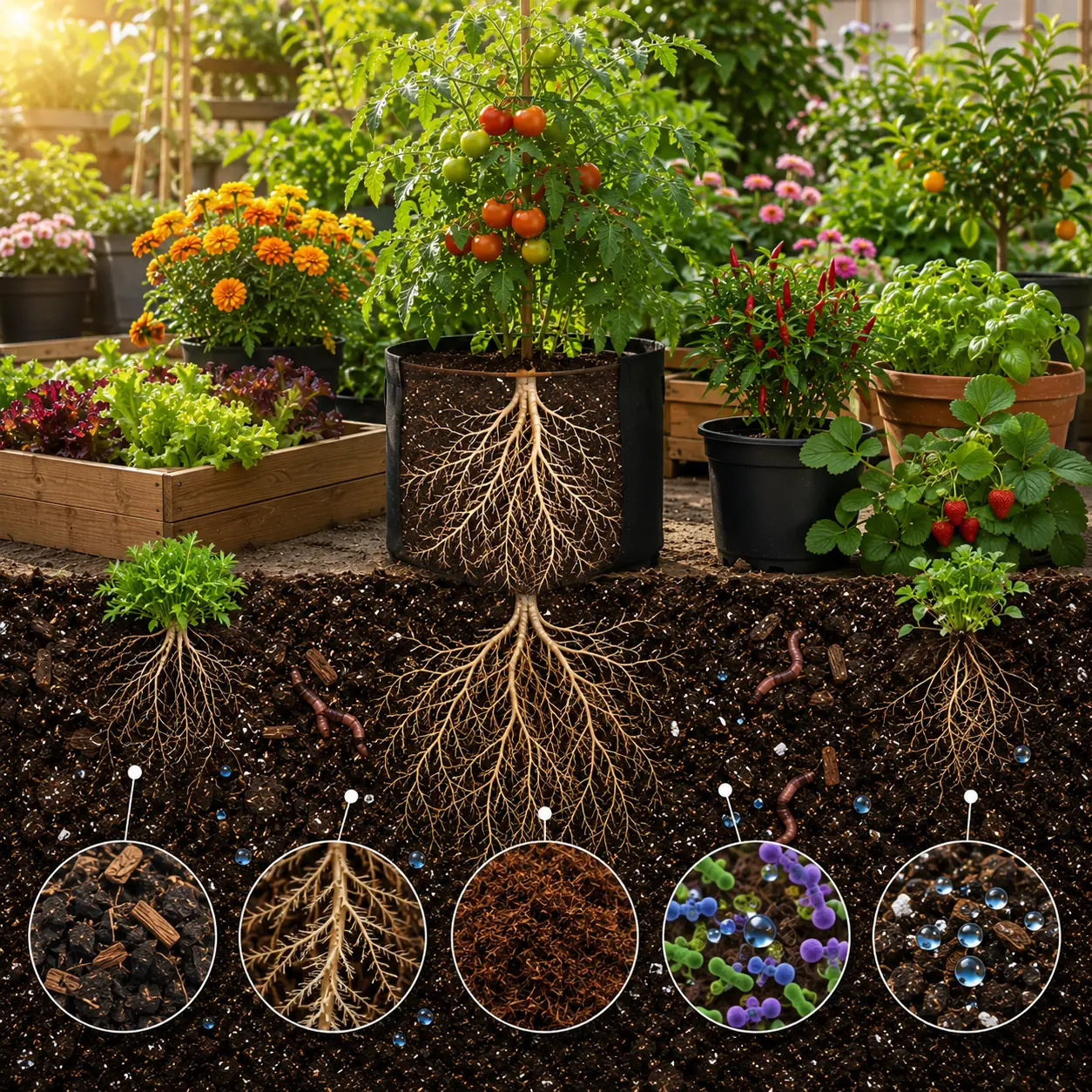
Organic Potting Soil Mix
Provides nutrients, structure, and healthy growing conditions for container plants.
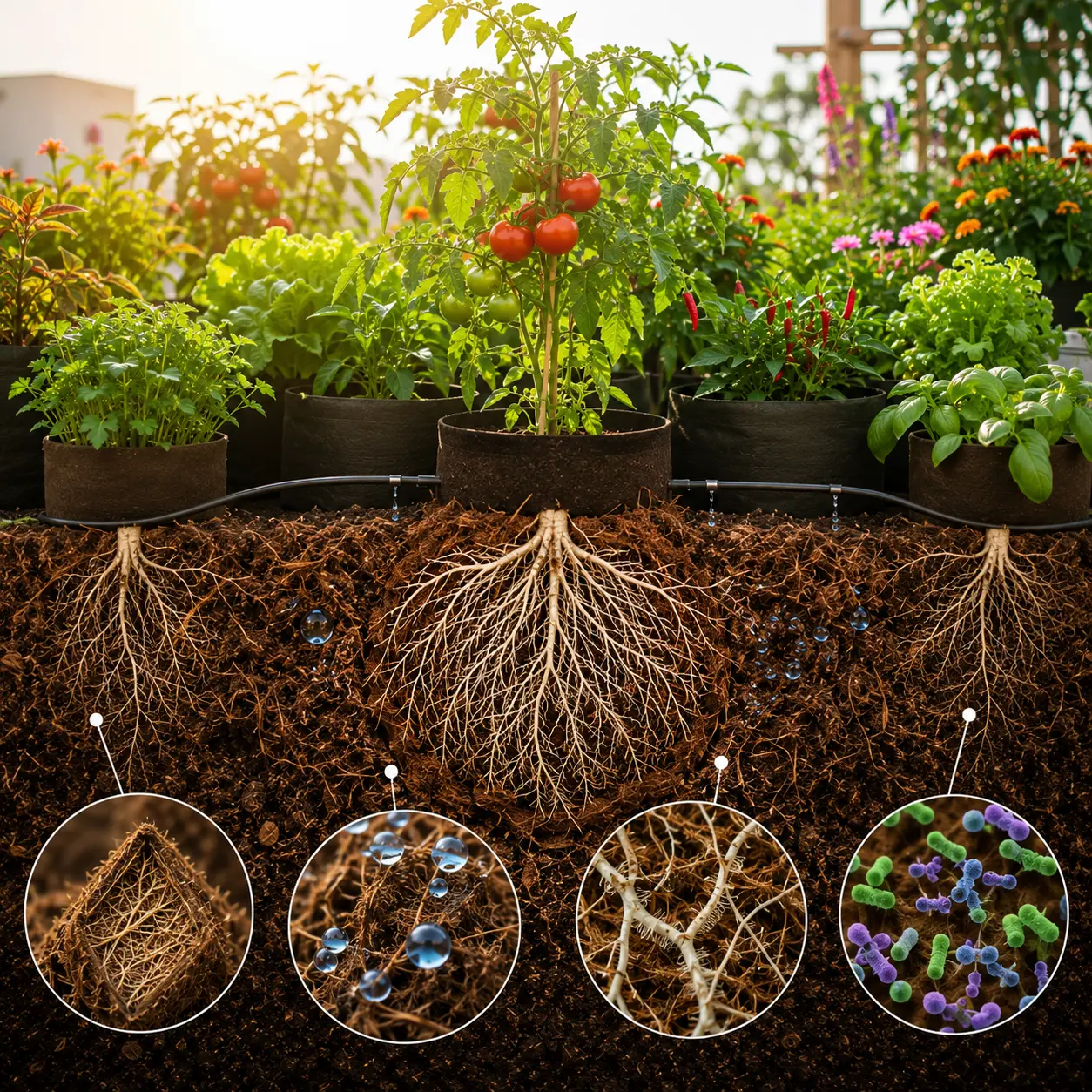
Coco Peat Growing Medium
Enhances moisture retention while maintaining excellent root-zone aeration.

Grow Bags for Plants
Improve drainage, root aeration, and vegetable production in limited spaces.

Plastic Pots for Plants
Ideal containers for seedlings, ornamentals, herbs, and balcony gardens.
Quick Facts
| Attribute | Detail |
|---|---|
| Common names | Brahmi, Water Hyssop, Herb of Grace |
| Scientific name | Bacopa monnieri (L.) Pennell |
| Regional names | Brahmi (Hindi, Bengali), Nirbrahmi / Brahmi (Marathi), Neer Brahmi (Tamil), Sambrani Chettu (Telugu), Jalanimba (Sanskrit), Jalabrahmi (Kannada), Brahmi (Malayalam), Neerbrahmi (Gujarati) |
| Plant type | Perennial creeping herb; semi-aquatic |
| Mature size | 10–30 cm tall; spreads indefinitely as a ground cover or floating mat |
| Sunlight | Full sun to partial shade |
| Water needs | High; tolerates waterlogging and standing water |
| Best season to plant | Monsoon onset (June–July) or post-monsoon (September–October) |
| Suitable states | All Indian states; naturally abundant in West Bengal, Kerala, Tamil Nadu, Andhra Pradesh, Bihar, and Uttar Pradesh |
| Varieties | Primarily one widely cultivated species; some regional ecotypes exist. See Varieties Guide for detail. |
Choosing the Right Spot
Brahmi’s natural habitat is the margins of ponds, rivers, paddy fields, and marshy ground across India’s plains. This tells you almost everything about where it wants to grow: consistently moist to wet soil, warm temperatures, and reasonable light.
In home gardens, a spot near a water source — a tap, a small pond, or even a consistently shaded wall that stays damp — suits brahmi well. It tolerates partial shade better than most herbs, making it a practical choice for spots that receive three to four hours of direct sunlight and indirect bright light for the rest of the day.
Container growing is extremely well-suited to brahmi. A wide, shallow tray or pot — 30–40 cm diameter, 15–20 cm deep — allows the creeping stems to spread naturally. Brahmi can also be grown in a water feature or small pot placed inside a larger water-filled tray, keeping the root zone permanently moist. This setup, common in traditional Indian homes, produces the most vigorous growth of any growing method.
Ground planting works well in garden beds that receive consistent moisture or near natural drainage channels, where the soil stays damp. Brahmi spreads laterally and becomes a dense, attractive ground cover — useful under taller plants where lawn grass struggles with shade and moisture.
Soil and Potting Mix
Brahmi is one of the few garden herbs that genuinely prefers heavy, moisture-retentive soil. Loamy to slightly clayey soil suits it well. It grows naturally in paddy field margins and riverbanks where soil is dense and consistently wet — conditions that would rot most other herbs within a fortnight.
For container growing, a mix of garden soil and compost in roughly equal parts works well. The deliberate addition of coarse sand — standard advice for most herbs — is unnecessary and counterproductive for brahmi; it increases drainage and dries the root zone faster than this plant prefers.
The common soil mistake Indian gardeners make with brahmi is using a standard potting mix designed for drainage. Brahmi planted in a light, fast-draining mix requires watering twice daily in summer to maintain the moisture it needs, which is impractical. Use heavier soil or add a layer of clay-rich garden soil to the base of the pot to slow drainage.
Soil pH of 5.5–7.0 is acceptable, with slightly acidic conditions typical of its natural habitat.
Planting — Season and Method
Brahmi can be planted in two windows in Indian conditions. The primary window is monsoon onset — June to July — when rainfall provides consistent moisture automatically, and temperatures are warm enough for rapid establishment. The secondary window is post-monsoon — September to October — in South India and coastal regions where temperatures remain warm, and irrigation can supplement the receding rains.
Brahmi is almost always planted from stem cuttings rather than seed. Seeds exist and are viable, but they are tiny, slow to germinate, and unnecessary when stem cuttings root so readily. A 10–15 cm cutting placed in moist soil or simply laid on the surface of a wet growing medium develops roots within seven to ten days under warm conditions.
For ground planting, space cuttings 15–20 cm apart. Brahmi fills in quickly and produces a continuous mat — generous spacing is not required. For containers, three to five cuttings placed around the perimeter of a wide shallow pot establish rapidly and begin covering the surface within three to four weeks.
Water thoroughly at planting and do not allow the soil to dry out at any point during establishment. Unlike most newly planted herbs that benefit from brief dry periods to encourage root exploration, brahmi roots best when moisture is consistently available.
Watering
Brahmi is the exception to nearly every standard watering rule for Indian home gardens. It does not need to dry out between waterings. It does not suffer from root rot in wet soil the way most herbs do. It can tolerate standing water around its roots for extended periods — a behaviour reflecting its semi-aquatic natural habitat.
For the first four to six weeks, keep the soil consistently moist — water daily in summer, every other day in cooler months, and rely on rain during the monsoon. Established plants maintain the same high moisture requirement indefinitely.
The overwatering problem that applies to almost every other herb is essentially reversed for brahmi: the failure mode is underwatering, not overwatering. A brahmi plant that has been allowed to dry out completely will wilt dramatically, lose some leaves, and recover slowly over one to two weeks after rewatering — but it will recover. A plant kept consistently moist never needs this recovery period.
During the monsoon, outdoor brahmi needs no supplemental watering. For indoor container plants, water daily or set the pot in a saucer of water and allow it to draw moisture upward — the tray-standing method works very well for this species.
Fertiliser
Brahmi is a light to moderate feeder. In its natural habitat, it grows in nutrient-rich sediment and water — fertile, organically active conditions — so it responds well to regular organic feeding.
At planting, incorporate well-rotted compost or vermicompost into the soil or pot at a generous handful per container. Once established, a diluted liquid feed of vermicompost leachate or cow dung liquid (jeevamrit) applied every three to four weeks through the growing season supports steady, productive growth.
Mustard cake water — 50 g soaked in 1 litre of water for 24 hours, diluted 1:5 before use — is a practical and effective organic liquid feed for brahmi that most Indian gardeners can prepare easily.
Avoid high-nitrogen synthetic fertilisers. As with kalmegh, excess nitrogen pushes soft, fast vegetative growth at the expense of the active compound concentration — bacosides — that give the plant its medicinal value.
Neem cake worked into the soil at planting provides slow-release nutrition alongside some degree of pest suppression in the root zone, a practical combination for a perennial herb.
Common Problems and Fixes
Brahmi, in appropriate moisture conditions, is remarkably trouble-free. The problems you are most likely to encounter are:
Aphid colonies on new growth, particularly in the post-monsoon and early winter period, when natural predator populations decline.
Fungal leaf spot during peak monsoon humidity in crowded or poorly aerated growing conditions.
Stem and root rot in containers where drainage is so poor that the soil becomes anaerobic rather than merely wet — there is a difference between moist, oxygenated soil and stagnant, airless muck.
For full diagnosis and treatment, see the Brahmi Problems Guide.
When Will You See Results?
Brahmi establishes and begins spreading within three to four weeks of planting from cuttings under monsoon conditions. A container planted in June typically covers the soil surface completely and produces harvestable material by August or September.
The plant does not flower dramatically or produce conspicuous fruit — the small white flowers, appearing intermittently through the year, are modest and easily overlooked. The reward for brahmi growers is the leaf harvest, which is available within six to eight weeks of establishment and continues year-round in South India and coastal regions.
In North India, brahmi slows significantly in winter and may partially die back in frost-prone areas, but roots survive and regrow vigorously at the first warmth of March to April. Year-round harvest is fully achievable in most of India south of the Vindhyas.
Propagation
Brahmi propagates with extraordinary ease from stem cuttings. Any stem section with two to three leaf nodes, placed in water or pressed onto moist soil, develops roots within a week under warm conditions — making it one of the most reliably propagated herbs in the Indian home garden.
Water propagation is practical and visible: place cuttings in a glass of water on a sunny windowsill and roots appear within five to seven days. Pot up when roots are 2–3 cm long.
Layering is even simpler — where creeping stems touch moist soil, they root spontaneously at nodes without any intervention. Established brahmi plants continually produce rooted sections that can be separated and moved to new locations.
For anyone wanting to expand their brahmi planting or share plants, a single established container produces dozens of rooted cuttings per season with no special technique required.
Container Growing
Brahmi is exceptionally well-suited to container growing and is one of the best herbs for the water tray method — placing the pot in a shallow tray of water that is kept topped up. This mimics the plant’s natural waterside habitat and eliminates the risk of the soil drying out between waterings.
Minimum pot size is 25–30 cm in diameter and 15 cm in depth. Wider is better than deeper — Brahmi’s root system is shallow and horizontal, not deep. A broad terracotta tray or a traditional clay water pot works well and maintains even moisture through the pot walls.
Repotting is rarely necessary for brahmi in the conventional sense. When a container becomes too crowded — stems piling up and spilling over heavily — divide the plant, refresh the soil with new compost, and replant a portion of the original root and stem mass. Do this in June at monsoon onset for the fastest recovery.
Plastic containers retain moisture longer than terracotta and are appropriate for brahmi. If using terracotta, water frequency increases, and the tray method becomes more important.
Harvesting
Brahmi leaves and tender stem tips are the harvestable portions. Harvest by pinching or cutting stem tips — this simultaneously removes the harvest material and encourages lateral branching, producing a denser, more productive plant over time.
Leaves can be harvested from six to eight weeks after establishment. Regular harvesting — every two to three weeks during the growing season — keeps the plant compact and actively growing rather than allowing it to become a sprawling, dense mat that develops woody base stems.
Fresh leaves are used directly in traditional preparations. For drying, spread harvested material in a single layer in the shade. Brahmi’s small, thin leaves dry within two to three days in warm, well-ventilated conditions. Store dried material in an airtight container away from moisture and direct light. Dried brahmi retains potency for six to twelve months.
Seasonal Protection
Brahmi is genuinely cold-sensitive. In North Indian states — Delhi, UP, Rajasthan, Punjab, Bihar — the plant slows significantly from November and may die back to ground level in hard frosts. Roots survive mild freezes in the ground; container plants should be moved indoors or under cover before night temperatures drop below 5°C.
In South India, coastal regions, and the Northeast, brahmi grows year-round with no cold protection needed. In these regions, it is essentially a permanent ground cover or container plant that requires only the occasional trim and consistent moisture.
Summer heat in North India — May and June, before the monsoon — stresses brahmi if combined with water stress. In this period, container plants benefit from afternoon shade and the tray watering method to maintain moisture. Once the monsoon arrives, brahmi recovers rapidly from any summer stress.
Key Takeaways
- Brahmi’s single most important requirement is consistent moisture — it is semi-aquatic by nature and behaves differently from almost every other Indian medicinal herb in terms of water needs.
- Container growing in a water tray is the most practical and productive method for apartment and balcony gardeners.
- Stem cutting propagation is so reliable that a single purchased plant can supply an unlimited number of new plants within one season.
- In South India and coastal regions, brahmi is effectively a year-round perennial harvest. In North India, protect containers from frost and expect winter dormancy.
- Harvest regularly — every two to three weeks — to keep plants productive and prevent the development of a dense, woody mat.
Brahmi rewards the gardener who remembers one rule above all others: keep it wet. Do that, and this ancient herb takes care of the rest.


