Arrowroot Varieties: Which One Should You Grow in India?
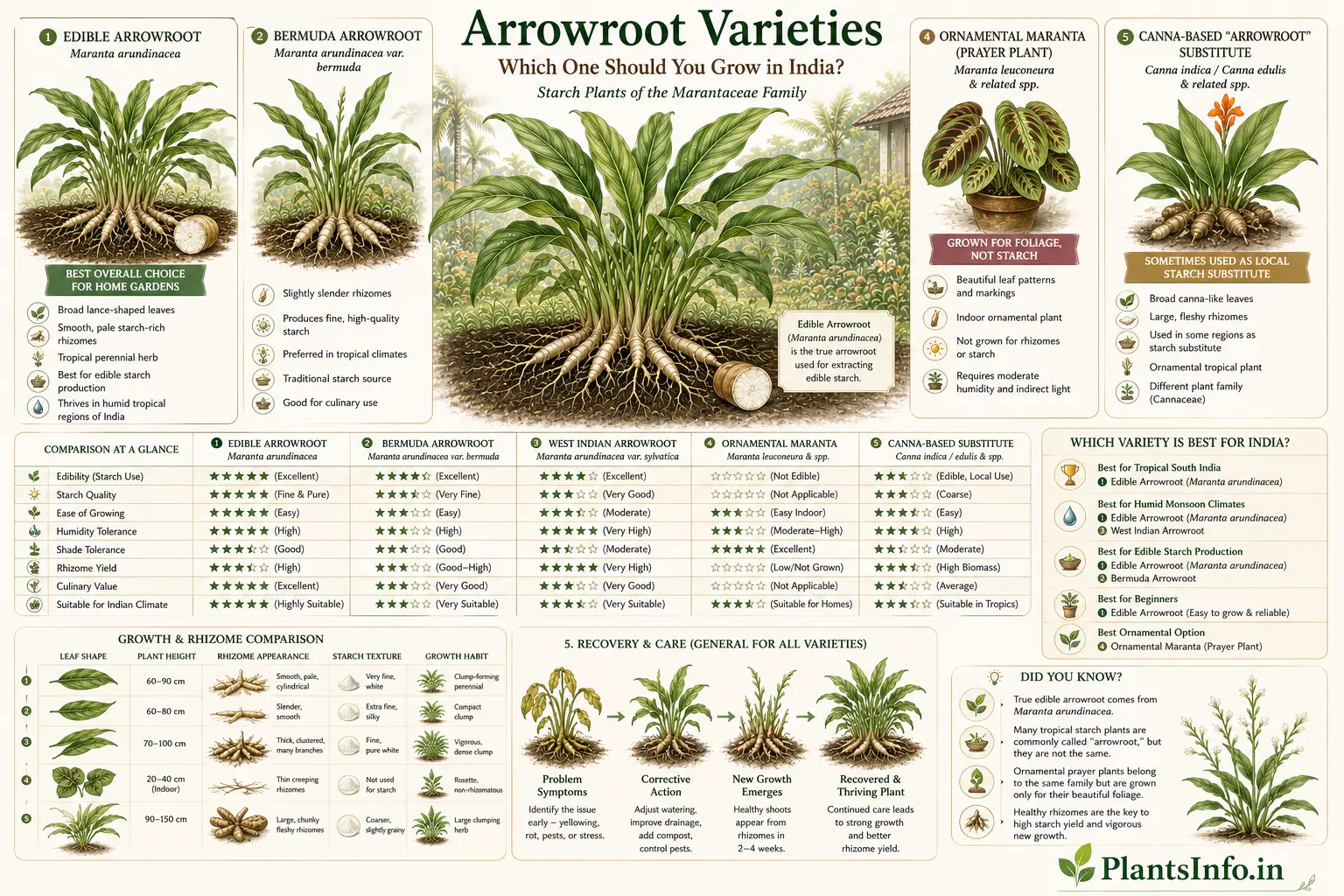
Quick Answer: Arrowroot has no formally named commercial cultivars widely available in Indian nurseries or through agricultural supply channels. What you will encounter is unimproved landrace material and regional ecotypes — with the most important distinction being whether you are growing Maranta arundinacea (true arrowroot) or Curcuma angustifolia (Indian arrowroot), which are two different plants often sold under the same name.
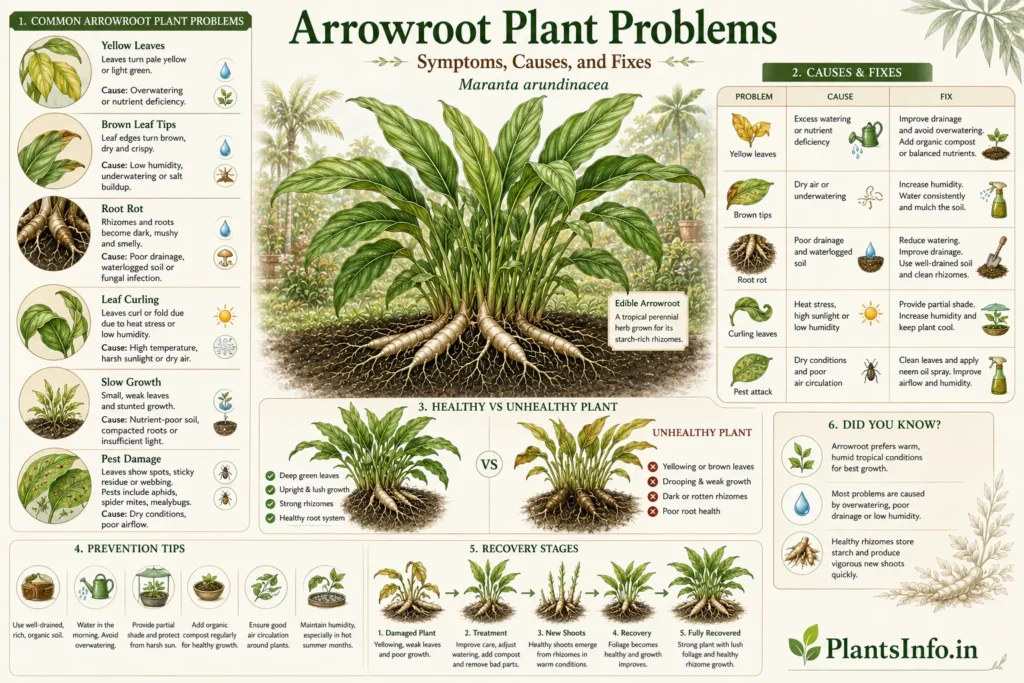
See also: Arrowroot plant profile, how to grow it, common problems, its flowering season, and its benefits.
Most Indian home gardeners who grow arrowroot got their first rhizomes from a neighbour, a kitchen garden enthusiast, or a rural market — not a seed catalogue. The informal nature of arrowroot’s distribution in India means the variety question is largely a question of provenance and botanical identity rather than cultivar selection.
Recommended Products
Disclosure: As an Amazon Associate, PlantsInfo may earn from qualifying purchases.
🌱 Growing Essentials
The following products can help with container gardening, potting, root development, soil management, and healthy plant growth.
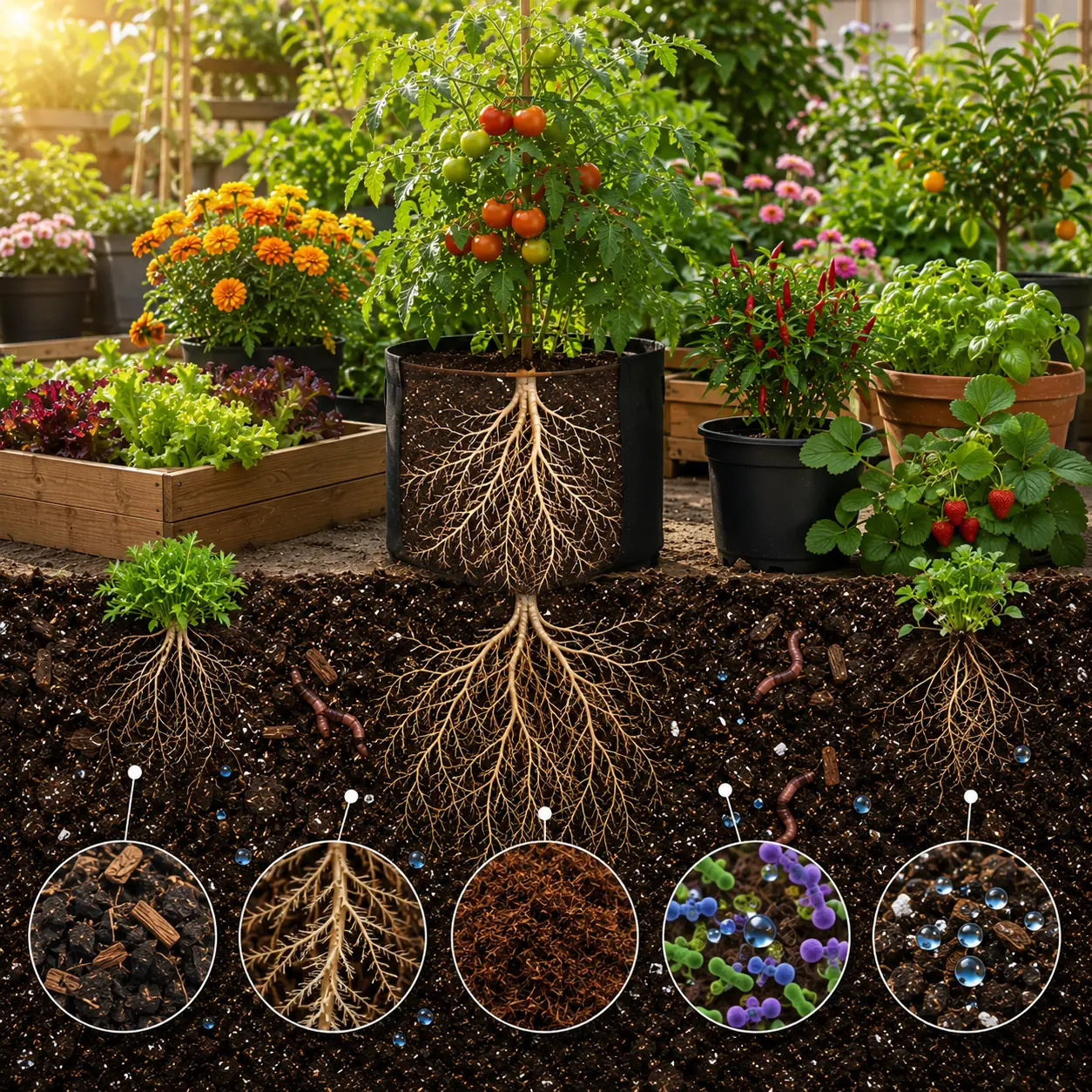
Organic Potting Soil Mix
Provides nutrients, structure, and healthy growing conditions for container plants.
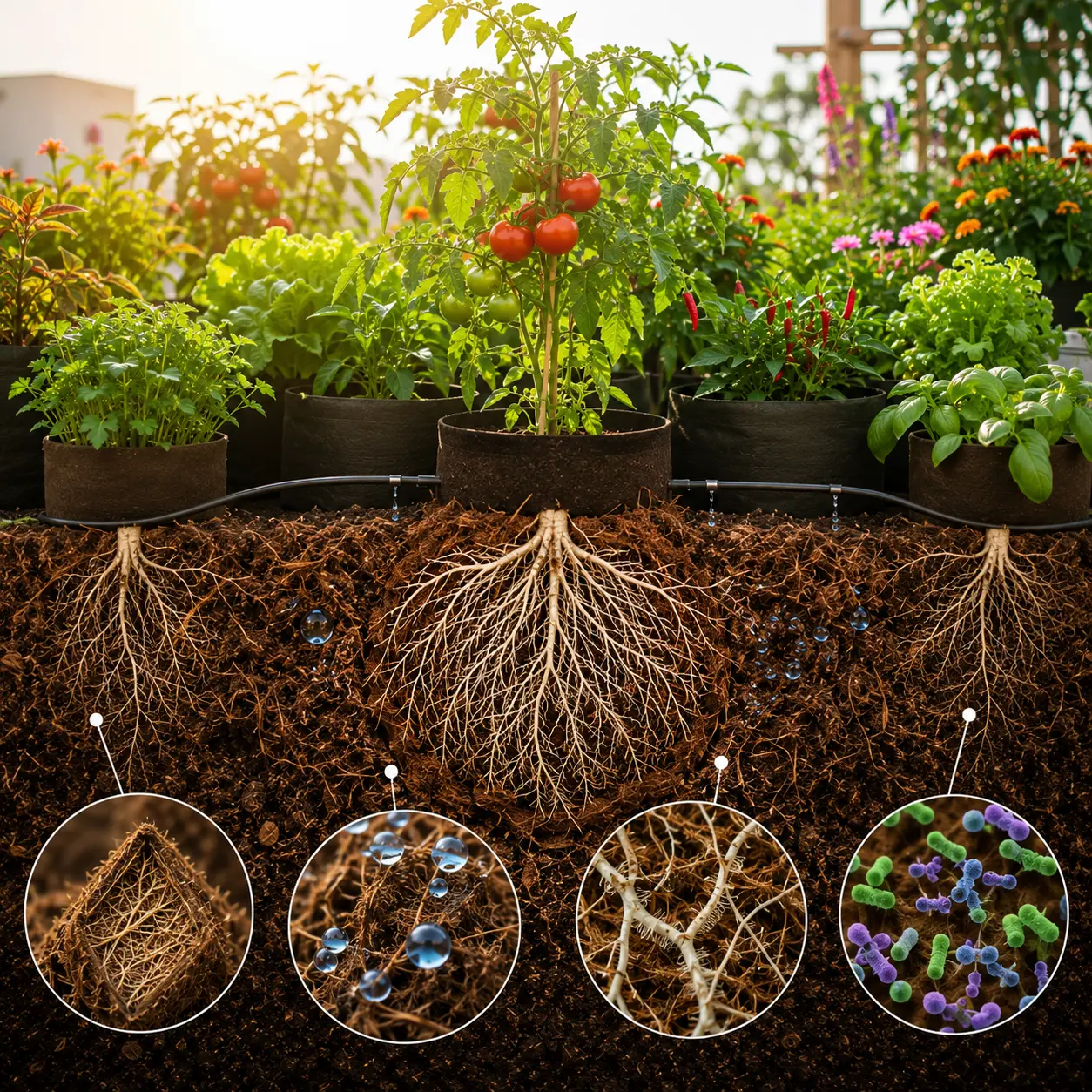
Coco Peat Growing Medium
Enhances moisture retention while maintaining excellent root-zone aeration.

Grow Bags for Plants
Improve drainage, root aeration, and vegetable production in limited spaces.

Plastic Pots for Plants
Ideal containers for seedlings, ornamentals, herbs, and balcony gardens.
This post helps you understand what the actual differences between available material are, and how to make a deliberate choice rather than planting whatever the local nursery happens to label “ararot.”
Quick Variety Selector
| Variety / Type | Type | Plant Size | Best For | Suited To |
|---|---|---|---|---|
| Landrace Maranta arundinacea (standard) | Open-pollinated, unimproved | Medium (60–120 cm) | General starch production, infant nutrition, home use | Kerala, Tamil Nadu, coastal Karnataka, West Bengal, Northeast India |
| Kerala / South Indian ecotype | Unimproved regional selection | Medium-large | High-humidity gardens, traditional homegardens | Kerala, coastal South India |
| Northeast India ecotype | Unimproved regional selection | Medium | High-rainfall hill garden conditions | Assam, Meghalaya, Tripura, Arunachal |
| Curcuma angustifolia (Indian Arrowroot) | Distinct species, often co-sold | Medium (60–90 cm) | Different application — native Indian starch plant | Central India, MP, Chhattisgarh, dry zones |
Varieties in Detail
Landrace Maranta arundinacea (Standard)
The standard landrace material circulating through South Indian home gardens, AYUSH herb plots, and agricultural university demonstration gardens is unimproved Maranta arundinacea with no selection history beyond the informal preference of growers for healthy-looking rhizomes at replanting time. It is the baseline material and the comparison point for all other types discussed here.
This material is reliably productive in warm, humid conditions. Its rhizomes are elongated, white to cream, and produce starch of the quality traditionally associated with arrowroot — fine-grained, clear when cooked, and easily digested. Its notable strength is broad adaptability across South and coastal Indian conditions.
Its weakness is that it provides no special advantage in drought or cold conditions beyond the baseline tolerance of the species. Propagation is exclusively by rhizome division; seed saving is not practised. It is the correct choice for the vast majority of home gardeners in suitable growing regions.
Kerala / South Indian Ecotype
Kerala’s tradition of arrowroot cultivation — particularly in Thiruvananthapuram and Kollam districts — has, over generations of informal selection, produced material that is notably vigorous in high-humidity, partial-shade homegardens.
Plants from Kerala-origin rhizomes tend toward the larger end of the growth range (100–120 cm), with broader leaf spread and slightly higher rhizome yield per plant in humid conditions.
The Kerala ecotype performs best when grown in the traditional homegarden format — beneath coconut or banana canopies with consistent moisture from ambient humidity and periodic irrigation.
It is less suited to exposed garden beds or drier inland conditions than standard landrace material. If you are in coastal Kerala or Tamil Nadu and can source rhizomes from a productive local garden, this ecotype is worth prioritising over generic market material.
Northeast India Ecotype
Populations of arrowroot established across Assam, Meghalaya, and Tripura have adapted over time to the specific conditions of the northeast — high-rainfall, high-humidity environments with acidic soils and a growing season defined by the northeast monsoon rather than the southwest monsoon calendar.
This material typically shows reliable germination and establishment under the heavy rainfall conditions that can stress more tropical-origin material, and it is tolerant of the slightly acidic soils (pH 5.5–6.5) common in northeast India’s tea-country region.
Its notable weakness is that it has not been evaluated comparatively against standard landrace material for starch yield or quality — the ecotype distinction is observational rather than research-documented.
For gardeners in the northeast, sourcing locally grown rhizomes from established gardens in the region is strongly preferred over attempting to establish Kerala or South Indian material in conditions it was not selected for.
Curcuma angustifolia (Indian Arrowroot — a separate species)
This entry is included not as a variety of Maranta arundinacea but as the most important distinction a buyer in Indian markets needs to understand. Curcuma angustifolia — called Tikur or Tikhur in Hindi, Tavaksiri in some Ayurvedic texts — is a native Indian rhizome plant in the ginger family. It produces a starch marketed and used under the “arrowroot” name across much of central India (Madhya Pradesh, Chhattisgarh, parts of Maharashtra).
It is not the same plant as Maranta arundinacea. The rhizomes have a distinctly different appearance — shorter, more rounded, and faintly aromatic (characteristic of the Zingiberaceae family). The starch is broadly similar in use but not identical in properties.
For gardeners in central India or drier zones where Maranta arundinacea grows poorly, Curcuma angustifolia is a legitimate and ecologically appropriate native alternative — not a substitute for Maranta but a valid starch crop in its own right. Do not conflate the two when sourcing planting material or interpreting growing guides.
Head-to-Head Comparison
Standard Landrace vs. Kerala Ecotype
For a gardener in coastal Kerala or Tamil Nadu, the Kerala ecotype wins on yield per plant and traditional quality — provided the high-humidity, partial-shade homegarden conditions it was selected for are available.
In any other Indian region, the standard landrace is the better choice because it is more adaptable, easier to source from verified botanical suppliers, and performs reliably without the specific microclimate that the Kerala ecotype performs best in. Neither type has a meaningful advantage in starch quality for home use — the difference is in vigour and yield under specific conditions, not in the end product.
Maranta arundinacea vs. Curcuma angustifolia
These are not competing varieties but complementary crops for different geographic and climatic niches. Maranta arundinacea is the better choice in humid tropical regions — Kerala, coastal South India, Bengal, and the northeast — where its moisture requirements are naturally met.
Curcuma angustifolia is the more appropriate choice in central India’s semi-arid zones, where it grows natively and where the conditions needed for Maranta are difficult to provide. For starch quality in culinary use, Maranta produces a finer, clearer product; for dry-zone cultivation without intensive irrigation, Curcuma angustifolia is the more realistic crop. Neither is inferior overall — the better plant is the one suited to where you are.
How to Choose for Your Space
For a container or terrace garden in South India, use standard landrace Maranta arundinacea in a container of at least 35–40 cm depth. Place in morning sun with afternoon shade. Expect one good harvest per year and plan for annual replanting.
For a small ground plot under 100 sq ft in a suitable humid zone, four to six arrowroot plants spaced 35–40 cm apart will supply a household with adequate starch and still leave room for other companion plantings beneath a fruit tree or along a shaded boundary.
For a larger garden or backyard in South India or the northeast, arrowroot is most productive when planted as the understorey layer of a mixed food garden — beneath bananas, coconut, or tall fruit trees. This mimics its natural growing conditions and produces the best yields with the least irrigation input.
For central and dry-zone India, consider Curcuma angustifolia instead of Maranta arundinacea if irrigation is not reliably available. It is better adapted to those conditions and is a genuinely productive native crop.
Regional Suitability
- In Kerala and coastal Tamil Nadu, standard landrace or Kerala ecotype material performs excellently — the climate matches the plant’s preferred conditions closely.
- In West Bengal and Northeast India, the northeast ecotype or standard landrace material both work well; source locally grown rhizomes wherever possible.
- In coastal Karnataka and Andhra Pradesh, standard landrace performs well with partial shade and consistent moisture.
- In central India (MP, Chhattisgarh), Curcuma angustifolia is more regionally appropriate than Maranta arundinacea.
- In North India (above approximately 23°N in dry-climate zones), Maranta arundinacea is not recommended as a productive home crop without significant irrigation and humidity management.
Where to Source These Varieties in India
Reliable sources for Maranta arundinacea rhizomes in India include AYUSH medicinal plant gardens (most major government hospitals and research institutes maintain them), Krishi Vigyan Kendras (KVKs) in arrowroot-growing districts of Kerala and Tamil Nadu, state horticulture department demonstration gardens, and established home gardeners in South Indian and northeast Indian communities. Agricultural university extension departments in Kerala (particularly Kerala Agricultural University) maintain and distribute verified planting material.
When buying from informal market sources, verify that the rhizomes are elongated, smooth, white to cream, and without the distinctive spicy aroma of the Zingiberaceae family. Firm, plump rhizomes with visible node buds are the sign of viable planting material.
Key Takeaways
- No named commercial cultivars of arrowroot exist in India — all available material is landrace or regional ecotype.
- The single most important sourcing decision is botanical clarity: Maranta arundinacea and Curcuma angustifolia are different plants sold under the same name.
- Kerala and northeast ecotypes offer marginal advantages in their specific home conditions, but standard landrace material is the correct choice for most gardeners.
- Curcuma angustifolia is not inferior — it is the ecologically appropriate arrowroot crop for central and drier India.
- Source from AYUSH gardens, KVKs, or verified established gardens rather than casual nursery or market purchases, where botanical identity cannot be confirmed.
Conclusion: The arrowroot variety question resolves simply once you know where you are growing — match the material to the climate, verify the botany, and the plant will handle the rest.