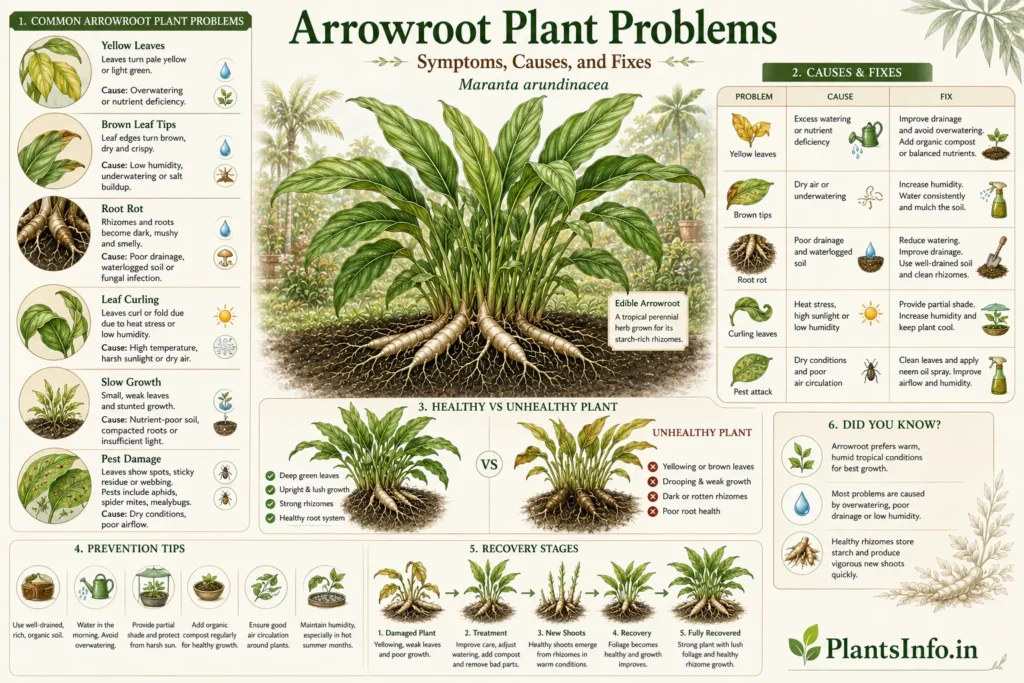
Arrowroot Plant: Key Facts, Names, and What You Should Know

In Kerala homes, arrowroot has a name that also means “tender” — Koova — and the word captures something the plant’s botanical profile does not: the specific gentleness for which this starch has been trusted with infants and the unwell for centuries.
See also: Arrowroot plant profile, how to grow it, common problems, its flowering season, and its benefits.
Names in Different Languages
| Language | Name |
|---|---|
| English | Arrowroot, West Indian Arrowroot |
| Hindi | Ararot, Tikhur |
| Bengali | Ararot, Shishumool |
| Tamil | Koovai Kilangu, Araruttu |
| Telugu | Paala Goranta, Araroot |
| Marathi | Ararot, Tikhur |
| Kannada | Araroot Gida, Koova |
| Malayalam | Koova, Ararot |
| Gujarati | Ararot |
| Punjabi | Ararot |
| Scientific name | Maranta arundinacea L. |
| Family | Marantaceae |
The most searched name in India is Ararot in Hindi-language searches, and Koova in Kerala and South Indian searches. The English name “arrowroot” is thought to derive from the Arawak word aru-aru (meal of meals) — though a competing folk etymology connects it to the use of the plant’s pulped rhizome to draw out poison from arrow wounds in its American Caribbean origin. Neither etymology is definitively established; the Arawak derivation is considered more linguistically credible by most ethnobotanical sources.
Recommended Products
Disclosure: As an Amazon Associate, PlantsInfo may earn from qualifying purchases.
🌱 Growing Essentials
The following products can help with container gardening, potting, root development, soil management, and healthy plant growth.
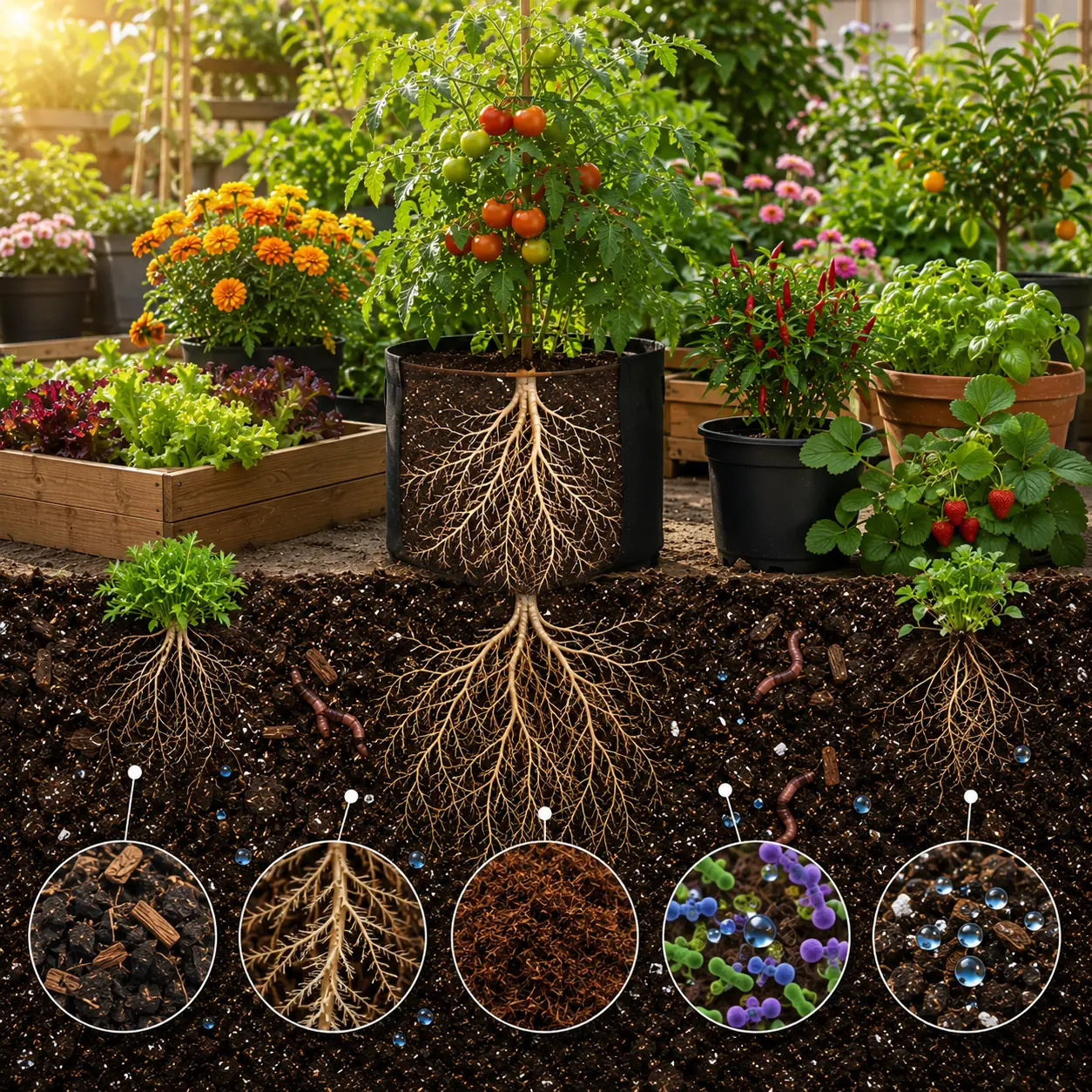
Organic Potting Soil Mix
Provides nutrients, structure, and healthy growing conditions for container plants.
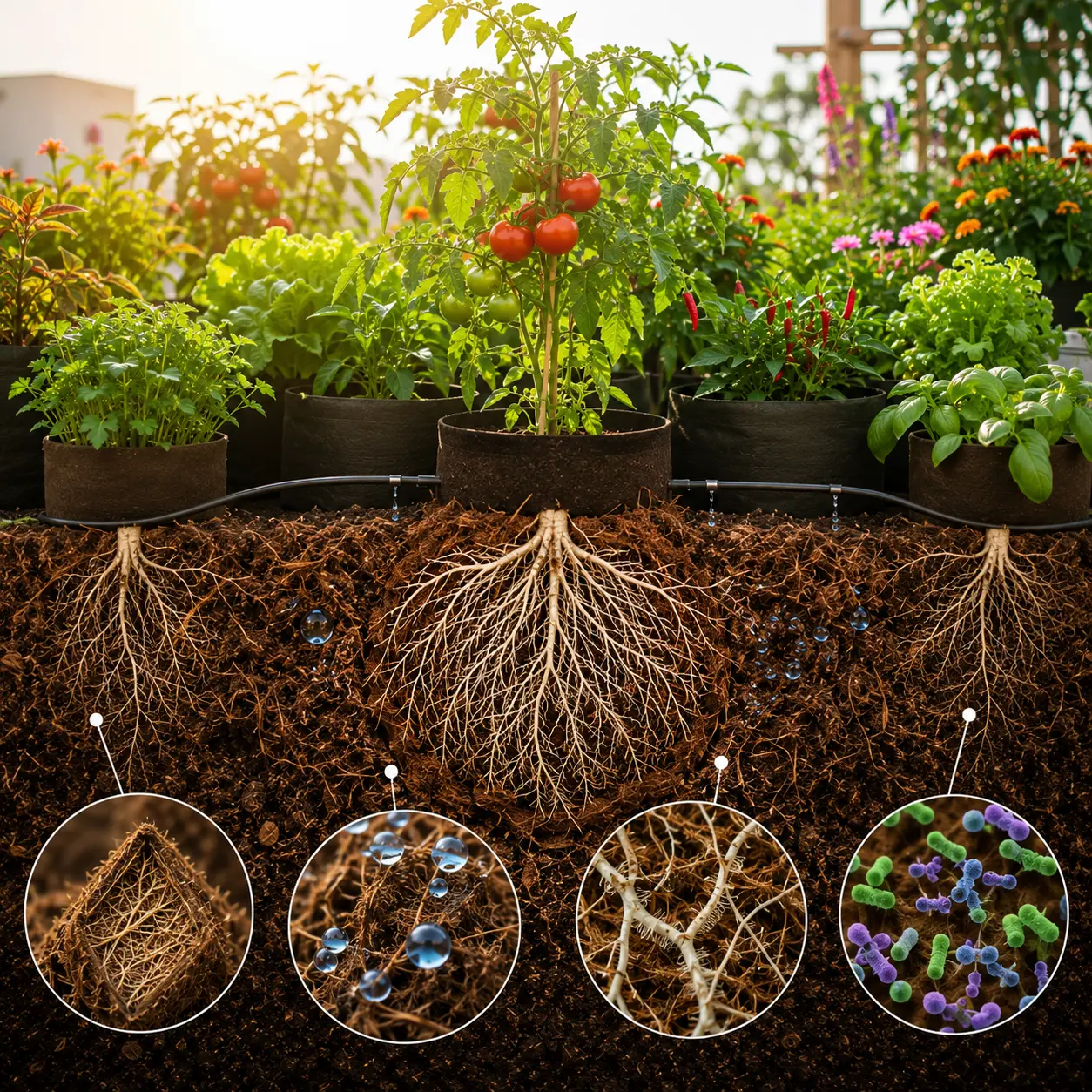
Coco Peat Growing Medium
Enhances moisture retention while maintaining excellent root-zone aeration.

Grow Bags for Plants
Improve drainage, root aeration, and vegetable production in limited spaces.

Plastic Pots for Plants
Ideal containers for seedlings, ornamentals, herbs, and balcony gardens.
What Does It Look Like?
Arrowroot is a clump-forming perennial herb, typically 60–120 cm tall in cultivation. The stems are slender and upright, bearing alternate leaves that are broad, oval to lanceolate, and bright to mid-green — typically 15–30 cm long and 8–15 cm wide. The leaf surface is smooth and slightly waxy. The plant’s visual similarity to other Marantaceae members (including the ornamental prayer plants) is immediately apparent to anyone familiar with that family.
The flowers are small, white, and irregularly shaped, carried on branching panicles above the foliage during the brief flowering period in the growing season. They are not showy and are easily missed. The rhizomes — the harvested part — are pale white to cream, cylindrical, finger-shaped, covered in thin papery scales at the nodes, and can grow 20–30 cm in length in well-grown conditions. The cut surface of a fresh rhizome is white and slightly mucilaginous.
Where Does It Grow in India?
Arrowroot is not native to India — it originates from the Caribbean and tropical Americas and was introduced to the Indian subcontinent, most likely through Portuguese and later British colonial trade routes, several centuries ago. It is now extensively naturalised and cultivated in the humid tropical regions of India.
The primary commercial and home cultivation zones are Kerala (where it is most deeply culturally embedded), Tamil Nadu, Karnataka, the coastal districts of Andhra Pradesh and Odisha, West Bengal, and the northeastern states (Assam, Meghalaya, Tripura). It grows best at low to moderate altitudes — below 1,000 metres — in warm, humid conditions with well-distributed rainfall or reliable irrigation. It is not well adapted to the dry continental climate of central and northwestern India, where humidity is insufficient during critical growth phases.
In Kerala, arrowroot cultivation is particularly concentrated in Thiruvananthapuram and Kollam districts, where cottage-scale starch processing has historical commercial significance alongside home garden cultivation.
What Is It Used For?
Arrowroot’s primary use is starch production — the rhizomes are processed into a fine white powder used in infant nutrition, convalescent foods, and culinary thickening; full nutritional and culinary detail belongs in the Benefits Guide. In traditional South Indian and Ayurvedic medicine, arrowroot preparations are used for digestive recovery and as a first weaning food.
The leaves are used as a temporary food wrapping material in some Kerala traditions, particularly for steamed preparations. The plant functions as a productive shade-loving understorey component in mixed homegardens beneath coconut and banana. In some rural communities, the fresh rhizome pulp is applied topically as a traditional remedy for minor skin irritations and insect bites.
Is It Easy to Grow?
Honest answer: yes, within the right climate zone. In Kerala, Tamil Nadu, coastal Karnataka, West Bengal, and the northeastern states — anywhere with genuine tropical humidity and rainfall — arrowroot is genuinely easy. It grows with minimal intervention in appropriate conditions.
In drier inland gardens, it becomes moderate difficulty due to the need for consistent moisture management through the dry season. In North India, above 23°N latitude in non-humid zones, growing arrowroot as a productive crop requires more active management and is probably not worth the effort compared to other root crops better suited to those conditions.
⚠ Special Flags
Commonly confused species: Maranta arundinacea is occasionally confused with Curcuma angustifolia (Indian Arrowroot, also called Tikur or Tikhur in Hindi), which is an entirely different plant in the Zingiberaceae family. Both produce starch used under the “arrowroot” name in Indian markets — but they are botanically unrelated.
Curcuma angustifolia is native to India and produces a similar starch; the two plants are complementary rather than competing, but the distinction matters for anyone growing the plant specifically for botanical or medicinal reasons. Maranta arundinacea has smooth, elongated rhizomes without the distinctive turmeric-family smell of Curcuma angustifolia.
No toxicity concerns: Arrowroot is safe for consumption, including by infants and the elderly. There are no documented toxicity concerns for any part of the plant.
Frequently Asked Questions
Is Koova (arrowroot) the same as the arrowroot sold in Indian supermarkets?
Usually, but not always. Commercial arrowroot powder in Indian markets is sometimes derived from Curcuma angustifolia (Indian arrowroot) or even cassava rather than Maranta arundinacea. The end-use properties are broadly similar, but the plants are botanically distinct. For home cultivation, ensure you source Maranta arundinacea rhizomes specifically.
Can arrowroot be grown outside Kerala and South India?
Yes, in any sufficiently humid and warm Indian region — coastal Odisha, West Bengal, and the northeast are all suitable. In drier or cooler inland zones, it can be grown with more active moisture management, but it is more demanding than in its preferred humid tropical habitat.
Does arrowroot flower in Indian home gardens?
Yes, briefly — small white flowers typically appear in August–September during the monsoon growing season. They are not ornamentally significant, and their appearance and passing have no practical impact on rhizome development or harvest timing.
Conclusion: Arrowroot is a quietly useful plant — not a headline crop, not a medicinal powerhouse, but a plant that has earned its place in Indian homes through patient, reliable service.