Plant Guides

Carrot Benefits: Nutritional Benefits & Uses

Carrot benefits infographic showing nutrition, beta-carotene, culinary uses in India, traditional food value, and ecological role of flowering carrot plants.

Daucus carota is primarily valued as a food crop, with its edible storage root providing dietary fibre and nutrients and serving as a versatile ingredient in Indian cuisine. Its broader significance also includes established food-cultural value and an ecological role…

Carrot Flowering Season in India: When It Blooms

Carrot (Daucus carota) flowering season infographic showing vegetative growth, bolting, white compound umbels and mature dry fruits.

Quick Answer Quick Answer: Carrot (Daucus carota) flowering time depends on cultivar, temperature and growing conditions. Tropical types adapted to warmer climates generally have lower cold requirements for flowering than temperate types, but there is no single flowering calendar that…

Carrot Plant: Quick Facts, Names, and What to Know

Carrot plant (Daucus carota, family Apiaceae) showing finely divided leaves, orange storage roots, white umbrella-shaped flower clusters, and mature dry fruits.

Quick Answer The carrot, Daucus carota, is a herbaceous member of the parsley family, Apiaceae. The cultivated carrot is usually grown as an annual vegetable crop, although the species itself is biennial. Introduction The familiar carrot is botanically more varied…

How to Identify Carrot Plant Problems: Symptoms, Causes, and Fixes

Carrot plant problems showing leaf spots, soft rot, aphids, and root galls on carrot roots.

Quick Answer Carrot problems can arise from diseases, pests, root damage, environmental stress, or post-harvest conditions, and similar symptoms can have different causes. Start by identifying the visible symptom, then examine the affected foliage, roots, and growing conditions before choosing…

Carrot Seasonal Care Guide for India: What to Do Each Month?

Carrot seasonal care guide for India showing pre-monsoon, monsoon, post-monsoon and winter care, including watering, moisture management, drainage and harvesting.

Quick Answer Carrot care in India should change with seasonal conditions rather than follow one fixed routine throughout the year. Pre-monsoon heat can increase moisture stress, while monsoon rainfall can create excess moisture, so the root zone should remain consistently…

Carrot Varieties: Which One Should You Grow in India?

Comparison of eight carrot varieties for Indian gardens, including Pusa Kesar, Pusa Rudhira, Pusa Asita, Pusa Vrishti, Pusa Meghali, Pusa Yamdagni, Pusa Nayanjyoti and Nantes, with root colours and growing suitability.

Quick Answer For an Indian home gardener, climate fit is the factor that most separates carrot varieties. Tropical or Asiatic types are better suited to warmer conditions, while temperate types such as Nantes and Pusa Yamdagni are better suited to…

How to Grow Carrots: Care Guide for Indian Gardens

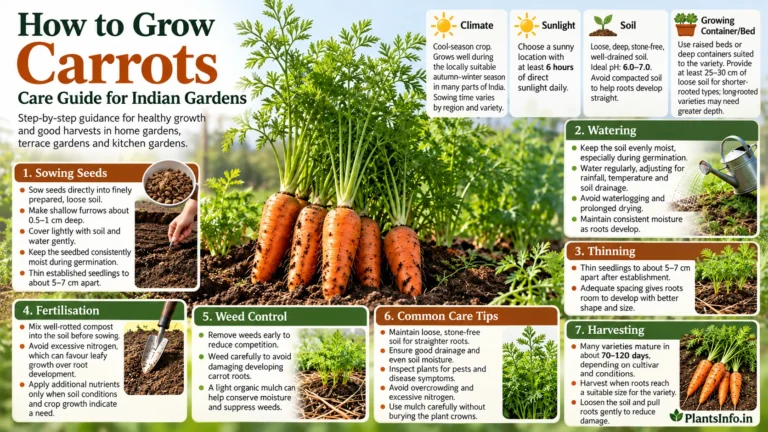
How to grow carrots in Indian gardens, including sowing, watering, thinning, soil preparation, fertilisation, weed control and harvesting.

Quick Answer Carrots can be grown successfully at home and are generally easy to moderate to grow when given loose, stone-free soil and consistent moisture. The main challenge is producing straight, well-formed roots rather than simply keeping the foliage healthy.…

Hybrid Rose Seasonal Care in India: Month-by-Month Guide

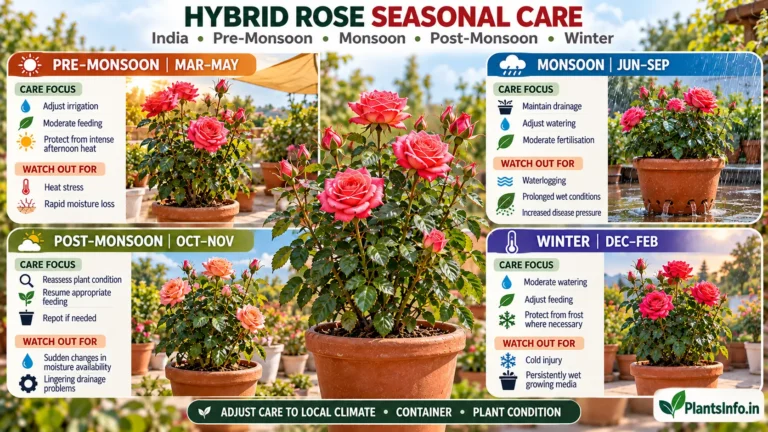
Hybrid rose seasonal care guide in India showing pre-monsoon, monsoon, post-monsoon, and winter care

Hybrid roses are particularly vulnerable during the pre-monsoon period (March–May), when high temperatures, intense sunlight, and rapid moisture loss can increase heat stress. Seasonal care should prioritise appropriate moisture management, protection from extreme afternoon heat, and adjustments to fertilisation according…

Hybrid Rose Plant Problems: Symptoms, Causes, and Fixes

Hybrid rose plant problems showing black spot, powdery mildew, aphids, spider mites, and watering stress with practical fixes

Hybrid roses (Rosa × hybrida) commonly experience fungal diseases, sap-sucking pest infestations, and environmental stress under Indian growing conditions. Early identification and appropriate care can help manage most problems, although established systemic viral infections have no reliable curative treatment and…