Plant Guides

Cocoa Plant Problems: Diseases, Pests & Treatment Guide
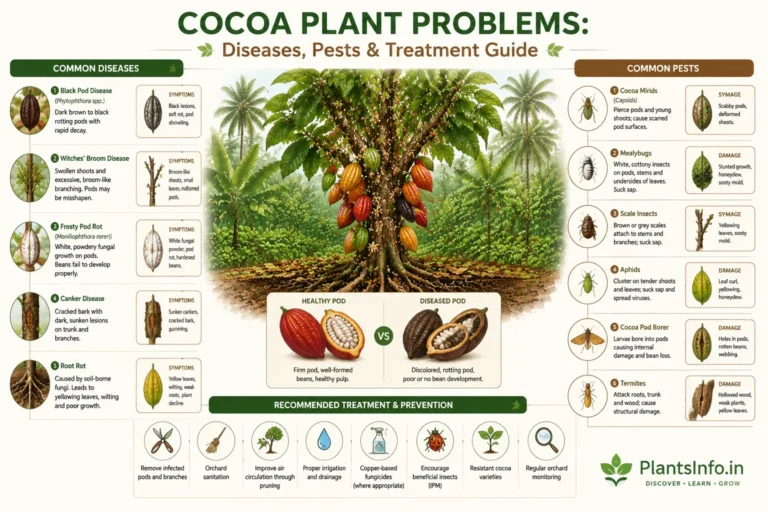
Cocoa plant problems infographic showing common diseases, insect pests, symptoms, healthy vs diseased cocoa pods, and treatment and prevention methods for Theobroma cacao.

Quick Answer Cocoa (Theobroma cacao L.) is vulnerable to several diseases, pests, nutritional disorders, and environmental stresses that can reduce tree vigour and pod production if left unmanaged. Worldwide, black pod disease (caused by Phytophthora spp.) is generally regarded as…
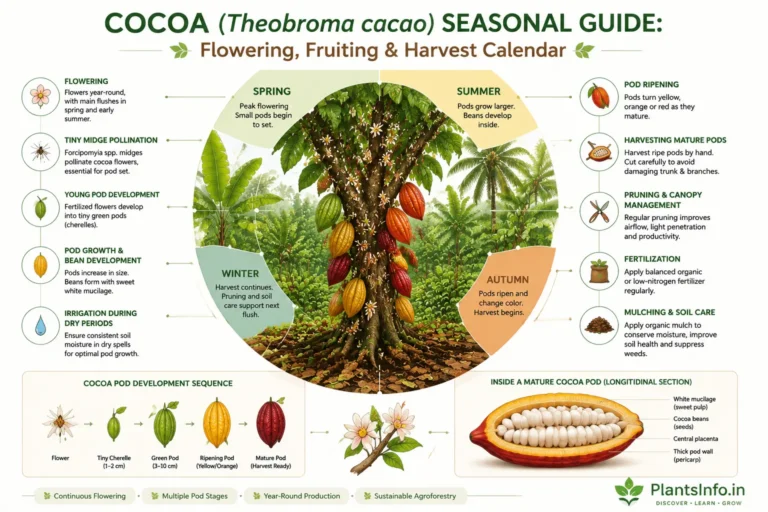
How to Grow Cocoa (Theobroma cacao L.): A Complete Growing Guide

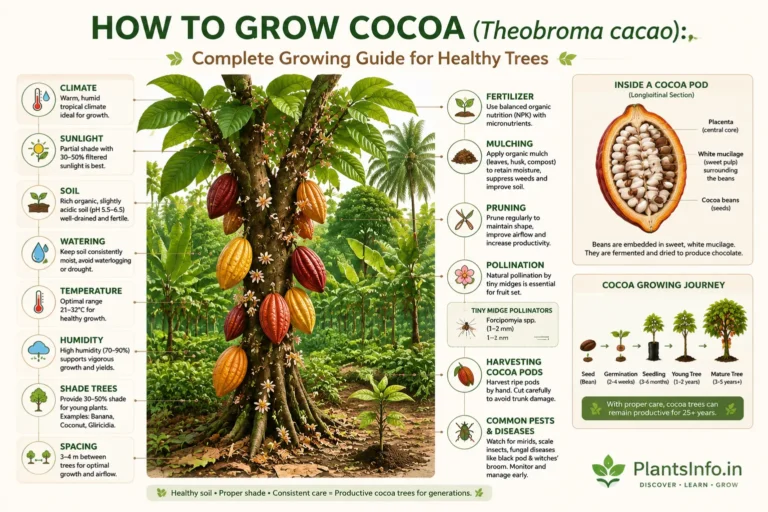
How to Grow Cocoa (Theobroma cacao): Complete Growing Guide infographic showing a healthy cocoa tree, flowers, pods, growing requirements, pollination, pod anatomy, and cultivation tips.

Quick Answer Cocoa (Theobroma cacao L.) grows best in warm, humid tropical climates with year-round temperatures of 21–32°C, annual rainfall of approximately 1,500–2,500 mm, and high atmospheric humidity. Young plants require partial shade, while mature trees perform best under filtered…

Guggul Varieties: Which One Should You Grow in India?

Botanical infographic comparing Guggul (Commiphora wightii) types, ecotypes, and growing selections in India, including Rajasthan and Gujarat populations, resin-producing selections, conservation planting, and container cultivation.

Quick Answer: No commercially released horticultural varieties of guggul exist in India. The meaningful distinctions are between regional ecotypes — primarily Rajasthan and Gujarat provenances — and the five classical resin grades described in Ayurvedic texts. For home gardeners, the…

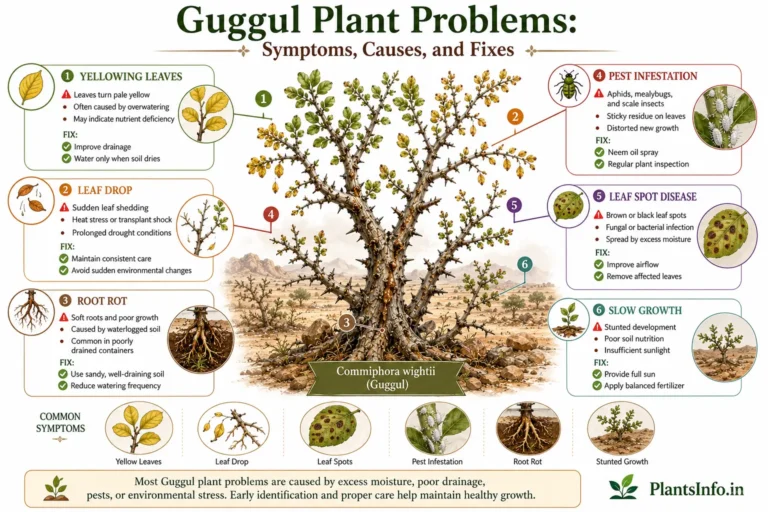
Guggul Plant Problems: Symptoms, Causes, and Fixes

Botanical infographic showing common Guggul plant problems including yellow leaves, leaf drop, root rot, pest infestation, leaf spot disease, and slow growth, with symptoms, causes, and treatment solutions for Commiphora wightii.

“Quick Answer: Guggul is a tough, low-maintenance plant in the right climate — but in the wrong one, it fails in predictable ways. Waterlogging is the single greatest threat, followed by fungal bark disease in humid conditions and mealy bug…

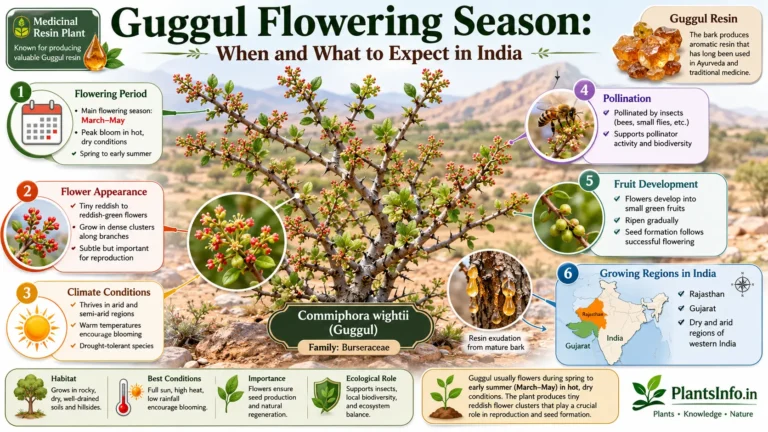
Guggul Flowering Season: When and What to Expect in India

Botanical infographic of Guggul (Commiphora wightii) flowering season in India, showing March–May blooming period, tiny reddish-green flowers, pollination, fruit development, medicinal resin production, and growing regions in Rajasthan and Gujarat.

Quick Answer:Guggul flowers once a year, typically between January and March, producing small red-pink flowers on bare, leafless branches before the new leaf flush begins. Fruiting follows in March–April. In its native range across Rajasthan and Gujarat, both flowering and…

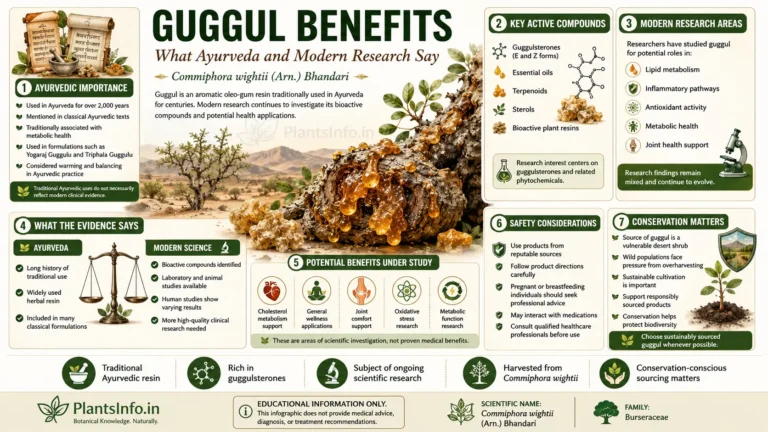
Guggul Benefits: What Ayurveda and Modern Research Say

Guggul benefits infographic explaining traditional Ayurvedic uses, active compounds, modern scientific research, safety considerations, and conservation of Commiphora wightii.

Quick Answer: Guggul resin from Commiphora wightii is one of Ayurveda’s most celebrated medicines — used for nearly 3,000 years for joint health, lipid management, and metabolic disorders. Modern research has confirmed anti-inflammatory and antioxidant activity in its key compound,…

Star Fruit Varieties: Which One Should You Grow in India?

Star Fruit varieties infographic comparing Arkin, Sri Kembangan, Bell, Kary, Golden Star, and local seedling types by sweetness, fruit size, yield, and suitability for Indian gardens.

Quick Answer:For most Indian home gardeners, the B-17 variety is the safest starting point — it is sweet, productive, widely available from nurseries, and performs well across tropical and subtropical India. The choice between sweet and sour types, however, matters…