How to Grow Cocoa (Theobroma cacao L.): A Complete Growing Guide
Quick Answer
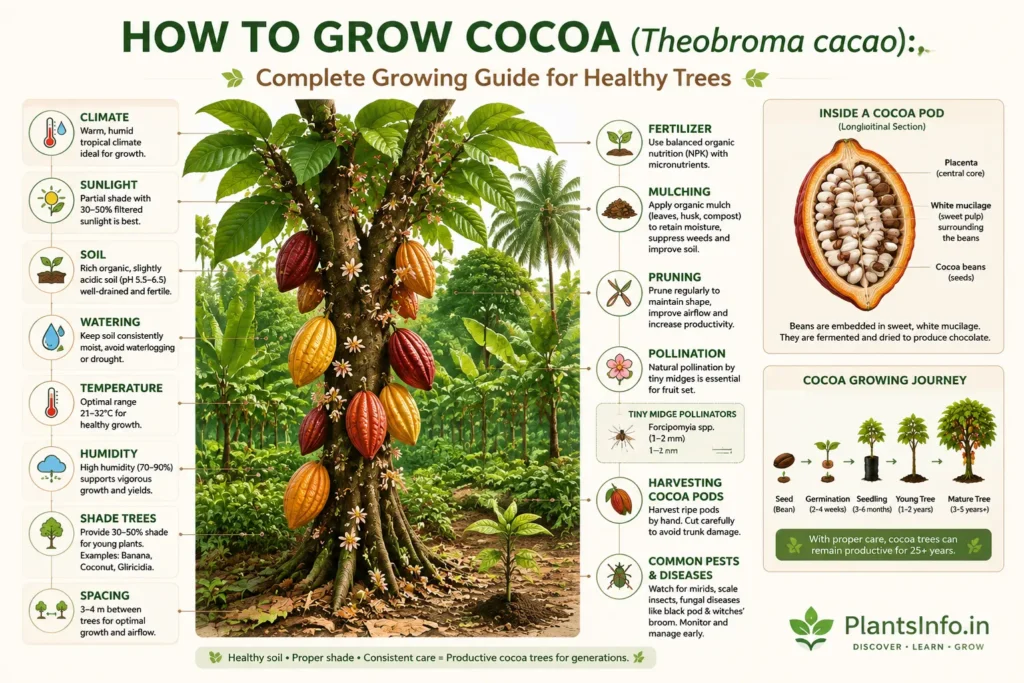
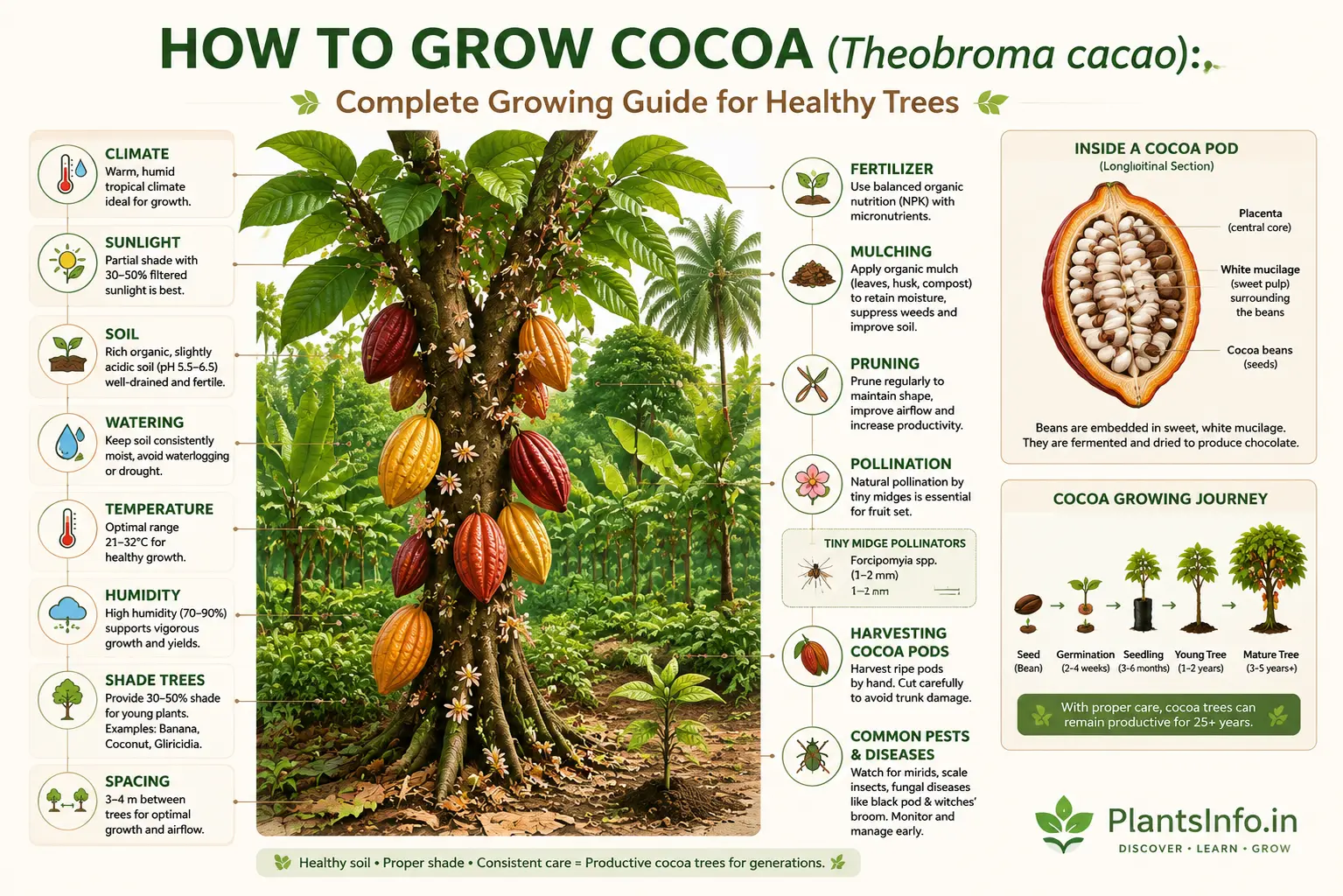
Cocoa (Theobroma cacao L.) grows best in warm, humid tropical climates with year-round temperatures of 21–32°C, annual rainfall of approximately 1,500–2,500 mm, and high atmospheric humidity. Young plants require partial shade, while mature trees perform best under filtered sunlight or a well-managed agroforestry canopy. The most critical requirements for successful cultivation are excellent soil drainage, consistent soil moisture, and protection from drought, frost, and hot desiccating winds.
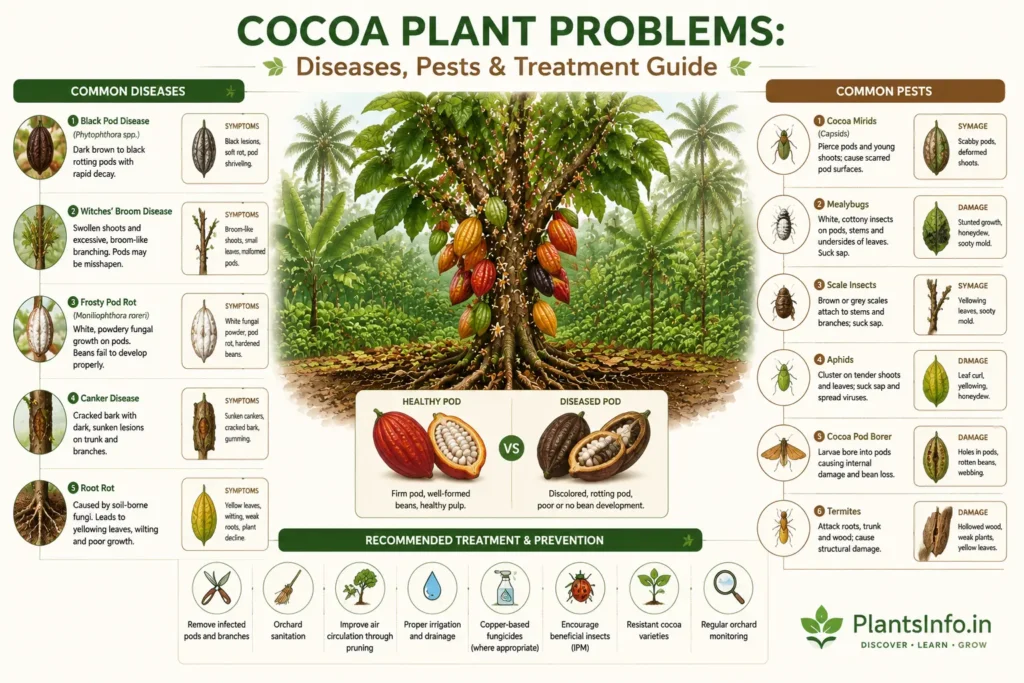
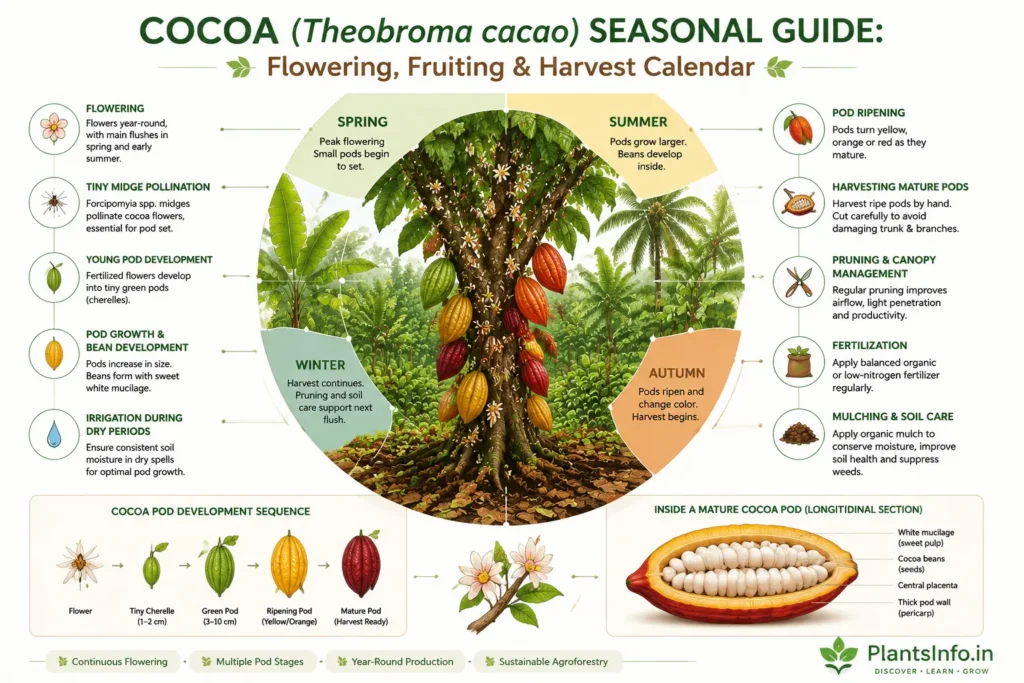
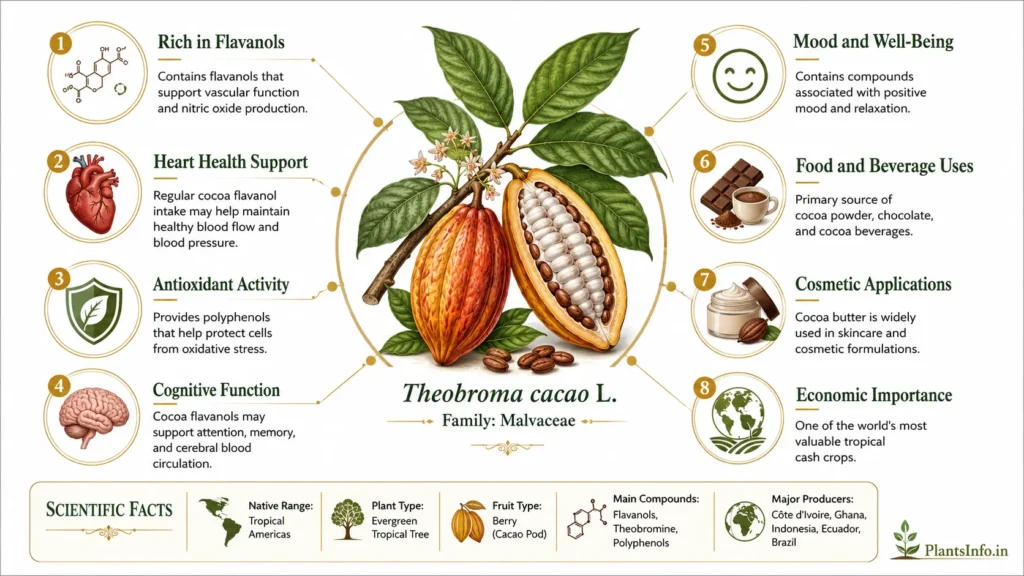
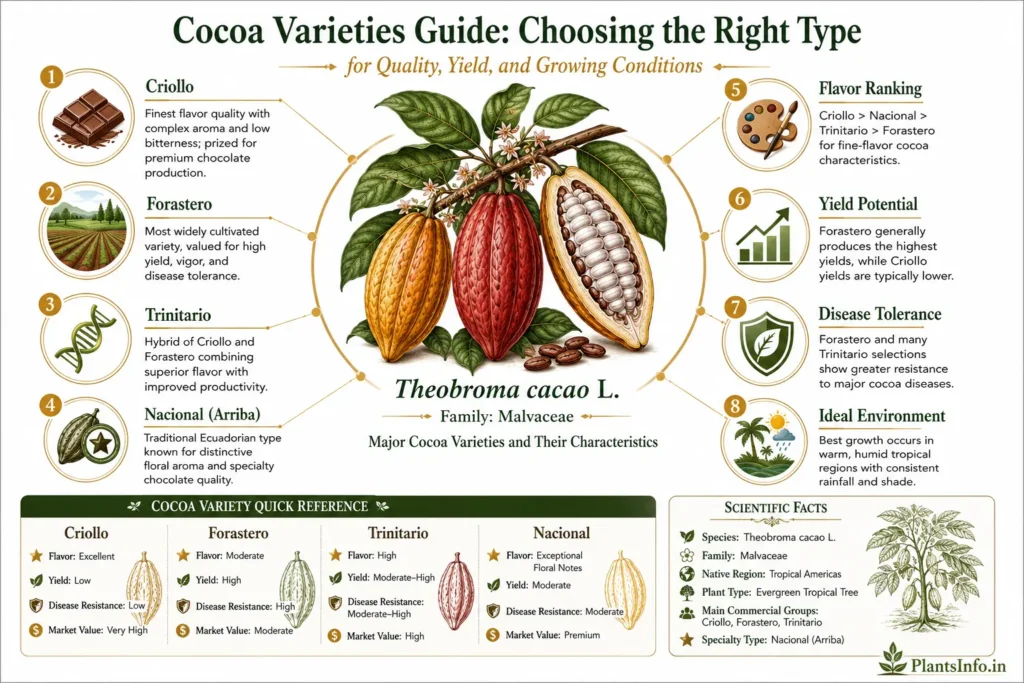
See also: Cocoa plant plant profile, common problems, its flowering season, its benefits, and its varieties.
In India, cocoa is most successfully grown as an intercrop beneath coconut and arecanut plantations in Kerala, Karnataka, Tamil Nadu, Andhra Pradesh, Telangana, and parts of Odisha where tropical conditions closely resemble its native rainforest habitat. Although cocoa can be grown in home gardens, it demands more attentive site selection and moisture management than many tropical fruit trees.
Recommended Products
Disclosure: As an Amazon Associate, PlantsInfo may earn from qualifying purchases.
🌱 Growing Essentials
The following products can help with container gardening, potting, root development, soil management, and healthy plant growth.
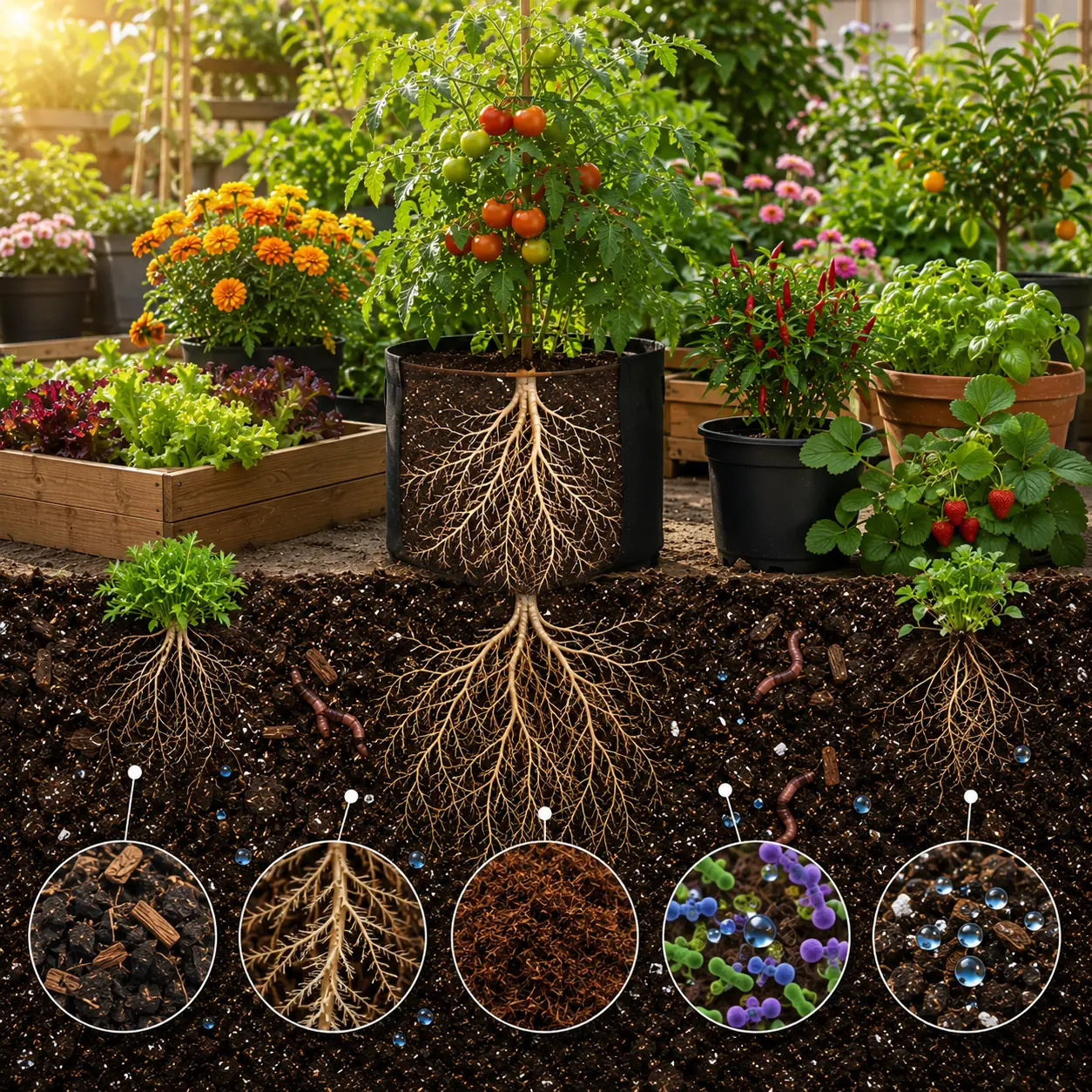
Organic Potting Soil Mix
Provides nutrients, structure, and healthy growing conditions for container plants.
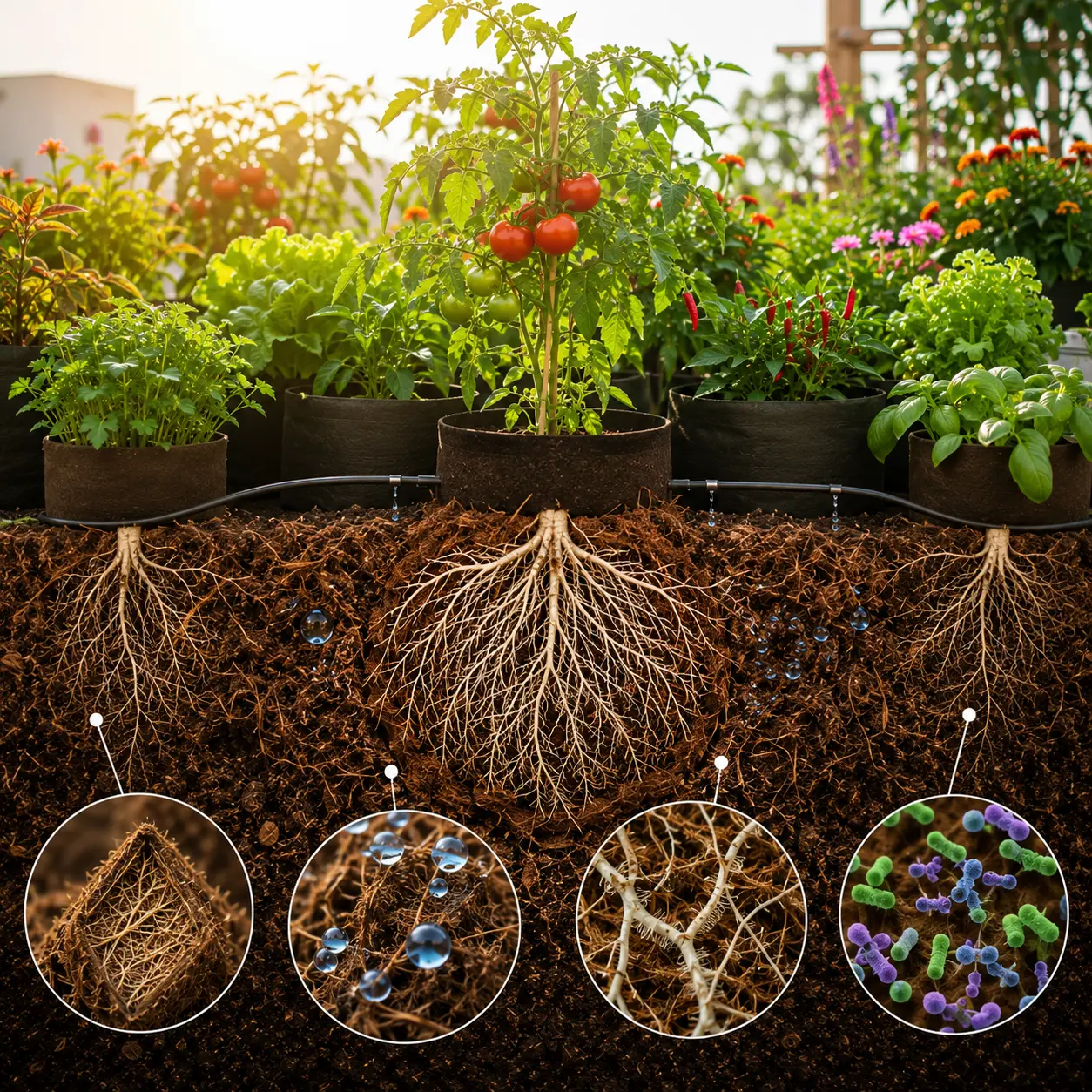
Coco Peat Growing Medium
Enhances moisture retention while maintaining excellent root-zone aeration.

Grow Bags for Plants
Improve drainage, root aeration, and vegetable production in limited spaces.

Plastic Pots for Plants
Ideal containers for seedlings, ornamentals, herbs, and balcony gardens.
Introduction
Cocoa is a small evergreen tropical tree cultivated primarily for its seeds, commonly known as cocoa beans, which are processed into cocoa powder, cocoa butter, and chocolate. Native to the humid rainforests of the Amazon Basin, the species has evolved under the protection of taller forest trees where temperatures remain relatively stable throughout the year.
Unlike many fruit trees adapted to open landscapes, cocoa performs best when growers recreate the layered environment of a tropical forest. Young plants are especially sensitive to intense sunlight, prolonged drought, poor drainage, and frost. Consequently, successful cultivation depends less on intensive management and more on providing suitable environmental conditions from the outset.
India has emerged as an important cocoa-producing country, particularly through integrated farming systems where cocoa is grown beneath coconut or arecanut. These systems naturally provide filtered light, moderate temperatures, and improved humidity, making them highly suitable for sustained production.
Before You Start
Before planting cocoa, evaluate whether your location can consistently provide its basic environmental requirements.
| Requirement | Recommendation |
|---|---|
| Climate | Warm tropical, frost-free |
| Temperature | Ideally 21–32°C |
| Rainfall | 1,500–2,500 mm annually or equivalent irrigation |
| Humidity | Preferably above 70% |
| Sunlight | Partial shade for young plants; filtered light thereafter |
| Soil | Deep, fertile, well-drained |
| Waterlogging | Not tolerated |
| Frost | Not tolerated |
| Strong dry winds | Should be avoided |
If several of these requirements cannot be met, cocoa is unlikely to perform well without significant environmental modification.
Is Cocoa Suitable for Home Gardens?
Yes, provided the garden is located in a humid tropical region and sufficient shade can be maintained during the establishment phase. Small home gardens in Kerala, coastal Karnataka, Goa, northeastern India, and similar climates are generally more suitable than dry inland locations.
Gardeners in regions experiencing cold winters, prolonged dry seasons, or very low humidity should expect greater management challenges.
Biggest Success Factor
Replicating a Tropical Forest Environment
The single most important factor determining cocoa’s success is recreating the conditions of its natural rainforest habitat.
Many cultivation failures are incorrectly attributed to fertilizers or irrigation when the underlying issue is excessive sunlight, poor drainage, or low atmospheric humidity.
Successful cocoa plantations typically provide:
- Filtered rather than harsh direct sunlight.
- Deep organic soils with excellent drainage.
- Uniform soil moisture throughout the year.
- High humidity around the canopy.
- Protection from drying winds.
When these environmental factors are optimized, routine management becomes considerably easier, and trees establish more rapidly.
Growing Essentials

| Growing Factor | Recommendation |
|---|---|
| Difficulty | Moderate |
| Climate | Tropical humid |
| USDA Equivalent | 11–13 |
| Light | Partial shade when young; filtered sun as mature |
| Water | Consistently moist but never waterlogged |
| Soil | Deep loam or clay loam with high organic matter |
| Soil pH | Approximately 5.5–7.0 |
| Drainage | Critical |
| Growth Rate | Moderate |
| Fruiting Begins | Usually 3–5 years from grafted plants under favourable management |
| Container Growing | Suitable only while young or as an ornamental specimen |
| Frost Tolerance | None |
| Drought Tolerance | Low |
Growing Priority Assessment
| Growing Factor | Importance |
|---|---|
| Drainage | Critical |
| Shade Management | Critical |
| Soil Moisture | High |
| Humidity | High |
| Fertilization | Moderate |
| Pruning | Moderate |
| Mulching | Moderate |
Proper drainage and shade management influence long-term success more than any fertilizer program.
Climate Suitability in India
| Region | Suitability | Remarks |
|---|---|---|
| Kerala | Excellent | Ideal humidity and rainfall |
| Coastal Karnataka | Excellent | Widely cultivated under arecanut and coconut |
| Tamil Nadu (humid districts) | Excellent | Particularly suitable in irrigated plantation systems |
| Andhra Pradesh | Good | Irrigation essential during dry periods |
| Telangana | Moderate | Requires careful irrigation and shade management |
| Odisha (humid coastal districts) | Moderate to Good | Suitable with proper drainage |
| Northeast India | Good | High rainfall requires careful drainage |
| Maharashtra (Konkan) | Moderate | Performs well in humid coastal areas |
| Central India | Poor | Low humidity and prolonged dry periods limit growth |
| Northern Plains | Unsuitable | Winter cold and frost damage plants |
Regional Notes
South India
South India remains the country’s principal cocoa-growing region because warm temperatures, abundant rainfall, and existing coconut and arecanut plantations naturally provide favorable growing conditions.
Northeast India
The humid climate is advantageous, but extremely heavy rainfall can increase the importance of proper site drainage.
Dry Interior Regions
Cultivation is possible only under intensive irrigation combined with artificial shade, making commercial production considerably less economical.
Choosing a Location
Selecting the correct planting site has a greater impact on long-term productivity than almost any subsequent management practice.
Choose locations that provide:
- Protection from strong afternoon sun.
- Shelter from dry seasonal winds.
- Deep, fertile soil.
- Good natural drainage.
- Easy access to irrigation during prolonged dry periods.
Avoid sites where rainwater accumulates after heavy showers. Even short periods of standing water can reduce root health and weaken tree establishment.
For commercial orchards, integrating cocoa beneath mature coconut or arecanut plantations remains one of the most reliable production systems because these trees naturally create the filtered canopy that cocoa prefers.
Sunlight Requirements
Young Trees
Seedlings and newly planted saplings are highly sensitive to direct sunlight. Excessive exposure can scorch leaves, reduce growth, and increase water stress.
Provide approximately 40–60% shade during the establishment period using:
- Existing plantation trees.
- Shade nets where necessary.
- Temporary shade structures.
- Suitable companion trees.
Mature Trees
As trees mature, their tolerance for light gradually increases. Mature cocoa benefits from filtered sunlight rather than dense shade.
Excessive shade may reduce flowering and pod production, while excessive sunlight often increases moisture stress and canopy damage.
The objective is balanced light penetration rather than either full exposure or deep shade.
Soil Requirements
Healthy root systems depend on deep, fertile, well-aerated soils capable of retaining moisture while draining freely.
Ideal Soil Characteristics
| Soil Factor | Recommendation |
|---|---|
| Texture | Loam to clay loam |
| Organic Matter | High |
| Drainage | Excellent |
| Depth | At least 1–1.5 m where possible |
| pH | Approximately 5.5–7.0 |
| Water Holding Capacity | High |
Cocoa roots occupy both the surface and deeper soil layers. Deep soils allow the tree to access moisture during short dry periods while supporting stable long-term growth.
Heavy clay soils can support cocoa if internal drainage remains adequate, whereas shallow, compacted, or poorly drained soils frequently result in weak growth.
Improving Soil Before Planting
Where soil quality is marginal:
- Incorporate well-decomposed compost or farmyard manure.
- Improve drainage before planting rather than afterwards.
- Avoid fresh manure immediately around young roots.
- Preserve existing topsoil wherever possible.
Building soil organic matter before planting provides lasting benefits because cocoa remains a perennial crop for many decades under suitable management.
Planting
Proper establishment during the first year has a lasting influence on tree vigour, canopy development, and future productivity. Although cocoa is a long-lived perennial, most early failures occur because young plants are exposed to unsuitable conditions immediately after planting.
Best Planting Season
The ideal planting time depends on the availability of reliable soil moisture.
| Region | Preferred Planting Period |
|---|---|
| South India | Early monsoon (June–August) |
| Northeast India | Beginning of the rainy season |
| Irrigated areas | Any frost-free period with assured irrigation |
Planting at the onset of the monsoon allows roots to establish before the drier months while reducing transplant stress. In irrigated plantations, planting outside the rainy season is possible provided adequate watering is maintained.
Avoid planting immediately before prolonged dry periods or in waterlogged fields during peak monsoon rainfall.
Selecting Planting Material
Healthy planting material provides a significant advantage over attempts to compensate later through fertilization or irrigation.
Look for nursery plants that have:
- Dark green, healthy foliage.
- A well-developed root system.
- No signs of stem injury or root damage.
- Uniform growth with a sturdy central stem.
- Freedom from visible pest or disease symptoms.
Spacing
Spacing depends on the production system and the associated shade trees.
General recommendations include:
| Growing System | Typical Spacing |
|---|---|
| Monocrop plantations | Approximately 3 × 3 m |
| Coconut or arecanut intercropping | Adjusted to the existing plantation geometry while maintaining adequate light and airflow |
| Home gardens | Allow sufficient room for mature canopy development |
Excessively close spacing increases canopy competition, reduces air movement, and complicates orchard management.
Planting Procedure
- Prepare planting pits well before transplanting.
- Mix excavated soil with well-decomposed organic manure if soil fertility is low.
- Ensure pits drain freely after irrigation or rainfall.
- Remove nursery containers carefully to minimise root disturbance.
- Plant at the same depth as in the nursery bag.
- Firm the soil gently around the root ball.
- Irrigate immediately after planting.
- Apply mulch around—but not touching—the stem.
Young plants may require temporary shade structures until surrounding vegetation provides adequate protection.
Watering
Consistent soil moisture is essential throughout cocoa’s life cycle. Unlike drought-tolerant fruit trees, cocoa performs poorly when exposed to repeated cycles of severe drying and excessive wetness.
Water Requirements by Growth Stage
| Plant Stage | Water Requirement |
|---|---|
| Newly planted | Frequent light irrigation to maintain uniformly moist soil |
| Young trees | Regular irrigation during dry weather |
| Mature trees | Deep irrigation during prolonged dry periods |
| Established plantations during monsoon | Supplemental irrigation usually unnecessary where rainfall is adequate |
The objective is to maintain evenly moist soil rather than continuously saturated conditions.
Irrigation Principles
- Water deeply rather than applying frequent shallow irrigation.
- Adjust irrigation according to rainfall, soil type, and evaporation rates.
- Reduce irrigation during prolonged rainy periods if drainage is satisfactory.
- Increase irrigation frequency during hot, dry weather.
Drip irrigation is particularly suitable because it supplies moisture efficiently while reducing water wastage and limiting prolonged surface wetness.
Recognising Water Stress
Early signs of inadequate moisture may include:
- Temporary leaf drooping during prolonged dry weather.
- Reduced production of new flushes.
- Slower vegetative growth.
- Premature shedding of developing leaves.
Fertilizing
Cocoa is a long-term perennial crop that gradually removes nutrients through vegetative growth and pod production. Maintaining soil fertility therefore requires regular nutrient replenishment rather than occasional heavy fertilizer applications.
Fertilizer Strategy
An effective nutrient programme combines organic matter with balanced mineral nutrition.
Organic inputs may include:
- Well-decomposed farmyard manure.
- Compost.
- Vermicompost is available.
Mineral fertilizer recommendations vary according to:
- Soil fertility.
- Tree age.
- Expected yield.
- Local extension recommendations.
- Leaf or soil analysis where available.
Because nutrient requirements differ substantially between young and mature trees, fertilizer programmes should be adjusted over time rather than using a single fixed schedule.
Application Guidelines
- Apply fertilizers around the active root zone rather than directly against the trunk.
- Incorporate organic materials lightly into the soil surface where practical.
- Apply fertilizers when adequate soil moisture is available.
- Split annual fertilizer applications into multiple doses where recommended to improve nutrient uptake and reduce losses.
Routine soil testing provides the most reliable basis for long-term nutrient management, particularly in commercial plantations.
Mulching
Mulching is one of the simplest practices for improving cocoa establishment, especially during the first several years after planting.
Benefits of Mulching
A suitable organic mulch helps:
- Reduce evaporation from the soil surface.
- Moderate soil temperature.
- Suppress weed growth.
- Improve soil organic matter over time.
- Encourage biological activity within the root zone.
Materials commonly used include:
- Coconut husks.
- Dry leaves.
- Paddy straw.
- Grass clippings free of mature weed seeds.
- Compostable plantation residues.
Maintain a small gap between the mulch and the trunk to minimise prolonged stem moisture.
In many Indian cocoa plantations, recycled plantation residues provide an economical and environmentally sustainable source of mulch.
Pruning
Pruning aims to maintain a healthy, productive canopy while improving access for routine orchard operations.
Objectives of Pruning
Remove:
- Dead or damaged branches.
- Crossing branches.
- Weak shoots.
- Excessively crowded growth.
Maintain:
- Balanced canopy structure.
- Good light penetration.
- Adequate air movement.
Avoid removing large portions of the canopy in a single season, as severe pruning may temporarily reduce growth and increase sun exposure to previously shaded branches.
Maintenance Pruning
Annual inspection usually provides sufficient opportunity to remove undesirable growth before major structural problems develop.
Where cocoa is grown beneath taller shade trees, pruning should also consider maintaining an appropriate balance between shade and light penetration.
Container Growing
Cocoa can be grown in containers during its juvenile stage or as an ornamental specimen, but long-term pod production is generally limited compared with field-grown trees.
Suitable Containers
Young plants benefit from progressively larger containers rather than immediate transfer into oversized pots.
Essential container characteristics include:
- Large drainage holes.
- Stable construction.
- Adequate depth for root development.
Potting Medium
An ideal potting mix should combine:
- Good drainage.
- High organic matter.
- Moisture retention.
- Aeration.
A mixture containing loam, compost, and coarse drainage material generally performs well.
Limitations
Container-grown cocoa requires:
- More frequent irrigation.
- Regular fertilization.
- Periodic reporting.
- Careful shade management.
For growers seeking regular pod production, permanent field planting remains the more practical option.
Harvesting
Cocoa trees begin producing harvestable pods only after several years of successful establishment and canopy development.
Under favourable tropical conditions, grafted trees commonly begin bearing within approximately 3–5 years, while seed-grown trees often require a longer juvenile period. Actual bearing age varies with planting material, climate, management, and growing conditions.
Pods should be harvested only after reaching full maturity. Immature pods contain underdeveloped beans and reduce processing quality.
Harvesting should be carried out carefully using appropriate cutting tools to avoid damaging the cushion-like flowering sites on the trunk and older branches, which support future pod production.
Seasonal Protection
Cocoa grows continuously under favourable tropical conditions but still benefits from seasonal management.
During Dry Seasons
- Increase irrigation where rainfall becomes insufficient.
- Maintain mulch to reduce moisture loss.
- Monitor shade levels to minimise heat stress.
- Avoid unnecessary pruning during severe drought.
During Heavy Monsoon Rainfall
- Ensure drainage channels remain functional.
- Prevent prolonged standing water around root systems.
- Replace displaced mulch where necessary.
During Unusual Cold Weather
In marginal growing areas:
- Protect young plants using temporary covers if temperatures approach damaging levels.
- Reduce exposure to cold winds.
- Delay new planting until warmer conditions return.
Because cocoa has virtually no frost tolerance, even brief freezing temperatures may cause severe injury or plant death.
Common Mistakes
The following mistakes account for many establishment failures in cocoa cultivation.
| Mistake | Why It Causes Problems | Better Practice |
|---|---|---|
| Planting in full, unprotected sun | Heat and leaf scorch reduce establishment | Provide partial shade during early growth |
| Poor drainage | Roots remain oxygen-deficient | Improve drainage before planting |
| Overwatering heavy soils | Encourages root decline | Water according to soil moisture, not a fixed schedule |
| Allowing prolonged drought | Reduces vegetative growth and future productivity | Maintain consistent soil moisture |
| Excessive fertilizer application | Can damage young roots and upset nutrient balance | Apply moderate, balanced nutrition |
| Neglecting mulching | Greater moisture loss and weed competition | Maintain an organic mulch layer |
| Planting in frost-prone areas | Cocoa has extremely low cold tolerance | Restrict cultivation to suitable tropical climates |
| Ignoring shade management | Too much or too little light affects growth | Maintain balanced filtered light |
Practical Takeaways
- Drainage problems generally cause greater long-term losses than occasional nutrient deficiencies.
- Young cocoa plants require environmental protection more than intensive fertilizer inputs.
- Maintaining steady moisture is usually more beneficial than alternating between heavy irrigation and drought.
- Investing time in site preparation before planting often determines plantation success for decades.
Frequently Asked Questions
Can cocoa be grown successfully throughout India?
No. Cocoa is best suited to humid tropical regions that remain frost-free throughout the year. In India, it performs most reliably in Kerala, coastal Karnataka, Tamil Nadu, Andhra Pradesh, Telangana (with irrigation), Goa, parts of Odisha, and suitable areas of the Northeast. In regions with prolonged cold winters or very low humidity, maintaining healthy growth is considerably more challenging.
How long does it take for a cocoa tree to produce pods?
Under favourable growing conditions, grafted cocoa trees often begin producing pods in approximately 3–5 years after planting. Seed-grown trees generally require a longer juvenile period before bearing. Actual timelines depend on climate, management, planting material, and overall tree health.
Is cocoa difficult to grow?
Cocoa is best described as a moderately demanding tropical crop. It is not difficult where its environmental requirements are naturally met, but success declines rapidly if shade, humidity, soil moisture, or drainage are inadequate.
The greatest challenge for most growers is creating a stable tropical growing environment rather than performing complex maintenance.
Does cocoa require full sunlight?
No.
Young cocoa plants require partial shade to prevent leaf scorch and excessive water loss. Mature trees tolerate more light but generally perform best under filtered sunlight rather than continuous exposure to intense midday sun.
Proper shade management is more beneficial than attempting to maximise sunlight.
How often should cocoa be watered?
There is no universal irrigation schedule.
Water requirements depend on:
- rainfall,
- soil type,
- tree age,
- temperature,
- humidity,
- and season.
The goal is to maintain evenly moist soil while preventing waterlogging. Irrigation frequency should always respond to actual soil moisture rather than fixed calendar intervals.
Can cocoa tolerate drought?
Only to a limited extent.
Short dry periods may slow growth, but prolonged drought can reduce vegetative development, flowering potential, and future yields. Young trees are particularly vulnerable because their root systems remain relatively shallow during establishment.
Maintaining adequate soil moisture through irrigation and mulching substantially improves drought resilience.
Can cocoa survive waterlogged soil?
No.
Although cocoa requires abundant moisture, its roots also need oxygen. Poorly drained soils can quickly weaken root systems and reduce tree vigour.
Where heavy rainfall is common, drainage management is often more important than irrigation planning.
What type of soil is best for cocoa?
Deep, fertile loam or clay loam with:
- high organic matter,
- good moisture retention,
- excellent drainage,
- and a slightly acidic to neutral pH (approximately 5.5–7.0)
Provides the most favourable growing conditions.
Shallow or compacted soils generally restrict long-term growth.
Is cocoa suitable for container cultivation?
It can be grown in containers while young and may also serve as an attractive ornamental plant in suitable climates.
However, long-term pod production is usually limited because mature cocoa develops an extensive root system that performs better in open ground.
Growers interested in regular harvests should establish trees in the field whenever possible.
Should cocoa be grown beneath coconut or arecanut?
Yes, where appropriate.
Intercropping cocoa beneath coconut or arecanut has become one of India’s most successful production systems because these plantations naturally provide filtered light, moderate temperatures, and improved humidity while making efficient use of available land.
The suitability of any intercropping system still depends on maintaining adequate spacing and balanced canopy management.
How much fertilizer does a cocoa tree require?
Nutrient requirements vary according to:
- tree age,
- soil fertility,
- expected yield,
- and local growing conditions.
Rather than following a single standard fertilizer schedule, growers achieve better long-term results by combining organic matter with balanced mineral nutrition based on soil testing or regional extension recommendations.
Does cocoa need pruning every year?
Annual inspection is beneficial even if extensive pruning is unnecessary.
Routine pruning removes dead, damaged, or crowded branches while maintaining a balanced canopy that allows adequate light penetration and air movement.
Heavy pruning should generally be avoided because sudden exposure of shaded branches may increase stress.
Can cocoa tolerate frost?
No.
Cocoa is a strictly tropical species with extremely poor frost tolerance. Even brief exposure to freezing temperatures may seriously damage foliage, stems, flowers, or young plants.
For this reason, cocoa cultivation is generally unsuitable in areas experiencing regular winter frost.
What is the most common reason cocoa trees fail?
Environmental conditions, rather than nutrient deficiencies, are responsible for many failures.
The most frequent causes include:
- poor drainage,
- excessive sunlight during establishment,
- prolonged drought,
- unsuitable climate,
- and inadequate humidity.
Correct site selection usually contributes more to long-term success than intensive management after planting.
Is cocoa a suitable crop for beginners?
Beginners can certainly grow cocoa successfully if they live in an appropriate tropical climate and understand its environmental requirements.
Those already managing coconut or arecanut plantations often find cocoa easier to establish because the necessary shade and microclimate already exist.
For gardeners in unsuitable climates, maintaining the required humidity and temperature may prove considerably more difficult than routine care itself.
Can cocoa trees remain productive for many years?
Yes.
Well-managed cocoa trees grown under suitable environmental conditions can remain productive for several decades. Long-term productivity depends on maintaining healthy soil, balanced nutrition, effective shade management, and consistent moisture throughout the life of the plantation.
Conclusion
Cocoa (Theobroma cacao L.) is a rewarding tropical tree whose cultivation depends far more on environmental suitability than on intensive intervention. Growers who provide a humid, frost-free climate, deep, well-drained soil, consistent moisture, and carefully managed shade can establish healthy trees capable of sustained production over many years.
For Indian growers, integrating cocoa beneath coconut or arecanut plantations remains one of the most practical and successful production systems because it closely replicates the species’ natural rainforest environment. Home gardeners in suitable tropical regions can also cultivate cocoa successfully by prioritising site selection, drainage, and moisture conservation from the outset.
Throughout this guide, one principle consistently emerges as the foundation of successful cultivation: replicate the conditions of a tropical forest rather than attempting to force cocoa to adapt to an unsuitable environment. When drainage, shade, humidity, and soil health are managed well, routine tasks such as irrigation, fertilization, and pruning become significantly more effective, allowing cocoa trees to develop into vigorous, productive, and long-lived specimens.