Cocoa Plant Problems: Diseases, Pests & Treatment Guide
Quick Answer
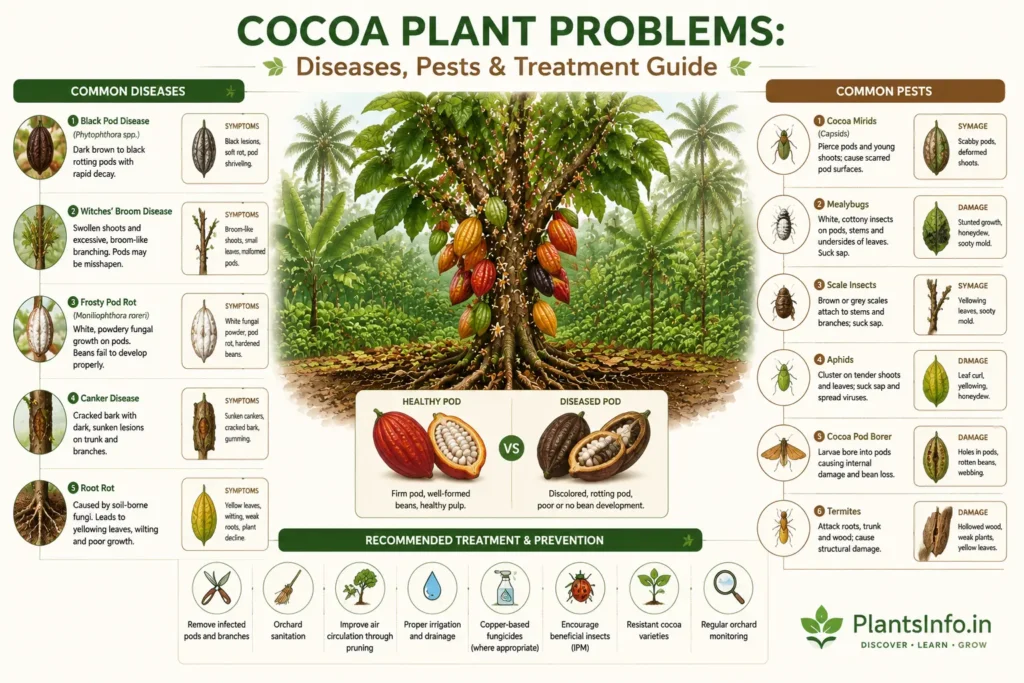
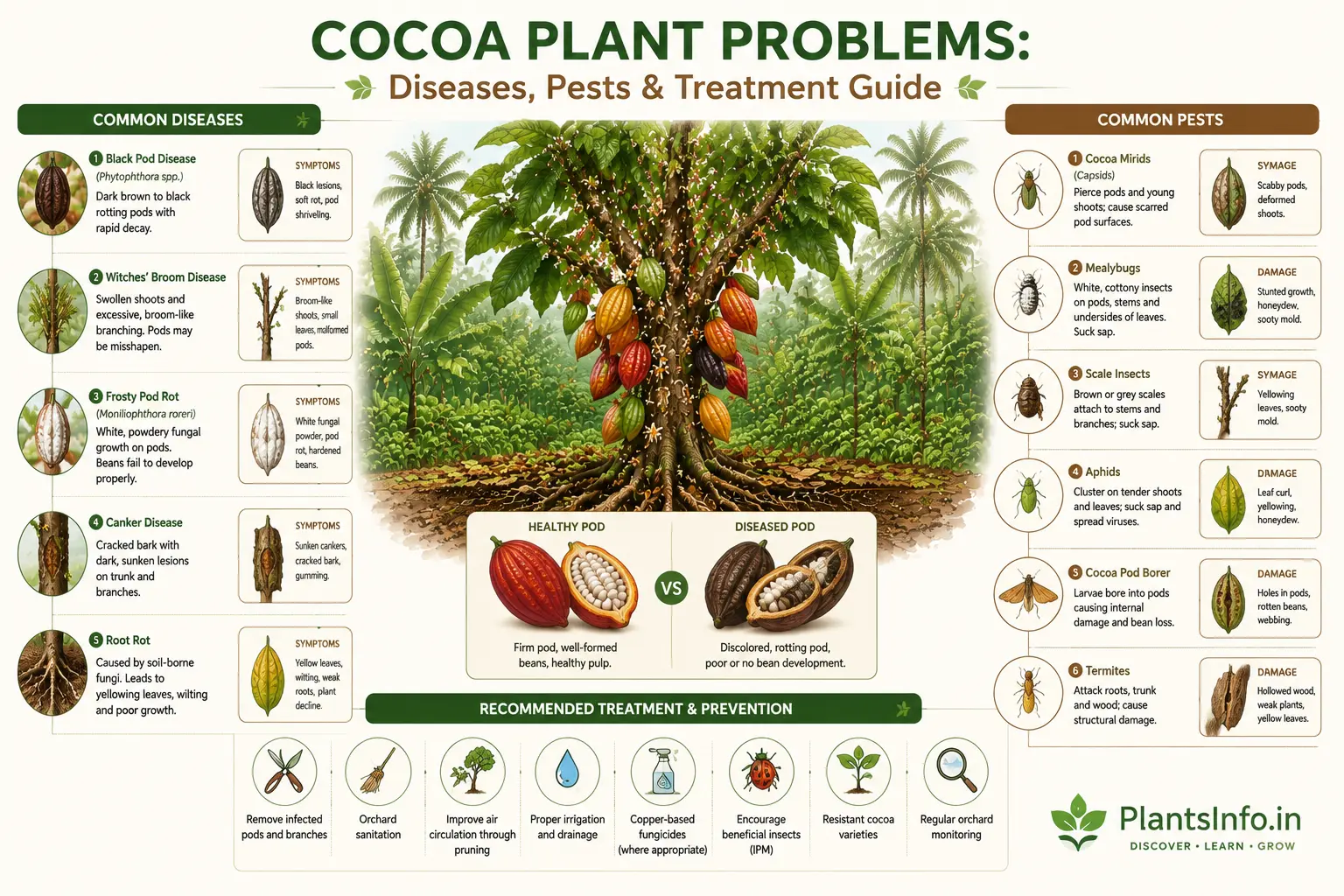
Cocoa (Theobroma cacao L.) is vulnerable to several diseases, pests, nutritional disorders, and environmental stresses that can reduce tree vigour and pod production if left unmanaged. Worldwide, black pod disease (caused by Phytophthora spp.) is generally regarded as the most economically important disease because it can destroy developing pods rapidly and, under favourable conditions, spread to stems and roots.
See also: Cocoa plant plant profile, how to grow it, its flowering season, its benefits, and its varieties.
In India, the majority of cocoa health problems are associated with high humidity, prolonged rainfall, poor drainage, irregular moisture availability, nutrient imbalance, and inadequate orchard sanitation. Early diagnosis and prompt management usually prevent minor issues from developing into significant production losses.
Recommended Products
Disclosure: As an Amazon Associate, PlantsInfo may earn from qualifying purchases.
🌱 Growing Essentials
The following products can help with container gardening, potting, root development, soil management, and healthy plant growth.
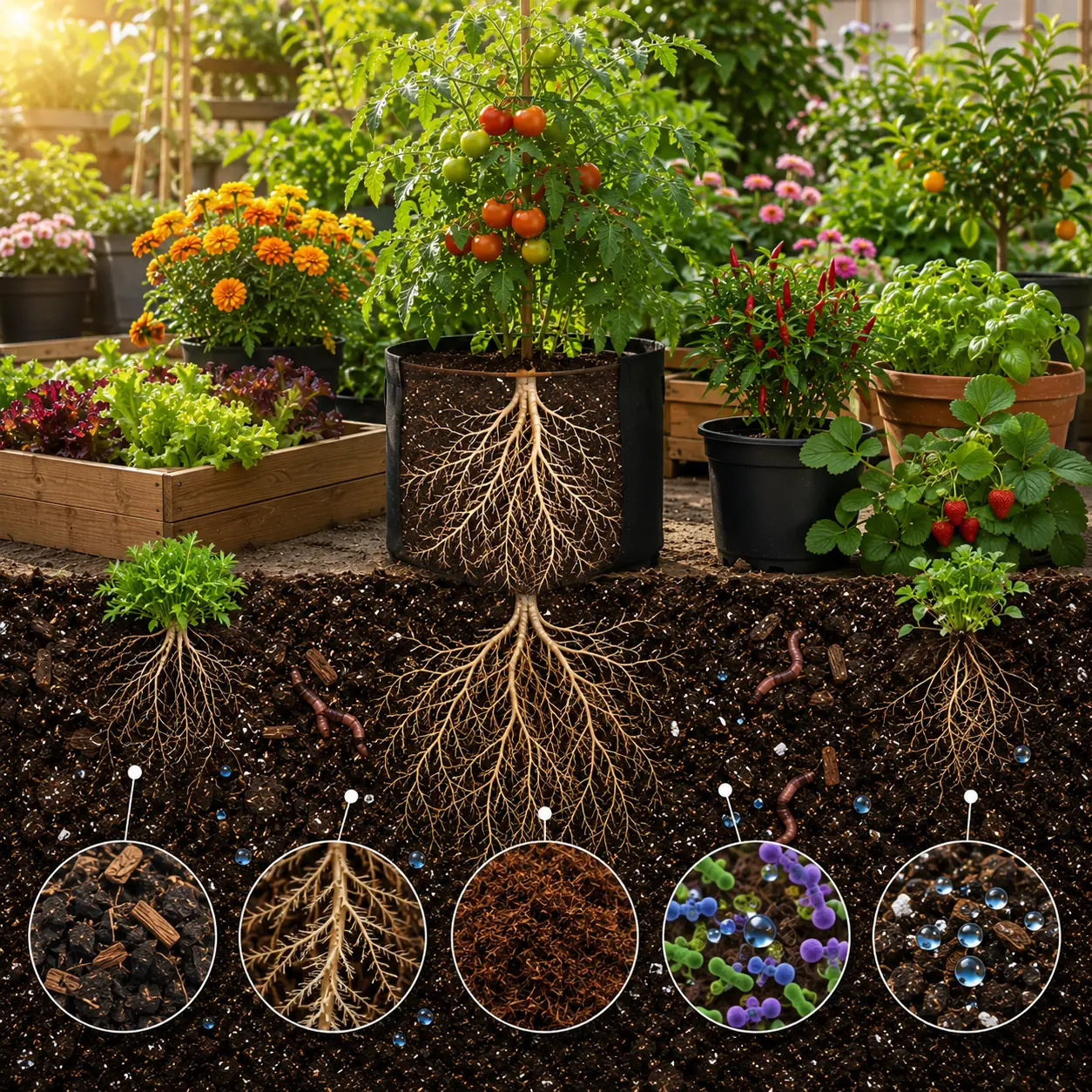
Organic Potting Soil Mix
Provides nutrients, structure, and healthy growing conditions for container plants.
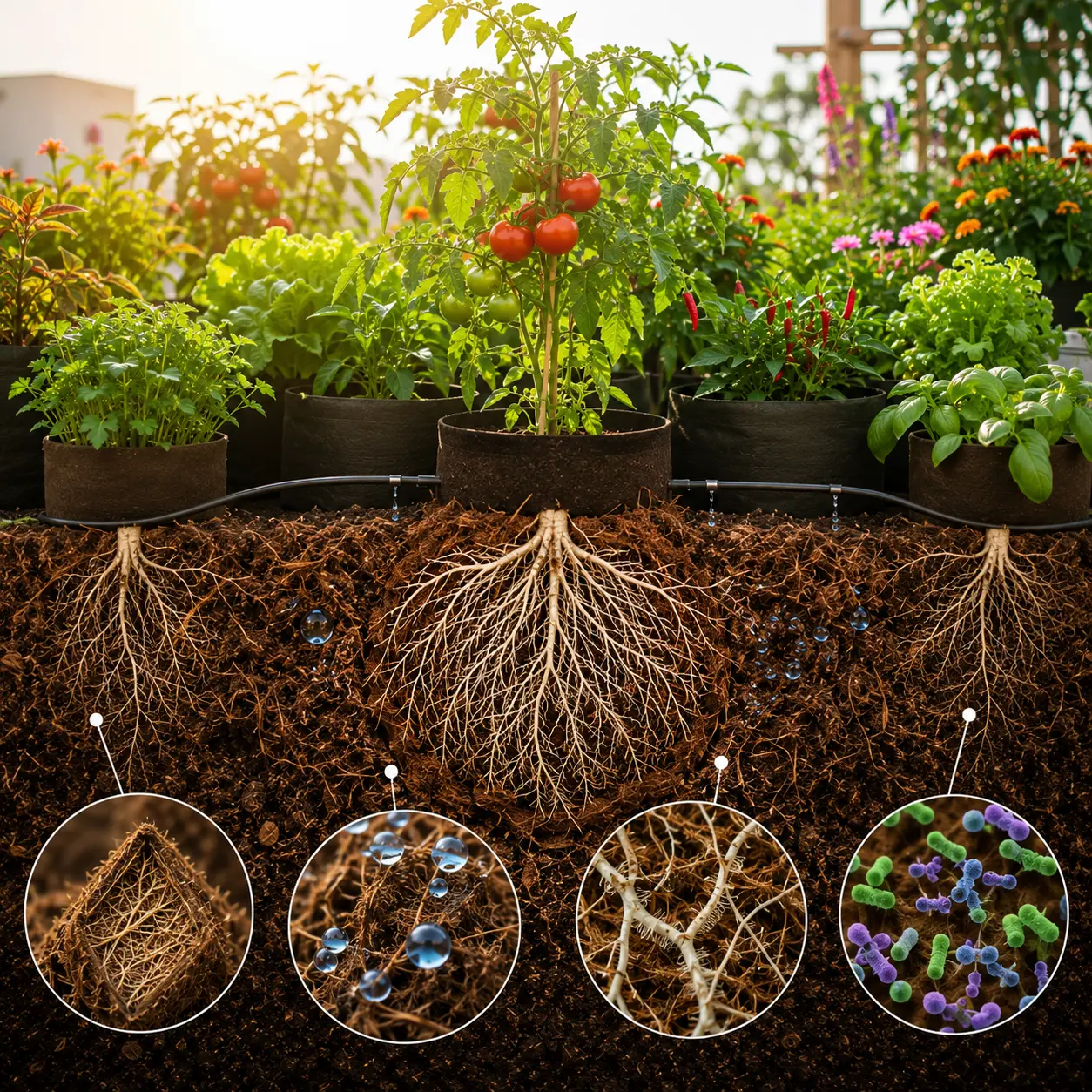
Coco Peat Growing Medium
Enhances moisture retention while maintaining excellent root-zone aeration.

Grow Bags for Plants
Improve drainage, root aeration, and vegetable production in limited spaces.

Plastic Pots for Plants
Ideal containers for seedlings, ornamentals, herbs, and balcony gardens.
Introduction
Healthy cocoa plantations rarely remain entirely free from problems. Because cocoa is cultivated in warm, humid tropical environments, conditions that favour vigorous growth can also encourage the development of fungal and oomycete diseases, insect pests, and physiological disorders.
Not every symptom indicates a disease. Yellow leaves, reduced flowering, premature pod drop, or slow growth may result from environmental stress, nutritional imbalance, or natural physiological processes rather than infection. Accurate diagnosis, therefore, represents the first and most important step before attempting corrective action.
Many cocoa problems also interact. For example, prolonged waterlogging weakens root systems, increasing susceptibility to root diseases, while drought stress may reduce tree vigour and increase sensitivity to other disorders. Likewise, poor orchard hygiene can increase the persistence of several important pathogens.
This guide focuses on practical diagnosis and evidence-based management of the most important cocoa problems reported from tropical production systems. Because disease occurrence varies with climate, rainfall, orchard management, and local pathogen populations, readers should interpret symptom descriptions together with regional observations rather than relying on any single visual characteristic.
Quick Diagnosis
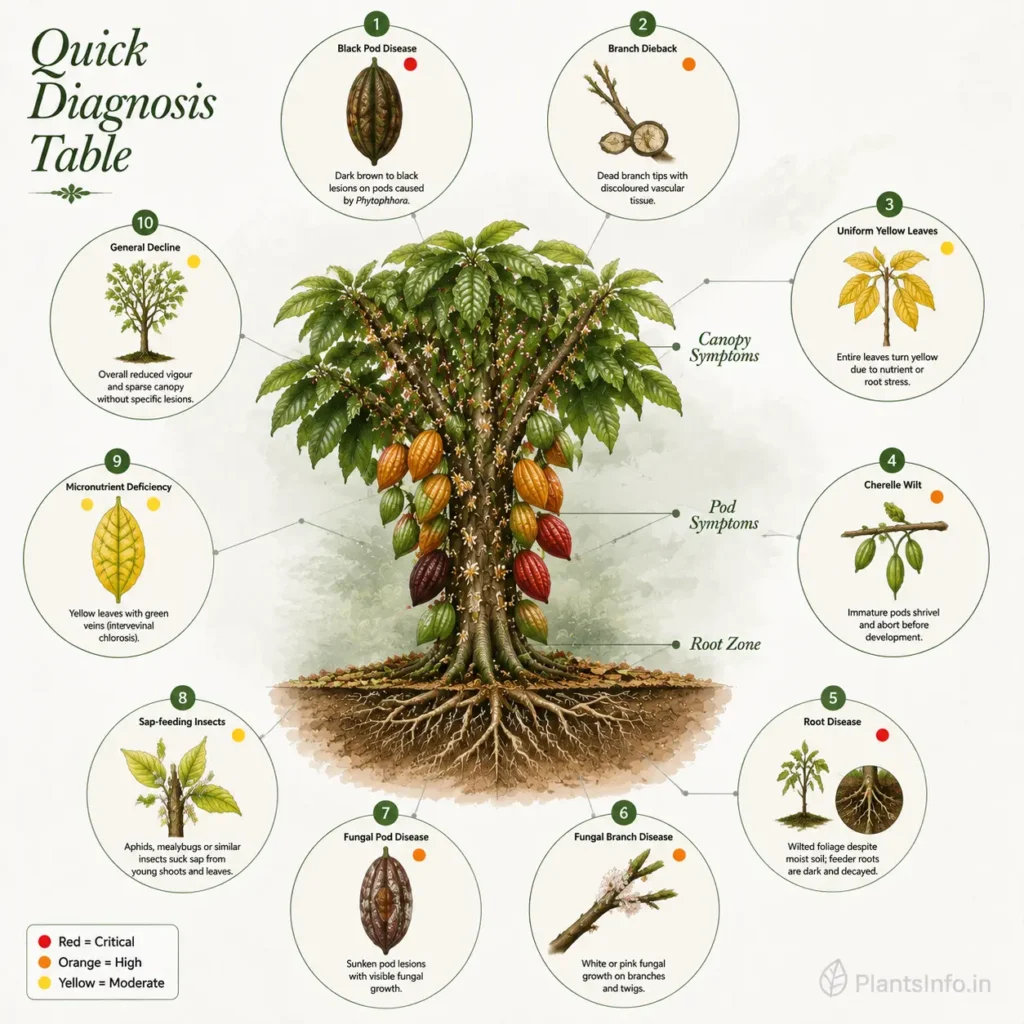
The following table provides a rapid starting point for identifying common cocoa problems. Similar symptoms may have multiple causes, so confirmation should always consider recent weather, growing conditions, and symptom progression.
| Symptom | Most Likely Cause | Urgency | Initial Response |
|---|---|---|---|
| Pods develop dark brown or black lesions | Black pod disease (Phytophthora spp.) | Critical | Remove infected pods immediately and improve orchard sanitation. |
| Sudden branch dieback | Stem canker or severe vascular infection | High | Remove affected tissues where appropriate and inspect surrounding trees. |
| Leaves yellow uniformly | Nutrient deficiency, root stress, or poor drainage | Moderate | Assess drainage, root condition, and nutrient status before treatment. |
| Young pods shrivel and fall | Physiological cherelle wilt or environmental stress | Low–Moderate | Evaluate tree health and seasonal conditions before assuming disease. |
| Leaves wilt despite moist soil | Root disease or severe root damage | High | Inspect root zone and drainage; investigate possible root pathogens. |
| White or pink fungal growth on branches | Fungal branch disease | High | Remove affected branches promptly and improve canopy airflow. |
| Pods show sunken lesions with fungal growth | Fungal pod disease | High | Remove infected pods and monitor disease spread. |
| Numerous small insects on young shoots | Sap-feeding insect infestation | Moderate | Identify pest species before selecting control measures. |
| Scattered yellow leaves with green veins | Possible micronutrient deficiency | Moderate | Confirm deficiency through symptom pattern and soil or leaf analysis where feasible. |
| General decline without obvious lesions | Environmental stress or multiple interacting factors | Moderate–High | Evaluate irrigation, drainage, nutrition, and root health systematically. |
Problem Severity Assessment
| Problem Category | Urgency |
|---|---|
| Black pod disease | Critical |
| Stem canker | High |
| Root diseases | High |
| Major branch diseases | High |
| Severe drought stress | High |
| Nutrient deficiencies | Moderate |
| Minor insect infestations | Moderate |
| Physiological cherelle wilt | Usually Low |
Early diagnosis substantially improves recovery potential for most cocoa problems.
Most Critical Problem
Black Pod Disease
Among all diseases affecting cocoa worldwide, black pod disease, caused by several Phytophthora species, is widely recognised as the most economically significant. In India, the disease is favoured by prolonged rainfall, high humidity, and persistently wet orchard conditions.
Why It Is So Important
Unlike many foliar diseases that mainly reduce photosynthesis, black pod disease directly affects the harvested crop. Under favourable environmental conditions, infected pods may deteriorate rapidly, reducing both yield and bean quality.
Some Phytophthora species can also infect stems, roots, and young tissues, making long-term orchard management more challenging if inoculum is allowed to accumulate.
Typical Symptoms
Early symptoms commonly include:
- Small water-soaked lesions on pods.
- Rapid enlargement of brown to black infected areas.
- Progressive darkening of the entire pod.
- Internal bean deterioration as infection advances.
- Premature pod decay while attached to the tree.
Under humid conditions, pale fungal-like growth associated with pathogen reproduction may become visible on infected pod surfaces.
Conditions That Increase Risk
Disease development is favoured by:
- Frequent rainfall.
- High relative humidity.
- Poor air circulation.
- Dense canopies that remain wet for extended periods.
- Poor orchard sanitation.
- Infected pods remain beneath trees.
Poor drainage further increases disease pressure by maintaining prolonged surface moisture within plantations.
Immediate Management Priorities
When black pod disease is suspected:
- Remove infected pods promptly.
- Destroy diseased plant material away from productive trees.
- Avoid leaving infected pods on the orchard floor.
- Improve air movement where excessive canopy density exists.
- Maintain effective drainage during wet periods.
- Follow locally recommended integrated disease management practices, including approved fungicide programmes where appropriate.
Early intervention substantially reduces opportunities for secondary spread during prolonged rainy weather.
Disease Problems
Black Pod Disease (Phytophthora spp.)
Importance
Black pod disease remains the principal disease limiting cocoa production in many tropical regions. Depending on weather conditions and management, losses may range from minor localised infection to severe crop reduction.
Symptoms
- Brown or black expanding pod lesions.
- Progressive pod decay.
- Internal bean deterioration.
- Premature pod drop in severe infections.
Favourable Conditions
- Persistent rainfall.
- Relative humidity above normal seasonal levels.
- Wet pod surfaces.
- Poor orchard hygiene.
Management
Integrated management should combine:
- Regular orchard inspection.
- Prompt removal of infected pods.
- Good sanitation.
- Effective drainage.
- Balanced canopy management.
- Locally recommended fungicide programmes where necessary.
No single control measure provides complete protection under highly favourable disease conditions.
Stem Canker
Stem canker is frequently associated with Phytophthora infections affecting trunks and branches.
Symptoms
- Dark, sunken lesions on stems.
- Cracked or discoloured bark.
- Sap exudation in some cases.
- Progressive branch decline above the affected areas.
Advanced infections may interfere with water movement and weaken structural integrity.
Risk Factors
- Mechanical wounds.
- High humidity.
- Prolonged rainfall.
- Existing black pod disease pressure.
Management
Successful management generally involves:
- Early detection.
- Removal of severely affected tissues where appropriate.
- Prevention of unnecessary trunk injuries.
- Reduction of disease inoculum within the plantation.
- Application of locally recommended protective treatments when warranted.
Pink Disease (Erythricium salmonicolor)
Pink disease primarily affects branches under warm, humid conditions.
Symptoms
Characteristic features include:
- Thin, whitish fungal growth during early infection.
- Pink to salmon-coloured fungal crust as the disease develops.
- Branch girdling.
- Progressive dieback beyond infected areas.
Conditions Favouring Infection
- Dense shade.
- Poor air circulation.
- Extended periods of high humidity.
- Persistently wet bark surfaces.
Management
Management focuses on:
- Early removal of infected branches.
- Improving canopy ventilation.
- Maintaining orchard sanitation.
- Avoiding unnecessary branch injuries.
Prompt pruning usually limits further spread within individual trees.
Root Diseases
Several soil-borne fungi and oomycetes may infect cocoa roots, particularly where drainage is poor or root systems remain weakened by environmental stress.
Because multiple pathogens can produce similar symptoms, laboratory confirmation may sometimes be required for precise diagnosis.
Common Symptoms
- Progressive decline.
- Leaf yellowing.
- Reduced canopy growth.
- Wilting despite adequate soil moisture.
- Root discoloration and decay.
Contributing Factors
- Waterlogged soils.
- Poor drainage.
- Root injury.
- Long-term orchard stress.
Management
Management depends on reducing conditions favourable to root pathogens.
Key priorities include:
- Improving drainage.
- Avoiding prolonged soil saturation.
- Removing severely affected trees when necessary.
- Maintaining healthy root systems through appropriate orchard management.
Anthracnose (Colletotrichum spp.)
Anthracnose occurs in many tropical crops, including cocoa, particularly during periods of prolonged humidity.
Symptoms
- Irregular dark lesions on leaves.
- Leaf blight.
- Shoot dieback.
- Occasional pod lesions.
Favourable Conditions
- Warm temperatures.
- Frequent rainfall.
- High humidity.
- Extended leaf wetness.
Management
Integrated management includes:
- Removal of heavily infected plant material.
- Improved canopy airflow.
- Good orchard sanitation.
- Monitoring during prolonged wet weather.
Practical Disease Diagnosis Tips
When diagnosing cocoa diseases:
- Observe whether symptoms occur primarily on leaves, pods, stems, or roots.
- Consider recent rainfall and humidity patterns.
- Distinguish between isolated symptoms and plantation-wide problems.
- Examine symptom progression over several days rather than relying on a single observation.
- Avoid applying fungicides before identifying the likely cause of decline.
Accurate diagnosis not only improves treatment success but also reduces unnecessary pesticide use and supports more sustainable orchard management.
Pest Problems
Insect pests reduce cocoa productivity by feeding on leaves, shoots, flowers, pods, or roots. Some species cause direct physical damage, while others weaken trees by removing sap or creating wounds that allow secondary infections.
Not every insect observed in a cocoa plantation requires intervention. Accurate identification, regular monitoring, and integrated pest management (IPM) generally provide better long-term outcomes than routine insecticide application.
Mirid Bugs (Capsid Bugs)
Mirid bugs (Helopeltis spp. and related species in Asia; Sahlbergella and Distantiella spp. in Africa) are among the most economically important insect pests of cocoa worldwide. In India, Helopeltis species are the principal concern.
Symptoms
- Small dark feeding punctures on pods.
- Brown or black lesions around feeding sites.
- Dieback of young shoots.
- Premature wilting of tender flushes.
- Deformed or undersized pods under severe infestations.
Young tissues are generally more susceptible than mature stems.
Risk Factors
- Warm temperatures.
- Flushes of new vegetative growth.
- Poor monitoring.
- Neglected orchards.
Management
Integrated management includes:
- Regular field scouting.
- Removal of heavily damaged shoots where appropriate.
- Conservation of natural predators.
- Avoiding unnecessary broad-spectrum insecticides.
- Using approved insecticides only when economic thresholds are exceeded.
Mealybugs
Mealybugs colonize tender shoots, leaf axils, flowers, and pods where they feed on plant sap.
Symptoms
- White cotton-like insect clusters.
- Sticky honeydew deposits.
- Development of black sooty mould on honeydew.
- Reduced vigour.
- Distorted young growth during severe infestations.
The sooty mould itself is usually superficial but reduces photosynthetic efficiency by covering leaf surfaces.
Conditions Favouring Infestation
- Dense canopies.
- Dry weather.
- Excessive nitrogen fertilization.
- Presence of ants that protect mealybug colonies.
Management
Effective control includes:
- Monitoring young shoots regularly.
- Prune heavily infested plant parts when practical.
- Managing ant populations that protect mealybugs.
- Conserving beneficial predators such as ladybird beetles.
- Applying recommended insecticides only when infestations become economically significant.
Aphids
Although generally less destructive than some other cocoa pests, aphids may colonize young flushes during periods of active vegetative growth.
Symptoms
- Curled young leaves.
- Sticky honeydew.
- Reduced shoot growth.
- Localized distortion.
Heavy infestations may encourage sooty mould development.
Management
- Encourage natural predators.
- Avoid excessive nitrogen fertilization.
- Remove heavily infested shoots where feasible.
- Apply selective insecticides when necessary.
Scale Insects
Scale insects remain attached to stems, branches, or leaves while feeding continuously on plant sap.
Symptoms
- Small, immobile bumps on stems or leaves.
- Yellowing foliage.
- Reduced tree vigour.
- Honeydew and sooty mould in some species.
Management
- Improve canopy ventilation.
- Encourage biological control organisms.
- Remove severely infested branches if localized.
- Apply horticultural oils or approved insecticides where appropriate.
Cocoa Pod Borer
In regions where cocoa pod borer occurs, larvae feed within developing pods and directly damage beans.
Symptoms
- Premature pod ripening.
- Small entry holes.
- Poor bean development.
- Reduced bean quality.
- Internal feeding damage.
Because larvae remain protected inside pods, early detection is particularly important.
Management
Integrated management typically includes:
- Timely harvesting.
- Orchard sanitation.
- Removal of infested pods.
- Monitoring adult populations.
- Regionally recommended integrated pest management practices.
Occurrence and economic importance vary considerably between cocoa-growing regions.
Termites
Termites usually become problematic in young plantations or where trees are already weakened.
Symptoms
- Damage around the stem base.
- Feeding beneath bark.
- Reduced stability of young trees.
- Wilting associated with severe root injury.
Risk Factors
- Dry conditions.
- Dead wood within plantations.
- Stressed young trees.
Management
- Remove dead wood and debris.
- Maintain healthy tree vigour.
- Protect young trees where termite pressure is known to be high.
- Use approved control measures when necessary.
Rodents and Vertebrate Pests
Rodents, squirrels, and occasionally other vertebrates may damage ripening pods by feeding on developing beans.
Symptoms
- Gnawed pod surfaces.
- Opened pods.
- Missing beans.
- Secondary fungal invasion following feeding damage.
Management
- Regular harvesting.
- Orchard sanitation.
- Habitat management.
- Regionally appropriate vertebrate pest control measures.
Pest Diagnosis Summary
| Symptom | Most Likely Pest | Diagnostic Feature |
|---|---|---|
| Dark feeding punctures on pods | Mirid bugs | Small necrotic feeding spots |
| White cotton-like masses | Mealybugs | Visible insects with waxy covering |
| Curled young leaves | Aphids | Colonies on tender shoots |
| Hard bumps on stems | Scale insects | Immobile protective coverings |
| Internal pod damage | Cocoa pod borer | Feeding tunnels inside pods |
| Stem base injury | Termites | Soil-associated feeding damage |
| Gnawed pods | Rodents | Bite marks and missing beans |
Environmental Problems
Many cocoa problems originate from environmental stress rather than infectious diseases. These disorders often affect large areas of a plantation simultaneously and usually reflect recent weather conditions or site limitations.
Drought Stress
Cocoa has relatively low drought tolerance compared with many tropical tree crops.
Symptoms
- Leaf wilting.
- Reduced flushing.
- Slower growth.
- Increased young pod loss.
- Premature leaf shedding during prolonged drought.
Contributing Factors
- Inadequate irrigation.
- Low rainfall.
- High temperatures.
- Low humidity.
- Insufficient mulching.
Corrective Measures
- Restore consistent soil moisture.
- Improve mulching.
- Reduce unnecessary pruning during drought.
- Protect young plants from excessive heat.
Waterlogging
Excess water often causes more serious long-term damage than short periods of drought.
Symptoms
- Yellow leaves.
- Reduced vigour.
- Poor root growth.
- Wilting despite wet soil.
- Progressive canopy decline.
Contributing Factors
- Heavy clay soils.
- Poor drainage.
- Blocked drainage channels.
- Extended monsoon rainfall.
Corrective Measures
- Improve field drainage.
- Avoid standing water.
- Raise planting sites where appropriate.
- Restore soil aeration.
Persistent waterlogging frequently precedes secondary root diseases.
Sun Scorch
Young cocoa plants are particularly susceptible to excessive direct sunlight.
Symptoms
- Brown leaf margins.
- Bleached leaf tissue.
- Leaf curling.
- Reduced seedling growth.
Corrective Measures
- Provide temporary shade.
- Maintain balanced canopy cover.
- Increase irrigation during heat waves.
Wind Damage
Strong winds damage cocoa mechanically while also increasing moisture loss.
Symptoms
- Broken branches.
- Torn leaves.
- Leaning young trees.
- Increased moisture stress.
Corrective Measures
- Maintain windbreaks.
- Support young trees where necessary.
- Remove damaged branches promptly.
Cold Injury
Although uncommon in major cocoa-growing regions, unusually low temperatures may affect plantations established near the climatic limits of cultivation.
Symptoms
- Leaf discoloration.
- Reduced growth.
- Shoot dieback.
- Severe injury following frost.
Because cocoa lacks frost tolerance, repeated cold exposure often causes permanent damage.
Nutrient Deficiencies
Nutrient deficiencies usually develop gradually and often affect large numbers of trees rather than isolated individuals.
Visual diagnosis provides useful preliminary information but should ideally be confirmed through soil or leaf analysis before major fertilizer adjustments are made.
Nitrogen Deficiency
Symptoms
- Uniform pale green foliage.
- Reduced vegetative growth.
- Smaller leaves.
- Thin canopy.
Likely Causes
- Poor soil fertility.
- Insufficient fertilizer.
- Nutrient leaching.
Phosphorus Deficiency
Symptoms
- Slow growth.
- Weak root development.
- Reduced flowering.
- Smaller canopy.
Likely Causes
- Low soil phosphorus.
- Poor nutrient availability in acidic soils.
Potassium Deficiency
Symptoms
- Yellowing or scorching along leaf margins.
- Weak stems.
- Poor pod filling.
- Reduced drought tolerance.
Potassium deficiency often becomes more noticeable during periods of heavy fruit production.
Magnesium Deficiency
Symptoms
- Interveinal chlorosis on older leaves.
- Green veins with yellow tissue between veins.
- Progressive leaf discoloration.
Calcium Deficiency
Symptoms
- Poor development of young leaves.
- Weak shoot growth.
- Reduced root development.
Iron Deficiency
Symptoms
- Yellow young leaves.
- Green veins remain visible.
- Symptoms begin on recently formed foliage.
Iron deficiency commonly reflects reduced nutrient availability rather than inadequate soil iron.
Zinc Deficiency
Symptoms
- Small leaves.
- Shortened internodes.
- Reduced shoot extension.
- Rosette appearance during severe deficiency.
Nutrient Deficiency Summary
| Nutrient | Characteristic Symptom |
|---|---|
| Nitrogen | Uniform yellowing of older foliage |
| Phosphorus | Slow growth and weak root development |
| Potassium | Yellow or scorched leaf margins |
| Magnesium | Yellowing between veins of older leaves |
| Calcium | Distorted young growth |
| Iron | Yellow young leaves with green veins |
| Zinc | Small leaves and shortened internodes |
Physiological Disorders
Physiological disorders result from the plant’s response to environmental conditions rather than infection by pathogens or pests.
Cherelle Wilt
Cherelle wilt is one of the most characteristic physiological phenomena in cocoa.
Symptoms
- Small developing pods cease growth.
- Pods shrivel gradually.
- Young pods darken.
- Premature pod drop.
Cause
The tree naturally regulates the number of pods it can mature. When developing fruits exceed available resources, some young pods are aborted.
Moderate cherelle wilt is therefore considered normal.
When to Investigate Further
Excessive cherelle wilt may indicate:
- Severe drought.
- Poor nutrition.
- Root stress.
- Heavy pest or disease pressure.
- General tree decline.
Natural Leaf Senescence
Older cocoa leaves naturally yellow and fall as part of normal canopy renewal.
Normal leaf ageing should not be confused with disease when:
- Only older leaves are affected,
- New growth remains healthy,
- And overall tree vigour is maintained.
Stress-Induced Leaf Drop
Temporary leaf shedding may occur following:
- prolonged drought,
- transplant shock,
- root disturbance,
- severe pruning,
- or sudden environmental changes.
Recovery usually depends on the restoration of favourable growing conditions rather than chemical treatment.
Uneven Pod Development
Not all pods on a cocoa tree mature at identical rates.
Variation commonly reflects:
- differences in flowering dates,
- pollination success,
- competition among developing fruits,
- and natural resource allocation.
This uneven development is generally normal in healthy cocoa trees.
Diagnostic Principles
When investigating cocoa decline:
- Observe the pattern. A single affected tree often indicates a localized issue, whereas widespread symptoms usually suggest environmental or nutritional causes.
- Examine multiple plant parts. Leaves, stems, pods, and roots together provide a more reliable diagnosis than any single symptom.
- Consider recent weather. Heavy rainfall, drought, or unusual temperatures frequently explain symptom development.
- Look for progression. Symptoms that spread rapidly may indicate infectious diseases, while gradual changes often reflect nutritional or environmental disorders.
- Avoid treating symptoms before identifying causes. Correct diagnosis is the foundation of effective management and helps prevent unnecessary pesticide or fertilizer applications.
Prevention
Preventive management is more effective and economical than attempting to control severe outbreaks after they become established. Most cocoa problems arise when environmental conditions favour pathogens or when trees are weakened by prolonged stress. An integrated approach that combines good orchard hygiene, balanced nutrition, appropriate canopy management, and regular monitoring provides the most reliable long-term protection.
Orchard Sanitation
Orchard sanitation is the foundation of disease prevention.
Key practices include:
- Remove diseased or damaged pods promptly.
- Destroy infected plant material away from productive trees.
- Do not leave infected pods beneath trees.
- Prune dead or severely diseased branches where appropriate.
- Keep the orchard floor reasonably free from excessive plant debris that may harbour pathogens.
Regular sanitation reduces the amount of disease inoculum available for future infections.
Regular Monitoring
Routine inspection allows problems to be detected before significant yield losses occur.
Inspect plantations regularly for:
- New leaf symptoms.
- Pod lesions.
- Branch dieback.
- Insect activity.
- Changes in canopy colour.
- Unusual leaf drop.
- Declining tree vigour.
During prolonged rainy periods, monitoring frequency should increase because many cocoa diseases develop rapidly under humid conditions.
Moisture Management
Maintaining balanced soil moisture reduces both drought stress and conditions favourable to root diseases.
Preventive priorities include:
- Prevent prolonged waterlogging.
- Improve drainage before the rainy season.
- Irrigate during extended dry periods where necessary.
- Maintain organic mulch to conserve soil moisture.
- Avoid repeated cycles of severe drying and flooding.
Stable moisture conditions support healthy root function throughout the year.
Canopy Management
A well-managed canopy reduces disease pressure while maintaining suitable growing conditions.
Objectives include:
- Improving air circulation.
- Allowing faster drying of foliage and pods after rainfall.
- Reducing excessive humidity within dense canopies.
- Removing overcrowded or damaged branches.
Canopy management should aim for balanced shade rather than excessive exposure to direct sunlight.
Nutrient Management
Healthy trees are generally more resilient to pests and diseases.
Preventive nutrient management should include:
- Periodic soil or leaf analysis where practical.
- Balanced fertilization.
- Regular incorporation of organic matter.
- Correction of identified nutrient deficiencies.
- Avoidance of excessive nitrogen applications that encourage soft, susceptible growth.
Integrated Pest Management (IPM)
Long-term pest management should prioritize ecological balance rather than routine pesticide use.
Effective IPM includes:
- Monitoring pest populations.
- Conserving beneficial insects.
- Managing ants associated with sap-feeding pests.
- Applying chemical controls only when justified by pest pressure.
- Rotating approved pesticides to reduce resistance development.
Integrated management helps preserve natural biological control agents while minimizing unnecessary pesticide exposure.
Preventive Checklist
| Practice | Benefit |
|---|---|
| Weekly orchard inspection during wet weather | Early detection |
| Prompt removal of infected pods | Reduces disease spread |
| Good drainage | Reduces root diseases |
| Balanced nutrition | Improves tree resilience |
| Appropriate shade management | Maintains favourable microclimate |
| Orchard sanitation | Lowers pathogen carry-over |
| Regular harvesting | Reduces pod losses and secondary infections |
Recovery Expectations
Recovery depends on the type of problem, the severity of damage, and how quickly corrective action begins. Some disorders resolve rapidly after environmental conditions improve, while others may permanently reduce productivity or require removal of severely affected trees.
Recovery Assessment
| Problem | Recovery Potential | Typical Outlook |
|---|---|---|
| Mild nutrient deficiency | Excellent | Good recovery following nutrient correction |
| Temporary drought stress | Good | Recovery expected if prolonged damage has not occurred |
| Waterlogging | Moderate | Depends on duration and root damage |
| Minor insect infestation | Good | Usually manageable with timely intervention |
| Black pod disease | Moderate | Good if detected early and sanitation is maintained |
| Stem canker | Moderate | Depends on severity and extent of infection |
| Root diseases | Variable | Early intervention improves survival; advanced infections may be irreversible |
| Severe cold injury | Poor | Permanent damage may occur |
| Extensive trunk infection | Poor | Removal may become necessary |
Recovery Time
Approximate recovery periods vary considerably.
| Problem Type | Expected Recovery Time* |
|---|---|
| Moisture stress | Several weeks after conditions improve |
| Nutrient deficiency | Weeks to months depending on severity |
| Minor canopy damage | One growing season |
| Severe branch loss | Multiple growing seasons |
| Root decline | Highly variable depending on root regeneration |
*Actual recovery depends on climate, tree age, overall health, and management.
Indicators of Successful Recovery
Positive signs include:
- Healthy new leaf flushes.
- Improved leaf colour.
- Strong shoot growth.
- Normal pod development.
- Stable canopy density.
- Absence of new disease lesions.
Recovery should be evaluated using new growth rather than damaged tissues, which often remain permanently affected.
Common Mistakes
Many cocoa problems become severe because of delayed diagnosis or inappropriate management rather than the original cause itself.
1. Treating Before Diagnosing
Applying fungicides, insecticides, or fertilizers before identifying the underlying problem often wastes resources and may delay appropriate treatment.
Always determine whether symptoms are caused by disease, pests, nutrient imbalance, or environmental stress before taking corrective action.
2. Confusing Physiological Disorders with Disease
Natural processes such as cherry wilt or seasonal leaf senescence are frequently mistaken for infectious diseases.
Not every yellow leaf or fallen pod requires chemical treatment.
3. Ignoring Drainage Problems
Growers sometimes focus on fertilizers while overlooking poorly drained soils.
Persistent waterlogging weakens root systems and predisposes trees to several serious diseases.
Improving drainage often produces greater long-term benefits than increasing fertilizer applications.
4. Delaying Removal of Diseased Pods
Leaving infected pods on trees or on the orchard floor increases pathogen survival and encourages further disease spread.
Prompt sanitation remains one of the most effective disease-management practices.
5. Overusing Pesticides
Routine pesticide applications without monitoring pest populations may:
- disrupt beneficial insects,
- encourage resistance,
- increase production costs,
- and fail to address the true cause of decline.
Integrated pest management generally provides more sustainable results.
6. Ignoring Small Early Symptoms
Minor lesions, slight yellowing, or limited branch dieback are often easier to manage than advanced disease.
Early intervention usually reduces both economic losses and treatment costs.
7. Assuming Every Problem Has a Single Cause
Cocoa decline frequently results from multiple interacting factors.
For example:
- poor drainage,
- nutrient imbalance,
- prolonged drought,
- and opportunistic pathogens
May occur simultaneously.
A systematic assessment usually produces more reliable diagnoses than focusing on one symptom alone.
Frequently Asked Questions
Why are my cocoa pods turning black?
The most likely cause is black pod disease caused by Phytophthora species, particularly during prolonged wet weather. However, mechanical injury and other pod diseases may occasionally produce similar symptoms. Careful examination of lesion development and recent weather conditions helps improve diagnostic accuracy.
Why are young cocoa pods falling off?
Moderate loss of young pods (cherelle wilt) is a normal physiological process that allows the tree to regulate crop load.
Excessive pod loss, however, may indicate drought stress, nutrient imbalance, poor pollination, disease, or general tree decline.
Can yellow leaves always indicate nutrient deficiency?
No.
Yellowing may result from:
- nutrient deficiencies,
- waterlogging,
- root diseases,
- drought stress,
- natural leaf ageing,
- or other environmental factors.
The distribution of symptoms provides important diagnostic clues.
Why does my cocoa tree wilt even though the soil is wet?
Wilting in wet soil often suggests impaired root function rather than inadequate water supply.
Possible causes include:
- poor drainage,
- root diseases,
- prolonged waterlogging,
- or severe root damage.
Is every branch dieback caused by disease?
No.
Branch dieback may result from:
- fungal infections,
- drought,
- physical injury,
- nutrient imbalance,
- or cold damage.
Inspection of affected bark and surrounding tissues helps determine the underlying cause.
When should fungicides be used?
Fungicides are most effective when integrated with sanitation, monitoring, drainage improvement, and canopy management.
They should be applied according to locally approved recommendations and not as the sole disease-management strategy.
Can damaged cocoa trees recover?
Many can.
Recovery depends on:
- the original cause,
- severity of damage,
- tree age,
- environmental conditions,
- and the speed of corrective action.
Early diagnosis generally improves recovery prospects.
Should every insect be controlled?
No.
Many insects found in cocoa plantations are beneficial predators or pollinators.
Management should focus on economically damaging pests rather than eliminating all insect activity.
How often should cocoa plantations be inspected?
Routine inspections should be conducted throughout the year, with increased frequency during rainy periods when disease pressure is typically greatest.
Commercial plantations often benefit from weekly monitoring during peak disease seasons.
Can poor drainage cause several different problems simultaneously?
Yes.
Poor drainage may contribute to:
- root diseases,
- nutrient uptake disorders,
- reduced growth,
- increased susceptibility to pathogens,
- and long-term decline.
Correcting drainage often resolves multiple problems simultaneously.
What is the first sign that a cocoa plantation is becoming unhealthy?
Early warning signs frequently include:
- reduced flushing,
- gradual canopy thinning,
- isolated yellow leaves,
- minor pod lesions,
- or reduced shoot growth.
Detecting these changes before widespread decline develops greatly improves management success.
Should severely diseased trees always be removed?
Not necessarily.
Trees with localized disease may recover after appropriate management.
However, trees suffering extensive trunk infections, severe root decline, or irreversible structural damage may eventually require removal to reduce disease pressure within the plantation.
Conclusion
Successful diagnosis of cocoa problems depends on understanding that similar symptoms often have very different causes. Yellow leaves may reflect nutrient deficiency, root stress, or natural ageing, while pod loss may result from normal physiological regulation, environmental stress, or disease. Careful observation, rather than immediate treatment, is therefore the first step in effective problem management.
Among infectious diseases, black pod disease remains the most significant threat in many cocoa-growing regions, particularly where prolonged humidity and poor orchard sanitation allow pathogens to spread rapidly. Equally important, however, are environmental factors such as poor drainage, drought, and nutritional imbalance, which frequently weaken trees and increase their susceptibility to both pests and diseases.
Long-term plantation health is achieved through integrated management rather than reliance on any single intervention. Regular monitoring, orchard sanitation, balanced nutrition, effective drainage, appropriate canopy management, and timely responses to emerging problems collectively provide the most reliable foundation for sustainable cocoa production.