Complete Cocoa plant (Theobroma cacao L.) Guides
Problems & Diseases
Introduction
The cocoa plant (Theobroma cacao L.) is one of the world’s most economically important tropical tree species because its seeds form the basis of the global chocolate industry. A member of the Malvaceae family, it is native to tropical regions of northern South America, particularly the Amazon and Orinoco basins. The species is distinguished by cauliflory, a reproductive strategy in which flowers and fruits develop directly on the trunk and major branches, enabling production of large seed-bearing fruits.
Classification
- Plant Type
- Tree
- Lifecycle
- Perennial
- Leaf Habit
- Evergreen
- Native Region
- Central America, Northern South America
- Plant Family
- Malvaceae
Within native tropical forests, cocoa functions as a shade-tolerant understory tree that contributes to structural diversity and food-web interactions. Its flowers are pollinated primarily by tiny flies, especially ceratopogonid midges, rather than by the larger insect pollinators commonly associated with many flowering trees. This specialised pollination system, together with large animal-dispersed fruits, distinguishes the species from many economically important tropical crop relatives and influences both wild reproduction and plantation productivity.
Human association with cocoa extends back several millennia in Mesoamerica, where cacao beverages acquired ceremonial, economic, and cultural significance. Modern cultivation spans tropical regions worldwide and supports the livelihoods of millions of farming households. Although the species is widely cultivated, wild genetic resources remain important for breeding, disease resistance, and long-term crop resilience. This profile examines the biological, ecological, agricultural, and conservation dimensions of the species through a structured scientific reference framework.
Identity
Quick Plant Information
| Field | Value |
|---|---|
| Accepted Scientific Name | Theobroma cacao L. |
| Primary Common Name | Cocoa Plant |
| Plant Type | Tropical tree |
| Life Cycle | Perennial |
| Growth Habit | Evergreen tropical tree |
| Mature Size | Typically 4–8 m in cultivation; larger in unmanaged forest conditions |
| Growth Rate | Moderate |
| Flowering Season | Intermittent throughout the year in suitable tropical climates |
| Fruiting Season | Variable; often year-round under tropical conditions |
| Light Requirement | Partial shade to filtered sunlight |
| Water Requirement | High |
| Soil Preference | Deep, well-drained, organic-rich soils |
| Temperature Tolerance | Tropical; sensitive to prolonged cold and frost |
| Pollination Type | Insect-mediated |
| Self-Fertility Status | Variable among genotypes; many benefit from cross-pollination |
| Primary Propagation Method | Seed and grafting |
| Typical Yield Class | Moderate to high |
| Primary Use Categories | Food crop, beverage crop, industrial crop, agroforestry species |
| Toxicity Status | No documented intrinsic human toxicity; cocoa products may be toxic to some animals due to methylxanthines |
| Conservation Concern | Wild genetic resource conservation important |
| Cultivation Difficulty Level | Moderate |
Classification and Taxonomy
| Field | Value | Notes |
|---|---|---|
| Accepted Scientific Name | Theobroma cacao L. | Accepted species name |
| Known Synonyms | Cacao cacao (L.) H.Karst. | Historical synonym |
| Taxonomic Authority Source | Linnaeus; contemporary acceptance in major taxonomic databases | Source Class B |
| Assessment Date | 2026-06-11 | Current review |
| Kingdom | Plantae | |
| Division | Magnoliophyta | Angiosperms |
| Class | Magnoliopsida | Eudicot lineage |
| Order | Malvales | |
| Family | Malvaceae | |
| Subfamily | Byttnerioideae | Applicable |
| Genus | Theobroma | |
| Species | T. cacao | |
| Native Origin | Amazon–Orinoco region of tropical South America | Concise summary |
| IUCN Status | Not Evaluated | Status category only |
Related Species of Significance
| Species | Common Name | Distinguishing Feature | Economic or Ecological Significance |
|---|---|---|---|
| Theobroma grandiflorum | Cupuaçu | Larger aromatic fruits | Important Amazonian fruit crop |
| Theobroma bicolor | White Cacao | Pale seeds and pulp | Regional food and beverage use |
| Theobroma speciosum | Cacauí | Smaller fruits | Wild genetic resource |
| Theobroma subincanum | Cupuí | Distinct fruit morphology | Local food use and breeding interest |
| Theobroma obovatum | Wild Cacao Relative | Restricted distribution | Conservation and genetic diversity value |
Taxonomic Context
The genus Theobroma contains more than twenty recognised species distributed primarily in tropical South America. Among them, T. cacao is uniquely important because of its global agricultural role and extensive domestication history. Historical confusion has centred less on species identity than on cultivated genetic groups and regional naming systems. Taxonomic stability has benefited international trade, germplasm conservation, breeding programmes, and regulatory oversight by ensuring that scientific, agricultural, and commercial literature consistently refers to the same biological entity despite substantial genetic diversity within cultivated populations.
Cytogenetics
| Parameter | Value | Notes |
|---|---|---|
| Chromosome Number | 2n = 20 | Widely reported and stable |
| Ploidy Level | Diploid | Standard condition |
| Genome Size | Approximately 430–450 Mb depending on assembly and estimation method. | Reported from genome sequencing studies |
Cytogenetic Note
The cocoa plant possesses a relatively stable diploid genome and chromosome complement, factors that have facilitated modern breeding, genetic mapping, and whole-genome sequencing initiatives. The absence of widespread documented ploidy variation simplifies inheritance studies and germplasm management. Cytogenetic stability has contributed to the development of molecular breeding programmes targeting disease resistance, yield improvement, and adaptation to changing environmental conditions while maintaining product quality characteristics.
Scientific Stability and Nomenclature
The currently accepted name is Theobroma cacao L., established by Carl Linnaeus in 1753 and retained by modern taxonomic authorities. Taxonomic databases, including internationally recognised nomenclatural repositories, continue to accept this name without substantive dispute. A notable historical nomenclatural event occurred during the nineteenth century when alternative combinations such as Cacao cacao (L.) H.Karst. were proposed following differing interpretations of generic boundaries. Subsequent taxonomic consensus favoured retention of Theobroma because the genus was already well established in botanical literature and agricultural usage.
Adoption of the accepted name is effectively universal across agricultural science, horticulture, genetics, phytochemistry, plant pathology, commodity regulation, and international trade. This stability is particularly important because cocoa research encompasses thousands of publications, extensive germplasm collections, and globally regulated commodity chains. Consistent nomenclature improves literature retrieval, facilitates regulatory compliance, and reduces ambiguity in breeding, quarantine, certification, and commercial sourcing programmes. While discussion continues regarding domestication history, population structure, and relationships among cultivated genetic groups, these debates do not affect the accepted scientific name of the species itself.
Synonymy
| Accepted Name (Current Authority) | Synonyms Commonly Encountered | Context Where Synonym Persists |
|---|---|---|
| Theobroma cacao L. | Cacao cacao (L.) H.Karst. | Historical botanical literature |
| Theobroma cacao L. | Historical varietal names | Older agricultural and breeding publications |
Form
Growth Habit and Architecture
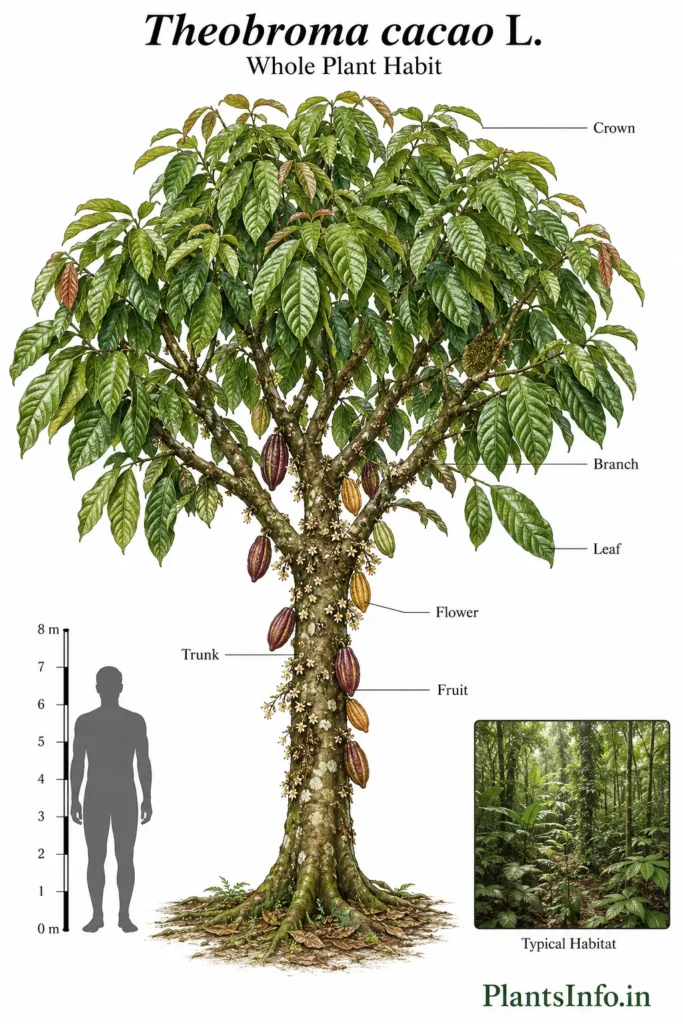
The cocoa plant is a small to medium-sized evergreen tropical tree adapted to the shaded understory of humid forests. Its architecture combines a straight central trunk with a characteristic jorquette, a tiered branching structure that forms the permanent crown. The canopy is relatively compact, allowing efficient interception of filtered light beneath taller forest trees. Cauliflory, the production of flowers and fruits directly on the trunk and major branches, is among its most distinctive features. This architecture supports large fruit development while maintaining access for pollinators and seed-dispersing animals within densely vegetated tropical environments.
| Parameter | Value | Notes |
|---|---|---|
| Life Form | Evergreen tree | Perennial woody species |
| Mature Height | 4–8 m (13–26 ft) in cultivation | Larger in unmanaged forests |
| Canopy Spread | 3–6 m (10–20 ft) | Variable among cultivars |
| Stem Type | Single-trunked woody stem | Often develops low branching crown |
| Bark or Surface Texture | Smooth to slightly fissured | Becomes rougher with age |
| Branching Pattern | Jorquette branching system | Characteristic of cacao |
| Root System Overview | Central taproot with extensive lateral roots; commonly reaches over 1.5 m (5 ft) depth where soil permits | Morphology only |
| Growth Rate | Moderate | Climate dependent |
| Longevity | Commonly 40–60 years; occasionally longer | Productive lifespan often shorter |
| Distinguishing Architectural Feature | Cauliflory | Flowers and fruits borne on trunk and major branches |
Stem
The stem provides structural support for the canopy and serves as the principal site for flower and fruit production through cauliflory. Young stems are smooth and green to reddish-green, becoming progressively woody and grey-brown with age. The trunk remains relatively slender compared with many tropical trees of similar height. Mature stems support substantial fruit loads while maintaining flexibility in humid forest environments.
| Stem Characteristic | Description |
|---|---|
| Stem Type | Woody trunk |
| Cross-Section Shape | Circular |
| Mature Diameter | Commonly 10–30 cm (4–12 in) |
| Surface Texture | Smooth when young; slightly fissured when mature |
| Colour (Young) | Green to reddish-green |
| Colour (Mature) | Grey-brown to brown |
| Internode Length | Variable; commonly 5–15 cm (2–6 in) |
| Thorns, Spines, or Wings | Absent |
| Internal Structure | Solid with central pith |
| Lenticels | Present and visible on younger stems |
Leaves
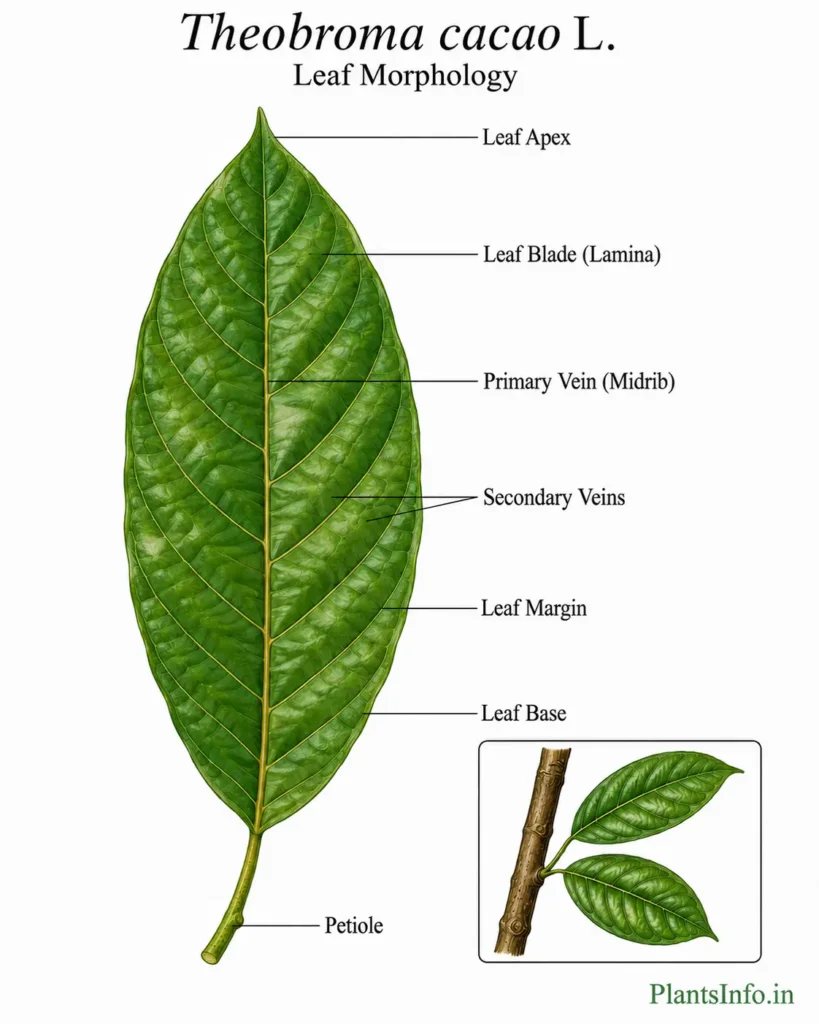
Cocoa leaves are large, simple, and evergreen, contributing substantially to photosynthetic productivity in shaded tropical environments. Newly emerging leaves often display striking bronze, pinkish, or reddish coloration before maturing to glossy green. Their thin yet broad structure is adapted for efficient light capture under low-light forest conditions. Juvenile flushes frequently hang vertically before stiffening and assuming a more horizontal orientation.
| Characteristic | Description |
|---|---|
| Presence | Present |
| Leaf Type | Simple |
| Size | 15–40 cm × 5–15 cm (6–16 in × 2–6 in) |
| Colour | Bronze-red when young; dark green when mature |
| Arrangement | Alternate |
| Special Features | Prominent drip tips and pendulous young flushes |
Flowers
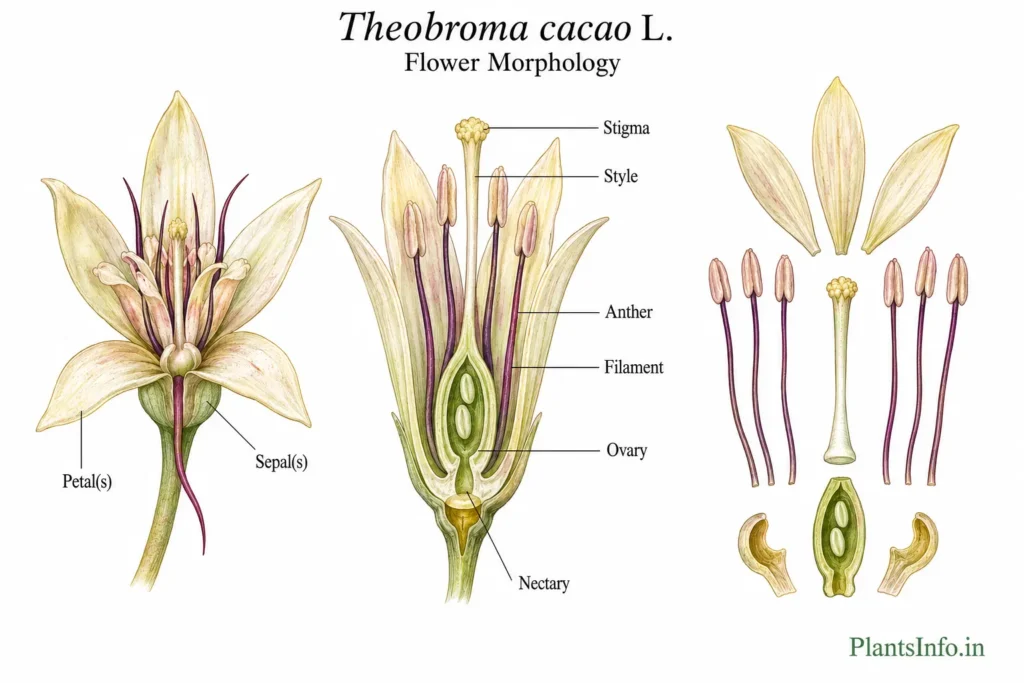
Cocoa flowers are unusually small relative to the size of the fruits they ultimately produce. They arise directly from the trunk and older branches, creating dense flowering cushions that may persist for many years. Floral structure reflects adaptation to very small insect visitors capable of navigating narrow floral spaces. Continuous flowering in suitable tropical climates enables prolonged reproductive opportunity, although only a small proportion of flowers develop into mature fruits.
| Floral Attribute | Description |
|---|---|
| Inflorescence Type | Cauliflorous fascicles |
| Flower Diameter | Approximately 1–2 cm (0.4–0.8 in) |
| Flower Length | Approximately 1–1.5 cm (0.4–0.6 in) |
| Outer Tepals or Sepals | Five, pale green to pinkish |
| Inner Tepals or Petals | Five, hooded and specialised |
| Stamens | Five fertile stamens with staminodes present |
| Pistil | Single superior ovary |
| Fragrance | Mild, often faint |
| Anthesis Period | Throughout the year under suitable conditions |
| Primary Pollinators | Ceratopogonid midges and related small flies |
Fruit

| Fruit Characteristic | Description |
|---|---|
| Fruit Type | Berry (large indehiscent berry commonly termed a pod) |
| Shape | Ellipsoid to ovoid |
| Length | 10–35 cm (4–14 in) |
| Diameter | 7–15 cm (3–6 in) |
| Weight | Commonly 300–1000 g (0.7–2.2 lb) |
| Skin Colour | Green, yellow, orange, red, or purple depending on genotype |
| Surface Features | Deeply ridged and thick-walled |
| Flesh Colour | White to cream |
| Flesh Texture | Mucilaginous pulp |
| Seed Count | Commonly 20–60 seeds |
| Sugar Content | Sweet pulp; quantitative values vary among genotypes |
| Maturation Period | Approximately 5–6 months after pollination |
Seeds
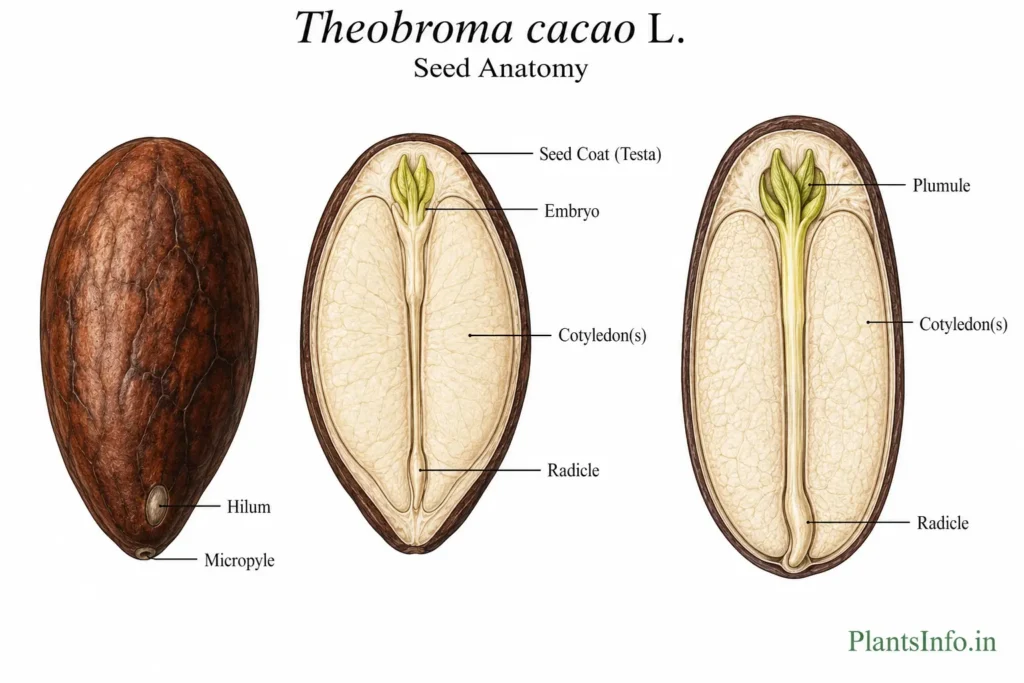
| Seed Characteristic | Description |
|---|---|
| Size | Approximately 2–3 cm (0.8–1.2 in) |
| Shape | Ovoid to flattened |
| Colour | White, violet, or purple internally depending on genotype |
| Seed Coat | Thin and relatively delicate |
| Oil Content | High; cocoa butter constitutes a major seed component |
| Viability Period | Typically short; viability declines rapidly after drying |
| Germination Rate | Commonly high when fresh under suitable conditions |
Root System
The cocoa plant develops a central taproot accompanied by a broad network of lateral roots occupying the upper and intermediate soil horizons. In deep, well-structured soils, the taproot may extend beyond 1.5 m (5 ft), while lateral roots commonly spread well beyond the canopy radius. Root architecture provides anchorage and access to water reserves during short periods of reduced rainfall. The species is sensitive to prolonged waterlogging because oxygen availability decreases around actively growing roots. For cultivation, this morphology favours deep, well-drained soils and influences plantation design, spacing, and long-term productivity.
Field Identification
A mature cocoa plant is most readily recognised by the combination of a relatively small evergreen tree habit, large glossy leaves, and conspicuous ribbed fruits emerging directly from the trunk and major branches. The distinctive jorquette branching pattern further aids identification. Among related species, it is most frequently confused with Theobroma grandiflorum (cupuaçu), particularly when observed without mature fruits. The single most reliable distinguishing feature is the fruit: cocoa produces typically narrower, more strongly ridged pods, whereas cupuaçu bears larger fruits with a thicker brown exterior. Trunk-borne flowers and fruits provide an immediate field cue separating cacao from most other tropical fruit trees.
Normal vs. Concerning Observations
| Observation | Status | Explanation |
|---|---|---|
| Bronze-red young leaves | Normal | Typical colour of new vegetative growth |
| Pendulous leaf flushes | Normal | Common juvenile leaf development pattern |
| Flowers produced directly on trunk | Normal | Characteristic cauliflorous growth |
| Limited fruit set despite abundant flowering | Monitor | Many flowers naturally abort |
| Localised branch dieback | Investigate | May indicate physiological stress or disease |
| Extensive premature leaf drop | Investigate | Exceeds normal turnover levels |
| Small numbers of aborted young fruits | Monitor | Frequently observed in healthy trees |
| Widespread bark cracking or lesions | Investigate | Potential indicator of pathology or injury |
Cultivar Summary
| Cultivar | Key Characteristic | Commercial Status | Origin |
|---|---|---|---|
| ‘Amelonado’ | Vigorous Forastero-derived type | Commercially dominant | Amazon Basin |
| ‘ICS 1’ | Historical breeding selection | Historically documented | Trinidad |
| ‘UF 667’ | Disease resistance breeding line | Regionally significant | Central America |
| ‘CCN-51’ | High productivity and vigour | Commercially dominant | Ecuador |
| ‘TSH 1188’ | Improved breeding material | Regionally significant | Trinidad |
Physiology and Phytochemistry
Functional Traits
The cocoa plant is a shade-adapted evergreen tropical tree whose physiology reflects long-term evolution within humid forest understories. Rather than maximising rapid growth under intense sunlight, it prioritises continuous carbon acquisition, persistent foliage, and sustained reproductive output under relatively stable climatic conditions. Its functional strategy integrates efficient low-light photosynthesis, extensive perennial biomass retention, chemically defended seeds, and repeated flowering throughout the year. These traits collectively support long life spans, regular fruit production, and successful persistence in environments where competition for light, pollinator access, and seed dispersal opportunities strongly influences reproductive success.
| Trait | Mechanism Description | Adaptive Significance |
|---|---|---|
| Photosynthetic Pathway | C3 photosynthesis fixes atmospheric carbon through the Calvin cycle during daylight hours using ribulose-1,5-bisphosphate carboxylase/oxygenase (RuBisCO). | Efficient under shaded tropical forest conditions. |
| Water Use Strategy | Maintains transpiration through broad evergreen leaves while regulating stomatal opening in response to moisture availability and atmospheric demand. | Supports year-round growth where humidity remains high. |
| Nutrient Acquisition | Extensive lateral and vertical roots intercept dissolved mineral nutrients across multiple soil horizons. | Improves nutrient access in heterogeneous tropical soils. |
| Growth Form Strategy | Long-lived woody perennial allocates resources to durable stems, canopy maintenance, and repeated reproductive cycles. | Enhances long-term reproductive output. |
| Reproductive Strategy | Produces thousands of flowers annually while investing heavily in relatively few mature fruits and large nutrient-rich seeds. | Increases reproductive opportunities despite low fruit set. |
| Dispersal Mechanism | Seeds are enclosed within sweet mucilaginous pulp attractive to vertebrate dispersers. | Promotes movement away from parent plants. |
| Stress Response Mechanism | Modulates growth rates, leaf turnover, and stomatal behaviour under environmental stress. | Reduces physiological damage during adverse conditions. |
| Chemical Defence | Seeds and vegetative tissues contain bioactive secondary metabolites including methylxanthines and polyphenols. | Deters herbivory and protects reproductive tissues. |
| Shade Tolerance | Large leaves and low-light photosynthetic efficiency permit positive carbon balance under reduced irradiance. | Enables persistence beneath forest canopies. |
| Cauliflory | Flowers and fruits develop directly on trunks and major branches rather than peripheral shoots. | Improves access for pollinators and dispersers. |
Physiological Integration
The functional strategy of cocoa depends on interaction among multiple traits rather than any single adaptation. Shade tolerance permits maintenance of large evergreen leaves capable of continuous carbon capture under low-light conditions, supporting long-term resource accumulation. This stable carbon supply enables repeated flowering throughout the year despite low rates of successful fruit development.
Chemical defence compounds protect the substantial energetic investment represented by large seeds rich in storage reserves. Water-use regulation complements this strategy by maintaining leaf function during short-term environmental fluctuations while avoiding excessive resource loss. Cauliflory further integrates reproductive and architectural traits by positioning flowers and fruits where pollinators and dispersers can access them efficiently. Together, these mechanisms create a conservative but resilient physiological system optimised for humid tropical forest environments.
Phytochemistry
Among tropical crop species, cocoa possesses one of the most extensively characterised phytochemical profiles. Research has focused particularly on seed chemistry because of its economic importance in food production and human nutrition studies. The species is notable for high concentrations of flavan-3-ols, procyanidins, methylxanthines, and storage lipids.
These compounds contribute to flavour development, defence against herbivores, seed physiology, and commercial processing characteristics. While seeds dominate phytochemical research, leaves, fruit pulp, and other tissues also contain biologically active metabolites that contribute to ecological interactions and species function.
| Compound Class | Representative Compounds | Primary Location | Ecological or Biological Function |
|---|---|---|---|
| Methylxanthines | Theobromine, Caffeine | Seeds | Chemical defence and physiological regulation |
| Flavan-3-ols | Catechin, Epicatechin | Seeds | Antioxidant activity and defence |
| Procyanidins | Procyanidin B2, Procyanidin C1 | Seeds | Polyphenolic defence and seed protection |
| Lipids | Oleic acid, Stearic acid, Palmitic acid | Seeds | Energy storage and seed development |
| Flavonols | Quercetin, Quercetin glycosides | Leaves and seeds | UV protection and defence |
| Anthocyanins | Cyanidin derivatives | Developing tissues and some seeds | Pigmentation and antioxidant function |
| Volatile Aroma Precursors | Pyrazine precursors, Amino acid derivatives | Seeds | Flavour development following processing |
Phytochemical Organ Distribution
| Organ | Compound Class | Representative Compounds | Concentration |
|---|---|---|---|
| Seed Cotyledons | Methylxanthines | Theobromine, Caffeine | High |
| Seed Cotyledons | Flavan-3-ols | Epicatechin, Catechin | High |
| Seed Cotyledons | Procyanidins | Procyanidin B2, Procyanidin C1 | Moderate–High |
| Seed Cotyledons | Lipids | Oleic acid, Stearic acid, Palmitic acid | High |
| Leaves | Flavonols | Quercetin derivatives | Moderate |
| Fruit Pulp | Soluble Sugars | Glucose, Fructose, Sucrose | Moderate |
| Seed Coat | Polyphenols | Catechin derivatives | Moderate |
Phytochemical Significance
The phytochemistry of cocoa is dominated by the seed, which contains the compound classes responsible for both commercial value and much of the species’ biological interest. Methylxanthines, particularly theobromine, are among the most recognisable constituents and contribute to defence, flavour characteristics, and physiological activity.
Polyphenols, including flavan-3-ols and procyanidins, represent another major research focus because of their influence on taste, colour development, oxidation processes, and potential biological effects. Storage lipids collectively known as cocoa butter are equally significant from a commercial perspective, determining texture and processing behaviour.
Characterisation of seed chemistry is highly advanced relative to other plant organs. Interactions among polyphenols, methylxanthines, proteins, and volatile precursors contribute substantially to the sensory properties of cocoa-derived products. Most research has concentrated on seeds and processed cocoa materials, while leaf and fruit-pulp chemistry remain comparatively less studied. The research base is globally distributed across producing and consuming regions, although particularly strong concentrations of phytochemical research originate from Europe, North America, Brazil, Ghana, Côte d’Ivoire, and Southeast Asia. Evidence for major compound classes is supported by extensive species-specific literature.
Evidence, Nutrition, and Safety
Evidence Hierarchy for Medicinal Use
| Evidence Layer | Status | Notes |
|---|---|---|
| Traditional Use | Documented | Cacao beverages and preparations recorded in Mesoamerican cultural traditions and historical ethnobotanical sources. |
| Nutritional Evidence | Documented | Extensive evidence supports nutritional contribution of cocoa-derived foods and beverages. |
| In Vitro Studies | Documented | Numerous studies report antioxidant, vascular, inflammatory, and cellular effects of cocoa polyphenols. |
| Animal Studies | Documented | Experimental studies demonstrate cardiovascular, metabolic, and neurobiological effects under controlled conditions. |
| Human Clinical Studies | Documented | Multiple clinical trials have examined cocoa flavanol consumption and cardiovascular biomarkers. |
| Regulatory Recognition | Partial | Certain health-related statements have received limited recognition in some jurisdictions; broad medicinal claims are not universally approved. |
| Unsupported Commercial Claims | Documented | Claims involving disease cure, major weight loss, detoxification, or universal cognitive enhancement exceed available evidence. |
Evidence Assessment
The evidence base for cocoa differs substantially from that of many medicinal plants because research emphasis has focused on nutrition and functional-food applications rather than traditional herbal medicine. The strongest support exists for nutritional value, phytochemical composition, and selected cardiovascular biomarkers examined in human clinical studies. Evidence becomes progressively weaker when extending findings from biochemical mechanisms to broad therapeutic claims. Commercial promotion frequently emphasises anti-ageing, detoxification, weight-management, or disease-prevention benefits that are not supported by equivalent clinical evidence. The largest evidence gap therefore lies between well-characterised phytochemistry and expansive health claims that extend beyond documented human outcomes.
Nutritional Composition
Representative values for unsweetened cocoa powder per 100 g.
| Nutrient | Value per 100 g | Notes | Source |
|---|---|---|---|
| Energy | 228 kcal | Unsweetened cocoa powder | (USDA FoodData Central) |
| Protein | 19.6 g | Plant protein source | (USDA FoodData Central) |
| Total Fat | 13.7 g | Includes cocoa butter lipids | (USDA FoodData Central) |
| Carbohydrate | 57.9 g | Includes dietary fibre fraction | (USDA FoodData Central) |
| Dietary Fibre | 37.0 g | High relative to many food crops | (USDA FoodData Central) |
| Calcium | 128 mg | Mineral nutrient | (USDA FoodData Central) |
| Magnesium | 499 mg | Exceptionally high concentration | (USDA FoodData Central) |
| Potassium | 1524 mg | Major intracellular mineral | (USDA FoodData Central) |
| Iron | 13.9 mg | High relative to many plant foods | (USDA FoodData Central) |
| Phosphorus | 734 mg | Major mineral constituent | (USDA FoodData Central) |
| Zinc | 6.8 mg | Trace mineral source | (USDA FoodData Central) |
| Theobromine | Variable; commonly 1–3% dry weight | Bioactive methylxanthine | Source Class A |
Nutritional Significance Note
Unsweetened cocoa powder is unusual among plant-derived food ingredients because it combines high dietary fibre content with substantial concentrations of magnesium, potassium, phosphorus, and iron. Its protein content is moderate rather than exceptional, while vitamin concentrations are generally less notable than its mineral profile. Nutritional interpretation depends strongly on processing, since fermentation, roasting, alkalisation, and fat removal alter both nutrient composition and phytochemical retention. Most published nutritional datasets are derived from cultivated material processed into commercial cocoa powder rather than fresh seeds, and therefore should not be interpreted as representative of freshly harvested cacao beans.
Soil Ecology and Mycorrhizal Associations
Species-level studies have documented associations between Theobroma cacao roots and arbuscular mycorrhizal fungi, particularly species within the genera Glomus, Rhizophagus, Acaulospora, and related taxa. These symbioses facilitate nutrient acquisition and may contribute to improved establishment under nutrient-limited tropical conditions. Rhizosphere bacterial communities commonly include taxa associated with nutrient cycling, organic matter transformation, phosphorus mobilisation, and plant-growth promotion, although community composition varies among production systems and regions.
Published studies indicate that mycorrhizal inoculation can enhance seedling establishment and early growth under some experimental conditions. High-intensity fertilisation regimes may reduce dependence on mycorrhizal associations, though responses vary with soil conditions and management systems. Species-specific allelopathic effects have not been comprehensively characterised, and no major allelopathic mechanism is currently recognised as a defining ecological feature of cacao.
From both agronomic and conservation perspectives, maintenance of biologically active soil communities may support long-term productivity and establishment success, particularly in restoration systems and landscapes where soil degradation has reduced microbial diversity. Most evidence derives from tropical agricultural research programmes in Latin America, West Africa, and Southeast Asia.
Recommended Products
Disclosure: As an Amazon Associate, PlantsInfo may earn from qualifying purchases.
🌱 Plant Care Essentials
The following tools can help with pruning, plant health, soil management, and fruit garden maintenance.

Neem Oil for Plant Care
Natural plant protection against aphids, whiteflies, mites, and other common garden pests.

Fungicide for Root Care
Helps suppress soil-borne fungal diseases and supports healthier root systems.

Spray Bottle for Plants
Ideal for applying foliar sprays, neem oil solutions, and liquid plant treatments.

Rubber Hand Gloves
Protects hands during pruning, planting, soil preparation, and garden maintenance.
Toxicity and Safety
| Subject | Toxic Compounds | Clinical Effects | Source |
|---|---|---|---|
| Humans | Theobromine, caffeine (dose dependent) | Excessive intake may contribute to insomnia, palpitations, gastrointestinal discomfort, or stimulant-related effects in sensitive individuals | EFSA scientific opinions; Source Class A |
| Cats | Theobromine, caffeine | Potentially severe methylxanthine toxicity affecting cardiovascular and neurological systems | ASPCA Animal Poison Control; Source Class B |
| Dogs | Theobromine, caffeine | Vomiting, tachycardia, tremors, seizures, and potentially fatal intoxication at sufficient doses | Merck Veterinary Manual; Source Class B |
| Livestock | Theobromine, caffeine | Toxicity reported in susceptible species when exposure is sufficiently high | Veterinary toxicology literature; Source Class A |
Toxicity Context
The safety profile of cocoa depends strongly on dose, preparation method, and species exposed. For most healthy humans, normal dietary consumption of cocoa-containing foods is generally considered safe, although stimulant-sensitive individuals may experience adverse effects at higher intakes because of methylxanthine exposure. Toxicity in companion animals reflects the concentration of isolated compounds, particularly theobromine, rather than the nutritional role of cocoa in human diets. Individuals with specific cardiovascular conditions, stimulant sensitivity, or medication interactions may require additional caution. This profile does not constitute medical or veterinary advice.
Distribution and Habitat

Native Range and Distribution
Biogeographic Context
The native distribution of Theobroma cacao is closely linked to the geological and climatic history of the Amazon and Orinoco drainage systems. The species evolved within humid lowland tropical forests where year-round moisture, relatively stable temperatures, and dense forest structure favoured shade-tolerant understory trees. River systems likely played an important role in natural dispersal and population connectivity.
Archaeological and genetic evidence indicate that humans subsequently expanded its range through cultivation and trade long before global commercial agriculture emerged. Habitat conversion within Amazonian forests has reduced portions of the species’ natural habitat, while extensive cultivation has obscured the distinction between wild, semi-wild, and historically managed populations in some regions. Distribution research is broadly international rather than concentrated within a single country’s literature.
Native Range
| Region | Countries or Sub-regions | Notes |
|---|---|---|
| Western Amazon Basin | Peru, Ecuador, Colombia | Major centre of genetic diversity |
| Upper Amazon Basin | Peru, western Brazil | Numerous wild populations documented |
| Northern Amazon Basin | Venezuela, Colombia | Includes Orinoco-associated populations |
| Central Amazon Basin | Brazil | Wild and semi-wild populations present |
| Guiana Shield Region | Guyana, Suriname, French Guiana | Native occurrence documented but less extensive |
Global Cultivation and Naturalisation
| Region | Countries or Areas | Cultivation Status | Notes |
|---|---|---|---|
| West Africa | Côte d’Ivoire, Ghana, Nigeria, Cameroon | Commercially established | Dominates global cocoa production |
| Tropical South America | Brazil, Ecuador, Peru, Colombia | Commercially established | Native and cultivated populations overlap |
| Central America | Mexico, Belize, Guatemala, Honduras, Costa Rica, Panama | Commercially established | Historical centre of cultivation |
| Southeast Asia | Indonesia, Malaysia, Philippines | Commercially established | Production influenced by disease and market conditions |
| South Asia | India, Sri Lanka | Emerging | Limited suitable climatic zones |
| Pacific Islands | Papua New Guinea, Solomon Islands, Fiji | Commercially established | Important regional export crop |
| Northern Australia | Queensland | Experimental | Climatic and economic limitations |
| Southern United States | Hawaii, Puerto Rico (US territory) | Attempted — limited success | Restricted by climate and scale |
Cultivation Range Note
Commercial production is concentrated within a narrow equatorial belt extending through West Africa, tropical America, Southeast Asia, and selected Pacific regions. Côte d’Ivoire and Ghana collectively contribute a substantial proportion of global cocoa supply, making production statistics disproportionately influenced by West African agriculture. This concentration represents a research and reporting bias that may underrepresent ecological and agronomic variation elsewhere. Emerging cultivation continues in parts of South Asia and selected tropical regions experiencing market expansion. Attempts outside humid tropical climates have generally achieved limited commercial success because climatic constraints narrow the global production envelope.
Natural Habitat
In its native state, cocoa occurs primarily within humid tropical rainforest ecosystems, most commonly in lowland forests but occasionally extending into lower montane environments. Documented native populations generally occur from near sea level to approximately 1,200 m (3,940 ft) elevation. The species is associated with deep, organic-rich, well-drained soils and typically occupies shaded understory positions beneath taller canopy trees.
Moisture availability is generally high throughout the year, although seasonal fluctuations occur in parts of its range. Cocoa exhibits limited tolerance of severe disturbance and is most characteristic of relatively intact forest systems. Ecologically, it is best regarded as a habitat specialist adapted to humid tropical forest environments, a trait that influences both conservation priorities and global cultivation site selection.
Ecological Role
Within native tropical forests, Theobroma cacao functions primarily as an understory fruit-producing tree contributing resources to both pollinator and vertebrate communities. Its flowers support specialised interactions with small dipteran insects, particularly ceratopogonid midges, while mature fruits provide energy-rich pulp and seeds attractive to mammals capable of transporting propagules.
Ecological studies indicate that rodents, primates, and other vertebrates may participate in seed movement, although species-specific dispersal networks remain incompletely resolved across much of the native range. The species is not generally considered a keystone species at ecosystem scale, but it contributes to structural diversity and trophic complexity within rainforest understories.
Because extensive cultivation has altered population structure across large portions of its range, distinguishing natural ecological interactions from plantation-associated interactions remains an ongoing research challenge. Pollination ecology is comparatively well studied, whereas wild dispersal networks remain less comprehensively documented. Current understanding therefore remains stronger for reproductive ecology than for long-term population dynamics in undisturbed forests.
Ecological Role
| Role Type | Species or Agent Involved | Notes |
|---|---|---|
| Pollinator Association | Forcipomyia spp. | Documented flower visitors within native ecosystems |
| Seed Dispersal | Primates and rodents (species variable by region) | Species-level networks incompletely resolved |
| Understory Resource Provider | Multiple rainforest vertebrates | Fruits provide seasonal food resource |
Invasive Status
Although Theobroma cacao has been cultivated extensively outside its native range, no major invasive status of global concern has been documented. Localised naturalisation may occur near cultivation sites, but significant ecosystem-level invasive impacts have not been widely reported.
Climate and Stress Tolerance
Optimal Climate Parameters
| Parameter | Optimal Range | Tolerance Range | Notes |
|---|---|---|---|
| Mean Annual Temperature | 24–28°C (75–82°F) | 18–32°C (64–90°F) | Based on global commercial cultivation |
| Daytime Temperature | 25–32°C (77–90°F) | 18–35°C (64–95°F) | Regional variation documented |
| Nighttime Temperature | 20–24°C (68–75°F) | 15–28°C (59–82°F) | Sustained extremes reduce performance |
| Annual Rainfall | 1,500–2,500 mm (59–98 in) | 1,000–3,500 mm (39–138 in) | Derived from global cultivation envelope |
| Dry Season Length | 0–3 months | Up to 5 months | Longer dry seasons increase stress |
| Relative Humidity | 70–90% | 50–100% | Humidity influences physiological performance |
| Solar Radiation | Filtered to moderate tropical sunlight | Full shade to partial sun equivalent | Most data derived from shaded cultivation systems |
Climate Interpretation
Temperature and moisture availability are the principal climatic constraints limiting cocoa expansion. Although the species evolved in humid rainforest environments, commercial cultivation demonstrates a somewhat broader climatic envelope than that occupied by many wild populations. Rainfall distribution and dry-season duration frequently impose stronger limitations than annual precipitation totals alone. Cold sensitivity remains one of the most important barriers to expansion beyond tropical and near-tropical regions. By contrast, breeding programmes and production systems have demonstrated some capacity to accommodate variation in solar radiation and humidity, provided temperatures remain within physiologically acceptable limits.
Stress Tolerance Profile
| Stress Type | Tolerance Level | Physiological Response | Notes |
|---|---|---|---|
| Drought | Low–Moderate | Reduces stomatal conductance, limits transpiration, and suppresses vegetative growth to conserve water. | Extended drought significantly affects productivity. |
| Heat | Moderate | Increases transpiration and activates heat-stress response pathways including protective protein expression. | Severe heat may impair reproduction. |
| Cold or Frost | Very Low | Cellular membranes lose functional integrity and metabolic activity declines sharply. | Frost frequently causes severe injury. |
| Salinity | Low | Osmotic stress reduces water uptake and alters ion balance. | Not considered salt tolerant. |
| Waterlogging | Low–Moderate | Root oxygen availability decreases, reducing aerobic respiration and nutrient uptake efficiency. | Persistent flooding problematic. |
| Air Pollution | Not documented at species level | Not documented at species level. | Existing data are insufficient for assessment. |
| Wind | Moderate | Reduces leaf boundary layers and increases water loss through transpiration. | Severe storms may damage canopies. |
| Soil Compaction | Low | Restricts root-zone aeration and limits resource uptake processes. | Commonly associated with reduced vigour. |
Compound Stress
Compound stress responses have received less study than individual stress factors. Available evidence indicates that drought combined with elevated temperatures produces disproportionately severe physiological effects because reduced water availability limits evaporative cooling while heat simultaneously increases transpiration demand. Interactions between waterlogging and salinity have been studied less extensively at the species level, representing a significant knowledge gap. Existing research suggests that multiple simultaneous stressors generally produce stronger reductions in growth, reproductive performance, and physiological efficiency than would be predicted from either factor alone. Further work remains necessary to quantify compound-stress thresholds across major production regions.
Adaptations and Reproductive Biology
Structural and Physiological Adaptations
Adaptation Narrative
The structural adaptations of Theobroma cacao reflect its evolutionary history as a shade-adapted understory tree within humid Neotropical forests. Large leaves maximise light interception beneath closed canopies, while cauliflory positions flowers and fruits on the trunk where specialised pollinators and vertebrate dispersers can access them more readily. The characteristic jorquette branching system creates an efficient crown architecture under shaded conditions. Together, these adaptations reflect selection pressures associated with persistent humidity, reduced light availability, complex forest structure, and dependence on specialised reproductive interactions.
Structural Adaptations
| Adaptation | Mechanism Description | Ecological Context |
|---|---|---|
| Large Shade Leaves | Broad lamina increases light interception surface area. | Adaptation to low-light forest understories. |
| Drip-Tip Leaf Morphology | Extended leaf tips facilitate rapid water shedding. | Persistent rainfall and high humidity environments. |
| Cauliflory | Flowers and fruits develop on trunks and major branches rather than terminal shoots. | Improves accessibility for pollinators and dispersers in dense forests. |
| Jorquette Crown Architecture | Tiered branching system distributes foliage efficiently beneath canopy shade. | Optimises crown structure in competitive light environments. |
| Evergreen Canopy | Persistent foliage maintained throughout multiple seasons. | Supports year-round carbon acquisition in stable climates. |
| Thin Bark | Relatively smooth bark facilitates repeated floral cushion development. | Associated with long-term trunk flowering. |
| Large Seed Size | Substantial nutrient reserves enclosed within each seed. | Supports seedling establishment in shaded habitats. |
| Mucilaginous Fruit Pulp | Seeds enclosed within attractive fleshy pulp. | Encourages vertebrate-mediated dispersal. |
| Flexible Young Shoots | Developing shoots remain pliable during early growth stages. | Reduces mechanical damage beneath forest canopies. |
Climate Change Vulnerability
| Factor | Assessment | Notes |
|---|---|---|
| Primary Climate Sensitivity Factors | High sensitivity to prolonged drought and elevated temperatures | Supported by plantation and ecological studies |
| Key Threatening Climate Processes | Rainfall disruption, heat stress, increased climate variability | Frequently identified in climate projections |
| Resilience Factors | Genetic diversity, broad cultivated distribution, breeding resources | Adaptive potential exists but varies regionally |
| Confidence Level | Moderate–High | Based on extensive agricultural and ecological literature |
Climate Vulnerability
Current assessments indicate moderate to high climate vulnerability for cocoa because production and natural populations are strongly associated with humid tropical climates. The greatest risks arise from increased drought frequency, altered rainfall seasonality, elevated temperatures, and compound heat-moisture stress. Multiple modelling studies and regional assessments (Source Class A) project shifts in climatic suitability across parts of West Africa, tropical America, and Southeast Asia. However, uncertainty remains regarding the capacity of breeding programmes, agroforestry systems, and local adaptation to offset projected impacts. Confidence is moderate to high because climate sensitivity is well documented, although long-term responses vary among regions and cultivation systems.
Phenological Calendar
| Event | Native Range Timing | Cultivated Range Timing | Environmental Triggers |
|---|---|---|---|
| Vegetative Growth Onset | Multiple flushes throughout the year | Multiple flushes throughout the year | Increased moisture availability and active growth temperatures |
| Flower Bud Initiation | Often follows vegetative flushes | Variable among production regions | Resource accumulation and favourable moisture conditions |
| Anthesis or Peak Flowering | Intermittent year-round | Year-round or seasonal peaks depending on region | Humidity, temperature stability, and prior vegetative growth |
| Fruit Development | Throughout the year | Throughout the year | Successful pollination and sustained carbohydrate supply |
| Fruit Maturation | Approximately 5–6 months after flowering | Approximately 5–6 months after flowering | Thermal accumulation and fruit development progression |
| Seed Dispersal | Variable; often linked to fruit ripening periods | Limited outside natural ecosystems | Fruit maturity and vertebrate activity |
| Dormancy or Rest Period | No true dormancy documented | No true dormancy documented | Growth slows under unfavourable environmental conditions |
Phenological Notes
Phenology in cocoa is unusually flexible compared with many temperate tree species because growth, flowering, and fruiting can occur throughout the year under suitable tropical conditions. Seasonal peaks often emerge in response to rainfall distribution and resource availability rather than fixed photoperiodic cues. This plasticity has enabled successful cultivation across multiple tropical regions despite differences in seasonal rainfall regimes. Regional production calendars therefore vary substantially even though the underlying biological sequence of vegetative growth, flowering, fruit development, and maturation remains broadly consistent.
Pollination Ecology
Cocoa possesses one of the most specialised pollination systems among major tropical crops. Its small, structurally complex flowers are adapted for visitation by tiny insects capable of navigating narrow floral spaces. Successful pollination depends on ecological interactions that occur at very small spatial scales and can be influenced by habitat structure, humidity, and local biodiversity. The system is distinctive because abundant flowering does not translate directly into high fruit set; only a small proportion of flowers develop into mature fruits. This low natural success rate is a normal component of the species’ reproductive biology.
| Parameter | Value | Notes |
|---|---|---|
| Primary Pollinators | Forcipomyia spp. | Genus-level documentation widely reported |
| Secondary Pollinators | Culicoides spp. and related Ceratopogonidae | Regional variation documented |
| Pollination Syndrome | Small-fly pollination | Specialised insect association |
| Floral Mechanism | Hooded petals and restricted floral chambers guide very small insects toward reproductive structures | Physical guidance mechanism |
| Reproductive System | Hermaphroditic flowers; predominantly outcrossing though self-compatibility varies among genotypes | Genotype dependent |
| Seed Dispersal Agent | Primates and rodents (species variable by region) | Species-level networks incompletely resolved |
| Pollination Success Rate | Generally low relative to flower production | High floral abortion is normal |
| Human Intervention | Biologically feasible | Used in research and production contexts |
Pollination Context
The cocoa plant is not strictly obligately outcrossing, but many genotypes exhibit improved fruit set when cross-pollination occurs. Dependence on specialised small-fly pollinators means that pollinator decline, habitat simplification, or disruption of local ecological communities may influence reproductive success. Biological feasibility of hand pollination has been demonstrated, although operational methods fall outside the scope of this profile. A defining characteristic of cocoa reproduction is the large disparity between flower production and successful fruit formation, reflecting both pollinator limitation and intrinsic reproductive filtering mechanisms that regulate investment in developing fruits.
Seed Biology and Germination
| Parameter | Value | Notes |
|---|---|---|
| Seed Type | Recalcitrant seed | Sensitive to desiccation |
| Dormancy Class | Non-dormant to weakly dormant | Fresh seed germinates readily |
| Dormancy-Breaking Requirement | No specific dormancy-breaking treatment generally required | Fresh seed preferred |
| Optimal Germination Temperature | 25–30°C (77–86°F) | Widely reported for cultivated material |
| Germination Rate | Commonly 70–95% when fresh | Conditions influence results |
| Germination Period | Approximately 1–3 weeks | Fresh viable seed |
| Storage Behaviour | Recalcitrant | Poor long-term storage capacity |
| Seed Longevity | Typically days to a few months under favourable storage conditions | Rapid viability decline documented |
Germination Notes
The biology of cocoa seed germination is dominated by recalcitrant storage behaviour. Unlike orthodox seeds capable of prolonged dry storage, cacao seeds rapidly lose viability when moisture content declines. Consequently, germination success is strongly influenced by seed freshness and handling history. Most published germination data originate from cultivated material used in breeding and propagation programmes, although available evidence suggests broadly similar behaviour in wild-collected seeds. Dormancy is generally weak or absent, making viability retention a more important biological constraint than dormancy-breaking requirements.
Vegetative Reproduction
| Parameter | Value | Notes |
|---|---|---|
| Vegetative Regeneration Capacity | Moderate | Regeneration from vegetative tissues documented |
| Primary Regeneration Mechanism | Adventitious shoot formation and clonal propagation structures | Widely utilised in breeding systems |
| Minimum Propagule Size | Not standardised in species-level literature | Depends on propagation method |
| Ecological or Invasive Significance | Limited ecological significance in wild populations | Primarily important in cultivation |
Human Interaction
Economic Importance
Economic Context
Cocoa Plant is among the world’s most economically significant perennial tropical crops. Global production is concentrated in West Africa, particularly Côte d’Ivoire and Ghana, while major processing industries operate across Europe, North America, and Asia. Commercial markets are overwhelmingly supplied by cultivated production rather than wild harvest, although wild genetic resources remain important for breeding and crop improvement.
Quality is strongly influenced by genotype, fermentation quality, post-harvest handling, and contamination risks such as heavy metals or adulteration with non-cocoa ingredients. Major supply-chain vulnerabilities include disease outbreaks, climate variability, labour availability, geopolitical instability, and concentration of production within a relatively narrow geographic belt. These factors contribute directly to international market volatility and long-term industry risk.
Economic Sectors
| Use Category | Description | Economic Impact |
|---|---|---|
| Chocolate Production | Primary raw material for chocolate manufacture | Major global commodity sector |
| Beverage Industry | Cocoa powder and cocoa beverages | High commercial value |
| Confectionery Industry | Ingredient in confectionery products | Globally significant |
| Food Ingredients | Flavouring, baking, and processed foods | Widely distributed economic use |
| Cosmetics | Cocoa butter in skincare and cosmetic products | Moderate commercial significance |
| Pharmaceutical and Nutraceutical Ingredients | Bioactive compounds used in research and specialty products | Emerging and specialised market |
| Agroforestry Systems | Integrated production crop in tropical farming systems | Regional economic importance |
| Summary Economic Assessment | Globally traded perennial commodity crop with extensive value-added processing chains | Very high international economic significance |
Traditional Uses
| Use Category | Knowledge System | Region or Cultural Group | Practice Summary | Documentation Level |
|---|---|---|---|---|
| Ritual Beverage | Maya Knowledge Systems | Mesoamerica | Preparation of ceremonial cacao beverages | Extensive |
| Elite Consumption | Aztec Knowledge Systems | Central Mexico | Consumption in political and ceremonial settings | Extensive |
| Currency Use | Aztec Economic Systems | Central Mexico | Seeds used as exchange medium | Extensive |
| Nutritional Beverage | Indigenous Amazonian Traditions | Amazon Basin | Consumption of cacao-derived beverages | Moderate |
| Medicinal Beverage | Maya Ethnomedicine | Mesoamerica | Use in traditional health-related preparations | Moderate |
| Social Hospitality | Mesoamerican Cultural Traditions | Mesoamerica | Shared beverage consumption during social events | Extensive |
| Fermented Food Products | Amazonian Indigenous Traditions | Western Amazonia | Local processing and consumption of pulp products | Moderate |
Traditional Use Summary
The deepest documented traditional relationships with cacao originate within Mesoamerica, particularly among Maya and later Aztec societies, where cacao functioned simultaneously as food, ritual substance, prestige commodity, and economic resource. These traditions are extensively documented through archaeological, historical, and ethnographic evidence. Additional food and beverage uses occur across parts of tropical South America, especially within indigenous Amazonian communities. Many traditions remain active today, although modern commercial chocolate production has substantially transformed the cultural and economic context in which cacao is consumed. Traditional knowledge remains geographically concentrated within its centres of domestication despite the globalisation of commercial production.
Regional Ethnobotanical Context
Human relationships with cacao extend back more than three millennia and are deeply intertwined with the cultural history of tropical America. Archaeological evidence indicates that cacao use developed within complex agricultural societies long before European contact. Over time, cacao transitioned from a locally significant food and ceremonial plant to a globally traded commodity. This transformation altered patterns of cultivation, consumption, and knowledge transmission while preserving important cultural associations within indigenous and descendant communities. Modern commercial systems coexist with traditional practices, although the scale of industrial production frequently obscures the historical origins of the crop and the communities that contributed to its domestication, selection, and cultural development.
Traditional Ecological Knowledge
Documented traditional ecological knowledge relating to cacao extends beyond food and beverage use. Indigenous and traditional farming communities in Mesoamerica and tropical South America have historically incorporated cacao into diversified agroforestry systems alongside fruit trees, timber species, and other useful plants. Such systems maintain canopy structure, reduce environmental exposure, and support landscape multifunctionality. Species-specific ecological indicator uses are not extensively documented in the literature. Compared with medicinal and food traditions, TEK concerning ecological integration and long-term agroforestry management remains less comprehensively recorded, representing a continuing research opportunity.
Ethical Considerations
Cacao originated within tropical America, and its domestication history is closely associated with indigenous communities of Mesoamerica and the Amazon Basin. Knowledge systems documented for the species include Maya cultural traditions, Aztec agricultural and economic systems, and multiple indigenous Amazonian traditions that contributed to cultivation, processing, and utilisation practices over centuries or millennia.
Documentation quality varies considerably. Mesoamerican ceremonial, economic, and culinary uses are extensively documented through archaeological records, colonial-period texts, and modern scholarship. By contrast, many indigenous Amazonian traditions remain less comprehensively represented in published literature. This uneven documentation influences which knowledge systems receive visibility within global commercial narratives.
The Nagoya Protocol is potentially relevant because cacao genetic resources, breeding materials, and associated traditional knowledge continue to possess commercial value. However, no single internationally recognised access-and-benefit-sharing case currently defines the species at a global level. No widely documented major biopiracy controversy specifically centred on cacao comparable to disputes involving some medicinal plants has been identified. Patent activity has primarily focused on breeding, processing technologies, flavour development, and genetic improvement rather than appropriation of a single traditional medicinal practice.
Commercial benefits derived from cacao have historically accrued disproportionately outside the regions where domestication and traditional knowledge originated. Major processing, branding, and value-added industries are concentrated in countries that are neither the centres of origin nor the principal custodians of traditional knowledge. This geographic separation creates attribution challenges and raises questions regarding recognition of historical contributions by indigenous and local communities.
Researchers, commercial buyers, and product developers operating internationally should prioritise transparent sourcing, accurate attribution of traditional knowledge origins, compliance with applicable access-and-benefit-sharing frameworks, and engagement with local institutions where traditional knowledge contributes to commercial development. Such practices improve transparency while supporting equitable recognition of the species’ cultural and historical foundations.
Cultural Significance
The cultural significance of cacao is exceptionally concentrated within Mesoamerica, where it developed symbolic meanings extending far beyond its nutritional value. Among Maya societies, cacao was associated with status, ritual exchange, hospitality, and cosmological symbolism. Artistic depictions, inscriptions, and ceremonial vessels indicate that cacao occupied a prominent place in elite and religious contexts. Later Aztec societies similarly integrated cacao into systems of prestige, tribute, and economic exchange.
Following global dissemination, cacao acquired new cultural meanings associated with luxury, celebration, gifting, and social consumption. Chocolate products derived from cacao became embedded within festivals, holidays, and social rituals across many cultures. Linguistically, the persistence of terms derived from Indigenous American languages reflects the crop’s cultural origins even within modern international commerce.
Public interest in cacao remains high because of its links to chocolate production, tropical agriculture, culinary traditions, and sustainable sourcing initiatives. Museums, botanical gardens, agroforestry tourism enterprises, and educational programmes frequently use cacao as an example of the connections between biodiversity, agriculture, commerce, and cultural history.
Applied Cultivation Knowledge
Cultivation Summary
| Parameter | Value | Notes |
|---|---|---|
| Hardiness or Climate Zone | Humid tropical climates | Reflects global cultivation range |
| Soil pH Range | Approximately 5.0–7.5 | Broadly suitable range documented |
| Moisture Sensitivity | High; sensitive to prolonged waterlogging and drought | Biological orientation only |
| Light Sensitivity | Shade tolerant; performs across filtered-light environments | Biological orientation only |
| Productive Lifespan | Commonly several decades | Varies by genotype and production system. |
Pest, Disease and Physiological Burden Summary
Cocoa experiences a substantial biological burden relative to many perennial crops. Documented pathogens include witches’ broom disease (Moniliophthora perniciosa), frosty pod rot (Moniliophthora roreri), and black pod disease (Phytophthora spp.). Important insect pests include mirids, cocoa pod borers, and related herbivores. Physiological stress from drought, heat, waterlogging, and pollination limitation is also well documented. The burden profile is extensively studied across multiple continents.
Failure Points and Commercial Risks
| Risk | Cause | Commercial Impact | Mitigation Domain |
|---|---|---|---|
| Pollination Failure | Inadequate pollinator activity or reproductive inefficiency | Reduced fruit set and yield | Agronomic |
| Black Pod Disease | Infection by Phytophthora species | Severe pod loss and economic damage | Genetic / Agronomic |
| Climate Stress | Drought, heat, or rainfall disruption | Reduced productivity and quality | Genetic / Infrastructural |
| Cultivar–Environment Mismatch | Unsuitable genotype for local conditions | Poor performance and yield instability | Genetic |
| Supply Chain Concentration | Production concentrated within limited regions | Market volatility and supply risk | Regulatory / Infrastructural |
Conservation and Research
Conservation Analysis
The principal conservation concern for Theobroma cacao is not immediate species extinction but the preservation of wild genetic diversity and the tropical forest ecosystems in which wild populations evolved. Modern commercial production depends on a relatively narrow subset of cultivated germplasm, whereas wild populations contain adaptive traits associated with disease resistance, environmental tolerance, and long-term breeding resilience. Consequently, the dominant conservation risk is genetic as much as ecological.
Deforestation throughout portions of the Amazon Basin and adjacent tropical regions continues to reduce and fragment habitats supporting wild cacao populations and related crop wild relatives. At the same time, extensive cultivation has complicated efforts to distinguish truly wild populations from naturalised or historically managed populations. This distinction is increasingly important for conservation planning, germplasm collection, and evolutionary research.
Commercial demand has encouraged widespread cultivation, reducing pressure for direct wild harvest but increasing reliance on genetically uniform production systems. Long-term sustainability therefore depends on maintaining both ex situ collections and in situ conservation of wild populations. Genetic erosion would reduce breeding options for future disease outbreaks, climate adaptation, and productivity improvement. Current conservation priorities focus on safeguarding genetic diversity rather than preventing imminent species-level extinction.
Conservation Status
| Parameter | Value | Notes | Source |
|---|---|---|---|
| IUCN Red List Category | Not Evaluated | No formal global Red List assessment currently available | – IUCN Red List: https://www.iucnredlist.org/ ; accessed 2026-06-11 |
| IUCN Red List Criteria | Not Applicable | No published Red List assessment | – https://www.iucnredlist.org/ ; accessed 2026-06-11 |
| Population Trend | Not formally assessed | Wild populations vary regionally | – https://www.iucnredlist.org/ ; accessed 2026-06-11 |
| Date of Assessment | Not Available | Species not evaluated | – https://www.iucnredlist.org/ ; accessed 2026-06-11 |
| Geographic Scope of Assessment | No global IUCN assessment available | Existing information derives from regional and crop-wild-relative studies | – https://www.iucnredlist.org/ ; accessed 2026-06-11 |
| Threats Summary | Deforestation, habitat fragmentation, genetic erosion, climate change | Threats primarily affect wild populations and genetic resources | Source Class A/B – Crop wild relative literature and IUCN resources |
Conservation Status Note
Although Theobroma cacao is not currently listed under a formal global IUCN threat category, conservation concerns remain significant because of ongoing habitat loss in regions containing wild populations and crop wild relatives. Commercial cultivation ensures the species itself remains widespread, but cultivation does not replace the evolutionary value of wild genetic diversity. Conservation efforts increasingly focus on maintaining genetic resources required for future breeding and climate adaptation rather than preventing immediate species extinction.
Research Coverage and Knowledge Gaps
| Research Topic | Coverage Level | Key Gaps | Priority |
|---|---|---|---|
| Genetics and Breeding | High | Wild population representation | High |
| Pollination Ecology | Moderate | Regional pollinator networks | High |
| Climate Adaptation | Moderate–High | Long-term adaptive thresholds | High |
| Soil Ecology | Moderate | Regional microbiome variation | Medium |
| Wild Population Biology | Moderate | Population continuity data | High |
| Phytochemistry | High | Non-seed organ chemistry | Medium |
Research Landscape
Research output for cacao continues to expand and remains among the largest for any tropical crop species. Major centres of activity include Brazil, Colombia, Ecuador, Côte d’Ivoire, Ghana, the United States, and several European research institutions. Funding originates from a combination of public-sector agricultural research, universities, international development programmes, and private industry. This diversity generally improves reliability, although commercial interest has produced a stronger emphasis on productivity, flavour, disease resistance, and processing characteristics than on wild population ecology. Knowledge of cultivated cacao is therefore substantially more complete than knowledge of many wild populations.
Priority Knowledge Gaps
One of the most important unresolved questions concerns the distribution, genetic integrity, and evolutionary status of wild cacao populations throughout the Upper Amazon Basin. Distinguishing truly wild populations from ancient human-managed populations remains difficult and directly affects conservation planning and crop domestication research.
Climate adaptation represents another major research priority. While substantial work has examined climate suitability projections, uncertainties remain regarding physiological thresholds, adaptive genetic variation, and the capacity of breeding programmes to respond to future environmental conditions. These uncertainties affect long-term production forecasting and conservation prioritisation.
Pollination ecology also requires further investigation. Although ceratopogonid midges are widely recognised as principal pollinators, regional differences in pollinator communities and landscape-level drivers of pollination success remain incompletely characterised. Improved understanding would benefit both ecological conservation and agricultural productivity.
Additional gaps involve rhizosphere ecology, interactions between microbial communities and disease resistance, and comparative phytochemistry of leaves, flowers, fruit pulp, and wild genotypes. Addressing these questions would strengthen breeding programmes, improve resilience forecasting, and expand understanding of the species beyond its role as a commercial crop.
Interesting Facts
More Flowers Than Fruits
A mature cacao tree may produce thousands of flowers annually, yet only a small fraction develop into mature pods. This reproductive filtering allows the plant to allocate resources selectively to successful fruits.
Why are cacao seeds called beans if they are not legumes?
Cacao “beans” are seeds from a berry-like fruit and are not true botanical beans. The term bean is a traditional commercial and culinary designation.
Chocolate Begins On The Trunk
The species exhibits cauliflory, producing flowers and fruits directly from trunks and major branches. This unusual growth pattern improves access for specialised pollinators and large-fruited seed dispersal systems.
Theobromine Exceeds Caffeine
Cacao contains substantially more theobromine than caffeine. This compound contributes to flavour, physiological effects, and the well-known toxicity of chocolate products to dogs and several other animals.
Wild And Cultivated Boundaries Blur
Many cacao populations exist along a continuum from wild to cultivated forms. Modern genetic studies continue to reassess where natural populations end, and ancient human influence begins.
A Crop With A Sequenced Genome
Cacao was among the early tropical tree crops to receive extensive genomic analysis. Genome resources now support breeding for disease resistance, flavour quality, and environmental adaptation.
Frequently Asked Questions
Identification and Biology
Why do cacao fruits grow directly from the trunk?
Cacao exhibits cauliflory, a growth strategy in which flowers and fruits develop on older woody tissues rather than branch tips. This adaptation improves access for small pollinating insects and for animals capable of interacting with large fruits. It also allows the tree to support heavy fruit loads without concentrating weight on younger branches.
Is cocoa the same plant as cacao?
Yes. Cacao refers to the species Theobroma cacao and its raw seeds, while cocoa often refers to processed products derived from those seeds. The distinction is largely commercial and culinary rather than botanical. Both terms ultimately refer to the same species and its derivatives.
Cultivation and Ecology
Why is cacao difficult to cultivate outside the tropics?
The species evolved in humid tropical forests and depends on relatively stable temperatures, abundant moisture, and the absence of frost. These environmental requirements limit commercial production to a narrow global climatic zone. Outside that zone, environmental constraints frequently reduce growth, flowering, and fruit development.
Does cacao require insect pollinators?
Yes. Most successful pollination depends on very small insects, particularly ceratopogonid midges. Although flowers are produced in large numbers, natural pollination efficiency is often low. Pollinator availability therefore plays an important role in fruit production and reproductive success.
Conservation and Chemistry
Is cacao endangered?
The species is not currently evaluated on the IUCN Red List, and cultivated populations are widespread globally. However, conservation concerns focus on wild populations, habitat loss, and preservation of genetic diversity. These resources are important for future breeding and adaptation efforts.
Does chocolate’s health reputation come from cacao itself?
Partly. Cacao contains flavanols, polyphenols, and methylxanthines that have been studied extensively. However, many commercial chocolate products contain additional ingredients that alter nutritional profiles. Health claims should therefore distinguish between cacao chemistry and finished consumer products.
Common Misconceptions
Are all cacao varieties genetically similar?
No. Modern genetic research has revealed substantial diversity among cacao populations. Distinct genetic groups contribute different flavour profiles, disease responses, and environmental tolerances. Maintaining this diversity remains important for long-term crop improvement.
Is cacao naturally sweet?
The seeds themselves are relatively bitter and astringent because of their phytochemical composition. Sweetness primarily comes from the surrounding fruit pulp and from later processing. This surprises many people who associate cacao exclusively with sweet chocolate products.
Conclusion
Theobroma cacao occupies a unique position among cultivated plants because it combines extraordinary economic importance with deep cultural history and substantial biological complexity. Its seeds support a global industry, yet the species remains fundamentally a tropical forest tree shaped by specialised ecological relationships and long evolutionary history.
The central challenge facing cacao is the preservation and effective use of genetic diversity. Wild populations, crop wild relatives, and locally adapted germplasm provide essential resources for responding to disease pressures, environmental change, and future production demands. Continued habitat loss and uncertainty regarding wild population status make this challenge increasingly important.
Future research priorities include climate adaptation, pollination ecology, conservation genetics, rhizosphere interactions, and characterisation of under-studied phytochemical variation. Progress in these fields will strengthen both conservation and commercial sustainability.
Source Classification System
This profile uses a three-tier source reliability framework.
Source Class A – Peer-reviewed scientific literature, monographs, systematic reviews, and primary research publications.
Source Class B – Authoritative institutional databases, government resources, and internationally recognized reference systems.
Source Class C – Ethnobotanical literature, agricultural extension publications, historical sources, traditional knowledge documentation, and other grey literature.
Where multiple source classes are cited, the highest-quality available evidence was prioritized.
References
A. Primary Taxonomic Sources
Plants of the World Online. (2026). Theobroma cacao L. Royal Botanic Gardens, Kew. Available at: https://powo.science.kew.org/taxon/urn:lsid:ipni.org:names:320783-2 (Accessed: 11 June 2026).
World Flora Online. (2026). Theobroma cacao L. World Flora Online. Available at: https://www.worldfloraonline.org/taxon/wfo-0000458440 (Accessed: 11 June 2026).
B. Peer-Reviewed Literature
Lavoie, A., Jagoret, P., Deheuvels, O., Bastide, P., and colleagues. (2023). Local working collections as the foundation for an integrated strategy for cacao conservation. Frontiers in Ecology and Evolution, 10, 1063266. https://doi.org/10.3389/fevo.2022.1063266
Motamayor, J.C., Lachenaud, P., da Silva e Mota, J.W., Loor, R., Kuhn, D.N., Brown, J.S., and Schnell, R.J. (2008). Geographic and genetic population differentiation of the Amazonian chocolate tree (Theobroma cacao L.). PLoS ONE, 3(10), e3311. https://doi.org/10.1371/journal.pone.0003311
C. Monographs, Books, and Technical References
Wood, G.A.R., and Lass, R.A. (2001). Cocoa (4th ed.). Oxford, United Kingdom: Blackwell Science Ltd.
D. Databases and Authoritative Online Resources
IUCN. (2026). The IUCN Red List of Threatened Species. International Union for Conservation of Nature. Available at: https://www.iucnredlist.org/ (Accessed: 11 June 2026).
USDA Agricultural Research Service. (2026). FoodData Central. United States Department of Agriculture. Available at: https://fdc.nal.usda.gov/ (Accessed: 11 June 2026).
Plants of the World Online. (2026). Royal Botanic Gardens, Kew. Available at: https://powo.science.kew.org/ (Accessed: 11 June 2026).
World Flora Online. (2026). Available at: https://www.worldfloraonline.org/ (Accessed: 11 June 2026).
E. Technical and Grey Literature
Royal Botanic Gardens, Kew. (2026). Cacao (Theobroma cacao) Species Profile. Royal Botanic Gardens, Kew. Public-facing synthesis of taxonomy, distribution, ecology, and conservation information.
Food and Agriculture Organization of the United Nations (FAO). (2026). Cocoa and tropical tree crop resources. FAO technical and statistical resources. Available at: https://www.fao.org/ (Accessed: 11 June 2026).