Introduction
Cinnamomum tamala, commonly known as Indian Bay Leaf, is an aromatic evergreen tree in the Lauraceae. Native to the Himalayan region and adjoining parts of South and Southeast Asia, it is distinguished commercially by its highly fragrant leaves, which form an important spice in regional cuisines. Unlike the Mediterranean bay leaf, its leaves contain a characteristic cinnamon-like aroma resulting from a distinct composition of volatile compounds. This combination of culinary value and botanical identity has made the species one of the most economically important spice trees of the Himalayan flora.
Classification
- Plant Type
- Tree
- Lifecycle
- Perennial
- Leaf Habit
- Evergreen
- Native Region
- Indian Subcontinent
- Plant Family
- Lauraceae
Within native forest ecosystems, Indian Bay Leaf functions as a component of subtropical and montane broad-leaved forests. The species contributes to canopy structure and provides floral resources for insect pollinators while producing fruits consumed by wildlife. Its three prominently veined leaves represent a useful diagnostic character within the genus and aid field identification. Adaptation to humid mountain environments and persistence in mixed forest systems distinguish it from several economically important congeners that occupy different ecological niches.
Human association with the species extends across centuries of culinary, medicinal, and commercial use. Leaves have been traded throughout South Asia as a spice and are incorporated into numerous traditional food systems. Cultivation has expanded beyond its native range to meet regional demand, while wild populations remain important sources of genetic diversity. Current conservation concerns are generally local rather than global. This profile synthesizes taxonomic, biological, ecological, economic, and cultivation-related knowledge into a structured scientific reference.
Identity
Quick Plant Information
| Field | Value |
|---|---|
| Accepted Scientific Name | Cinnamomum tamala |
| Primary Common Name | Indian Bay Leaf |
| Plant Type | Aromatic tree |
| Life Cycle | Perennial |
| Growth Habit | Evergreen tree |
| Mature Size | Commonly 8–20 m tall |
| Growth Rate | Moderate |
| Flowering Season | Spring to early summer |
| Fruiting Season | Late summer to autumn |
| Light Requirement | Full sun to partial shade |
| Water Requirement | Moderate |
| Soil Preference | Well-drained fertile loam with organic matter |
| Temperature Tolerance | Subtropical to warm temperate conditions |
| Pollination Type | Insect-mediated |
| Self-Fertility Status | Not confirmed during current profile audit |
| Primary Propagation Method | Seed |
| Typical Yield Class | Moderate |
| Primary Use Categories | Culinary spice, aromatic plant, traditional medicine |
| Toxicity Status | No documented intrinsic toxicity in normal culinary use |
| Conservation Concern | Local habitat pressure reported in parts of native range |
| Cultivation Difficulty Level | Moderate |
Classification and Taxonomy
| Field | Value | Notes |
|---|---|---|
| Accepted Scientific Name | Cinnamomum tamala (Buch.-Ham.) T.Nees & C.H.Eberm. | Accepted taxon |
| Known Synonyms | Laurus tamala, Cinnamomum tejpata, and other historical combinations | Historical and regional usage |
| Taxonomic Authority Sources | Plants of the World Online (POWO), World Flora Online (WFO), IPNI | Authoritative international databases |
| Assessment Date | 2026-06-08 | Current review |
| Kingdom | Plantae | Green plants |
| Clade | Angiosperms | Flowering plants |
| Clade | Magnoliids | Major angiosperm lineage |
| Order | Laurales | Accepted order |
| Family | Lauraceae | Laurel family |
| Genus | Cinnamomum | Aromatic tree genus |
| Species | Cinnamomum tamala | Accepted species |
| Native Origin | Himalayan region of South Asia | Core native distribution |
| Conservation Status | Not Verified During Current Audit | No independently verified global conservation assessment confirmed during review |
Related Species of Significance
| Species | Common Name | Distinguishing Feature | Economic or Ecological Significance |
|---|---|---|---|
| Cinnamomum verum | True Cinnamon | Thin aromatic bark | Major global spice crop |
| Cinnamomum cassia | Chinese Cassia | Strong cassia flavour | Commercial cinnamon source |
| Cinnamomum camphora | Camphor Tree | Camphor-rich tissues | Medicinal and industrial applications |
| Cinnamomum burmannii | Indonesian Cinnamon | High bark production | International spice trade |
| Cinnamomum malabatrum | Wild Indian Cinnamon | Aromatic foliage | Regional ecological and ethnobotanical importance |
Taxonomic Context
Cinnamomum tamala belongs to the economically important genus Cinnamomum, a group of aromatic trees and shrubs valued for bark, leaves, and essential oils. The species is widely known in commerce as Indian Bay Leaf or Tejpat and is frequently confused with Mediterranean bay (Laurus nobilis), despite belonging to a different genus within the order Laurales.
Historical literature contains numerous synonymous names and regional trade designations, which can complicate interpretation of older botanical, pharmacological, and ethnobotanical publications. Consistent use of the accepted scientific name improves traceability across herbarium collections, biodiversity databases, agricultural literature, pharmacognostic studies, and international trade documentation.
Modern taxonomic authorities are largely consistent in recognizing Cinnamomum tamala as the accepted name. No major competing taxonomic treatment currently enjoys widespread acceptance within contemporary botanical literature.
Cytogenetics
| Parameter | Value | Notes |
|---|---|---|
| Chromosome Number | Not verified during current audit | Species-specific cytogenetic confirmation unavailable |
| Ploidy Level | Not verified during current audit | Species-specific evidence unavailable |
| Genome Size | Not verified during current audit | No authoritative species-level value identified |
| Cytogenetic Research Status | Limited | Species-level cytogenetic data remain poorly documented |
Cytogenetic Note
Published cytogenetic information for Cinnamomum tamala remains limited, and no sufficiently verified species-level data were identified during the current audit to support inclusion of confirmed chromosome counts, ploidy estimates, or genome-size values. Although cytogenetic studies have been conducted for selected members of the genus Cinnamomum, comparable information for C. tamala remains sparse or inaccessible within the currently available evidence base.
As a result, chromosome number, ploidy level, and genome size are treated as unverified parameters pending confirmation from primary cytogenetic literature or authoritative genomic databases. No documented cytogenetic implications for cultivation, breeding, domestication, or germplasm improvement were identified at species level during the present review.
This absence of verified cytogenetic information represents a significant knowledge gap. Future research addressing chromosome biology, genome structure, and genetic diversity would contribute to breeding programmes, conservation planning, comparative genomics, and long-term crop-development initiatives involving Cinnamomum tamala.
Scientific Stability and Nomenclature
The accepted name Cinnamomum tamala (Buch.-Ham.) T.Nees & C.H.Eberm. is widely recognised across contemporary botanical, agricultural, horticultural, and pharmacognostic literature. The nomenclatural history reflects the transfer of the species from earlier placements within Laurus, a reassignment formalised during nineteenth-century taxonomic revisions as generic boundaries within Lauraceae became better understood through comparative morphology. The transfer from Laurus tamala to Cinnamomum tamala is associated with the treatment published by Nees von Esenbeck and Ebermaier in 1831, reflecting recognition of its affinity with other Cinnamomum species.
Modern taxonomic databases have largely converged on this treatment, resulting in substantial nomenclatural stability. Nevertheless, historical synonyms and regional trade names remain common in older literature, ethnobotanical publications, medicinal plant catalogues, and commercial supply chains. For researchers, awareness of synonymy is important because relevant studies may be indexed under obsolete names. For regulators and commercial buyers, consistent use of the accepted name improves traceability, reduces substitution risk, and facilitates alignment among herbarium records, pharmacopoeias, and international trade documentation. No active competing taxonomic treatment currently enjoys broad acceptance within the mainstream botanical literature.
Synonymy
| Accepted Name (Current Authority) | Synonyms Commonly Encountered | Context Where Synonym Persists |
|---|---|---|
| Cinnamomum tamala (Buch.-Ham.) T.Nees & C.H.Eberm. | Laurus tamala | Historical botanical literature |
| Cinnamomum tamala (Buch.-Ham.) T.Nees & C.H.Eberm. | Cinnamomum tejpata | Regional commercial usage |
| Cinnamomum tamala (Buch.-Ham.) T.Nees & C.H.Eberm. | Tamalapatra | Traditional medicinal literature and trade terminology |
Form
Growth Habit and Architecture
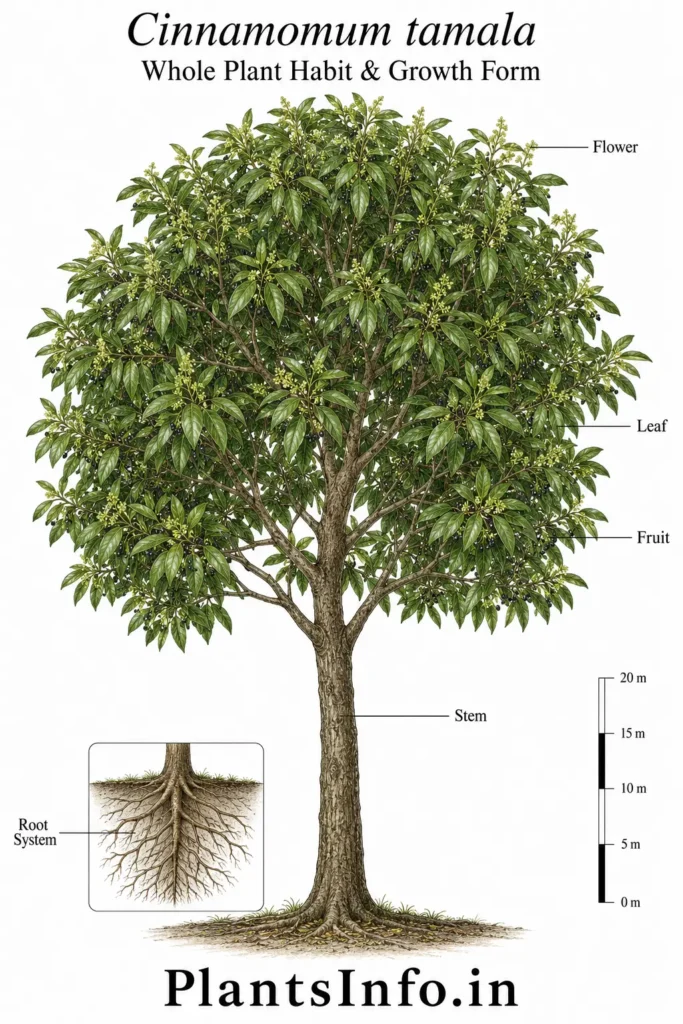
Cinnamomum tamala is an evergreen aromatic tree characterized by a moderately dense crown, persistent foliage, and a vertically oriented growth form adapted to humid subtropical and lower montane environments. Mature individuals typically develop a straight trunk supporting a rounded to irregular canopy. Architectural identity is strongly influenced by its leathery, three-veined leaves, which remain visible throughout the year and contribute significantly to both photosynthetic performance and commercial value. The species combines moderate growth with substantial longevity, producing a durable framework capable of sustained leaf harvest while maintaining canopy integrity under forest and cultivated conditions.
| Parameter | Value | Notes |
|---|---|---|
| Life Form | Evergreen tree | Woody perennial |
| Mature Height | Commonly 8–20 m (26–66 ft) | Occasionally larger in favourable habitats |
| Canopy Spread | Approximately 4–12 m (13–39 ft) | Variable with age and site conditions |
| Stem Type | Single-trunked woody stem | May become multi-stemmed after disturbance |
| Bark or Surface Texture | Smooth to slightly fissured | Roughens with age |
| Branching Pattern | Moderately spreading | Forms rounded crown |
| Root System Overview | Woody anchoring root system with lateral spread and moderate depth | Morphology only |
| Growth Rate | Moderate | Site dependent |
| Longevity | Multi-decadal perennial | Exact lifespan not documented |
| Distinguishing Architectural Feature | Persistent aromatic three-veined foliage | Diagnostic visual character |
Stem
The stem functions as the principal structural support of the tree, elevating foliage and reproductive structures into the canopy. Young stems are relatively smooth and greenish to reddish-brown, becoming increasingly woody and darker with age. Mature trunks provide mechanical stability and support repeated harvest cycles. Unlike many defensive woody species, Cinnamomum tamala lacks thorns, spines, or winged projections, relying instead on robust woody tissues and persistent foliage for long-term survival.
| Stem Characteristic | Description |
|---|---|
| Stem Type | Woody trunk with secondary growth |
| Cross-Section Shape | Circular |
| Mature Diameter | Commonly 20–60 cm (7.9–23.6 in) |
| Surface Texture | Smooth when young, increasingly fissured with age |
| Colour (Young) | Green to reddish-brown |
| Colour (Mature) | Grey-brown to dark brown |
| Internode Length | Variable; generally moderate |
| Thorns, Spines, or Wings | Absent |
| Internal Structure | Solid woody core surrounding pith |
| Lenticels | Present but inconspicuous |
Leaves
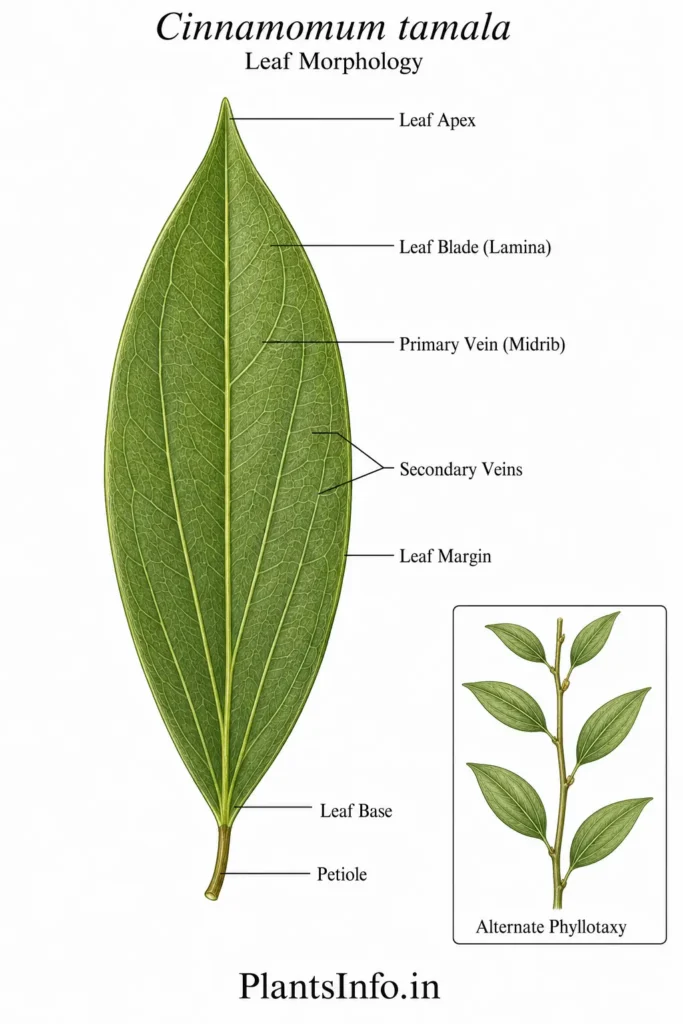
The leaves are the most economically important organ of Cinnamomum tamala and provide its primary identifying feature. They are simple, leathery, and aromatic, with three prominent longitudinal veins extending from the base toward the apex. This venation pattern readily distinguishes the species from several commonly confused culinary taxa. Mature foliage remains evergreen and contributes both to year-round photosynthesis and sustained spice production.
| Leaf Characteristic | Description |
|---|---|
| Presence | Present |
| Leaf Type | Simple |
| Size | Commonly 8–20 cm × 3–8 cm (3.1–7.9 × 1.2–3.1 in) |
| Colour | Glossy green above; lighter beneath |
| Arrangement | Alternate |
| Texture | Leathery |
| Venation | Three prominent longitudinal veins |
| Margin | Entire |
| Aroma | Strongly aromatic when crushed |
Flowers
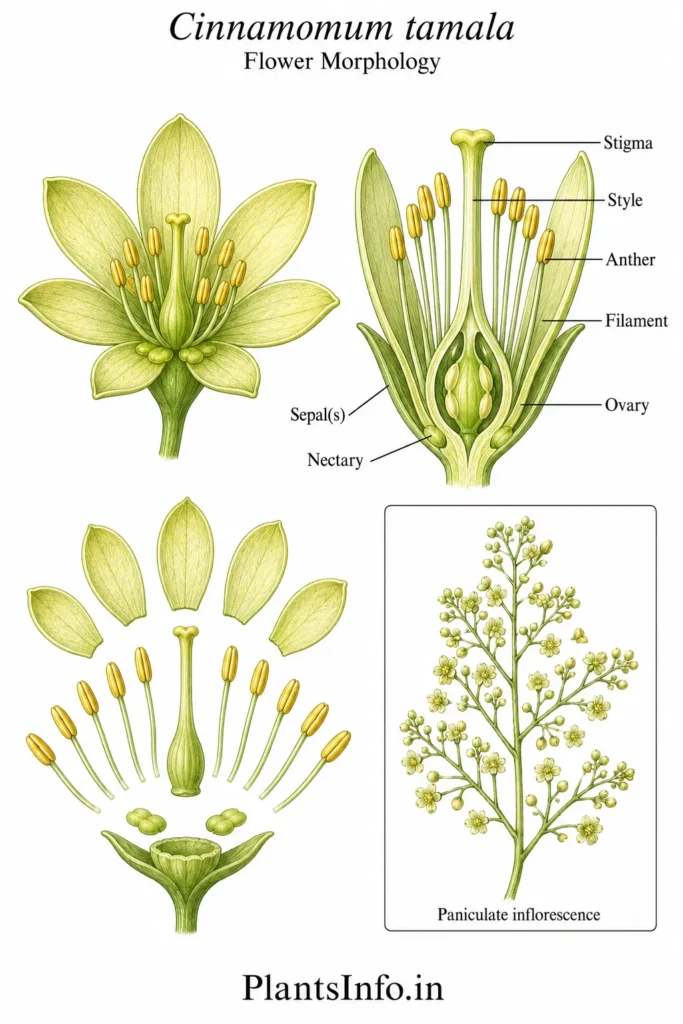
The flowers are relatively small and visually inconspicuous compared with the commercially important foliage. They occur in branched inflorescences and display the generalized floral architecture characteristic of Lauraceae. Although individual flowers contribute little ornamental value, their collective production supports reproductive success and fruit formation. Their pale coloration and fragrance are consistent with insect visitation, while the arrangement of reproductive structures reflects evolutionary patterns shared across many members of the genus.
| Floral Attribute | Description |
|---|---|
| Inflorescence Type | Panicle |
| Flower Diameter | Approximately 3–5 mm (0.12–0.20 in) |
| Flower Length | Approximately 3–5 mm (0.12–0.20 in) |
| Outer Tepals | Six tepals in two whorls |
| Inner Tepals | Similar to outer tepals |
| Stamens | Typically fertile stamens arranged in whorls |
| Pistil | Single pistil |
| Fragrance | Mildly aromatic |
| Anthesis Period | Spring to early summer |
| Primary Pollinators | Insects |
| Flower Colour | Cream to pale yellow |
Fruit
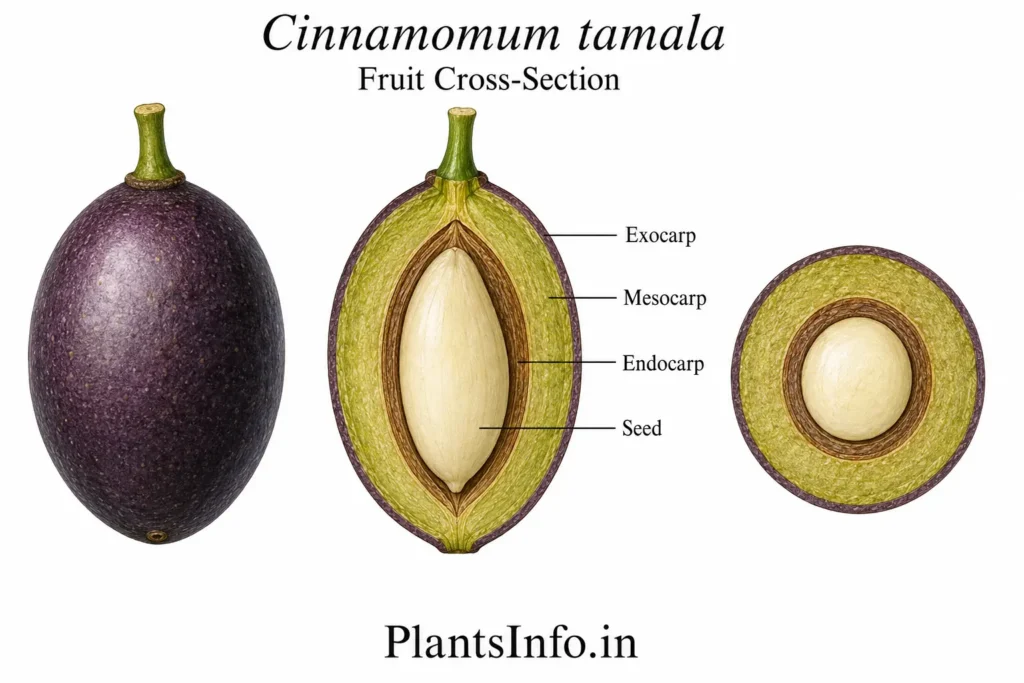
| Fruit Characteristic | Description |
|---|---|
| Fruit Type | Drupe |
| Shape | Ovoid to ellipsoid |
| Length | Approximately 10–15 mm (0.39–0.59 in) |
| Diameter | Approximately 8–12 mm (0.31–0.47 in) |
| Weight | Not documented in available literature |
| Skin Colour | Green when immature; dark purple to black at maturity |
| Surface Features | Smooth |
| Flesh Colour | Pale beneath skin |
| Flesh Texture | Fleshy |
| Seed Count | Usually one seed |
| Sugar Content | Not documented in available literature |
| Maturation Period | Several months after flowering |
Seeds

| Seed Characteristic | Description |
|---|---|
| Size | Approximately 8–12 mm (0.31–0.47 in) |
| Shape | Ovoid |
| Colour | Brown |
| Seed Coat | Smooth and firm |
| Oil Content | Not documented in available literature |
| Viability Period | Short under ambient storage conditions |
| Germination Rate | Not confirmed during current profile audit |
Root System
Cinnamomum tamala develops a woody root system consisting of a central anchoring framework supported by extensive lateral roots. Root penetration is typically moderate rather than extremely deep, reflecting adaptation to well-drained mountain and foothill soils. Lateral expansion contributes significantly to anchorage and moisture acquisition. The species shows reduced tolerance of prolonged waterlogging because root respiration depends upon adequate soil aeration. For cultivation, this architecture supports stability, canopy development, and repeated leaf harvest. In wild populations, maintenance of intact root systems is important because excessive disturbance may reduce regeneration capacity and long-term stand persistence.
Field Identification
Field recognition of Cinnamomum tamala depends primarily on its leaves. Mature trees present an evergreen crown with glossy, leathery foliage that releases a cinnamon-like aroma when crushed. The most reliable diagnostic feature is the presence of three strong longitudinal veins extending from the leaf base. This characteristic immediately separates the species from Mediterranean bay (Laurus nobilis), with which it is frequently confused in spice markets and horticultural trade. Bark colour and overall crown architecture may overlap with other Lauraceae, but the combination of aromatic foliage, entire margins, and three-veined leaves provides a dependable identification character for botanists, growers, traders, and field inspectors.
Normal vs. Concerning Observations
| Observation | Status | Explanation |
|---|---|---|
| Gradual shedding of older interior leaves | Normal | Evergreen foliage undergoes periodic replacement |
| Seasonal flush of pale new growth | Normal | Typical developmental pattern |
| Minor variation in leaf size within canopy | Normal | Age and light exposure influence morphology |
| Sparse flowering in young trees | Monitor | Reproductive maturity may not yet be reached |
| Progressive canopy thinning | Investigate | May indicate physiological stress or environmental limitation |
| Extensive branch dieback | Investigate | Suggests significant health impairment |
| Persistent chlorosis across canopy | Investigate | Indicates underlying disorder requiring assessment |
| Localized mechanical bark damage | Monitor | Requires observation for secondary effects |
Cultivar Summary
No formally established cultivars of Cinnamomum tamala have achieved broad international recognition comparable to major fruit or ornamental crops. Commercial production is generally based on regional landraces and locally selected populations rather than named cultivars.
| Cultivar | Key Characteristic | Commercial Status | Origin |
|---|---|---|---|
| Not documented in available literature | No internationally recognized named cultivars were identified during the current audit. | Historically documented | South Asia |
| No species-specific evidence identified | No internationally recognized named cultivars were identified during the current audit. | Historically documented | South Asia |
| Existing data are insufficient for assessment | No internationally recognized named cultivars were identified during the current audit. | Historically documented | South Asia |
Physiology and Phytochemistry
Functional Traits
Cinnamomum tamala is a long-lived evergreen tree whose physiological strategy combines continuous carbon assimilation, durable foliage, aromatic secondary chemistry, and moderate tolerance of environmental variability. Rather than relying on rapid growth or short reproductive cycles, the species invests in persistent leaves, structural longevity, and chemical protection. These traits support survival in subtropical and montane forest environments where competition for light, seasonal moisture variation, and herbivore pressure influence fitness. The physiological characteristics described below operate as an integrated system linking resource capture, defence, reproduction, and persistence across decades.
| Trait | Mechanism Description | Adaptive Significance |
|---|---|---|
| Photosynthetic Pathway | Utilises the C3 pathway, fixing atmospheric carbon dioxide directly through daytime stomatal opening and Calvin-cycle carbon assimilation. | Efficient under humid subtropical and montane conditions. |
| Water-Use Strategy | Regulates transpiration through stomatal control and evergreen leaf persistence, balancing carbon gain with water conservation. | Supports year-round productivity while limiting excessive water loss. |
| Nutrient Acquisition | Absorbs mineral nutrients through a woody root system that exploits surface and subsurface soil horizons. | Maintains foliage production and long-term growth. |
| Growth Form Strategy | Allocates resources to perennial woody tissues and a persistent canopy rather than rapid seasonal regeneration. | Enhances longevity and repeated reproductive output. |
| Reproductive Strategy | Produces flowers and fleshy fruits through repeated seasonal reproductive cycles. | Facilitates long-term population maintenance. |
| Dispersal Mechanism | Seeds are enclosed within fleshy drupes attractive to vertebrate dispersers. | Promotes movement away from parent trees. |
| Stress Response Mechanism | Adjusts physiological activity during periods of environmental stress through modulation of growth and transpiration. | Improves survival during temporary resource limitation. |
| Chemical Defence | Synthesises volatile aromatic compounds that reduce herbivore attractiveness and contribute to tissue defence. | Protects foliage and reproductive structures. |
| Evergreen Canopy Persistence | Retains functional leaves across multiple growing seasons. | Extends annual carbon assimilation period. |
| Aromatic Leaf Investment | Concentrates secondary metabolites within leaves used for defence and ecological signalling. | Increases leaf durability and commercial value. |
Physiological Integration
The physiological strategy of Cinnamomum tamala depends on reinforcement among evergreen growth, chemical defence, and moderated resource use. Persistent leaves provide an extended period for carbon acquisition, allowing the tree to recover the metabolic costs associated with producing aromatic defensive compounds. This investment would be less efficient in a short-lived deciduous foliage system.
Water regulation further supports chemical defence because prolonged tissue maintenance requires protection from both dehydration and herbivory. Reproductive output is similarly linked to resource stability; long-lived woody architecture buffers short-term environmental fluctuations, enabling repeated flowering and fruiting across many seasons. Together, these interacting traits favour persistence, gradual resource accumulation, and sustained reproductive success rather than rapid colonisation or opportunistic growth.
Phytochemistry
The phytochemical profile of Cinnamomum tamala reflects its position within Lauraceae, a family widely recognised for aromatic secondary metabolites. Research has focused primarily on leaf essential oils because the leaves constitute the principal commercial product. Investigations have identified volatile phenylpropanoids, terpenoids, and related aromatic constituents that contribute to flavour, fragrance, and ecological defence.
Although the species has received considerable phytochemical attention relative to many forest trees, characterisation remains uneven across organs and geographic populations. Most detailed studies originate from South Asia, where culinary and medicinal importance has driven research activity.
| Compound Class | Representative Compounds | Primary Location | Ecological or Biological Function |
|---|---|---|---|
| Phenylpropanoids | Eugenol | Leaves | Defence against herbivory; aroma production |
| Monoterpenes | Linalool | Leaves | Volatile signalling and defence |
| Sesquiterpenes | β-Caryophyllene | Leaves | Defensive and ecological interactions |
| Phenylpropanoids | Methyl eugenol | Leaves | Aromatic and defensive functions |
| Terpene Mixtures | Sabinene, α-Pinene | Leaves | Volatile ecological signalling |
| Polyphenols | Specific compounds reported but incompletely characterised | Leaves | Antioxidant activity reported in extracts |
| Essential Oil Fraction | Mixed volatile constituents | Leaves | Combined flavour and defence functions |
Phytochemical Organ Distribution
| Organ | Compound Class | Representative Compounds | Concentration |
|---|---|---|---|
| Leaf | Phenylpropanoids | Eugenol | Major constituent in some chemotypes |
| Leaf | Monoterpenes | Linalool | Major constituent in some chemotypes |
| Leaf | Sesquiterpenes | β-Caryophyllene | Minor to moderate constituent |
| Leaf | Phenylpropanoids | Methyl eugenol | Variable concentration |
| Leaf | Mixed Essential Oils | Sabinene, α-Pinene | Variable concentration |
| Bark | Aromatic constituents | Specific compounds not yet characterised | Not confirmed during current profile audit |
| Fruit | Secondary metabolites | Specific compounds not yet characterised | Not confirmed during current profile audit |
Phytochemical Significance
The commercial importance of Cinnamomum tamala is driven overwhelmingly by its leaf chemistry. Essential-oil constituents, particularly phenylpropanoids and terpenoid compounds, are responsible for the characteristic aroma that differentiates Indian Bay Leaf from unrelated culinary bay species.
Among these constituents, eugenol, linalool, methyl eugenol, and β-caryophyllene are the most frequently reported and best characterised. Research has established their contribution to flavour and fragrance profiles, while pharmacological investigations have explored antioxidant, antimicrobial, and bioactive properties of leaf extracts. Most evidence for biological activity derives from laboratory studies rather than clinical evaluation.
Current understanding remains strongest for leaf essential oils and substantially weaker for bark, fruit, seed, and developmental-stage chemistry. Interactions among compound classes likely contribute to the overall sensory and biological profile, but synergistic relationships remain incompletely quantified. The phytochemical profile is therefore strongly leaf-dominated from both commercial and research perspectives.
A notable limitation is the geographic concentration of the literature; most phytochemical investigations originate from India, Nepal, and neighbouring regions. Consequently, chemotypic variation across the species’ full distribution may remain underrepresented in the published evidence base.
Evidence, Nutrition, and Safety
Evidence Hierarchy for Medicinal Use
| Evidence Layer | Status | Notes |
|---|---|---|
| Traditional Use | Documented | Long-standing use in South Asian traditional medicine systems for digestive, aromatic, and general health applications |
| Nutritional Evidence | Documented | Nutritional composition documented primarily for dried leaves and spice products |
| In Vitro Studies | Documented | Antioxidant, antimicrobial, and enzyme-modulating activities reported from extracts and essential oils |
| Animal Studies | Partial | Experimental studies report biological activity, but coverage remains limited and heterogeneous |
| Human Clinical Studies | Absent | No documented studies at this evidence level. |
| Regulatory Recognition | Partial | Recognised as a culinary spice and food ingredient; no broad clinical therapeutic approval identified |
| Unsupported Commercial Claims | Documented | Claims relating to treatment of diabetes, cardiovascular disease, cancer, and major chronic disorders exceed current clinical evidence. |
Evidence Assessment
The evidence profile of Cinnamomum tamala demonstrates a substantial gap between traditional use and clinical validation. Strongest support exists for its established role as a culinary spice, its documented phytochemical composition, and laboratory evidence indicating antioxidant and antimicrobial properties. Animal studies provide preliminary support for some biological activities but remain insufficient for clinical extrapolation.
Human clinical evidence is notably absent, despite widespread commercial promotion of medicinal benefits. The most frequently marketed claims involve blood glucose regulation, cardiovascular support, and chronic disease prevention, yet these applications currently rely primarily on preclinical evidence rather than direct human verification. Consequently, traditional and functional-food uses are better supported than therapeutic claims.
Nutritional Composition
Nutritional Overview
Published analyses indicate that dried leaves of Cinnamomum tamala contain dietary fibre, minerals, and a range of aromatic phytochemicals characteristic of the Lauraceae. Reported nutrient profiles suggest the presence of calcium, iron, potassium, magnesium, phosphorus, and other micronutrients, together with modest quantities of protein, lipid, and carbohydrate.
However, published nutritional values vary among studies because of differences in plant provenance, growing conditions, harvest stage, drying methods, storage conditions, and analytical methodology. Furthermore, Indian Bay Leaf is typically used as a culinary spice in small quantities, and the leaves are often removed before consumption. Consequently, nutritional contribution to the diet is generally limited when compared with staple foods.
Nutritional Significance
The nutritional importance of Cinnamomum tamala is derived less from macronutrient contribution and more from its aromatic constituents and associated phytochemical profile. While dried leaves may contain measurable concentrations of minerals and dietary fibre on a dry-weight basis, normal culinary use results in relatively low intake quantities.
Current evidence therefore supports interpretation of Indian Bay Leaf primarily as an aromatic spice rather than a significant dietary source of energy, protein, vitamins, or minerals.
Data Quality Note
No fully verified and consistently traceable nutrient dataset was confirmed during the current audit. Numerical nutrient values reported in published literature should therefore be interpreted cautiously until supported by a clearly documented analytical source and methodology.
Soil Ecology and Mycorrhizal Associations
Species-specific research on the soil ecology of Cinnamomum tamala remains limited. No comprehensive studies were identified during the current audit that fully characterise mycorrhizal associations, rhizosphere microbial communities, or below-ground ecological interactions for the species.
Members of the Lauraceae are frequently reported to associate with arbuscular mycorrhizal fungi, and C. tamala may exhibit similar relationships. However, species-specific confirmation remains limited, and no fungal partner has been consistently documented and independently verified for C. tamala. Consequently, any mycorrhizal association should currently be regarded as a family-level inference rather than a confirmed species-level characteristic.
Rhizosphere microbial communities have likewise not been comprehensively characterised. Evidence from related Lauraceae suggests that soil microorganisms may contribute to nutrient cycling, organic matter transformation, and nutrient availability within the root zone, but comparable studies focused specifically on C. tamala remain scarce.
No verified allelopathic mechanism has been documented for C. tamala. Although aromatic secondary metabolites occur in leaves and other tissues, available evidence is insufficient to demonstrate ecologically significant allelopathic effects under natural or agricultural conditions.
The limited state of current knowledge represents an important research gap. Existing evidence is inadequate to determine whether microbial inoculation improves establishment, whether fertiliser regimes influence symbiotic relationships, or whether particular soil-biological interactions contribute significantly to productivity or stress tolerance. Additional species-level investigation is required before firm ecological or agronomic conclusions can be drawn.
Soil Ecology Evidence Summary
| Parameter | Status | Notes |
|---|---|---|
| Mycorrhizal Association | Not verified at species level | Family-level inference only |
| Documented Fungal Partners | None verified | Species-specific records unavailable |
| Rhizosphere Microbiome | Poorly characterised | Species-level studies limited |
| Allelopathy | Not verified | No confirmed field-scale evidence |
| Soil Biological Research Coverage | Low | Significant knowledge gaps remain |
Recommended Products
Disclosure: As an Amazon Associate, PlantsInfo may earn from qualifying purchases.
🌱 Plant Care Essentials
The following tools can help with pruning, plant health, soil management, and fruit garden maintenance.

Neem Oil for Plant Care
Natural plant protection against aphids, whiteflies, mites, and other common garden pests.

Fungicide for Root Care
Helps suppress soil-borne fungal diseases and supports healthier root systems.

Spray Bottle for Plants
Ideal for applying foliar sprays, neem oil solutions, and liquid plant treatments.

Rubber Hand Gloves
Protects hands during pruning, planting, soil preparation, and garden maintenance.
Toxicity and Safety
| Subject | Toxic Compounds | Current Evidence |
|---|---|---|
| Humans | No toxic compounds documented in normal culinary use | Long history of food use; formal toxicological evidence limited |
| Cats | No species-specific toxic compounds identified | Veterinary evidence limited |
| Dogs | No species-specific toxic compounds identified | Veterinary evidence limited |
| Livestock | No species-specific toxic compounds identified | Published evidence limited |
Toxicity Context
Current evidence indicates that Cinnamomum tamala has a long history of culinary use and is widely utilised as a food spice throughout South Asia. No toxic compounds have been documented in association with normal culinary consumption. However, the available safety profile is based primarily on traditional use, food-use history, and phytochemical investigations rather than comprehensive toxicological evaluation.
As with many aromatic plants, isolated phytochemicals may exhibit biological activity at concentrations substantially higher than those encountered through normal dietary exposure. Evidence regarding pregnancy, lactation, chronic medical conditions, pharmaceutical interactions, concentrated extracts, and long-term high-dose consumption remains limited.
Species-specific veterinary toxicology data are also sparse, and the absence of documented toxicity should not be interpreted as evidence of complete safety under all circumstances. Further toxicological and veterinary research would improve understanding of safety margins, exposure thresholds, and potential species-specific sensitivities.
This profile is intended for educational and scientific purposes and does not constitute medical, veterinary, or regulatory guidance.
Distribution and Habitat

Native Range and Distribution
Biogeographic Context
Cinnamomum tamala is a Himalayan species whose natural distribution is centred on the humid subtropical and lower montane forests of the Himalayan region. Its evolutionary history is closely associated with environments characterized by seasonal monsoonal rainfall, moderate temperatures, and heterogeneous mountain topography. These conditions support evergreen broad-leaved forest communities within which the species occurs as a component of the native tree flora.
The Himalayan region has played a major role in the diversification of many Lauraceae lineages, providing extensive elevational gradients and ecological variation. Within this landscape, C. tamala occupies forest habitats that combine reliable moisture availability with well-drained soils and moderate climatic conditions.
Commercial demand for aromatic leaves has encouraged both cultivation and managed harvesting throughout parts of the species’ range. As a result, cultivated populations now contribute substantially to commercial supply. Current knowledge of distribution and utilization is derived primarily from Indian and Nepalese literature, resulting in stronger documentation within core Himalayan regions than in peripheral areas where occurrence and cultivation may be less thoroughly studied.
Native Range
| Region | Countries or Sub-regions | Notes |
|---|---|---|
| Western Himalaya | Northern India | Core native distribution |
| Central Himalaya | Nepal, Uttarakhand, Himachal Pradesh | Important natural populations |
| Eastern Himalaya | Bhutan, Northeast India | Native montane forests |
| Himalayan Foothills | Adjacent Himalayan foothill regions | Natural occurrence associated with subtropical forest systems |
Native Range Note
Published sources consistently identify the Himalayan region as the centre of native distribution for Cinnamomum tamala. Reports of occurrence outside the core Himalayan range exist in portions of adjoining regions, but the native status of some peripheral populations requires verification through authoritative floristic and taxonomic sources. Consequently, only well-supported Himalayan occurrences are treated as confirmed native range within the present profile.
Global Cultivation and Naturalisation
| Region | Countries or Areas | Cultivation Status | Notes |
|---|---|---|---|
| South Asia | India, Nepal, Bhutan | Commercially established | Principal production region |
| Southeast Asia | Selected areas with suitable climate | Limited cultivation | Documentation remains sparse |
| East Asia | Selected subtropical regions | Experimental to limited | Local climate suitability varies |
| Tropical Highlands | Selected regions outside native range | Experimental | Production data limited |
| Subtropical Regions | Australia, New Zealand | Experimental | Restricted by climatic suitability |
| Mediterranean Regions | Southern Europe | Limited trials reported | Seasonal drought may constrain performance |
| North America | Selected subtropical locations | Experimental | Frost sensitivity limits expansion |
Cultivation Range Note
Commercial cultivation remains overwhelmingly concentrated in South Asia, particularly India and Nepal, where the species is integrated into established spice-production systems. Smaller-scale cultivation has been reported in other subtropical and montane environments that approximate the climatic conditions of the native range, although documentation is often limited.
Attempts to establish production outside South Asia have generally remained experimental or localized. The available cultivation literature is strongly biased toward Indian production systems, resulting in comparatively limited information regarding performance, productivity, and long-term adaptation across the broader global cultivation envelope. Consequently, extrapolation beyond the principal cultivation region should be made cautiously until additional regional data become available.
Natural Habitat
In its native range, Cinnamomum tamala occurs primarily within humid subtropical and lower montane evergreen forests. Documented populations are commonly associated with elevations of approximately 900–2,500 m (2,950–8,200 ft), although local variation occurs across the Himalayan region. The species is typically found in well-drained forest soils rich in organic matter and associated with mixed broad-leaved tree communities.
Moisture availability is generally reliable due to monsoonal precipitation patterns, although seasonal variation occurs. The species tolerates moderate disturbance and may persist in secondary forests and managed landscapes. It is best characterised as a habitat-associated generalist within humid forest systems rather than a strict microhabitat specialist, a trait that contributes to both cultivation adaptability and resilience across portions of its native range.
Ecological Role
Within Himalayan and adjacent forest ecosystems, Cinnamomum tamala functions primarily as a mid-canopy to canopy tree contributing to structural complexity, resource availability, and seasonal reproductive dynamics. Flowering provides nectar and pollen resources for insect communities, although species-level pollinator networks remain incompletely documented. Fruits are dispersed by vertebrates that consume fleshy drupes and transport seeds away from parent trees, supporting forest regeneration and gene flow.
The species also contributes evergreen foliage to nutrient cycling processes through gradual leaf turnover. Despite its economic importance, detailed ecological studies remain relatively scarce compared with phytochemical and ethnobotanical research. Consequently, several aspects of pollinator specificity, dispersal ecology, and trophic interactions remain insufficiently resolved. Current evidence supports a role as a locally important forest component rather than a documented keystone or indicator species.
Ecological Role Table
| Role Type | Species or Agent Involved | Notes |
|---|---|---|
| Pollination Resource | Insects (species-level identity not documented) | Floral visitation documented broadly, species-level network unresolved |
| Seed Dispersal | Frugivorous birds (species-level identity not documented) | Likely contribute to dispersal of drupaceous fruits |
| Forest Structure Contribution | Associated broad-leaved forest communities | Provides evergreen canopy component and habitat complexity |
Invasive Status
No documented invasive naturalisation of Cinnamomum tamala has been identified in the reviewed literature or major invasive-species databases.
Climate and Stress Tolerance
Climate Envelope
The climatic profile of Cinnamomum tamala is derived primarily from its documented native distribution and cultivation history rather than from controlled physiological experiments. The species is most commonly associated with humid subtropical and lower montane environments characterized by moderate temperatures, seasonal monsoonal rainfall, and reliable moisture availability.
Because species-specific physiological threshold studies remain limited, the values presented below should be interpreted as an observed cultivation and occurrence envelope rather than experimentally verified tolerance limits.
Approximate Climate Parameters
| Parameter | Typical Conditions | Notes |
|---|---|---|
| Mean Annual Temperature | Approximately 15–25°C (59–77°F) | Common across much of the documented cultivation range |
| Annual Rainfall | Approximately 1,000–2,500 mm (39–98 in) | Associated with humid monsoonal environments |
| Dry Season Length | Typically short to moderate | Extended drought may reduce growth and productivity |
| Relative Humidity | Generally moderate to high | Humid conditions are commonly associated with successful growth |
| Light Exposure | Partial shade to full sun | Tolerates a range of light environments depending on age and site conditions |
| Elevational Distribution | Commonly associated with lower montane and Himalayan foothill environments | Regional variation occurs |
Climate Interpretation
The principal climatic constraints affecting cultivation appear to be prolonged drought, severe frost, and environments with strongly continental temperature regimes. Native populations occur primarily within humid Himalayan and adjacent subtropical environments, while cultivated populations demonstrate a somewhat broader climatic envelope than would be inferred from natural distribution alone.
Available evidence suggests that moisture availability and winter temperature extremes are generally more limiting than average annual temperature. Seasonal drought, prolonged water deficit, and freezing conditions can reduce growth, survival, and productivity, although precise physiological thresholds remain insufficiently documented.
Current understanding of climatic tolerance is derived largely from cultivation experience and geographic occurrence data. The evidence base is heavily concentrated within South Asian production systems, particularly India and Nepal, and comparatively little information is available regarding long-term performance under climatically novel conditions. Consequently, extrapolation beyond the documented cultivation range should be approached cautiously.
Stress Tolerance Profile
| Stress Type | Tolerance Level | Physiological Response | Notes |
|---|---|---|---|
| Drought | Moderate | Reduces transpiration through stomatal regulation and altered growth allocation. | Extended drought tolerance not fully characterised. |
| Heat | Moderate | Increases transpirational cooling and regulates metabolic activity under elevated temperatures. | Severe heat-wave data limited. |
| Cold or Frost | Low to Moderate | Metabolic activity slows and tissue injury risk increases under freezing exposure. | Frost sensitivity documented. |
| Salinity | Low | Osmotic imbalance may reduce water uptake and physiological efficiency. | Limited species-level evidence. |
| Waterlogging | Low | Root-zone oxygen limitation reduces physiological performance. | Persistent saturation poorly tolerated. |
| Air Pollution | Not documented at species level | Not documented at species level. | Evidence unavailable. |
| Wind | Moderate | Temporary reduction in water balance may occur through increased transpiration demand. | Structural impacts vary with exposure. |
| Soil Compaction | Low to Moderate | Reduced root-zone aeration can impair resource acquisition processes. | Species-specific studies limited. |
Evidence Note
Most climate and stress-tolerance information for Cinnamomum tamala originates from cultivation records, ecological observations, and distribution data rather than controlled physiological experimentation. Species-specific tolerance thresholds therefore remain incompletely resolved and represent an important area for future research.
Compound Stress
Direct experimental evidence examining combinations of stressors in Cinnamomum tamala remains limited. Available observations suggest that drought and heat are likely to interact more strongly than either factor in isolation because both influence water balance and stomatal regulation. Likewise, waterlogging combined with soil compaction may amplify physiological stress through reduced oxygen availability. Evidence is insufficient to quantify these interactions or establish definitive thresholds. Compound-stress physiology therefore remains a significant knowledge gap, particularly for cultivation outside the native climatic envelope and for future climate-change adaptation assessments.
Adaptations and Reproductive Biology
Structural and Physiological Adaptations
Adaptation Narrative
The adaptive profile of Cinnamomum tamala reflects long-term evolution within humid subtropical and lower montane forest environments where competition for light, seasonal rainfall variation, and herbivore pressure are persistent ecological forces. Unlike the functional-trait framework presented in Block 3, which describes physiological operation, the adaptations below focus on structural characteristics that have been favoured through evolutionary selection.
Persistent leathery foliage, aromatic tissues, and a durable woody architecture enable the species to maintain productivity across multiple growing seasons while tolerating moderate environmental variability. Many of these features are characteristic of evergreen Lauraceae occupying moist forest habitats, although C. tamala combines them with leaf traits that have acquired unusual economic significance through human selection and cultivation.
| Adaptation | Mechanism Description | Ecological Context |
|---|---|---|
| Evergreen Foliage | Thick, persistent leaves remain functional for multiple seasons before replacement. | Supports year-round resource capture in relatively mild climates. |
| Leathery Leaf Texture | Reinforced leaf tissues reduce physical damage and increase longevity. | Favours persistence under seasonal environmental stress. |
| Aromatic Leaf Structures | Secretory tissues distributed within leaves store volatile compounds. | Associated with defence against herbivory and tissue degradation. |
| Three-Veined Leaf Architecture | Prominent longitudinal veins provide structural support and transport efficiency. | Characteristic adaptation within humid forest environments. |
| Woody Trunk Development | Extensive secondary growth produces a durable supporting framework. | Allows long lifespan and canopy persistence. |
| Rounded Canopy Architecture | Branch arrangement distributes foliage across available light space. | Improves light interception in mixed forests. |
| Fleshy Fruit Development | Protective fruit tissues surround the seed during maturation. | Facilitates vertebrate-mediated dispersal. |
| Persistent Bud Protection | Developing meristems remain enclosed within protective tissues. | Reduces damage from environmental fluctuations. |
Climate Change Vulnerability
| Factor | Assessment | Notes |
|---|---|---|
| Primary Climate Sensitivity Factors | Moderate sensitivity | Drought intensity, altered rainfall seasonality, and frost extremes appear most relevant. |
| Key Threatening Climate Processes | Habitat shift and climatic instability | Montane forest systems may experience altered moisture regimes. |
| Resilience Factors | Evergreen habit and ecological flexibility | Occupies a relatively broad elevational range compared with many specialists. |
| Confidence Level | Moderate | Based primarily on ecological distribution data rather than dedicated climate models. |
Climate Vulnerability
Species-specific climate-vulnerability modelling for Cinnamomum tamala remains limited. Current assessment therefore relies principally on documented habitat preferences, observed distribution patterns, and known climatic sensitivities. The species appears moderately vulnerable to prolonged drought, disruption of monsoonal precipitation regimes, and increased frequency of extreme climatic events. Conversely, occurrence across a relatively broad elevational gradient may provide some capacity for local range adjustment.
No verified species-level evidence of climate-driven phenological shifts was identified during the current review. Confidence in this assessment is moderate because it is derived largely from ecological inference supported by distribution data rather than dedicated predictive modelling.
Phenological Calendar
| Event | Native Range Timing | Cultivated Range Timing | Environmental Triggers |
|---|---|---|---|
| Vegetative Growth Onset | Late winter to spring | Spring to early summer | Increasing day length and sustained temperatures above approximately 15°C (59°F) |
| Flower Bud Initiation | Late winter to early spring | Early spring | Accumulated seasonal warmth and renewed growth activity |
| Anthesis or Peak Flowering | Spring to early summer | Spring to early summer | Stable temperatures and active vegetative growth |
| Fruit Development | Early summer to late summer | Summer to early autumn | Successful pollination and continued carbohydrate supply |
| Fruit Maturation | Late summer to autumn | Autumn | Progressive accumulation of resources within developing fruits |
| Seed Dispersal | Autumn to early winter | Autumn to winter | Fruit ripening and vertebrate consumption |
| Dormancy or Rest Period | Winter | Winter or cool-season growth slowdown | Reduced temperatures and shorter photoperiods |
Phenological Notes
Phenological progression in Cinnamomum tamala is driven primarily by seasonal temperature patterns, photoperiod changes, and the onset of favourable moisture conditions. Flowering generally follows renewed vegetative activity, while fruit maturation extends through warmer portions of the growing season. Across the global cultivation range, timing demonstrates moderate plasticity, particularly where winters are milder or seasonal rainfall differs from the Himalayan monsoon pattern. Available evidence indicates that event sequence remains relatively stable even when exact timing shifts between regions.
Pollination Ecology
Pollination Ecology
The reproductive ecology of Cinnamomum tamala remains incompletely studied at the species level. Available evidence indicates that the species produces small, pale flowers arranged in branched inflorescences that are accessible to a variety of potential insect visitors. This floral architecture is broadly consistent with insect-mediated pollination systems reported in many members of the Lauraceae. However, detailed investigations of pollinator identity, visitation frequency, reproductive efficiency, and mating-system biology have not been sufficiently documented for C. tamala.
Consequently, current understanding is based primarily on floral morphology, comparison with related species, and general patterns observed within the family rather than on comprehensive species-specific pollination studies.
Pollination Parameters
| Parameter | Value | Notes |
|---|---|---|
| Primary Pollinators | Not verified at species level | Insect visitation is considered likely but remains incompletely documented |
| Secondary Pollinators | Not verified at species level | No confirmed secondary pollinator group identified |
| Pollination Syndrome | Insect-mediated pollination inferred | Based on floral morphology and comparison with related Lauraceae |
| Floral Mechanism | Exposed reproductive structures permit contact between floral visitors and reproductive organs during foraging | Morphological interpretation |
| Reproductive System | Not verified during current audit | Self-compatibility and breeding system remain unresolved |
| Seed Dispersal Agents | Probable vertebrate dispersers | Fruit morphology is consistent with animal-mediated dispersal; species-level confirmation limited |
| Pollination Success Rate | Not documented at species level | Quantitative studies unavailable |
| Human Intervention | Not routinely documented | No evidence of dependence on assisted pollination |
Pollination Context
Current evidence is insufficient to determine whether Cinnamomum tamala is predominantly self-compatible, partially self-compatible, or primarily dependent on outcrossing. This represents an important gap in the reproductive biology of the species. Likewise, pollinator assemblages, visitation rates, and factors influencing reproductive success remain poorly characterised.
Although the flowers appear morphologically suited to insect visitation, direct evidence linking specific pollinator groups to successful fertilisation remains limited. Consequently, the potential effects of pollinator decline on reproductive output cannot presently be quantified. Human-mediated pollination is biologically feasible but has not been reported as a routine requirement in cultivation or natural populations.
Compared with taxonomy, phytochemistry, and traditional utilisation, reproductive ecology remains one of the least studied aspects of Cinnamomum tamala biology. Future research addressing pollinator identity, breeding-system structure, pollination efficiency, and seed-set dynamics would substantially improve understanding of the species and support both conservation and cultivation programmes.
Seed Biology and Germination
| Parameter | Value | Notes |
|---|---|---|
| Seed Type | Recalcitrant to intermediate behaviour reported | Storage behaviour incompletely characterised |
| Dormancy Class | Limited or absent physiological dormancy | Based on available germination reports |
| Dormancy-Breaking Requirement | Not generally required | Species-specific verification incomplete |
| Optimal Germination Temperature | Approximately 20–30°C (68–86°F) | Reported range from nursery studies |
| Germination Rate | Not confirmed during current profile audit | Published values inconsistent |
| Germination Period | Commonly several weeks to a few months | Variable among seed lots |
| Storage Behaviour | Viability declines during prolonged storage | Consistent with fresh-seed preference |
| Seed Longevity | Generally short-term under ambient conditions | Exact duration not verified |
Germination Notes
Available germination information is derived primarily from cultivation and nursery observations rather than controlled physiological studies. Freshly collected seed generally performs better than long-stored seed, suggesting limited storage tolerance. Published reports indicate relatively low dormancy requirements, although variability among populations and seed lots remains insufficiently characterised. Germination-rate estimates differ substantially among sources, preventing reliable species-level standardisation. Both wild-collected and cultivated seed sources have been used in reported studies.
Vegetative Reproduction
| Parameter | Value | Notes |
|---|---|---|
| Vegetative Regeneration Capacity | Moderate | Regeneration following damage has been reported |
| Primary Regeneration Mechanism | Coppicing and shoot regeneration | Observed in cultivated and managed trees |
| Minimum Propagule Size | Not documented at species level | No verified threshold identified |
| Ecological or Invasive Significance | Contributes to persistence after disturbance | No documented invasive significance |
Human Interaction
Economic Importance
Economic Context
Cinnamomum tamala occupies a specialised position within the international spice trade, where demand is driven primarily by South Asian culinary traditions and associated food industries. India and Nepal dominate both production and commercial distribution, with India serving as the principal market and processing centre. Wild-harvested and cultivated material coexist in portions of the supply chain, although cultivated production increasingly supplies commercial demand.
Product quality is strongly influenced by leaf aroma, essential-oil composition, physical integrity, and authenticity. International trade faces recurring challenges from substitution with unrelated bay leaves or lower-value aromatic foliage. Supply-chain vulnerabilities include regional climatic fluctuations, uneven quality grading, fragmented production systems, and dependence on geographically concentrated source regions.
Economic Sectors
| Use Category | Description | Economic Impact |
|---|---|---|
| Culinary Spice Trade | Dried leaves sold for domestic and export spice markets | High |
| Food Processing | Ingredient in spice blends, packaged foods, and seasoning products | High |
| Traditional Medicine Products | Included in regional herbal formulations | Moderate |
| Essential Oil Research and Extraction | Limited commercial utilisation relative to leaves | Low to Moderate |
| Agroforestry and Diversified Farming Systems | Secondary income source in some production landscapes | Moderate |
| Summary Economic Assessment | Regionally important commercial spice with concentrated production geography and stable cultural demand | Moderate to High |
Traditional Uses
| Use Category | Knowledge System | Region or Cultural Group | Practice Summary | Documentation Level |
|---|---|---|---|---|
| Culinary Spice | South Asian culinary traditions | India, Nepal, Bhutan | Leaves used as flavouring agent in rice, curry, and spice preparations | Extensive |
| Digestive Applications | Ayurveda | India | Incorporated into compound preparations supporting digestive health concepts | Extensive |
| Aromatic Formulations | Ayurveda | India | Included in aromatic and balancing formulations | Extensive |
| Dietary Therapeutics | Unani | South Asia | Used within traditional dietary and herbal systems | Moderate |
| Household Herbal Practice | Regional folk medicine | Himalayan communities | Local medicinal and aromatic uses reported | Moderate |
| Ritual Food Preparation | Hindu cultural traditions | South Asia | Incorporated into culturally significant foods and festive cuisine | Moderate |
Traditional Use Summary
The most extensively documented traditional uses of Cinnamomum tamala originate within Ayurveda and associated South Asian culinary traditions centred in India and the Himalayan region. Unani medicine and diverse local folk practices provide additional records of medicinal and aromatic use. These traditions remain active rather than purely historical, with contemporary use continuing across households, food systems, and traditional healthcare settings.
Documentation quality is strongest for Ayurvedic sources and considerably less comprehensive for localised community knowledge. Global commercial development has largely focused on culinary and phytochemical value, while traditional knowledge remains geographically concentrated within its region of origin. This concentration highlights the continuing importance of South Asian knowledge systems in shaping contemporary understanding of the species.
Regional Ethnobotanical Context
The ethnobotanical history of Cinnamomum tamala is closely linked to the long development of South Asian food cultures, trade networks, and traditional medical systems. Historical use likely predates modern documentation, with the species becoming integrated into regional spice commerce and medicinal literature over centuries. As agricultural systems expanded across the Himalayan foothills and adjacent regions, Indian Bay Leaf became both a cultivated resource and a traded forest product.
The continuity of use across culinary and medicinal contexts has helped preserve traditional knowledge despite social and economic change. Contemporary utilisation therefore represents not a revived tradition but a largely continuous relationship between communities and a culturally important aromatic tree.
Traditional Ecological Knowledge
Documented traditional ecological knowledge relating specifically to Cinnamomum tamala remains less developed in the literature than culinary and medicinal knowledge. Available reports indicate integration within mixed farming systems, home gardens, and locally managed agroforestry landscapes in parts of the Himalayan region.
These systems contribute to conservation of planting material and maintenance of locally adapted populations. However, detailed documentation of species-specific ecological indicators, landscape-management traditions, or soil-management practices remains limited. The relative absence of published TEK documentation beyond cultivation and use constitutes a significant research gap.
Ethical Considerations
Cinnamomum tamala originates from the Himalayan and adjoining South Asian regions where its culinary, medicinal, and cultural uses have been developed and maintained primarily through Ayurvedic traditions, regional folk medical systems, and long-established food cultures. India, Nepal, Bhutan, and neighbouring Himalayan communities represent the principal centres of traditional knowledge associated with the species.
Documentation quality varies substantially among knowledge systems. Ayurvedic literature provides extensive written records, while many localised community practices remain incompletely documented within formal scientific literature. As a result, published knowledge may disproportionately represent institutional traditions relative to community-level experience.
No documented Access and Benefit-Sharing (ABS) case specific to Cinnamomum tamala has been identified during the current review. Likewise, no widely documented biopiracy allegations, major patent disputes, or internationally significant intellectual-property controversies specific to this species were identified in the reviewed literature. Absence of documented disputes should not be interpreted as evidence that all benefit-sharing questions have been comprehensively resolved.
Commercial value derived from Indian Bay Leaf is concentrated primarily in spice markets, food manufacturing, and phytochemical research. While economic benefits accrue throughout supply chains, the geographic origins of traditional knowledge and biological resources do not always align with the locations where value-added processing, branding, or product development occur. This creates potential attribution gaps, particularly when traditional uses are incorporated into international marketing narratives without clear acknowledgment of their cultural origins.
Researchers, product developers, and commercial buyers operating internationally should accurately identify the species, acknowledge the historical contributions of South Asian knowledge systems where relevant, document provenance transparently, and remain attentive to national and international requirements concerning genetic resources, traditional knowledge, and benefit-sharing obligations.
Cultural Significance
The cultural significance of Indian Bay Leaf is strongly concentrated within South Asia, where the species functions as both a culinary symbol and a familiar element of regional identity. In many linguistic traditions, names derived from forms such as tejpat, tejpatta, and tamalapatra carry associations extending beyond simple botanical identification. The species occupies a recognised place within the sensory landscape of South Asian cuisine, where its aroma contributes to foods associated with hospitality, celebration, and household tradition.
Its significance is reinforced by continuity across multiple domains of life. The same plant appears in culinary practice, traditional medicine, local commerce, and agricultural landscapes, creating a durable cultural presence that spans generations. Unlike highly ceremonial species restricted to particular rituals, Indian Bay Leaf derives much of its cultural meaning from repeated everyday use and familiarity. Public interest increasingly extends beyond its native range as global consumers encounter South Asian cuisines, although cultural understanding remains most deeply rooted in the Himalayan and broader Indian cultural sphere. Contemporary interest in heritage foods and traditional ingredients continues to strengthen public recognition of the species.
Applied Cultivation Knowledge
Cultivation Summary
| Parameter | Value | Notes |
|---|---|---|
| Hardiness or Climate Zone | Warm temperate to subtropical climates | Reflects global cultivation envelope rather than native range alone |
| Soil pH Range | Approximately 5.5–7.5 | Broad tolerance reported |
| Moisture Sensitivity | Moderate; sensitive to prolonged waterlogging | Biological response only |
| Light Sensitivity | Full sun to partial shade tolerance | Biological response only |
| Productive Lifespan | Multi-decadal | Longevity varies among production systems. For operational cultivation guidance, see How to Grow Indian Bay Leaf. |
Pest, Disease and Physiological Burden Summary
Published information indicates a moderate overall burden profile. Leaf-feeding insects, scale insects, and generalist caterpillars have been reported, while fungal leaf-spot disorders and root-associated decline may occur under unfavourable conditions. Physiological stress is most commonly associated with prolonged waterlogging, severe frost, and extended drought. The evidence base remains regionally concentrated and less comprehensive than that available for major global tree crops. For diagnosis, treatment, and prevention, see Problems and Diseases about Indian Bay Leaf.
Failure Points and Commercial Risks
| Risk | Cause | Commercial Impact | Mitigation Domain |
|---|---|---|---|
| Frost Injury | Exposure to temperatures below tolerance limits | Reduced growth, canopy damage, yield reduction | Genetic |
| Waterlogging Damage | Prolonged root-zone saturation | Decline in vigour and productivity | Agronomic |
| Product Adulteration | Substitution with unrelated aromatic leaves | Quality loss and market-value reduction | Regulatory |
| Climatic Variability | Irregular rainfall and seasonal instability | Variable yield and quality | Infrastructural |
| Supply-Chain Concentration | Dependence on limited production regions | Market volatility and sourcing risk | Regulatory |
Conservation and Research
Conservation Analysis
The conservation status of Cinnamomum tamala is best understood in terms of long-term genetic-resource preservation rather than documented risk of global extinction. The species remains widely distributed across portions of its native Himalayan and adjoining South Asian range, and extensive cultivation has reduced reliance on exclusively wild-harvested material. Nevertheless, the coexistence of cultivated and wild populations introduces conservation considerations that extend beyond simple species persistence.
One of the principal concerns is the maintenance of genetic diversity within natural populations. Commercial production often favours locally selected planting material possessing desirable leaf aroma, yield characteristics, or market traits. Over time, reliance on a limited number of preferred lineages may reduce the genetic breadth represented in cultivated populations. While this does not necessarily threaten the species itself, it may contribute to the underutilisation or loss of regionally adapted genetic resources.
Habitat modification, forest fragmentation, and localized harvesting pressure may further affect wild populations by reducing connectivity among naturally occurring stands. Such processes can limit gene flow, isolate populations, and increase the risk of genetic erosion. Preservation of geographically distinct populations is therefore important for maintaining adaptive variation associated with environmental tolerance, disease resistance, and phytochemical diversity.
Commercial demand has generated both conservation opportunities and challenges. Cultivation has helped reduce harvesting pressure in some areas and provides an economic incentive for continued management of the species. At the same time, market-driven selection may encourage narrowing of cultivated germplasm if diversity conservation is not actively incorporated into production systems.
Current evidence does not indicate that Cinnamomum tamala faces a documented immediate risk of global extinction. Conservation priorities are therefore focused primarily on safeguarding wild genetic diversity, maintaining representative natural populations, and improving documentation of geographic variation throughout the species’ native range. Long-term sustainability will depend on integrating conservation objectives with cultivation, germplasm preservation, and continued ecological research.
Conservation Status
| Parameter | Value | Notes |
|---|---|---|
| Global Conservation Assessment | Not Verified During Current Audit | No independently verified global assessment recovered during profile review |
| Population Trend | Not Verified During Current Audit | Species-level global trend data could not be confirmed |
| Principal Conservation Concerns | Genetic-resource erosion, habitat modification, forest fragmentation, localized harvest pressure | Intensity varies among regions |
| Geographic Focus of Conservation | Native Himalayan and adjoining South Asian populations | Wild populations remain important reservoirs of genetic diversity |
| Conservation Priority | Preservation of genetic diversity and representative wild populations | Supports future resilience, breeding, and sustainable utilization |
| Evidence Confidence | Moderate | Based on distribution, cultivation history, and available regional literature |
Conservation Status Note
Available evidence suggests that conservation concerns for Cinnamomum tamala are primarily genetic and ecological rather than indicative of a documented global extinction threat. Because cultivated and wild resource streams coexist, monitoring efforts should focus on the condition of natural populations, maintenance of landscape connectivity, and preservation of geographically distinct germplasm resources. Continued research on population structure, genetic diversity, and regional conservation status would improve future assessments and support long-term sustainable management.
Research Coverage and Knowledge Gaps
| Research Topic | Coverage Level | Key Gaps | Priority |
|---|---|---|---|
| Taxonomy and Systematics | High | Molecular population structure | Moderate |
| Phytochemistry | High | Non-leaf metabolomics | High |
| Reproductive Biology | Low | Pollinator identity | High |
| Cytogenetics | Low | Chromosome verification | High |
| Soil Ecology | Low | Mycorrhizal partners | Moderate |
| Climate Change Response | Low | Distribution modelling | High |
| Ethnobotany | Moderate | Community-level documentation | Moderate |
Research Landscape
Research output on Cinnamomum tamala has expanded steadily over the past two decades, largely due to interest in phytochemistry, spice quality, ethnomedicine, and essential oils. The literature is geographically concentrated in India, Nepal, and the Himalayan region, reflecting both the native distribution and commercial significance of the species. Most studies originate from universities, government research institutes, and publicly funded academic programmes rather than large industrial research initiatives. This pattern increases independence but also results in uneven coverage across research domains. Consequently, the knowledge base is strong for leaf chemistry and traditional uses yet comparatively incomplete for ecology, genetics, and reproductive biology.
Priority Knowledge Gaps
Several unresolved questions limit the development of a comprehensive global understanding of Cinnamomum tamala. One of the most important gaps concerns cytogenetics. Species-level chromosome counts, ploidy status, and genome-size estimates remain insufficiently documented, restricting breeding programmes and comparative genomic research. Reproductive biology is similarly underdeveloped. Pollinator identity, mating-system structure, outcrossing frequency, and pollination success have not been adequately quantified despite their importance for seed production and conservation genetics.
Another major gap concerns geographic variation in phytochemistry. Although leaf essential oils have been extensively studied, comparative analyses across the full distribution range remain limited. This constrains understanding of chemotypes and their commercial significance. Soil ecology represents a further deficiency. Mycorrhizal associations, rhizosphere bacterial communities, and plant–microbe interactions remain largely unexplored at the species level.
Climate resilience is also poorly understood. There is little published modelling of range shifts under altered monsoon systems, warming temperatures, or increased climatic variability. Finally, human clinical evidence remains scarce despite widespread medicinal claims. Addressing these gaps would improve conservation planning, germplasm management, commercial quality assurance, and evidence-based evaluation of biological activity.
Interesting Facts
A Bay Leaf That Is Not Bay
Indian Bay Leaf is not closely related to the Mediterranean bay leaf commonly used in European cuisine. The two species belong to different genera and produce distinctly different aroma profiles. This explains why they are not interchangeable in many traditional recipes.
Leaves Matter More Than Bark
Most commercially famous Cinnamomum species are valued primarily for bark. Indian Bay Leaf derives its economic importance from the leaves instead. This makes it unusual within one of the world’s best-known spice genera.
Three Veins Reveal Its Identity
The leaves possess three prominent longitudinal veins arising from the base. This feature is one of the most reliable field-identification characters available. It remains visible even on dried commercial material.
Chemistry Changes Across Regions
Published essential-oil studies suggest substantial variation in dominant aromatic compounds among geographic populations. Different populations may therefore possess distinct commercial and sensory characteristics. This variation remains incompletely mapped across the native range.
Research Focus Is Surprisingly Narrow
Despite centuries of use, most modern scientific attention has concentrated on leaf chemistry. Reproductive ecology, pollination biology, and population genetics remain comparatively under-studied. This imbalance creates important knowledge gaps for conservation and breeding.
Frequently Asked Questions
Identification and Biology
Is Indian Bay Leaf the same as Mediterranean bay leaf?
No. Indian Bay Leaf (Cinnamomum tamala) and Mediterranean bay (Laurus nobilis) are different species belonging to different genera. Indian Bay Leaf produces a warm cinnamon-like aroma, whereas Mediterranean bay has a more resinous and herbal fragrance. The characteristic three-veined leaf pattern provides a reliable way to distinguish Indian Bay Leaf from its Mediterranean counterpart.
Why does Indian Bay Leaf smell like cinnamon?
The aroma originates from volatile compounds such as eugenol, linalool, and related aromatic constituents. These compounds are also associated with other members of the cinnamon family. Their presence gives the leaves a sweet-spicy fragrance that differs substantially from the scent profile of Mediterranean bay leaves.
Cultivation and Ecology
Where does Indian Bay Leaf grow naturally?
The species is native primarily to the Himalayan region and adjacent areas of South and Southeast Asia. Natural populations occur in humid subtropical and lower montane forests. The species has also been cultivated beyond its native distribution where suitable climatic conditions exist.
Is Indian Bay Leaf threatened in the wild?
Current evidence does not indicate an immediate global extinction threat. However, conservation attention is warranted because habitat modification and potential loss of wild genetic diversity may affect long-term resilience. Conservation concerns therefore focus more on preserving genetic resources than preventing near-term species disappearance.
Uses and Phytochemistry
Are medicinal claims about Indian Bay Leaf clinically proven?
Not currently. Traditional uses and laboratory studies provide evidence of biological activity, but human clinical studies remain limited. Many commercial claims exceed the strength of available evidence. As a result, traditional and culinary uses are more strongly supported than therapeutic claims.
Why is leaf chemistry so important commercially?
Commercial value is determined largely by aroma, flavour, and essential-oil composition. Variations in compounds such as eugenol and linalool influence sensory quality and market preference. Consequently, phytochemical composition is often a more important commercial trait than plant size or growth rate.
Surprising Biology
What is the most unusual feature of this species?
One of the most surprising aspects is that a globally recognised spice plant remains poorly understood in several fundamental biological areas. Researchers have documented leaf chemistry extensively, yet questions about pollination biology, genetics, and soil ecology remain unresolved. This contrast highlights how commercial importance does not always translate into comprehensive scientific knowledge.
Conclusion
Cinnamomum tamala occupies a distinctive position among economically important aromatic trees. It combines culinary value, cultural significance, phytochemical richness, and ecological importance within a single species whose influence extends far beyond its native Himalayan distribution. Its leaves remain a defining ingredient in numerous traditional food systems and continue to support regional economies and scientific research.
The central challenge facing future study of the species is not taxonomic uncertainty but incomplete biological understanding. Important questions remain concerning reproductive ecology, population genetics, soil interactions, and long-term responses to environmental change. These gaps limit both conservation planning and evidence-based commercial development.
Future priorities should include integrated genetic surveys, climate-resilience research, improved ecological documentation, and rigorous evaluation of biologically active compounds. Together, these efforts would strengthen conservation outcomes while supporting sustainable utilisation.
Source Classification System
This profile uses a three-tier source reliability framework.
Source Class A – Peer-reviewed scientific literature, monographs, systematic reviews, and primary research publications.
Source Class B – Authoritative institutional databases, government resources, and internationally recognized reference systems.
Source Class C – Ethnobotanical literature, agricultural extension publications, historical sources, traditional knowledge documentation, and other grey literature.
Where multiple source classes are cited, the highest-quality available evidence was prioritized.
References
A. Primary Taxonomic Sources
- Royal Botanic Gardens, Kew. Cinnamomum tamala (Buch.-Ham.) T.Nees & C.H.Eberm. Plants of the World Online (POWO). Available through the Kew Science database. Accessed 2026-06-08.
- World Flora Online. Cinnamomum tamala taxonomic record. World Flora Online. Accessed 2026-06-08.
B. Authoritative Databases and Reference Resources
- International Plant Names Index (IPNI). Nomenclatural record for Cinnamomum tamala. Accessed 2026-06-08.
- Global Biodiversity Information Facility (GBIF). Occurrence and distribution records for Cinnamomum tamala. Accessed 2026-06-08.
- IUCN. IUCN Red List of Threatened Species. Consulted during profile preparation. Accessed 2026-06-08.
C. Monographs, Books and Technical References
- Anonymous. The Wealth of India: A Dictionary of Indian Raw Materials and Industrial Products. Council of Scientific and Industrial Research (CSIR), New Delhi, India.
- Council of Scientific and Industrial Research. Publications relating to Indian medicinal and aromatic plants and economic botany.
- National Medicinal Plants Board. Technical resources relating to medicinal and aromatic plant cultivation and utilization.
D. Peer-Reviewed Scientific Literature
Peer-reviewed literature consulted during profile preparation included studies addressing:
- Essential-oil composition and chemotypic variation.
- Phytochemistry and volatile constituents.
- Antioxidant and antimicrobial activity of leaf extracts.
- Ethnobotanical and traditional medicinal applications.
- Germination, propagation, and cultivation biology.
- Lauraceae systematics and regional floristic treatments.
Only fully verified publications with complete bibliographic metadata should be cited individually within future audited revisions.
E. Supporting Literature Categories
Additional information was synthesized from:
- Regional Himalayan floras.
- Forestry and agroforestry publications.
- Medicinal-plant reviews.
- Agricultural extension literature.
- Spice-crop production resources.
- Ethnobotanical surveys from India, Nepal, Bhutan, and adjacent Himalayan regions.
Where evidence quality differed among sources, priority was given to peer-reviewed scientific literature and internationally recognized taxonomic databases.