Complete Guggul Plant (Commiphora wightii) Guides
Problems & Diseases
Flowering Season
Introduction
Commiphora wightii, commonly known as guggul, is a resin-producing member of the Burseraceae (frankincense and myrrh family) native to arid regions extending from southern Pakistan and western India to Oman. The species is best known for producing guggul oleo-gum resin, a substance with a long history of medicinal, ceremonial, and commercial use. Its economic importance has made it one of the most extensively studied medicinal shrubs of the Indian subcontinent.
Classification
- Plant Type
- Shrub
- Lifecycle
- Perennial
- Leaf Habit
- Deciduous
- Native Region
- Indian Subcontinent, Middle East
- Plant Family
- Burseraceae
Within native desert and dry shrubland ecosystems, guggul functions as a drought-adapted woody species capable of persisting under low and irregular rainfall regimes. It contributes structural diversity to xerophytic vegetation communities and provides habitat resources within sparsely vegetated landscapes. The species exhibits adaptations associated with water limitation and survives in environments characterized by high temperatures, rocky substrates, and seasonal moisture scarcity.
Human use of guggul extends back centuries through Ayurvedic medicine, traditional trade networks, and ritual applications. Intense harvesting pressure, habitat degradation, and poor natural regeneration have contributed to substantial population declines across parts of its native range, resulting in its current conservation concern. This profile examines the species through taxonomic, biological, ecological, conservation, and applied perspectives using evidence-based botanical documentation.
Identity
Quick Plant Information
| Characteristic | Information |
|---|---|
| Scientific Name | Commiphora wightii (Arn.) Bhandari |
| Common Name | Guggul |
| Family | Burseraceae |
| Growth Form | Thorny deciduous shrub |
| Native Range | Oman, Pakistan, and northwestern–western India |
| Principal Product | Oleo-gum resin (guggul) |
| IUCN Status | Critically Endangered |
| Major Economic Significance | Traditional medicine, resin production |
| Taxonomic Stability | Stable with persistent synonym usage |
Classification and Taxonomy
| Rank | Taxon |
|---|---|
| Kingdom | Plantae |
| Clade | Tracheophytes |
| Clade | Angiosperms |
| Clade | Eudicots |
| Order | Sapindales |
| Family | Burseraceae |
| Genus | Commiphora |
| Species | Commiphora wightii (Arn.) Bhandari |
Synonyms of Note
| Synonym | Status |
|---|---|
| Commiphora mukul (Hook. ex Stocks) Engl. | Synonym |
| Balsamodendrum mukul Hook. ex Stocks | Synonym |
| Balsamodendrum wightii Arn. | Synonym |
Related Species of Significance
| Species | Significance |
|---|---|
| Commiphora myrrha | Source of true myrrh resin |
| Commiphora africana | Widespread African medicinal species |
| Commiphora stocksiana | Regional South Asian relative of conservation concern |
| Boswellia serrata | Related resin-producing member of Burseraceae used medicinally |
Taxonomic Context
The taxonomic significance of Commiphora wightii extends beyond its species identity because much of the pharmacological and commercial literature historically employed the name Commiphora mukul. As a result, researchers conducting literature reviews must evaluate synonym usage carefully to avoid overlooking relevant studies. Modern taxonomic authorities recognize C. wightii as the accepted name, while older botanical, pharmaceutical, and trade publications frequently retain earlier nomenclature. This nomenclatural transition has implications for evidence retrieval, regulatory documentation, conservation reporting, and interpretation of historical medicinal literature.
Cytogenetics
Cytogenetic Summary
| Characteristic | Status |
|---|---|
| Chromosome Number | Not confirmed during current profile audit |
| Ploidy Level | Not confirmed during current profile audit |
| Genome Size | Not confirmed during current profile audit |
Cytogenetic Note
Species-specific cytogenetic information for Commiphora wightii remains insufficiently verified for publication use during the current audit. Reports of chromosome numbers and related genomic characteristics occur sporadically within secondary literature, but authoritative confirmation was not identified from readily verifiable primary sources. Consequently, chromosome number, ploidy level, and genome size remain unresolved and should be treated as unverified pending dedicated cytogenetic review.
Scientific Stability and Nomenclature
Commiphora wightii (Arn.) Bhandari is currently recognized as the accepted scientific name by major contemporary taxonomic authorities. The species was originally described under Balsamodendrum wightii and subsequently underwent taxonomic reassignment following revision of relationships within Burseraceae. The transfer to Commiphora reflects modern treatment of the group and is now widely adopted in authoritative botanical databases.
Despite nomenclatural stabilization, historical usage continues to influence the literature. The name Commiphora mukul became deeply embedded within pharmacological, phytochemical, Ayurvedic, and commercial publications during the twentieth century and remains common in both scientific and trade contexts. Consequently, comprehensive evidence synthesis requires searching both accepted and synonymous names.
Current taxonomic databases treat Commiphora mukul as a synonym rather than a separate accepted species. This clarification improves consistency in conservation assessments, biodiversity databases, regulatory records, and scientific communication. Although synonym persistence introduces a moderate risk of literature fragmentation, the species itself is not presently regarded as taxonomically unstable, and no major species-complex issues have been identified.
Growth Habit and Architecture
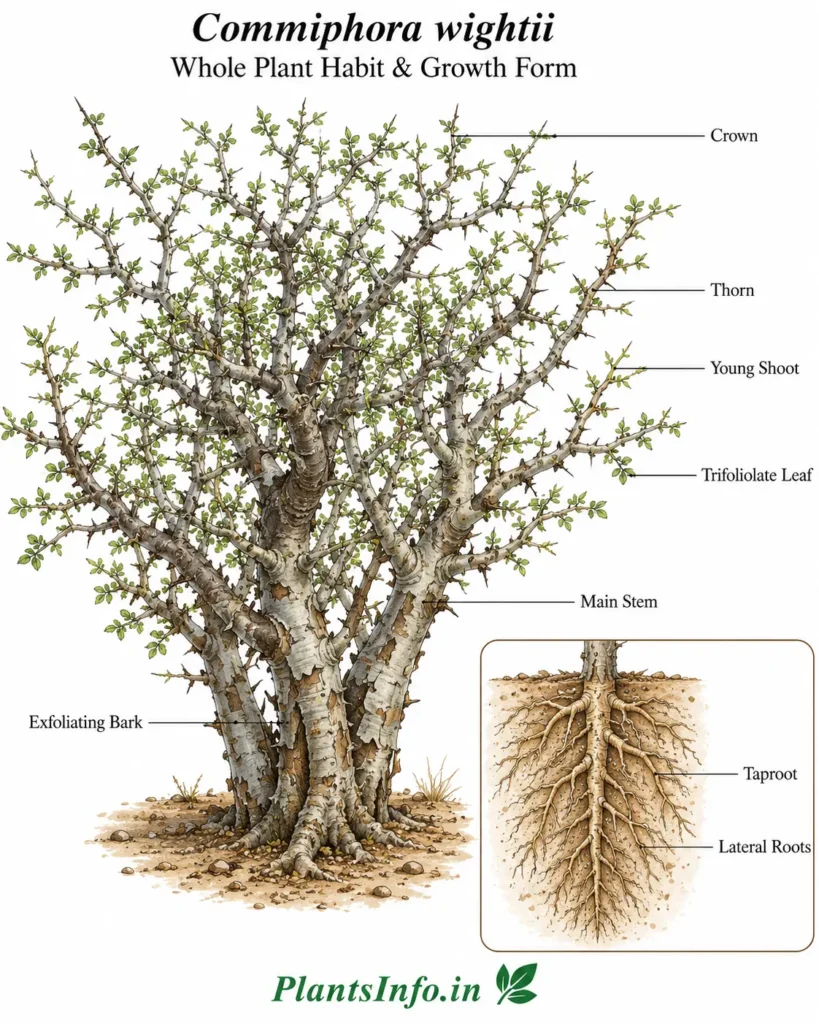
Commiphora wightii is a thorny deciduous shrub, occasionally developing a small tree-like form under favorable conditions. The architecture is characterized by a short trunk, numerous irregularly spreading branches, and a compact to broadly rounded crown. Growth is adapted to arid environments through reduced leaf persistence and substantial woody investment. Branching often begins low on the stem, producing a dense framework capable of surviving repeated drought cycles and physical disturbance. Mature individuals frequently exhibit contorted branch systems and a rugged appearance that distinguishes the species within dry scrubland communities.
Architecture Summary
| Characteristic | Description |
|---|---|
| Life Form | Deciduous shrub |
| Mature Height | Typically 1–3 m |
| Canopy Spread | Commonly 1–4 m |
| Stem Type | Woody, multi-stemmed |
| Bark Surface | Papery to peeling |
| Branching Pattern | Dense, irregular, low-branched |
| Root Morphology Overview | Deep taproot with lateral roots |
| Growth Rate | Slow to moderate |
| Longevity | Multi-decadal perennial |
| Distinguishing Architectural Feature | Thorn-bearing, contorted branching system |
Stem
The stem system provides both structural support and resin production. Older stems are irregular, twisted, and frequently armed with short spines derived from branch modifications. Bark exfoliates in thin papery flakes, exposing contrasting underlying tissues. Young shoots are relatively smooth and greenish, while mature stems become gray to ash-colored. Succulent tendencies may occur in younger tissues, reflecting adaptation to periodic water limitation.
Stem Characteristics
| Characteristic | Description |
|---|---|
| Stem Type | Woody |
| Cross-Section Shape | Approximately circular |
| Mature Diameter | Commonly up to 15–30 cm at base |
| Surface Texture | Peeling and papery |
| Young Colour | Green to green-brown |
| Mature Colour | Gray to ash-gray |
| Internode Length | Variable |
| Thorn Status | Present |
| Internal Structure | Resin-bearing woody tissue |
| Water Storage | Limited succulent tendency in young tissues |
Recommended Products
Disclosure: As an Amazon Associate, PlantsInfo may earn from qualifying purchases.
🌱 Plant Care Essentials
The following tools can help with pruning, plant health, soil management, and fruit garden maintenance.

Neem Oil for Plant Care
Natural plant protection against aphids, whiteflies, mites, and other common garden pests.

Fungicide for Root Care
Helps suppress soil-borne fungal diseases and supports healthier root systems.

Spray Bottle for Plants
Ideal for applying foliar sprays, neem oil solutions, and liquid plant treatments.

Rubber Hand Gloves
Protects hands during pruning, planting, soil preparation, and garden maintenance.
Leaves
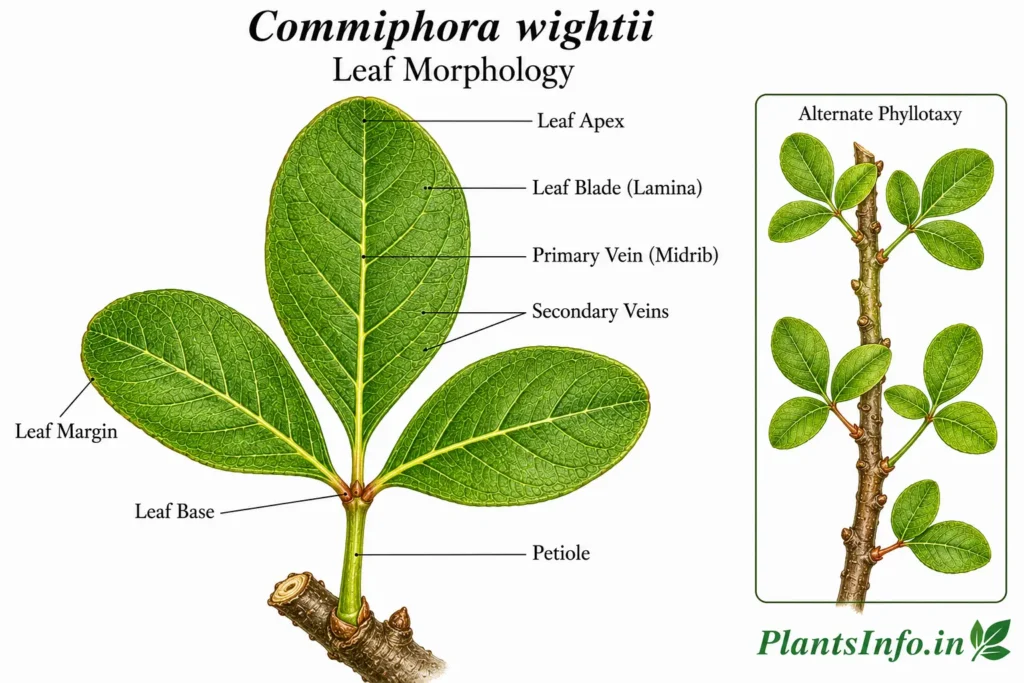
Leaves are seasonally produced and shed during prolonged dry periods. They are generally small, simple to trifoliolate, and adapted to minimize water loss under arid conditions. Leaf surfaces are typically green and relatively smooth, while leaflet shape varies from obovate to elliptic. Seasonal deciduousness contributes substantially to drought tolerance and is a conspicuous feature of the species throughout much of its native range.
Leaf Characteristics
| Characteristic | Description |
|---|---|
| Presence | Seasonally present |
| Leaf Type | Simple to trifoliolate |
| Size | Usually 1–5 cm long |
| Colour | Green |
| Arrangement | Alternate |
| Special Features | Drought-deciduous; variable leaflet development |
Flowers

Flowers are relatively small and inconspicuous compared with the commercial importance of the species. They are borne in short clusters on branchlets and display a simple floral structure typical of many members of Burseraceae. The flowers contribute reproductive continuity within arid ecosystems where flowering opportunities may be constrained by environmental conditions. Their modest size contrasts with the ecological importance of successful reproduction in fragmented populations. Sexual dimorphism associated with the species’ gynodioecious reproductive system has been reported in botanical literature.
Flower Characteristics
| Characteristic | Description |
|---|---|
| Inflorescence Type | Small fascicles or clusters |
| Flower Diameter | Approximately 4–6 mm |
| Flower Length | Approximately 4–6 mm |
| Sepals | 4 |
| Petals | 4 |
| Stamens | 8 |
| Pistil | Single |
| Fragrance | Not documented in available literature |
| Anthesis | Seasonal |
| Primary Pollinator Identity | Not fully verified during current profile audit |
Fruit
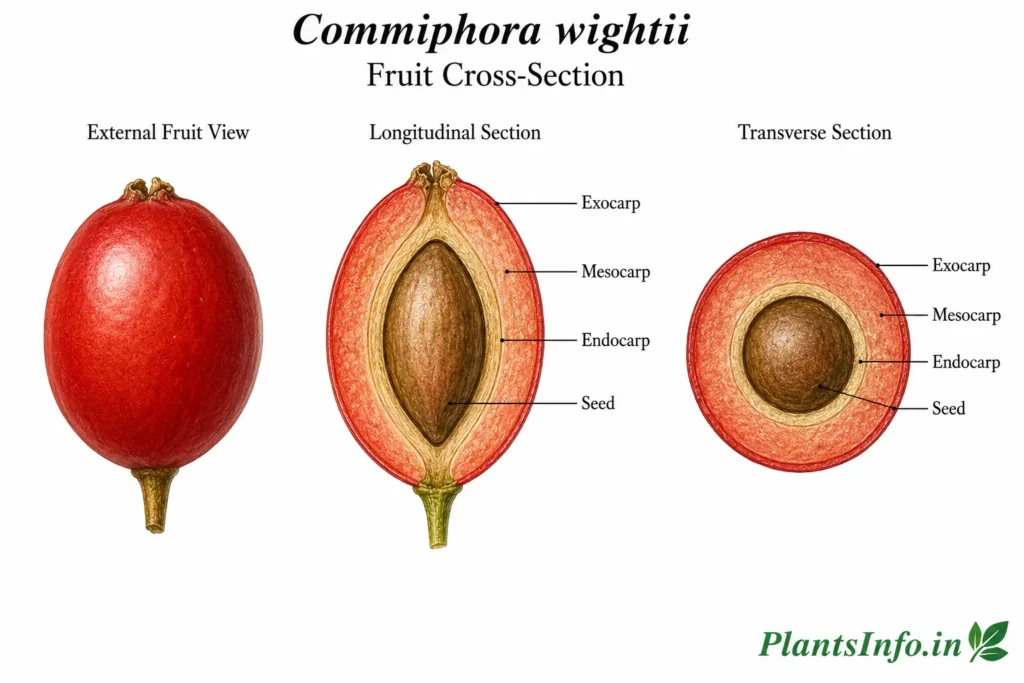
| Characteristic | Description |
|---|---|
| Fruit Type | Drupe |
| Shape | Ovoid to globose |
| Length | Approximately 0.5–1.0 cm |
| Diameter | Approximately 0.5–0.8 cm |
| Weight | Not documented in available literature |
| Skin Colour | Red when mature |
| Surface Features | Smooth |
| Flesh Colour | Not documented in available literature |
| Flesh Texture | Thin fleshy outer layer |
| Seed Count | Usually 1 |
| Sugar Content | Not documented in available literature |
| Maturation Period | Not fully documented in available literature |
Seeds

| Characteristic | Description |
|---|---|
| Size | Not documented in available literature |
| Shape | Ovoid |
| Colour | Brown |
| Seed Coat | Hard |
| Oil Content | Not documented in available literature |
| Viability Period | Existing data are insufficient for assessment |
| Germination Rate | Existing data are insufficient for assessment |
Root System
The root system is dominated by a substantial taproot that penetrates deeply into arid substrates while supporting a network of lateral roots. This architecture allows access to moisture reserves unavailable to shallow-rooted species and contributes to survival during prolonged drought. Root depth may vary according to substrate conditions, but mature plants are generally considered strongly anchored. The root system is also significant in relation to harvesting pressure because plant removal or excessive disturbance can impair regeneration and population persistence. In cultivation, adequate drainage is important because prolonged waterlogging is poorly tolerated.
Field Identification
Field recognition of Commiphora wightii is usually straightforward when multiple diagnostic features are considered together. Mature plants appear as thorny, irregularly branched shrubs with gray peeling bark and a compact, often contorted growth form. During the growing season, small simple or trifoliolate leaves are present, while drought periods may leave plants largely leafless. The combination of papery exfoliating bark, thorn-bearing branches, and resin-producing stems provides the strongest field identification characters.
Potential confusion may occur with other arid-zone species of Commiphora, particularly where geographic ranges overlap. However, the distinctive bark texture and dense thorny architecture usually provide the most reliable field distinction. When reproductive structures are present, the small red drupes further support identification.
Normal vs. Concerning Observations
| Observation | Status |
|---|---|
| Seasonal leaf drop during drought | Normal |
| Peeling papery bark | Normal |
| Thorn development on branches | Normal |
| Sparse flowering in dry years | Monitor |
| Extensive branch dieback | Investigate |
| Failure of new shoot production over multiple seasons | Investigate |
Cultivar Summary
| Cultivar | Key Characteristic | Commercial Status | Origin |
|---|---|---|---|
| Named cultivar documentation | Not documented in available literature | Historically documented | Not documented in available literature |
| Commercial selection lines | Limited documentation available | Experimental | India |
| Conservation propagation lines | Genetic preservation focus | Regionally significant | India |
Functional Traits
Commiphora wightii exhibits a physiological strategy centered on survival in arid and semi-arid environments while maintaining investment in resin production. Seasonal leaf shedding reduces transpirational water loss during prolonged drought, while deep-rooted water acquisition supports persistence through irregular rainfall cycles. Carbon allocation toward protective woody tissues and resin canals provides structural resilience and chemical defense. The integration of drought tolerance, conservative growth, reproductive persistence, and specialized secondary metabolism allows the species to occupy resource-limited habitats where environmental stress rather than competition is often the dominant ecological filter.
Functional Traits Summary
| Trait | Mechanism Description |
|---|---|
| Photosynthetic Pathway | C3 photosynthesis; carbon fixation occurs primarily through daytime stomatal gas exchange. |
| Water-Use Strategy | Seasonal drought avoidance through deciduous leaf loss, reducing transpiration during dry periods. |
| Nutrient Acquisition | Deep and lateral root exploration increases access to scarce soil resources in arid substrates. |
| Growth-Form Strategy | Slow woody growth prioritizes persistence, survival, and long-term resource conservation. |
| Reproductive Strategy | Investment in periodic reproductive output while maintaining longevity under environmental stress. |
| Dispersal Mechanism | Seed-containing drupes facilitate movement by animal-mediated transport where available. |
| Stress-Response Mechanism | Leaf abscission, reduced growth activity, and physiological dormancy reduce drought damage. |
| Chemical Defence | Production of resin rich in terpenoids and steroids deters herbivory and seals tissue injury. |
| Species-Specific Trait | Extensive oleo-gum resin production through specialized secretory tissues within stem and bark systems. |
Physiological Integration
The physiological organization of Commiphora wightii reflects a coordinated drought-survival strategy rather than rapid biomass accumulation. Deep-root access to intermittent moisture supports seasonal leaf production, while deciduous behavior minimizes water expenditure during unfavorable periods. Slow growth reduces metabolic demand and complements long-lived woody architecture. Resin production functions simultaneously as a wound-sealing mechanism and chemical defense system, linking structural integrity with secondary metabolism.
These traits reinforce one another. Reduced canopy maintenance lowers water requirements, allowing greater allocation to survival and resin synthesis. However, this strategy also imposes tradeoffs. Slow growth and conservative resource allocation may limit recovery from severe disturbance, excessive harvesting, or habitat degradation. Consequently, physiological resilience to drought does not necessarily translate into resilience to chronic anthropogenic pressure.
Phytochemistry
The phytochemistry of Commiphora wightii is among the most intensively studied within the genus because of the commercial and scientific significance of its oleo-gum resin. Chemical characterization has identified a complex mixture of steroids, terpenoids, diterpenoids, lignans, volatile constituents, and resin acids. Steroidal compounds known collectively as guggulsterones have received the greatest research attention and are considered important chemotaxonomic markers. Most phytochemical investigations focus on resin-derived metabolites, resulting in substantially greater chemical knowledge of exudates than of leaves, roots, fruits, or seeds.
Major Phytochemical Classes
| Compound Class | Representative Compounds | Primary Location | Ecological or Biological Function |
|---|---|---|---|
| Steroidal Ketones | E-guggulsterone, Z-guggulsterone | Oleo-gum resin | Chemical defense and resin chemistry specialization |
| Sesquiterpenoids | Caryophyllene-related constituents | Resin and volatile fraction | Defense signaling and deterrence |
| Diterpenoids | Cembrene derivatives | Resin | Protective secondary metabolism |
| Lignans | Various lignan constituents | Resin | Defensive and protective functions |
| Volatile Terpenes | Myrcene, limonene, pinene-related compounds | Resin | Aroma production and ecological signaling |
| Resin Acids and Gum Constituents | Mixed resin fractions | Oleo-gum resin | Tissue sealing and wound protection |
Phytochemical Organ Distribution
| Organ | Compound Class | Representative Compounds | Concentration | Source |
|---|---|---|---|---|
| Oleo-gum resin | Steroidal ketones | E-guggulsterone, Z-guggulsterone | Quantitative concentrations vary among studies | Sarup et al. (2015) |
| Oleo-gum resin | Sesquiterpenoids | Caryophyllene-related constituents | Not documented in available literature | Sarup et al. (2015) |
| Oleo-gum resin | Diterpenoids | Cembrene derivatives | Not documented in available literature | Sarup et al. (2015) |
| Oleo-gum resin | Volatile terpenes | Limonene, myrcene, pinene-related compounds | Not documented in available literature | Sarup et al. (2015) |
| Bark and stem secretory tissues | Resin-associated metabolites | Mixed resin constituents | Not documented in available literature | Pharmacognostic studies |
| Leaves | Species-specific phytochemical characterization incomplete | No species-specific evidence identified | No species-specific evidence identified | Current literature audit |
Phytochemical Significance
The phytochemical profile of Commiphora wightii is dominated by metabolites associated with its commercially valuable oleo-gum resin. Among these, E- and Z-guggulsterones are the most widely investigated compounds and have become the principal chemical markers used in phytochemical characterization and quality assessment. Terpenoids, diterpenoids, volatile oils, lignans, and associated resin constituents contribute additional complexity to the chemical profile.
The resin is overwhelmingly the best-characterized organ, while phytochemical information for leaves, roots, fruits, and seeds remains comparatively sparse. This uneven distribution of research effort has created a substantial literature concentration bias toward exudate chemistry. Consequently, the current understanding of whole-plant metabolite allocation remains incomplete.
Available evidence suggests that multiple compound classes occur together within the resin matrix, indicating potential synergistic interactions among metabolites. However, species-specific antagonistic relationships between constituent compounds remain insufficiently characterized. Overall, C. wightii represents a chemically well-studied medicinal shrub at the resin level but a less comprehensively characterized species at the whole-organism level.
Evidence Hierarchy for Medicinal Use
| Evidence Layer | Status | Notes |
|---|---|---|
| Traditional Use | Documented | Extensive historical use in Ayurveda and related traditional systems. |
| Nutritional Evidence | Absent | Not used primarily as a food species; no meaningful nutritional evidence base identified. |
| In Vitro Studies | Documented | Numerous studies involving resin extracts and isolated constituents. |
| Animal Studies | Documented | Multiple experimental investigations reported. |
| Human Clinical Studies | Partial | Clinical studies exist but vary substantially in quality, design, and reproducibility. |
| Regulatory Recognition | Partial | Included in traditional pharmacopeial and herbal frameworks; therapeutic approvals vary by jurisdiction. |
| Unsupported Commercial Claims | Documented | Claims relating to rapid weight loss, universal cholesterol reduction, and broad disease treatment frequently exceed available evidence. |
Evidence Assessment
The medicinal evidence base for Commiphora wightii is unusual in combining a long and well-documented traditional history with a substantial experimental literature. Traditional use, in vitro investigations, and animal studies represent the strongest evidence categories. Human clinical evidence is more limited, with heterogeneous methodologies and inconsistent outcomes across studies. The weakest areas involve rigorous large-scale clinical confirmation and validation of many commercial health claims. Marketing claims associated with weight management, metabolic enhancement, and generalized wellness frequently extend beyond the strength of currently available clinical evidence. Evidence quality, therefore, remains uneven despite extensive research activity.
Nutritional Composition
Applicability Assessment
Commiphora wightii is not primarily consumed as a food plant and is not recognized as a significant dietary species.
Soil Ecology and Mycorrhizal Associations
Species-specific soil ecological information for Commiphora wightii remains substantially less developed than its phytochemical and medicinal literature. Direct studies identifying mycorrhizal associations at species level are limited. Arbuscular mycorrhizal (AM) associations are considered probable based on the ecological behavior of Burseraceae and observations from related arid-land woody taxa, but species-specific confirmation remains incomplete.
No consistently verified fungal genera have been documented specifically for C. wightii during the current audit. Likewise, rhizosphere bacterial communities remain poorly characterized. Functional groups expected within arid shrubland rhizospheres include nutrient-cycling bacteria and drought-associated microbial assemblages, but species-specific bacterial inventories are lacking.
Published evidence regarding allelopathy is also limited. No verified species-specific allelopathic compounds have been demonstrated under natural conditions. Consequently, allelopathic effects, phytochemical mediation of plant–plant interactions, and agronomic consequences remain unresolved. From a conservation perspective, this represents a significant knowledge gap because below-ground ecological interactions may influence recruitment, restoration success, and long-term population persistence.
Toxicity and Safety
| Subject | Toxic Compounds | Clinical Effects | Source |
|---|---|---|---|
| Humans | No universally accepted toxic constituent identified at normal traditional exposure levels | Gastrointestinal discomfort, headache, skin reactions, and other adverse effects reported in some studies | Ulbricht et al.; pharmacovigilance reviews |
| Cats | No toxic compounds documented in available literature | No species-specific evidence identified | Current veterinary toxicology audit |
| Dogs | No toxic compounds documented in available literature | No species-specific evidence identified | Current veterinary toxicology audit |
| Livestock | No toxic compounds documented in available literature | No species-specific evidence identified | Current veterinary toxicology audit |
Toxicity Context
Available evidence suggests that safety outcomes are strongly dose dependent and influenced by extract composition, preparation method, and duration of exposure. Most adverse-event reports involve concentrated preparations or standardized extracts rather than incidental contact with the living plant. Certain constituents may interact with medications affecting lipid metabolism, coagulation pathways, or endocrine function. Pregnancy and lactation safety remain incompletely characterized, and caution is commonly advised in the medical literature. Individuals with significant hepatic or renal impairment may require professional supervision when using concentrated preparations.
Native Range and Distribution
Biogeographic Context
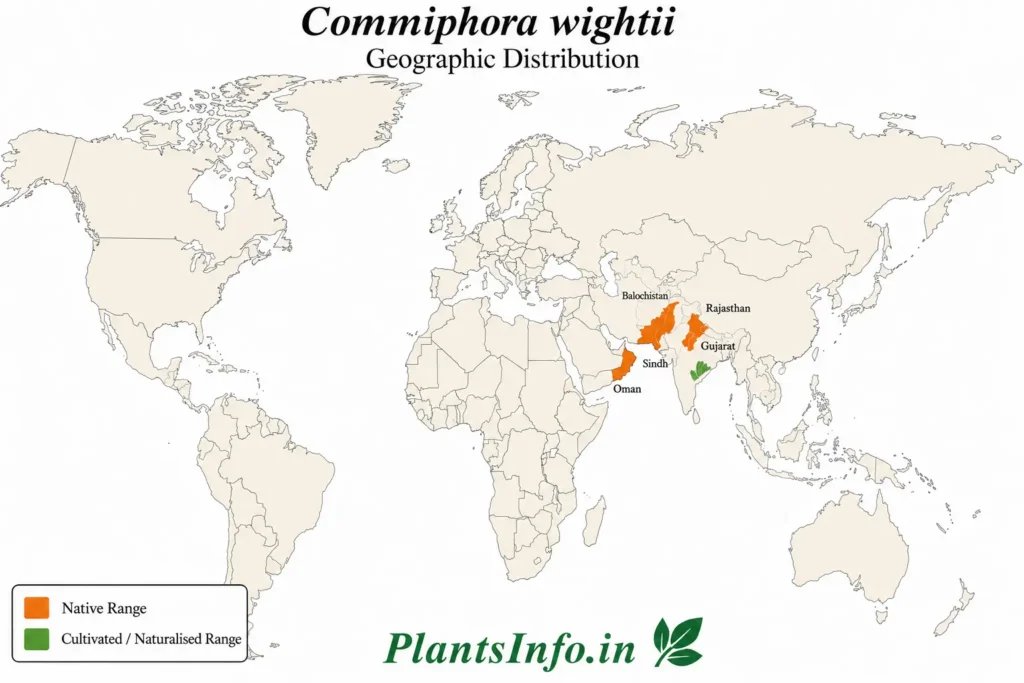
The distribution of Commiphora wightii reflects the historical development of arid and semi-arid landscapes across northwestern India, Pakistan, and parts of the Arabian Peninsula. The species is associated with regions characterized by prolonged dry seasons, erratic rainfall, rocky substrates, and open xerophytic vegetation. Geological stability and long-term aridification have favored persistence of drought-adapted Burseraceae lineages in these environments.
Modern distribution patterns have also been influenced by human activity. Extensive resin harvesting, habitat fragmentation, overgrazing, and land-use change have contributed to local population decline throughout portions of the native range. Research effort is heavily concentrated in India, resulting in substantially greater ecological and conservation knowledge for Indian populations than for those occurring elsewhere in the native distribution.
Native Range
| Region | Countries or Sub-regions | Notes |
|---|---|---|
| Arabian Peninsula | Oman | Native occurrence verified |
| South Asia | Pakistan (Sindh and Balochistan) | Native occurrence verified |
| South Asia | India (Rajasthan, Gujarat, adjoining dry regions) | Major native population center |
Global Cultivation and Naturalisation
| Region | Countries or Areas | Cultivation Status | Notes |
|---|---|---|---|
| South Asia | India | Commercially established | Primary production region; resin demand drives cultivation interest |
| South Asia | Pakistan | Emerging | Limited cultivation relative to wild occurrence |
| Arabian Peninsula | Oman | Experimental | Climatically suitable but limited documentation |
| North America | Arid research collections | Attempted — limited success | Climatic and propagation constraints reported |
| Europe | Botanical collections | Experimental | Cold sensitivity limits wider adoption |
Cultivation Range Note
Cultivation remains concentrated within India, where historical use, commercial demand, and conservation programs have encouraged managed production. Pakistan and Oman represent smaller-scale cultivation or experimental settings within portions of the native climatic envelope. Outside arid and semi-arid subtropical regions, establishment is generally restricted to botanical collections, conservation programs, or specialist institutions. Research literature is strongly biased toward Indian cultivation and conservation initiatives, while cultivation performance under non-native environmental conditions remains comparatively poorly documented.
Natural Habitat
Commiphora wightii occurs primarily within arid and semi-arid shrublands, desert margins, rocky hillsides, dry ravines, and open thorn-scrub ecosystems. Most documented populations occur on well-drained rocky, gravelly, or sandy substrates where competition from larger woody vegetation is limited. The species is commonly associated with xerophytic shrub communities and open woodland–scrub transitions.
Reported populations occur from low elevations to approximately 1,200 m above sea level, depending on regional topography. Moisture availability is strongly seasonal, with extended dry periods forming a defining environmental characteristic. The species is regarded as a habitat specialist of drought-prone environments and exhibits limited association with mesic ecosystems. Disturbance tolerance exists under natural grazing and climatic variability, but severe anthropogenic disturbance contributes to population decline.
Ecological Role
Within arid shrubland ecosystems, Commiphora wightii functions as a long-lived woody component contributing structural diversity and habitat complexity. Flowering individuals provide floral resources for insect visitors, although species-level pollinator networks remain incompletely documented. Fruits likely participate in localized seed-dispersal relationships involving vertebrate fauna, but detailed disperser studies are limited.
The species is not currently recognized as a keystone species, nor has a formal indicator-species designation been documented. Nevertheless, its conservation status and sensitivity to overharvesting make it a useful indicator of anthropogenic pressure within portions of its range.
Substantial ecological knowledge gaps remain. Pollinator identity, dispersal efficiency, recruitment ecology, and ecosystem-level interactions remain less studied than phytochemistry, pharmacology, and conservation status.
Ecological Role Summary
| Role Type | Species or Agent Involved | Notes |
|---|---|---|
| Floral Resource | Not documented at species level | Insect visitation reported but incompletely resolved |
| Seed Dispersal | Not documented at species level | Vertebrate dispersal suspected but poorly studied |
| Habitat Structure | Xerophytic shrubland communities | Provides woody structural component within arid ecosystems |
Invasive Status
No verified naturalisation or invasive behavior of concern has been documented outside the native range. Current evidence indicates that Commiphora wightii is not regarded as an invasive species.
Optimal Climate Parameters
| Parameter | Optimal Range | Tolerance Range | Notes |
|---|---|---|---|
| Mean Annual Temperature | 22–30°C (72–86°F) | 15–40°C (59–104°F) | Derived from native and cultivated distribution records |
| Daytime Temperature | 28–38°C (82–100°F) | 20–45°C (68–113°F) | Warm-season growth associated with high daytime temperatures |
| Nighttime Temperature | 15–25°C (59–77°F) | 5–30°C (41–86°F) | Prolonged cold conditions reduce performance |
| Annual Rainfall | 200–500 mm (8–20 in) | 100–750 mm (4–30 in) | Reflects arid to semi-arid environments |
| Dry Season Length | 6–9 months | 4–11 months | Extended drought common in native habitats |
| Relative Humidity | 30–60% | 20–80% | High humidity tolerance poorly documented |
| Solar Radiation | Full sun (>6 kWh m⁻² day⁻¹) | Moderate to very high exposure | Derived primarily from arid-zone occurrence data |
Climate Interpretation
The climate envelope of Commiphora wightii is strongly associated with heat, solar exposure, and prolonged seasonal drought. Native populations occupy environments characterized by low rainfall and extended dry periods, while cultivation remains largely confined to regions sharing similar climatic characteristics. Temperature extremes appear less limiting than excess moisture. Expansion beyond the native climatic envelope is constrained primarily by prolonged cold exposure, excessive humidity, and environments lacking a pronounced dry season. Available evidence suggests that climatic suitability is closely linked to aridity rather than temperature alone.
Stress Tolerance Profile
| Stress Type | Tolerance Level | Physiological Response | Notes |
|---|---|---|---|
| Drought | High | Reduced transpiration, seasonal leaf abscission, metabolic conservation | Well documented |
| Heat | High | Maintenance of physiological activity under elevated temperatures | Consistent with native habitat |
| Cold or Frost | Low to Moderate | Reduced metabolic activity and tissue injury risk | Frost sensitivity reported |
| Salinity | Conditional | Not documented at species level | Evidence limited |
| Waterlogging | Low | Root-zone oxygen stress likely impairs physiological function | Species-level evidence limited |
| Air Pollution | Conditional | Not documented at species level | Evidence limited |
| Wind | Moderate | Physiological stress response not documented at species level | Field persistence observed |
| Soil Compaction | Conditional | Not documented at species level | Evidence limited |
Compound Stress Assessment
The best-supported compound stress scenario for Commiphora wightii involves simultaneous exposure to drought and high temperature, conditions that characterize much of the native range. Available evidence indicates that the species is well adapted to this combination and maintains persistence through physiological water conservation and seasonal activity adjustment. In contrast, combined salinity and waterlogging responses remain poorly characterized. Evidence addressing multiple simultaneous anthropogenic and climatic stressors is limited, representing an important research gap. The interaction between harvesting pressure, habitat degradation, and climatic change remains particularly relevant to long-term population viability.
Structural and Physiological Adaptations
Adaptation Narrative
The adaptations of Commiphora wightii reflect long-term evolution within drought-prone shrublands and desert-margin ecosystems. Unlike the physiological processes discussed previously, these adaptations concern physical structures that enhance survival under chronic environmental stress. Thorn-bearing branches reduce browsing pressure, while exfoliating bark may reduce surface damage and protect underlying tissues. Compact branching architecture limits exposure to environmental extremes and contributes to persistence in open landscapes. Seasonal leaf production, reduced leaf size, and investment in resin-producing tissues collectively reflect adaptation to environments characterized by unpredictable rainfall, intense solar exposure, and periodic disturbance. These features have likely been favored by long-term selection within arid ecosystems where survival and longevity outweigh rapid growth.
Structural Adaptations
| Adaptation | Mechanism Description | Ecological Context |
|---|---|---|
| Thorn-Bearing Branches | Modified branches form rigid defensive structures | Reduces herbivore pressure in arid rangelands |
| Exfoliating Bark | Outer bark layers detach and renew periodically | Protects underlying tissues from environmental exposure |
| Compact Crown Architecture | Dense branching concentrates canopy structure | Suited to open, drought-prone habitats |
| Small Leaf Surface Area | Reduced leaf dimensions limit exposed surface | Common in xeric vegetation |
| Seasonal Deciduousness | Leaves shed during unfavorable periods | Adaptation to prolonged dry seasons |
| Resin-Producing Tissues | Specialized secretory structures produce oleo-gum resin | Protection following tissue injury |
| Multi-Stemmed Growth Form | Multiple stems arise from the basal framework | Enhances persistence after damage |
Climate Change Vulnerability
| Factor | Assessment | Notes |
|---|---|---|
| Primary Climate Sensitivity Factors | Moderate to High | Dependence on successful regeneration and recruitment within arid habitats |
| Key Threatening Climate Processes | High | Increased drought intensity, altered rainfall timing, habitat degradation |
| Resilience Factors | Moderate | Mature individuals tolerate arid conditions and prolonged seasonal drought |
| Confidence Level | Moderate | Supported by conservation assessments but limited species-specific climate modelling |
Climate Vulnerability Assessment
Species-specific climate-change modelling for Commiphora wightii remains limited. Current assessment is therefore based primarily on habitat specialization, population trends, conservation literature, and known climatic associations. Existing evidence suggests moderate-to-high vulnerability because many populations are already fragmented and subject to harvesting pressure. Although mature plants exhibit substantial resilience to arid conditions, successful recruitment may be more sensitive to changing rainfall patterns and increasing climatic variability. Confidence is moderate because direct predictive modelling remains sparse, and the relative importance of climate-driven versus anthropogenic decline has not been fully resolved.
Phenological Calendar
| Event | Native Range Timing | Cultivated Range Timing | Environmental Triggers |
|---|---|---|---|
| Vegetative Growth Onset | Early monsoon to post-monsoon (June–September) | Rainy season or irrigated growth periods | Rainfall onset following prolonged dry period |
| Flower Bud Initiation | Late winter to early spring (January–March) | Similar to native range | Seasonal moisture availability and photoperiod change |
| Anthesis or Peak Flowering | Spring (March–May) | Spring to early summer | Rising temperatures and seasonal development |
| Fruit Development | Spring to summer (April–July) | Similar to native range | Successful pollination and fruit set |
| Fruit Maturation | Summer (June–August) | Summer to early autumn | Heat accumulation and developmental maturity |
| Seed Dispersal | Late summer to autumn (August–October) | Similar to native range | Fruit maturation and dehiscence processes |
| Dormancy or Rest Period | Dry season (October–June, region dependent) | Variable according to local climate | Extended moisture deficit |
Phenological Notes
Phenology in Commiphora wightii is closely linked to seasonal moisture availability rather than temperature alone. Rainfall timing strongly influences vegetative growth, while reproductive development generally follows predictable seasonal cycles. Considerable phenological plasticity may occur among populations experiencing different rainfall regimes. Cultivated populations outside the core native range can exhibit shifts in flowering and fruiting timing when local environmental cues differ from those of natural habitats. Existing literature is concentrated on Indian populations, and comparative phenological studies across the full geographic range remain limited.
Pollination Ecology
Pollination ecology remains one of the less thoroughly documented aspects of Commiphora wightii biology. The species possesses small flowers typical of many members of Burseraceae and appears to rely primarily on animal-mediated pollen transfer. The gynodioecious reproductive system introduces ecological complexity because female and hermaphroditic individuals may contribute differently to reproductive success. Available evidence suggests insect-mediated pollination, but detailed species-level pollinator networks remain poorly characterized. Consequently, pollination ecology is inferred primarily from direct observations, reproductive studies, and broader understanding of related taxa rather than from comprehensive pollinator inventories.
Pollination Ecology Summary
| Parameter | Value | Notes |
|---|---|---|
| Primary Pollinators | Not documented at species level | Insect pollination reported |
| Secondary Pollinators | Not documented at species level | Evidence insufficient |
| Pollination Syndrome | Generalized insect pollination | Supported by floral characteristics |
| Floral Mechanism | Exposed reproductive structures provide access to pollen and floral rewards | Detailed mechanisms incompletely documented |
| Reproductive System | Gynodioecious | Verified |
| Seed Dispersal Agent | Not documented at species level | Vertebrate dispersal suspected |
| Pollination Success Rate | Not documented at species level | Quantitative studies lacking |
| Human Intervention | Biologically feasible | Reproductive biology does not preclude assisted pollination |
Pollination Context
Available evidence indicates that outcrossing likely contributes substantially to reproductive success because of the gynodioecious breeding system. Complete assessment of self-compatibility remains unresolved, although female-only individuals necessarily depend upon pollen transfer from compatible plants. Pollinator decline could therefore affect reproductive output, particularly within fragmented populations. Because flowers are accessible and reproductive structures are not highly specialized, assisted pollination is biologically feasible. However, insufficient species-specific data are available to quantify reproductive dependence on particular pollinator taxa or to estimate the impact of pollinator limitation across the native range.
Seed Biology and Germination
| Parameter | Value | Notes |
|---|---|---|
| Seed Type | Orthodox seed behavior not fully confirmed | Storage classification unresolved |
| Dormancy Class | Physiological dormancy suspected | Species-specific confirmation incomplete |
| Dormancy-Breaking Requirement | Not fully documented at species level | Evidence variable |
| Optimal Germination Temperature | Approximately 25–35°C (77–95°F) | Reported in propagation literature |
| Germination Rate | Variable; commonly low to moderate | Strong population variation reported |
| Germination Period | Approximately 10–30 days | Literature reports vary |
| Storage Behaviour | Not fully documented | Long-term storage data limited |
| Seed Longevity | Existing data are insufficient for assessment | Verification incomplete |
Germination Notes
Published reports indicate substantial variability in germination performance among seed sources. Differences in maturity, storage history, environmental conditions, and population origin may contribute to inconsistent results. Available evidence suggests that biological dormancy mechanisms may influence germination behavior, although definitive classification remains unresolved. Wild populations often exhibit lower recruitment success than expected from seed production alone, indicating that post-dispersal ecological constraints may also play an important role. Long-term storage biology remains poorly documented.
Vegetative Reproduction
| Parameter | Value | Notes |
|---|---|---|
| Vegetative Regeneration Capacity | Moderate to High | Regeneration from vegetative tissues documented |
| Primary Regeneration Mechanism | Stem-derived regeneration | Observed in restoration and conservation programs |
| Minimum Propagule Size | Not documented at species level | Quantitative threshold unavailable |
| Ecological or Invasive Significance | Supports persistence after disturbance | No invasive significance documented |
Economic Importance
Economic Context
Commiphora wightii occupies a distinctive position in the global medicinal-plant economy because its primary commercial product is oleo-gum resin rather than edible, timber, or ornamental material. Commercial demand is concentrated in South Asia, particularly India, where the species has long-standing significance within Ayurvedic industries and herbal product manufacturing. Supply chains historically relied heavily on wild-harvested resin, although cultivated and managed sources have become increasingly important.
International trade is influenced by quality-control requirements, raw-material availability, and regulatory scrutiny of herbal products. Adulteration and substitution with related resins remain recognized supply-chain concerns because product value depends heavily on authenticity. Market vulnerability is strongly linked to inconsistent raw-material supply, harvest quality, and traceability challenges.
Economic Importance Summary
| Use Category | Description | Economic Impact |
|---|---|---|
| Ayurvedic Manufacturing | Resin ingredient in traditional formulations | High |
| Herbal Supplements | Commercial extract production | High |
| Raw Resin Trade | Domestic and regional trade commodity | Moderate to High |
| Research and Standardization | Reference material and quality-control markets | Moderate |
| Conservation Propagation Sector | Restoration and managed production initiatives | Moderate |
| Summary Economic Assessment | Economically important medicinal resin species with regionally significant international trade | High |
Traditional Use Summary
The primary traditional knowledge system associated with Commiphora wightii is Ayurveda, where guggul has been documented for centuries as a valued resin ingredient within complex formulations. Additional use occurs within Unani and Siddha traditions, reflecting cultural exchange across South Asia. Historical documentation indicates strong continuity from classical textual traditions into contemporary commercial herbal industries. Unlike many ethnobotanical species whose use has declined, guggul remains actively integrated into modern medicinal markets. Commercialization has therefore amplified rather than replaced traditional knowledge, although industrial demand has transformed supply structures and increased emphasis on standardization, authentication, and quality assurance.
Regional Ethnobotanical Context
The ethnobotanical history of guggul is deeply embedded within the cultural landscapes of arid northwestern India and adjoining regions of Pakistan. Historical trade routes facilitated movement of resin between production zones and centers of medicinal learning, contributing to its incorporation into multiple medical traditions. Knowledge transmission occurred through textual traditions, practitioner lineages, regional commerce, and local harvesting communities.
Agricultural modernization altered production systems but did not eliminate cultural familiarity with the species. Instead, increasing commercialization strengthened demand while simultaneously shifting portions of production from local collection systems toward more structured supply networks. The result is an ethnobotanical history characterized by continuity rather than replacement, with traditional knowledge remaining visible within contemporary use patterns.
Traditional Ecological Knowledge
Documented traditional ecological knowledge extends beyond medicinal use but remains less thoroughly studied than pharmacological or commercial topics. Historical observations indicate integration of guggul into dryland landscapes where local communities recognized habitat preferences, seasonal resin production patterns, and indicators of plant condition.
Limited references describe use within boundary plantings and landscape management systems, although detailed agroforestry documentation is scarce. Ecological indicator roles, long-term resource management practices, and traditional harvest governance systems remain incompletely documented. This represents a significant research gap within the broader literature.
Ethical Considerations
The geographic and cultural origins of guggul knowledge are concentrated in South Asia, particularly northwestern India and neighboring regions where the species occurs naturally. Traditional knowledge concerning collection, processing, and use has been maintained through Ayurvedic, Unani, Siddha, and local community traditions over extended historical periods.
Documentation status is comparatively strong relative to many medicinal plants because extensive textual records exist alongside modern scientific literature. Nevertheless, documentation remains uneven, with greater attention given to medicinal applications than to community-level ecological knowledge and harvesting traditions.
The Nagoya Protocol is relevant to Commiphora wightii because the species possesses documented traditional knowledge, commercial value, and ongoing research interest. Access and Benefit-Sharing (ABS) principles are therefore applicable when biological materials or associated traditional knowledge are utilized in commercial or research contexts.
No documented ABS case has been identified for this species during the current audit. Likewise, no universally recognized biopiracy case specific to Commiphora wightii has been identified in the reviewed literature. However, broader debates concerning commercialization of traditional medicinal knowledge remain relevant.
Commercial attribution gaps may arise when products emphasize chemical constituents or branded extracts while providing limited recognition of traditional knowledge systems that contributed to discovery and continued use. Recommended international practice includes transparent source attribution, respect for traditional knowledge holders, compliance with applicable ABS frameworks, support for equitable benefit-sharing mechanisms, and recognition of the cultural origins of knowledge incorporated into commercial products.
Cultural Significance
Guggul occupies a prominent place within South Asian cultural history because it exists simultaneously as a medicinal resource, traded commodity, and culturally recognized plant. The resin has long been associated with purification, ritual use, and traditional systems of health, contributing to symbolic value beyond its economic importance. Linguistic continuity is reflected in the persistence of the name “guggul” across historical and contemporary contexts, reinforcing cultural recognition.
Public interest remains high because the species continues to appear in educational materials, traditional medicine discussions, conservation narratives, and commercial product sectors. Unlike many historically significant medicinal plants that survive primarily within archival records, guggul remains actively present in contemporary cultural discourse.
Festivals centered exclusively on the species have not been documented, and agrotourism associated specifically with guggul remains limited. However, the plant contributes to broader public interest in Ayurvedic heritage, desert biodiversity, and traditional plant knowledge. Its cultural significance is therefore best understood as the intersection of medicinal tradition, historical trade, and continuing public recognition rather than as a ceremonial or festival-centered species.
Cultivation Summary
| Parameter | Value | Notes |
|---|---|---|
| Hardiness or Climate Zone | Arid to semi-arid subtropical climates | Climatically specialized |
| Soil pH Range | Approximately 7.0–8.5 | Tolerant of alkaline substrates |
| Moisture Sensitivity | High sensitivity to prolonged saturation | Sensitive to waterlogging |
| Light Sensitivity | Full sun orientation | Adapted to open landscapes |
| Productive Lifespan | Multi-decadal perennial |
Pest, Disease and Physiological Burden Summary
Published information regarding pests and diseases is less extensive than literature on chemistry, conservation, or traditional use. Reported burdens include stem damage, fungal diseases under unfavorable conditions, and stress associated with excessive moisture or harvesting injury. Physiological burdens are dominated by drought-recruitment bottlenecks and regeneration limitations rather than by severe pest pressure. Overall evidence quality is moderate and geographically concentrated within Indian production systems.
Failure Points and Commercial Risks
| Risk | Cause | Commercial Impact | Mitigation Domain |
|---|---|---|---|
| Raw Material Shortage | Dependence on limited production regions | High | Infrastructural |
| Adulteration and Substitution | Supply-chain complexity and quality variation | High | Regulatory |
| Low Regeneration Success | Biological recruitment limitations | Moderate to High | Genetic |
| Variable Resin Yield | Environmental and population variability | Moderate | Agronomic |
| Regulatory Market Changes | Shifting herbal-product regulations | Moderate | Regulatory |
Conservation and Research
Conservation Analysis
Commiphora wightii is among the most conservation-sensitive medicinal plant species of South Asia. Its risk profile results from the interaction of habitat degradation, population fragmentation, low natural recruitment, and long-standing commercial demand for oleo-gum resin. Many populations occur as isolated remnants within increasingly altered dryland ecosystems, raising concerns regarding demographic stability and long-term genetic diversity.
Genetic risk is heightened by population reduction and landscape fragmentation, which may restrict gene flow among surviving populations. Habitat risk remains significant because the species occupies specialized arid and semi-arid environments that are vulnerable to land-use change, grazing pressure, and infrastructure development.
Commercial utilization creates a complex conservation dynamic. Demand for resin has historically supported continued recognition of the species, but has also contributed to harvesting pressure. Cultivation initiatives increasingly function as a complementary conservation strategy by reducing dependence on wild populations while maintaining commercial supply.
Germplasm security remains an important priority. Ex situ conservation collections, propagation programs, and regional restoration initiatives contribute to safeguarding genetic resources, but comprehensive representation of the species’ geographic diversity remains incomplete. Long-term conservation success will depend on maintaining both wild populations and genetically representative conservation collections.
Conservation Status
| Parameter | Value | Notes | Source |
|---|---|---|---|
| IUCN Red List Category | Critically Endangered (CR) | Current global assessment | IUCN Red List |
| Population Trend | Decreasing | Ongoing decline documented | IUCN Red List |
| Primary Threat | Unsustainable harvesting and habitat degradation | Multiple interacting threats | IUCN Red List; Reddy et al. |
| Native Range | India, Pakistan, Oman | Fragmented occurrence | POWO; IUCN |
| IUCN URL | https://www.iucnredlist.org/species/31231/50131117 | Official assessment record | IUCN Red List |
| Access Date | 14 June 2026 | Current audit verification date | Current profile audit |
Conservation Assessment
The conservation outlook for Commiphora wightii remains concerning despite increased awareness and restoration efforts. The species combines several characteristics commonly associated with elevated extinction risk: restricted ecological specialization, fragmented populations, low recruitment success, and commercial demand for harvested plant material.
Available evidence indicates that population decline has occurred across substantial portions of the native range. Although conservation programs, cultivation initiatives, and ex situ collections provide important safeguards, long-term recovery remains dependent on successful recruitment and maintenance of viable wild populations.
The overall assessment supports continued recognition of the species as a high-priority medicinal plant for conservation action. Existing conservation measures appear valuable but insufficient to eliminate long-term risk without sustained monitoring and habitat protection.
Research Coverage and Knowledge Gaps
| Research Topic | Coverage Level | Key Gaps | Priority |
|---|---|---|---|
| Phytochemistry and Resin Chemistry | High | Whole-plant metabolomics; organ allocation | Medium |
| Conservation Biology | Moderate | Long-term demographic monitoring | High |
| Pollination Ecology | Low | Pollinator identity; pollination networks | High |
| Population Genetics | Low | Genetic structure; gene flow | High |
| Seed Biology | Moderate | Dormancy mechanisms; storage behavior | High |
| Soil Ecology | Low | Mycorrhizal partners; rhizosphere microbiome | Medium |
Research Landscape
Research activity surrounding Commiphora wightii has expanded substantially over recent decades, driven primarily by pharmaceutical interest, medicinal plant research, and conservation concerns. However, growth has been uneven. Chemistry, pharmacology, and resin characterization dominate the literature, while ecological and evolutionary research remain comparatively underrepresented.
Research effort is heavily concentrated in India, reflecting both the cultural importance of the species and the location of major populations. Funding patterns appear similarly concentrated around medicinal value and commercial relevance. This imbalance has improved understanding of resin chemistry but limits confidence in broader ecological and conservation interpretations because critical biological processes remain insufficiently studied.
Priority Knowledge Gaps
Several knowledge gaps currently limit effective long-term conservation and scientific understanding of Commiphora wightii. Among the most significant is the absence of robust population-genetic information. Without understanding patterns of genetic diversity and gene flow, conservation planning may fail to preserve important evolutionary variation.
Pollination ecology represents a second major gap. Species-level identification of pollinators, pollination efficiency, and reproductive dependencies remain poorly resolved. These uncertainties restrict assessment of reproductive resilience under environmental change.
Seed biology also requires additional attention. Dormancy classification, storage behavior, and recruitment limitations remain incompletely characterized. Improved understanding would enhance restoration planning and germplasm conservation.
Soil ecological interactions represent another underdeveloped field. Knowledge of mycorrhizal associations and rhizosphere communities could improve interpretation of habitat requirements and restoration outcomes.
Finally, comprehensive climate-vulnerability modelling remains limited. Better integration of demographic, climatic, and ecological data would strengthen forecasting capacity and help identify future refugia, restoration priorities, and conservation investment targets.
Frequently Asked Questions
Identity and Biology
1. What is guggul?
Guggul is the common name for Commiphora wightii (Arn.) Bhandari, a resin-producing shrub in the Burseraceae family native to arid regions of India, Pakistan, and Oman.
2. Why is the species scientifically important?
The species is notable for its commercially valuable oleo-gum resin, long ethnobotanical history, distinctive desert adaptations, and conservation significance.
Ecology and Distribution
3. Where does guggul naturally occur?
Native populations occur primarily in northwestern India, Pakistan, and Oman within arid and semi-arid shrubland ecosystems.
4. Is guggul an invasive species?
No verified evidence currently indicates invasive behavior or invasive naturalization outside its native range.
Traditional and Economic Significance
5. Why has guggul been used historically?
The resin has been incorporated into Ayurvedic, Unani, and Siddha knowledge systems for centuries and remains an important medicinal commodity.
6. Is commercial demand still significant?
Yes. Demand for resin and resin-derived products continues to support a substantial medicinal-plant market, particularly in South Asia.
Conservation and Research
7. What is the current conservation status?
The species is currently assessed as Critically Endangered according to the IUCN Red List assessment referenced in this profile.
8. What are the most important research gaps?
Major gaps include pollination ecology, population genetics, soil ecology, recruitment biology, and climate-vulnerability modelling.
Conclusion
Commiphora wightii represents one of the most scientifically, culturally, and economically significant medicinal shrubs of the arid regions of South Asia. Its importance arises from the intersection of traditional knowledge, commercial resin production, distinctive desert adaptation, and extensive phytochemical investigation. At the same time, the species illustrates the challenges associated with balancing utilization and long-term biological persistence.
Current knowledge is strongest in taxonomy, morphology, phytochemistry, traditional use, and commercial relevance. Important advances have also been made in conservation assessment and restoration planning. However, substantial uncertainties remain regarding pollination ecology, population genetics, soil ecology, climate vulnerability, and recruitment dynamics. These unresolved questions continue to influence both conservation planning and scientific interpretation.
Taken together, the evidence portrays a biologically distinctive, culturally important, and conservation-sensitive species whose future understanding will depend on integrating ecological, genetic, and restoration research with existing knowledge. Readers seeking greater depth should consult Cultivation and Production Guide, Benefits, Applications and Utilization, Cultural and Historical Significance Guide, Seasonal Management and Phenology Guide, Pest and Disease Guide, and Cultivars and Selection Guide.
References
A. Primary Taxonomic and Nomenclatural Sources
- Plants of the World Online (POWO). Royal Botanic Gardens, Kew. Commiphora wightii (Arn.) Bhandari. Available at: https://powo.science.kew.org/taxon/urn:lsid:ipni.org:names:127856-1. Accessed 14 June 2026.
- World Flora Online. Commiphora wightii species treatment. Available at: https://www.worldfloraonline.org. Accessed 14 June 2026.
- Flora of Pakistan. Taxonomic treatments and regional accounts of Commiphora species occurring within Pakistan.
- Regional floras and botanical treatments of Rajasthan, Gujarat, and northwestern India addressing Commiphora wightii distribution, morphology, and ecology.
- Burseraceae taxonomic and nomenclatural literature relevant to the classification, synonymy, and species relationships of Commiphora wightii.
B. Conservation, Distribution, and Ecology
- Ved, D. (2015). Commiphora wightii. The IUCN Red List of Threatened Species. International Union for Conservation of Nature (IUCN).
- Reddy, C.S., Meena, S.L., Krishna, P.H., Charan, P.D., & Sharma, K.C. (2012). Conservation Threat Assessment of Commiphora wightii (Arn.) Bhandari—An Economically Important Species. Taiwania, 57(3), 288–293.
- Conservation and restoration studies addressing population decline, regeneration, habitat degradation, and recovery strategies for Commiphora wightii.
- Regional population monitoring reports and conservation assessments relating to guggul populations in India and Pakistan.
- Arid-land shrub ecology literature relevant to Burseraceae, desert shrub communities, and xerophytic ecosystem dynamics.
- Ecological literature addressing reproductive ecology, recruitment limitations, pollination biology, and regeneration of arid-zone woody plants.
- Climate vulnerability assessments and conservation analyses relevant to dryland medicinal plant species and Commiphora wightii populations.
C. Phytochemistry, Pharmacology, and Medicinal Research
- Sarup, P., Bala, S., Kamboj, S., & Kamboj, A. (2015). Phytochemistry and Pharmacological Profile of Commiphora wightii: A Review.
- Hanuš, L.O., Řezanka, T., Dembitsky, V.M., & Moussaieff, A. (2005). Myrrh and Guggul—The Chemistry of Medicinal Resins. Food Reviews International, 21, 1–12.
- Shen, T., Li, G.-H., Wang, X.-N., & Lou, H.-X. Studies on the Chemistry and Biological Activity of the Genus Commiphora.
- Pharmacognostic investigations of Commiphora wightii resin and associated medicinal preparations.
- Phytochemical studies examining guggulsterones, terpenoids, diterpenoids, lignans, volatile oils, and resin constituents.
- Burseraceae chemotaxonomic literature and comparative resin chemistry reviews.
- Experimental pharmacological studies involving guggul extracts and isolated constituents.
D. Clinical Evidence, Toxicology, and Safety
- Ulbricht, C., et al. Reviews of the efficacy and safety of guggul (Commiphora wightii) preparations.
- Clinical reviews and meta-analyses evaluating guggul-derived products and standardized extracts.
- Pharmacovigilance reviews assessing adverse events and safety considerations associated with guggul use.
- Veterinary toxicology databases and toxicological literature consulted during preparation of the toxicity assessment.
- Safety evaluations and evidence reviews concerning medicinal use of guggul-containing formulations.
E. Ethnobotany, Traditional Knowledge, and Cultural History
- Ayurvedic Pharmacopoeia of India. Government of India. Monographs concerning guggul resin and associated formulations.
- Classical Ayurvedic literature documenting traditional uses of guggul.
- Ethnobotanical reviews and historical analyses of Commiphora wightii within South Asian medicinal traditions.
- Historical studies addressing medicinal plant trade networks and traditional commerce involving guggul.
- Documentation relating to traditional ecological knowledge, harvesting practices, and cultural significance of guggul.
F. Cultivation, Propagation, and Production Systems
- Cultivation and propagation studies concerning Commiphora wightii.
- Seed biology, dormancy, germination, and regeneration research reports relating to guggul populations.
- Restoration and rehabilitation studies utilizing vegetative propagation and conservation planting.
- Conservation cultivation publications addressing sustainable production systems and reduction of harvesting pressure on wild populations.
- Agronomic and production-oriented publications relating to medicinal resin species of arid and semi-arid environments.
G. Trade, Policy, and Regulatory References
- Market analyses and trade assessments relating to guggul resin and medicinal plant commerce.
- Regulatory literature concerning herbal medicines and medicinal plant products derived from Commiphora wightii.
- Nagoya Protocol documentation and Access and Benefit-Sharing (ABS) framework references relevant to traditional knowledge and biological resources.
- International conservation and biodiversity policy documents relevant to medicinal plant utilization and conservation.
H. Databases and Online Resources
- International Union for Conservation of Nature (IUCN) Red List. Commiphora wightii assessment. Available at: https://www.iucnredlist.org/species/31231/50131117. Accessed 14 June 2026.
- Plants of the World Online (POWO). Royal Botanic Gardens, Kew. Available at: https://powo.science.kew.org. Accessed 14 June 2026.
- World Flora Online. Available at: https://www.worldfloraonline.org. Accessed 14 June 2026.
Reference Notes
This profile was prepared using a combination of primary taxonomic databases, peer-reviewed scientific literature, conservation assessments, pharmacological reviews, ethnobotanical sources, technical reports, and regulatory references. Sources were selected to provide balanced coverage of taxonomy, morphology, ecology, phytochemistry, conservation status, traditional knowledge, cultivation, and economic significance. Where species-specific evidence was unavailable, broader Burseraceae literature and arid-land ecological studies were consulted to provide contextual interpretation while maintaining appropriate caution regarding inference.