Plant Guides

Garden Strawberry: Nutrition, Benefits & Uses

Garden strawberry benefits, nutrition and culinary uses showing vitamin C, dietary fibre, folate, potassium, fresh fruit and common strawberry foods

Quick Answer Garden strawberry (Fragaria × ananassa) is primarily valued as an edible fruit that can be eaten fresh or incorporated into desserts, drinks, preserves and other foods. Its nutritional profile includes vitamin C, dietary fibre, potassium and naturally occurring…

How to Grow Garden Strawberry in India: Complete Care Guide

Garden strawberry growing guide for India showing sunlight, temperature, soil, watering, feeding, mulching, containers, runners, flowering and fruiting care

Quick Answer Garden strawberry (Fragaria × ananassa) can be grown successfully by Indian home gardeners, particularly where cool growing conditions are available. It is a Moderate-difficulty crop because it performs best with fertile, well-drained soil, steady moisture and a suitable…

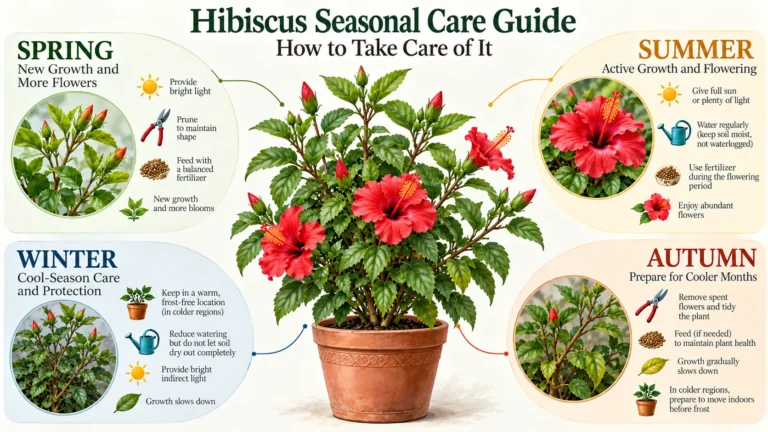
Hibiscus Seasonal Care Guide: How to Take Care of It

Hibiscus seasonal care guide showing key care considerations across spring, summer, autumn, and winter.

Quick Answer Winter (Dec–Feb) is the most vulnerable season for hibiscus in India’s colder regions because low temperatures can slow growth and increase sensitivity to cold and excess moisture. In warmer regions, the winter adjustment is less pronounced. Introduction A…

Hibiscus Plant Problems & Diseases: Symptoms, Causes & Fixes

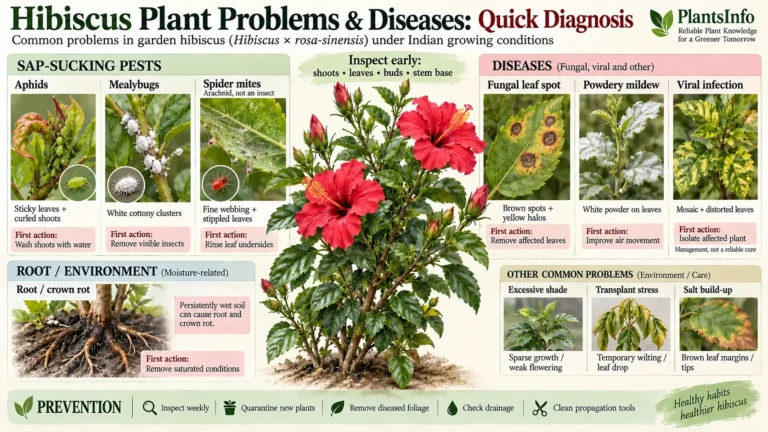
Semi-infographic showing common hibiscus problems including aphids, mealybugs, spider mites, fungal leaf spot, powdery mildew, root or crown rot, and viral leaf distortion with diagnostic symptoms and first actions.

Quick Answer The most common problems on garden hibiscus in Indian conditions are sap-sucking pests, especially aphids, along with moisture-related root stress. These problems are generally manageable when identified early, while viral infections require management rather than a cure. Hibiscus…

Hibiscus: Key Facts, Common Names & Distribution in India

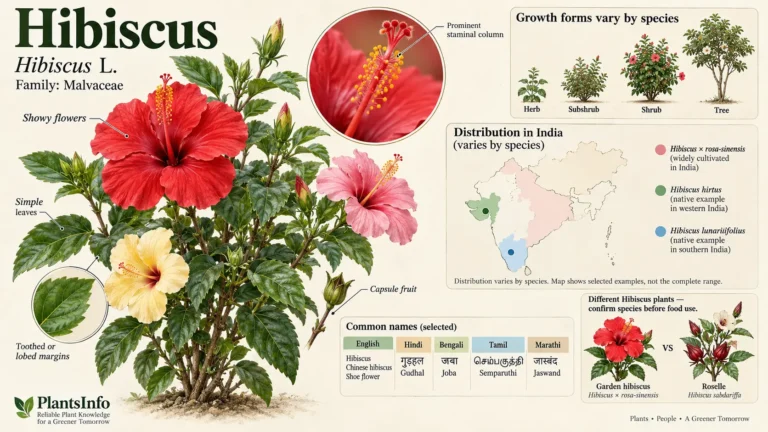
Semi-infographic botanical illustration of Hibiscus showing the garden hibiscus, prominent staminal column, leaf and fruit features, growth-form diversity, common Indian names, and species-dependent distribution in India.

Quick Answer Hibiscus L. is a genus in the mallow family, containing herbs, subshrubs, shrubs, and trees across tropical and subtropical regions. In India, “Hibiscus” commonly refers to several species, while the familiar garden hibiscus is usually Hibiscus × rosa-sinensis…

Hibiscus Flowering Season: India-based Guide

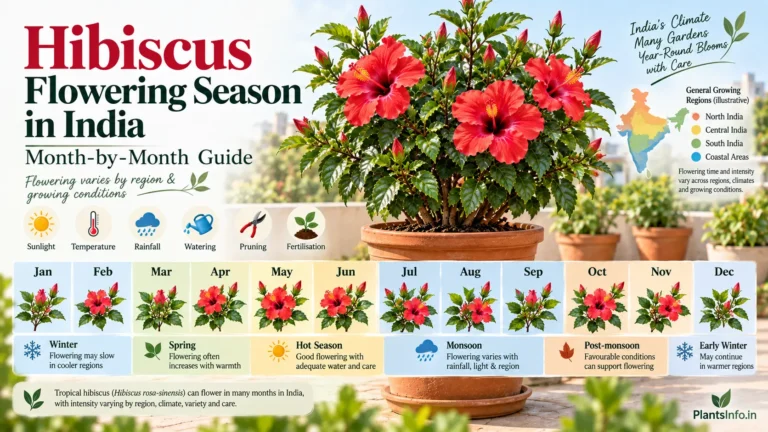
Botanical diagram of hibiscus flowering season in India with Jan–Dec guide and regional climate variations; scientific atlas illustration.

Quick Answer The commonly cultivated garden hibiscus, especially Hibiscus × rosa-sinensis, can flower through much of the year in warm Indian regions rather than having one fixed annual flowering season. Fruit formation is less consistent because it depends on successful…

Hibiscus Plant Uses: Traditional, Cultural & Practical

Botanical diagram of hibiscus showing traditional, cultural, practical and garden uses; scientific atlas illustration.

Quick Answer Hibiscus is valued in India primarily as an ornamental and culturally significant flowering plant, with additional traditional, culinary, and ecological uses that vary by species. The familiar garden hibiscus is different from food-associated species such as roselle, so…

How to Grow Hibiscus: India-Specific Care Guide

Botanical diagram of hibiscus in India showing sunlight, watering, pruning, soil and drainage care; scientific atlas illustration.

Quick Answer Hibiscus is generally straightforward to grow in Indian home gardens when it receives strong light, a well-drained root zone, and consistent moisture. The main goal is to keep the plant supplied without allowing the growing medium to remain…

Ashwagandha Benefits: Ayurveda & Research

Botanical infographic of Ashwagandha (Withania somnifera) showing Ayurvedic uses, root, withanolides, research and safety considerations.

Quick Answer Quick Answer: Ashwagandha (Withania somnifera) is primarily valued as an Ayurvedic medicinal herb, especially for traditional use of its root in preparations associated with general vitality and well-being. Modern research has examined its withanolides and several possible health…

Ashwagandha Seasonal Care Guide: India

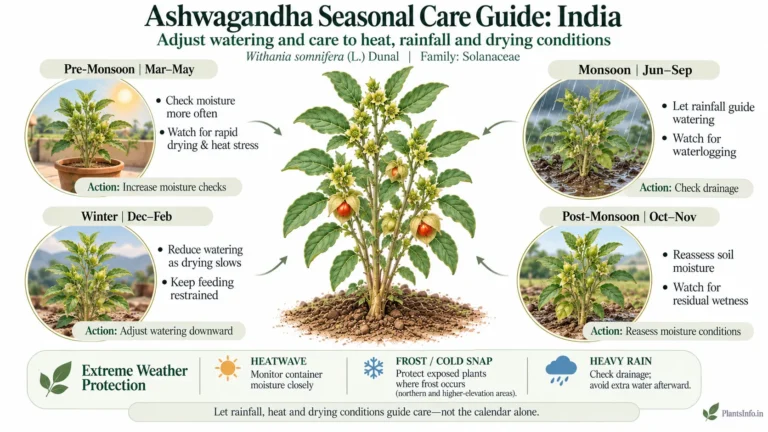
Ashwagandha seasonal care guide for India covering pre-monsoon, monsoon, post-monsoon and winter care.

Quick Answer Ashwagandha needs the closest seasonal attention during the Monsoon (Jun–Sep), when frequent rainfall can keep the root zone excessively wet. Across the year, adjust watering and feeding to actual moisture conditions rather than following one fixed routine. Ashwagandha…