Ashwagandha Benefits: Ayurveda & Research
Quick Answer
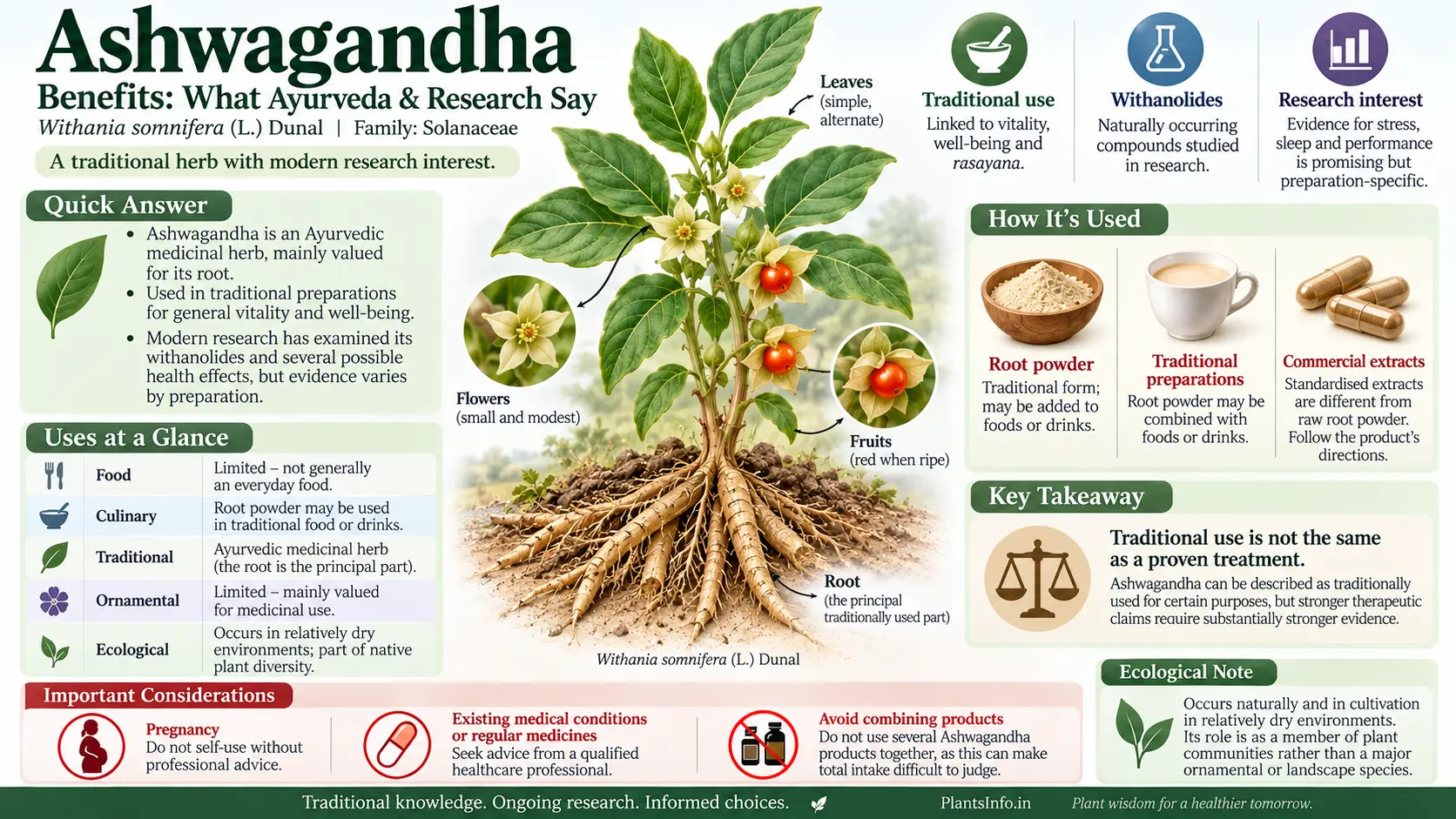
Quick Answer: Ashwagandha (Withania somnifera) is primarily valued as an Ayurvedic medicinal herb, especially for traditional use of its root in preparations associated with general vitality and well-being. Modern research has examined its withanolides and several possible health effects, but evidence differs by use and preparation.
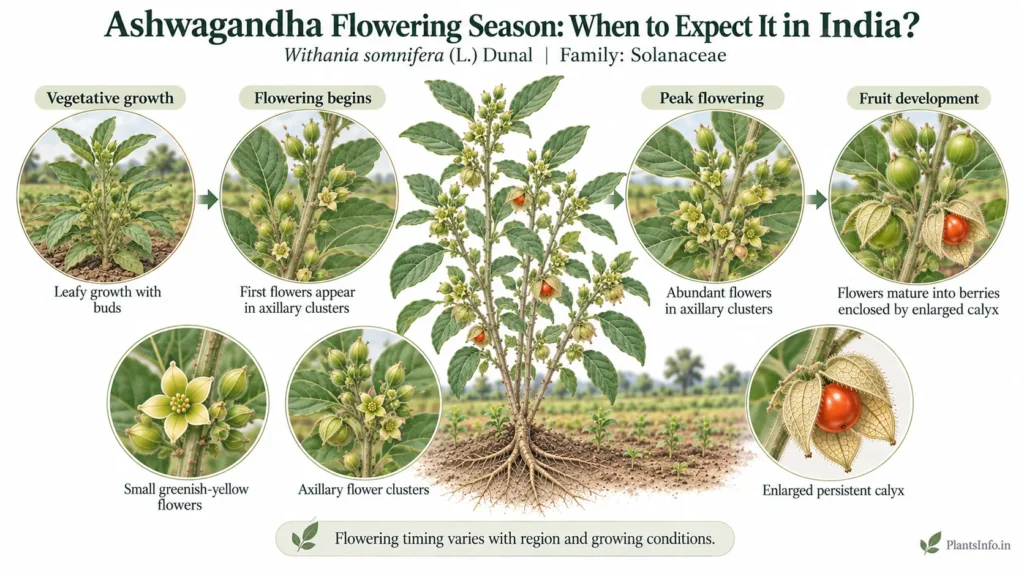
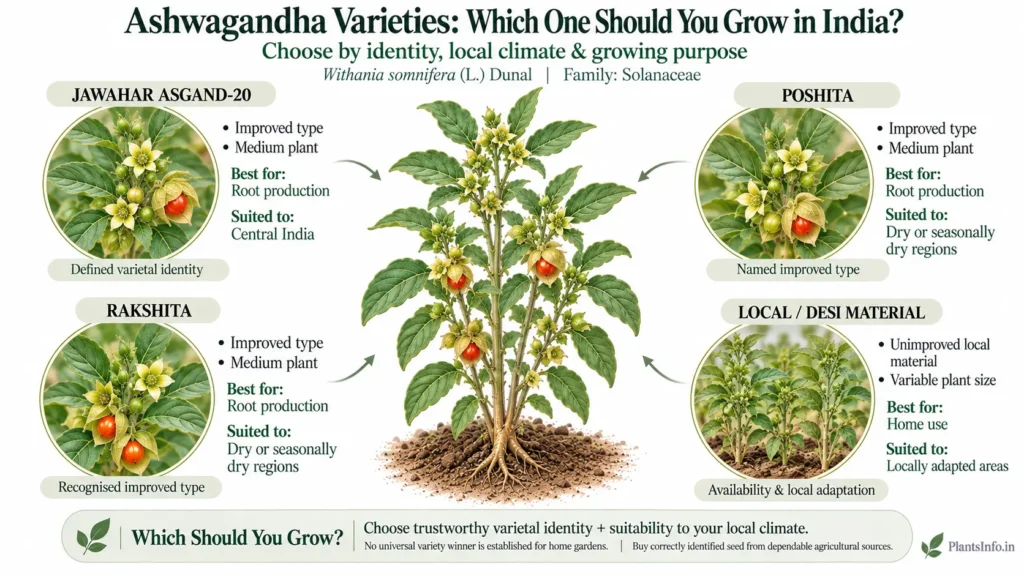
See also: Ashwagandha plant profile, how to grow it, common problems, seasonal care, and its flowering season.
Uses at a Glance
| Domain | Main use/role | Context |
|---|---|---|
| Food | Limited | Not generally treated as an everyday food |
| Culinary | Traditional preparations | Root powder may be incorporated into drinks or food preparations |
| Traditional | Ayurvedic medicinal herb | The root is the principal traditionally used part |
| Ornamental | Limited | Its value is mainly medicinal and traditional rather than ornamental |
| Ecological | Native plant diversity | Occurs naturally and in cultivation in relatively dry environments |
Why Ashwagandha Is Significant in Ayurveda
The roots of Ashwagandha have a much stronger traditional identity than its modest flowers and foliage might suggest. Traditional Ayurvedic practice records the root in preparations associated with rasayana, a broad category concerned with maintaining vitality and general well-being.
Recommended Products
Disclosure: As an Amazon Associate, PlantsInfo may earn from qualifying purchases.
🌱 Growing Essentials
The following products can help with container gardening, potting, root development, soil management, and healthy plant growth.
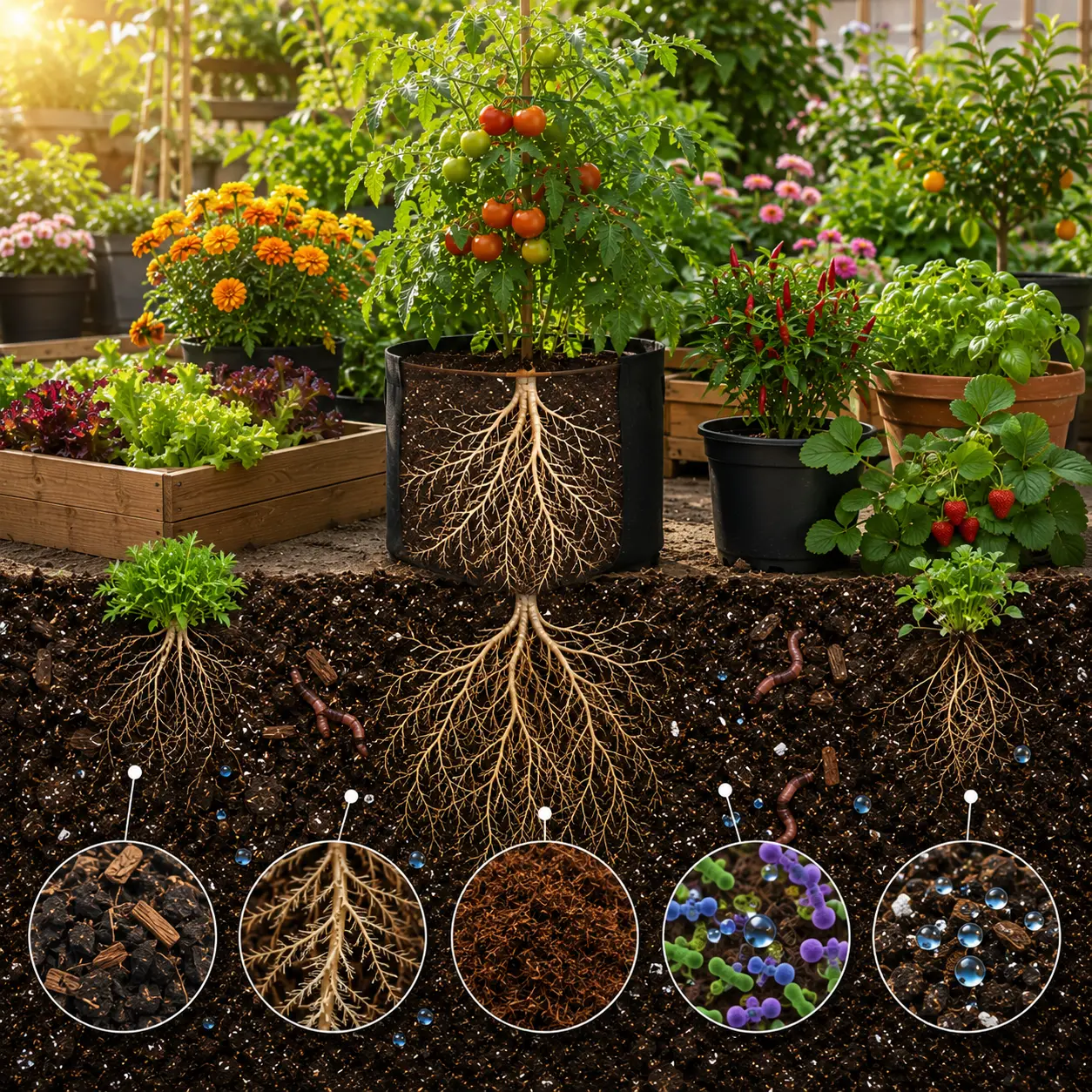
Organic Potting Soil Mix
Provides nutrients, structure, and healthy growing conditions for container plants.
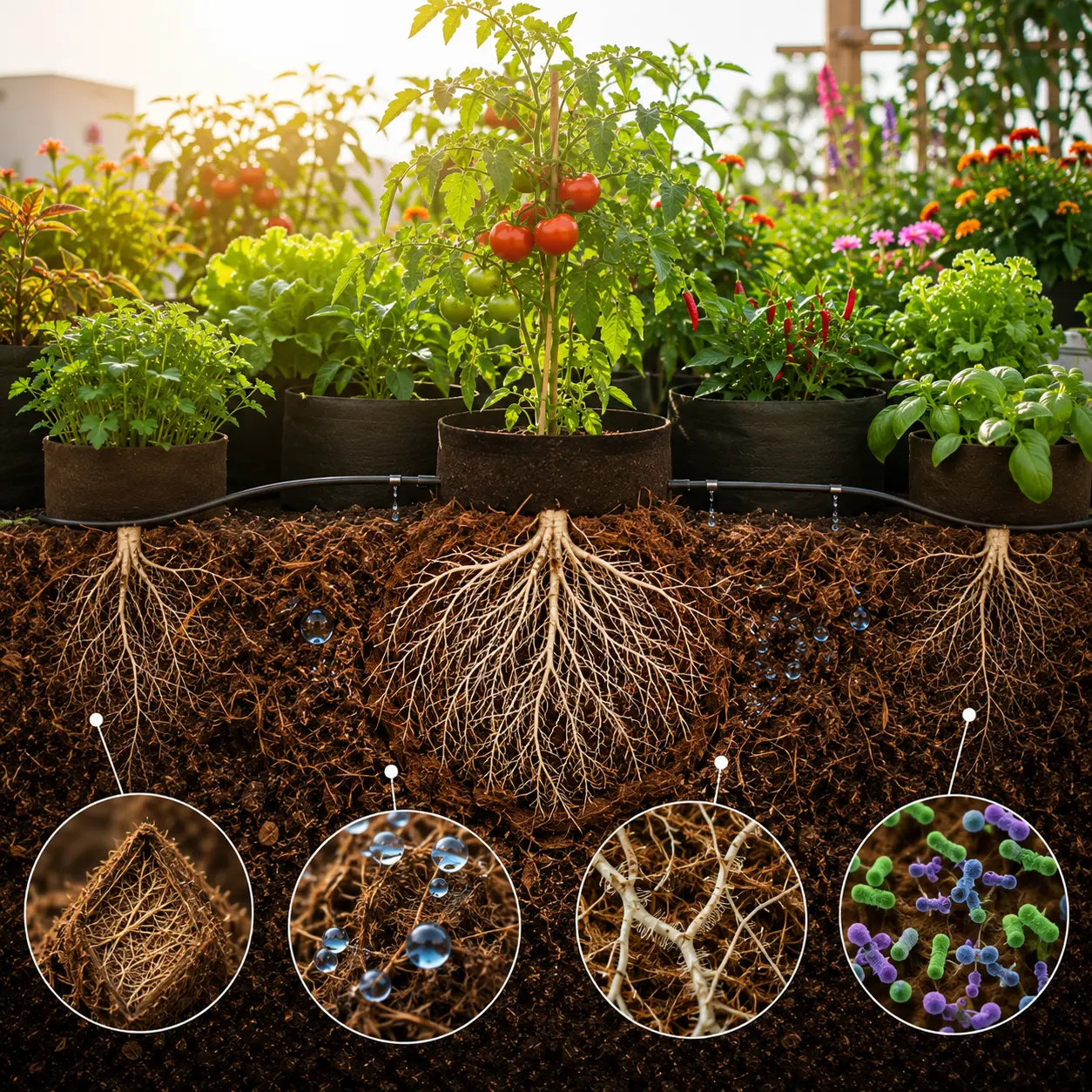
Coco Peat Growing Medium
Enhances moisture retention while maintaining excellent root-zone aeration.

Grow Bags for Plants
Improve drainage, root aeration, and vegetable production in limited spaces.

Plastic Pots for Plants
Ideal containers for seedlings, ornamentals, herbs, and balcony gardens.
Ashwagandha contains naturally occurring compounds called withanolides. These steroidal lactones are among the characteristic constituents investigated in research on Withania somnifera.
Modern research has examined standardised Ashwagandha preparations for areas including perceived stress, sleep and aspects of physical or mental performance. Some research findings are encouraging, but studies differ in extract composition, dose, duration and participants, so results from one preparation cannot automatically be applied to every Ashwagandha product.
The distinction between traditional use and demonstrated clinical benefit matters. Ashwagandha can be described as traditionally used for particular purposes, while stronger therapeutic wording requires substantially stronger evidence.
This information is based on traditional Ayurvedic knowledge and general research. It is not a substitute for medical advice. Consult a qualified healthcare professional before using any plant-based remedy for health conditions.
Ashwagandha Root and Traditional Preparations
The root is the part most strongly associated with traditional Ayurvedic use. It is commonly encountered as dried root powder or as an ingredient in formulated preparations.
Traditional preparations may combine the powdered root with foods or drinks. Commercial extracts are different from ordinary dried root because extraction can concentrate particular constituents.
That distinction is important when interpreting information about dosage or research. A quantity used in a study of a standardised extract should not automatically be treated as equivalent to the same quantity of raw root powder.
Research Interest in Withanolides
Withanolides have attracted scientific interest because they are biologically active constituents of Withania somnifera. Laboratory and human research has investigated Ashwagandha preparations in several areas of health.
Research on stress-related outcomes is among the more widely studied areas, with some trials reporting improvements in measures such as perceived stress. Research has also examined sleep-related outcomes, although the evidence is not sufficient to present Ashwagandha as a universal treatment for sleep problems.
The evidence is preparation-specific. Differences in extract standardisation, constituent concentrations, and study design make broad claims about “Ashwagandha” less reliable than claims referring to a particular researched preparation.
Traditional Use Is Not the Same as a Proven Treatment
Ashwagandha’s long history in Ayurveda documents traditional use, not automatic proof of modern medical efficacy.
Preliminary or moderate research findings can justify further investigation, but they should not be converted into claims that the herb cures or prevents diseases. Evidence remains limited for many of the broader health claims commonly made about Ashwagandha.
Ecological Role
Ashwagandha contributes to plant diversity in the relatively dry habitats where the species occurs. Its ecological role is primarily that of a member of these plant communities rather than a major shade, erosion-control or landscape-support species.
Detailed evidence about specific insects, birds, or other organisms that depend on Ashwagandha is limited. It is therefore better not to assign it a specialised wildlife-support role without stronger species-specific evidence.
Practical Value for Home Gardeners
For a home gardener, Ashwagandha offers an opportunity to grow a species with a distinctive place in Indian traditional plant knowledge. Its value is less about ornamental display and more about understanding a medicinal plant whose traditionally valued material is the root.
Home cultivation can also provide a useful distinction between the whole plant and commercial preparations: a garden-grown plant does not automatically have the same constituent concentration or standardisation as a manufactured extract.
How to Prepare or Use at Home
Root Powder
Dried root powder is a traditional form of use. There is no single evidence-based household quantity that can safely be applied to every person or every product, so a universal dosage is not appropriate.
Traditional Food or Drink Preparations
Root powder may traditionally be incorporated into a food or drink preparation. The amount used should follow the directions appropriate to the specific product rather than being increased simply because the material is plant-based.
Commercial Extracts
Standardised extracts should be treated separately from raw root powder. Follow the product’s stated directions and avoid assuming that different extracts are interchangeable.
One thing to avoid is combining several Ashwagandha products in an attempt to increase the effect. This can make total intake difficult to judge.
What to Avoid
Pregnancy is a situation in which Ashwagandha should not be self-used without appropriate professional advice because safety has not been adequately established.
People with existing medical conditions or those taking regular medicines should seek advice from a qualified healthcare professional before using concentrated Ashwagandha preparations. Safety information for particular combinations can depend on the person’s health status and the product used.
Ashwagandha should also not be treated as a replacement for prescribed treatment. Traditional use and preliminary research do not establish that it can cure, prevent, or substitute for treatment of a diagnosed disease.
Conclusion
Ashwagandha remains significant because its established Ayurvedic tradition now sits alongside modern research that is actively testing, rather than simply assuming, its possible health effects.