How to Grow Ashwagandha: India-Based Guide
Quick Answer
Ashwagandha (Withania somnifera) can be grown at home and is moderate in difficulty. It performs best in strong sunlight, well-drained soil and controlled watering, with planting timed to provide suitable moisture for establishment without leaving the roots in prolonged wet conditions.
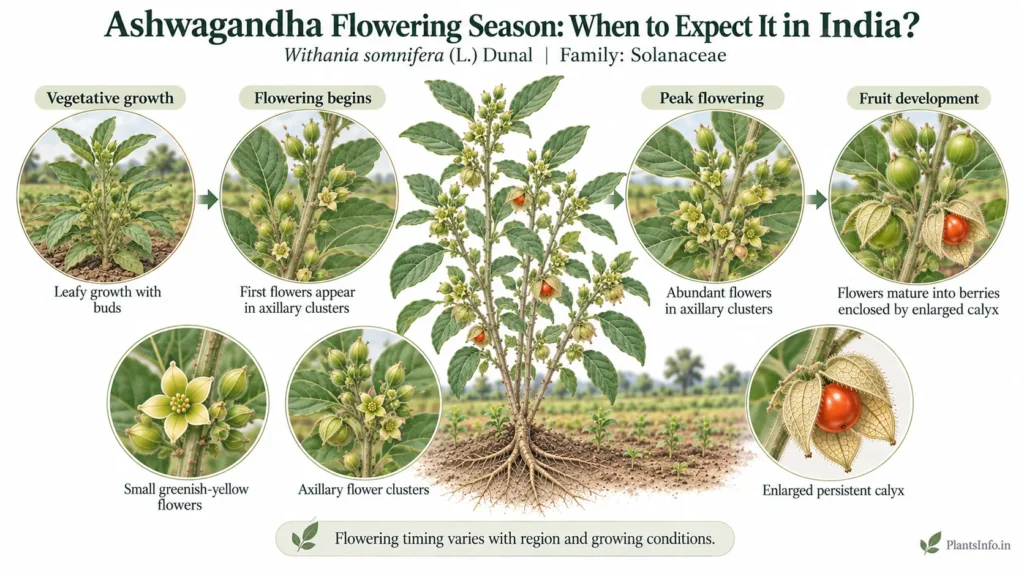
See also: Ashwagandha plant profile, common problems, seasonal care, its flowering season, and its benefits.
The pale, branching stems and small green leaves can look modest above ground, while the roots develop below the soil. For beginners, the main challenge is resisting the urge to keep the planting medium constantly wet.
Recommended Products
Disclosure: As an Amazon Associate, PlantsInfo may earn from qualifying purchases.
🌱 Growing Essentials
The following products can help with container gardening, potting, root development, soil management, and healthy plant growth.

Organic Potting Soil Mix
Provides nutrients, structure, and healthy growing conditions for container plants.

Coco Peat Growing Medium
Enhances moisture retention while maintaining excellent root-zone aeration.

Grow Bags for Plants
Improve drainage, root aeration, and vegetable production in limited spaces.

Plastic Pots for Plants
Ideal containers for seedlings, ornamentals, herbs, and balcony gardens.
Quick Facts
| Factor | Details |
|---|---|
| Common names | Ashwagandha, Indian ginseng, winter cherry, Asgandh |
| Scientific name | Withania somnifera |
| Plant type | Short-lived herbaceous shrub |
| Mature size | Typically about 30–150 cm |
| Sunlight | Full sun |
| Water needs | Low to moderate |
| Best planting season | Monsoon, generally June–July |
| Suitable areas | Dry or seasonally dry parts of India |
Quick Growing Requirements
| Factor | Quick requirement |
|---|---|
| Difficulty | Moderate |
| Climate | Warm, relatively dry conditions |
| Light | Full sun |
| Water | Moderate during establishment, then restrained |
| Soil | Well-drained, light soil |
| Drainage | Excellent |
| Container suitability | Suitable in a deep, wide container |
| Frost tolerance | Low |
Choosing the Right Spot
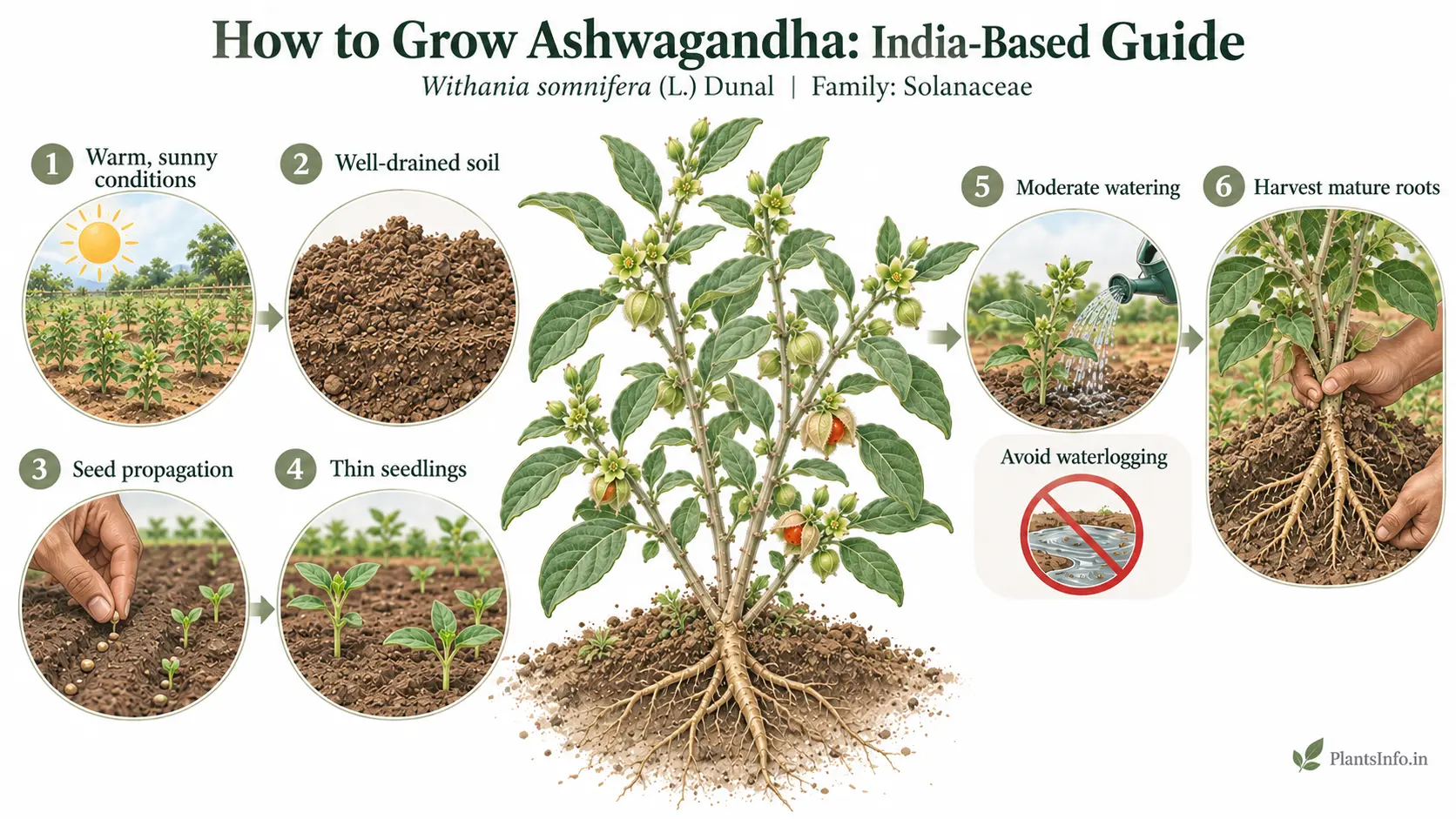
Give Ashwagandha the brightest practical outdoor position available, preferably one receiving several hours of direct sunlight each day. A sunny terrace, balcony, or open garden is generally more suitable than a shaded indoor position.
Ground planting is useful where the soil drains freely, and there is enough space for the root system. Containers are practical when garden soil stays wet, or garden space is limited.
In humid or high-rainfall areas, drainage can become the deciding factor. A location where rainwater regularly collects is a poor choice for this relatively dry-growing plant.
Soil and Potting Mix
Use a loose, well-drained sandy loam or similarly light soil. Ashwagandha generally suits soils that are not strongly acidic and can perform well in mildly alkaline conditions.
If the garden soil is heavy, improve its physical structure before planting rather than relying on frequent watering adjustments later. Avoid low-lying positions where rainwater remains around the roots.
For containers, the growing medium should remain open enough for excess water to escape. Dense garden clay is particularly unsuitable when used alone in a pot.
Planting — Season and Method
Monsoon is a common planting period for Ashwagandha in Indian cultivation, with sowing often carried out around June–July where local conditions are suitable. The practical window should follow the arrival of dependable moisture rather than an identical date in every region.
Seed is the straightforward choice for home growers. Sow shallowly, keep the seedbed appropriately moist during establishment, and avoid allowing young seedlings to remain crowded.
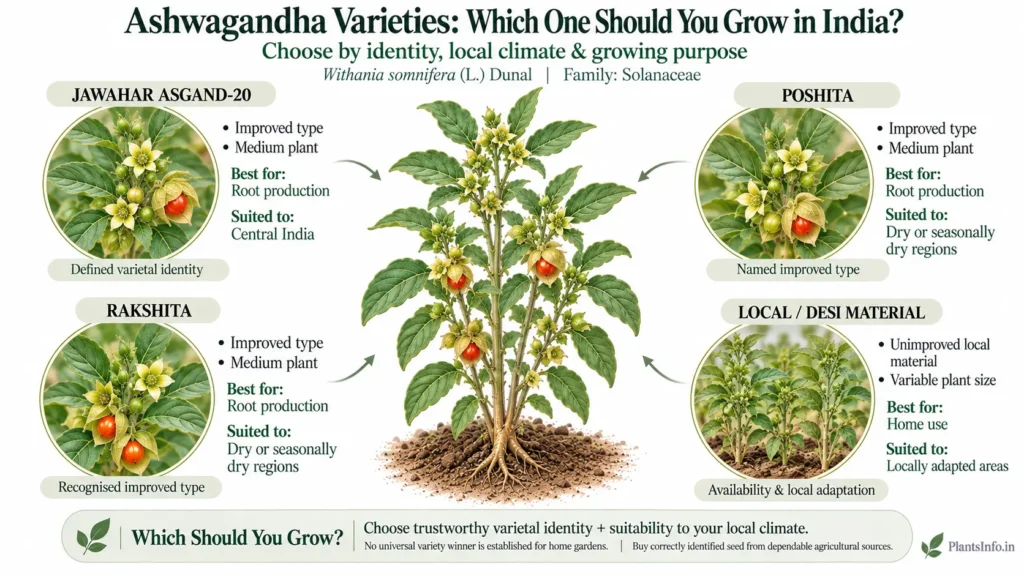
Where plants are being grown primarily for their roots, give individual plants adequate space rather than packing many into a small area.
Watering
During establishment, water when the upper growing medium begins to dry rather than following a rigid daily schedule. Young plants need more consistent moisture than established plants, but the root zone should still drain freely.
Once established, Ashwagandha generally needs less irrigation than many moisture-loving garden herbs. Allowing the growing medium to dry moderately between waterings is preferable to repeated shallow watering.
If the soil remains wet for several days after watering or rainfall, do not add more water simply because the normal schedule says it is due. During heavy Monsoon rainfall, supplemental watering may need to be reduced or stopped.
Fertiliser
Ashwagandha does not require an aggressive feeding programme. Start with a reasonably fertile growing medium and use supplementary organic matter or feeding conservatively rather than repeatedly pushing leafy growth.
Well-decomposed compost or vermicompost can be used as an organic amendment where appropriate. Neem cake may also be used as a soil amendment in modest quantities.
Avoid strong or repeated fertiliser applications when the plant is already growing satisfactorily. More feeding is not a substitute for suitable sunlight, soil and drainage.
Common Problems
| Problem | What to notice |
|---|---|
| Waterlogging | Soil stays saturated for prolonged periods |
| Poor establishment | Seedlings remain sparse or uneven |
| Weak growth | Plant receives inadequate direct light |
These are growing-condition problems rather than a diagnosis guide; detailed disease and pest identification belongs in the Problems, Diseases and Fixes spoke.
When Will You See Results?
Ashwagandha is grown as a relatively short-duration crop, with harvesting generally taking several months under suitable conditions.
For a home gardener, visible top growth should not be treated as the only measure of progress because the principal harvested portion develops underground. Give the plant sufficient time to reach its intended maturity rather than harvesting simply because the foliage looks established.
Common Mistakes
Keeping the Soil Wet
Gardeners accustomed to moisture-loving herbs may water Ashwagandha too frequently. The plant is better suited to controlled moisture and free drainage than to continuously saturated soil.
Choosing a Shaded Position
A bright-looking room can provide much less direct light than an outdoor position. Insufficient sunlight can result in weaker, less robust growth.
Using a Shallow Container
A shallow pot provides limited room for the root system. If growing in a container, choose one with sufficient depth and width for the plant to develop.
Feeding Too Heavily
Frequent strong fertilisation is unnecessary when the growing medium is already reasonably fertile. Excess feeding can encourage unwanted leafy growth without solving problems caused by poor light or unsuitable drainage.
Container Growing
Choose a deep, stable container with adequate drainage holes. The exact container size should reflect the number of plants being grown and the amount of root space available.
Use a loose potting medium rather than compact garden clay. A container should also be positioned so that excess water can escape rather than collecting underneath it.
If roots are the intended harvest, avoid overcrowding several plants into a small container. Adequate soil volume is more useful than simply increasing the number of plants.
Harvesting
Harvest the roots when the crop has reached its intended maturity rather than removing them prematurely for a small amount of root material.
Lift mature plants carefully, remove excess soil, and handle the roots without unnecessary damage. After cleaning, roots intended for storage should be dried thoroughly in a clean, protected place.
Conclusion
Ashwagandha is manageable for home gardeners when its basic requirements are respected: strong sunlight, free-draining soil, adequate root space, and restrained watering.