Ashwagandha Varieties: Which One Should You Grow?
Quick Answer
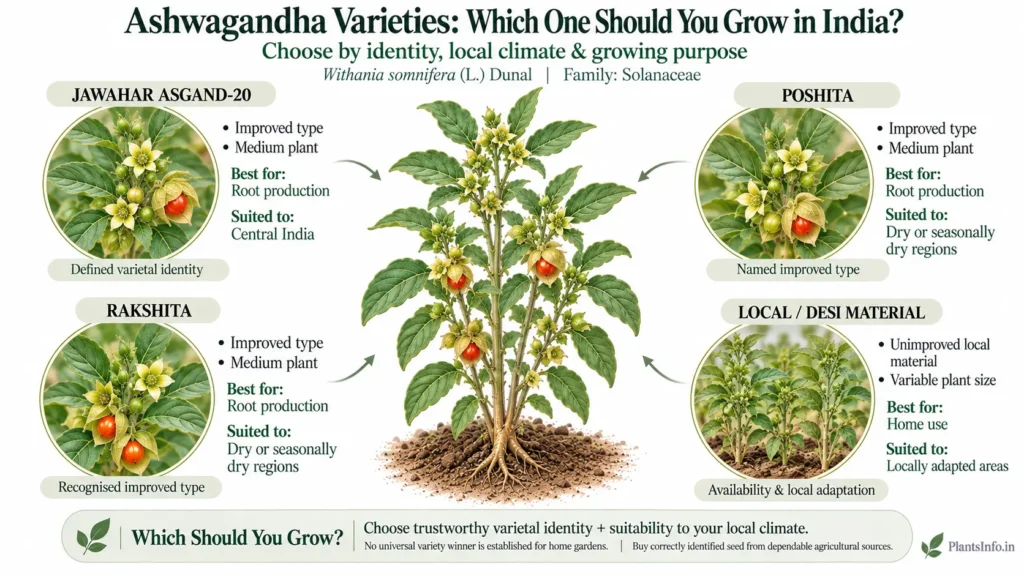
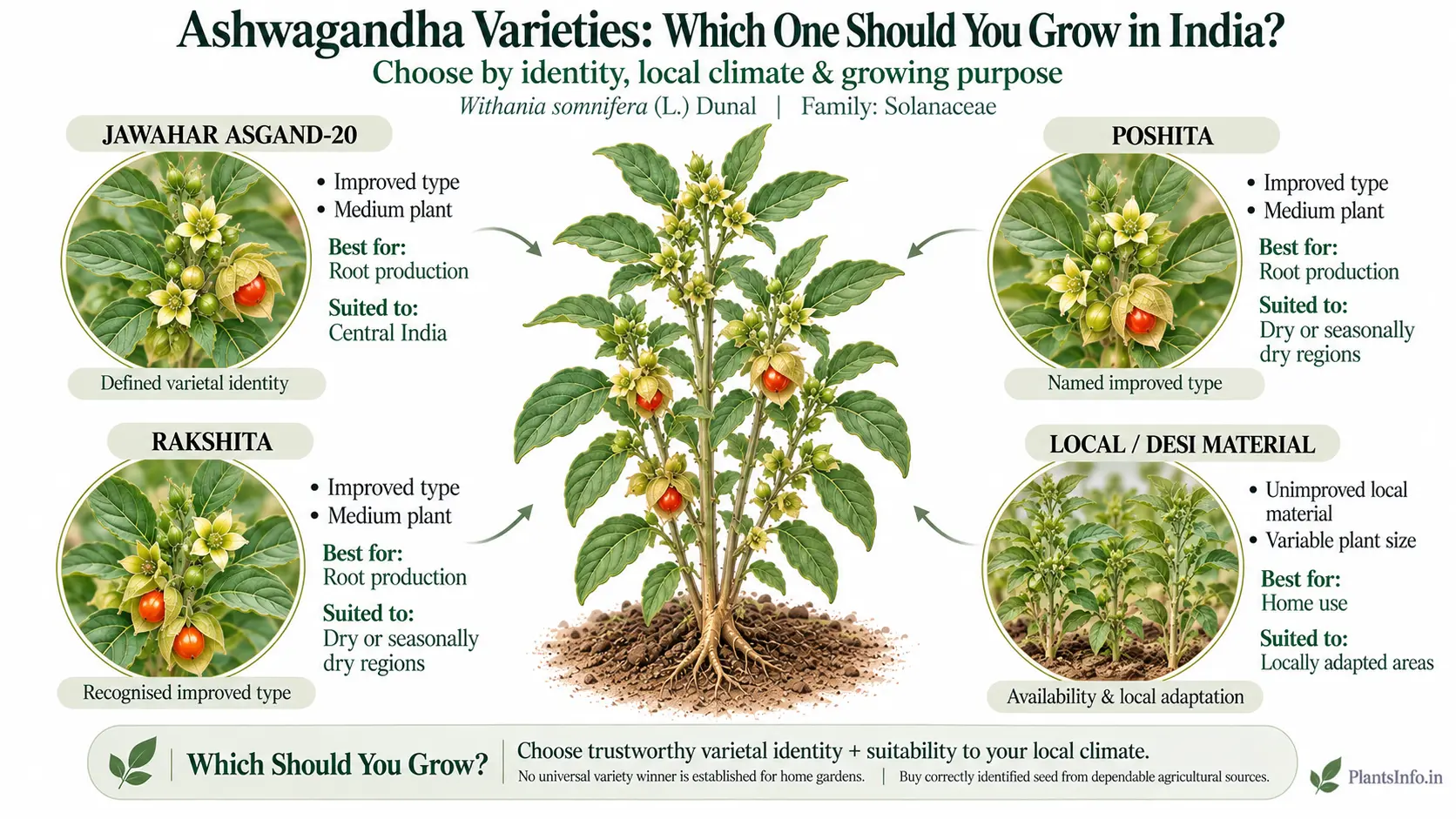
For an Indian home gardener, reliable varietal identity and suitability to the local climate are the most useful selection factors. Jawahar Asgand-20, Poshita and Rakshita are recognised improved types, while correctly identified local material can be a practical choice when named seed is unavailable.
See also: Ashwagandha plant profile, how to grow it, common problems, seasonal care, and its flowering season.
Ashwagandha has far fewer clearly differentiated choices for home gardeners than crops such as tomato or chilli. That makes choosing identifiable planting material more important than collecting a long list of variety names.
Recommended Products
Disclosure: As an Amazon Associate, PlantsInfo may earn from qualifying purchases.
🌱 Growing Essentials
The following products can help with container gardening, potting, root development, soil management, and healthy plant growth.
Organic Potting Soil Mix
Provides nutrients, structure, and healthy growing conditions for container plants.
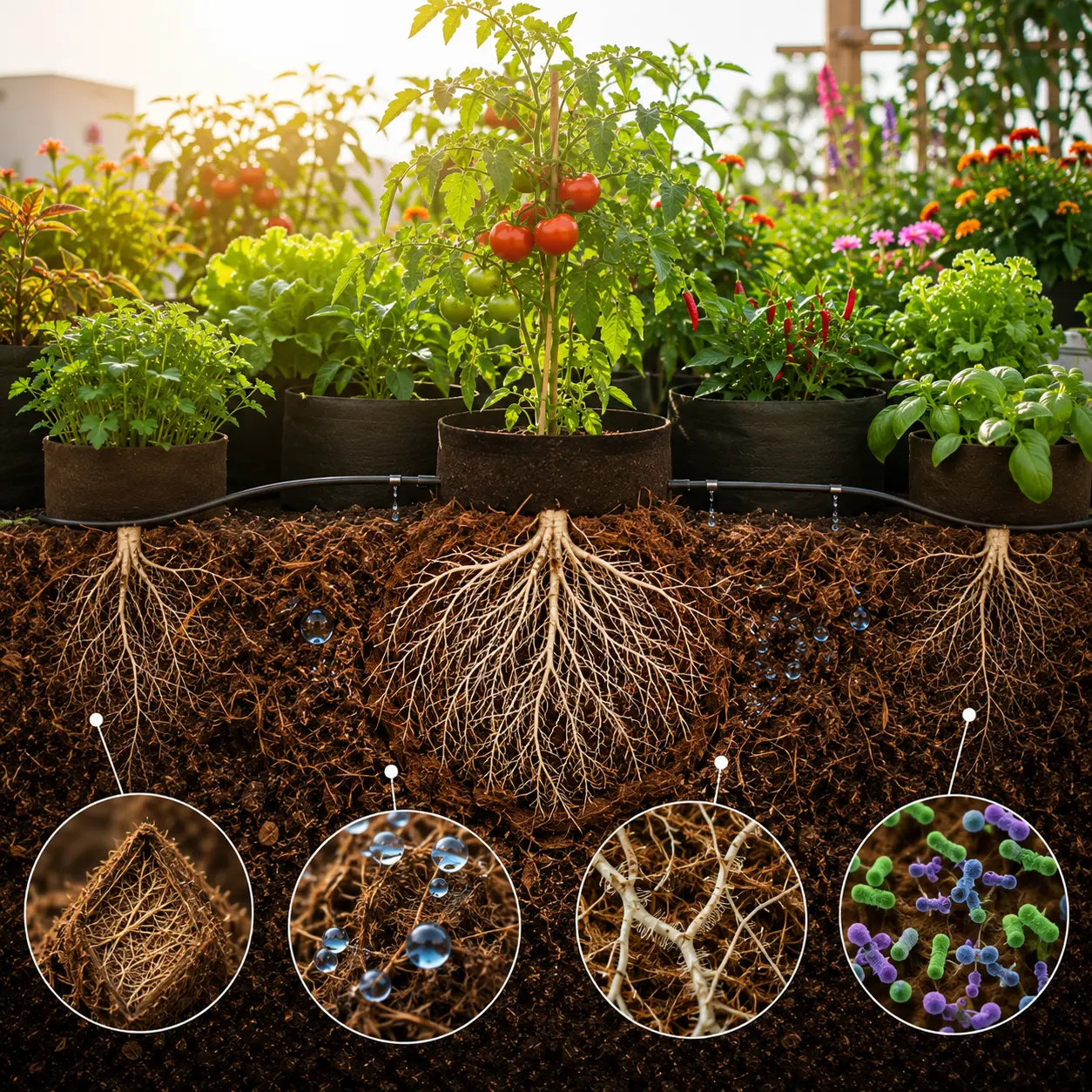
Coco Peat Growing Medium
Enhances moisture retention while maintaining excellent root-zone aeration.

Grow Bags for Plants
Improve drainage, root aeration, and vegetable production in limited spaces.

Plastic Pots for Plants
Ideal containers for seedlings, ornamentals, herbs, and balcony gardens.
Quick Variety Selector
| Variety | Type | Plant Size | Best For | Suited To |
|---|---|---|---|---|
| Jawahar Asgand-20 | Improved | Medium | Root production | Central India |
| Poshita | Improved | Medium | Root production | Dry, suitable regions |
| Rakshita | Improved | Medium | Root production | Dry, suitable regions |
| Local/desi material | Unimproved local | Variable | Home use | Locally adapted areas |
Varieties in Detail
Jawahar Asgand-20
Jawahar Asgand-20 is a recognised improved Ashwagandha selection associated with Indian agricultural cultivation. It is primarily relevant to growers interested in root production rather than ornamental use.
Its principal advantage is having a defined varietal identity, which is useful when uniform planting material matters. The main limitation for a home gardener is that genuine named seed may be less readily available than seed sold simply as Ashwagandha.
For gardeners in central Indian areas where Ashwagandha is established as a crop, it is a reasonable named selection when obtained from a dependable agricultural source.
Poshita
Poshita is a recognised improved Ashwagandha type used for cultivation and root production. It is associated with the relatively dry conditions favoured by commercial Ashwagandha production.
Its advantage is the availability of a named improved type rather than completely unidentified local material. Its limitation is that variety-specific information encountered through ordinary retail channels may be inconsistent.
It is most relevant to gardeners in dry or seasonally dry Indian regions who can obtain correctly identified seed.
Rakshita
Rakshita is another recognised improved Ashwagandha type used in Indian cultivation. Its importance is agricultural, with the variety name providing a defined identity rather than a guarantee of superior home-garden performance.
Its advantage is the option of using recognised improved planting material. Its weakness for small gardens is that dependable variety-specific differences in container performance are not sufficiently established to make it an automatic choice over other named types.
It can be considered in dry or seasonally dry regions when authentic, correctly labelled seed is available.
Local or Desi Material
Local Ashwagandha material is not a single uniform variety. Plants can differ according to their source, including characteristics such as growth habit and root development.
Its strongest practical advantage is availability and possible adaptation to local conditions. Its weakness is that the material may lack the uniformity and defined identity associated with an improved selection.
For a home gardener whose priority is simply obtaining correctly identified Ashwagandha rather than maintaining a particular variety, trustworthy local material can be a sensible option.
Head-to-Head Comparison
Jawahar Ashwagandha-20 vs Local Material
Jawahar Asgand-20 wins when defined improved planting material is the priority; local material wins when dependable local availability is the priority. A named selection provides clearer varietal identity, while local material may be easier to obtain in areas where Ashwagandha is traditionally cultivated. Neither should be assumed to produce superior results solely because it carries a particular name.
Poshita vs Rakshita
There is no evidence-supported universal winner between Poshita and Rakshita for a home garden. Both are recognised improved types, but reliable comparisons covering taste, container performance and growth speed are limited. For most home gardeners, correctly identified seed from a dependable source is a more defensible selection criterion than claiming one of these varieties is categorically better.
How to Choose for Your Space
Container or Terrace Garden
Choose correctly identified material that is available from a dependable source. A universal container winner among Jawahar Asgand-20, Poshita, and Rakshita cannot be established from reliable variety-specific information.
Small Ground Plot Under 100 sq ft
Choose Jawahar Asgand-20 if genuine named seed is readily available and suited to the local climate. Otherwise, correctly identified local material is preferable to seed that is sold under an unsupported variety name.
Larger Garden or Backyard
Choose a recognised improved type when uniform planting material is important. Jawahar Asgand-20, Poshita, and Rakshita can all be considered where authentic material is available and appropriate to the local conditions.
Regional Suitability
North India: Dry and seasonally dry areas can support Ashwagandha, but a universal variety winner cannot be established for the region.
Central India: This is an important production region for Ashwagandha, so recognised improved selections are particularly relevant where authentic seed is available.
South India: Suitable dry areas can grow Ashwagandha, with selection best based on locally appropriate and correctly identified planting material.
Coastal humid regions: Do not choose a named variety on reputation alone; persistent humidity can be a more important limitation than the differences among commonly available selections.
Hill and high-altitude areas: A general variety recommendation is not justified without location-specific performance information.
Where to Source These Varieties in India
For named varieties, look first to state agricultural departments, agricultural universities, Krishi Vigyan Kendra (KVK) channels, and established certified seed sources.
When buying, verify the variety name and seed-lot information where supplied. Seed labelled only “Ashwagandha” should not automatically be treated as Jawahar Asgand-20, Poshita or Rakshita.
Conclusion
For Ashwagandha, trustworthy varietal identity combined with local climate suitability is a better basis for choosing planting material than the variety name alone.