How to Grow Hibiscus: India-Specific Care Guide
Quick Answer
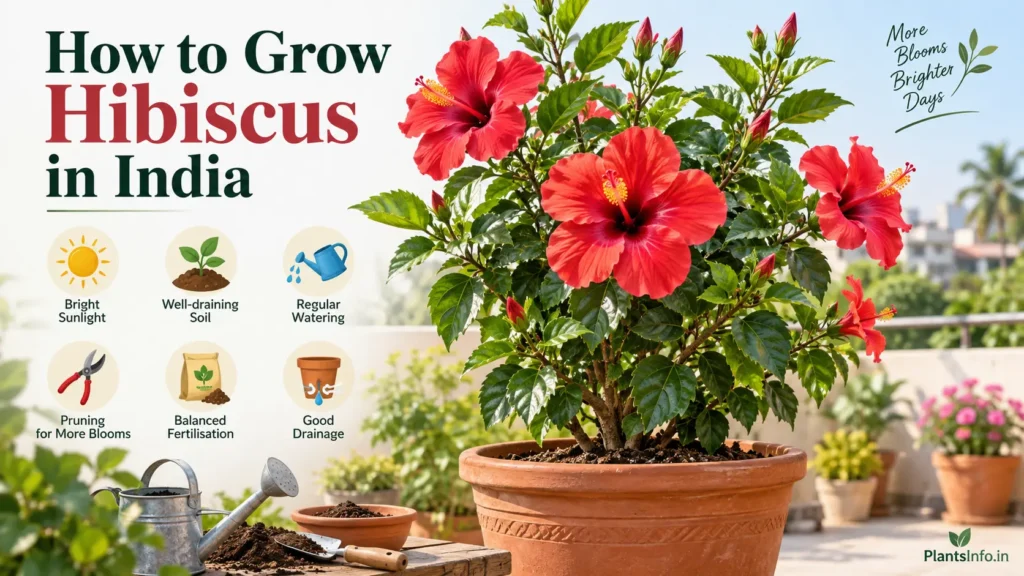
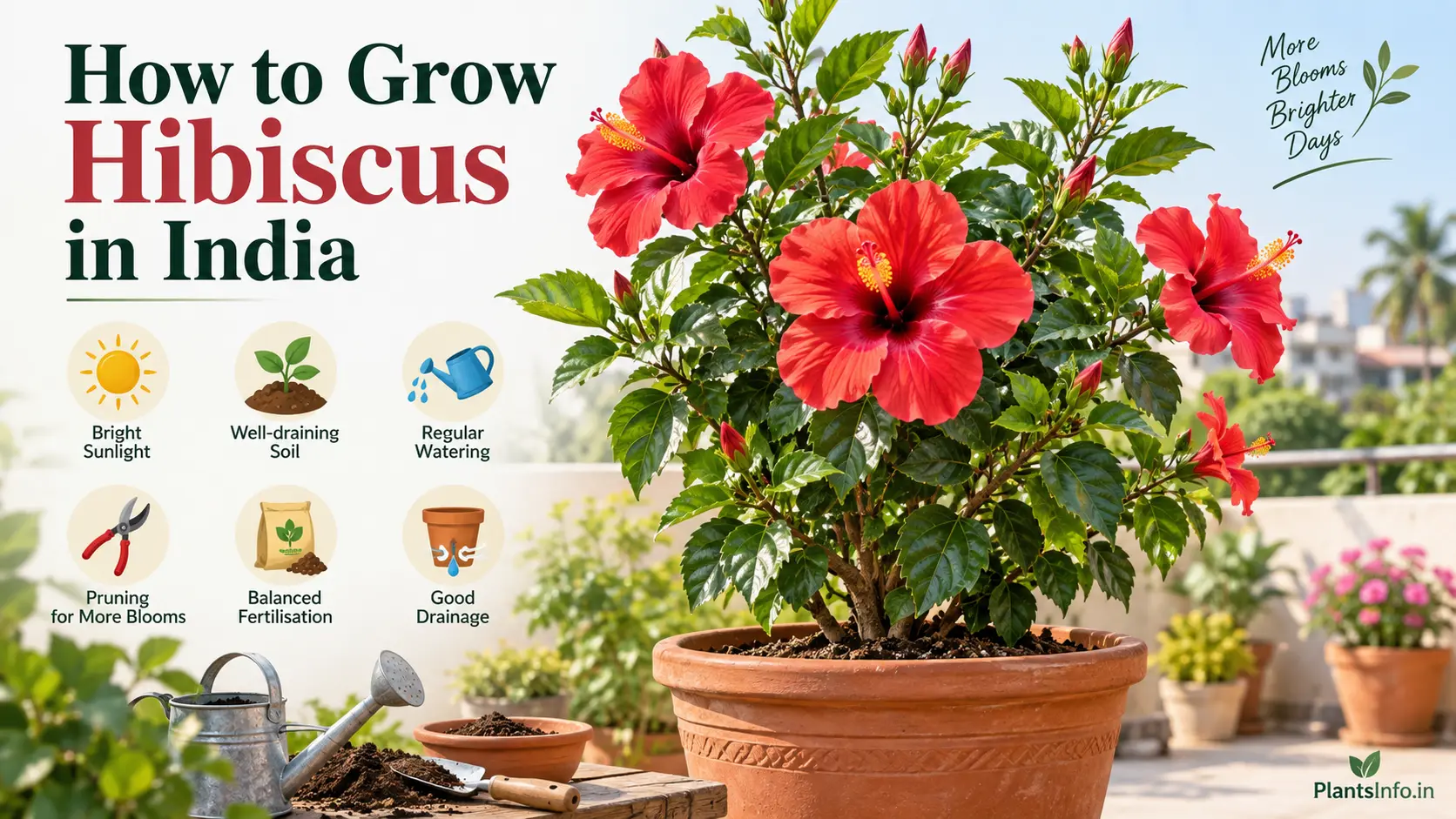
Hibiscus is generally straightforward to grow in Indian home gardens when it receives strong light, a well-drained root zone, and consistent moisture. The main goal is to keep the plant supplied without allowing the growing medium to remain persistently saturated.
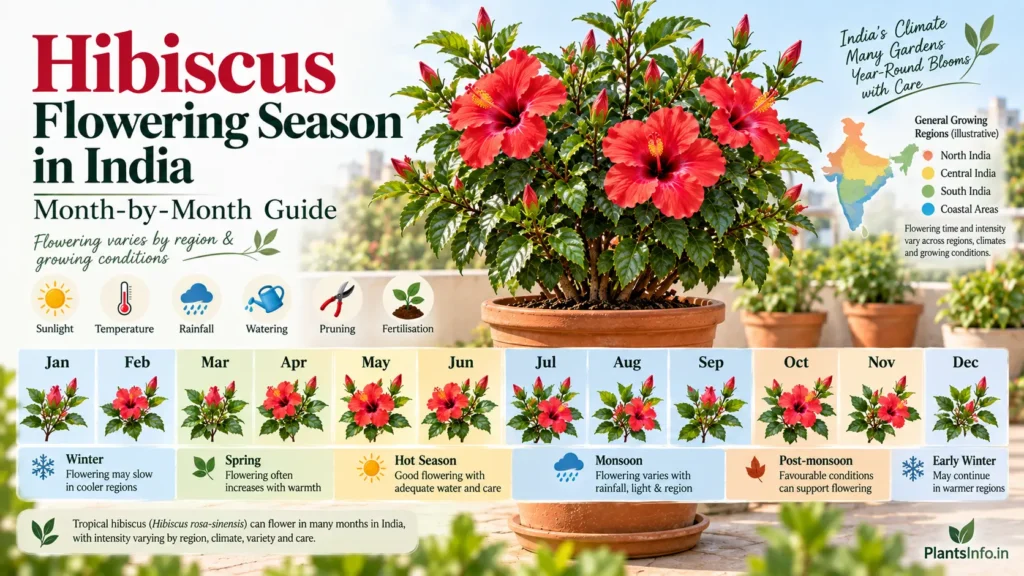
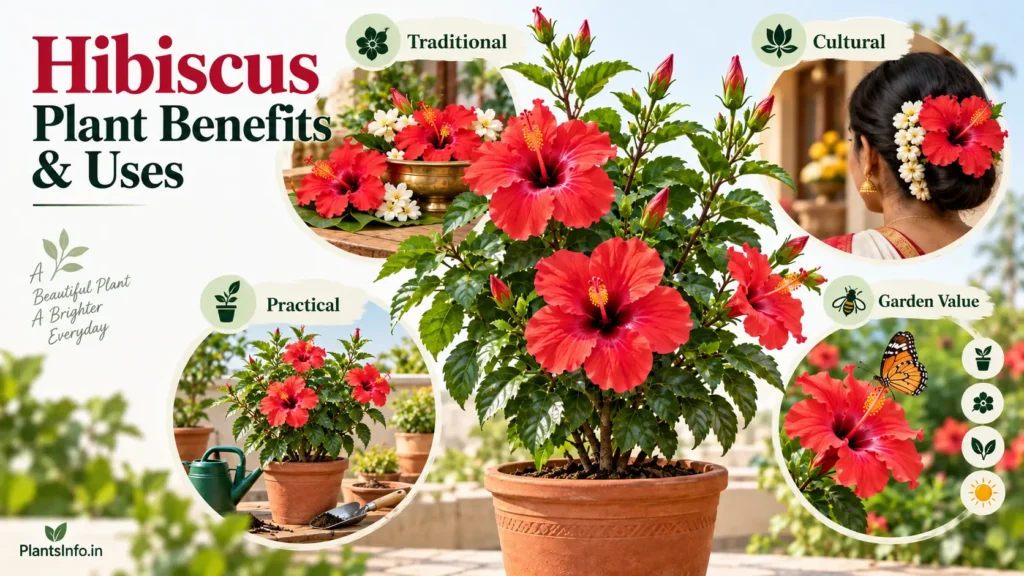
See also: Hibiscus Plant plant profile, common problems, seasonal care, its flowering season, and its benefits.
The brightly coloured flowers can make hibiscus seem demanding, but its routine care is relatively simple. Good light, appropriate drainage, and measured feeding provide the foundation for healthy growth.
Recommended Products
Disclosure: As an Amazon Associate, PlantsInfo may earn from qualifying purchases.
🌱 Growing Essentials
The following products can help with container gardening, potting, root development, soil management, and healthy plant growth.

Organic Potting Soil Mix
Provides nutrients, structure, and healthy growing conditions for container plants.

Coco Peat Growing Medium
Enhances moisture retention while maintaining excellent root-zone aeration.

Grow Bags for Plants
Improve drainage, root aeration, and vegetable production in limited spaces.

Plastic Pots for Plants
Ideal containers for seedlings, ornamentals, herbs, and balcony gardens.
Quick Facts
| Field | Information |
|---|---|
| Common names | Hibiscus, China rose, shoe flower |
| Scientific name | Hibiscus L. |
| Varieties | Common garden forms include single-flowered and double-flowered hibiscus |
| Plant type | Woody flowering shrub |
| Mature size | Common garden plants may reach about 1–3 m, depending on cultivar and conditions |
| Sunlight | Full sun to bright light |
| Water needs | Moderate; maintain moisture without prolonged saturation |
| Best season to plant | Monsoon; early Post-monsoon can also be suitable where conditions remain favourable |
| Climate | Tropical to subtropical conditions are generally suitable for common garden hibiscus |
| Container suitability | Very good |
| Frost tolerance | Low |
Quick Growing Requirements
| Factor | Quick requirement |
|---|---|
| Difficulty | Easy |
| Climate | Tropical to subtropical conditions |
| Light | Several hours of direct sunlight are useful for strong growth and flowering |
| Water | Regular watering; avoid a persistently soggy root zone |
| Soil | Fertile, loose, well-drained soil |
| Soil pH | A mildly acidic to neutral range is suitable |
| Drainage | Essential |
| Container suitability | Very good |
| Frost tolerance | Low |
| Drought tolerance | Moderate once established, but prolonged dryness can affect flowering |
Choosing the Right Spot
Choose a bright outdoor position receiving several hours of direct sunlight. In humid coastal and tropical areas, leaving adequate space around the plant also helps maintain good air movement.
Ground planting works well where the site drains freely, and enough room is available for the mature plant. Containers are useful for balconies, terraces, rented homes, and situations where the plant may need to be moved away from cold exposure.
Avoid placing a container permanently behind a shaded balcony railing or beneath dense overhead foliage. A hibiscus may continue producing leaves under inadequate light while flowering becomes less satisfactory.
Soil and Potting Mix
Hibiscus performs well in fertile soil that drains readily while retaining some moisture. A mildly acidic to neutral growing medium is suitable.
If garden soil is heavy, improve its structure with mature organic matter and an appropriate porous material rather than relying on dense soil alone. Avoid planting where irrigation or rainfall regularly collects around the stem.
For containers, use a loose, well-drained potting mix rather than compact field soil alone. Drainage holes should remain unobstructed.
Planting — Season and Method
Monsoon is a practical planting period in much of India, while early Post-monsoon can also be suitable where heavy rainfall has passed, and conditions remain favourable.
For a home gardener, a healthy nursery sapling is generally more predictable than raising a garden hibiscus from seed.
Plant at approximately the same depth as the nursery root ball. In the ground, leave enough room for the plant to develop its mature canopy rather than crowding several shrubs together.
Water thoroughly after planting so the soil settles around the roots. During establishment, maintain consistent moisture without allowing standing water to remain around the base.
Watering
During the first several weeks after planting, check the growing medium regularly and water when it begins to dry. Newly planted hibiscus should not be allowed to repeatedly wilt while its roots are establishing.
Once established, watering frequency depends on rainfall, temperature, soil, container size, and exposure. The objective is consistent moisture rather than a permanently wet root zone.
If soil remains wet for several days while the plant appears limp, reassess drainage and moisture before adding more water.
During the Monsoon, reduce supplemental watering whenever rainfall is already maintaining adequate moisture.
Fertiliser
Hibiscus benefits from a regular nutrient supply during active growth. Mature compost or vermicompost can provide an organic source of nutrients.
If using a manufactured fertiliser, follow its label rather than assuming that more fertiliser will produce more flowers. Excessive nitrogen can encourage leafy growth at the expense of the flowering performance gardeners want.
Avoid repeatedly applying concentrated fertiliser. Measured feeding is preferable to trying to accelerate growth through heavy applications.
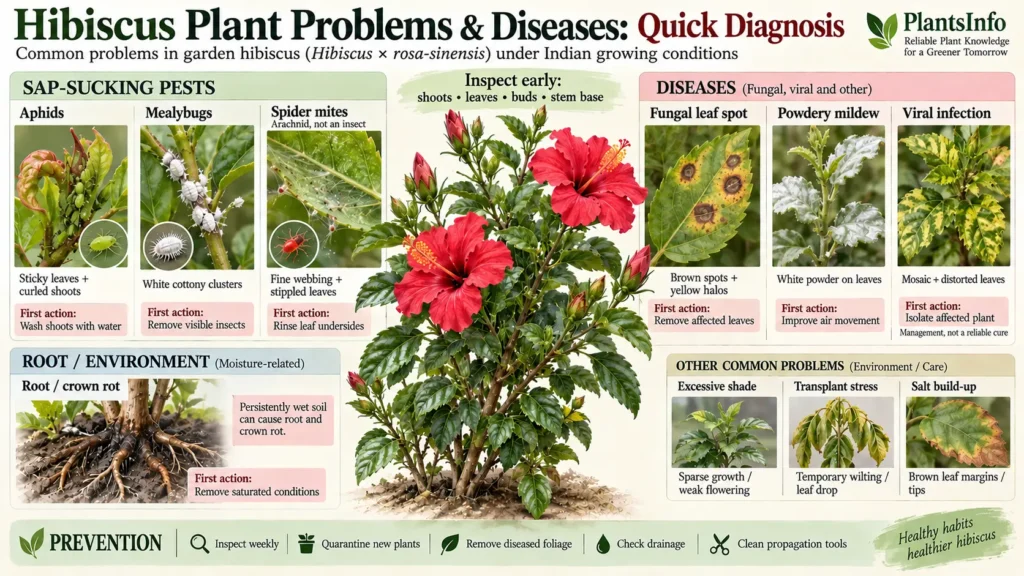
Common Problems
- Leaf yellowing and weak growth: Can be associated with root-zone stress, nutrient imbalance, pests, or unsuitable environmental conditions.
- Bud drop: Can occur when the plant experiences inconsistent moisture or other environmental stress.
- Sparse flowering: Can be associated with inadequate light or excessive vegetative growth.
- Persistent wet soil: Indicates that drainage or watering frequency needs reassessment.
Detailed disease and pest diagnosis belongs in the Problems guide rather than this growing routine.
When Will You See Results?
A healthy nursery hibiscus can produce new growth after establishment, but early development is also about building a strong root system and branching framework.
Do not judge a newly planted hibiscus by a short pause in growth or flowering. Transplant adjustment can temporarily redirect the plant’s resources toward establishment.
A plant developing several healthy new shoots is building a useful framework for later growth. Avoid trying to force immediate results through excessive watering or feeding.
Common Mistakes
Keeping Hibiscus in Too Much Shade
A hibiscus may survive in bright shade while producing less satisfactory flowering. If a container plant needs more light, move it gradually toward a brighter position.
Using an Oversized Pot
A very large container can retain excess unused moisture around a relatively small root system. Choose a container appropriate to the plant and increase its size as the root system develops.
Feeding Too Heavily
More fertiliser does not automatically mean more flowers. Excessive, particularly nitrogen-heavy, feeding can encourage leafy growth and create an imbalance.
Planting Too Deeply
Burying the stem base deeper than its original growing level can leave the crown exposed to unnecessary moisture. Maintain an appropriate planting depth.
Propagation
For home gardeners, stem cuttings are a practical way to propagate a desirable garden hibiscus and retain its characteristics.
Use healthy shoots and a clean, free-draining propagation medium. Warm conditions generally support rooting, although success varies with cutting maturity, moisture, temperature, and cultivar.
A single rooting success rate should not be assumed for every hibiscus plant.
Pruning and Training
Pruning can help maintain a compact shape and encourage branching. Hibiscus can tolerate substantial pruning, but repeatedly removing large amounts of healthy growth is unnecessary.
For Indian gardens, major shaping is best carried out when the plant is entering active growth rather than during severe environmental stress. Use clean, sharp tools and make cuts above healthy nodes where new shoots can develop.
The useful objective is a balanced, well-branched framework rather than keeping the shrub as small as possible.
Container Growing
Hibiscus is well suited to container cultivation. A container around 30–40 cm (12–16 inches) can be a practical starting size for an established home-garden plant, with larger containers used as the root system develops.
Choose a sturdy container with reliable drainage. Plastic, terracotta, and other durable materials can work; the important consideration is that the container suits the plant’s size and allows excess water to escape.
Use a fertile, porous potting mix rather than compact garden soil alone. Repot when the root system has substantially occupied the available space or growth is clearly becoming constrained by the container.
Conclusion
Give hibiscus strong light, suitable drainage, consistent moisture, and measured nutrition; steady establishment matters more than forcing rapid growth.