Hibiscus Seasonal Care Guide: How to Take Care of It

Quick Answer
Winter (Dec–Feb) is the most vulnerable season for hibiscus in India’s colder regions because low temperatures can slow growth and increase sensitivity to cold and excess moisture. In warmer regions, the winter adjustment is less pronounced.
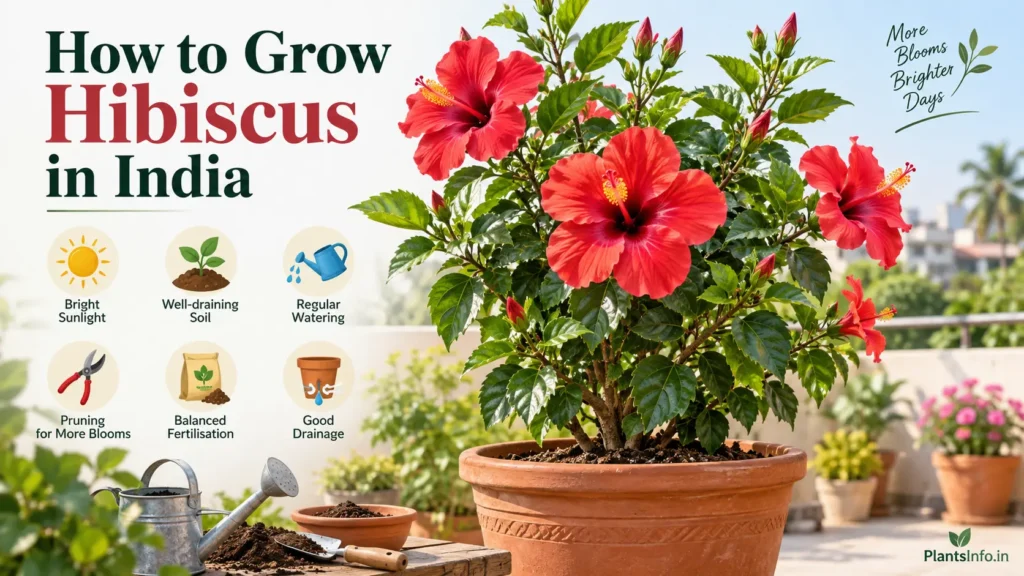
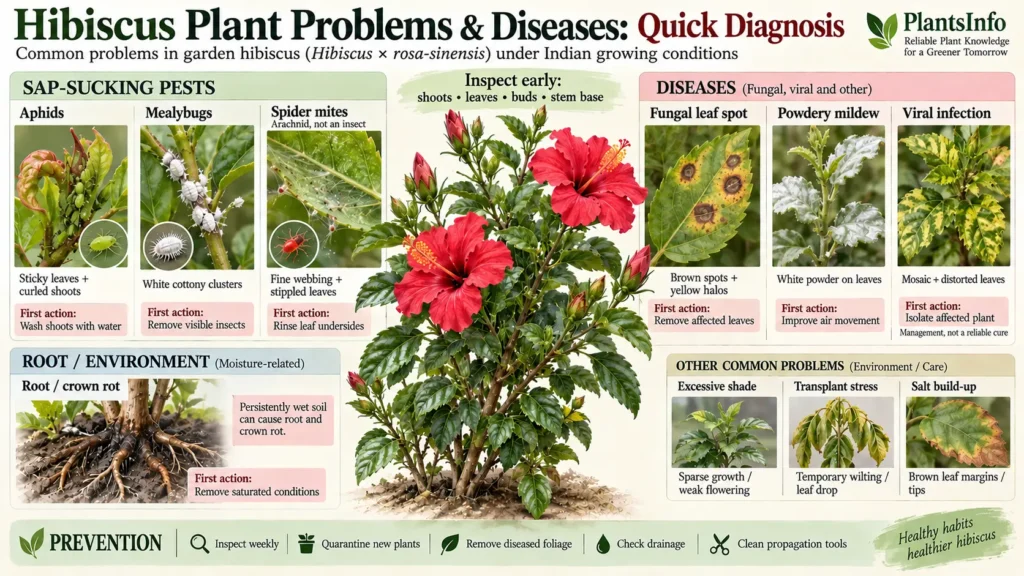
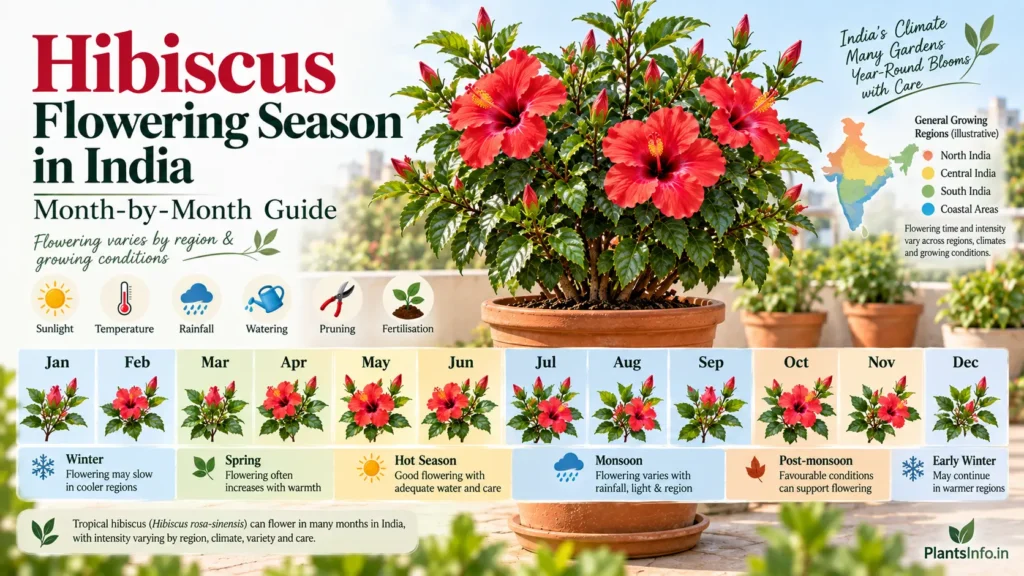
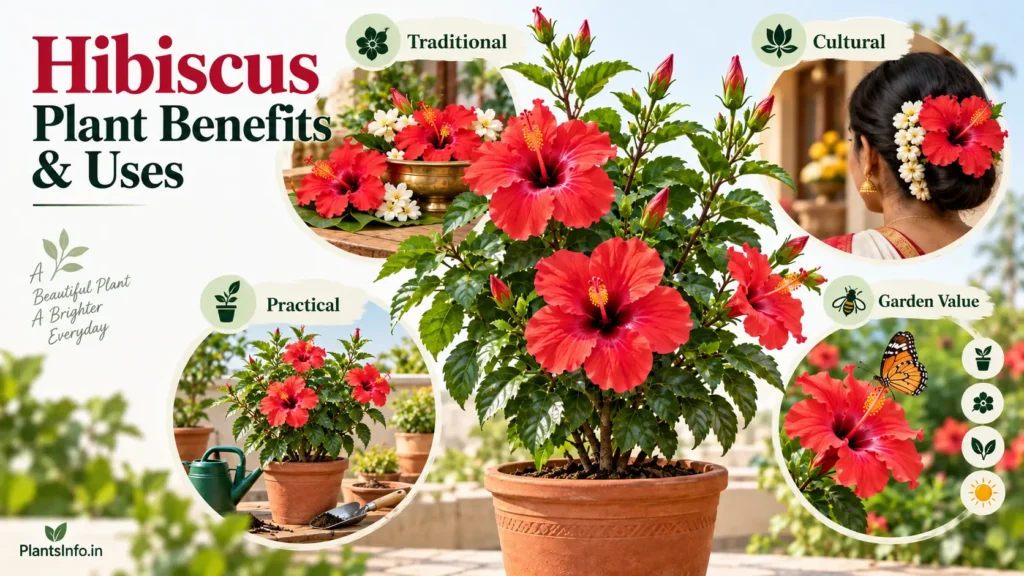
See also: Hibiscus Plant plant profile, how to grow it, common problems, its flowering season, and its benefits.
Introduction
A hibiscus may need noticeably different attention in March than in December. The biggest seasonal change is not a new care technique, but knowing when to increase, reduce, pause, or protect routine care as temperature and rainfall change.
Recommended Products
Disclosure: As an Amazon Associate, PlantsInfo may earn from qualifying purchases.
🌱 Growing Essentials
The following products can help with container gardening, potting, root development, soil management, and healthy plant growth.

Organic Potting Soil Mix
Provides nutrients, structure, and healthy growing conditions for container plants.

Coco Peat Growing Medium
Enhances moisture retention while maintaining excellent root-zone aeration.

Grow Bags for Plants
Improve drainage, root aeration, and vegetable production in limited spaces.

Plastic Pots for Plants
Ideal containers for seedlings, ornamentals, herbs, and balcony gardens.
Quick Seasonal Overview
| Season | Care Focus | Watch Out For |
|---|---|---|
| Pre-monsoon (Mar–May) | Increase moisture attention as heat rises; maintain appropriate feeding | Rapid drying and heat stress |
| Monsoon (Jun–Sep) | Prioritise drainage and reduce unnecessary irrigation | Waterlogging and fungal risk |
| Post-monsoon (Oct–Nov) | Restore balanced care after prolonged rain | Residual excess moisture |
| Winter (Dec–Feb) | Reduce watering in cooler areas; protect from severe cold | Cold exposure and persistently wet soil |
Pre-Monsoon Care (Mar–May)
As temperatures rise, hibiscus may require more frequent attention to moisture, particularly in exposed containers. Increase watering frequency only as the growing medium dries more quickly; do not treat the calendar date itself as a watering signal.
Keep normal feeding in place while conditions remain suitable for active growth. Do not increase fertiliser simply because temperatures are rising.
A specific concern during this period is heat stress in small containers or plants beside heat-reflecting walls.
Action point: Arrange temporary afternoon shade before severe heat arrives.
Monsoon Care (Jun–Sep)
During sustained rainfall, natural precipitation may replace routine irrigation. The priority is ensuring that containers and planting areas do not remain waterlogged.
Reduce or pause fertilising during periods of exceptionally heavy rain and saturated conditions. Return to the normal feeding schedule once excessive rainfall has passed and the growing medium is no longer persistently wet.
High humidity and prolonged leaf wetness can increase the seasonal risk of fungal problems, particularly where airflow is restricted.
Post-Monsoon Care (Oct–Nov)
After prolonged rainfall, gradually return to balanced watering and feeding as local conditions become drier. Avoid carrying the same irrigation frequency from Monsoon into this period.
Check that containers and planting areas have recovered from prolonged wet conditions before making further routine changes.
Repotting or transplanting window: Oct–Nov can be suitable in many Indian regions when local temperatures are moderate and excessive rainfall has ended.
Winter Care (Dec–Feb)
In cooler regions, reduce watering compared with the warmer months because the plant generally uses moisture more slowly. Allow longer intervals between watering rather than maintaining a warm-weather schedule.
Hibiscus can become much less active during colder conditions, so feeding should be reduced or paused when growth has substantially slowed.
Where frost occurs, protect the plant from direct freezing exposure, with particular attention to container-grown specimens that can be moved to shelter.
Extreme Weather Protection
Heatwave: For an exceptional heatwave, temporarily relocate container plants from exposed heat-reflecting surfaces or use emergency shade during the most intense afternoon conditions.
Frost or cold snap: When an unusually severe cold event is forecast, move movable containers into a sheltered position before the coldest period and provide temporary overnight protection for exposed plants.
Heavy monsoon or cyclone: During an exceptional storm, move loose containers away from exposed edges and secure them against strong winds; keep drainage outlets clear so stormwater can escape.
Seasonal Care Calendar
| Month | Care Task |
|---|---|
| January | In cooler regions, use a reduced winter watering schedule and maintain frost protection where required. |
| February | Continue winter adjustments while watching for increasing moisture demand as temperatures rise. |
| March | Begin increasing watering attention as temperatures rise; assess exposed containers more frequently. |
| April | Maintain heat protection where needed and continue appropriate feeding during active growth. |
| May | Prepare containers and planting areas for heavy rainfall; keep drainage pathways clear. |
| June | Check drainage before sustained monsoon rainfall and avoid unnecessary irrigation. |
| July | Monitor containers for standing water and reduce or pause feeding during persistently saturated conditions. |
| August | Maintain drainage checks and avoid routine watering when rainfall is already sufficient. |
| September | Continue preventing waterlogging and prepare for the transition away from prolonged monsoon conditions. |
| October | Gradually restore balanced watering and feeding after excessive rainfall has ended. |
| November | Complete suitable repotting or transplanting work where local conditions remain favourable; begin preparing for cooler weather. |
| December | Reduce watering in cooler regions and arrange shelter for plants exposed to severe cold. |
Seasonal Mistakes to Avoid
- Carrying heavy pre-monsoon irrigation into Monsoon: rainfall can leave the root zone saturated for prolonged periods.
- Keeping full monsoon watering after rainfall declines: the transition into Post-monsoon can leave the plant receiving more moisture than it needs.
- Maintaining warm-weather feeding during cold conditions: Winter growth can slow enough that the same feeding routine is no longer appropriate.
Regional Seasonal Variation
- North India: Winter protection becomes more important where cold snaps or frost occur.
- South India: Warmer conditions generally make the Winter adjustment less pronounced.
- Coastal India: Heavy monsoon rainfall makes drainage and exceptional-storm preparation particularly important.
- Hill regions: Cold protection may be needed whenever local temperatures approach freezing, rather than only during the standard Winter period.
Conclusion
Successful seasonal care comes from adjusting routine attention to the weather actually affecting the plant, rather than following an unchanging calendar.