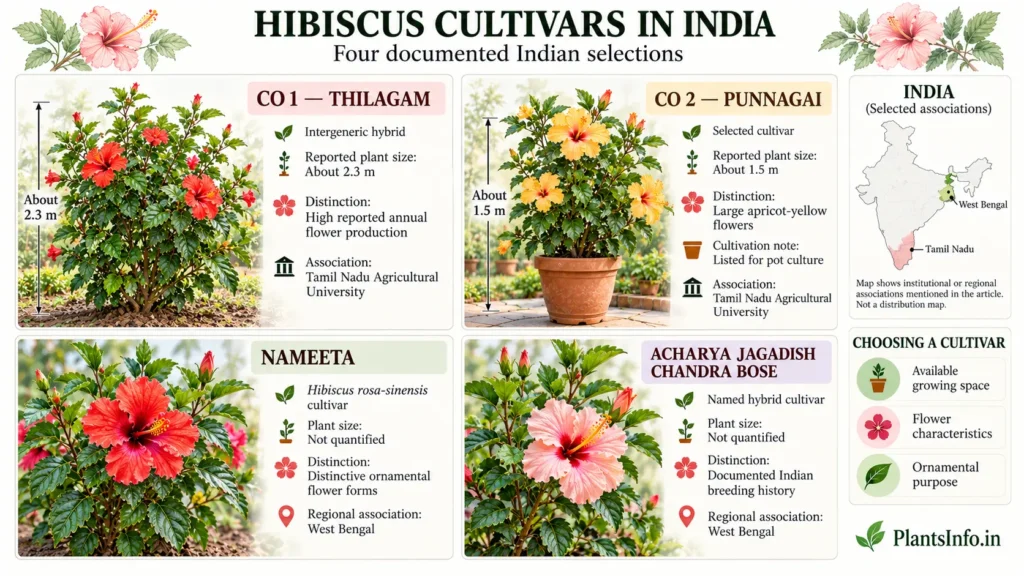
Hibiscus Plant Uses: Traditional, Cultural & Practical

Quick Answer
Hibiscus is valued in India primarily as an ornamental and culturally significant flowering plant, with additional traditional, culinary, and ecological uses that vary by species. The familiar garden hibiscus is different from food-associated species such as roselle, so uses should always be linked to the correct species.
See also: Hibiscus Plant plant profile, how to grow it, common problems, seasonal care, and its flowering season.
Uses at a Glance
| Domain | Main use or role | Context |
|---|---|---|
| Ornamental | Gardens, containers, specimens, and landscape planting | One of the most widespread uses of cultivated Hibiscus |
| Religious and cultural | Flowers used in worship and household traditions | Importance varies by region and tradition |
| Traditional | Flowers and other plant parts used in traditional practices | Uses differ substantially between species and traditions |
| Food | Selected floral parts used as ingredients or beverages | Applies to particular species, notably roselle |
| Ecological | Floral resource for visiting insects | Value depends on species, flower structure, and local conditions |
Ornamental and Landscape Value
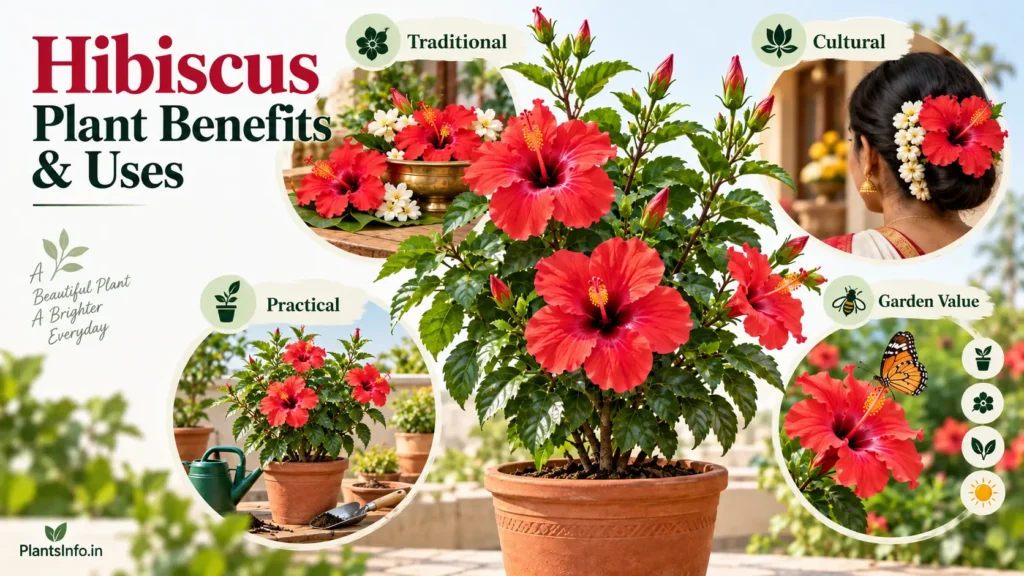
The strongest everyday value of common garden hibiscus is its ornamental display. Cultivated plants occur in different flower colours and forms, allowing them to serve as individual garden specimens, informal screens, shrubs, or container plants.
Recommended Products
Disclosure: As an Amazon Associate, PlantsInfo may earn from qualifying purchases.
🌱 Growing Essentials
The following products can help with container gardening, potting, root development, soil management, and healthy plant growth.
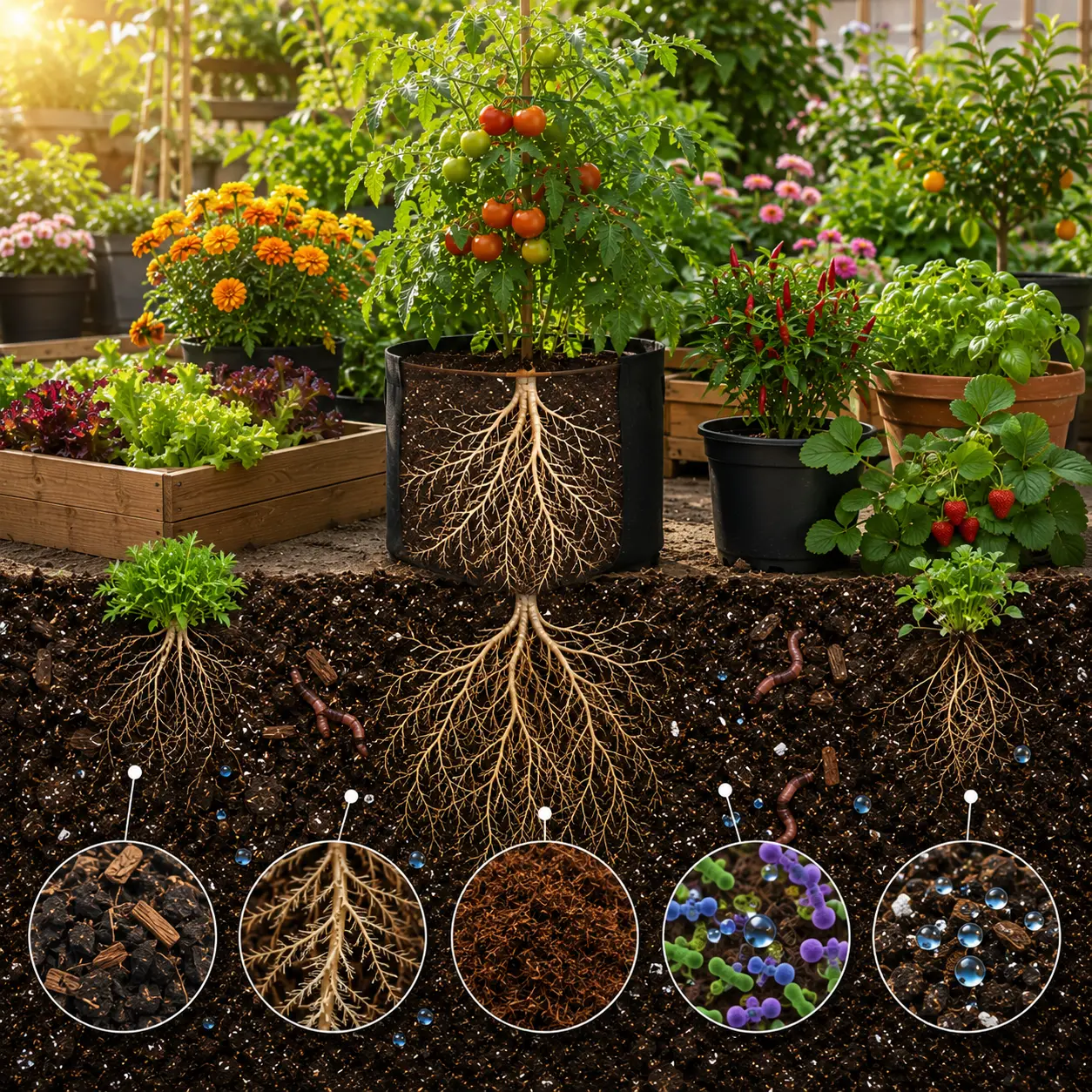
Organic Potting Soil Mix
Provides nutrients, structure, and healthy growing conditions for container plants.
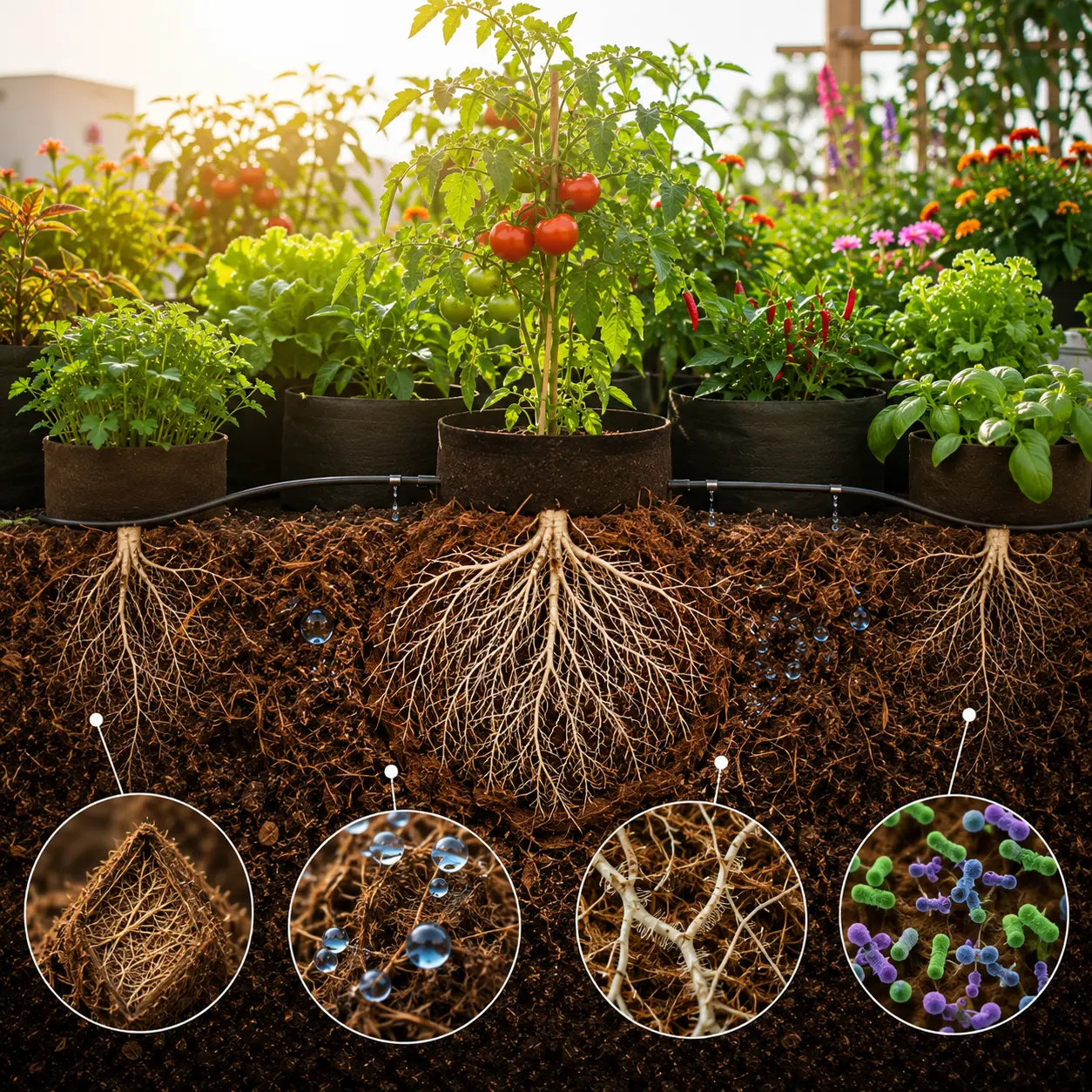
Coco Peat Growing Medium
Enhances moisture retention while maintaining excellent root-zone aeration.

Grow Bags for Plants
Improve drainage, root aeration, and vegetable production in limited spaces.

Plastic Pots for Plants
Ideal containers for seedlings, ornamentals, herbs, and balcony gardens.
Single and double flower forms can create markedly different visual effects. This diversity is one reason the name “hibiscus” does not describe one uniform ornamental appearance.
For Indian home gardens, its value is primarily visual: the flowers provide a strong colour accent against green foliage and can add recurring interest to outdoor spaces.
Traditional and Cultural Uses
Hibiscus has an established association with Indian household and cultural practices. In some regional traditions, particularly red-flowered forms are used as offerings during worship.
Flowers are also used in traditional hair-care preparations. Other traditional medicinal uses have been recorded for different Hibiscus species, but evidence associated with one species should not automatically be transferred to another.
Traditional use and preliminary research should not be interpreted as proof that a Hibiscus preparation treats a medical condition.
Health information: Traditional uses described here are not established medical treatments. Anyone considering a plant-based preparation for a health condition should consult a qualified healthcare professional.
Ecological Role
Hibiscus flowers can provide floral resources for visiting insects where their flowers are accessible and suitable resources are available. The actual value to wildlife varies with species, flower structure, local insect populations, and surrounding vegetation.
A cultivated hibiscus can therefore contribute to the ecological diversity of a mixed home garden. Its contribution is best considered alongside the other flowering plants present rather than in isolation.
Practical Value for Home Gardeners
A hibiscus can combine several everyday roles in one garden. It can provide an ornamental flowering feature, flowers for household worship where culturally appropriate, and an accessible example of plant diversity.
Its practical significance changes when the intended use changes. A plant selected as an ornamental should not automatically be treated as a food or medicinal plant simply because another Hibiscus species has that documented use.
Food Uses: Why Species Matters
Some Hibiscus species and floral parts are used as food or beverages, but this does not make every garden hibiscus edible.
Roselle (Hibiscus sabdariffa) is particularly associated with culinary and beverage use, while the ornamental China rose, Hibiscus × rosa-sinensis, is a different cultivated plant.
Correct identification is therefore essential before using any Hibiscus plant as food. Edible-flower guidance also emphasises avoiding plants exposed to chemicals that are not approved for food use.
What to Avoid
Do not consume a flower simply because it is labelled “hibiscus.” Confirm the species and its documented culinary use first, and do not consume flowers from ornamental plants that may have been treated with products unsuitable for edible crops.
Likewise, do not assume that a traditional preparation associated with one Hibiscus species can be substituted with another. Species-specific evidence is needed before transferring a traditional, nutritional, or medicinal claim.
Conclusion
Hibiscus has significance beyond ornamental beauty, but its food and traditional uses should always be interpreted according to the documented species.