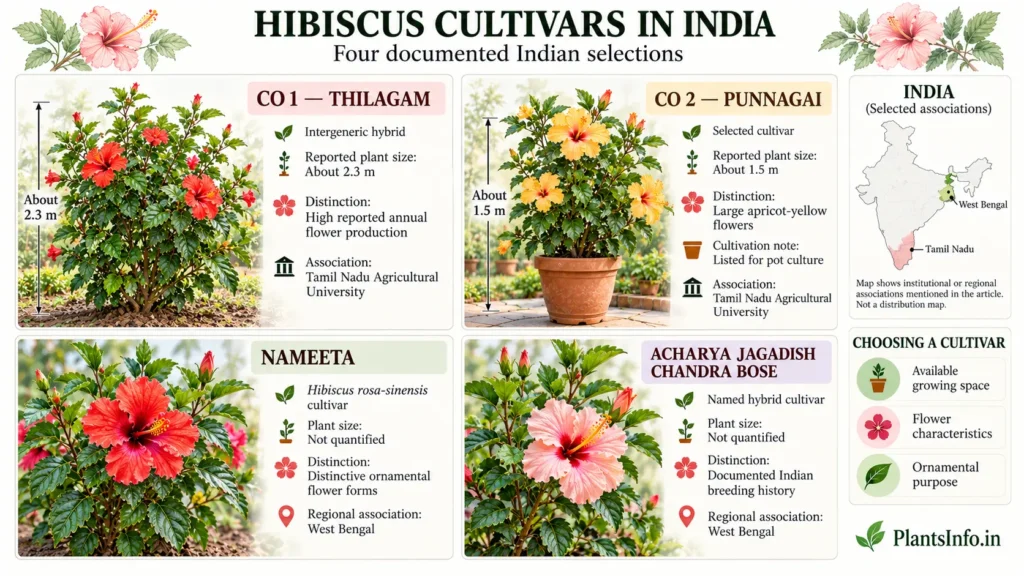
Hibiscus Flowering Season: India-based Guide

Quick Answer
The commonly cultivated garden hibiscus, especially Hibiscus × rosa-sinensis, can flower through much of the year in warm Indian regions rather than having one fixed annual flowering season. Fruit formation is less consistent because it depends on successful pollination and the particular cultivated plant.
See also: Hibiscus Plant plant profile, how to grow it, common problems, seasonal care, and its benefits.
Biological Timing at a Glance
| Biological stage | Typical period |
|---|---|
| Flower initiation | Repeatedly during active growth; timing varies with temperature, light, and plant condition |
| Peak flowering | Often extended across warmer growing periods; warm regions may see flowering through much of the year |
| Fruit set | Occasional after successful pollination; inconsistent in many cultivated ornamental forms |
| Fruit development | Follows successful fruit set rather than a fixed annual calendar |
| Ripening/harvest | No dependable universal period for ornamental Hibiscus × rosa-sinensis |
The broader genus contains species with substantially different flowering and fruiting patterns, so the timing below is primarily applicable to the familiar Indian garden hibiscus.
Recommended Products
Disclosure: As an Amazon Associate, PlantsInfo may earn from qualifying purchases.
🌱 Growing Essentials
The following products can help with container gardening, potting, root development, soil management, and healthy plant growth.
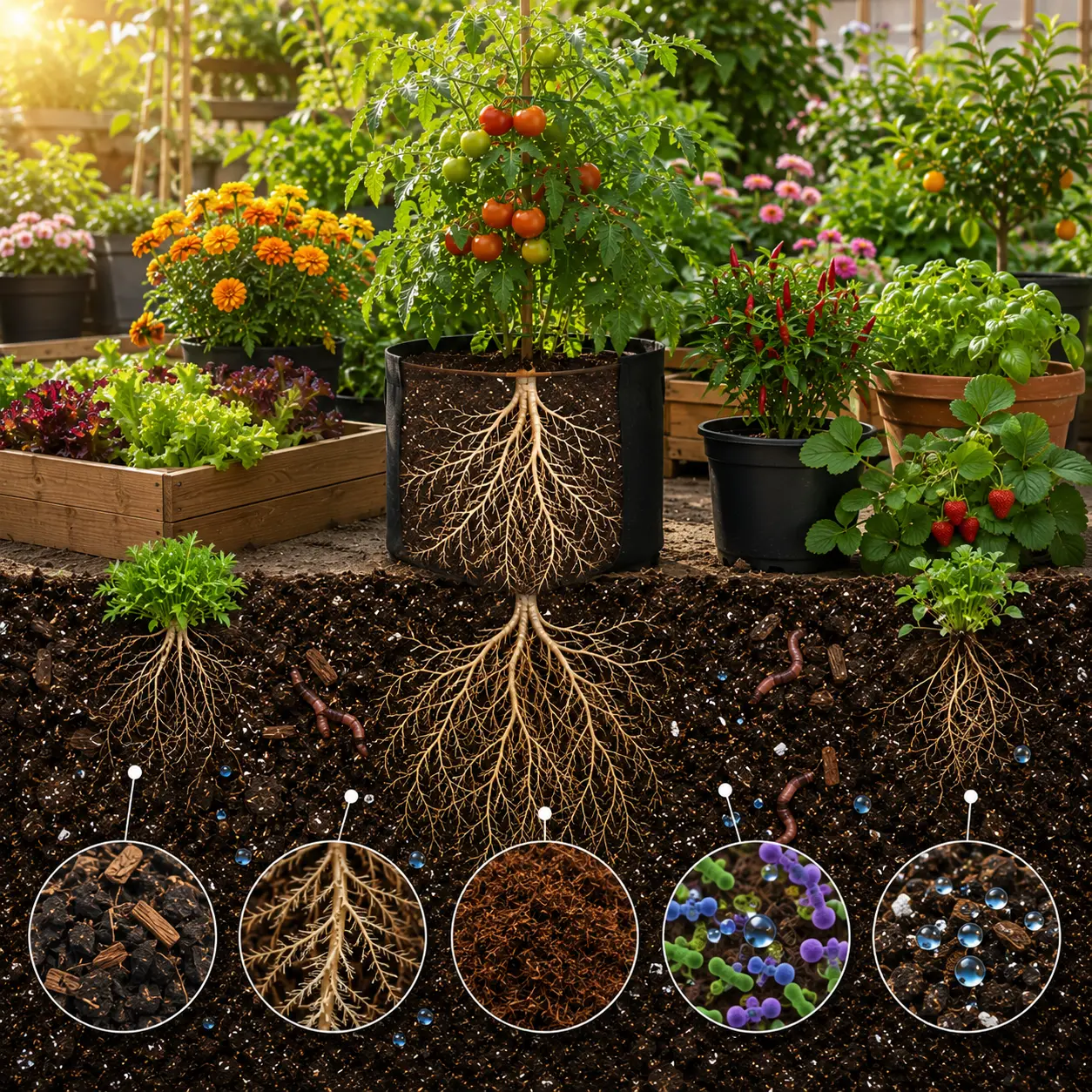
Organic Potting Soil Mix
Provides nutrients, structure, and healthy growing conditions for container plants.
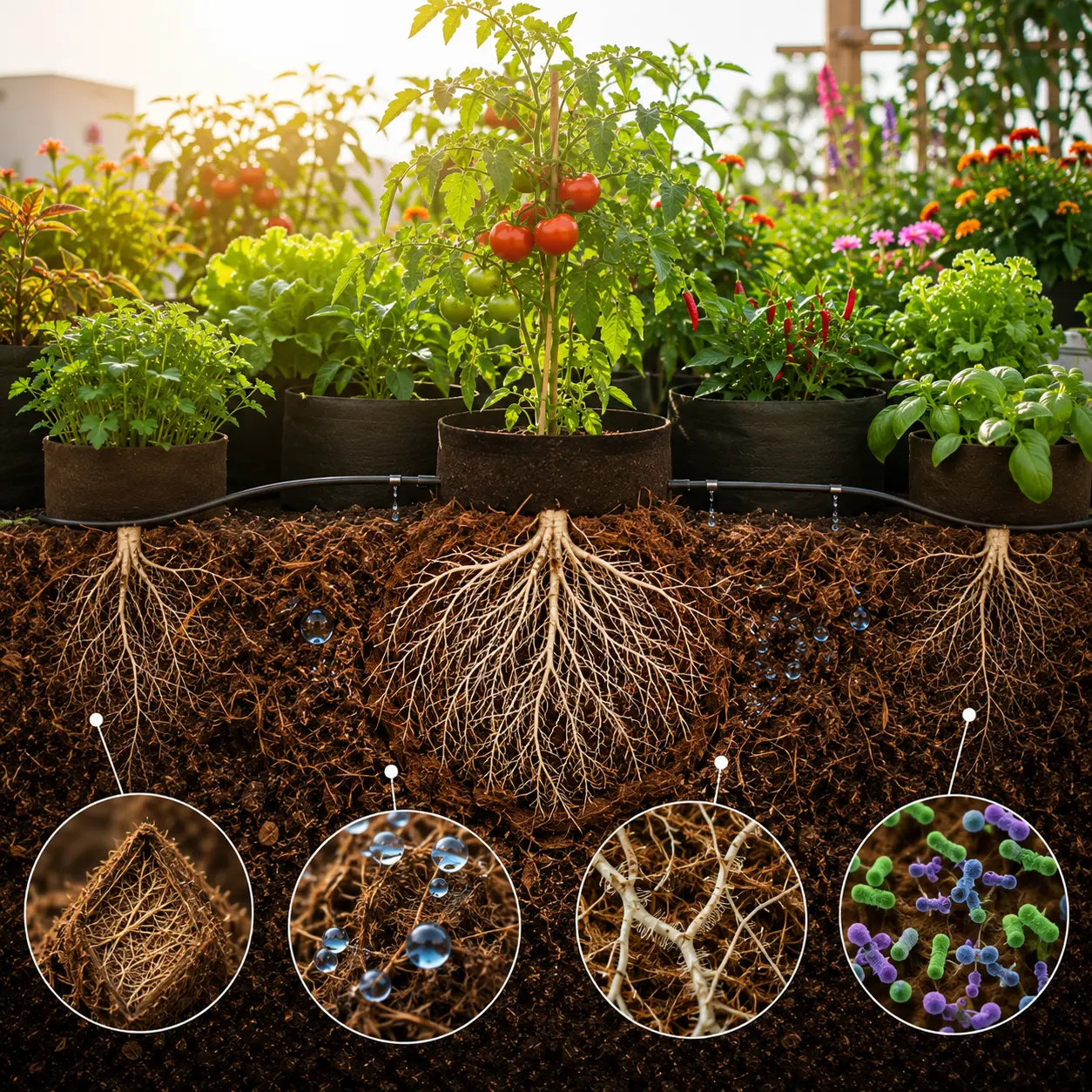
Coco Peat Growing Medium
Enhances moisture retention while maintaining excellent root-zone aeration.

Grow Bags for Plants
Improve drainage, root aeration, and vegetable production in limited spaces.

Plastic Pots for Plants
Ideal containers for seedlings, ornamentals, herbs, and balcony gardens.
India’s Seasons and This Plant
| Season (months) | What the plant is doing |
|---|---|
| Pre-monsoon (Mar–May) | Repeated bud formation and flowering are common in warm regions |
| Monsoon (Jun–Sep) | Growth and flowering can continue where temperatures remain favourable |
| Post-monsoon (Oct–Nov) | Flowering can continue in warm regions, with intensity varying by local conditions |
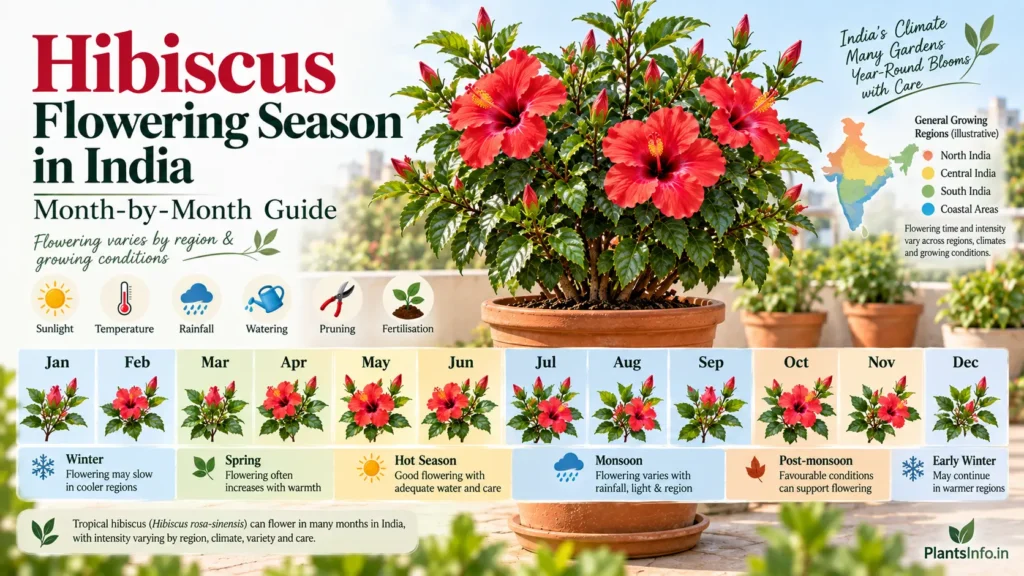
| Winter (Dec–Feb) | Flowering may continue in mild climates but can slow in cooler northern and higher-elevation areas |
Indian observations record Hibiscus rosa-sinensis flowering throughout the year in suitable conditions, while cooler temperatures can reduce its continuity and intensity.
Flowering Season in Detail
Hibiscus does not depend on one short annual flowering flush. The familiar garden hibiscus can repeatedly produce flowers during periods when temperature, light, and overall plant condition support active growth.
Warm, frost-free conditions can therefore support extended flowering across several seasons. Cooler northern and elevated areas may experience a noticeable reduction in flowering during Winter.
Individual flowers are short-lived, commonly remaining open for roughly a day before fading. This short duration does not indicate the end of the flowering period because additional flowers can appear during continued reproductive activity.
The practical timing distinction for Indian gardeners is therefore regional: warm areas can retain flowering activity for much of the year, while colder areas generally show a more pronounced Winter slowdown.
Fruiting Season
The familiar ornamental hibiscus can form a five-lobed seed capsule after successful pollination, but fruiting is considerably less predictable than flowering.
When fruit does form, the capsule develops after the flower has faded and continues maturing over the following period. A dry, mature capsule eventually opens to release multiple seeds.
There is no reliable India-wide fruiting month for ornamental Hibiscus × rosa-sinensis. Fruit set depends on successful pollination and the characteristics of the particular cultivated plant.
Month-by-Month Calendar
| Month | Season | What the Plant Is Doing |
|---|---|---|
| January | Winter | Flowering may continue in mild regions; cooler areas may show reduced activity. |
| February | Winter | Flowering and growth can increase as temperatures become more favourable in many regions. |
| March | Pre-monsoon | Active growth and repeated bud formation are common in warm areas. |
| April | Pre-monsoon | Flowering can remain active with continued production of new buds. |
| May | Pre-monsoon | Warm conditions can support continued flowering before the Monsoon. |
| June | Monsoon | Growth and flowering commonly continue where temperatures remain favourable. |
| July | Monsoon | Repeated flowering remains possible under suitable warm conditions. |
| August | Monsoon | Flowering can remain active in favourable regions, although intensity varies. |
| September | Monsoon | Continued flowering is possible as the Monsoon period progresses. |
| October | Post-monsoon | Flowering may continue in warm regions, with greater regional variation. |
| November | Post-monsoon | Mild areas can retain flowering activity while cooler areas may begin slowing. |
| December | Winter | Flowering can persist in warm climates but may become less frequent in cooler regions. |
What Can Go Wrong Seasonally?
- Winter flowering slowdown: Cooler temperatures can reduce bud production, particularly in northern and higher-elevation areas.
- Monsoon flowering variation: Extended cloudy or unusually wet periods can coincide with changes in flowering intensity rather than producing a fixed response.
- Poor fruit set after abundant flowering: Flowering and successful fruit formation are separate biological events, so abundant flowers do not necessarily result in mature seed capsules.
Post-Bloom Timing
After an individual flower fades, its reproductive structures either proceed toward fruit formation after successful pollination or fail to develop into a mature capsule.
When fruit formation succeeds, the resulting capsule develops and matures over the subsequent period rather than according to a universal India-wide schedule.
Conclusion
For Indian gardeners, hibiscus is best understood as a repeat-flowering shrub whose flowering and fruiting timing varies with climate and successful pollination.