Garden Strawberry: Nutrition, Benefits & Uses

Quick Answer
Garden strawberry (Fragaria × ananassa) is primarily valued as an edible fruit that can be eaten fresh or incorporated into desserts, drinks, preserves and other foods. Its nutritional profile includes vitamin C, dietary fibre, potassium and naturally occurring plant compounds, making it a useful fruit for a varied diet.
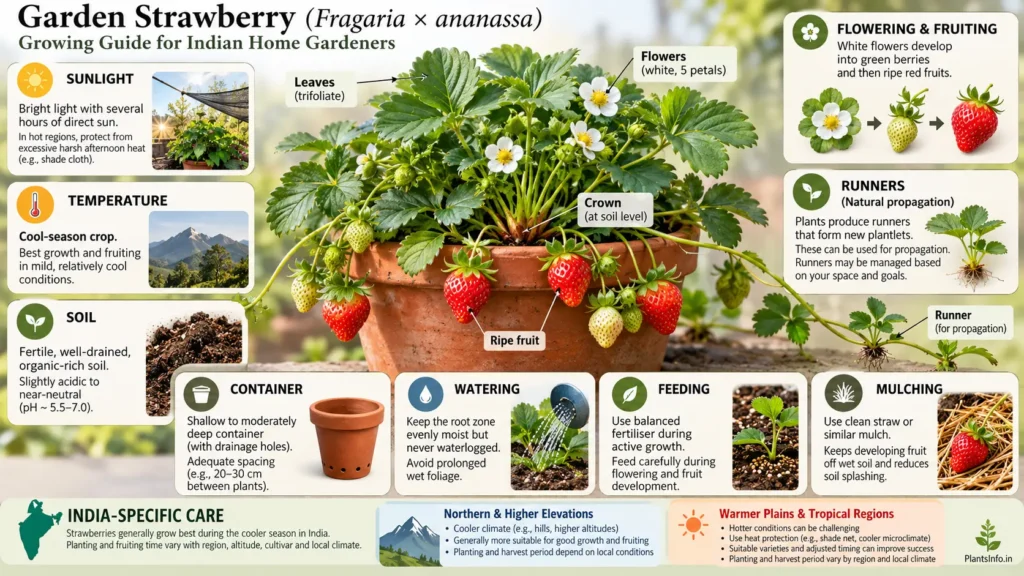
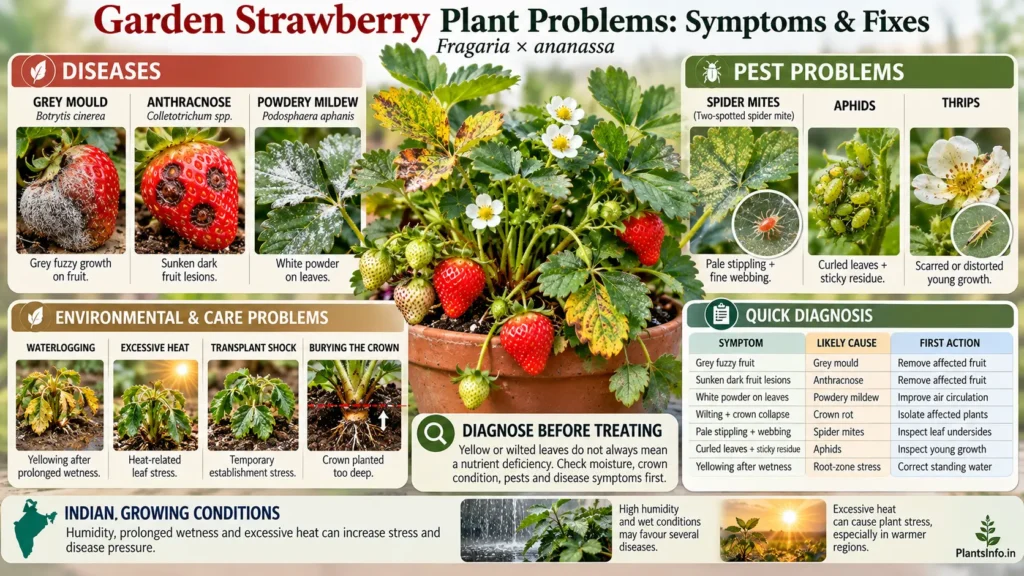
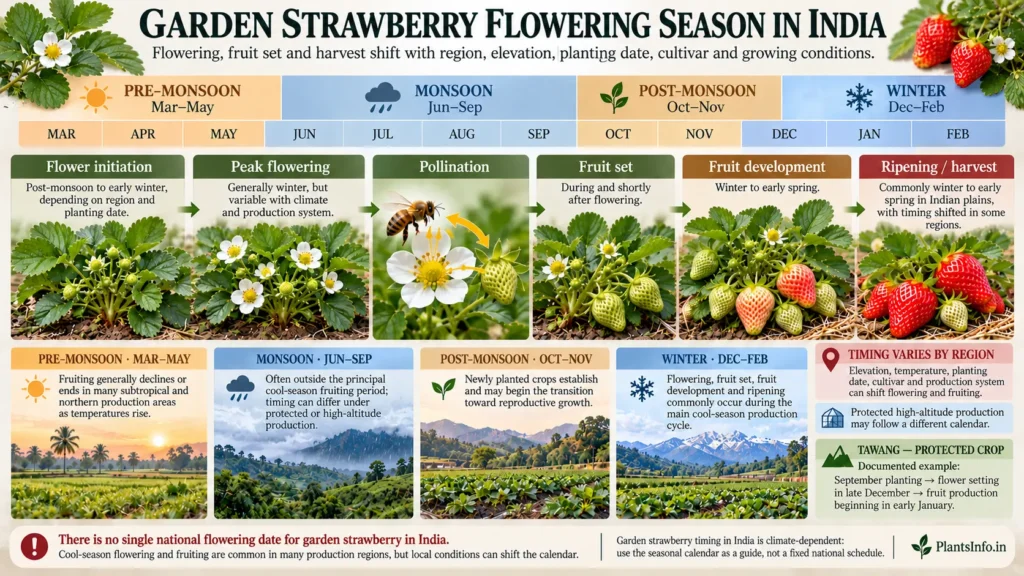
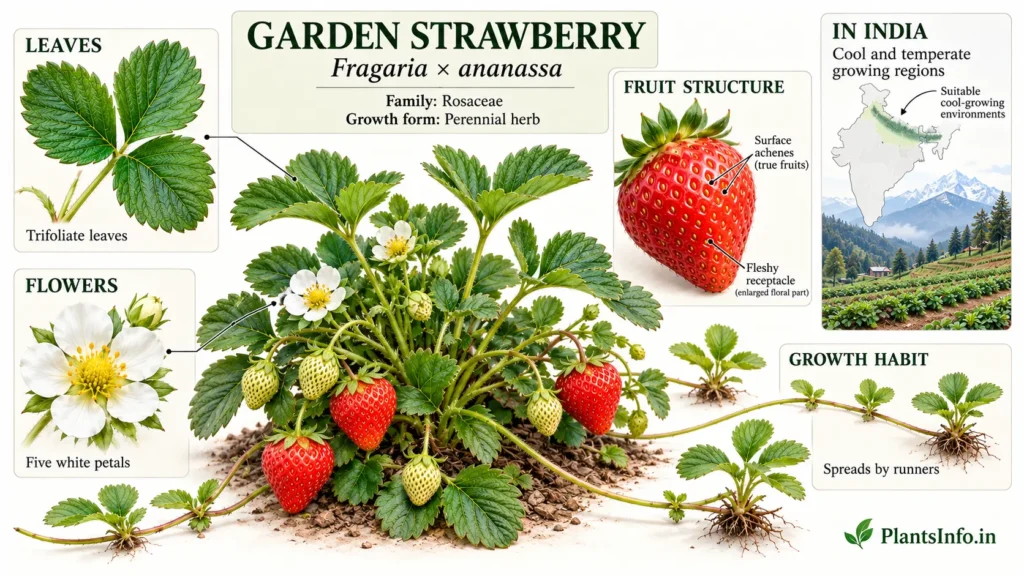
See also: Garden Strawberry plant profile, how to grow it, common problems, seasonal care, and its flowering season.
Uses at a Glance
| Domain | Main use/role | Context |
|---|---|---|
| Food | Fresh edible fruit | Commonly eaten ripe and fresh |
| Culinary | Desserts, drinks and preserves | Used in smoothies, milkshakes, ice cream, sauces and jams |
| Ornamental | Edible garden planting | Attractive fruits and flowers add interest to home food gardens |
| Ecological | Food resource for small visiting animals and insects | Flowers can provide floral resources for pollinating insects |
Introduction
A ripe strawberry combines bright colour, fragrance, acidity and sweetness in a fruit that is usually eaten with little preparation. That combination explains much of its popularity beyond its nutritional value: strawberries work equally well as a fresh snack and as an ingredient in prepared foods. For Indian home gardeners, the crop also offers a practical way to produce a highly perishable fruit close to the point of consumption.
Recommended Products
Disclosure: As an Amazon Associate, PlantsInfo may earn from qualifying purchases.
🌱 Growing Essentials
The following products can help with container gardening, potting, root development, soil management, and healthy plant growth.
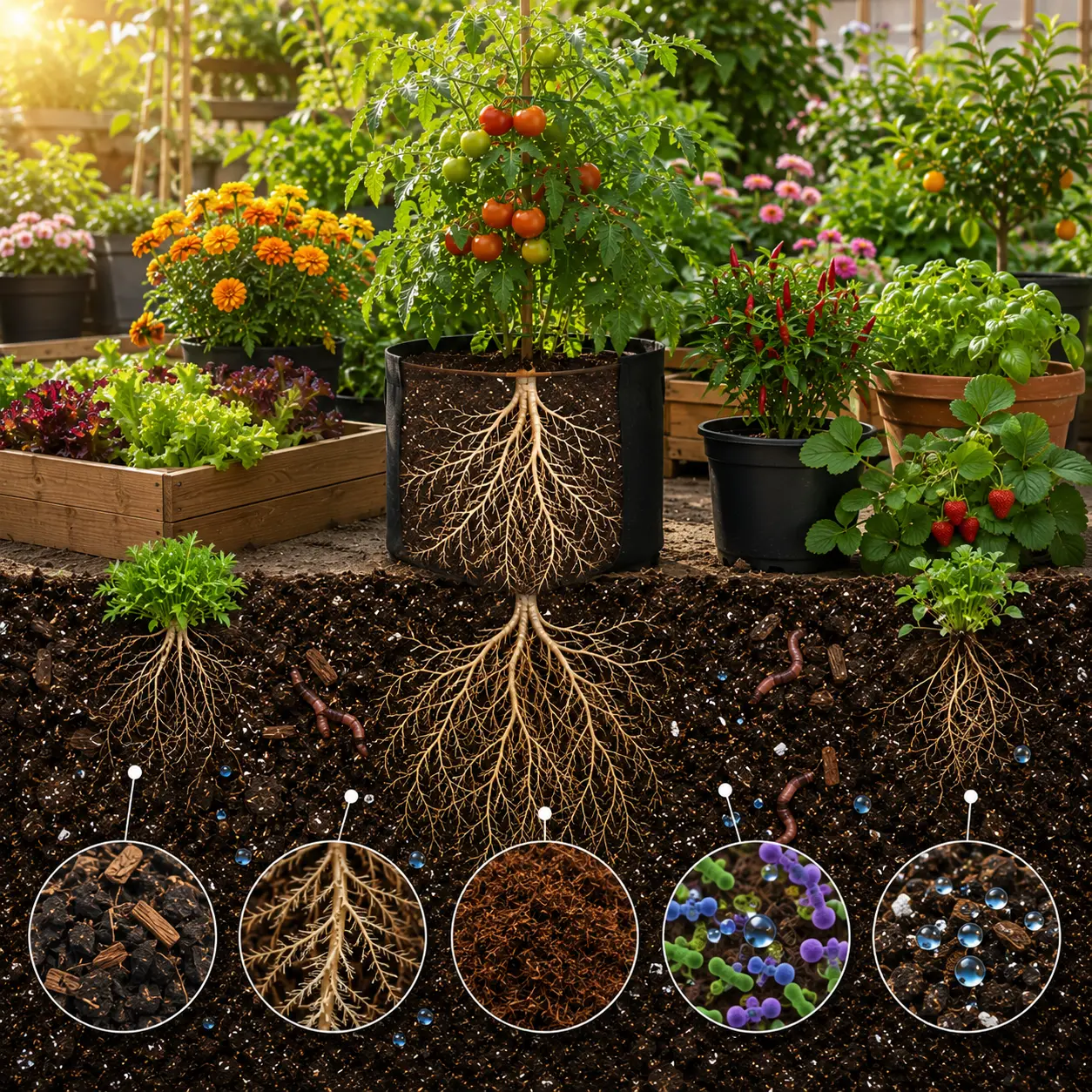
Organic Potting Soil Mix
Provides nutrients, structure, and healthy growing conditions for container plants.
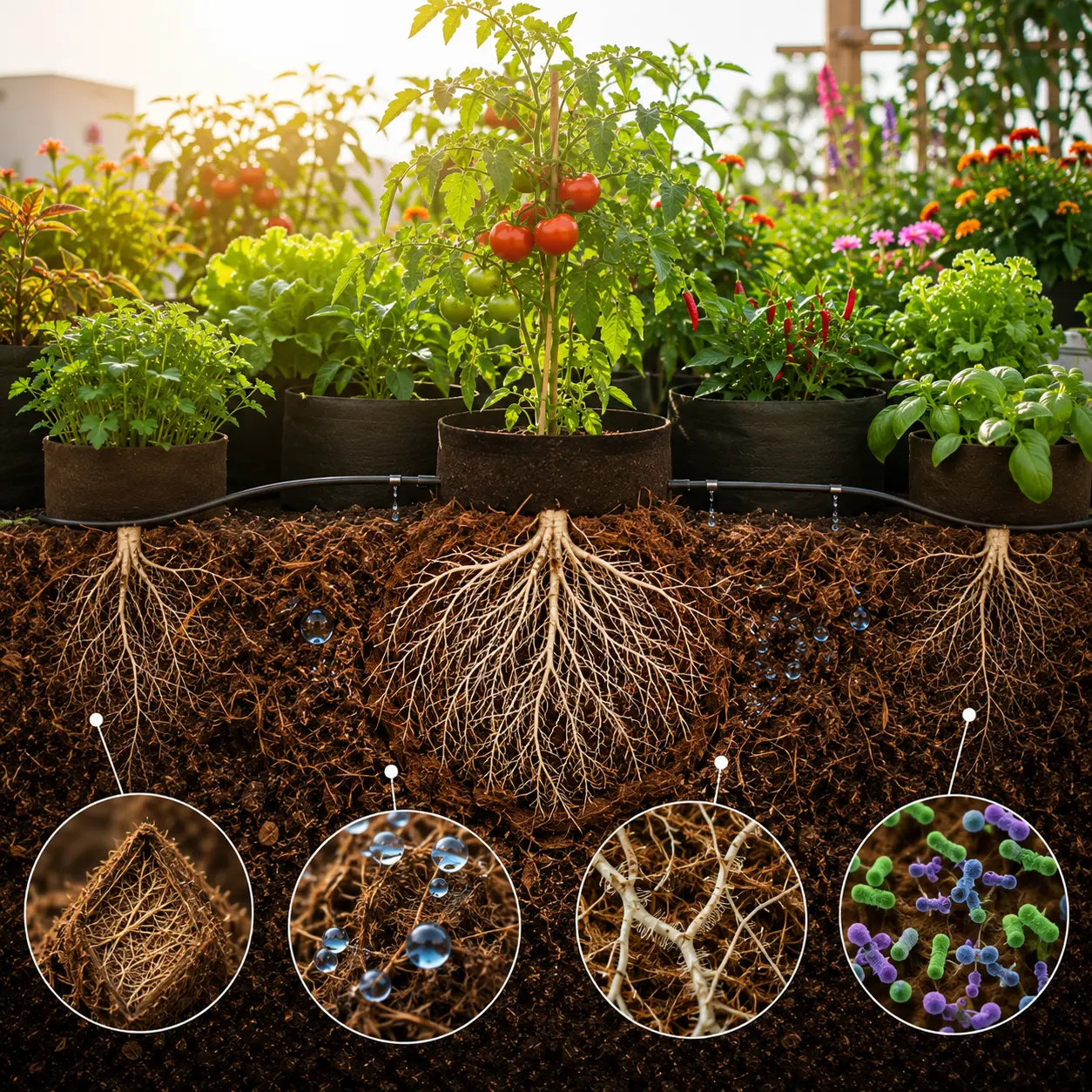
Coco Peat Growing Medium
Enhances moisture retention while maintaining excellent root-zone aeration.

Grow Bags for Plants
Improve drainage, root aeration, and vegetable production in limited spaces.

Plastic Pots for Plants
Ideal containers for seedlings, ornamentals, herbs, and balcony gardens.
Nutritional Value of Garden Strawberry
Raw strawberries are predominantly water and are relatively low in energy while providing carbohydrate, dietary fibre and several micronutrients. A USDA FoodData Central reference entry for raw strawberries gives approximately 32 kcal, 7.68 g carbohydrate, 2 g dietary fibre, 0.67 g protein and 0.3 g fat per 100 g. The same reference lists about 58.8 mg vitamin C and 153 mg potassium per 100 g. Actual composition can vary with cultivar, maturity, and growing conditions.
Vitamin C is one of the most prominent nutrients in the reference profile. Strawberries also provide smaller amounts of folate, manganese, magnesium and other micronutrients. Their nutritional contribution is therefore best understood as part of an overall varied diet rather than as evidence that the fruit treats or prevents a particular health condition.
The fruit also contains naturally occurring phytochemicals, including phenolic compounds and pigments that contribute to its colour and flavour. The presence of these compounds does not by itself establish a therapeutic effect in humans.
Culinary Uses of Garden Strawberry
Fresh consumption is the simplest and most characteristic use. Ripe strawberries can be eaten whole or sliced and added to breakfast foods, fruit salads, yoghurt and desserts. Their sweet-acidic flavour also allows them to work as a contrasting ingredient rather than simply as a sweet topping.
Strawberries are widely used in blended and prepared foods. Common applications include smoothies, milkshakes, ice cream, sauces, jams and other fruit preparations. Fresh or frozen berries can both be used in several of these applications, although texture changes after freezing and thawing.
In Indian home kitchens, strawberries can also be incorporated into familiar fruit-based preparations such as chilled drinks, shakes, desserts and mixed-fruit dishes. In Indian home kitchens, strawberries can also be incorporated into familiar fruit-based preparations such as chilled drinks, shakes, desserts and mixed-fruit dishes.
Ecological Role
The flowers of the strawberry can provide floral resources for visiting insects, including pollinators. In a garden setting, flowering strawberry plants therefore have a role beyond fruit production, although their ecological importance is modest compared with plants grown specifically to provide extensive habitat or nectar resources.
The ripe fruit can also be attractive to small animals and birds when left accessible. In cultivated gardens, however, most fruit is normally harvested for human consumption before it becomes an important food resource for wildlife.
Practical Value for Home Gardeners
For a home gardener, the main practical value of garden strawberries is the ability to produce a highly perishable fruit close to where it will be eaten. Harvesting for immediate consumption can make it easier to use fruit at desirable ripeness, while surplus fruit can be frozen or processed rather than consumed immediately.
Strawberry is also useful as a small-scale food-garden crop because the harvested product can move directly from garden to kitchen. This makes it particularly suitable for gardeners interested in combining ornamental appeal with edible production.
How to Prepare or Use at Home
Fresh: Wash ripe berries before eating, remove the leafy calyx, and use them whole or sliced in fruit dishes, yoghurt, or desserts.
Blended: Fresh or frozen strawberries can be blended with water, milk or other ingredients to make drinks such as smoothies and milkshakes.
Preserved: Excess ripe fruit can be cooked into jam or other fruit preparations, extending its culinary use beyond the short period when fresh berries are available.
One practical point to avoid is leaving washed strawberries wet in storage for prolonged periods. Excess surface moisture can accelerate quality deterioration, so fruit intended for later use is better kept dry until needed.
Conclusion
Garden strawberry combines fresh-fruit appeal with nutritional and culinary value, making it useful both as a home-grown food and as a versatile kitchen ingredient. Its greatest significance remains its role as an edible fruit rather than a medicinal crop.