Garden Strawberry Plant Problems: Symptoms & Fixes
Quick Answer
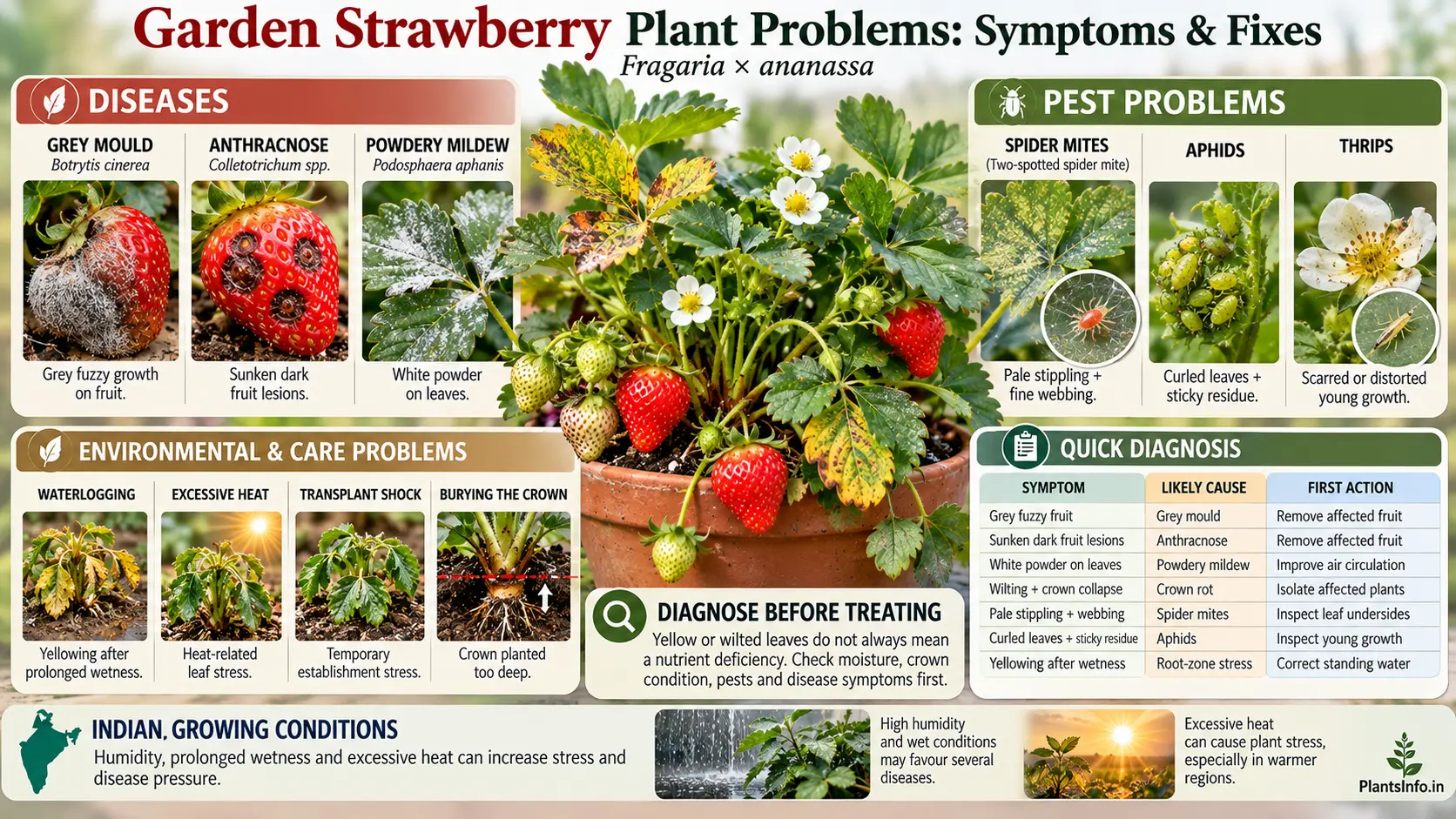
Among the more serious problems affecting garden strawberry in Indian conditions are fruit and crown diseases associated with excess moisture, particularly grey mould and crown-rot problems. These issues are generally more manageable when identified early, although some soil- and crown-borne infections can persist or cause affected plants to decline severely.
See also: Garden Strawberry plant profile, how to grow it, seasonal care, its flowering season, and its benefits.
Introduction
A strawberry plant can look healthy above the soil while trouble is already developing around the crown or fruit. Most common problems are preventable or manageable, but the visible symptom alone is not always enough to distinguish a fungal disease from moisture stress, insect feeding, or a root-zone disorder.
Recommended Products
Disclosure: As an Amazon Associate, PlantsInfo may earn from qualifying purchases.
🌱 Growing Essentials
The following products can help with container gardening, potting, root development, soil management, and healthy plant growth.
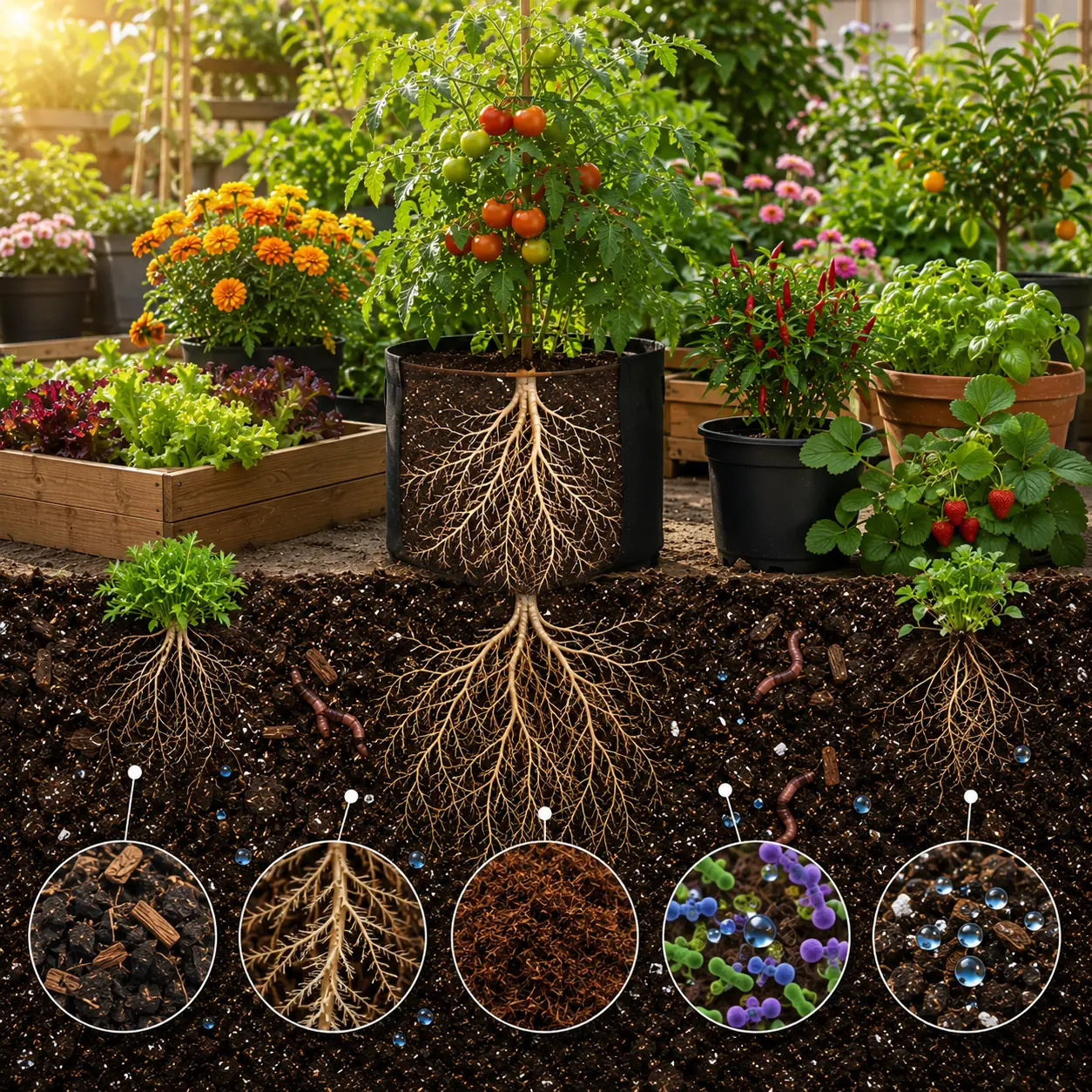
Organic Potting Soil Mix
Provides nutrients, structure, and healthy growing conditions for container plants.
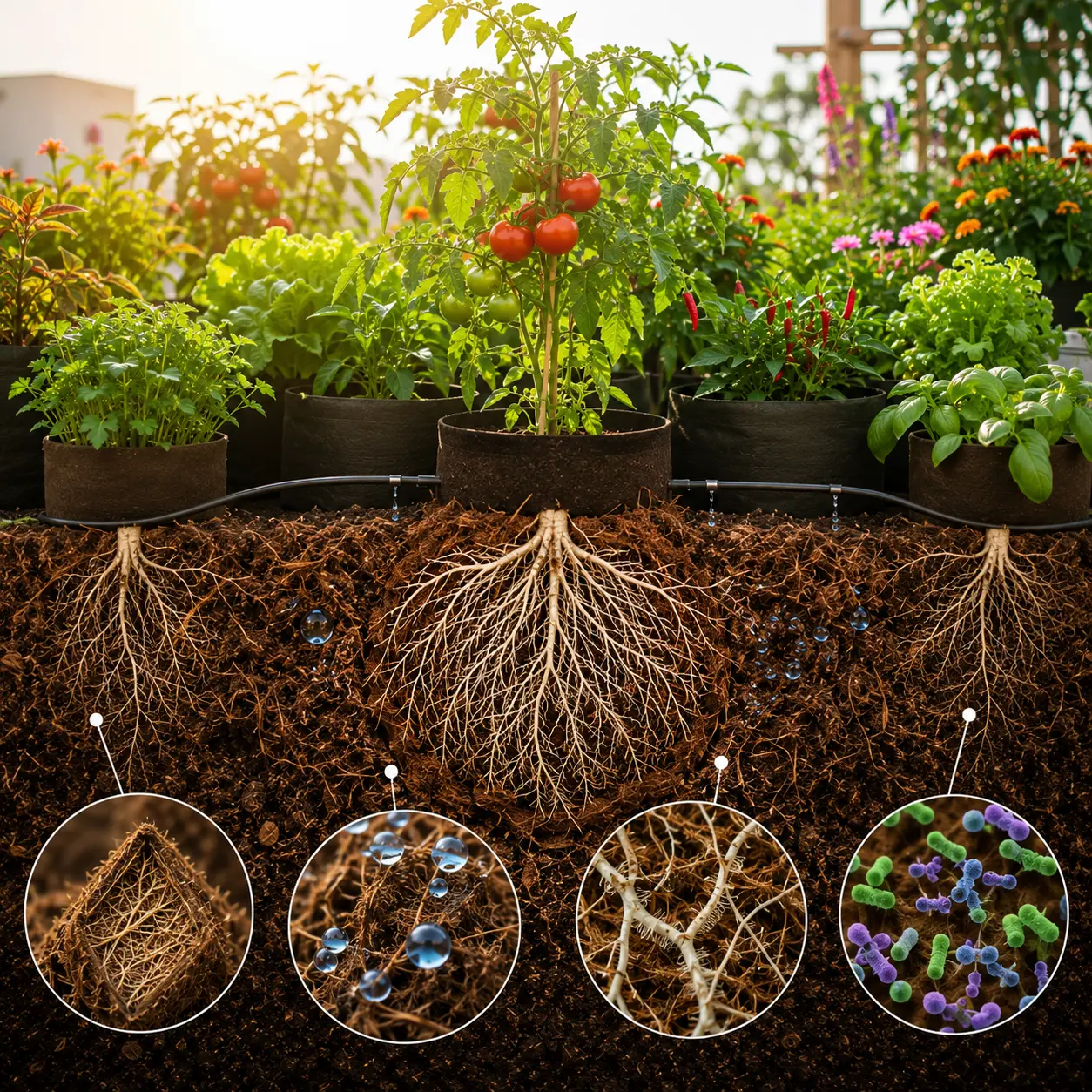
Coco Peat Growing Medium
Enhances moisture retention while maintaining excellent root-zone aeration.

Grow Bags for Plants
Improve drainage, root aeration, and vegetable production in limited spaces.

Plastic Pots for Plants
Ideal containers for seedlings, ornamentals, herbs, and balcony gardens.
Quick Diagnosis
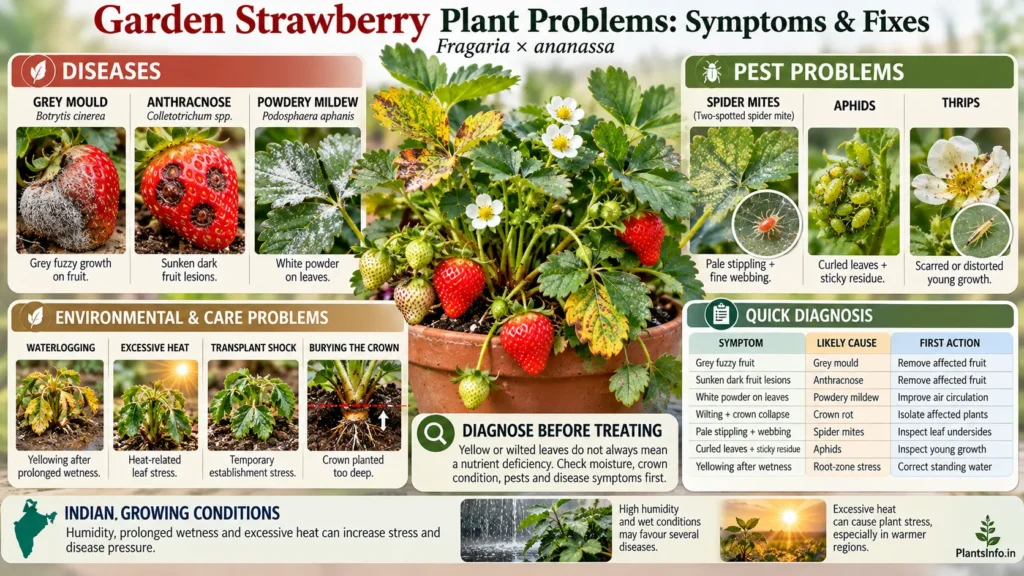
| Symptom | Most Likely Cause | First Action |
|---|---|---|
| Grey fuzzy growth on fruit | Grey mould | Remove affected fruit |
| Sunken dark fruit lesions | Anthracnose | Remove affected fruit |
| White powder on leaves | Powdery mildew | Improve air circulation |
| Wilting and crown collapse | Crown rot | Isolate affected plants |
| Pale stippled leaves, fine webbing | Spider mites | Inspect leaf undersides |
| Curled leaves with sticky residue | Aphids | Inspect young growth |
| Yellowing after prolonged wetness | Root-zone stress | Correct standing water |
Diseases
Grey Mould
Grey mould, caused by Botrytis cinerea, is a major strawberry fruit disease. Affected berries develop soft brown or tan areas followed by characteristic grey, fuzzy fungal growth. Infection can begin around flowering and become obvious only as fruit develops or after harvest. High humidity, wet conditions, and poor drying of the crop favour disease development.
Remove and discard visibly infected fruit rather than leaving it among healthy berries. Avoid conditions that keep flowers and fruit wet for long periods, and maintain clean growing conditions. Early sanitation is particularly important because sporulating fruit can provide inoculum for further infections.
Anthracnose
Strawberry anthracnose is associated with Colletotrichum species and can affect leaves, green fruit, ripe fruit and crowns. Fruit symptoms commonly include circular, sunken, water-soaked lesions that become brown to black. Indian research has shown that warm temperatures and prolonged surface wetness favour disease development.
Remove badly affected fruit and use clean planting material. Avoid prolonged leaf and fruit wetness where practical, particularly during warm, humid periods. Anthracnose can be difficult to manage once crown infection becomes established.
Powdery Mildew
Powdery mildew, caused by Podosphaera aphanis, produces a white powdery growth on strawberry foliage and can cause leaves to curl or distort. The disease is favoured by conditions that allow infection while foliage remains relatively dry, and dense canopies can increase its development.
Remove severely affected plant material where appropriate and improve air movement around the foliage. Avoid excessive nitrogen-driven soft growth, which can create a denser canopy and increase susceptibility.
Crown Rot
Crown rot is a disease complex rather than one single disease. Phytophthora cactorum is an established cause, while recent Indian research has identified Colletotrichum nymphaeae and, in 2026, Colletotrichum siamense as additional causes of strawberry crown rot. Symptoms can include wilting, yellowing, stunting, and eventual plant collapse; affected crowns may show characteristic internal discoloration.
Affected plants may not recover once severe crown infection has destroyed the crown. Remove severely collapsed plants and avoid repeatedly planting strawberries in soil associated with persistent crown-rot problems. Clean planting material and good drainage reduce the opportunity for disease establishment.
Pest Problems
Two-Spotted Spider Mites
Two-spotted spider mites (Tetranychus urticae) are an important strawberry pest in Indian production. Feeding produces pale stippling or bronzing of leaves, and fine webbing may become visible as populations increase. ICAR identifies two-spotted mites among the major insect and mite pests reported in Indian strawberry production.
Inspect the undersides of leaves when pale stippling appears. For a low-level infestation, remove heavily infested leaves where practical and use a suitable registered biological or low-toxicity option. If chemical control becomes necessary, use only an acaricide specifically registered and labelled for strawberry or the intended edible crop, following its label and pre-harvest interval.
Aphids
Strawberry aphids are small, soft-bodied insects that commonly cluster around young leaves and growing points. Feeding can cause curling, distortion, and weakening of new growth, while honeydew produced by aphids can leave foliage sticky and encourage sooty mould. ICAR identifies strawberry aphid (Chaetosiphon fragaefolii) among major strawberry pests in Indian protected production.
For light infestations, physically remove affected growth or wash aphids away with a gentle stream of water. Biological or botanical options may be appropriate where labelled for the crop. If chemical treatment is necessary, select a product registered for strawberry and follow the label, including its pre-harvest interval.
Thrips
Thrips are very small insects that can be difficult to see without close inspection. Feeding can produce distorted or scarred young tissues and flowers, and serious infestations can interfere with normal fruit development. ICAR lists Scirtothrips dorsalis among strawberry pests and notes that its occurrence can vary by production region and season.
Use monitoring and sanitation to detect populations early, and remove heavily damaged plant material when practical. Sticky traps can help with monitoring. Where chemical control is required, use only a strawberry-labelled insecticide and observe the product’s pre-harvest interval.
Commonly mistaken for a disease: Spider-mite feeding can produce pale or bronzed leaves that look like a physiological disorder or foliar disease. Fine webbing and stippling on the underside of leaves are useful clues pointing toward mites.
This information is for general guidance only. Always read product labels before applying any pesticide or fungicide. Follow state agriculture department guidelines for food crops. Keep children and pets away during and after application.
Environmental and Care Mistakes
Prolonged Waterlogging
Yellowing, wilting, and general decline after extended wet conditions can result from root-zone stress rather than a foliar disease. Strawberry is sensitive to poorly drained conditions, and prolonged saturation can also favour crown and root pathogens.
Correct the immediate drainage problem and allow the root zone to regain appropriate aeration. Plants that have already developed severe crown or root infection may not recover simply after drainage improves.
Excessive Heat
Strawberries are cool-season plants in many Indian production systems, and excessive heat can cause reduced vigour, leaf stress and declining fruit production. Heat-related decline can be mistaken for disease when no characteristic pathogen symptoms are present.
Move container-grown plants to a more suitable environment where possible and reduce additional heat stress rather than treating the symptoms as a fungal infection.
Transplant Shock
Recently planted strawberry plants may temporarily wilt, lose older leaves or show slowed growth while their root systems establish. This can be mistaken for crown disease, particularly if symptoms appear soon after planting.
Separate normal short-term establishment stress from progressive collapse: continued deterioration, crown discoloration, or plant death warrants closer disease investigation.
Burying the Crown
A strawberry crown that is planted excessively deep can remain weak and may show poor growth or decline even when foliage initially appears healthy. The problem is especially easy to create when nursery plants are transplanted without keeping the crown at its appropriate level.
Correct the planting depth early if the plant is otherwise healthy; severely damaged crowns may not recover.
The most common first-time mistake: treating every yellow or wilted strawberry as a fertiliser problem. Root-zone stress, crown disease, heat and pests can produce overlapping symptoms, so the visible pattern and growing conditions matter before adding more fertiliser.
Prevention Protocol
- Start with clean, healthy runners or nursery plants rather than visibly weak planting material.
- Keep fallen and rotting fruit from accumulating around productive plants.
- Maintain good air movement around foliage and fruit, especially during humid periods.
- Monitor leaf undersides regularly for mites and aphids before populations become obvious.
- Before and during wet Indian weather periods, watch for prolonged moisture around the crown and fruit rather than allowing disease symptoms to establish unnoticed.
These practices follow the broader integrated-pest-management principle of prevention, monitoring and using chemical controls only when necessary.
When to Give Up on a Plant
A strawberry plant showing severe crown collapse, extensive internal crown decay, or advanced wilt is unlikely to recover when the crown tissue has been extensively destroyed. Remove severely affected plants and avoid immediately replanting strawberries into soil associated with persistent crown or root disease. Crown-rot complexes can involve multiple pathogens, so laboratory or expert diagnosis may be necessary when the cause is uncertain.
Frequently Asked Questions
Can a diseased strawberry fruit be eaten after cutting away the damaged part?
Fruit showing active fungal decay should not be treated as normal edible fruit simply by cutting away the visible lesion. Discard visibly mouldy or rotting strawberries.
Why are strawberry leaves pale and stippled?
Pale stippling, bronzing and fine webbing can indicate two-spotted spider mite feeding. Check the undersides of leaves closely before assuming the problem is nutritional or fungal.
Can crown rot be cured?
Severe crown rot is often not reversible once the crown has extensively collapsed. Several pathogens can cause strawberry crown rot in India, so the precise cause matters when deciding whether affected plants can recover.
Conclusion
Early observation is the most useful defence against strawberry problems: distinguish moisture stress, pests and disease before choosing a treatment, especially when fruit is intended for consumption.