Garden Strawberry Flowering Season in India: Month-by-Month Guide
Quick Answer
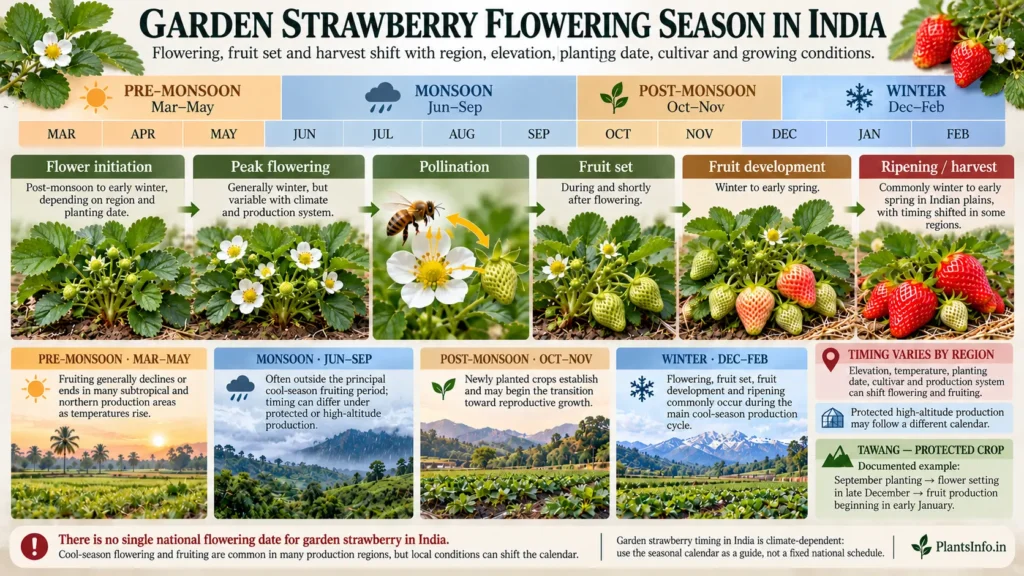
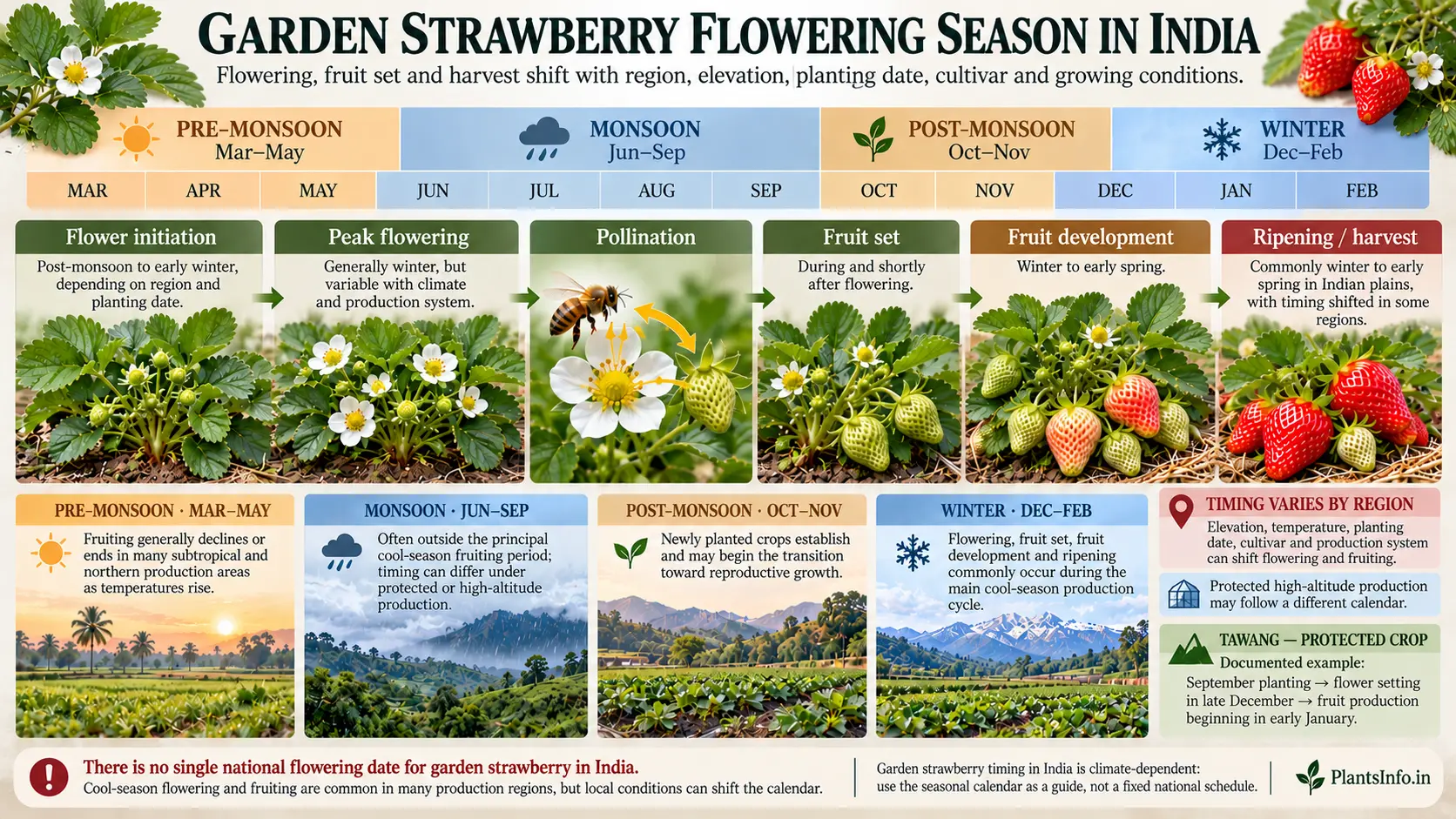
In many Indian strawberry-growing regions, garden strawberry is planted after the monsoon and flowers during the cooler part of the growing cycle, with fruit developing and ripening mainly through winter and into early spring. The exact sequence varies with region, planting date, cultivar and growing conditions; protected high-altitude production can follow a different calendar.
See also: Garden Strawberry plant profile, how to grow it, common problems, seasonal care, and its benefits.
Biological Timing at a Glance
| Biological stage | Typical period |
|---|---|
| Flower initiation | Post-monsoon to early winter, depending on region and planting date |
| Peak flowering | Generally winter; timing varies with climate and production system |
| Fruit set | During and shortly after flowering |
| Fruit development | Winter to early spring |
| Ripening/harvest | Commonly winter to early spring in Indian plains; later or otherwise shifted in some regions |
Indian observations demonstrate the importance of regional variation. In a protected strawberry crop at Tawang, a September-planted crop began setting flowers in the last week of December and produced fruit in the first week of January. In eastern India’s subtropical plains, strawberry production is associated with the winter growing period.
Recommended Products
Disclosure: As an Amazon Associate, PlantsInfo may earn from qualifying purchases.
🌱 Growing Essentials
The following products can help with container gardening, potting, root development, soil management, and healthy plant growth.
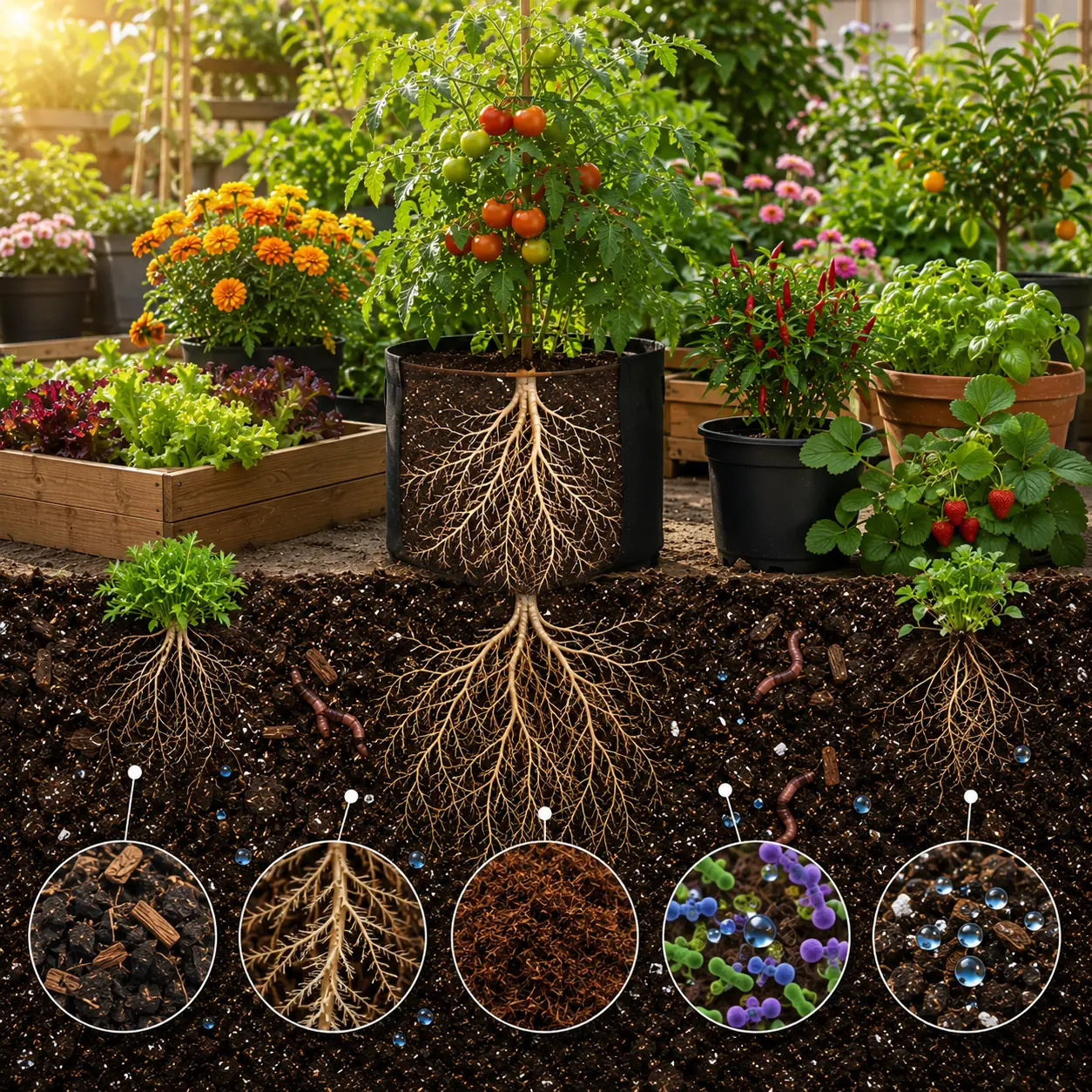
Organic Potting Soil Mix
Provides nutrients, structure, and healthy growing conditions for container plants.
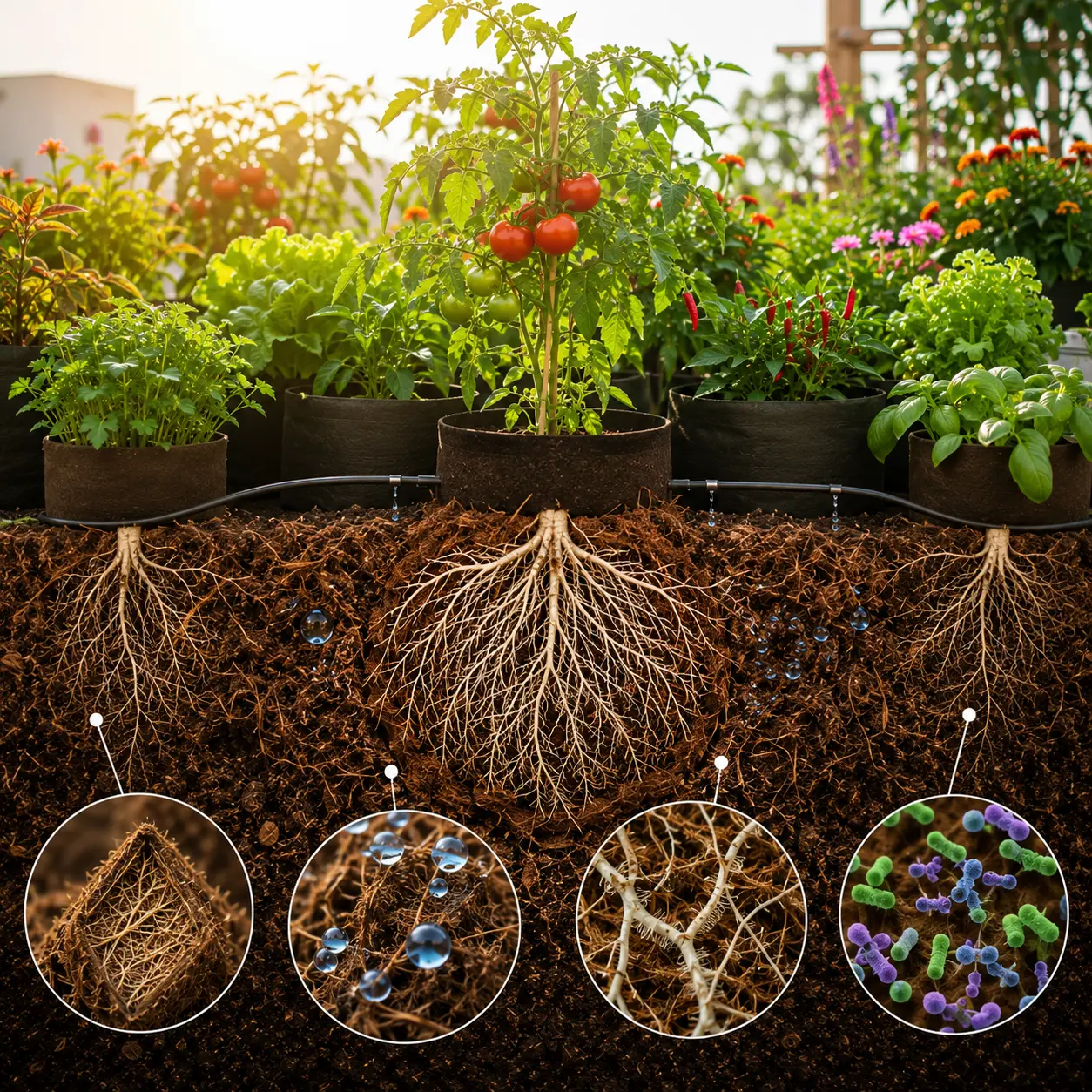
Coco Peat Growing Medium
Enhances moisture retention while maintaining excellent root-zone aeration.

Grow Bags for Plants
Improve drainage, root aeration, and vegetable production in limited spaces.

Plastic Pots for Plants
Ideal containers for seedlings, ornamentals, herbs, and balcony gardens.
Introduction
A strawberry crop can move surprisingly quickly from the appearance of white flowers to recognisable green fruit. In India, however, there is no single national flowering date: elevation, temperature, planting date, cultivar, and production system can shift the sequence substantially.
India’s Seasons and This Plant
| Season (months) | What the plant is doing |
|---|---|
| Pre-monsoon (Mar–May) | Fruiting generally declines or ends in many subtropical and northern production areas as temperatures rise; plants may remain vegetative or enter a less productive period. |
| Monsoon (Jun–Sep) | In many Indian production areas, this is outside the principal cool-season fruiting period; timing can differ under protected or high-altitude production. |
| Post-monsoon (Oct–Nov) | Newly planted crops establish and begin the transition toward reproductive growth; flower initiation may begin depending on planting date and environment. |
| Winter (Dec–Feb) | Flowering, fruit set, fruit development and ripening commonly occur during the main cool-season production cycle. |
Flowering Season in Detail
For many Indian production systems, flowering begins after plants have experienced the cooler post-monsoon conditions. Research from the Shivalik foothills of Himachal Pradesh recorded first flower opening around 21 January in several observations, while an ICAR report from high-altitude Tawang recorded flower setting as early as the last week of December in a September-planted protected crop. These examples illustrate why a single nationwide flowering date would be misleading.
Flowering can continue for an extended period rather than occurring on one day. Older Indian research summarized substantial cultivar differences in the commencement and duration of flowering, further supporting the use of a regional rather than universal calendar.
Temperature and day length both influence strawberry developmental timing. For short-day types, shorter days help induce flower buds, while temperature influences the rate at which development proceeds. Strawberry production literature also recognizes June-bearing and day-neutral types with substantially different flowering patterns, so the cultivar’s flowering response matters when interpreting a calendar.
Pollination Biology
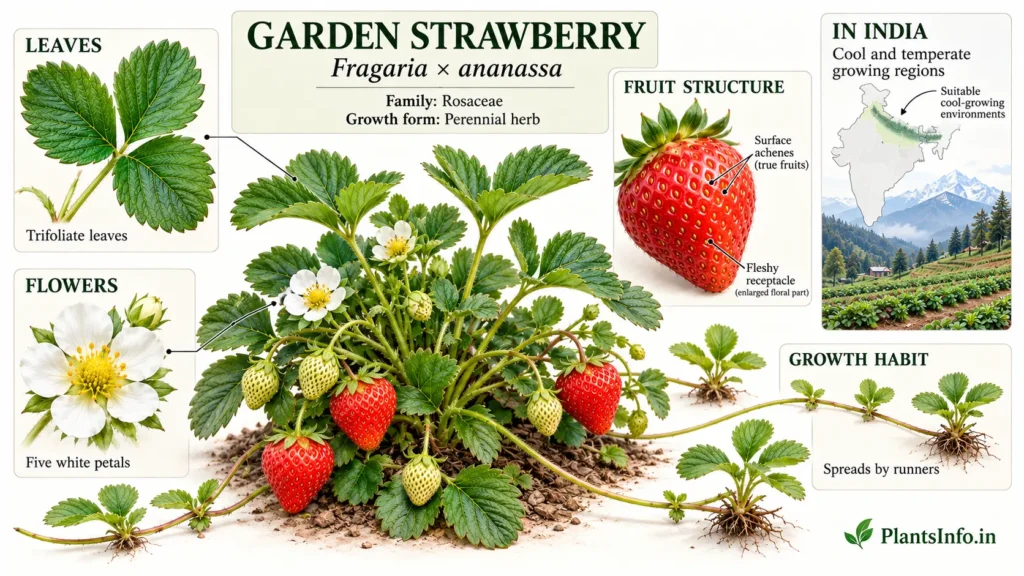
Garden strawberry flowers are generally self-fertile, so a second strawberry cultivar is not normally required for fruit set. However, insects such as bees and flies are important pollinators, and more complete pollination of the many flower structures contributes to well-formed fruit.
Pollination is therefore most relevant during the flowering period. Cool, rainy conditions can reduce pollinator activity, which can affect pollination completeness and subsequently fruit shape or size.
Fruiting Season
Fruit begins developing after successful pollination and passes through a green developmental stage before becoming fully coloured. Under suitable conditions, strawberries can reach harvest maturity roughly four weeks after full bloom; Penn State Extension gives approximately 28–30 days as a general interval, although Indian timing can vary with temperature and production system.
In Indian plains, the main fruiting and harvesting period commonly falls from winter into early spring. An ICAR source describes fruit maturation beginning around the end of February or the first week of March in one northern production context, while other Indian systems can begin substantially earlier.
A ripe strawberry is normally identified by strong, even colour development across the visible fruit, together with the characteristic ripe aroma and softened texture. If fruit remains on the plant beyond its optimum maturity, quality deteriorates, and the fruit becomes increasingly vulnerable to physical damage and decay.
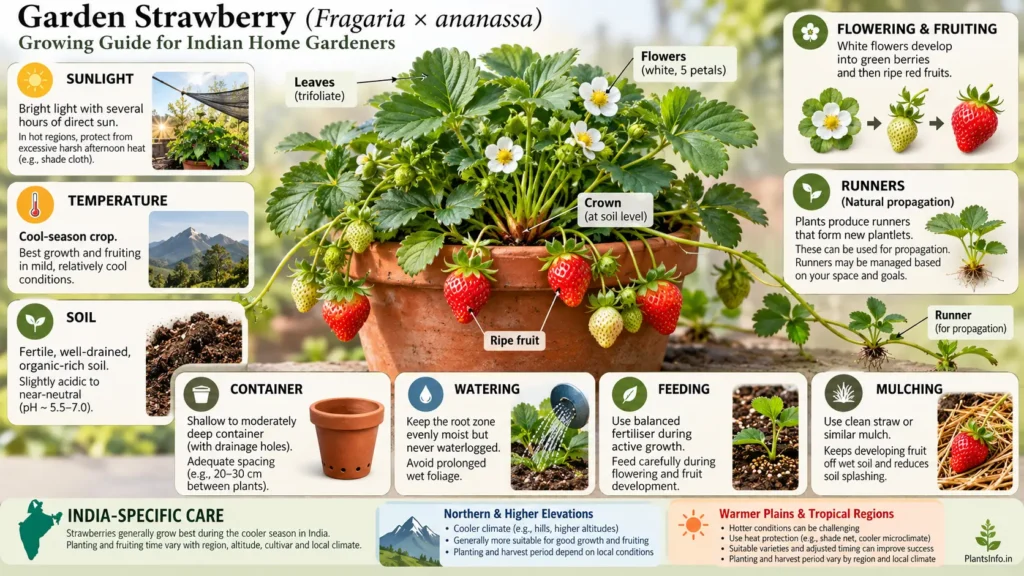
Best Time to Plant
For many Indian plains and subtropical production systems, the principal planting window falls in the post-monsoon period, broadly around October–November, although the appropriate window shifts with region and production system. Research in the Terai zone of West Bengal evaluated planting from early October through early December, while ICAR research in Bihar similarly examined October and November planting dates.
The biological reason is straightforward: planting after the monsoon allows establishment before the cooler conditions associated with reproductive development and fruit production. In high-altitude protected production, however, the calendar can differ substantially; ICAR’s Tawang work, for example, recorded a September-planted crop flowering in late December.
A second planting option may therefore exist in regions with a different temperature regime, but there is no single alternative window that applies reliably across India.
Month-by-Month Calendar
| Month | Season | What the Plant Is Doing |
|---|---|---|
| January | Winter | Flowering, fruit set and fruit development can occur; early or established crops may also have ripe fruit. |
| February | Winter | Flowering and fruit development continue in many Indian production areas, with increasing numbers of ripe fruits in suitable regions. |
| March | Pre-monsoon | Fruit ripening and harvest may continue into early spring, while reproductive activity generally declines as temperatures rise. |
| April | Pre-monsoon | The principal cool-season fruiting period is generally ending in northern and subtropical plains; heat increasingly limits reproductive activity. |
| May | Pre-monsoon | Little principal-season fruit production occurs in many Indian plains; the plant is outside its main cool-season reproductive window. |
| June | Monsoon | Generally outside the principal winter fruiting cycle in Indian plains. |
| July | Monsoon | Generally outside the principal cool-season flowering and fruiting cycle in Indian plains, although protected or high-altitude systems can differ. |
| August | Monsoon | Usually a non-peak reproductive period in conventional Indian plains production. |
| September | Monsoon | Planting may begin in some high-altitude or region-specific systems; reproductive timing depends strongly on location and production system. |
| October | Post-monsoon | Planting and establishment commonly occur in many Indian production regions; reproductive development begins to respond to the changing environment. |
| November | Post-monsoon | Newly established crops progress toward reproductive growth; early flowering may occur in some regions or production systems. |
| December | Winter | Flower initiation and flowering become prominent in suitable regions; early fruit set may occur. |
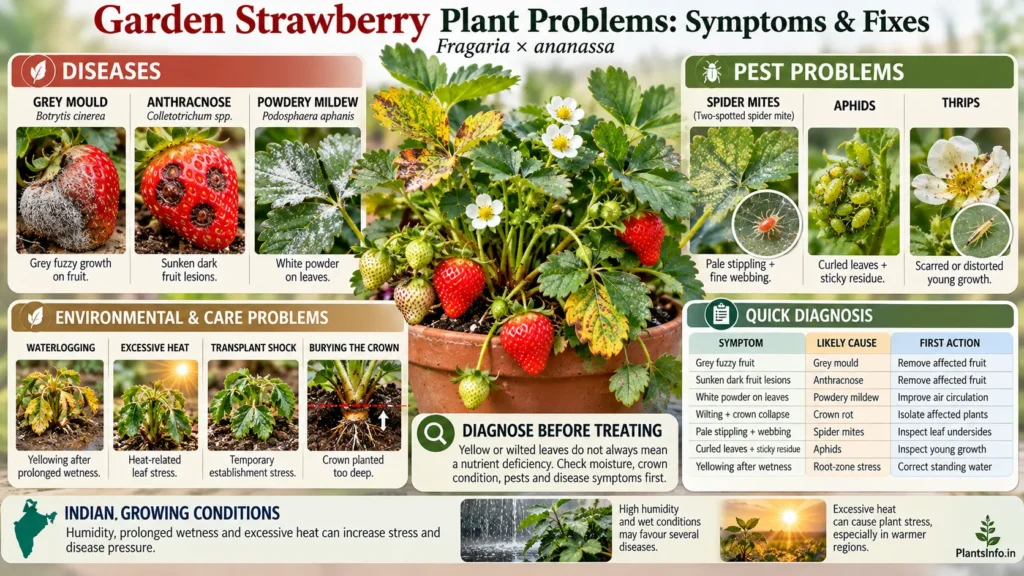
What Can Go Wrong Seasonally?
Heat during the pre-monsoon period: Rising temperatures can shorten or end the principal flowering and fruiting period in subtropical plains.
Poor pollination during cool, wet flowering weather: Reduced insect activity during bloom can result in incomplete pollination and subsequently smaller or misshapen fruit.
Frost during flowering: Open strawberry blossoms are substantially more vulnerable to freezing temperatures than developing young green fruit, so a cold event during bloom can cause flower damage.
Poor pollination can sometimes be mistaken for a problem with fruit development itself because the visible result may be small or misshapen fruit rather than an obvious failure at flowering.
Post-Harvest or Post-Bloom Care
After the principal fruiting period, reproductive activity generally declines as temperatures rise in subtropical production areas. The plant may remain vegetative for a period before entering a less productive phase or transitioning into the next production cycle, depending on climate and cultivar.
Conclusion
Garden strawberry follows a strongly climate-dependent reproductive calendar in India, with cool-season flowering and fruiting predominating but substantial regional variation in the exact dates.