How to Identify Carrot Plant Problems: Symptoms, Causes, and Fixes

Quick Answer
Carrot problems can arise from diseases, pests, root damage, environmental stress, or post-harvest conditions, and similar symptoms can have different causes. Start by identifying the visible symptom, then examine the affected foliage, roots, and growing conditions before choosing a corrective action.
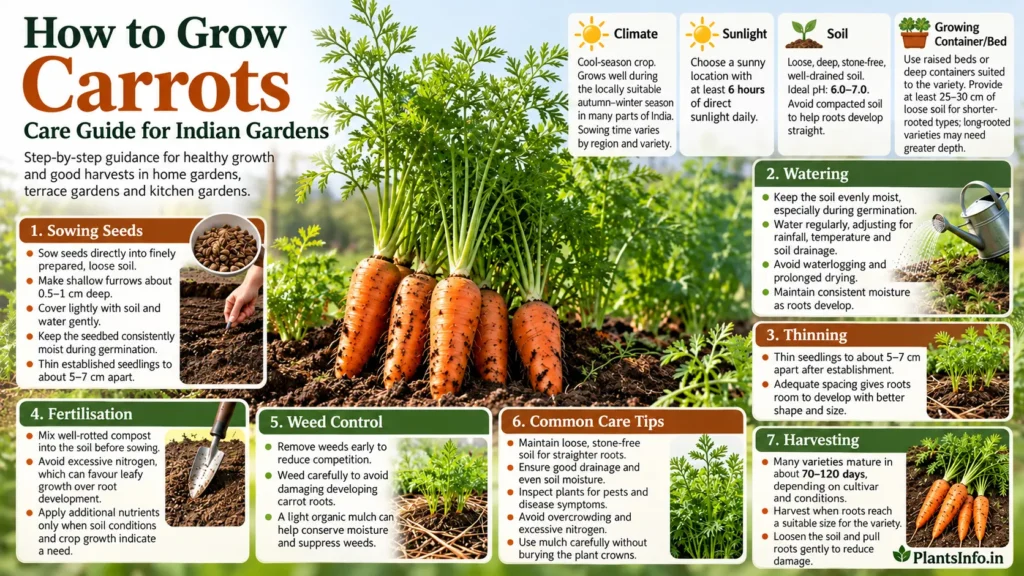
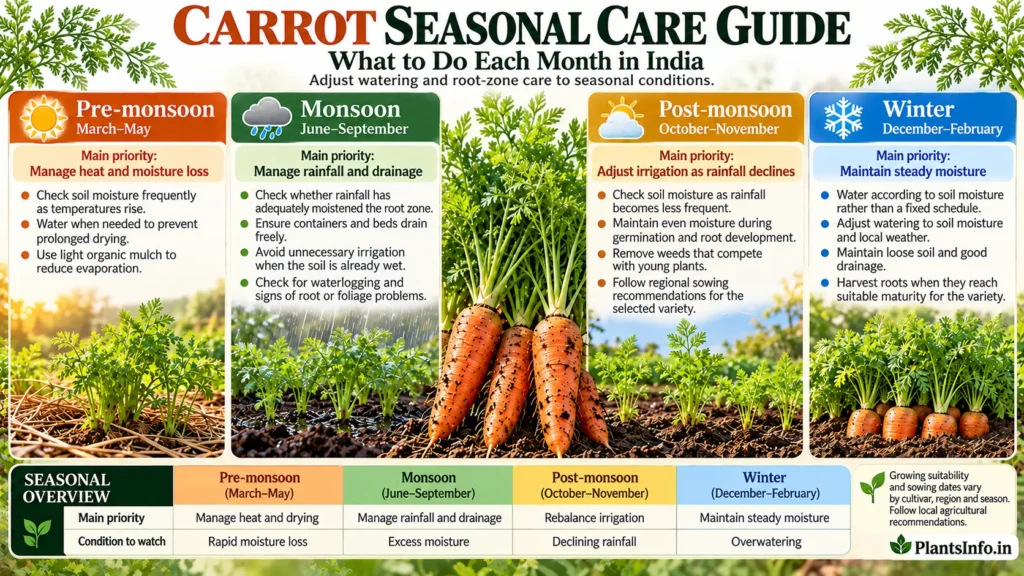
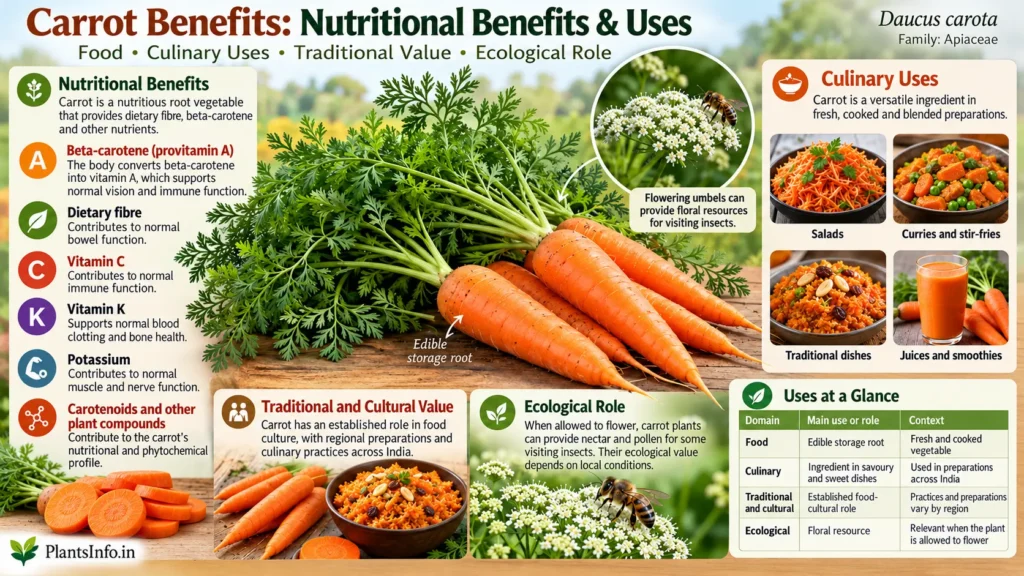
See also: Carrot plant profile, how to grow it, seasonal care, its flowering season, and its benefits.
Introduction
Carrot problems may appear in the foliage, roots, soil, or storage area, so a visible symptom does not always identify the underlying cause. Regular inspection, careful handling, suitable growing conditions, and prompt removal of affected material can help limit the development or spread of many problems.
Recommended Products
Disclosure: As an Amazon Associate, PlantsInfo may earn from qualifying purchases.
🌱 Growing Essentials
The following products can help with container gardening, potting, root development, soil management, and healthy plant growth.
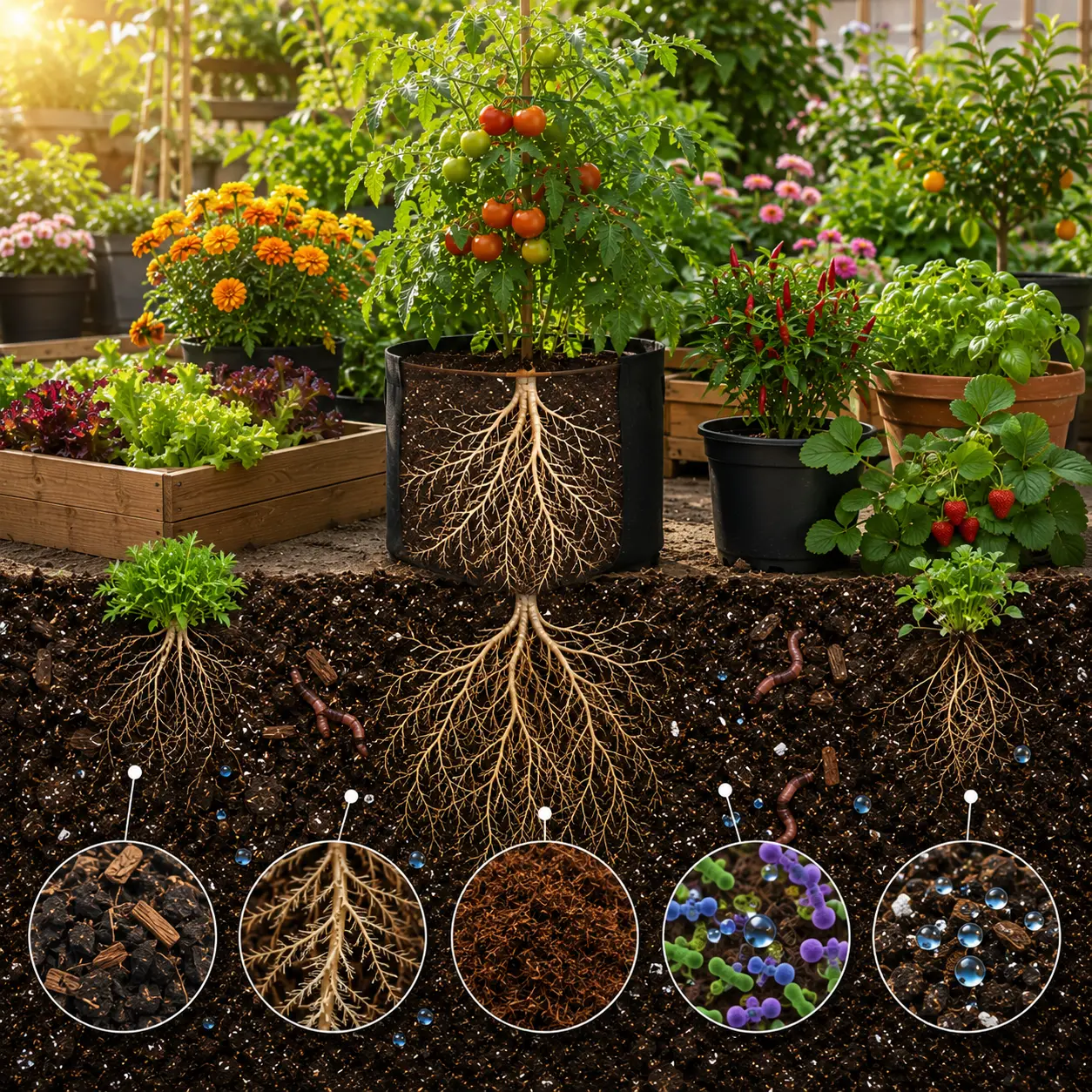
Organic Potting Soil Mix
Provides nutrients, structure, and healthy growing conditions for container plants.
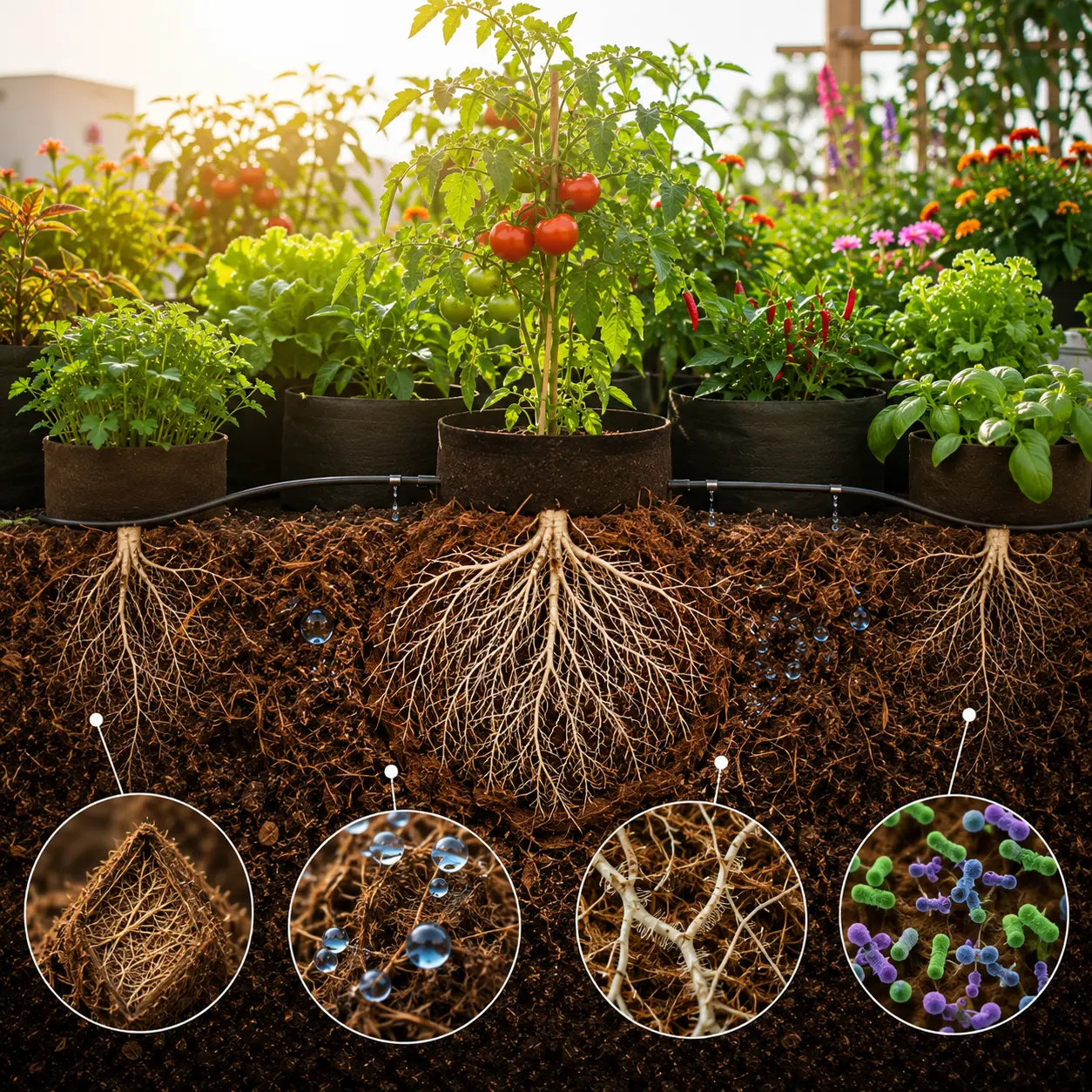
Coco Peat Growing Medium
Enhances moisture retention while maintaining excellent root-zone aeration.

Grow Bags for Plants
Improve drainage, root aeration, and vegetable production in limited spaces.

Plastic Pots for Plants
Ideal containers for seedlings, ornamentals, herbs, and balcony gardens.
Quick Diagnosis
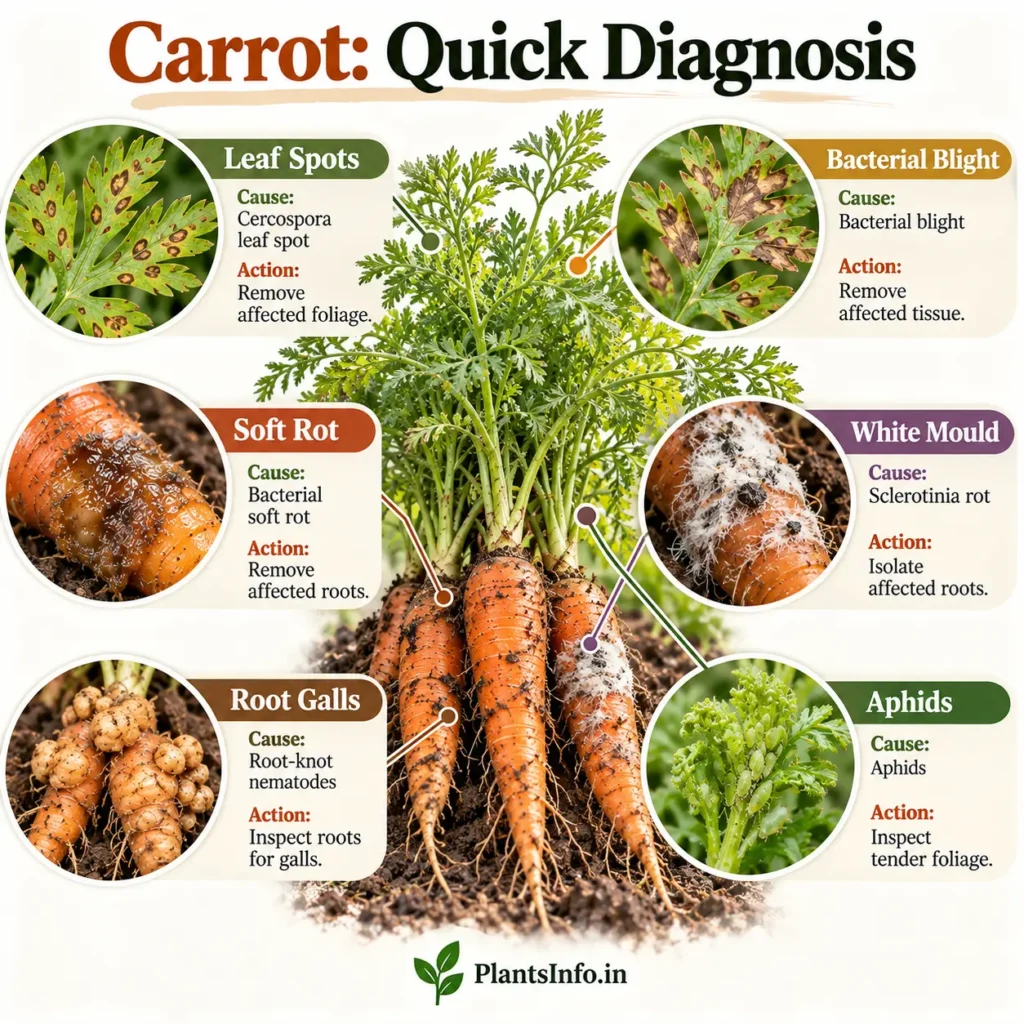
| Symptom | Most Likely Cause | First Action |
|---|---|---|
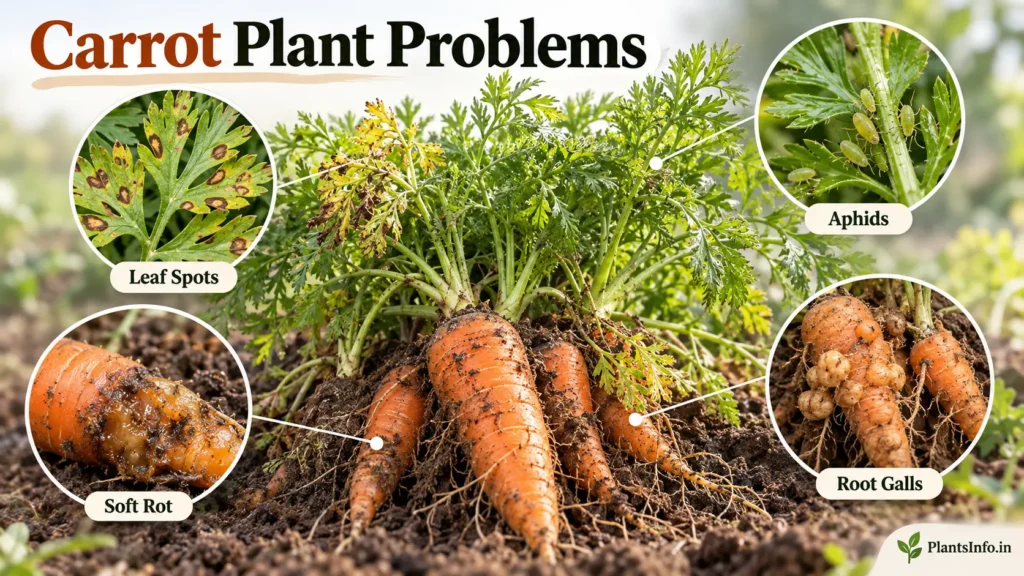
| Small brown leaf spots | Cercospora leaf spot | Remove affected foliage |
| Irregular brown leaf spots | Bacterial blight | Remove affected tissue |
| Water-soaked, soft roots | Bacterial soft rot | Remove affected roots |
| White mould on stored roots | Sclerotinia rot | Isolate affected roots |
| Galled, stunted roots | Root-knot nematodes | Inspect roots for galls |
| Curling, distorted young leaves | Aphids | Inspect tender foliage |
Diseases
Cercospora Leaf Spot
Cercospora leaf spot can produce small chlorotic or brown lesions on carrot leaves, often beginning around leaf margins and spreading across the foliage. Severe infection can result in larger areas of dead tissue.
The disease is caused by Cercospora carotae. Management focuses on removing heavily affected plant material and avoiding the retention of infected residues around later plantings.
Bacterial Blight
Bacterial blight can produce irregular brown leaf spots, dark streaks on petioles, and blighting of affected tissues. Early lesions may appear yellow before becoming dry and brittle.
The causal bacterium is Xanthomonas campestris pv. carotae. Management focuses on removing affected material, using clean seed, and maintaining field sanitation. Already damaged tissue cannot be reliably restored by treatment.
Bacterial Soft Rot
Bacterial soft rot produces water-soaked, soft or slimy root tissue that may become grey to brown and develop an unpleasant odour. Infection can enter through cultivation wounds, harvest bruises, or other damaged areas.
The causal bacterium is Erwinia carotovora subsp. carotovora. Established soft rot cannot be reversed. Remove affected roots and reduce opportunities for root injury during cultivation and harvest.
Sclerotinia Rot
Sclerotinia rot, also called white mould, can produce water-soaked dark lesions followed by abundant white cottony fungal growth and black sclerotia. In storage, affected roots can spread the fungus to neighbouring carrots.
The causal fungus is Sclerotinia sclerotiorum. Remove visibly affected roots rather than storing them with healthy produce, and maintain suitable storage ventilation.
Pest Problems
Root-Knot Nematodes
Root-knot nematodes are microscopic plant-parasitic roundworms. Affected plants may remain stunted or yellow while the roots develop characteristic galls that reduce root quality.
The causal group is Meloidogyne spp. Crop rotation is an important preventive measure where root-knot problems are known to occur. Chemical control should use only a nematicide currently registered and labelled for use on carrot in the relevant jurisdiction.
Aphids
Aphids are small, soft-bodied insects that commonly cluster on tender foliage. Feeding can cause curling, distortion, and weakening of young growth, and the resulting symptoms can sometimes resemble a disease.
For light infestations, a strong water spray can dislodge aphids. Where chemical control is necessary, use only an insecticide registered and labelled for aphids on edible crops.
Leafhoppers
Leafhoppers are small, mobile insects that may jump or fly away when disturbed. Their feeding can cause stippling, yellowing, or reduced plant vigour.
Because these symptoms can resemble nutritional or disease problems, inspect the foliage for the insects themselves before assigning a cause. Remove heavily infested foliage where practical and encourage natural enemies; if chemical control is necessary, use only a registered product labelled for the identified leafhopper and carrot crop.
Chemical Safety Disclaimer:
This information is for general guidance only. Always read product labels before applying any pesticide or fungicide. Follow state agriculture department guidelines for food crops. Keep children and pets away during and after application.
Environmental and Care Mistakes
Prolonged Water Saturation
Persistently saturated soil can increase the risk of root-rotting problems, particularly where drainage is poor. Where affected roots are already present, remove severely damaged material and correct the conditions contributing to continued saturation.
Compacted Soil
Compacted soil can restrict the developing taproot and contribute to misshapen or forked carrots. The physical restriction should be corrected before the next crop rather than allowing the same condition to persist.
Sudden Moisture Changes
A rapid increase in soil moisture after prolonged dryness can cause carrot roots to split. This is a physiological disorder rather than an infectious disease, and more even moisture conditions can reduce the risk.
Storing Damaged Roots
Bruised or wounded carrots are more vulnerable to post-harvest soft rots because damaged tissue can provide entry points for pathogens. Separate damaged roots from sound ones and avoid storing visibly infected carrots with healthy produce.
Prevention Protocol
- Before planting: Where root-knot nematodes are a known problem, avoid repeatedly growing carrots in the same affected soil and use crop rotation.
- During crop growth: Inspect foliage regularly for early leaf spots and sap-feeding insects.
- At harvest: Handle roots carefully to minimise bruising and wounds.
- During storage: Remove visibly diseased roots promptly and maintain suitable ventilation and cool conditions where possible.
Frequently Asked Questions
Are root-knot nematodes insects?
No. Root-knot nematodes are microscopic plant-parasitic roundworms that attack roots and produce characteristic galls.
Can a carrot with established soft rot be saved?
No. Established soft rot cannot be reversed. Remove affected carrots from contact with healthy produce rather than treating them as sound roots.
Are all yellow carrot leaves caused by disease?
No. Yellowing can result from pests, root problems, or environmental stress. Examine both the roots and growing conditions before assigning a disease diagnosis.
Conclusion
Effective diagnosis starts with the symptom but should not end there. Examining the affected plant part and the surrounding growing or storage conditions helps distinguish disease, pest damage, physiological disorders, and post-harvest problems before corrective action is taken.