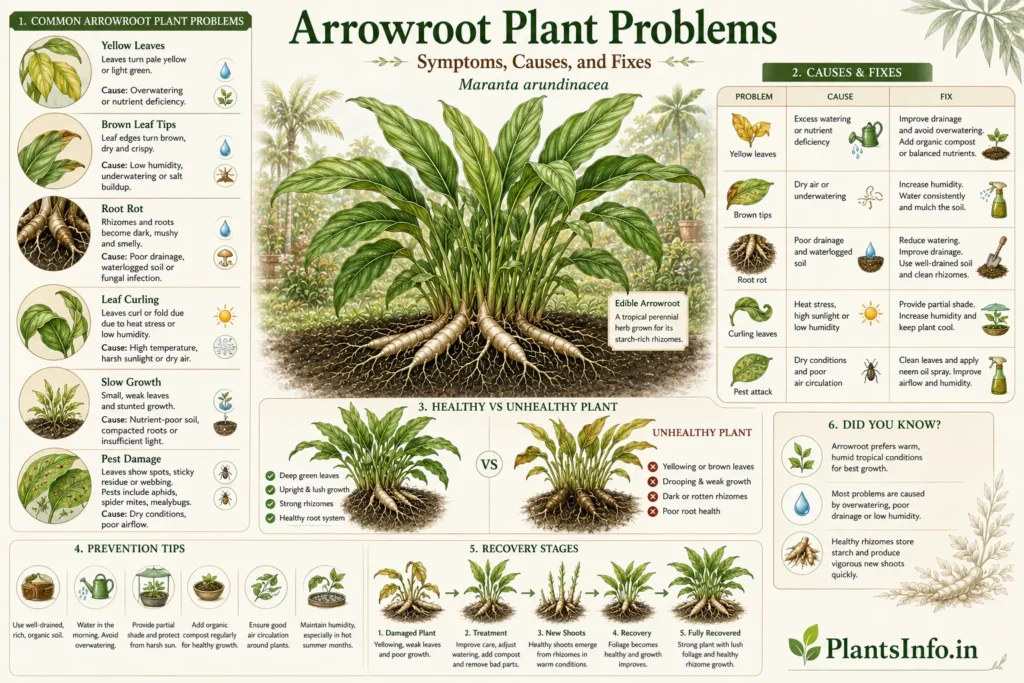
Arrowroot Plant Problems: Symptoms, Causes, and Fixes
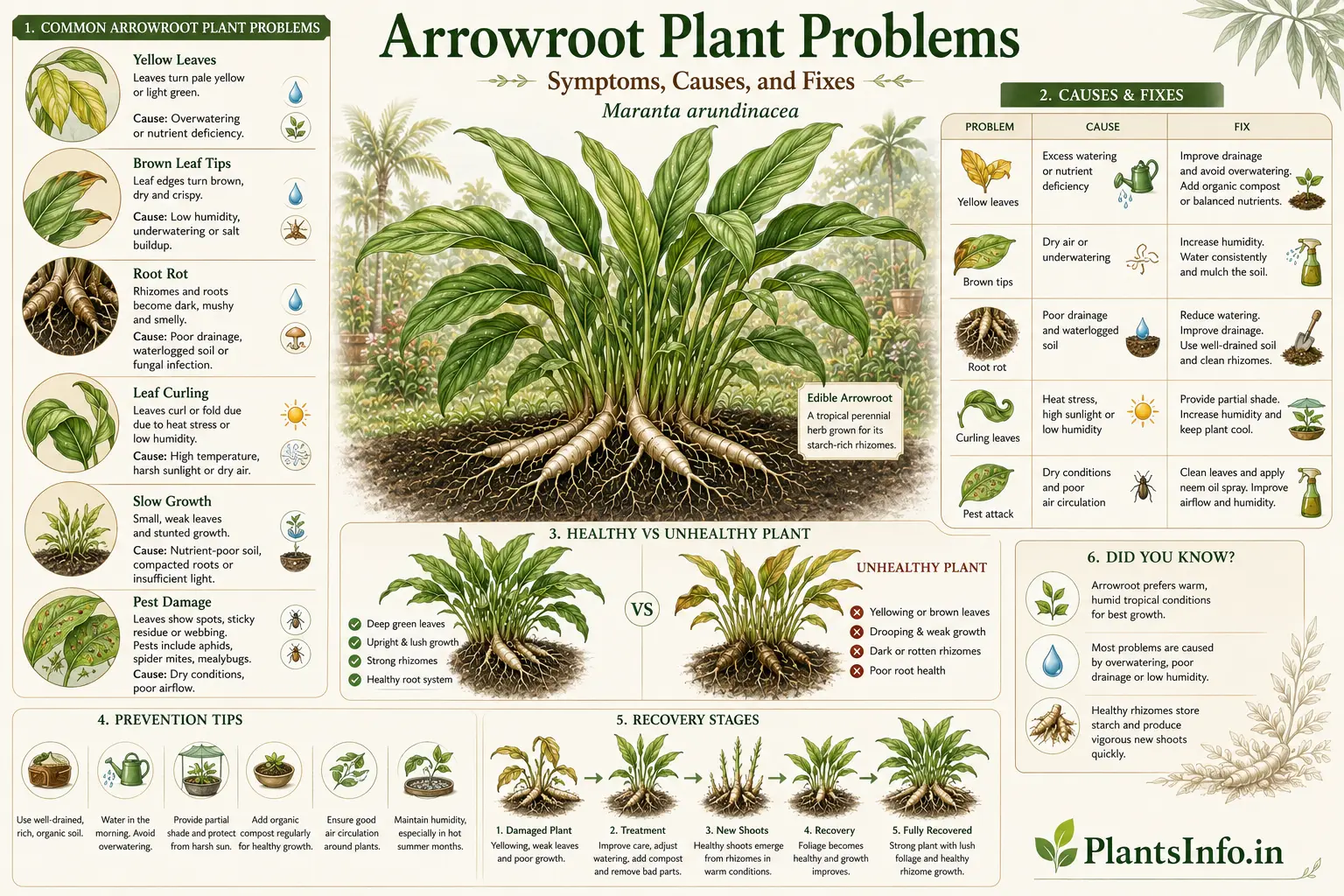
Quick Answer: Arrowroot is a hardy, low-maintenance plant and serious problems are uncommon in well-sited gardens. The vast majority of issues trace back to waterlogged soil, insufficient shade, or slug damage during establishment — all preventable with simple measures before planting.
See also: Arrowroot plant profile, how to grow it, its flowering season, its benefits, and its varieties.
There is a reason arrowroot has been grown in South Indian homegardens for centuries without the kind of intensive management that most food crops require. In appropriate conditions — shade, loose, moist soil, good drainage — it looks after itself. When problems appear, the diagnostic question to ask first is almost always the same: Is this plant in the right place? Most arrowroot problems are location problems, not pathogen problems.
Recommended Products
Disclosure: As an Amazon Associate, PlantsInfo may earn from qualifying purchases.
🌱 Growing Essentials
The following products can help with container gardening, potting, root development, soil management, and healthy plant growth.
Organic Potting Soil Mix
Provides nutrients, structure, and healthy growing conditions for container plants.
Coco Peat Growing Medium
Enhances moisture retention while maintaining excellent root-zone aeration.

Grow Bags for Plants
Improve drainage, root aeration, and vegetable production in limited spaces.

Plastic Pots for Plants
Ideal containers for seedlings, ornamentals, herbs, and balcony gardens.
Quick Diagnosis
| Symptom | Most Likely Cause | First Action |
|---|---|---|
| Soft, discoloured rhizomes at harvest | Rhizome rot (waterlogging) | Improve drainage before replanting; discard affected rhizomes |
| Brown leaf edges, papery texture | Sun scorch or low humidity | Move to deeper shade; increase mulch layer |
| Irregular holes in young leaves | Slug or snail damage | Check soil surface at night; apply physical barrier |
| Yellow-brown spots on leaf surface | Fungal leaf spot | Remove affected leaves; apply copper fungicide |
| Stunted growth, sparse shoots | Root-bound / poor soil | Amend soil; divide and replant in fresh mix |
| Wilting despite moist soil | Stem or rhizome rot | Examine base and rhizomes for soft tissue |
| Pale, etiolated shoots | Insufficient light (rare) | Relocate if light is extremely poor |
Diseases
Rhizome Rot
Rhizome rot is the most serious and common disease of arrowroot in Indian home gardens. It is caused primarily by water-mould pathogens — Phytophthora and Pythium species — that thrive in persistently anaerobic, waterlogged soil. The first visible symptoms are soft, discoloured patches on the rhizomes, visible only at harvest or when a plant is lifted. Above ground, the symptom is progressive wilting and yellowing of the aerial stems even when soil moisture appears adequate.
Once rhizome rot is established on most of the root system, the plant cannot be saved. The rhizomes should be removed and destroyed — do not compost rotted material. Replace the soil in the affected bed before replanting, as Phytophthora spores persist in soil.
Replanting in the same unimproved location is the single most common reason arrowroot gardeners experience repeated crop failure. The only reliable management is prevention: plant in loose, well-drained soil; raise the bed if necessary; and never allow water to pool at the root zone during the monsoon.
Fungal Leaf Spot
Fungal leaf spot appears as round to irregular brown or tan spots on the leaf surface, sometimes with a yellow halo, most commonly during and after the monsoon when humidity is highest. It is caused by Cercospora, Helminthosporium, and related fungal species. On arrowroot, leaf spot is primarily cosmetic — it reduces the plant’s ornamental appearance but rarely threatens the rhizome crop in an established planting unless it becomes very severe and defoliates the plant early in the season.
Remove and dispose of affected leaves promptly. Apply copper oxychloride fungicide at the label-specified dilution to the remaining foliage. The most effective prevention is adequate spacing between plants (30–40 cm) to allow airflow and reduce leaf-to-leaf humidity, combined with avoiding overhead watering.
Soft Rot (Bacterial)
Bacterial soft rot, caused by Pectobacterium (formerly Erwinia) species, produces a water-soaked, rapidly spreading decay of stem bases and rhizomes with a characteristically foul smell. It is most common in very humid conditions with poor drainage and is sometimes confused with Phytophthora rhizome rot — the distinguishing feature is the foul odour associated with bacterial soft rot, which is absent or much milder in fungal rot.
There is no effective curative treatment for bacterial soft rot. Remove and destroy affected plant material immediately. Improve drainage and reduce humidity at the planting site. Allow the soil to dry between waterings if this can be managed without stressing healthy plants. Copper-based bactericide applied as a preventive to healthy stems in the post-monsoon humid period can reduce recurrence.
Leaf Blight
In conditions of very high humidity combined with poor airflow — typical of dense underplanting in enclosed homegardens — leaf blight can cause large, irregular water-soaked lesions that expand rapidly and collapse entire leaves. It is less common than leaf spot but more damaging when it does appear. Management is the same as for bacterial soft rot: remove affected material, improve airflow, reduce overhead moisture, and apply copper-based fungicide or bactericide preventively to remaining healthy foliage.
This information is for general guidance only. Always read product labels before applying any pesticide or fungicide. Follow state agriculture department guidelines for food crops. Keep children and pets away during and after application.
Pest Problems
Slugs and Snails
Slugs and snails are the most common and damaging pests of young arrowroot in Indian home gardens, particularly during monsoon establishment when fresh shoots emerge from the soil into warm, moist conditions. They feed at night or on overcast days, leaving irregular holes in young leaves and occasionally severing entire shoots at the base. Because the damage is nocturnal, it is frequently attributed to disease by gardeners who inspect the plant in daylight.
Inspect the soil surface and undersides of leaves with a torch after dark to confirm slug or snail presence. Physical barriers — copper tape around container edges, a coarse sand or crushed eggshell perimeter around ground plantings — are effective deterrents.
Iron phosphate-based slug pellets (considered safe around pets and edible crops at label-specified rates) provide effective control. Avoid metaldehyde-based baits around food crops. In a modest home garden, hand-picking after dark is surprisingly effective and requires no chemicals.
This pest is most frequently misdiagnosed as caterpillar or grasshopper damage. The distinction: slug damage typically produces irregular, smooth-edged holes without the frass (droppings) that caterpillar feeding leaves behind.
Aphids
Aphids occasionally colonise arrowroot’s tender new growth during the pre-monsoon period, particularly on container-grown plants in warm, sheltered positions. They are typically green or yellow soft-bodied insects clustering on growing tips and leaf undersides. On arrowroot, aphid infestations are usually mild and respond well to a strong jet of water or two to three applications of neem oil spray (3–5 ml per litre of water with a small amount of dish soap as an emulsifier).
Red Spider Mites
Red spider mites are a stress pest on arrowroot, almost exclusively appearing on plants subjected to dry, hot conditions — most commonly in April–May when the plant is approaching dormancy in inland or dry-climate gardens. They produce fine webbing on leaf undersides and cause a yellow-bronze stippling or bronzing on the upper leaf surface. Because this symptom coincides with the natural senescence period of the plant, mite damage is often dismissed as seasonal decline rather than recognised as a pest problem.
If the plant is still several months from harvest when mite damage appears, neem oil spray with thorough undersurface coverage is effective. Increasing humidity around the plant by misting the foliage in the morning helps deter mite establishment. If the plant is close to harvest, the practical approach is simply to proceed with harvest — the rhizomes are not affected by foliar mite feeding.
This information is for general guidance only. Always read product labels before applying any pesticide or fungicide. Follow state agriculture department guidelines for food crops. Keep children and pets away during and after application.
Environmental and Care Mistakes
Planting in Direct Sun
Arrowroot in direct afternoon sun in Indian summer conditions develops brown, papery leaf edges within days and may enter premature dormancy, significantly reducing the rhizome bulking period and final yield. This is the most universally made mistake by first-time arrowroot growers — the assumption that a food crop needs maximum sun. Arrowroot is a shade plant. The fix is relocation or the addition of a shade structure (50% shade cloth is sufficient); it is not possible to harden an arrowroot plant to full sun through gradual exposure.
Inconsistent Moisture During Rhizome Bulking
The post-monsoon period (October–January) is when the rhizomes accumulate most of their starch mass. Gardeners who reduce watering aggressively after the monsoon ends — reasoning that the rains are over and the plant must be winding down — cause premature stress that arrests rhizome development.
The plant’s aerial parts may begin to look tired in this period, but the underground work is still active. Maintain moderate irrigation through November at a minimum in all but the wettest growing regions.
Harvesting Without Retaining Planting Stock
A surprisingly common mistake in home gardens: harvesting the entire rhizome clump for processing and having nothing left to replant at the next monsoon. At harvest time, always set aside 20–30% of the youngest, firmest rhizome pieces with visible buds before processing the rest. Store them in slightly moist sand in a cool, shaded location until the next planting window.
Using Small or Shallow Containers
Container growers who use pots under 25 cm in depth find that arrowroot rhizomes cannot extend properly — they buckle and deform against the container walls, producing poor starch yields and making harvest difficult. A minimum depth and width of 35–40 cm is needed for productive container cultivation.
Prevention Protocol
Before monsoon onset each year, verify that the planting site has active drainage — raised beds or mounded soil preparation is strongly recommended in gardens with any tendency toward waterlogging. Apply a fresh layer of organic mulch (dried leaves, paddy straw, or composted material) around the planting area after establishing rhizomes to maintain soil moisture and reduce slug habitat.
Inspect young shoots weekly during the first four weeks of the monsoon for slug damage and apply physical barriers promptly if found. Space plants at the recommended 30–40 cm minimum to ensure airflow and reduce conditions favouring fungal leaf diseases. Retain planting stock rhizomes at every harvest before processing begins — make this the first action, not an afterthought.
When to Give Up on a Plant
A planting where the majority of rhizomes are soft, discoloured, and foul-smelling at harvest is not worth replanting in the same location without active soil remediation. Remove all plant material, excavate the planting bed to 30 cm depth, and replace the soil entirely or improve drainage structurally (raised bed, added coarse sand layer at the base) before the next planting cycle.
In severe bacterial or Phytophthora rot cases, allowing the bed to dry completely through the pre-monsoon period before replanting is advisable. An individual plant above ground that has fully collapsed — soft stem base, no intact roots remaining — cannot be rescued and should be removed to prevent pathogen spread to adjacent healthy plants.
Conclusion: Arrowroot’s problems are almost entirely avoidable — site it correctly, drain it properly, and protect the young shoots from slugs at establishment, and the plant will repay that minimal effort with a reliable annual harvest