
Brahmi Plant Problems: Symptoms, Causes, and Fixes

Quick Answer: Brahmi is a resilient plant with a short list of genuine problems. Most issues — yellowing, wilting, stem rot — trace back to either insufficient water or, less commonly, completely stagnant, anaerobic soil. Pest pressure is low. When brahmi fails in Indian home gardens, it is almost always because the gardener treated it like a drought-tolerant herb and let it dry out.
See also: Brahmi plant profile, how to grow it, its flowering season, its benefits, and its varieties.
Pick up a neglected brahmi container and the diagnosis is usually immediate: dry, cracked soil, wilted stems, yellowing leaves. The plant is asking for the one thing it cannot compromise on. Give it water, and in most cases, it recovers within a week. The problems that don’t respond to rewatering are fewer, more specific, and almost all preventable — which is what this guide covers.
Recommended Products
Disclosure: As an Amazon Associate, PlantsInfo may earn from qualifying purchases.
🌱 Growing Essentials
The following products can help with container gardening, potting, root development, soil management, and healthy plant growth.
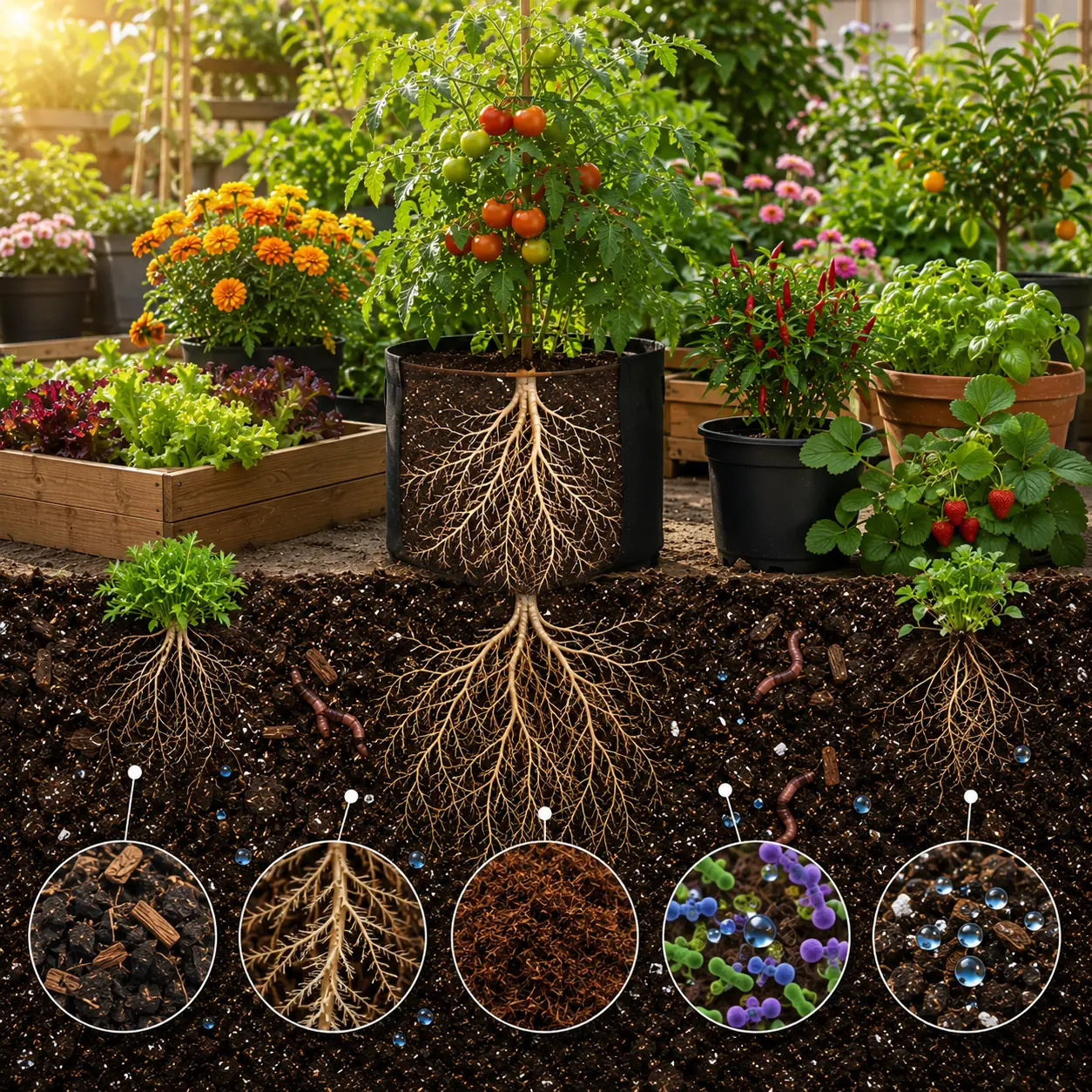
Organic Potting Soil Mix
Provides nutrients, structure, and healthy growing conditions for container plants.
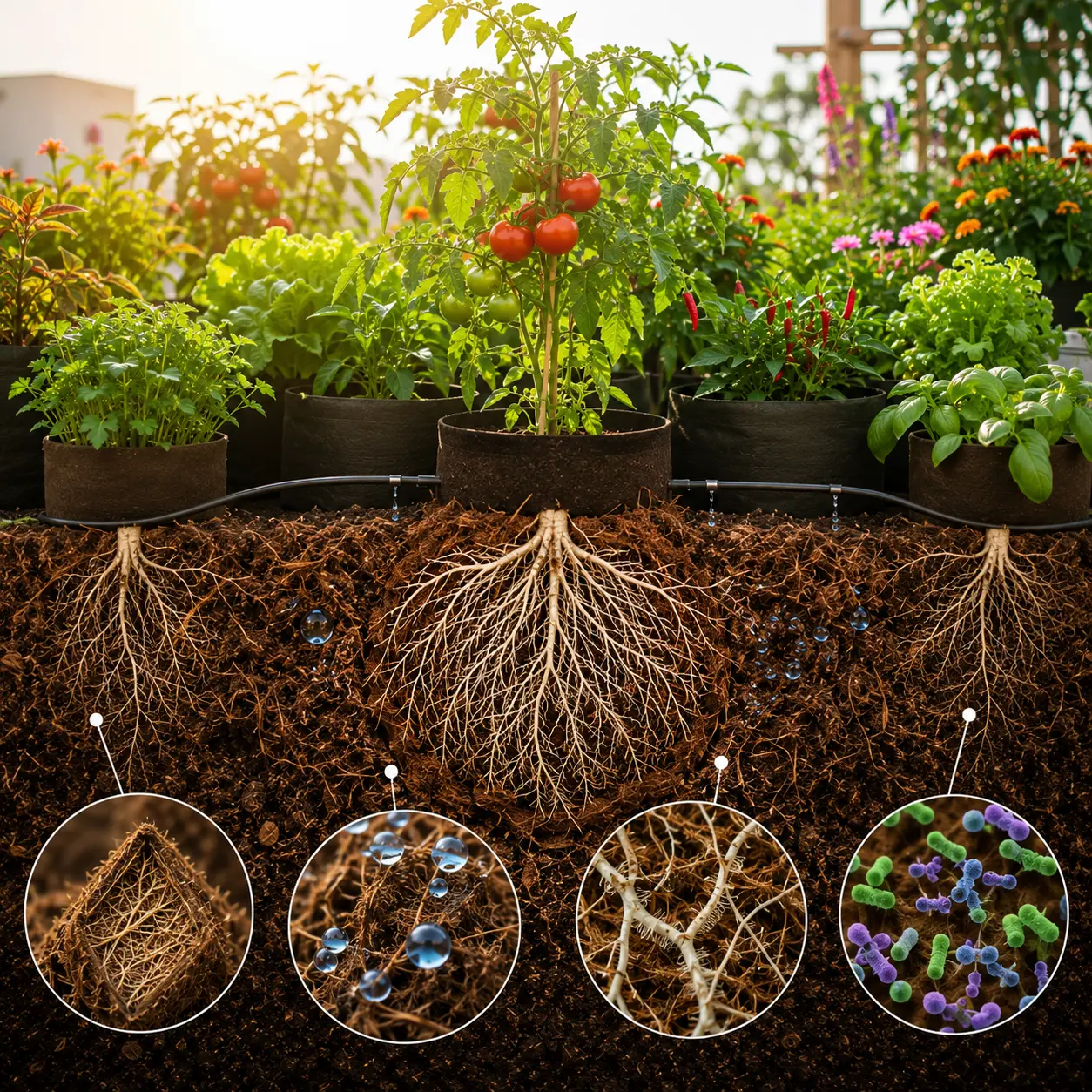
Coco Peat Growing Medium
Enhances moisture retention while maintaining excellent root-zone aeration.

Grow Bags for Plants
Improve drainage, root aeration, and vegetable production in limited spaces.

Plastic Pots for Plants
Ideal containers for seedlings, ornamentals, herbs, and balcony gardens.
Quick Diagnosis
| Symptom | Most Likely Cause | First Action |
|---|---|---|
| Wilting, dry soil | Underwatering | Water immediately; switch to tray method |
| Wilting, moist or wet soil | Anaerobic root rot or stem rot | Check roots; improve aeration |
| Yellowing leaves, wet soil | Waterlogging without aeration | Refresh soil; ensure oxygenated moisture |
| Yellowing leaves, dry soil | Underwatering or nutrient deficiency | Water; apply diluted organic liquid feed |
| Brown, mushy stem sections | Fungal stem rot | Cut above rot; repot in fresh soil |
| Small brown spots on leaves | Fungal leaf spot | Remove affected leaves; improve airflow |
| Sticky residue, curled new growth | Aphid infestation | Check stem tips; apply neem oil spray |
| White cottony patches | Mealybug | Remove manually; treat with rubbing alcohol |
| Pale, washed-out leaves | Insufficient light | Move to brighter position |
| Leggy, elongated stems with small leaves | Low light | Relocate to brighter indirect light |
Diseases
Brahmi’s disease resistance is generally good in appropriate conditions. Almost every disease that develops is a consequence of two conditions: waterlogging that becomes anaerobic (stagnant rather than simply wet) and poor airflow in dense mats.
Pythium Stem and Root Rot
The most serious disease threat to brahmi, Pythium rot, is distinct from simple waterlogging stress. Brahmi tolerates wet, oxygenated soil very well — it is, after all, a semi-aquatic plant. What it cannot tolerate is stagnant, airless soil where oxygen is depleted, and anaerobic conditions allow Pythium and related water moulds to proliferate. The symptom is stems that turn brown, soften, and collapse at or near soil level — initially in isolated sections, then spreading.
Affected tissue smells faintly sour. This is most common in containers with compacted old soil that has lost structure, or in pots sitting in the same water for extended periods without refreshing.
Treatment involves cutting all affected stem sections back to healthy tissue, repotting in fresh soil, and replacing the standing water in trays regularly — at least every two to three days — rather than allowing it to stagnate. Prevention is straightforward: never let tray water become stagnant; refresh it regularly.
Cercospora Leaf Spot
Cercospora leaf spot on brahmi produces small, circular brown spots with a slightly sunken centre and a yellow border — appearing first on older leaves and spreading upward in humid, airless conditions. It is most common during the peak monsoon months in dense mats where the interior leaves have minimal airflow. It is a cosmetic problem in mild cases and does not threaten the plant’s survival.
Remove affected leaves, thin the mat to improve airflow, and avoid wetting leaves when watering. A copper-based fungicide applied every ten to fourteen days controls spread in persistent cases. This disease is almost entirely preventable with periodic thinning of dense growth.
Powdery Mildew
Powdery mildew on brahmi is uncommon but occurs on plants in warm, dry conditions with poor airflow — occasionally in the post-monsoon period or on indoor plants near air conditioning. It appears as a white powdery coating on leaf surfaces. Diluted neem oil spray applied twice weekly manages mild cases. Ensure adequate airflow and avoid the conditions — dry warmth with still air — that trigger it. Powdery mildew on brahmi is manageable and rarely severe.
Damping Off in Propagation
When propagating brahmi from stem cuttings in communal trays, damping off can affect young cuttings in the first ten days if the growing medium becomes anaerobic from stagnant moisture. The symptom is cuttings that fail to root and instead collapse softly at the base. Unlike established plants, cuttings have no root reserve to survive any rotting episode. Use fresh, clean water for water propagation; change it every two to three days. For soil propagation, ensure the medium is moist but not waterlogged and stagnant.
Pest Problems
Aphids
Aphids are the most common brahmi pest in Indian gardens, clustering on new growth and stem tips — typically in the post-monsoon period from October onward as natural rainfall reduces and ant populations, which farm aphids, become more active. They cause curled, yellowed new growth and a sticky honeydew residue. For small infestations, a firm jet of water directed at colonies is effective and appropriate for a herb used in fresh-leaf consumption. For established infestations, neem oil spray (5 ml neem oil + 2 ml liquid soap per litre of water) every five to seven days for two to three weeks manages populations effectively. Because brahmi is often eaten fresh, avoid synthetic insecticides entirely and observe a ten-day gap between the last neem oil application and any leaf harvest.
Mealybugs
Mealybugs on brahmi appear as white cottony masses at stem nodes and leaf axils — more common on container plants in sheltered positions with limited natural predator access. They cause slow growth and yellowing. Remove manually with rubbing alcohol on a cotton swab for small infestations; treat with neem oil spray for established colonies. Mealybugs on brahmi spread slowly and are rarely severe, but check new cuttings carefully before introducing them to existing plants.
Grasshoppers and Caterpillars
In garden bed situations — particularly near paddy fields or grassland margins in rural settings — grasshoppers and leaf-feeding caterpillars occasionally damage brahmi, cutting or chewing leaves and stems. Because brahmi regrows rapidly from nodes, this damage is rarely serious unless very heavy. Hand removal is sufficient for light pressure. For persistent caterpillar feeding, Bacillus thuringiensis (Bt) spray is appropriate for a medicinal herb intended for consumption.
Snails and Slugs
In damp, shaded growing conditions — which brahmi’s preferred habitat naturally provides — snails and slugs are occasional pests, feeding on the fleshy leaves and leaving characteristic irregular holes and silvery mucus trails. Place coarse ash or crushed eggshell around the base of containers as a physical barrier. Beer traps work for garden beds. This pest is more common in cooler, wetter conditions and in the Northeast and coastal regions where humidity is consistently high.
This information is for general guidance only. Always read product labels before applying any pesticide or fungicide. Follow state agriculture department guidelines for food crops. Keep children and pets away during and after application.
Environmental and Care Mistakes
Treating Brahmi Like a Standard Herb
The universal mistake with brahmi is applying standard herb-growing watering logic — letting soil dry between waterings — to a semi-aquatic plant. A gardener who grows tulsi, curry leaf, and brahmi in a row and waters all three on the same schedule will consistently struggle with brahmi. The plant needs to be thought of separately, as closer to a water plant than a land herb. Switching to the tray method — pot sitting in 2–3 cm of water, refreshed regularly — resolves most chronic underwatering problems immediately.
Stagnant Water — The Nuanced Problem
Brahmi tolerates standing water, but only when that water is oxygenated and regularly refreshed. A container sitting in the same water for a week or more in warm weather develops anaerobic conditions at the root zone that cause Pythium rot even in a plant that normally loves moisture. Refresh tray water every two to three days. This is the single nuanced care point that most brahmi care guides miss — wet is good, stagnant is not.
Insufficient Light Indoors
Brahmi is frequently purchased as an indoor plant and placed in a position that receives too little light — a corridor, a shelf away from windows, or a room with only artificial lighting. In insufficient light, brahmi produces elongated, widely spaced leaves on stretched stems and is susceptible to fungal issues due to the slow transpiration in low-light conditions. It needs at least three to four hours of bright indirect light daily for healthy growth indoors. A bright east or west-facing windowsill is the minimum appropriate position.
Allowing Winter Die-Back to Become Permanent Loss
In North India, brahmi that is left outdoors from December to January and dies back completely above ground is frequently discarded by gardeners who assume the plant is dead. The roots survive mild winters and regrow strongly in March. Before discarding any brahmi plant after winter, check roots — white, firm roots at the base mean the plant is dormant, not dead. This mistake costs gardeners an established plant that would have regrown for free.
Prevention Protocol
Refresh tray water every two to three days during the growing season. This single habit prevents Pythium rot — the most serious disease threat to container brahmi — more effectively than any other single intervention.
Thin dense mats in September, before the post-monsoon humidity creates airless conditions at the base of the plant. Remove the central, most crowded portion of the mat, leaving outer, well-spaced stems. This prevents Cercospora leaf spot and maintains vigorous new growth throughout the plant.
Check stem tips for aphid colonies weekly from October through January — the post-monsoon period of peak aphid pressure. Early detection prevents the need for repeated treatment courses.
Quarantine new cuttings for one to two weeks before placing them in contact with established plants. Mealybugs are most often introduced through new nursery material and are difficult to detect on small cuttings.
For plants in North India, move containers under cover proactively in the first week of November — before the first cold night, not after. Cold damage to brahmi is fast and significant; prevention is simpler than recovery.
Frequently Asked Questions
Can I eat brahmi leaves from a plant treated with neem oil?
Yes, with a waiting period of at least ten days between the last neem oil application and leaf harvest. Rinse harvested leaves thoroughly in clean water before consumption.
My brahmi grows well outdoors but dies when I bring it indoors in winter — why?
The most common cause is the combination of lower light indoors and reduced air circulation, which together create conditions for fungal stem rot in a plant that is already slowing its growth due to temperature change. Place the indoor plant in the brightest available position, reduce watering to every two to three days (refreshing rather than pooling tray water), and ensure some airflow around the plant. Avoid placing it near a heater, which desiccates the air without warming the soil.
My brahmi leaves have tiny holes, but I can’t find any pests — what is causing this?
Small, irregular holes without visible insects most commonly indicate snail or slug feeding, which occurs at night. Check the plant after dark with a torch, or look for silvery mucus trails on the soil surface and pot rim in the morning. Place ash or crushed eggshell around the container base as a deterrent.
Brahmi is a forgiving plant for the gardener who understands its fundamental nature. Keep it wet, keep the water moving, give it light, and protect it from frost — the short list of requirements for a herb that has been growing in India’s wetlands for thousands of years without any help at all.


