
Mango Flowering Season: When and What to Expect in India

Quick Answer: Mango trees in India flower between December and February, with peak bloom in January across most of the country. Fruit ripens from April through August depending on the variety and region — Alphonso as early as April in the Konkan, Chausa as late as August in UP. Timing shifts by 4–6 weeks between the far south and the north.
See also: Mango plant profile, how to grow it, common problems, its benefits, and its varieties.
Come December in Malihabad or January in Ratnagiri, something happens to mango trees that stops you in your tracks: thousands of pale green flower clusters — manjari — push out of every branch tip at once, and the air carries a faint, honeyed scent. This is the moment the entire year of the mango has been building toward, and understanding it is the key to getting fruit from your own tree.
Recommended Products
Disclosure: As an Amazon Associate, PlantsInfo may earn from qualifying purchases.
🌱 Growing Essentials
The following products can help with container gardening, potting, root development, soil management, and healthy plant growth.
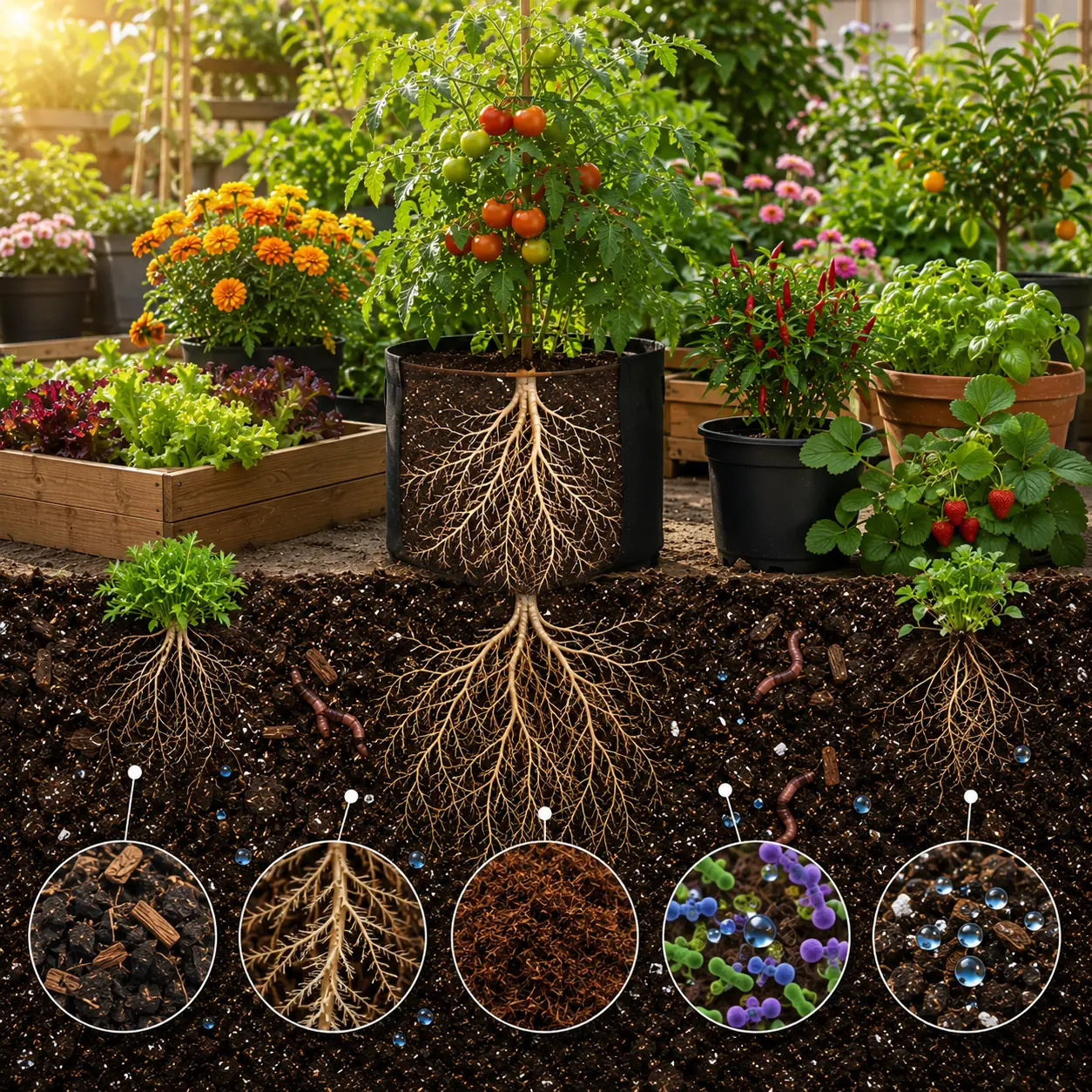
Organic Potting Soil Mix
Provides nutrients, structure, and healthy growing conditions for container plants.
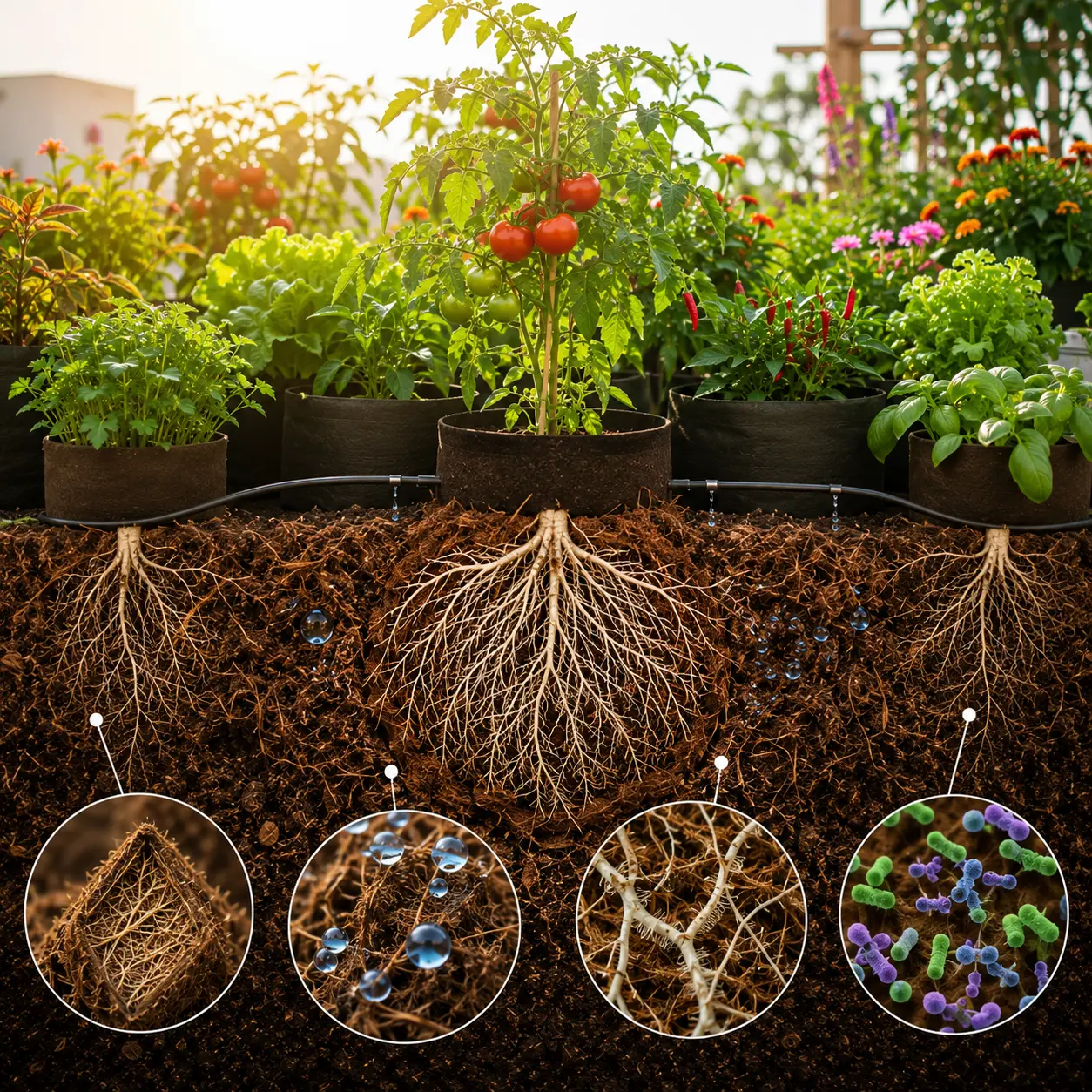
Coco Peat Growing Medium
Enhances moisture retention while maintaining excellent root-zone aeration.

Grow Bags for Plants
Improve drainage, root aeration, and vegetable production in limited spaces.

Plastic Pots for Plants
Ideal containers for seedlings, ornamentals, herbs, and balcony gardens.
India’s Seasons and This Plant
| Season (months) | What the plant is doing |
|---|---|
| Pre-monsoon (Mar–May) | Harvest continues for late varieties (UP, Bihar) through July; post-harvest flush of new vegetative growth; tree recovering. |
| Monsoon (Jun–Sep) | Vegetative growth slowing; flower bud differentiation beginning internally; best planting window. |
| Post-monsoon (Oct–Nov) | Vegetative growth slowing; flower bud differentiation beginning internally; best planting window |
| Winter (Dec–Feb) | Flowering — bud emergence, panicle development, and pollination; the most critical period of the year |
Flowering Season in Detail
Flower buds begin their internal differentiation from October onward, triggered by the drop in night temperatures and the dry conditions of early winter. What you see externally — the panicle pushing out of branch tips — begins from mid-December in the far south (Tamil Nadu, Kerala, coastal Andhra) and from January in central and north India.
Peak bloom varies by region and variety:
- South India (Tamil Nadu, Kerala, coastal Karnataka): December–January
- Deccan Plateau (Maharashtra, Telangana, interior Karnataka): January–February
- North India (UP, Bihar, Gujarat): January–March
Each panicle contains hundreds of small flowers, of which the vast majority are male. Only 1–25% of flowers on a panicle are hermaphrodite (capable of setting fruit), and only a fraction of those will actually set. This is entirely normal — a tree with a million flowers and 200 fruits is performing well.
Flowers last 3–4 weeks on the panicle. Pollination is primarily by flies and small bees. Cool, cloudy, or rainy weather during flowering significantly reduces pollinator activity and fruit set — this is one of the main reasons some seasons are poor even on healthy trees.
Fruiting Season in Detail
Fruit set occurs within 2–4 weeks of successful pollination. The tiny fruitlets — initially pea-sized — are clearly visible by February–March across most of India.
From set to harvest is roughly 3–5 months, depending on variety:
| Variety | Region | Typical Harvest Window |
|---|---|---|
| Alphonso / Hapus | Konkan (Maharashtra) | April–May |
| Kesar | Gujarat | May–June |
| Banganapalli / Safeda | Andhra Pradesh | April–June |
| Dasheri | UP | June–July |
| Langra | UP / West Bengal | June–July |
| Chausa | UP / Bihar | July–August |
| Amrapali (hybrid) | Pan-India | June–July |
What happens if you miss the harvest window: fruit left on the tree past peak ripeness drops, splits, or is taken by birds and bats within days. In humid conditions, overripe fruit on the tree also invites fruit flies (Bactrocera dorsalis), which lay eggs and render the fruit inedible. Harvest promptly.
Best Time to Plant
The ideal planting window is post-monsoon, from October to November. Soil is fully drained from the monsoon, temperatures are moderate, and the sapling has a full cool season to establish roots without the stress of summer heat or the waterlogging risk of active monsoon.
Why this timing works: mango saplings need warm soil for root growth, but cannot tolerate waterlogging in their first year. October–November gives them warm enough soil without standing water.
The second-best window is early monsoon — June to July, when rainfall reduces irrigation demand and warm soil temperatures accelerate root establishment. The risk: if the planting site does not drain well, the sapling can suffer. Only choose this window if drainage is assured.
For container-grown trees, timing is more forgiving — but post-monsoon remains the best choice for initial establishment.
Month-by-Month Care Calendar
| Month | Season | Key Task |
|---|---|---|
| January | Winter | Fruit seis t occurring; apply potassium spray to support fruit development; manage powdery mildew |
| February | Winter | Fruitlets developing; thin competing clusters on young trees; increase watering as temperatures rise. |
| March | Pre-monsoon | Fruit is not occurring; apply potassium spray to support fruit development; manage powdery mildew |
| April | Pre-monsoon | Peak harvest for wide varieties; intense heat — water deeply twice a week; harvest promptly |
| May | Pre-monsoon / Summer | Late variety harvest (Dasheri, Langra) continues; ensure drainage; post-harvest pruning begins. |
| June | Monsoon / Harvest | Tree resting and growing vegetatively; minimal intervention; watch for anthracnose in humid areas. |
| July | Monsoon | Chausa, Fazli harvest; post-harvest vegetative flush; apply vermicompost after harvest |
| August | Monsoon | Apply potassium-rich fertiliser at the drip line; reduce nitrogen completely; keep soil on the dry side |
| September | Monsoon | New shoot growth consolidating; clear any dead wood; ensure drainage |
| October | Post-monsoon | Best month to plant new saplings or repot container trees; apply vermicompost; flower bud differentiation begins internally |
| November | Post-monsoon | Flower panicles emerging in the south; no fertiliser; watch for early powdery mildew; minimal watering |
| December | Winter | Harvest begins in the south; watch for fruit fly; pick at the correct maturity stage |
What Can Go Wrong Seasonally?
Erratic or failed flowering (December–February):
Most often caused by excess nitrogen fertilisation in October–November, which pushes vegetative growth instead of flower buds, or by unusually warm, dry winters that fail to trigger the temperature cue. Avoid nitrogen from October through flowering. If the tree has not flowered by late February, the season is lost — focus on good post-monsoon nutrition for the following year.
Heavy fruit drop in March–April:
Some natural drop is normal and healthy — the tree self-thins. Excessive drop (more than 70% of fruitlets) usually points to inconsistent watering during fruit set, mango hopper damage during flowering, or a late spell of cold, cloudy weather that reduced pollination. Apply potassium sulphate and establish consistent irrigation from March through May.
Anthracnose on ripening fruit (June–July):
\Dark, sunken spots on ripening or post-harvest fruit are caused by the fungus Colletotrichum gloeosporioides. This is one of the most commonly misidentified mango problems — often blamed on physical damage or poor storage. In humid states during monsoon harvest, preventive copper-based fungicide sprays before and after rain events significantly reduce its impact.
Post-Harvest Care
After the last fruit is harvested, the mango tree enters its most vigorous vegetative phase of the year. Two or three flushes of new growth — bronze-red when young — push out through July, August, and September.
This is the window for post-harvest pruning: remove dead, crossing, and unproductive branches while the tree is actively pushing new growth. Apply vermi-compost and farmyard manure at the drip line in July to fuel this flush.
Do not apply nitrogen after September — doing so delays the shift from vegetative to reproductive mode and suppresses the following season’s flowering.
Conclusion
Mango trees follow a predictable annual cycle in which flowering, fruit development, harvest, and vegetative growth are closely linked to seasonal temperature and rainfall patterns. Understanding this cycle allows gardeners to plan planting, pruning, fertilization, irrigation, and pest management at the most effective times. Rather than focusing only on the flowering period, successful mango cultivation depends on supporting the tree throughout the entire year. By adapting seasonal care to local climate and the characteristics of each variety, gardeners can encourage healthy flowering, improve fruit set, and achieve more consistent harvests over the long term.


