
How to Grow a Mango Tree: Complete Care Guide for Indian Gardens
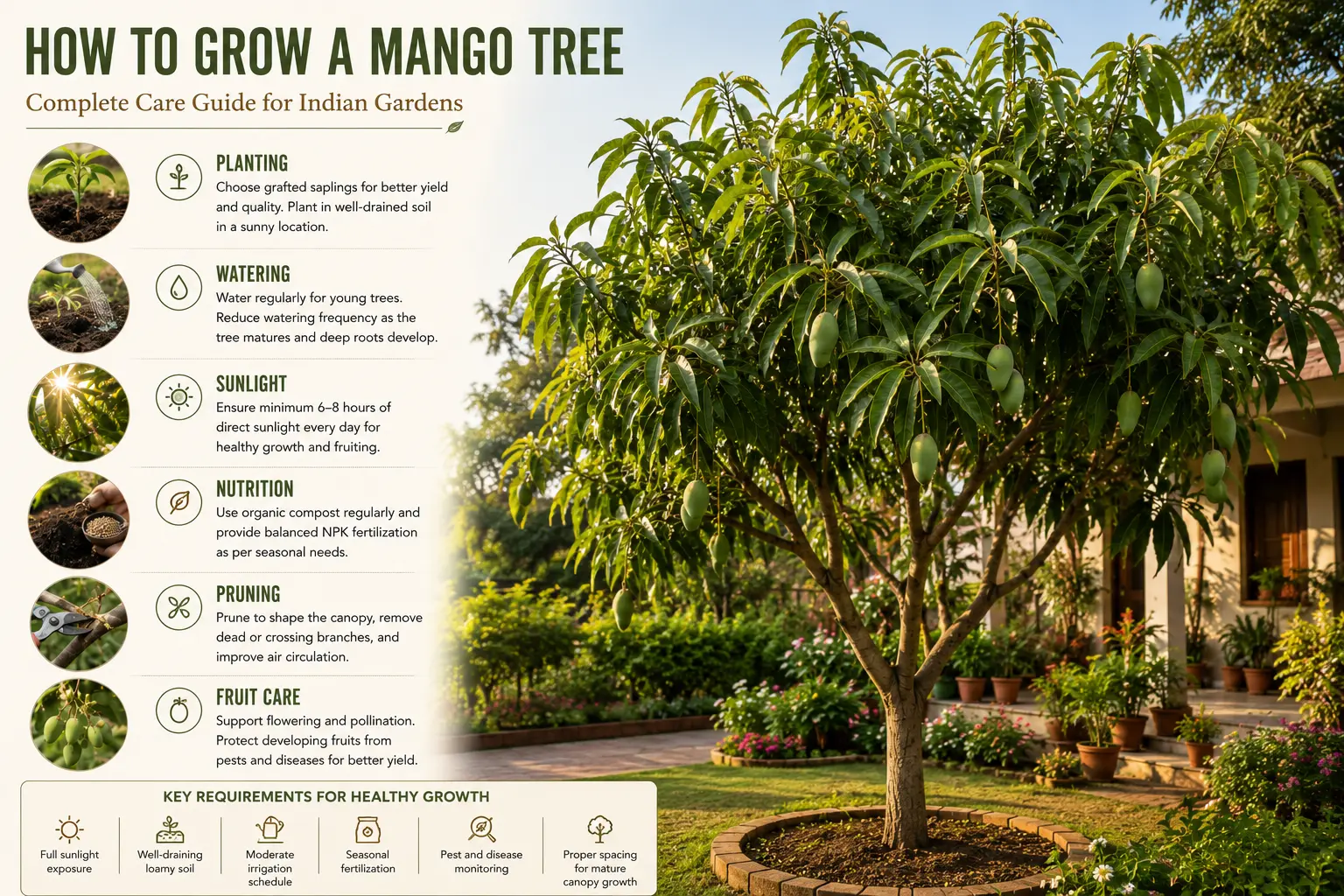
Quick Answer: Mango trees grow well across most of India in the ground, and dwarf varieties can be managed in large containers. They are a long-term commitment — most grafted trees take 3–5 years to fruit — but require surprisingly little day-to-day care once established. The biggest beginner mistake is planting in waterlogged soil, which kills a young mango faster than any pest.
See also: Mango plant profile, common problems, its flowering season, its benefits, and its varieties.
Bite into a ripe Alphonso or Dasheri in May, and it is difficult to think of another fruit that so completely captures an Indian summer. Hundreds of millions of Indians grow up with a mango tree somewhere in the family — in a courtyard, at the edge of a field, shading a rooftop. Growing one at home is deeply achievable, rated Moderate primarily because of the patience required, not the difficulty of care. See all its uses and benefits →
Recommended Products
Disclosure: As an Amazon Associate, PlantsInfo may earn from qualifying purchases.
🌱 Growing Essentials
The following products can help with container gardening, potting, root development, soil management, and healthy plant growth.
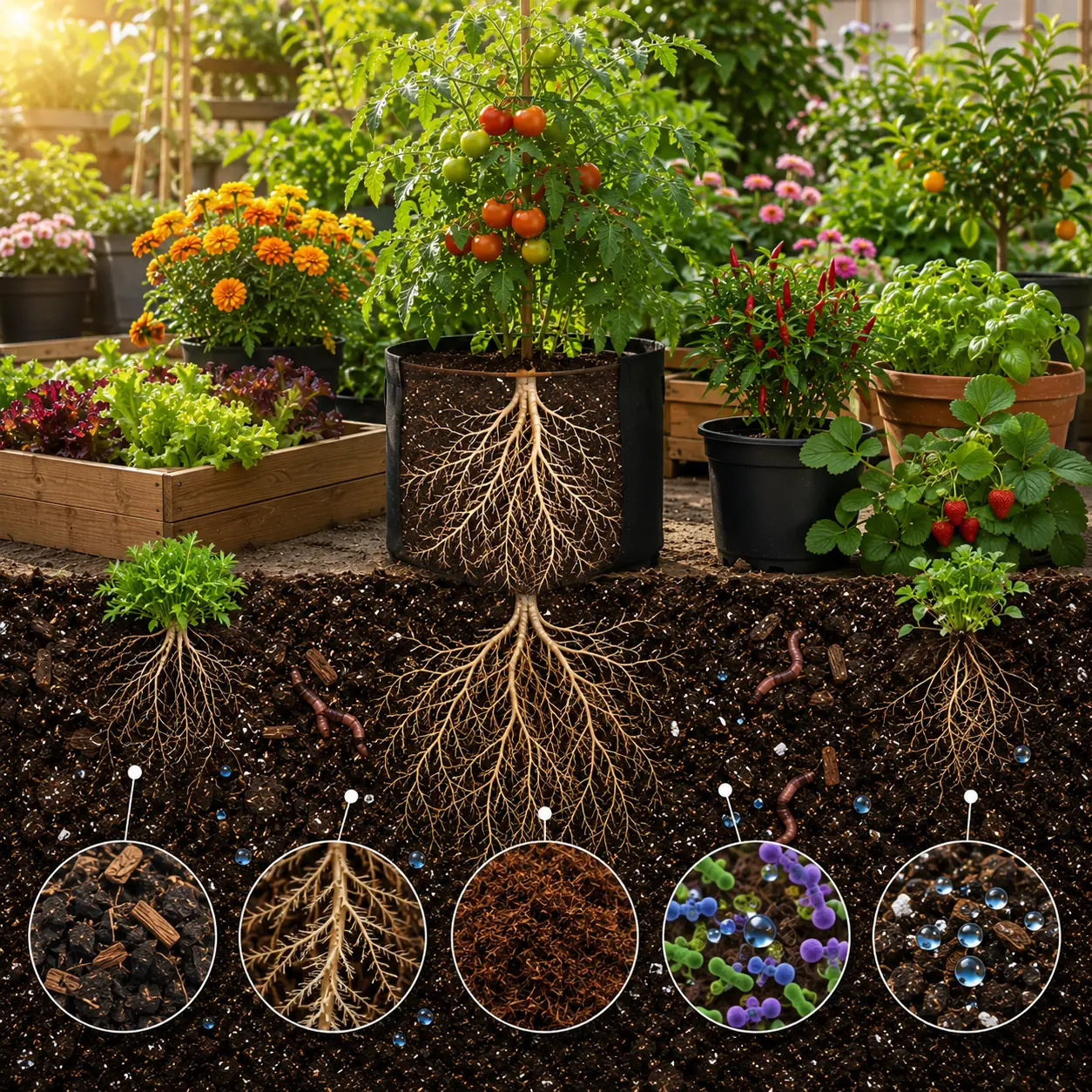
Organic Potting Soil Mix
Provides nutrients, structure, and healthy growing conditions for container plants.
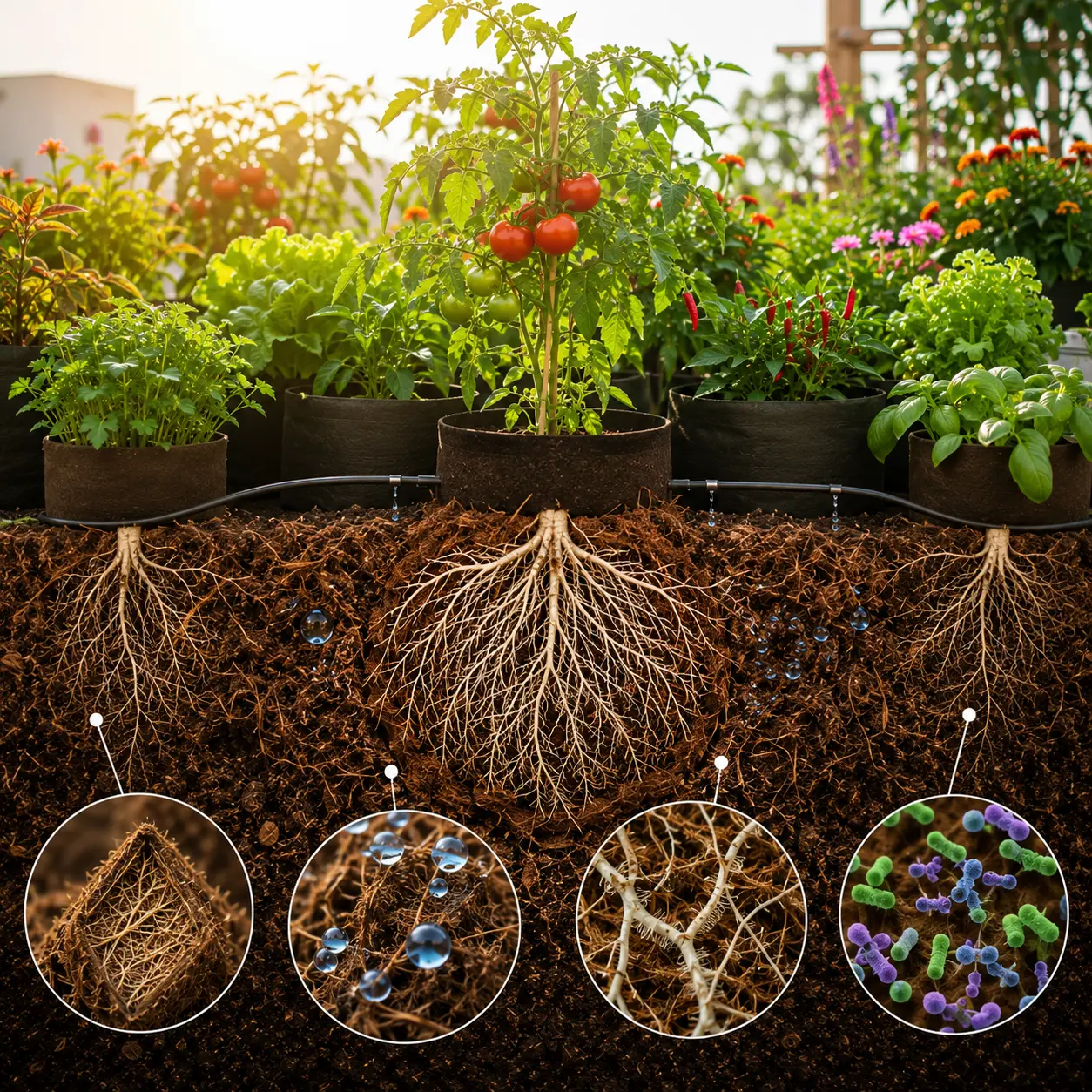
Coco Peat Growing Medium
Enhances moisture retention while maintaining excellent root-zone aeration.

Grow Bags for Plants
Improve drainage, root aeration, and vegetable production in limited spaces.

Plastic Pots for Plants
Ideal containers for seedlings, ornamentals, herbs, and balcony gardens.
Quick Facts
| Attribute | Detail |
|---|---|
| Common names | Mango, Aam, Mavadu, Mamidi, Mavu |
| Scientific name | Mangifera indica L. |
| Plant type | Tropical evergreen fruit tree |
| Mature size | 10–40 m (seedling); 4–8 m (grafted); 2–3 m (dwarf container) |
| Sunlight | Full sun — minimum 6–8 hours daily |
| Water needs | Moderate; drought tolerant once established |
| Best season to plant | Early monsoon (June–July) or post-monsoon (October–November) |
| Suitable states | All states below 600 m altitude; best in UP, Maharashtra, Andhra Pradesh, Karnataka, Bihar, Gujarat |
Choosing the Right Spot
Mango trees are sun-hungry. A minimum of 6–8 hours of direct sunlight is non-negotiable for flowering and fruiting. Even partial shade during key hours will reduce yield significantly.
In ground planting, leave at least 8–10 metres between full-sized grafted trees and 5–6 metres from walls or structures. The root system is wide and competitive. For dwarf or container varieties — Amrapali, Mallika, Irwin — a 2-metre clearance is sufficient.
Container growing is genuinely viable on large terraces and balconies, but the container must be substantial: at least 100–120 litres for a dwarf variety. South- or west-facing terraces across most of India provide ideal sun exposure.
Soil and Potting Mix
Mango trees prefer deep, well-drained loamy soil with a pH of 5.5–7.5. They are tolerant of a range of soil types — from sandy loam in coastal Konkan to deep alluvial soil in the Gangetic plains — as long as drainage is good.
For garden beds, dig a planting pit at least 60 cm × 60 cm × 60 cm and fill with a mix of garden soil, well-rotted compost, and a handful of neem cake. This enriched base gives the sapling a strong first season.
The common soil mistake Indian gardeners make: planting in low-lying spots where rainwater collects during the monsoon. Even 3–4 days of waterlogged roots during the first two years can be fatal. Always plant on slightly raised ground or improve drainage before planting.
Planting — Season and Method
The two best windows for planting mango in India are early monsoon (June–July) — when the soil is warm and moist, and establishment is fast — and post-monsoon (October–November), when temperatures are moderate, and root growth continues through winter without heat stress.
Always choose a grafted sapling over a seedling. Seedling-grown mango trees take 8–12 years to fruit and rarely reproduce the parent variety’s quality. A grafted sapling from a reputable nursery will fruit in 3–5 years and produce true-to-type fruit.
Plant at the same depth as the sapling was growing in its nursery bag. Do not bury the graft union — the knobby join near the base of the stem — under soil. Water thoroughly at planting and stake the sapling loosely to support it through the first monsoon.
Watering
For the first 4–6 weeks, water every 2–3 days — enough to keep the root zone moist but never soggy. The sapling has limited roots and cannot pull water from depth yet.
A mature mango tree in the ground is largely self-sufficient during the monsoon and needs supplemental watering only from December through May. Deep watering once a week during the dry season is better than light watering daily — it trains roots downward.
The specific overwatering sign: new leaves emerging from a young tree that are pale, limp, and fail to harden within a week, combined with a sour smell from the soil. This is early root suffocation, not nutrient deficiency, which is the common misdiagnosis.
During monsoon, potted mango trees must be checked regularly — ensure drainage holes are clear and water is not pooling in saucers.
Fertiliser
Mango responds well to feeding but is easily overfed with nitrogen, which produces lush leafy growth at the expense of flowering.
Year 1–2 (establishment): Apply well-rotted farmyard manure or vermicompost — roughly 5 kg per tree — at the start of post-monsoon (October). Add a small quantity of DAP (100 g) at the drip line to support root development.
Year 3 onwards (productive trees): A balanced approach works best. Apply vermicompost and mustard cake in October, a potassium-rich fertiliser (like potassium sulphate, 100–150 g) in November to support flower bud initiation, and a light nitrogen dose only after flowering is complete. Avoid nitrogen between October and February — it suppresses flowering.
One organic alternative that works well for home gardeners: banana peel compost dug into the drip line in November provides potassium naturally and costs nothing.
Common Problems and Fixes
Powdery mildew on new leaves and flower clusters: The most common mango disease in India, appearing December–February when nights are cool and humid. Spray with a diluted solution of wettable sulphur or a baking soda solution (5 g per litre) on affected parts. Act early — once the flower clusters are heavily infected, that season’s fruit set is compromised.
Mango hopper (Amritodus atkinsoni): Tiny insects that swarm flower clusters and suck sap, causing flowers to drop. This is the most commonly misdiagnosed problem — gardeners see dropped flowers and blame watering or nutrition. Spray with neem oil solution (5 ml per litre) at first bud swell and repeat every 10 days through flowering.
Fruit drop before maturity: Small fruit falling in March–April is often normal (the tree self-thins). Excessive drop — more than 60–70% — usually indicates inconsistent watering during fruit set or a potassium deficiency. Apply potassium sulphate and establish a regular watering schedule from fruit set through May.
When Will You See Results?
In year one, a healthy grafted sapling will push 2–3 flushes of new growth and establish its root system. Do not expect flowers.
Most grafted trees produce their first flowers in year 3 or 4, typically in December–January. The first full fruit crop usually arrives in year 4–5, ripening between April and July depending on the variety and location.
The patience note: a mango tree planted today is an investment measured in decades. The oldest productive mango trees in India are over 300 years old. Resist the temptation to push early fruiting with excessive fertiliser — it stresses a young tree and produces poor-quality fruit.
Propagation
Grafting is the standard and most practical propagation method for mango in India. The two most common techniques for home gardeners are veneer grafting and epicotyl grafting (the latter is widely used in government nurseries and produces fast-establishing saplings).
Air layering (gooty marcotting) is viable for home gardeners who want to propagate a specific backyard variety without grafting skills. Success rate is moderate — around 60–70% — and the rooted layer can be separated after 8–10 weeks.
Seed propagation is only worthwhile for polyembryonic varieties (like Bappakai or some South Indian types) where seedlings are genetically identical to the parent. For named varieties like Alphonso, Dasheri, or Kesar, always graft.
Best time to graft or air-layer: post-monsoon (September–October) when the tree is growing actively but not under heat stress.
Pruning and Training
Young mango trees benefit from light shaping in the first 2–3 years. Remove crossing branches and any growth below 60 cm from the ground to build a clear trunk. This improves air circulation and makes pest management easier.
Prune after harvest — June to August, depending on variety — while the tree is pushing its post-harvest flush of new growth. Never prune just before or during the flowering season (November–February).
For container trees, annual pruning is essential to control size. Remove about one-third of the canopy after fruiting, targeting the longest, least productive branches. This keeps the tree manageable and encourages compact, productive regrowth.
Avoid heavy pruning in summer or monsoon — large wounds in humid conditions invite fungal infection. Make clean cuts with a sterilised blade and seal large wounds with a paste of cow dung and neem oil.
Harvesting
Timing the harvest correctly is where most home gardeners lose fruit quality. The visual cues vary by variety, but general indicators of ripeness include: a slight softening of the shoulder of the fruit, a change in skin colour (yellow-green to yellow or orange-yellow depending on variety), and a sweet, heavy fragrance from the stem end.
For most north Indian varieties (Dasheri, Langra, Chausa), the harvest window is June–July. For Alphonso (Hapus), April–May in the Konkan region. For South Indian varieties like Banganapalli and Imam Pasand, April–June.
Harvest by cutting the stem 5–10 cm above the fruit — do not snap or pull. The sap that flows from a cut stem can stain and scar skin, and drips of sap on the fruit surface can cause black marks. Turn harvested fruit upside down for 30 minutes to let the sap drain before storage.
Store at room temperature to ripen fully, away from direct sun. Refrigeration stops the ripening process and dulls the flavour of most Indian varieties — a detail that surprises many people used to buying refrigerated supermarket mangoes.
Seasonal Protection
Young mango trees in North India — Uttar Pradesh, Punjab, Haryana, Rajasthan — are vulnerable to late frost in January–February, which can damage flower clusters and new growth. Cover young trees with jute or old cloth on forecast frost nights.
In coastal and humid states during peak monsoon, fungal pressure is high. Ensure good canopy airflow through pruning and apply preventive copper-based fungicide sprays at the start of the monsoon to reduce anthracnose incidence.
Conclusion
Mango trees are among the most rewarding fruit trees for Indian gardens, providing decades of shade, seasonal beauty, and abundant harvests when grown under suitable conditions. Long-term success depends less on intensive care and more on selecting a healthy grafted plant, planting it in a sunny, well-drained location, and following consistent watering, fertilization, and pruning practices during the early years.
Patience is essential, as mango trees require time to establish before reaching their full productive potential. By understanding their natural growth cycle and adapting care to local climate and seasonal conditions, gardeners can cultivate vigorous, long-lived trees that continue producing high-quality fruit for generations.


