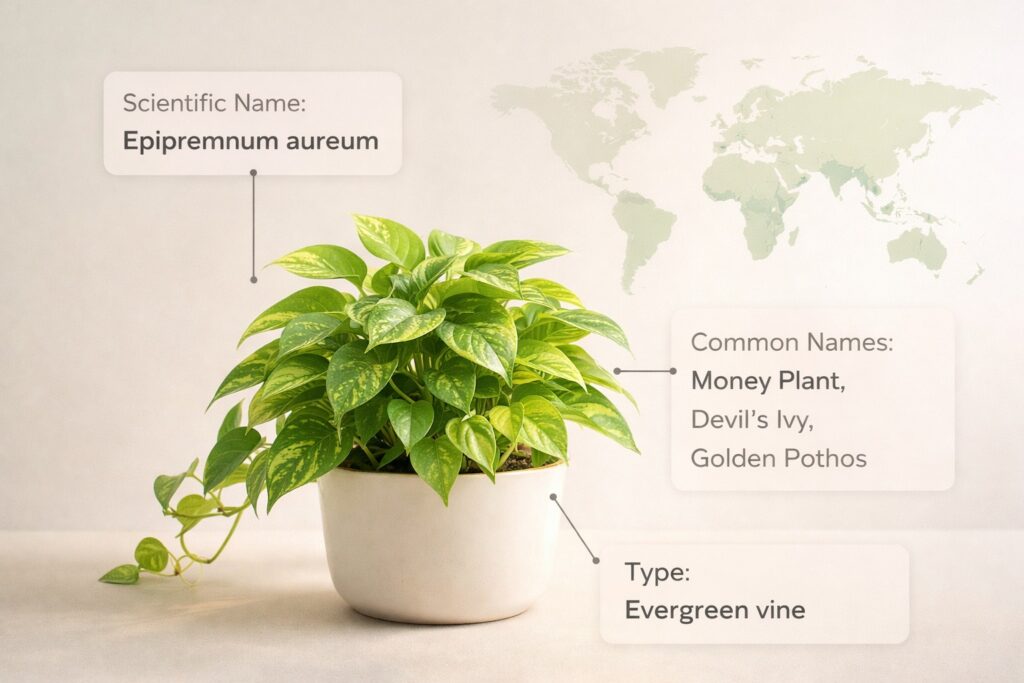
Money Plant (Pothos)Problems: Symptoms, Causes and Fixes
Quick Answer: Money plant is one of the hardiest houseplants you can grow, but it does get sick — usually because of overwatering or poor light. Most problems show up on the leaves first, and catching them early means a full recovery is almost always possible.
See also: Money Plant plant profile, how to grow it, its flowering season, its benefits, and its varieties.
That brown, mushy stem you noticed this morning is almost certainly root rot — and it is the single most common way Indian gardeners lose a money plant they have had for years. The good news: money plant (Epipremnum aureum) is forgiving. Most problems are care mistakes in disguise, not diseases, and most can be reversed once you know what you are looking at.
Recommended Products
Disclosure: As an Amazon Associate, PlantsInfo may earn from qualifying purchases.
🌱 Growing Essentials
The following products can help with container gardening, potting, root development, soil management, and healthy plant growth.
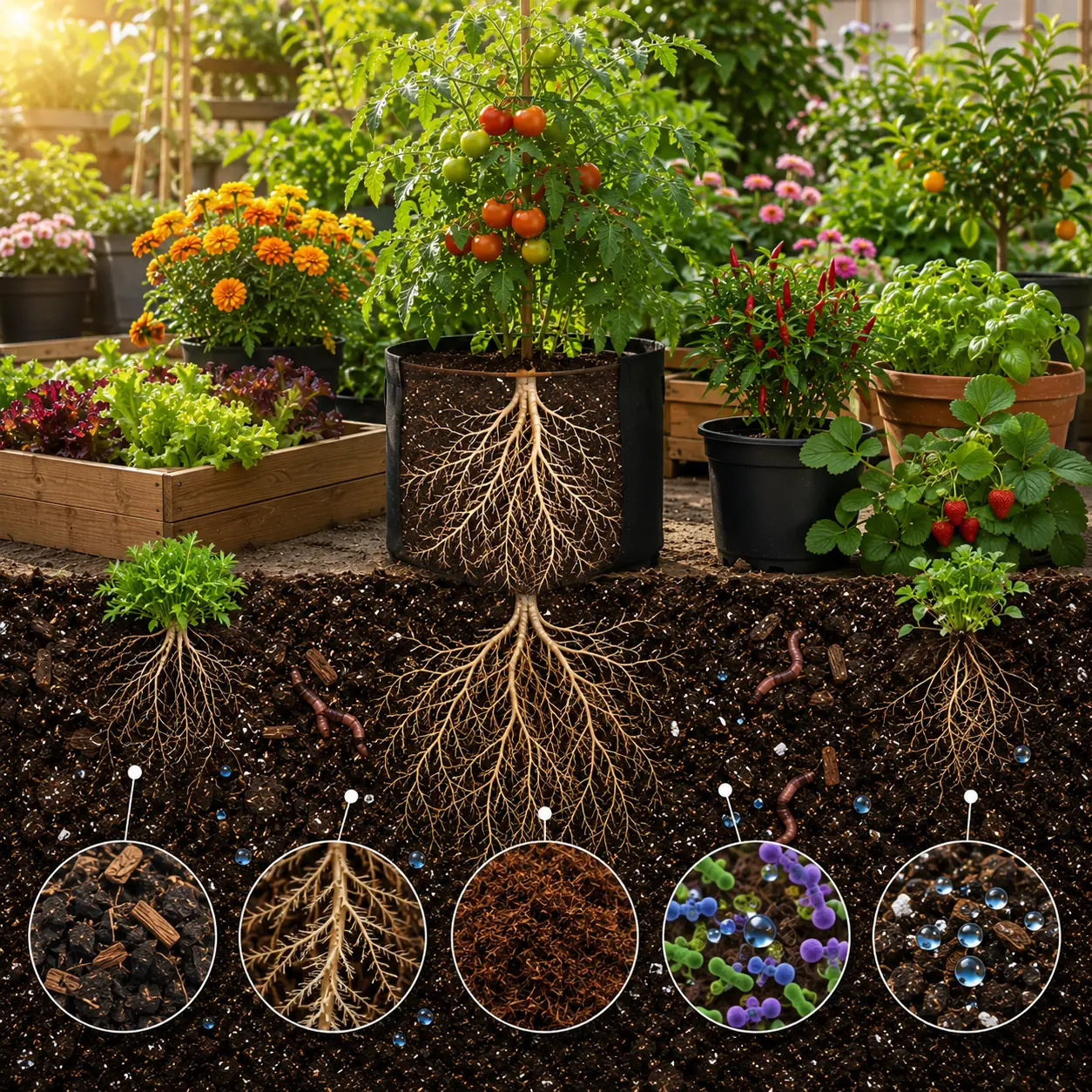
Organic Potting Soil Mix
Provides nutrients, structure, and healthy growing conditions for container plants.
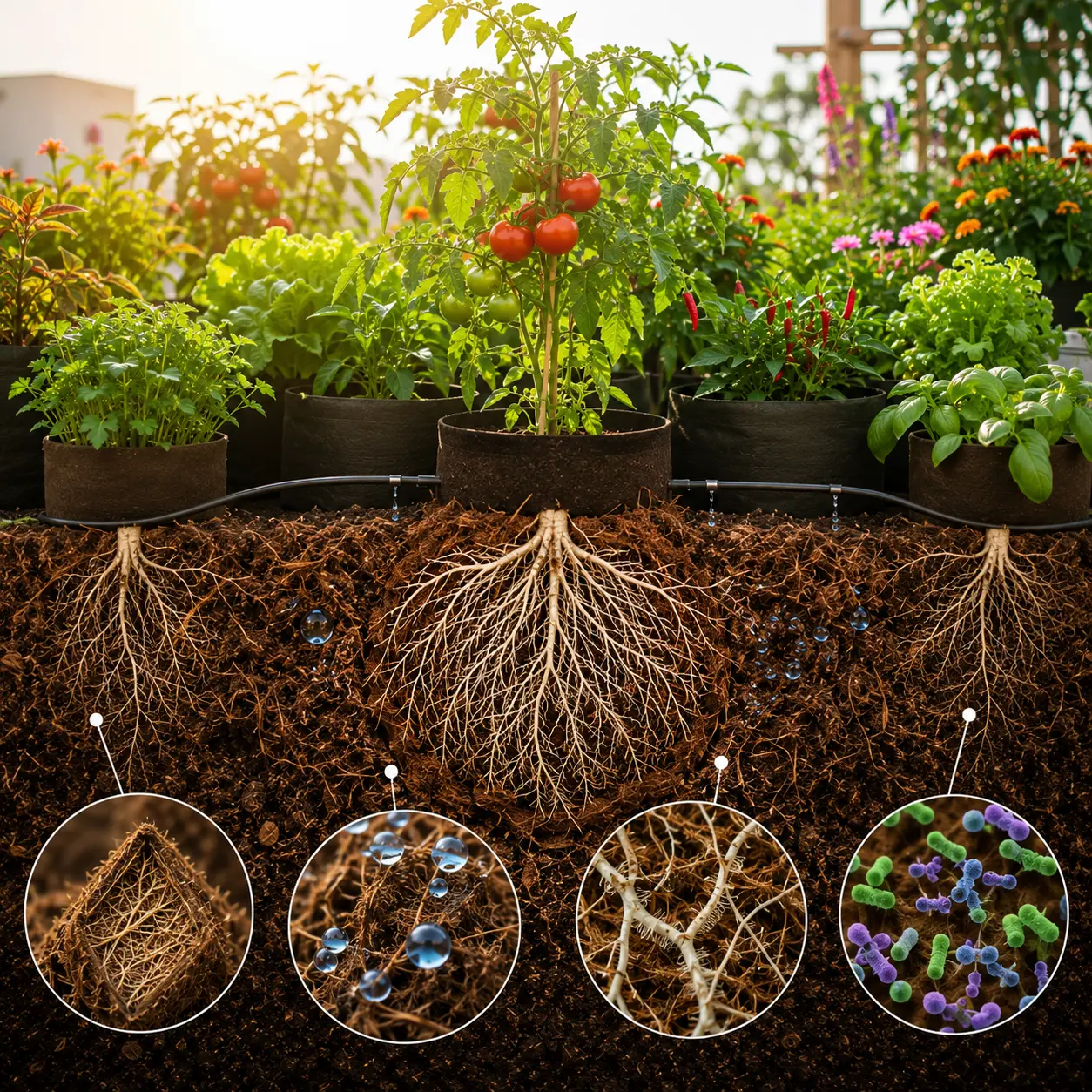
Coco Peat Growing Medium
Enhances moisture retention while maintaining excellent root-zone aeration.

Grow Bags for Plants
Improve drainage, root aeration, and vegetable production in limited spaces.

Plastic Pots for Plants
Ideal containers for seedlings, ornamentals, herbs, and balcony gardens.
Quick Diagnosis
| Symptom | Most Likely Cause | First Action |
|---|---|---|
| Yellow leaves (lower, older) | Overwatering or low light | Let soil dry; move to brighter spot |
| Yellow leaves (new growth) | Nutrient deficiency | Apply diluted liquid fertiliser |
| Brown leaf tips | Low humidity or fluoride in water | Mist leaves; switch to stored water |
| Brown patches mid-leaf | Fungal leaf spot | Remove affected leaves; improve airflow |
| Mushy black stems at base | Root rot | Unpot, cut rotted roots, repot fresh |
| Pale, washed-out leaves | Too much direct sun | Move to bright indirect light |
| Leggy, small leaves | Insufficient light | Relocate to a brighter position |
| White cottony clusters | Mealybugs | Wipe with neem oil solution |
| Fine webbing under leaves | Spider mites | Spray with water; apply neem oil |
| Leaves with dry brown edges and curling | Underwatering or heat stress | Water thoroughly; move away from hot window |
Diseases
Money plant is not particularly disease-prone, but three conditions show up consistently in Indian homes and gardens — usually when air circulation is poor, or the plant stays wet for too long.
Pythium root rot
Pythium root rot is the one disease that actually kills money plant. It is caused by the water mould Pythium spp. and is almost always triggered by waterlogged soil. The stems turn soft and black at the base, the leaves wilt suddenly and do not recover with watering, and the roots — when you check — are brown, slimy, and smell faintly sour. Mild cases can be saved by removing all rotted roots, dusting the healthy roots with a copper-based fungicide powder, and repotting into a fresh, well-draining mix. Severe cases, where more than half the root system is gone, rarely recover. This disease cannot be cured once advanced — only managed early.
Bacterial leaf spot
Bacterial leaf spot (Pseudomonas or Xanthomonas spp.) appears as water-soaked, dark spots that spread rapidly and sometimes develop a yellow halo. Unlike fungal spots, bacterial spots have irregular edges and may look greasy. It spreads through water splash and infected pruning tools. There is no chemical cure for bacterial infection in home settings — the fix is aggressive removal of all affected leaves, strict avoidance of overhead watering, and improved air circulation. Disinfect scissors with alcohol between cuts.
Fungal leaf spot
Fungal leaf spot (caused by various Colletotrichum or Phyllosticta spp.) produces circular or irregular brown spots with a slightly sunken centre and a defined border. These appear most often during and after the Indian monsoon, when humidity is high and air movement is low. Unlike bacterial spots, fungal spots tend to be drier in texture. A copper-based fungicide spray applied fortnightly during the monsoon season controls spread. Remove heavily affected leaves before spraying.
Mosaic virus
Mosaic virus is uncommon but worth knowing. It shows as irregular yellow-green mottling across the leaf surface — not in a pattern, not following veins, just scattered. There is no cure. An infected plant must be isolated immediately and eventually discarded. Do not propagate from a plant showing mosaic symptoms.
Pest Problems
Mealybugs
Mealybugs are the most common pest on Indian money plants, particularly in dry winter months and in homes with central heating. They look like tiny white cotton tufts tucked into leaf axils, along stems, and under leaves. They suck sap, causing leaves to yellow and distort. Organic fix: wipe visible colonies off with a cotton swab dipped in neem oil solution (5 ml neem oil + 1 ml dish soap per litre of water), then spray the whole plant. For persistent infestations, a systemic insecticide containing imidacloprid applied as a soil drench is effective — but do not use this on plants near food preparation areas or where children and pets have access.
Spider mites
Spider mites are often mistaken for a disease because the damage — pale, stippled, dusty-looking leaves — looks like a nutrient problem at first glance. Look closely: fine webbing on the underside of leaves and tiny moving dots are the giveaway. Spider mites thrive in hot, dry conditions — meaning Indian summers and air-conditioned rooms with low humidity are ideal for them. Organic fix: a strong water spray to dislodge colonies, followed by neem oil application every 5 days for three cycles. Chemical option: a miticide containing abamectin or spiromesifen, used per label instructions.
Scale insects
Scale insects appear as small, flat, brown or grey bumps stuck to stems and the undersides of leaves. Unlike mealybugs, they do not move once settled and are often dismissed as part of the stem. They excrete honeydew, which leads to black sooty mould on the leaf surface — the sooty mould is usually what gets noticed first. Scrape off scale with an old toothbrush, then apply neem oil solution. Severe infestations may need a systemic insecticide.
Spider mites are the pest most commonly mistaken for a disease — the stippled, faded leaf pattern is frequently diagnosed as a nutrient deficiency or viral infection. The webbing under the leaf settles the question.
This information is for general guidance only. Always read product labels before applying any pesticide or fungicide. Follow state agriculture department guidelines for food crops. Keep children and pets away during and after application.
Environmental and Care Mistakes
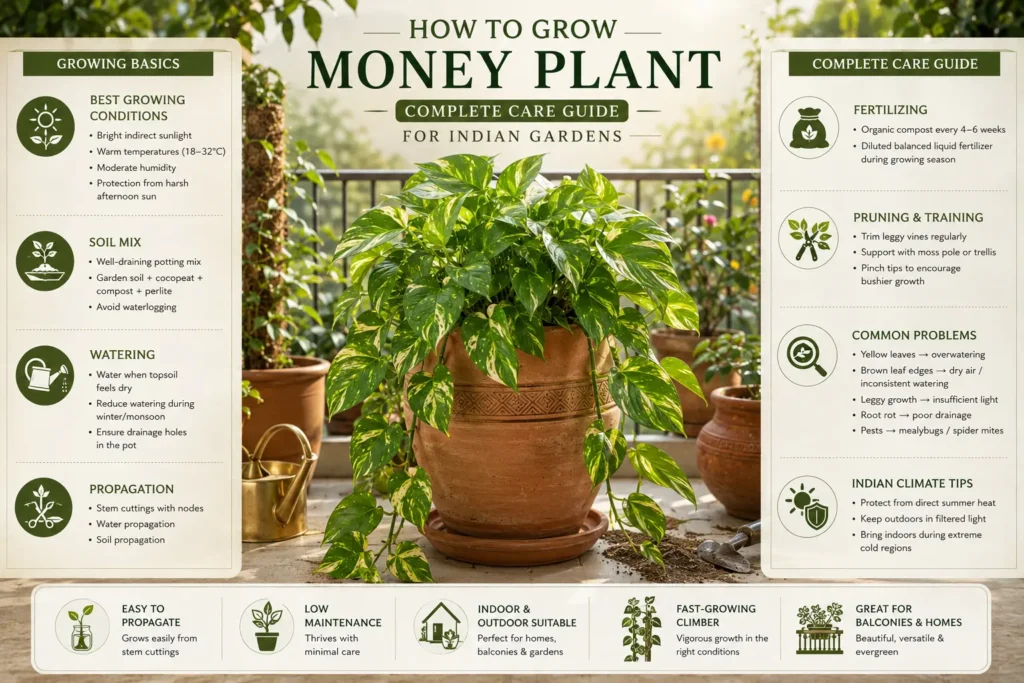
- Overwatering with waterlogged soil is the universal first mistake. The symptom is yellowing leaves that feel soft and limp — not crisp — combined with a soil surface that never seems to dry. Beginners confuse the wilting caused by root rot with underwatering and water more, accelerating the damage. Fix: let the soil dry out completely between waterings; if the pot has no drainage hole, repot immediately into one that does. For routine watering guidance, see the Money Plant Growing Guide.
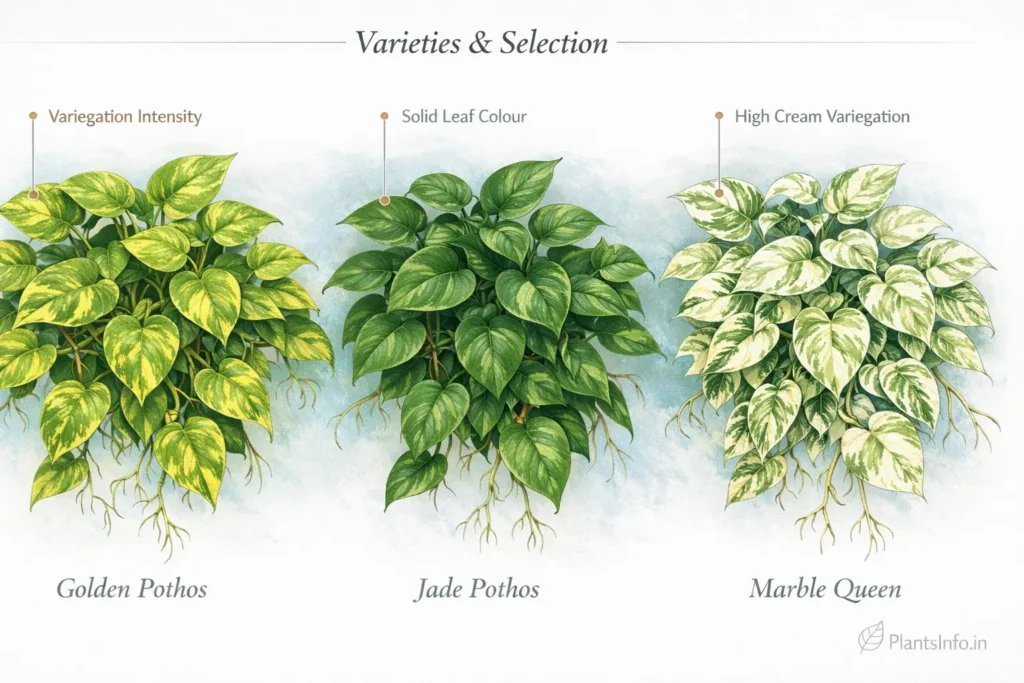
- Too much direct sun causes the variegation to bleach out — leaves turn pale, almost whitish-yellow, and develop dry papery patches that feel brittle. This is often misread as nutrient deficiency. Golden pothos loses its yellow patterning; marble queen loses contrast. Move the plant to bright indirect light. Recovery takes 4–6 weeks as new leaves emerge correctly.
- Low light for extended periods produces long, spindly stems with small, widely spaced leaves and reduced or lost variegation. In variegated varieties like Marble Queen, leaves may revert to plain green. This is not a disease — it is an adaptation. Moving the plant to better light stops the decline, but existing leggy growth does not recover. Prune it back and let the plant reshoot in better conditions.
- Cold damage and AC vents are the mistake almost every urban Indian gardener makes at least once. Money plant is tropical and dislikes temperatures below around 10°C and prolonged exposure to cold, dry air from air conditioning vents pointed directly at it. Leaves develop dark, water-soaked patches that turn brown and papery. The plant does not die but looks ragged for months. Move it away from direct AC airflow and keep it away from windows on cold North Indian winter nights.
Prevention Protocol
Prevention for money plant comes down to four habits, most of which cost nothing:
- Water only when the top 3–5 cm of soil is dry to the touch — do not follow a fixed schedule, because water needs change dramatically between monsoon and summer. Before monsoon onset in June, check that every pot has a working drainage hole and that saucers are not trapping standing water.
- Wipe leaves down with a damp cloth once a month. This removes dust that blocks light and — more importantly — dislodges early-stage spider mite and mealybug colonies before they establish. It is the most underrated prevention habit for indoor plants.
- Inspect new plants before bringing them home and keep new arrivals in a separate room for two weeks. Most mealybug infestations in a home collection trace back to a single new plant that was not quarantined.
- Rotate pots a quarter turn every two to three weeks so all sides receive even light. Uneven light causes one side to grow weak and leggy — and weak, etiolated growth is more susceptible to pest damage than healthy compact growth.
- Avoid fertilising during peak summer heat (May–June) and the coldest weeks of winter in North India — the plant’s uptake slows, and unused fertiliser salts accumulate in the soil, causing root burn that looks exactly like a disease.
When to Give Up on a Plant
Root rot that has reached the crown — the point where the stem meets the roots — is almost always fatal. If you squeeze the base of the stem and it collapses, if the discolouration extends more than halfway up the main stem, and if the roots are entirely brown with no white or cream-coloured tips remaining, the plant cannot be saved.
Mosaic virus infection is the other unrecoverable condition. A plant with irregular yellow-green mottling that does not match any nutrient deficiency pattern, does not improve with better care, and shows new leaves emerging already mottled — discard it.
When discarding a plant that died of root rot or viral disease: remove all soil from the pot, wash the pot with a diluted bleach solution (1 part bleach to 9 parts water), and leave it to dry in sunlight before reusing. Do not replant money plant or any other Araceae family plant in the same soil without replacing it entirely — Pythium persists in infected soil.
Frequently Asked Questions
Is the money plant safe for pets and children?
Money plant contains calcium oxalate crystals throughout the plant, which cause mouth irritation, drooling, and vomiting if chewed by cats, dogs, or young children. It is not fatally toxic but should be kept out of reach.
My money plant’s leaves are turning yellow. Is it dying?
Probably not. Yellow leaves on a money plant are almost always overwatering, low light, or age — older leaves at the base naturally yellow and drop. Check soil moisture first before assuming disease.
Can I use the same soil after my money plant died of root rot?
No. Discard the soil entirely. Pythium persists and will infect the next plant you put in it.
Money plant problems look alarming but rarely are. Catch them at the leaf stage rather than the stem stage and the fix is almost always simple — adjust the water, move the light, or wipe off the pest before it establishes.
When to Seek Further Help
Most Money Plant problems can be corrected once the underlying cause is identified. Yellowing leaves, slow growth, minor pest infestations, and watering issues are often reversible when addressed promptly. However, severe root rot, extensive stem decay, or widespread disease may permanently damage the plant, making recovery difficult.
Regular inspection of leaves, stems, roots, and growing conditions is the most effective way to prevent serious problems. By identifying symptoms early and applying the appropriate corrective measures, most Money Plants can recover and continue healthy growth.
If you’re unsure whether your plant’s symptoms are caused by pests, disease, or environmental stress, compare them carefully with the descriptions in this guide before making major changes to watering, fertilization, or lighting.