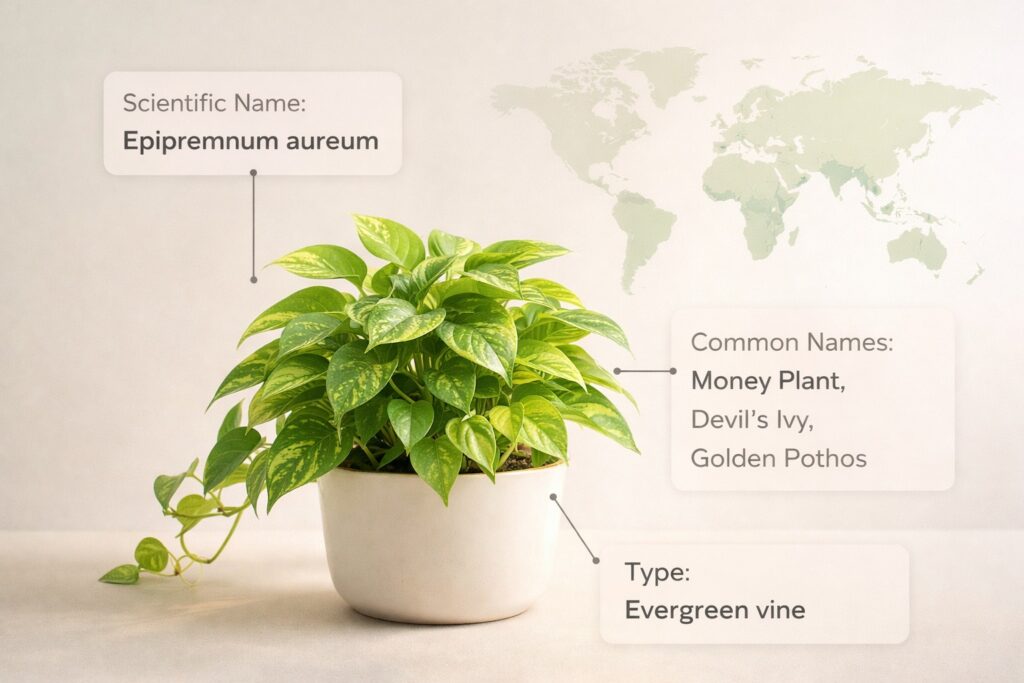
Money Plant (Pothos) Benefits: What Vastu, Tradition, and Modern Research Say
Quick Answer: Money plant is prized in Indian homes for three things: its Vastu significance as a prosperity symbol, its ability to improve indoor air quality, and its sheer ease of keeping alive. It is genuinely useful as a living air filter — though the effect is modest in a typical room.
See also: Money Plant plant profile, how to grow it, common problems, its flowering season, and its varieties.
Walk into almost any Indian home, and you will find a money plant on a window ledge, trailing down a shelf, or growing in a bottle near a television set. That last placement is no accident — Vastu tradition specifically recommends keeping it near electronics. Whether you are a believer in Vastu or not, the plant earns its place. The question worth asking is: what is it actually doing for your home?
Recommended Products
Disclosure: As an Amazon Associate, PlantsInfo may earn from qualifying purchases.
🌱 Growing Essentials
The following products can help with container gardening, potting, root development, soil management, and healthy plant growth.
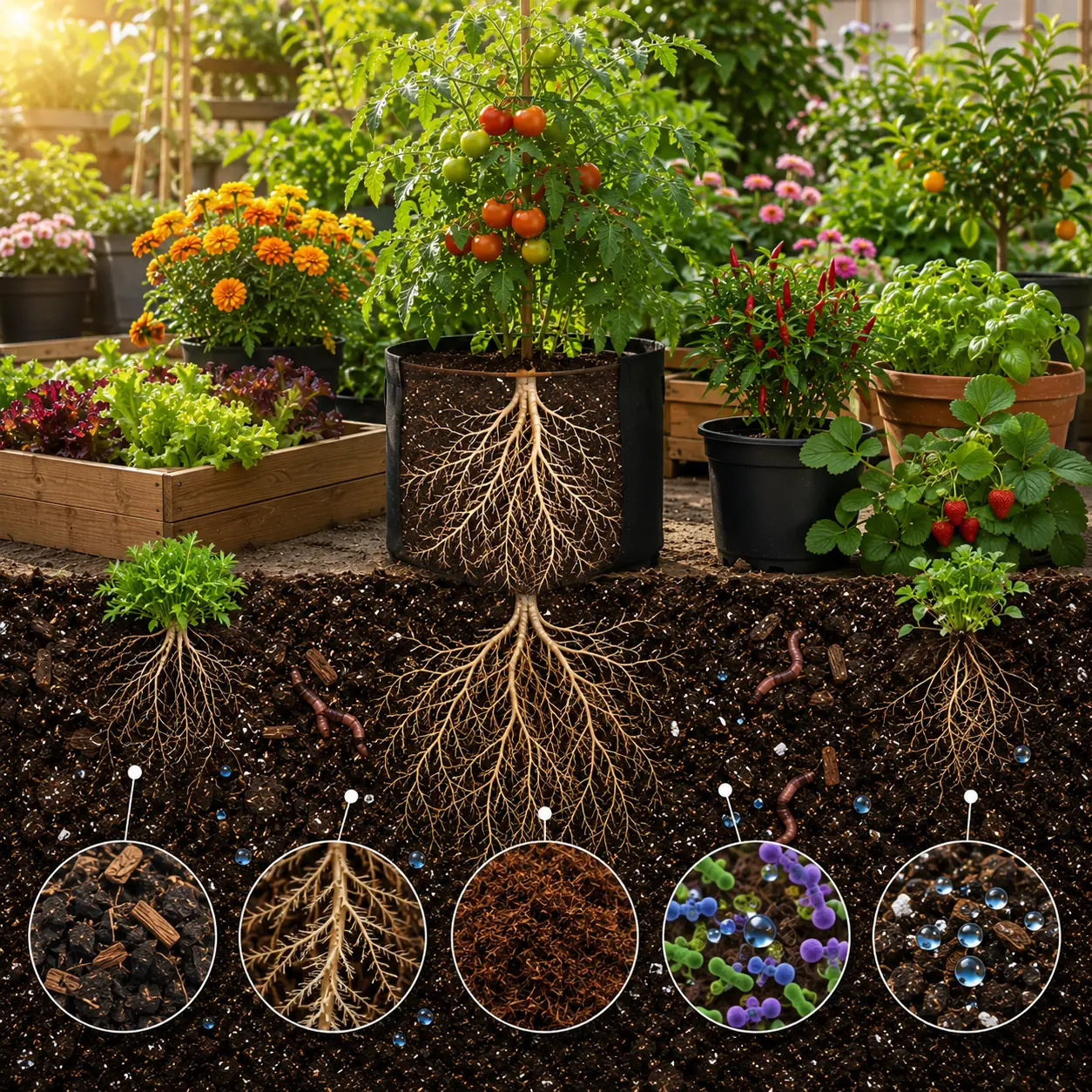
Organic Potting Soil Mix
Provides nutrients, structure, and healthy growing conditions for container plants.
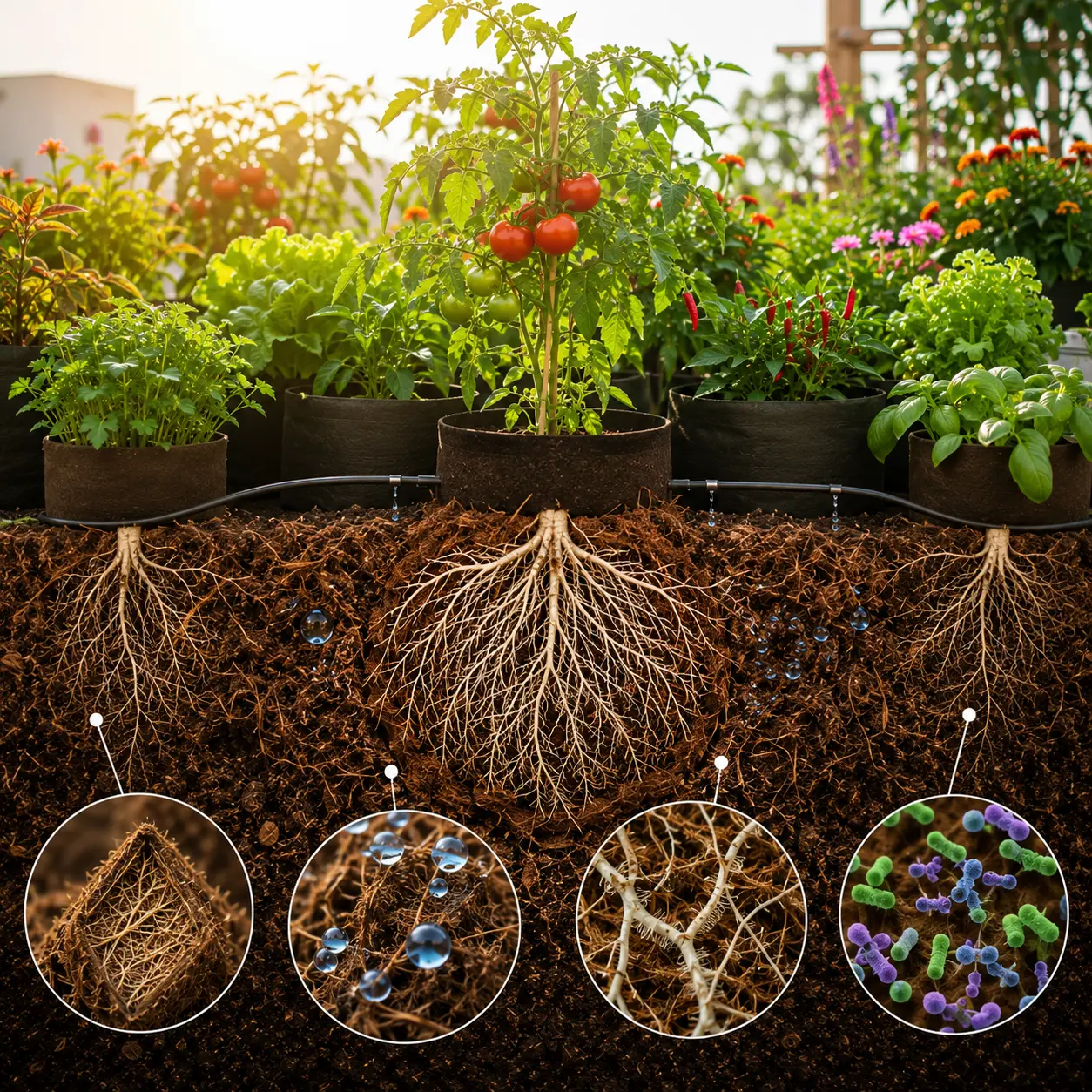
Coco Peat Growing Medium
Enhances moisture retention while maintaining excellent root-zone aeration.

Grow Bags for Plants
Improve drainage, root aeration, and vegetable production in limited spaces.

Plastic Pots for Plants
Ideal containers for seedlings, ornamentals, herbs, and balcony gardens.
Vastu and Cultural Significance
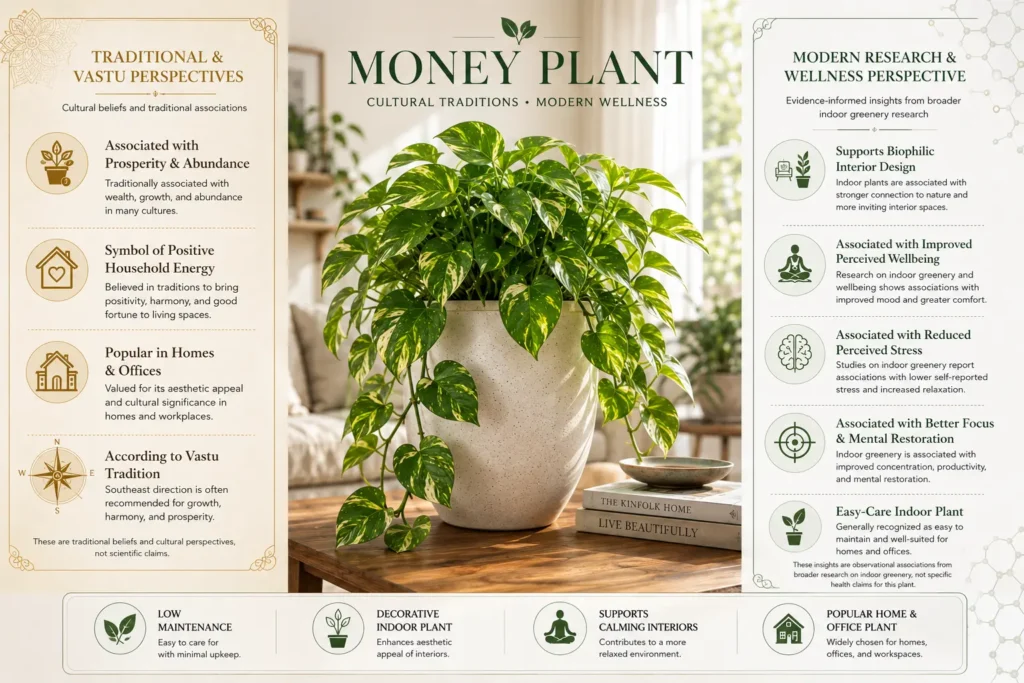
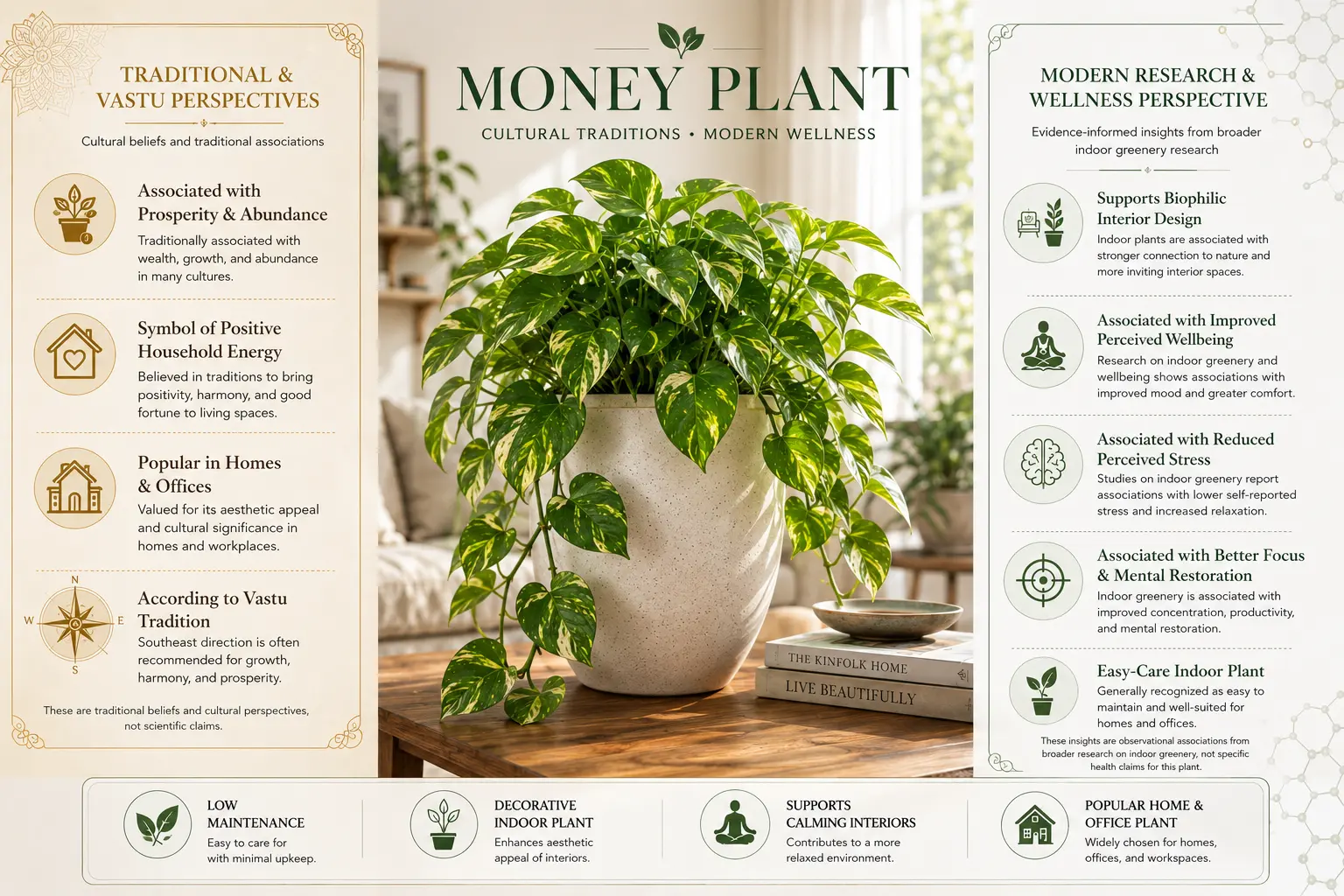
In Indian homes, the money plant holds a place that few other plants can claim. Vastu Shastra, the ancient Indian system of space and energy, identifies the southeast corner of the living room as the most auspicious position for this plant — a zone governed by Venus and associated with Lord Ganesha, both linked to wealth and the removal of obstacles.
The belief in the money plant as a luck-bringer is deeply layered. The heart-shaped leaves are said to resemble coins, inviting abundance. The five leaves said to appear on each stem (in certain cultivars) are linked in Feng Shui to the five elements — metal, wood, water, fire, and earth — believed to attract balanced, positive energy. Gifting a money plant cutting is a common gesture at housewarmings and business openings across India; the act of giving is itself considered auspicious.
Vastu guidelines are specific: keep the plant indoors rather than outside (direct sun reduces its positive effect and stresses the plant), avoid the northeast corner, and ensure the vines grow upward rather than trailing on the floor. A healthy, green plant is considered to amplify positive energy; a neglected or dying one, the reverse.
There is a telling parallel here with modern evidence: the plant that Vastu considers prosperous is also the plant NASA studied for air purification. The two traditions — ancient Indian spatial wisdom and twentieth-century space research — converged on the same species.
Air Purification: What the Research Actually Shows
The NASA Clean Air Study, conducted in 1989, included Epipremnum aureum among the houseplants evaluated for removing volatile organic compounds (VOCs) from sealed indoor environments. The study found that the money plant can absorb pollutants, including formaldehyde, benzene, xylene, toluene, and carbon monoxide.
More recent laboratory research has confirmed this. A study published in a peer-reviewed environmental journal found that active botanical filters built with pothos achieved high removal efficiencies for acetone, toluene, and pinene under controlled conditions.
The honest caveat: these studies used sealed or semi-sealed environments. In a well-ventilated Indian home, a single potted plant makes a modest, not dramatic, difference to air quality. To see meaningful benefit, researchers suggest needing several plants per room, and modern analyses note that normal ventilation often does the same job faster.
What this means practically: the money plant is a genuine, if gentle, air improver. It will not replace an air purifier or open windows. But in closed rooms — an air-conditioned office, a bedroom in a dense urban apartment, a room near heavy traffic — it contributes meaningfully. It is also one of the few plants that retain this ability in low-light conditions, which makes it uniquely useful indoors.
This information is based on published research and traditional knowledge. It is not a substitute for medical advice. Consult a qualified healthcare professional before using any plant-based remedy for health conditions.
Ecological Role
In the wild, money plant is a forest-floor climber that scales tall trees using aerial roots. In Indian parks and gardens where it has naturalised — particularly in south India, West Bengal, and humid northeastern states — it provides dense ground cover that protects soil from erosion and retains moisture.
For urban wildlife, it offers modest benefit: some insects are drawn to its dense foliage for shelter. However, gardeners should be aware that in very humid outdoor conditions, the money plant can spread aggressively. In parts of Sri Lanka, it has been documented to overrun forest sanctuaries. In Indian garden contexts, this is not typically a problem — it is far more likely to stay contained in a pot than to spread in the wild — but it is worth knowing if you are planting it outdoors in a coastal or high-rainfall area.
Practical Value for Home Gardeners
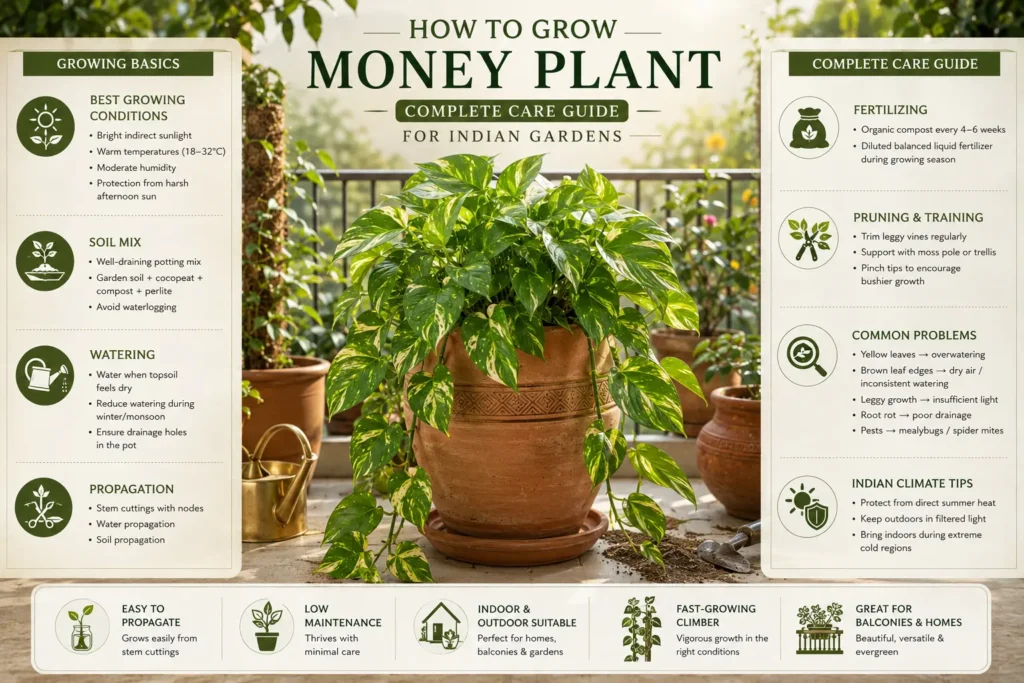
At home, the money plant earns its keep in several ways. It is genuinely one of the most propagation-friendly plants you can own — a single stem cutting will root in water in under two weeks, meaning one plant quickly becomes ten. It grows in soil, water, hanging baskets, and glass bottles, making it adaptable to almost any Indian home.
It is also a natural stress reducer. Research in environmental psychology consistently shows that having living greenery in a workspace or study improves focus and reduces anxiety. Money plant is easy enough to maintain that it does not create stress of its own.
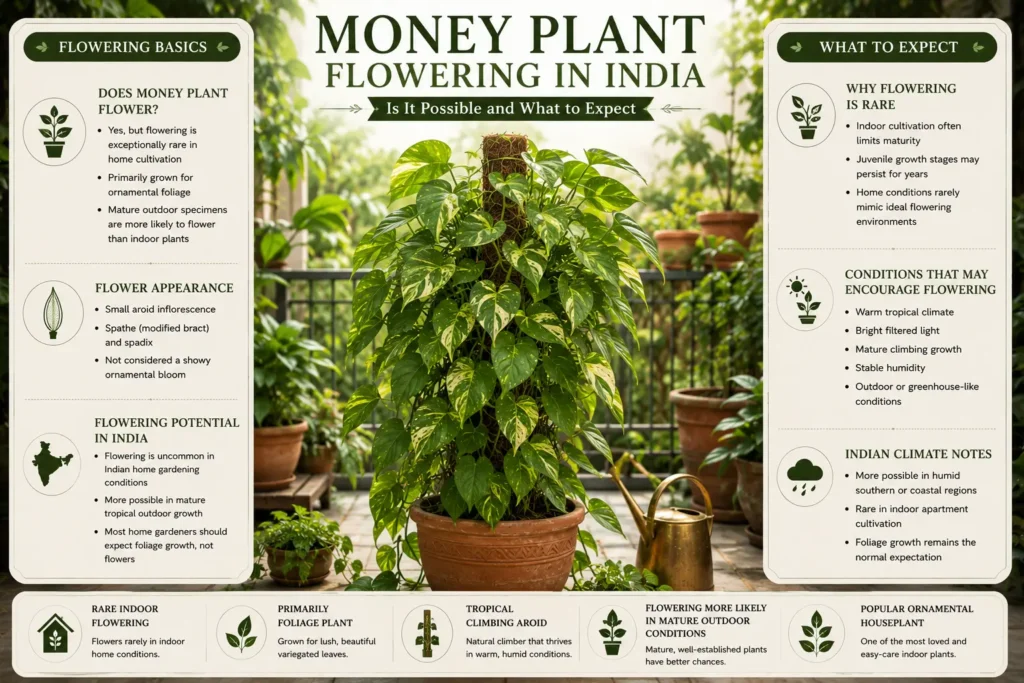
The plant’s ability to tolerate low light means it works in north-facing rooms, bathrooms, and interior offices where most plants would struggle. Flowers will almost certainly never appear, so grow it entirely for its foliage and practical benefits.
⚠ Toxicity note: Money plant is mildly toxic if ingested by pets (cats and dogs) or children, due to calcium oxalate crystals. Keep it out of reach of animals and young children.
Money plant is not merely a superstition-backed houseplant — it is one of the most reliably useful indoor plants an Indian home gardener can keep.
Conclusion
Money Plant remains one of the world’s most popular ornamental houseplants because it combines ease of cultivation with cultural significance. While traditions such as Vastu and Feng Shui associate the plant with prosperity and positive energy, modern research primarily supports its value as an attractive indoor foliage plant that may contribute to psychological well-being and indoor greening. Understanding both perspectives allows readers to appreciate the plant without confusing cultural beliefs with scientific evidence.