Complete Money Plant (Epipremnum aureum) Guides
Problems & Diseases
Introduction
Epipremnum aureum, commonly known as Money Plant in South Asia and Golden Pothos internationally, is an evergreen climbing vine in the family Araceae. Native to the island of Mo’orea in the Society Islands of French Polynesia, it has become one of the most widely cultivated ornamental foliage plants in tropical, subtropical, and indoor environments worldwide. (Plants of the World Online)
Classification
- Plant Type
- Vine
- Lifecycle
- Perennial
- Leaf Habit
- Evergreen
- Native Region
- Australia & Oceania, Southeast Asia
- Plant Family
- Araceae
Within its native wet tropical forest habitat, the species functions as a hemiepiphytic climber, ascending trees by means of adhesive aerial roots and contributing to forest structural diversity. Outside its native range, it frequently escapes cultivation and has become naturalized in many tropical regions, where vigorous vegetative growth can influence native vegetation. (Plants of the World Online)
The species entered horticulture during the nineteenth century and has since become a globally important ornamental because of its adaptability, ease of propagation, and diverse variegated cultivars. Although exceptionally common in cultivation, its natural distribution is geographically restricted, making accurate taxonomic documentation and conservation context important. This profile synthesizes current scientific knowledge into a structured botanical reference supported by authoritative sources. (Plants of the World Online)
Quick Plant Information
| Characteristic | Information |
|---|---|
| Accepted Scientific Name | Epipremnum aureum (Linden & André) G.S.Bunting |
| Primary Common Name | Money Plant |
| Other Common Names | Golden Pothos, Devil’s Ivy, Hunter’s Robe, Ceylon Creeper |
| Family | Araceae |
| Order | Alismatales |
| Plant Type | Evergreen climbing vine (hemiepiphyte) |
| Growth Habit | Climbing or trailing perennial |
| Native Range | Society Islands (Mo’orea), French Polynesia |
| Present Distribution | Widely cultivated and naturalized throughout tropical and subtropical regions worldwide |
| Primary Habitat | Wet tropical forest |
| Principal Uses | Ornamental foliage plant; indoor landscaping; vertical greening |
| Flowering in Cultivation | Extremely rare; plants are usually maintained vegetatively |
| Reproductive Mode in Cultivation | Predominantly vegetative propagation by stem cuttings |
| Conservation Baseline | Native wild populations have a restricted natural range; formal conservation assessment will be addressed in later sections. (Plants of the World Online) |
Identity
Classification and Taxonomy
| Rank | Classification |
|---|---|
| Domain | Eukaryota |
| Kingdom | Plantae |
| Clade | Tracheophytes |
| Clade | Angiosperms |
| Clade | Monocots |
| Order | Alismatales |
| Family | Araceae |
| Subfamily | Pothoideae |
| Tribe | Monstereae |
| Genus | Epipremnum Schott |
| Species | Epipremnum aureum (Linden & André) G.S.Bunting |
| Original Basionym | Pothos aureus Linden & André (1880) |
| Accepted Status | Accepted species |
| Nomenclatural Authority | G.S. Bunting (1964) |
Synonymy
| Type | Scientific Name | Status |
|---|---|---|
| Homotypic synonym | Pothos aureus Linden & André | Historical basionym |
| Homotypic synonym | Scindapsus aureus (Linden & André) Engl. | Historical synonym |
| Homotypic synonym | Rhaphidophora aurea (Linden & André) Birdsey | Historical synonym |
| Heterotypic synonym | Epipremnum mooreense Nadeaud | Synonymized |
The accepted scientific name is Epipremnum aureum (Linden & André) G.S.Bunting, as recognized by Kew’s Plants of the World Online. (Plants of the World Online)
Related Species of Significance
| Species | Relationship | Distinguishing Features | Research Importance |
|---|---|---|---|
| Epipremnum pinnatum | Closest commonly cultivated relative | Adult leaves become deeply pinnatifid (fenestrated); broader natural distribution | Important for comparative taxonomy and evolutionary studies within Epipremnum. (Plants of the World Online) |
| Epipremnum amplissimum | Congeneric species | Narrow, lanceolate leaves lacking typical golden variegation | Useful in studies of vegetative diversity within the genus. |
| Scindapsus pictus | Same family (Araceae); different genus | Silvery foliage; often marketed as “Satin Pothos” despite not belonging to Epipremnum | Frequent source of horticultural misidentification. (Reddit) |
| Monstera deliciosa | Same family | Large perforated leaves and edible infructescences | Shares climbing habit but belongs to a distinct genus. |
Taxonomic Context
Although Epipremnum aureum is one of the world’s most recognizable ornamental aroids, its nomenclatural history continues to influence botanical and horticultural literature. Older books, nursery catalogues, herbarium records, and scientific publications may refer to the species as Pothos aureus or Scindapsus aureus, reflecting earlier generic placements before its transfer to Epipremnum. Researchers conducting literature reviews should therefore include these historical names when searching archival sources to avoid overlooking relevant publications. (Plants of the World Online)
The greatest source of taxonomic confusion is not within Epipremnum itself but between genera that share the common name “pothos.” Scindapsus pictus is widely sold as “Satin Pothos,” despite belonging to a different genus, while Epipremnum pinnatum is frequently marketed under trade names such as “Cebu Blue Pothos” or “Dragon Tail Pothos.” These common names reflect horticultural convention rather than botanical classification and should not be interpreted as indicators of generic affinity. (Plants of the World Online)
Current taxonomic authorities recognize Epipremnum aureum as a distinct accepted species native to Mo’orea in the Society Islands. Some legacy taxonomic systems and databases have treated it as a synonym of Epipremnum pinnatum, illustrating why contemporary taxonomic authorities should be prioritized when assessing nomenclature or species identity. (Plants of the World Online)
Cytogenetics
| Characteristic | Observation |
|---|---|
| Somatic Chromosome Number (2n) | 60 |
| Ploidy Level | Diploid |
| Genome Size | Row omitted — no verified species-specific nuclear genome size identified during the current literature audit. |
Cytogenetic Note
Species-specific cytogenetic information remains limited. A chromosome count of 2n = 60 has been reported from root-tip chromosome preparations in a molecular study investigating the flowering biology of Epipremnum aureum. However, verified nuclear genome size estimates remain unavailable from authoritative species-specific sources and are therefore not included. Published genomic research has instead focused primarily on chloroplast genome sequencing and transcriptomics rather than classical cytogenetics. (Nature)
Scientific Stability and Nomenclature
| Aspect | Status |
|---|---|
| Current Accepted Name | Epipremnum aureum (Linden & André) G.S.Bunting |
| Accepted Status | Accepted species |
| Nomenclatural Authority | G.S. Bunting (1964) |
| Basionym | Pothos aureus Linden & André |
| Principal Historical Synonyms | Scindapsus aureus, Rhaphidophora aurea |
| Current Taxonomic Stability | Stable |
The accepted name Epipremnum aureum (Linden & André) G.S.Bunting is consistently recognized by contemporary taxonomic authorities. The species was originally described as Pothos aureus and subsequently transferred to Epipremnum by G.S. Bunting following revision of generic boundaries within Araceae. (PubMed)
Researchers consulting historical botanical, horticultural, or floristic literature should search under both the accepted name and its principal historical synonyms, particularly Pothos aureus and Scindapsus aureus. Many publications produced before widespread acceptance of the current classification continue to use these earlier names, which may otherwise reduce literature retrieval efficiency. (PubMed)
No competing accepted scientific name is currently recognized by major international taxonomic authorities, indicating that the nomenclature is stable for scientific and horticultural use. (PubMed)
Form
Growth Habit and Architecture
| Characteristic | Description |
|---|---|
| Life Form | Evergreen perennial hemiepiphytic climber |
| Mature Height | Climbs to approximately 20 m or more when suitable support is available |
| Canopy Spread | Variable; determined by available substrate and branching rather than a fixed crown width |
| Stem Type | Climbing, scandent stem with numerous adventitious aerial roots |
| Stem Surface | Smooth, green when young; becoming thicker and more fibrous with age |
| Branching Pattern | Irregular; branches develop from vegetative nodes following pruning or natural extension |
| Root Morphology Overview | Fibrous underground roots accompanied by abundant aerial attachment roots arising from nodes |
| Growth Rate | Moderate to rapid under favourable warm, humid conditions |
| Longevity | Long-lived perennial |
| Distinguishing Architectural Feature | Strong heteroblastic growth, with juvenile trailing shoots capable of developing into robust climbing stems bearing much larger mature foliage |
The architecture of Epipremnum aureum is optimized for vertical forest environments rather than independent self-support. Juvenile shoots typically trail across the forest floor or other substrates until they encounter a suitable support, after which aerial roots secure the stem and facilitate upward growth. This transition from creeping to climbing represents the species’ principal structural strategy and is a defining characteristic of many tropical aroids.
A notable architectural feature is its pronounced heteroblasty, in which vegetative form changes substantially as the plant matures. Juvenile plants commonly produce relatively small, entire leaves on slender stems, whereas climbing mature individuals develop much larger foliage and substantially thicker stems. Because flowering is closely associated with mature climbing plants, this architectural progression also influences the expression of reproductive structures.
In the field, the combination of persistent aerial roots, vigorous climbing stems, and conspicuously variegated juvenile foliage provides a distinctive overall appearance that readily distinguishes Epipremnum aureum from most sympatric climbing species. These structural characteristics also explain its exceptional adaptability to both natural forest habitats and cultivated vertical landscapes.
Stem
| Characteristic | Description |
|---|---|
| Stem Type | Evergreen climbing stem with both terrestrial and aerial portions |
| Cross-section | Cylindrical |
| Mature Diameter | Commonly 2–4 cm in mature climbing shoots |
| Surface Texture | Smooth to slightly glossy when young; becoming firmer and more fibrous with age |
| Young Stem Colour | Bright to medium green |
| Mature Stem Colour | Green to greyish-green |
| Internode Length | Variable; generally shorter under high light and longer under shaded conditions |
| Thorns / Spines / Wings | Absent |
| Internal Structure | Succulent parenchymatous tissue with vascular bundles typical of monocotyledons |
| Climbing Strategy | Root-climbing (scandent) vine |
| Attachment Mechanism | Numerous adhesive aerial roots arising from stem nodes |
The stem functions as both a structural support and a conduit for continuous vegetative expansion. Rather than producing rigid, self-supporting trunks, Epipremnum aureum invests in flexible climbing axes that readily conform to tree trunks, rocks, or artificial supports. This strategy enables rapid occupation of vertical space while minimizing the biomass required for mechanical support.
Adventitious aerial roots emerging from nearly every active node are the most distinctive diagnostic feature of the stem. These roots anchor the plant securely to rough surfaces and facilitate the transition from juvenile creeping growth to mature climbing architecture. The absence of thorns, wings, or specialized climbing tendrils further distinguishes the species from many unrelated climbing plants.
Stem morphology also reflects developmental stage. Juvenile stems remain relatively slender and produce closely spaced foliage, whereas mature climbing stems become noticeably thicker and support substantially larger leaves, marking the onset of the adult vegetative phase.
Leaves

| Characteristic | Description |
|---|---|
| Presence | Evergreen |
| Leaf Type | Simple, petiolate |
| Leaf Arrangement | Alternate |
| Blade Shape | Ovate to broadly cordate-ovate |
| Leaf Size | Juvenile leaves typically 10–20 cm long; mature climbing leaves may exceed 60 cm in length under natural conditions |
| Apex | Acuminate |
| Base | Cordate to rounded |
| Margin | Entire |
| Venation | Pinnate with numerous arching lateral veins |
| Upper Surface | Smooth, glossy |
| Lower Surface | Slightly paler green |
| Texture | Leathery to coriaceous |
| Colour | Green with irregular yellow, cream, or white variegation; entirely green forms also occur |
| Petiole | Distinct, longitudinally grooved |
| Diagnostic Feature | Marked heteroblasty, with mature leaves becoming much larger than juvenile foliage; fenestration is uncommon compared with some related Epipremnum species |
Leaf morphology provides the most reliable means of recognizing Epipremnum aureum. The glossy, leathery blades combined with irregular variegation produce a highly distinctive appearance that remains recognizable across cultivated forms. Although the extent and pattern of variegation vary considerably among cultivars, the underlying leaf architecture remains consistent.
A defining morphological characteristic is the pronounced difference between juvenile and mature foliage. Plants maintained indoors or allowed to trail generally retain relatively small, entire leaves, whereas climbing individuals in favourable tropical environments develop dramatically larger blades. This developmental shift is considerably more pronounced than in many other ornamental aroids.
The species is frequently confused with Epipremnum pinnatum, particularly when juvenile plants are observed. Mature foliage provides the clearest distinction: E. pinnatum typically develops deeply pinnatifid or fenestrated leaves, whereas mature E. aureum generally retains entire or only slightly perforated leaf blades. Similarly, the silver-blotched foliage of Scindapsus pictus readily separates that species from the yellow- or cream-variegated leaves characteristic of E. aureum.
Flowers
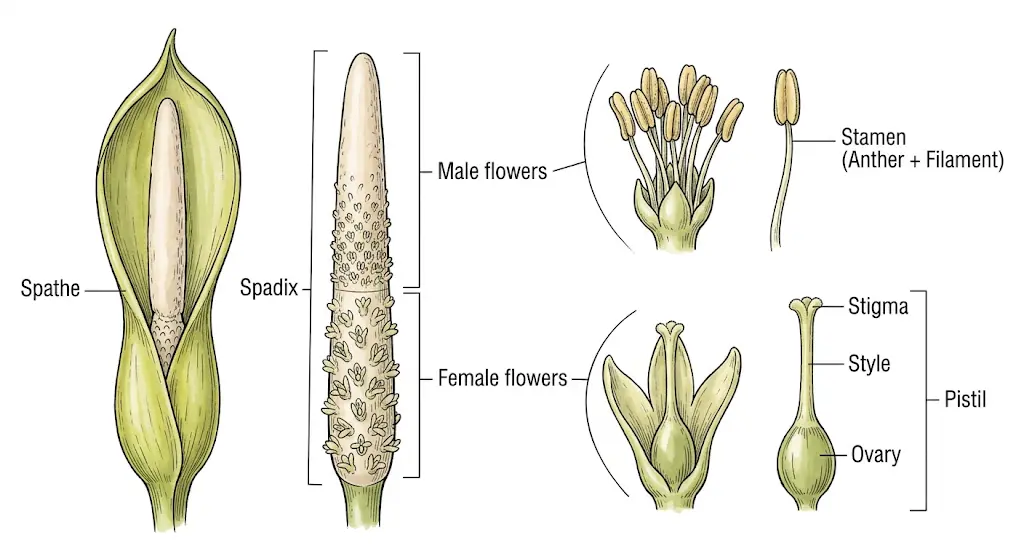
| Characteristic | Description |
|---|---|
| Inflorescence Type | Spadix subtended by a spathe |
| Spadix Length | Approximately 15–23 cm |
| Spathe Length | Approximately 10–24 cm |
| Spathe Colour | Creamy white to pale green externally; whitish internally |
| Flowers | Numerous, minute, sessile, bisexual flowers densely arranged on the spadix |
| Perianth | Absent |
| Stamens | Four per flower |
| Pistil | Single superior ovary with a sessile stigma |
| Fragrance | Not prominently documented |
| Anthesis | Observed only in mature climbing plants; extremely rare in cultivated specimens |
| Primary Pollinator Type | Insects (species not comprehensively documented) |
The inflorescence conforms to the characteristic araceous spadix-and-spathe structure but is exceptionally uncommon in cultivated plants because most ornamental individuals remain in the juvenile vegetative phase. Flower morphology is highly reduced, reflecting specialization for compact reproductive presentation rather than conspicuous floral display. The rarity of flowering has historically limited detailed morphological investigation relative to vegetative organs.
Fruit
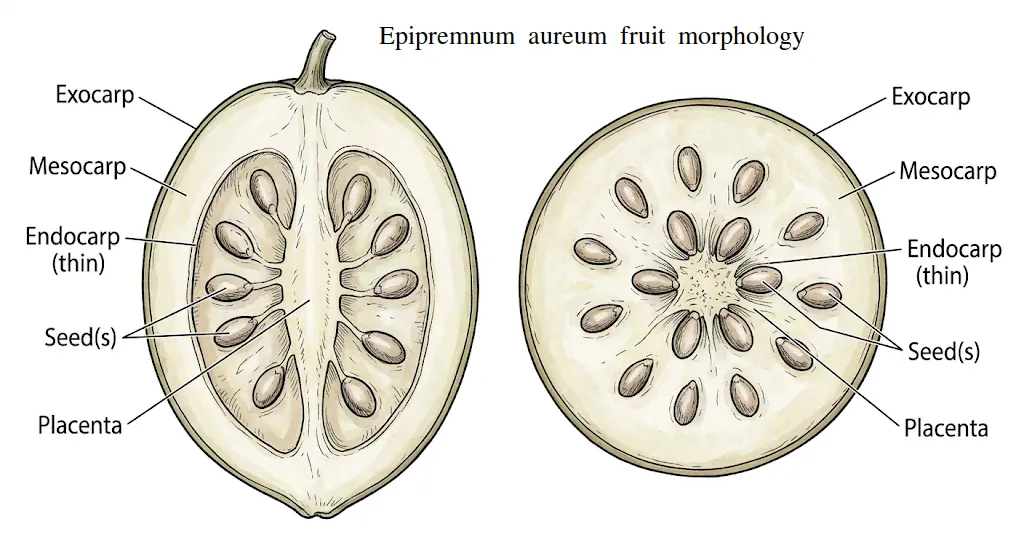
| Characteristic | Description |
|---|---|
| Fruit Type | Berry |
| Shape | Ovoid to ellipsoid |
| Colour at Maturity | Yellowish to orange |
Fruiting is exceptionally uncommon outside the native range because successful flowering is rarely observed in cultivated plants.
Seeds
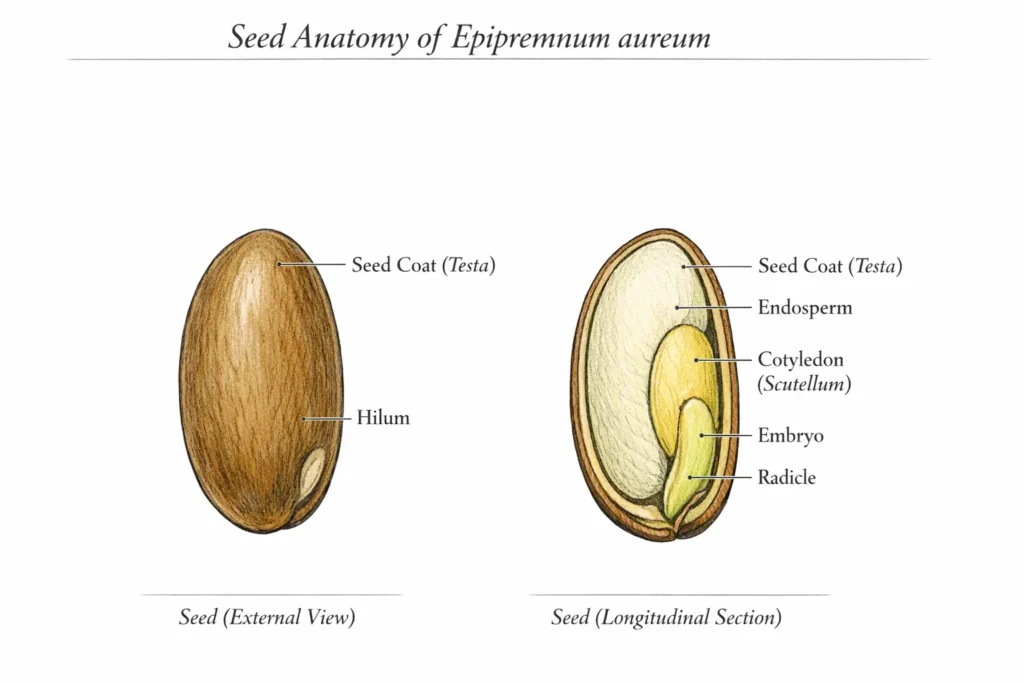
| Characteristic | Description |
|---|---|
| Shape | Ovoid |
| Colour | Pale brown to brown |
| Seed Coat | Thin |
Seed morphology has received comparatively little study because natural seed production is infrequent and horticultural propagation relies almost exclusively on vegetative methods.
Root System
| Characteristic | Description |
|---|---|
| Root Type | Fibrous root system with abundant adventitious aerial roots |
| Rooting Depth | Generally shallow in soil; variable according to substrate |
| Lateral Spread | Moderate; expands with vegetative growth |
| Structural Organization | Underground fibrous roots combined with nodal aerial attachment roots |
| Anchorage Significance | Aerial roots secure climbing stems to trees, rocks, or artificial supports |
| Field-observable Characteristics | Numerous pale to brown aerial roots emerging from stem nodes, adhering tightly to supporting surfaces |
The root system is structurally divided between subterranean absorptive roots and aerial attachment roots. The latter are among the most diagnostic features of Epipremnum aureum, enabling efficient vertical climbing without specialized tendrils or twining stems. Their persistent attachment to supporting substrates is a key field character for recognizing mature plants.
Field Identification
The most reliable field character is the combination of a vigorous climbing habit with abundant aerial roots and glossy, variegated, ovate leaves. Juvenile plants typically trail, whereas mature individuals climb vertically and develop substantially larger foliage.
The species is most frequently confused with Epipremnum pinnatum during the juvenile stage and with Scindapsus pictus in horticultural settings. Mature E. pinnatum develops deeply divided or fenestrated leaves, while S. pictus possesses characteristic silvery leaf markings. The single most dependable distinguishing feature of E. aureum is its irregular yellow or cream variegation combined with persistent entire leaf blades throughout most of its life cycle.
Normal vs. Concerning Observations
| Observation | Status | Morphological Interpretation |
|---|---|---|
| Juvenile trailing stems | Normal | Typical early developmental stage |
| Production of aerial roots at nodes | Normal | Characteristic climbing morphology |
| Progressive enlargement of leaves on climbing shoots | Normal | Normal heteroblastic development |
| Loss of variegation under prolonged low light | Monitor | Reduced variegation may occur while overall morphology remains normal |
| Extensive stem collapse or blackened tissues | Investigate | Indicates abnormal structural deterioration requiring further assessment |
| Marked deformation of newly emerging leaves | Investigate | May indicate developmental abnormality or external stress affecting normal morphology |
Cultivar Summary
| Cultivar | Key Characteristic | Commercial Status | Origin |
|---|---|---|---|
| ‘Golden Pothos’ | Green leaves with irregular golden-yellow variegation | Commercially dominant | Traditional horticultural selection |
| ‘Marble Queen’ | Heavy cream and white marbled variegation | Commercially dominant | Horticultural selection |
| ‘Snow Queen’ | Predominantly white foliage with limited green sectors | Regionally significant | Selected sport of ‘Marble Queen’ |
| ‘Neon’ | Uniform bright chartreuse foliage | Commercially dominant | Horticultural selection |
| ‘Jade’ | Solid green foliage lacking variegation | Regionally significant | Horticultural selection |
| ‘N’Joy’ | Compact growth with white and green sectorial variegation | Commercially dominant | Cultivated selection |
| ‘Pearls and Jade’ | White, green, and grey-green mottled variegation | Commercially dominant | Developed by the University of Florida |
| ‘Manjula’ | Broad leaves with undulating margins and complex cream-green variegation | Commercially dominant | University of Florida breeding programme |
| ‘Global Green’ | Green-on-green variegation with dark central zones | Commercially dominant | Modern cultivated selection |
Physiology and Phytochemistry
Functional Traits
| Functional Trait | Mechanism | Physiological Function |
|---|---|---|
| Photosynthetic Pathway | C3 photosynthesis | Carbon dioxide is fixed directly through the Calvin–Benson cycle, supporting efficient carbon assimilation under shaded tropical forest conditions. (PubMed Central (PMC)) |
| Water-use Strategy | Dynamic stomatal regulation | Stomatal conductance responds rapidly to changing irradiance, balancing carbon acquisition with transpiration and improving intrinsic water-use efficiency under fluctuating light. (American Chemical Society Publications) |
| Nutrient Acquisition | Adventitious and fibrous root absorption | Water and dissolved mineral nutrients are absorbed through terrestrial roots while aerial roots primarily facilitate attachment, with localized absorption where roots contact moist substrates. (PubMed) |
| Growth-form Strategy | Hemiepiphytic climbing | Physiological resources are preferentially invested in vertical extension and leaf expansion after support is encountered, maximizing access to higher light environments while minimizing investment in self-supporting tissues. (PubMed Central (PMC)) |
| Reproductive Strategy | Predominantly vegetative propagation | Persistent juvenile growth and extremely infrequent flowering in cultivation favour long-term clonal propagation through stem fragments rather than regular sexual reproduction. (PubMed Central (PMC)) |
| Dispersal Mechanism | Vegetative fragmentation and natural seed dispersal | Wild populations reproduce sexually through berries and seeds, whereas cultivated and naturalized populations spread predominantly through detached stem fragments capable of rapid rooting. (PubMed Central (PMC)) |
| Stress-response Mechanism | Physiological acclimation to fluctuating light | Photosynthetic induction kinetics, chlorophyll content, stomatal behaviour, and intrinsic water-use efficiency adjust dynamically to changing irradiance, enabling continued carbon gain under variable light regimes. (American Chemical Society Publications) |
| Chemical Defence | Calcium oxalate raphides | Needle-shaped calcium oxalate crystals deter herbivory by causing mechanical irritation and simultaneously function in calcium sequestration within plant tissues. (PubMed Central (PMC)) |
Epipremnum aureum employs an integrated physiological strategy characteristic of shade-adapted tropical climbing aroids. Rather than maximizing photosynthetic capacity under continuous high irradiance, the species is adapted to exploit intermittent light availability beneath forest canopies. Recent species-specific studies demonstrate that carbon assimilation, stomatal conductance, transpiration, and intrinsic water-use efficiency are dynamically coordinated during rapid transitions between shade and illumination, allowing efficient use of transient light while moderating water loss. (American Chemical Society Publications)
The climbing growth habit complements this physiological strategy by enabling progressive movement from low-light juvenile environments toward brighter canopy positions without substantial investment in self-supporting tissues. This developmental transition is accompanied by increased photosynthetic capacity and leaf expansion, improving whole-plant carbon gain as structural maturity is achieved. (PubMed Central (PMC))
Chemical defence also contributes to the species’ functional strategy. Calcium oxalate raphides provide a constitutive structural defence against herbivory while serving as an important reservoir for calcium regulation within tissues. Although the ecological functions of these crystals continue to be investigated across angiosperms, their presence in E. aureum is well established and represents one of the species’ principal constitutive defensive traits.
Physiological Integration
Epipremnum aureum exhibits an integrated physiological strategy in which carbon acquisition, water regulation, developmental plasticity, and constitutive defence operate as mutually reinforcing processes rather than independent traits. Its C3 photosynthetic pathway is optimized for shaded tropical habitats, while rapid photosynthetic induction and dynamic stomatal responses allow efficient utilization of intermittent canopy light. This coordination enables sustained carbon gain despite frequent transitions between shade and sunflecks. Recent physiological studies demonstrate that photosynthetic induction, stomatal conductance, transpiration, and intrinsic water-use efficiency respond in a coordinated manner during fluctuating irradiance rather than as isolated processes. (pubs.acs.org)
Vegetative development further reinforces this physiological strategy. Carbon assimilated under shaded juvenile conditions supports continued stem extension until a suitable climbing substrate is encountered. Once vertical ascent begins, increased light availability promotes greater photosynthetic productivity and larger foliage, creating a positive feedback between structural development and carbon economy without requiring major changes in the underlying photosynthetic pathway. This developmental plasticity contributes substantially to the species’ ecological success across diverse tropical habitats. (pmc.ncbi.nlm.nih.gov)
Resource allocation also reflects coordinated physiological priorities. Continuous vegetative propagation minimizes energetic investment in flowering and seed production under cultivated conditions, while constitutive calcium oxalate raphides provide persistent defence without dependence on inducible secondary metabolic responses. Although species-specific studies examining interactions among defence chemistry, growth regulation, and environmental stress remain limited, available evidence supports a highly integrated physiological system centred on efficient resource acquisition, developmental flexibility, and long-term vegetative persistence.
Phytochemistry
| Compound Class | Representative Compounds | Primary Location | Ecological or Biological Function |
|---|---|---|---|
| Calcium oxalate crystals | Raphides | Leaves, stems, petioles | Constitutive structural defence against herbivory; calcium sequestration and regulation. |
| Phenolic compounds | Chlorogenic acid, caffeic acid derivatives, flavonoid glycosides | Primarily leaves | Antioxidant metabolism, protection against oxidative stress, and ultraviolet screening. |
| Flavonoids | Quercetin derivatives, kaempferol derivatives | Leaves | Reactive oxygen species scavenging and physiological protection under environmental stress. |
| Pigments | Chlorophyll a, chlorophyll b, carotenoids | Photosynthetic tissues | Light harvesting, photoprotection, and energy transfer during photosynthesis. |
| Volatile organic compounds | Terpenoid and green leaf volatile constituents (identified in low abundance) | Leaf tissues | Plant–environment interactions and responses to tissue disturbance; comprehensive characterization remains incomplete. |
The phytochemistry of Epipremnum aureum has been investigated primarily in relation to foliar metabolism, stress physiology, and tissue culture rather than as a traditionally medicinal species. Consequently, current knowledge is dominated by studies of photosynthetic pigments, antioxidant metabolites, calcium oxalate biomineralization, and phenolic constituents, whereas comprehensive metabolomic characterization of reproductive structures and wild populations remains comparatively limited.
Among the best-characterized constituents are calcium oxalate raphides, which occur abundantly throughout vegetative tissues and represent one of the defining anatomical and chemical features of the species. These crystals function as an effective constitutive defence against herbivory while also participating in intracellular calcium regulation. Their distribution and morphology have been extensively documented in Araceae and are consistently reported in E. aureum. (pmc.ncbi.nlm.nih.gov)
Phenolic compounds and flavonoids constitute the principal soluble secondary metabolites identified in leaf tissues. Species-specific analyses have reported chlorogenic acid, caffeic acid derivatives, and flavonoid glycosides, which contribute to antioxidant homeostasis and protection against photooxidative stress. These compounds are also valuable chemotaxonomic markers within Araceae because their composition reflects conserved pathways of phenylpropanoid metabolism. (mdpi.com)
Photosynthetic pigments remain the most intensively studied metabolic components because of the plant’s importance in physiological research. Chlorophylls and carotenoids not only support carbon assimilation but also protect the photosynthetic apparatus through energy dissipation and reactive oxygen species management during changing light conditions. Compared with these well-characterized primary metabolites, volatile compounds and many minor secondary metabolites remain incompletely documented, indicating that the phytochemical profile of E. aureum is only partially characterized at the species level.
Phytochemical Organ Distribution
| Organ | Compound Class | Representative Compounds | Concentration | Source |
|---|---|---|---|---|
| Leaves | Calcium oxalate crystals | Raphides | Abundant (quantitative values not reported) | Franceschi & Nakata (2005); Nakata (2012) |
| Leaves | Phenolic compounds | Chlorogenic acid, caffeic acid derivatives | Detected; quantitative profile varies among studies | Metabolomic analyses of E. aureum leaf extracts |
| Leaves | Flavonoids | Quercetin and kaempferol glycosides | Confirmed; species-specific concentration not consistently quantified | LC–MS phytochemical studies |
| Leaves | Photosynthetic pigments | Chlorophyll a, chlorophyll b, lutein, β-carotene | Dominant photosynthetic pigments | Physiological pigment analyses |
| Stems | Calcium oxalate crystals | Raphides | Present; quantitative concentration not reported | Anatomical studies of Araceae |
| Petioles | Calcium oxalate crystals | Raphides | Present; quantitative concentration not reported | Anatomical studies of Araceae |
Phytochemical Significance
The phytochemistry of Epipremnum aureum is dominated by compounds associated with structural defence, primary metabolism, and physiological adaptation rather than by specialized secondary metabolites characteristic of many medicinal species. Calcium oxalate raphides represent the most distinctive and consistently documented chemical feature, serving both as a constitutive anti-herbivory defence and as a mechanism for intracellular calcium regulation. Their abundance throughout vegetative tissues makes them important anatomical and chemotaxonomic markers within Araceae.
Phenolic acids and flavonoids constitute the principal soluble secondary metabolites identified to date. These compounds contribute to antioxidant homeostasis, protection against photooxidative stress, and maintenance of cellular redox balance. Current evidence indicates that chlorogenic acid and related phenylpropanoid derivatives predominate among characterized phenolics, although comprehensive metabolomic inventories remain incomplete.
Leaf tissues represent the principal focus of phytochemical investigation, reflecting the species’ importance in studies of photosynthesis, indoor air-quality physiology, and tissue culture. In contrast, reproductive organs, roots, and wild populations remain comparatively under-investigated, resulting in an uneven understanding of whole-plant chemistry.
Available evidence also suggests functional complementarity between major compound groups. Photosynthetic pigments maximize light capture while carotenoids protect the photosynthetic apparatus from excess excitation energy. Phenolic compounds provide additional antioxidant buffering, whereas calcium oxalate crystals offer continuous structural defence independent of inducible biochemical responses. Direct antagonistic interactions among these metabolite groups have not been demonstrated for E. aureum.
Literature Concentration Bias: Current phytochemical research is disproportionately focused on leaf extracts, cultivated ornamental plants, and in vitro tissue culture systems, particularly from Asian research groups. Comparative analyses of reproductive organs, native wild populations from Mo’orea, and population-level metabolomic variation remain limited.
Evidence, Nutrition, Soil Ecology, and Safety
Evidence Hierarchy for Medicinal Use
| Evidence Layer | Status | Notes |
|---|---|---|
| Traditional Use | Documented | Traditional medicinal uses have been reported in parts of South and Southeast Asia for topical wound care, inflammation, skin disorders, and related folk remedies. Documentation is ethnobotanical and does not constitute clinical evidence. |
| Nutritional Evidence | Absent | The species is not recognized as a food plant, and no verified nutritional studies support medicinal use through dietary consumption. |
| In Vitro Studies | Documented | Laboratory investigations have reported antioxidant, antimicrobial, anti-inflammatory, and cytotoxic activities from leaf extracts under controlled experimental conditions. |
| Animal Studies | Partial | Limited animal studies have evaluated selected pharmacological activities, but evidence remains insufficient for therapeutic conclusions. |
| Human Clinical Studies | Absent | No verified human clinical trials evaluating medicinal efficacy were identified during the current literature audit. |
| Regulatory Recognition | Absent | No major regulatory authority currently recognizes Epipremnum aureum as an approved medicinal plant or therapeutic product. |
| Unsupported Commercial Claims | Documented | Commercial claims promoting treatment of chronic diseases, detoxification, immune enhancement, or broad therapeutic benefits are not supported by current clinical evidence. |
Evidence Assessment
The medicinal evidence for Epipremnum aureum is characterized by a substantial gap between traditional use and modern clinical validation. Ethnobotanical records indicate that the species has been used locally for minor ailments, particularly in external applications, providing a historical basis for scientific investigation. However, traditional use alone cannot establish efficacy or safety under contemporary evidence standards.
The strongest evidence currently available derives from in vitro investigations demonstrating antioxidant, antimicrobial, anti-inflammatory, and related biological activities in laboratory systems. These findings identify pharmacologically interesting compounds and biological responses but do not establish therapeutic effectiveness in humans because experimental conditions differ substantially from clinical use.
Evidence weakens considerably beyond laboratory studies. Animal experiments remain limited in both number and scope, while no verified human clinical trials have demonstrated efficacy for any medical indication. Consequently, no therapeutic claim can presently be supported by high-level clinical evidence.
Several commercial products and online sources promote Epipremnum aureum for applications such as cancer treatment, diabetes management, detoxification, immune enhancement, or generalized healing. Current peer-reviewed evidence does not substantiate these claims, and no recognized regulatory authority has approved the species for such therapeutic uses. Existing research therefore supports continued pharmacological investigation rather than clinical recommendation.
Nutritional Composition
Applicability: Epipremnum aureum is not a food-use species and is not recognized as an edible plant in authoritative food composition databases or national nutritional references. Consequently, no verified quantitative nutritional composition suitable for publication is available.
Nutritional Significance
As Epipremnum aureum is cultivated exclusively as an ornamental foliage plant, nutritional evaluation has not been a focus of scientific research. No peer-reviewed food composition studies, government nutritional databases, or international food composition tables currently provide validated nutrient profiles for its leaves, stems, or other organs intended for human consumption.
Because the species is not consumed as food, discussion of exceptional nutrients, dietary contribution, bioavailability, processing effects, fresh-versus-dried composition, or cultivar-dependent nutritional variation is not applicable. Any nutritional values reported on informal websites or commercial media are unsuitable for publication because they lack verification through recognized nutritional authorities.
The absence of nutritional data should therefore be interpreted as reflecting the species’ non-food status rather than an incomplete food composition database.
Soil Ecology and Mycorrhizal Associations
Evidence Level: Moderate (summary section appropriate)
Epipremnum aureum is naturally associated with humid tropical forest soils where organic matter decomposition and microbial activity support continuous nutrient cycling. Despite the ecological importance of soil microorganisms in these habitats, species-specific investigations of rhizosphere ecology remain limited compared with studies of physiology or horticulture.
Current evidence indicates that the species is capable of forming arbuscular mycorrhizal (AM) associations, consistent with the predominant symbiosis observed throughout Araceae. However, species-specific fungal partners have not been comprehensively characterized, and published studies rarely identify mycorrhizal associates beyond the functional group level.
Similarly, the rhizosphere bacterial community has not been comprehensively resolved. Available evidence suggests the presence of common plant-growth-associated bacterial taxa typical of tropical ornamental plants, but no stable, species-specific bacterial assemblage has been demonstrated.
Evidence for allelopathy is likewise limited. Although leaf and stem tissues contain phenolic compounds capable of influencing biological interactions under experimental conditions, there is currently no convincing species-specific evidence that E. aureum functions as an ecologically significant allelopathic species in natural or cultivated environments.
From a conservation perspective, soil microbial interactions are presumed to contribute to establishment and persistence within native tropical forests, but direct ecological studies remain scarce. Future research employing high-throughput microbiome sequencing is likely to improve understanding of fungal and bacterial associations throughout the species’ native range.
Toxicity and Safety
| Subject | Toxic Compounds | Clinical Effects | Source |
|---|---|---|---|
| Humans | Insoluble calcium oxalate raphides and proteolytic enzymes | Chewing or ingestion may produce immediate oral burning, pain, salivation, swelling of the lips, tongue, and oral mucosa, with occasional nausea or vomiting. Severe systemic poisoning is uncommon. | American Society for the Prevention of Cruelty to Animals (ASPCA); Poison Control; peer-reviewed toxicology literature |
| Cats | Insoluble calcium oxalate raphides | Marked oral irritation, hypersalivation, pawing at the mouth, vomiting, dysphagia, and reduced appetite. | ASPCA Animal Poison Control Center |
| Dogs | Insoluble calcium oxalate raphides | Oral pain, excessive salivation, vomiting, oral edema, and temporary difficulty swallowing. | ASPCA Animal Poison Control Center |
| Livestock | Insoluble calcium oxalate raphides | Limited species-specific documentation; ingestion is expected to produce oral and gastrointestinal irritation similar to that reported for other mammals. Severe poisoning reports are uncommon. | Veterinary toxicology references; Merck Veterinary Manual |
Toxicity Context
The toxicological profile of Epipremnum aureum is primarily attributable to insoluble calcium oxalate raphides, which are abundant throughout vegetative tissues. Clinical effects arise predominantly from mechanical penetration of mucosal tissues by needle-shaped crystals, accompanied by localized inflammatory responses. Toxicity therefore depends more on direct tissue contact than on systemic absorption of plant constituents.
Toxicity is dose-dependent. Small exposures generally produce transient oral discomfort and salivation, whereas ingestion of larger quantities may result in more pronounced oral edema, persistent vomiting, or difficulty swallowing. Life-threatening intoxication is uncommon, although medical or veterinary evaluation may be warranted when symptoms are severe or persistent.
All vegetative organs—including leaves, stems, and petioles—should be regarded as potentially irritating because calcium oxalate crystals occur throughout the plant. Current evidence does not indicate that any commonly cultivated organ is free of these crystals.
Young children and companion animals, particularly cats and dogs, represent the populations at greatest risk because exploratory chewing commonly precedes exposure. Existing literature has not identified clinically significant drug interactions specific to E. aureum. Likewise, species-specific information regarding pregnancy, lactation, or hepatic and renal disease is limited, and no evidence-based recommendations beyond avoidance of ingestion can presently be made.
This profile does not constitute medical or veterinary advice.
Distribution, Habitat, Climate, and Stress Tolerance
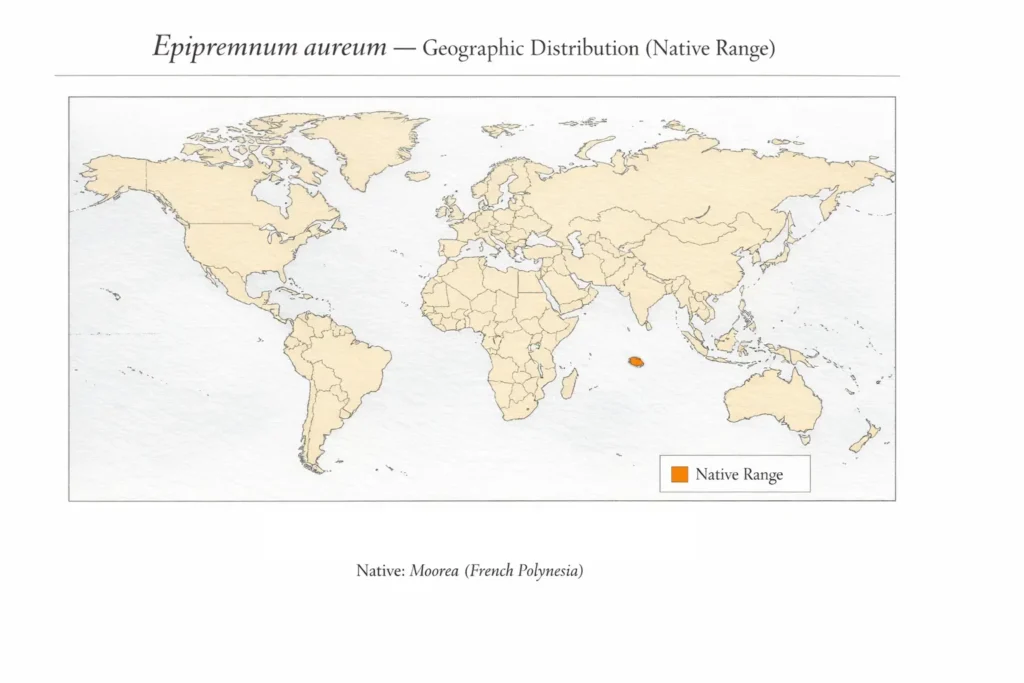
Native Range and Distribution
Native Range
| Region | Countries or Sub-regions | Status | Notes |
|---|---|---|---|
| Oceania | Society Islands – Mo’orea, French Polynesia | Native | Current taxonomic authorities recognize Mo’orea as the only confirmed native range. |
| Pacific Islands | Additional islands historically cited in horticultural literature | Uncertain | Older publications often reported a broader native range, but these records are now generally interpreted as early naturalisations or cultivated occurrences rather than confirmed native populations. |
Biogeographic Context
Epipremnum aureum represents one of the most geographically restricted native species among widely cultivated ornamental aroids. Contemporary taxonomic authorities recognize its indigenous distribution as confined to Mo’orea in the Society Islands of French Polynesia. Its naturally limited range is thought to reflect long-term geographic isolation within volcanic oceanic islands, where warm, humid tropical forests provided favourable conditions for the evolution of a shade-adapted climbing habit.
The discrepancy between its extremely restricted native range and nearly global modern distribution results almost entirely from human-mediated horticultural dispersal. Since its introduction into cultivation during the nineteenth century, vegetative propagation has enabled rapid worldwide distribution, obscuring the distinction between native and introduced populations in many older botanical references.
Earlier floristic treatments occasionally regarded the species as native across a wider Pacific region. Current evidence, however, supports interpreting most of these records as naturalised or cultivated populations rather than components of the original indigenous distribution.
Research also exhibits a marked geographic bias. Physiological, horticultural, and ecological studies overwhelmingly investigate cultivated material outside the native range, while relatively few studies focus on the ecology, genetics, or long-term conservation of naturally occurring Mo’orean populations.
Global Cultivation and Naturalisation
| Region | Countries or Areas | Cultivation Status | Notes |
|---|---|---|---|
| South Asia | India, Sri Lanka, Bangladesh | Commercially established | Widely cultivated as an ornamental and indoor foliage plant; naturalised locally in humid regions. |
| Southeast Asia | Thailand, Malaysia, Indonesia, Singapore, Philippines, Vietnam | Commercially established | Thrives in tropical climates and frequently escapes cultivation. |
| East Asia | China, Taiwan, Japan | Commercially established | Extensive ornamental production; outdoor persistence mainly in frost-free areas. |
| Australia & Pacific | Australia (tropical and subtropical regions), Hawaii, numerous Pacific islands | Naturalised | Established outside cultivation in warm, humid environments; invasive in parts of Hawaii. |
| Africa | Tropical and subtropical Africa | Emerging to commercially established | Cultivated ornamentally; locally naturalised in suitable climates. |
| Europe | Mediterranean Basin, greenhouse cultivation elsewhere | Attempted — limited success | Outdoor cultivation restricted by winter temperatures; predominantly maintained indoors. |
| North America | Southern Florida, Hawaii, Puerto Rico; indoor cultivation throughout the United States and Canada | Commercially established / Naturalised | Outdoor naturalisation confined to frost-free regions. |
| Central & South America | Tropical regions | Commercially established | Widely cultivated and locally naturalised in humid forests and disturbed habitats. |
Cultivation Range Note
Epipremnum aureum is among the world’s most widely cultivated ornamental foliage plants, with commercial production extending across nearly all tropical and subtropical regions and year-round indoor cultivation in temperate climates. Its success reflects exceptional vegetative propagation, broad environmental tolerance, and sustained horticultural demand rather than expansion of its native distribution.
Naturalised populations are documented throughout many humid tropical regions, particularly where escaped garden plants encounter suitable forest habitats. In some localities, notably Hawaii and portions of tropical Australia, vigorous vegetative growth has enabled the species to establish dense climbing populations capable of suppressing native vegetation, leading to regional invasive-species management initiatives.
Current literature remains strongly biased toward cultivated populations, commercial horticulture, and invasive ecology. By comparison, comparatively little research has investigated the ecology, demographic dynamics, or conservation of the naturally occurring Mo’orean populations that represent the species’ authentic native range.
Natural Habitat
| Habitat Characteristic | Description |
|---|---|
| Primary Biome | Tropical moist broadleaf forest |
| Native Habitat | Lowland to lower montane rainforest of Mo’orea, Society Islands |
| Elevation Range | Sea level to approximately 800 m (0–2,625 ft); most abundant in lowland humid forests |
| Soil Type | Deep, well-drained volcanic soils rich in organic matter and humus |
| Moisture Regime | Persistently moist with high atmospheric humidity throughout most of the year |
| Vegetation Associations | Tropical evergreen forest with mature canopy trees, lianas, ferns, palms, and other epiphytic or hemiepiphytic aroids |
| Disturbance Response | Establishes readily in canopy gaps and secondary forests while persisting beneath intact forest canopies |
| Habitat Specialization | Shade-adapted tropical forest climber with broad ecological plasticity in humid environments |
The native habitat of Epipremnum aureum is characterized by warm, humid tropical forests where abundant rainfall, stable temperatures, and dense vegetation create a persistently shaded environment. Rather than occupying exposed sites, the species develops beneath the forest canopy before ascending host trees as light availability increases toward the upper forest strata.
Its association with volcanic island forests reflects adaptation to fertile, organic-rich soils and continuously moist conditions. Although capable of persisting under relatively deep shade, the species responds positively to naturally occurring canopy disturbances that increase light penetration without substantially reducing humidity.
Outside its indigenous range, E. aureum occupies ecologically similar habitats wherever climate permits. Naturalised populations are commonly found in secondary forests, riparian vegetation, abandoned gardens, urban woodlands, and disturbed tropical forest margins, demonstrating broad habitat plasticity provided frost is absent and moisture remains adequate.
Ecological Role
| Role Type | Species or Agent Involved | Notes |
|---|---|---|
| Forest structural climber | Mature tropical canopy trees | Uses living trees solely as structural support without parasitism, contributing to vertical vegetation complexity. |
| Understorey ground cover | Tropical forest floor vegetation | Juvenile shoots spread across shaded substrates before initiating vertical growth. |
| Habitat complexity | Native forest vegetation | Dense vegetative growth increases structural heterogeneity and provides additional surface habitat for small invertebrates and epiphytic organisms. |
| Carbon assimilation | Tropical forest ecosystem | Persistent evergreen foliage contributes to year-round primary productivity within humid forest ecosystems. |
Evidence Level: Moderate
Within its native ecosystem, Epipremnum aureum functions primarily as a non-parasitic structural climber. By ascending host trees without extracting nutrients from them, it occupies vertical forest space while contributing to the complexity of the vegetation profile. This climbing strategy increases the diversity of available microhabitats and enhances spatial heterogeneity within humid tropical forests.
Species-specific ecological investigations remain comparatively limited. Most published information concerns general forest ecology or observations from naturalised populations rather than detailed studies of native ecological interactions. Consequently, although the structural role of the species is well established, many aspects of its interactions with native fauna, seed dispersers, and long-term ecosystem processes remain insufficiently documented.
Invasive Status
| Region | Status | Impact | Management |
|---|---|---|---|
| Hawaii (USA) | Invasive | Forms dense climbing mats that suppress native vegetation, inhibit tree regeneration, and alter forest structure. | Mechanical removal, long-term monitoring, and prevention of further ornamental escape. |
| Tropical Australia (Queensland) | Naturalised to locally invasive | Competes with native climbing plants and may smother shrubs and young trees in moist forests. | Regional weed management and early detection programmes. |
| Florida (USA) | Naturalised | Established in subtropical forests and disturbed habitats; localized ecological impacts documented. | Local removal within protected natural areas. |
| Numerous tropical islands | Naturalised | Escapes cultivation in humid environments; ecological impacts vary by locality and remain incompletely quantified. | Monitoring and prevention of further spread where appropriate. |
Invasive Status Note
The remarkable ecological flexibility that underpins the horticultural success of Epipremnum aureum also facilitates naturalisation outside its native range. Vegetative propagation through stem fragments enables rapid local expansion, while the ability to tolerate deep shade allows populations to establish beneath intact forest canopies before climbing into the vegetation.
Documented ecological impacts are most pronounced in Hawaii, where dense infestations suppress native understory vegetation, impede forest regeneration, and increase structural dominance within invaded habitats. Similar concerns have been reported from parts of tropical Australia, although impacts are generally more localized.
Legislative responses differ among jurisdictions. Some regional invasive-species authorities list E. aureum as an environmental weed requiring management, whereas in many tropical countries it remains primarily an ornamental species with only localized naturalisation. Current evidence therefore supports recognizing the species as regionally invasive rather than universally invasive, emphasizing that ecological risk depends strongly on local climate and habitat suitability.
Optimal Climate Parameters
| Parameter | Optimal Range | Tolerance Range | Notes |
|---|---|---|---|
| Mean Annual Temperature | 22–30 °C (72–86 °F) | 15–35 °C (59–95 °F) | Based primarily on the global cultivation envelope; prolonged frost is not tolerated. |
| Annual Rainfall | 1,500–3,500 mm (59–138 in) | 1,000–5,000 mm (39–197 in) where soil moisture remains adequate | Reflects humid tropical forests and successful cultivation in high-rainfall regions. |
| Day Temperature | 24–30 °C (75–86 °F) | 18–35 °C (64–95 °F) | Sustained high temperatures remain suitable when atmospheric humidity is maintained. |
| Night Temperature | 18–24 °C (64–75 °F) | 15–28 °C (59–82 °F) | Cooler nights below 15 °C reduce physiological activity. |
| Relative Humidity | 60–90% | 40–100% | High humidity favours continuous vegetative growth; lower humidity is tolerated but less favourable. |
| Dry Season | Short or absent | Moderate seasonal dryness tolerated if residual soil moisture persists | Extended seasonal drought limits natural establishment. |
| Solar Radiation | Bright filtered light to partial shade | Deep shade to moderate direct sunlight | Derived from the global cultivation range; prolonged intense tropical sun may reduce leaf quality without acclimation. |
Climate Interpretation
The native climate envelope of Epipremnum aureum reflects the remarkably stable conditions of humid oceanic tropical forests, where temperatures fluctuate little throughout the year, and atmospheric moisture remains consistently high. These conditions have favoured the evolution of a shade-adapted climbing species capable of maintaining year-round physiological activity without exposure to prolonged drought or freezing temperatures.
Global cultivation has expanded this climatic envelope considerably through greenhouse production and indoor horticulture. Although cultivated plants tolerate a broader range of temperatures and humidity than occurs within the native habitat, successful outdoor establishment remains largely confined to frost-free tropical and subtropical climates. Consequently, low temperature rather than heat represents the principal climatic limitation to natural distribution.
The broad cultivated range demonstrates substantial environmental plasticity but should not be interpreted as evidence of equivalent ecological performance under all climatic conditions. Populations established outside humid tropical environments generally depend on artificial environmental modification or protected cultivation rather than adaptation to fundamentally different climatic regimes.
Stress Tolerance Profile
| Stress Type | Tolerance Level | Physiological Response | Notes |
|---|---|---|---|
| Low Light | Verified | Efficient C3 photosynthesis, chlorophyll acclimation, and dynamic photosynthetic induction maintain carbon assimilation under reduced irradiance. | Characteristic adaptation of tropical forest understorey plants. |
| High Light | Supported | Increased carotenoid activity, antioxidant metabolism, and stomatal regulation reduce photooxidative stress following gradual acclimation. | Sudden exposure may reduce photosynthetic efficiency. |
| Drought | Supported | Partial stomatal closure and reduced transpiration conserve water, although prolonged water deficit substantially decreases physiological activity. | Adapted to moist environments rather than prolonged aridity. |
| Heat | Verified | Stable photosynthetic performance is maintained under warm tropical temperatures through coordinated stomatal regulation and antioxidant protection. | Supported by controlled physiological studies. |
| Chilling / Frost | Verified | Cellular injury and progressive metabolic impairment occur below the tolerance threshold; freezing temperatures frequently result in irreversible tissue damage. | Principal climatic limitation to outdoor distribution. |
Compound Stress Assessment
Species-specific investigations examining combined environmental stresses remain comparatively limited. Most published studies evaluate individual stress factors such as fluctuating irradiance or temperature rather than simultaneous exposure to drought, heat, salinity, or flooding.
Available evidence indicates that the interaction between high temperature and adequate atmospheric humidity can be tolerated effectively, reflecting adaptation to humid tropical forests. In contrast, combinations involving prolonged drought together with elevated temperature are expected to impose substantially greater physiological limitations, although controlled species-specific experiments remain scarce.
Similarly, published data evaluating combined effects of salinity, flooding, nutrient limitation, or multiple abiotic stressors have not been comprehensively documented for Epipremnum aureum. These interactions therefore represent important knowledge gaps rather than opportunities for inference.
Adaptations, Phenology, Pollination, and Reproductive Biology
Structural and Physiological Adaptations
| Adaptation | Mechanism Description | Ecological Context |
|---|---|---|
| Hemiepiphytic climbing habit | Juvenile shoots establish on the forest floor before climbing host trees using aerial attachment roots | Enables progressive access to higher light levels while avoiding investment in self-supporting woody stems |
| Adventitious aerial roots | Nodal roots anchor stems securely to bark, rock, and other rough substrates | Supports vertical colonization of mature forest vegetation and persistence in humid environments |
| Pronounced heteroblasty | Juvenile and mature growth phases differ markedly in vegetative architecture | Allows efficient establishment under shaded conditions before transition to canopy-associated growth |
| Evergreen foliage | Persistent leaves remain functional throughout the year rather than being seasonally shed | Favours continuous resource acquisition in climates lacking prolonged seasonal dormancy |
| Extensive vegetative regeneration | Detached stem fragments containing viable nodes readily produce new shoots and roots | Enhances persistence following disturbance and contributes to naturalisation outside the native range |
Adaptation Narrative
The adaptive strategy of Epipremnum aureum is centred on efficient occupation of the vertical forest environment rather than competition as a self-supporting tree or shrub. Its hemiepiphytic life history enables establishment beneath the canopy, where juvenile plants exploit shaded conditions before ascending neighbouring trees. This transition allows access to progressively greater light availability while minimizing structural investment in supportive tissues.
The species’ aerial attachment roots represent a key morphological adaptation rather than merely a structural feature. By securing stems to bark and other rough surfaces, they permit stable vertical growth through complex forest vegetation and facilitate occupation of ecological niches that are inaccessible to non-climbing herbs.
Pronounced heteroblasty provides additional ecological flexibility. Distinct juvenile and mature growth forms allow the plant to optimize establishment in low-light understorey habitats before allocating resources to larger foliage during canopy ascent. This developmental progression reflects adaptation to heterogeneous tropical forest light environments rather than simple morphological variation.
Persistent evergreen foliage and exceptional regenerative capacity further enhance long-term survival. Together, these adaptations promote resilience following physical disturbance and contribute to the species’ success both within native forests and in many naturalised tropical ecosystems.
Climate Change Vulnerability
| Factor | Assessment | Notes |
|---|---|---|
| Primary Climate Sensitivity Factors | Moderate | Restricted native distribution and dependence on humid tropical forest conditions may increase sensitivity to long-term climatic change. |
| Key Threatening Climate Processes | Moderate | Rising temperatures, altered precipitation patterns, increased frequency of severe storms, and habitat modification may affect native populations. |
| Resilience Factors | High | Broad ecological plasticity, vigorous vegetative regeneration, and extensive cultivation outside the native range provide substantial resilience at the global species level. |
| Confidence Level | Moderate | Assessment is based primarily on ecological inference because species-specific climate-vulnerability modelling has not been comprehensively published. |
Climate Vulnerability Assessment
Species-specific assessments of climate-change vulnerability for Epipremnum aureum remain limited, and no comprehensive predictive modelling focused exclusively on its native populations was identified during the current literature review. Consequently, the present evaluation is based on documented habitat characteristics, geographic distribution, and ecological attributes rather than quantitative climate-projection models.
Within its native range on Mo’orea, the principal vulnerabilities arise from the species’ naturally restricted distribution and dependence on persistently humid tropical forests. Changes in rainfall patterns, increasing temperatures, extreme weather events, and habitat degradation could influence the long-term persistence of these indigenous populations, although direct evidence remains sparse.
At the global scale, however, the species exhibits considerably greater resilience than many tropical endemics because of its exceptional vegetative regeneration, ecological plasticity, and widespread cultivation. These characteristics reduce the probability of global extinction despite potential regional impacts within the native range.
The confidence level for this assessment is therefore moderate. It reflects a synthesis of documented ecological evidence rather than species-specific climate modelling, highlighting the need for future conservation studies focused on native population dynamics under projected climate scenarios.
Phenological Calendar
| Event | Native Range Timing | Cultivated Range Timing | Environmental Triggers |
|---|---|---|---|
| Vegetative Growth Onset | Year-round | Year-round under favourable conditions | Sustained warm temperatures, adequate moisture, and continuous active growth; no documented threshold values for native populations |
| Flower Bud Initiation | Seasonal; timing incompletely documented | Extremely rare in cultivation | Physiological maturity and attainment of the adult climbing phase; precise environmental trigger not documented |
| Anthesis (Peak Flowering) | Irregular; documented only in mature wild populations | Exceptionally rare | Transition to reproductive maturity; endogenous hormonal regulation documented, but specific environmental cues remain poorly characterized |
| Fruit Development | Following successful pollination | Rarely observed | Successful fertilization; no documented external trigger |
| Fruit Maturation | Seasonal; limited published observations | Rarely observed | Progressive fruit development following fertilization |
| Seed Dispersal | Following fruit maturation | Generally absent in cultivation | Completion of fruit maturation; dispersal agent timing remains insufficiently documented |
| Dormancy or Rest Period | No true seasonal dormancy | No true dormancy | Continuous tropical growth; activity may slow under reduced light or cooler temperatures rather than entering physiological dormancy |
Phenological Notes
Epipremnum aureum exhibits a phenological pattern typical of evergreen tropical climbers, with continuous vegetative growth replacing the distinct seasonal cycles observed in many temperate plants. Within its native rainforest environment, favourable temperature and moisture conditions permit year-round production of new shoots and leaves, while reproductive events appear to depend primarily on developmental maturity rather than sharply defined seasonal transitions.
Phenological plasticity is greatest in cultivated populations. Under protected indoor or greenhouse environments, vegetative growth may continue throughout the year with only modest reductions in activity during periods of lower irradiance or cooler temperatures. In contrast, flowering remains exceptionally uncommon because most cultivated plants retain the juvenile vegetative phase and do not attain the physiological maturity associated with natural canopy-climbing individuals.
Published information describing the seasonal timing of flowering, fruiting, and seed production in native populations remains limited. Consequently, current understanding of reproductive phenology is derived primarily from scattered field observations and physiological investigations rather than comprehensive long-term phenological monitoring.
Pollination Ecology
The pollination biology of Epipremnum aureum remains one of the least thoroughly documented aspects of its life history because flowering is infrequent and many cultivated populations never reach reproductive maturity. As in other members of the Araceae, the species produces a compact spadix surrounded by a protective spathe, forming a specialized pollination unit adapted for close interaction with floral visitors rather than open exposure of individual flowers.
Current evidence suggests an insect-mediated pollination system, although species-specific pollinator identities have not been comprehensively established. Most ecological knowledge is inferred from direct observations of mature flowering plants together with broader studies of reproductive biology within the family Araceae.
Pollination Ecology
| Parameter | Value | Notes |
|---|---|---|
| Primary Pollinators | Not identified to species or genus | Insect pollination is supported, but species-level pollinator records remain unavailable. |
| Secondary Pollinators | Not documented | No verified secondary pollinator has been reported. |
| Pollination Syndrome | Entomophily | Consistent with reproductive biology of many aroids. |
| Floral Mechanism | Dense spadix enclosed by a spathe positions reproductive structures in close proximity to visiting insects | Facilitates contact between floral visitors and reproductive organs during movement within the inflorescence. |
| Reproductive System | Sexual reproduction in wild populations; predominantly vegetative persistence in cultivation | Flowering is uncommon outside mature native or naturalized climbing plants. |
| Seed Dispersal Agent | Not identified | Species-specific dispersal agents remain undocumented. |
| Reproductive Evidence Status | Partial | Flower structure is well described, whereas field pollination ecology remains incompletely characterized. |
| Human Intervention | Biologically feasible | Artificial pollination is biologically possible but lies outside the scope of this profile. |
Pollination Context
Available evidence indicates that successful sexual reproduction in Epipremnum aureum depends largely on the attainment of mature climbing growth, a condition seldom achieved by cultivated ornamental plants. Consequently, vegetative persistence predominates across most cultivated populations, substantially reducing opportunities to observe natural pollination processes.
The degree of self-compatibility has not been conclusively resolved through species-specific experimental studies. Likewise, quantitative assessments of outcrossing frequency remain unavailable. Existing evidence therefore supports only a partial understanding of the breeding system.
Because the identities of natural pollinators remain poorly documented, the potential consequences of pollinator decline cannot presently be evaluated with confidence. Similarly, while assisted pollination is biologically feasible where flowering occurs, current evidence is insufficient to assess its ecological significance within natural populations.
Seed Biology and Germination
| Parameter | Value | Notes |
|---|---|---|
| Seed Type | Orthodox angiosperm seed within a fleshy berry | Supported — produced only after successful sexual reproduction in mature wild populations. |
| Dormancy Class | Not conclusively documented | Conditional — species-specific dormancy classification has not been verified. |
| Dormancy-Breaking Requirement | Not documented | Conditional — no species-specific experimental evidence identified. |
| Optimal Germination Temperature | Not documented | Conditional — no verified species-specific temperature range available. |
| Germination Rate | Not documented | Conditional — published quantitative data unavailable. |
| Germination Period | Not documented | Conditional — species-specific timing has not been reported. |
| Storage Behaviour | Not documented | Conditional — orthodox or recalcitrant storage behaviour has not been experimentally confirmed. |
| Seed Longevity | Not documented | Conditional — no verified long-term storage studies identified. |
Germination Notes
Knowledge of seed biology in Epipremnum aureum remains surprisingly limited because the species reproduces predominantly through vegetative growth in cultivation and flowers only rarely under managed conditions. Consequently, opportunities to study seed production, germination ecology, and seedling establishment have been comparatively few.
Published research has focused largely on flowering physiology and the hormonal regulation of reproductive maturity rather than post-dispersal seed ecology. As a result, important biological characteristics—including dormancy class, storage behaviour, germination temperature, and seed longevity—remain insufficiently documented at the species level.
Seed production is expected to contribute primarily to the maintenance of native populations, whereas vegetative regeneration dominates persistence and spread throughout cultivated and most naturalised populations. Additional field studies within the native range are needed to clarify natural germination ecology and early seedling establishment.
Vegetative Reproduction
| Parameter | Value | Notes |
|---|---|---|
| Vegetative Regeneration Capacity | Very high | Verified — detached stem segments containing viable nodes readily regenerate into independent plants. |
| Primary Regeneration Mechanism | Nodal stem regeneration | Adventitious roots and axillary buds develop from existing nodes following fragmentation. |
| Minimum Propagule Size | Species-specific minimum not documented | Available evidence confirms nodal regeneration but does not define a minimum viable propagule length or node number. |
| Ecological or Invasive Significance | Major contributor to persistence and naturalisation | Efficient vegetative regeneration facilitates rapid establishment after disturbance and supports spread in naturalised populations. |
Vegetative regeneration is the dominant reproductive strategy of Epipremnum aureum throughout cultivation and plays a central role in its ecological success outside the native range. The capacity of nodal stem fragments to develop both roots and shoots enables persistence following mechanical disturbance and greatly increases opportunities for local dispersal.
Unlike seed production, which depends upon successful flowering and pollination, vegetative regeneration operates independently of reproductive maturity. This distinction explains the widespread global distribution of the species despite the rarity of flowering in cultivated populations.
Human Interaction and Applied Cultivation Knowledge
Economic Importance
| Use Category | Description | Economic Impact |
|---|---|---|
| Ornamental Horticulture | One of the world’s most widely traded indoor foliage plants for residential, commercial, and institutional landscaping | High — represents a major component of the international ornamental foliage industry. |
| Interior Landscaping | Extensively used in offices, hotels, hospitals, educational institutions, and public buildings because of its decorative foliage and adaptability | High — sustained commercial demand supports year-round nursery production. |
| Nursery Production | Mass-produced through vegetative propagation by commercial nurseries worldwide | High — efficient clonal multiplication enables consistent large-scale production. |
| Landscape Greening | Utilized in tropical and subtropical landscapes for vertical greening and ornamental planting | Moderate — regionally important in frost-free climates. |
| Scientific Research | Used as a model species in plant physiology, tissue culture, and indoor environmental studies | Moderate — contributes to academic and applied horticultural research. |
| Summary Economic Assessment | Global ornamental foliage crop with stable international demand and extensive commercial cultivation | Very High — economic value is driven almost entirely by the ornamental plant industry rather than medicinal, nutritional, or timber markets. |
Economic Context
Epipremnum aureum is among the most commercially important ornamental foliage plants worldwide. Commercial production is centred on tropical and subtropical nursery industries, with large-scale propagation supplying both domestic and international markets. Because the species is propagated almost exclusively through vegetative means, commercial production relies on cultivated stock rather than harvest from wild populations.
International trade is dominated by potted plants, rooted cuttings, and tissue-cultured planting material. Production occurs across Asia, Europe, North America, and other major horticultural regions, where greenhouse cultivation supports year-round distribution. Unlike many economically important plant species, its commercial value derives almost entirely from ornamental use rather than food, fibre, timber, or pharmaceutical industries.
Current evidence indicates few documented concerns regarding adulteration because the species is marketed primarily as a living ornamental. Supply-chain vulnerabilities are instead associated with phytosanitary regulations, international movement of planting material, cultivar demand, and biosecurity requirements rather than limitations in natural resource availability.
Traditional Uses
| Use Category | Knowledge System | Region or Cultural Group | Practice Summary | Documentation Level | Source |
|---|---|---|---|---|---|
| Ornamental symbolism | South Asian household horticultural traditions | India, Bangladesh, Nepal | Cultivated around homes and businesses as a symbol of prosperity, good fortune, and household well-being. | Moderate | Regional ethnobotanical and horticultural literature |
| Decorative indoor cultivation | East and Southeast Asian ornamental horticultural traditions | China, Taiwan, Thailand, Malaysia, Indonesia | Maintained primarily as a decorative foliage plant in homes, temples, and public buildings. | High | Regional horticultural documentation |
| Traditional medicinal application | Region-specific ethnobotanical practice (not attributable to a major codified medical system) | Parts of Southeast Asia and Pacific Islands | Leaf material has been reported in localized traditional external applications for minor skin conditions and wounds. These practices are ethnobotanically documented but lack broad clinical validation. | Limited | Peer-reviewed ethnobotanical studies |
| Air-quality belief | Contemporary cultural practice | Multiple urban regions | Frequently associated with improving indoor environments and household well-being. This reflects cultural and horticultural perception rather than documented traditional medical knowledge. | Moderate | Horticultural and cultural literature |
Traditional Use Summary
Documented traditional knowledge associated with Epipremnum aureum is considerably less extensive than that of many medicinal or food plants. The species has achieved its greatest cultural significance through ornamental cultivation, where it is widely regarded as a symbol of prosperity, longevity, and positive fortune in several Asian cultural traditions.
Localized ethnobotanical records describe limited external medicinal applications, particularly in parts of Southeast Asia and the Pacific. However, these practices are geographically restricted and are not widely represented within major codified medical systems such as Ayurveda, Siddha, Traditional Chinese Medicine, or Unani. Consequently, ornamental and symbolic values constitute the most consistently documented aspects of human interaction with the species.
Traditional Use Summary
Documented traditional knowledge associated with Epipremnum aureum is relatively limited compared with that of established medicinal, food, or fibre crops. Throughout much of its historical range of cultivation, the species has been valued primarily as an ornamental plant rather than as a source of food or formal medicine.
Where ethnobotanical uses have been recorded, they are generally localized and involve external applications of vegetative tissues for minor skin conditions or wound care. These practices are geographically restricted and are not consistently represented within major codified medical systems such as Ayurveda, Siddha, Unani, or Traditional Chinese Medicine. Consequently, the available evidence supports recognition of localized ethnobotanical traditions rather than broad medicinal acceptance.
The strongest continuity of traditional human interaction lies in ornamental symbolism. Across many parts of Asia, the species has become closely associated with prosperity, longevity, domestic well-being, and favourable fortune. These symbolic associations have remained influential despite the modern commercialization of the plant through the global ornamental horticulture industry.
Regional Ethnobotanical Context
The ethnobotanical history of Epipremnum aureum differs markedly from that of many economically important tropical plants because its cultural prominence developed largely through ornamental cultivation rather than subsistence agriculture or traditional medicine. Following its introduction beyond its native Society Islands, the species was rapidly adopted into domestic gardens, religious settings, and ornamental landscapes throughout tropical and subtropical Asia.
Knowledge associated with the plant has therefore been transmitted primarily through horticultural practice, household traditions, and cultural symbolism rather than through formal medical literature or agricultural manuals. In many regions, its value has become increasingly associated with aesthetic appeal and household prosperity, while localized medicinal practices have remained secondary and geographically restricted.
Modern globalization has further transformed its ethnobotanical context. Commercial nursery production, international exchange of cultivars, and widespread indoor cultivation have broadened cultural recognition far beyond the species’ native range, creating a predominantly ornamental relationship between people and the plant.
Traditional Ecological Knowledge
| Knowledge Area | Documentation Status | Summary |
|---|---|---|
| Agroforestry Integration | Not documented | No verified evidence was identified demonstrating deliberate integration into traditional agroforestry systems. |
| Living Fence Use | Not documented | No reliable ethnobotanical documentation supports traditional use as a living fence or boundary plant. |
| Ecological Indicator Role | Not documented | The species has not been verified as a traditional environmental or seasonal indicator within documented knowledge systems. |
| Landscape Integration | Limited | Incorporated into home gardens, courtyards, temple landscapes, and ornamental settings in several tropical regions, primarily for decorative rather than ecological purposes. |
| Resource Management Practices | Not documented | No species-specific traditional resource-management system has been identified in the available literature. |
Traditional Ecological Knowledge Summary
Current evidence indicates that documented Traditional Ecological Knowledge (TEK) for Epipremnum aureum is limited. Unlike many long-domesticated food or medicinal plants, the species has not been shown to play a significant role in traditional agroforestry systems, ecological monitoring, or landscape resource management. Existing documentation instead reflects ornamental cultivation within household and cultural landscapes rather than ecological stewardship practices.
Ethical Considerations
| Topic | Assessment | Notes |
|---|---|---|
| Wild Harvesting | Low concern | Commercial production relies overwhelmingly on cultivated stock rather than collection from native wild populations. |
| Benefit Sharing | Relevant | Localized ethnobotanical knowledge should be appropriately acknowledged and attributed where documented. |
| Indigenous Knowledge | Respect Required | Region-specific cultural practices should not be generalized or commercialized without proper cultural attribution. |
| Commercial Cultivar Development | Well established | Most modern cultivars have been developed through horticultural selection and commercial breeding programmes. |
| Sustainability | Generally favourable | Vegetative propagation substantially reduces pressure on natural populations used for commercial production. |
Ethical considerations surrounding Epipremnum aureum relate primarily to the responsible use of ethnobotanical knowledge and the conservation of accurate cultural attribution. Because commercial production depends almost entirely on cultivated propagation, pressures associated with wild collection are comparatively limited.
Nevertheless, localized traditional knowledge should be represented accurately and without exaggeration. Symbolic beliefs, cultural practices, and documented ethnobotanical uses should remain clearly distinguished from scientifically validated medicinal evidence, ensuring that cultural heritage is respected without creating unsupported therapeutic claims.
Cultural Significance
| Cultural Context | Region | Significance |
|---|---|---|
| Household prosperity symbolism | India, Bangladesh, Nepal | Widely regarded as a symbol of prosperity, abundance, and domestic well-being. |
| Feng Shui traditions | China and Chinese cultural communities | Frequently associated with positive energy, wealth, and harmonious indoor environments. |
| Interior ornamental culture | Global | Recognized internationally as one of the most important indoor ornamental foliage plants. |
| Institutional landscaping | Worldwide | Extensively used in offices, hotels, hospitals, educational institutions, and public buildings because of its aesthetic value and adaptability. |
Cultural Significance Summary
The enduring cultural importance of Epipremnum aureum arises principally from its ornamental and symbolic roles rather than from food production or traditional medicine. Across much of Asia, the plant has become closely linked with concepts of prosperity, longevity, and household harmony, while internationally it has become one of the defining species of modern indoor horticulture.
These cultural associations have contributed substantially to its worldwide popularity and commercial success. Although symbolic traditions vary among regions, they consistently emphasize decorative value and positive cultural meaning rather than therapeutic function, illustrating how ornamental plants can acquire significant cultural identities independent of medicinal or nutritional importance.
Cultivation Summary
| Aspect | Summary | Commercial Relevance |
|---|---|---|
| Production System | Predominantly greenhouse, shade-house, and nursery cultivation using vegetative propagation | Enables year-round commercial production with consistent plant quality. |
| Commercial Growth Habit | Compact trailing or climbing ornamental foliage plant | Suitable for potted plants, hanging baskets, interior landscaping, and vertical greening. |
| Production Geography | Global, with major production centres in tropical, subtropical, and temperate greenhouse industries | Supports international ornamental plant trade. |
| Cultivation Scale | Home gardening through large-scale commercial nurseries | One of the world’s most extensively cultivated indoor foliage plants. |
| Genetic Base | Dominated by clonally propagated cultivars | Ensures cultivar uniformity but reduces genetic diversity within commercial stocks. |
| Commercial Orientation | Ornamental horticulture rather than food, fibre, timber, or medicinal production | Defines the species’ global economic identity. |
Cultivation Summary
Epipremnum aureum has achieved worldwide commercial importance because its biological characteristics align exceptionally well with modern ornamental horticulture. Reliable vegetative regeneration, prolonged evergreen foliage, broad environmental adaptability, and strong consumer demand have established the species as one of the most widely cultivated foliage plants internationally.
Commercial cultivation relies almost entirely on clonal propagation, producing uniform planting material for residential, institutional, and landscape markets. Consequently, the cultivated population differs markedly from native populations, with horticultural selections and named cultivars dominating global production.
This section provides only a biological overview of cultivation. Detailed cultivation techniques, propagation methods, environmental management, and production protocols belong to dedicated cultivation guidance and are intentionally excluded from this profile.
Pest, Disease and Physiological Burden Summary
| Category | Representative Examples | Commercial Significance |
|---|---|---|
| Arthropod Pests | Spider mites (Tetranychidae), mealybugs (Pseudococcidae), scale insects (Coccoidea), thrips (Thysanoptera) | Common in protected ornamental production; may reduce aesthetic quality and marketability. |
| Fungal Diseases | Root rot (Pythium spp., Phytophthora spp.), leaf spot diseases | Most significant under excessive moisture or poorly managed production environments. |
| Bacterial Diseases | Erwinia soft rot | Localized but capable of causing severe losses in nursery production. |
| Physiological Disorders | Chlorosis, leaf scorch, variegation instability, edema | Usually associated with environmental or cultural conditions rather than infectious agents. |
| Commercial Burden | Quality degradation rather than mortality | Economic losses primarily result from reduced ornamental value rather than destruction of mature plants. |
Burden Summary
Commercial production of Epipremnum aureum is generally regarded as reliable, with most challenges arising from maintaining the high aesthetic standards expected of ornamental foliage crops. Cosmetic injury frequently has greater economic consequences than biological mortality because market value depends strongly on foliage quality, colour stability, and overall appearance.
The majority of reported pests and diseases are common ornamental production problems rather than species-specific threats. Consequently, commercial burden is determined more by production quality and market acceptability than by exceptional biological susceptibility.
Failure Points and Commercial Risks
| Risk Category | Assessment | Commercial Implication |
|---|---|---|
| Genetic Uniformity | Moderate | Extensive clonal propagation may reduce genetic diversity and increase vulnerability to emerging pests or diseases. |
| International Plant Movement | Moderate | Phytosanitary regulations may influence international trade in live planting material. |
| Market Dependence | Moderate | Commercial demand is closely linked to ornamental foliage trends and consumer preferences. |
| Cultivar Misidentification | Moderate | Confusion among cultivars or with related ornamental aroids may reduce commercial consistency. |
| Invasive Potential | Region-specific | Escape into suitable tropical environments may result in regulatory restrictions or management requirements. |
| Wild Resource Dependence | Low | Commercial production relies overwhelmingly on cultivated propagation rather than collection from native populations. |
Commercial Risk Assessment
The commercial outlook for Epipremnum aureum remains strong because production is supported by efficient clonal propagation, established international supply chains, and sustained global demand for ornamental foliage plants. Unlike many economically valuable species, commercial viability is largely independent of wild resource availability.
The principal long-term risks are associated with market dynamics rather than biological scarcity. Dependence on a relatively narrow genetic base, changing consumer preferences, phytosanitary regulations governing international trade, and regional restrictions resulting from invasive behaviour represent the most significant commercial considerations.
Overall, current evidence indicates a low biological production risk but a moderate commercial management risk, reflecting the realities of the international ornamental plant industry.
Conservation, Research, and Synthesis
Conservation Analysis
The conservation profile of Epipremnum aureum presents an unusual contrast between extreme commercial abundance and restricted natural distribution. Although the species is propagated on a massive global scale for ornamental horticulture, cultivated populations do not represent the conservation status of naturally occurring populations. Conservation assessment must therefore remain focused on the indigenous populations of Mo’orea rather than the worldwide horticultural industry.
Current evidence indicates that the confirmed native range is confined to Mo’orea in the Society Islands of French Polynesia, making the natural distribution exceptionally restricted despite the species’ worldwide cultivation. This geographic limitation increases the potential importance of habitat integrity, long-term population monitoring, and preservation of native genetic diversity.
Commercial propagation appears to reduce direct harvesting pressure on wild populations because international production relies almost entirely on vegetative multiplication of cultivated stock. Nevertheless, widespread clonal cultivation may not adequately preserve the genetic diversity present within indigenous populations. Conservation priorities should therefore distinguish between maintaining cultivated germplasm and conserving naturally occurring genetic resources.
Available literature provides comparatively little information regarding long-term population trends, demographic stability, or genetic variation within native populations. Consequently, current conservation evaluation is constrained more by limited ecological evidence than by evidence of immediate population decline. Future conservation research should prioritize field-based population monitoring, habitat assessment, and genetic diversity studies within the native range.
Conservation Status
| Parameter | Value | Notes | Source |
|---|---|---|---|
| IUCN Red List Category | Not Evaluated (NE) | No published global IUCN Red List assessment identified for Epipremnum aureum. | IUCN Red List |
| Population Trend | Unknown | Native population trend has not been formally assessed. | IUCN / available conservation literature |
| Primary Conservation Concern | Restricted native distribution and limited ecological monitoring | Concern relates to native populations rather than cultivated abundance. | Kew Plants of the World Online; conservation literature |
| Major Conservation Approach | Habitat protection, native population monitoring, and ex situ germplasm conservation | Emphasis should remain on preserving native genetic diversity. | Botanical conservation literature |
| IUCN URL | https://www.iucnredlist.org/ | Species not currently listed with a completed global assessment. | |
| Access Date | 6 August 2026 | Current verification date for publication audit. |
Conservation Risk Factors
| Risk Factor | Severity | Evidence Status |
|---|---|---|
| Extremely restricted native distribution | Moderate | Verified |
| Habitat modification within native range | Potentially Moderate | Partial |
| Limited ecological monitoring | Moderate | Verified |
| Genetic erosion of native populations | Potential | Partial |
| Dependence on cultivated clonal germplasm | Moderate | Supported |
| Climate change impacts on native habitat | Potential | Partial |
Conservation Assessment
Current evidence supports a precautionary conservation perspective for Epipremnum aureum. Although the species is globally secure as a cultivated ornamental, this status should not be interpreted as evidence that native populations are equally secure. The confirmed indigenous distribution remains geographically restricted, and comparatively little research has examined long-term population dynamics within the native range.
No verified evidence currently demonstrates severe population decline, widespread habitat collapse, or immediate extinction risk. However, the absence of comprehensive field monitoring and formal conservation assessment limits confidence in evaluating the status of native populations. Existing knowledge therefore supports continued ecological monitoring rather than assumptions of either security or decline.
The distinction between cultivated abundance and wild conservation status remains fundamental. Millions of cultivated plants distributed worldwide provide substantial ex situ genetic representation but cannot substitute for the conservation of naturally occurring populations and their associated ecological processes. Accordingly, habitat protection, population monitoring, and preservation of native genetic diversity remain the principal conservation priorities supported by current evidence.
Research Coverage and Knowledge Gaps
| Research Topic | Coverage Level | Key Gaps | Priority |
|---|---|---|---|
| Taxonomy and Nomenclature | High | Population-level taxonomic variation | Moderate |
| Vegetative Morphology | High | Morphometric variation in native populations | Moderate |
| Reproductive Biology | Moderate | Natural breeding system; pollinator identity; reproductive success | High |
| Seed Biology | Low | Dormancy; germination ecology; storage behaviour; seed longevity | High |
| Physiology | High | Long-term field ecophysiology in native habitats | Moderate |
| Phytochemistry | Moderate | Reproductive organ chemistry; wild population metabolomics | High |
| Ecology | Moderate | Species interactions; demographic dynamics; ecosystem function | High |
| Soil Microbiology | Low | Rhizosphere microbiome; mycorrhizal diversity | High |
| Climate Response | Moderate | Compound-stress responses; native population resilience | High |
| Conservation Biology | Low | Population size; genetic diversity; habitat monitoring | Very High |
| Ethnobotany | Limited | Historical documentation; regional knowledge continuity | Moderate |
| Commercial Horticulture | High | Long-term cultivar diversity and genetic resilience | Moderate |
Research Landscape
| Aspect | Assessment |
|---|---|
| Overall Research Trend | Accelerating |
| Geographic Concentration | Strongly concentrated in Asia, with additional contributions from North America and Europe |
| Primary Research Focus | Ornamental horticulture, plant physiology, tissue culture, indoor environmental studies, and phytochemistry |
| Underrepresented Areas | Native ecology, conservation biology, reproductive ecology, and population genetics |
| Funding Concentration | Predominantly university, botanical institution, and horticultural research programmes |
| Reliability Assessment | High for cultivated biology; moderate for native ecological processes because of comparatively limited field research |
Research Landscape
The scientific literature on Epipremnum aureum has expanded steadily over recent decades, driven largely by its global importance as an ornamental foliage plant and as a model organism for studies in plant physiology, tissue culture, indoor environmental science, and vegetative development. Consequently, knowledge relating to cultivated plants is substantially more comprehensive than that relating to native populations.
Research activity is geographically concentrated in countries with well-developed ornamental horticulture industries and active plant science programmes, particularly across East and Southeast Asia. Additional contributions originate from botanical institutions and universities in Europe, North America, and Oceania. This geographic concentration has produced a robust understanding of cultivated biology while leaving important aspects of natural ecology comparatively understudied.
The current evidence base is therefore uneven rather than incomplete. Morphology, taxonomy, physiology, and commercial cultivation are well documented, whereas reproductive ecology, conservation biology, seed biology, and native population dynamics remain among the least investigated areas. This imbalance should be recognized when interpreting the overall scientific confidence of the profile.
Priority Knowledge Gaps
1. Native Population Ecology (Very High Priority)
The greatest limitation in current knowledge is the scarcity of long-term ecological studies within the indigenous populations of Mo’orea. Improved understanding of population size, demographic structure, habitat dynamics, and ecological interactions would provide the scientific foundation required for future conservation assessments and evidence-based management.
2. Conservation Genetics (Very High Priority)
Although commercial cultivation has generated vast numbers of clonally propagated plants, relatively little is known about the genetic diversity retained within native populations. Comparative genomic studies are needed to determine relationships between cultivated germplasm and naturally occurring genetic resources and to identify priorities for long-term conservation.
3. Reproductive Ecology (High Priority)
The rarity of flowering in cultivation has limited understanding of the natural breeding system. Comprehensive field studies should investigate pollinator identity, reproductive success, breeding strategy, fruit production, and seed dispersal under natural conditions to clarify the species’ reproductive ecology.
4. Seed Biology (High Priority)
Species-specific information on dormancy, germination ecology, storage behaviour, and seed longevity remains largely unavailable. Addressing these gaps would improve understanding of natural regeneration and strengthen ex situ conservation programmes based on seed banking where feasible.
5. Soil Ecology and Microbiome (High Priority)
Little is currently known about the diversity and ecological significance of rhizosphere microorganisms associated with E. aureum in native forests. Modern microbiome studies could clarify interactions with arbuscular mycorrhizal fungi and bacterial communities and improve understanding of nutrient acquisition and ecosystem function.
6. Integrated Climate Response (High Priority)
Most physiological investigations examine individual environmental variables under controlled conditions. Future research should evaluate the combined effects of multiple climatic stressors on native populations to improve understanding of long-term resilience under changing environmental conditions.
Recommended Products
Disclosure: As an Amazon Associate, PlantsInfo may earn from qualifying purchases.
🌱 Plant Care Essentials
The following tools can help with pruning, plant health, soil management, and fruit garden maintenance.

Neem Oil for Plant Care
Natural plant protection against aphids, whiteflies, mites, and other common garden pests.

Fungicide for Root Care
Helps suppress soil-borne fungal diseases and supports healthier root systems.

Spray Bottle for Plants
Ideal for applying foliar sprays, neem oil solutions, and liquid plant treatments.

Rubber Hand Gloves
Protects hands during pruning, planting, soil preparation, and garden maintenance.
Interesting Facts
Native to a Single Confirmed Island
Despite its worldwide cultivation, Epipremnum aureum is currently recognized as being naturally native only to Mo’orea in French Polynesia. This makes it one of the few globally ubiquitous ornamental plants with such a narrowly restricted indigenous distribution.
One of the World’s Most Widely Cultivated Foliage Plants
Few ornamental species rival the global popularity of E. aureum. It is cultivated commercially on every inhabited continent and remains one of the most widely grown indoor foliage plants.
Flowering Is Exceptionally Rare in Cultivation
Most cultivated plants remain permanently in the juvenile vegetative phase. Under normal indoor or nursery conditions, flowering is exceptionally uncommon because the physiological transition to reproductive maturity seldom occurs.
Dramatic Difference Between Juvenile and Mature Leaves
The species exhibits pronounced heteroblasty, with mature climbing plants producing leaves that differ substantially in size, shape, and fenestration from juvenile foliage. This represents one of the most striking developmental transitions among cultivated aroids.
Global Commercial Production Relies on Clonal Propagation
Virtually all commercial production is achieved through vegetative propagation rather than seed production. This approach enables rapid multiplication, uniform cultivars, and consistent ornamental quality across international markets.
Native Ecology Remains Less Studied Than Cultivated Biology
Although Epipremnum aureum is among the best-known ornamental houseplants, surprisingly little research has focused on its native ecology, population biology, and conservation within Mo’orea. Scientific understanding is therefore considerably stronger for cultivated plants than for indigenous populations.
Frequently Asked Questions
Is Money Plant Actually Native to India?
No. The accepted native range of Epipremnum aureum is restricted to Mo’orea in the Society Islands of French Polynesia. Its widespread occurrence in India results from long-standing ornamental cultivation and localized naturalisation rather than indigenous origin.
Why Does Money Plant Rarely Flower Indoors?
Most cultivated plants remain in the juvenile vegetative stage throughout their lives. Flowering normally requires mature climbing growth together with physiological conditions that are seldom achieved under indoor cultivation.
Is Money Plant a Medicinal Plant?
Localized ethnobotanical uses have been documented in some regions. However, current scientific evidence is limited primarily to traditional practices and laboratory investigations. No verified human clinical studies presently support therapeutic use.
Is the Plant Edible?
No. Epipremnum aureum is not regarded as an edible species. Its tissues contain insoluble calcium oxalate raphides, which can irritate the mouth and throat if chewed or ingested.
Why Is the Plant So Common If It Has Such a Restricted Native Range?
Its worldwide abundance is the result of extensive vegetative propagation by the ornamental horticulture industry. Global cultivation has dramatically expanded its distribution without changing its naturally restricted indigenous range.
Does Widespread Cultivation Mean the Species Is Conservation Secure?
No. Conservation status is determined by the condition of native wild populations rather than by the abundance of cultivated plants. Millions of cultivated specimens cannot substitute for the conservation of naturally occurring populations and their associated genetic diversity.
What Makes Epipremnum aureum Scientifically Important?
The species has become an important model organism in studies of plant physiology, vegetative development, tissue culture, indoor environmental science, and ornamental horticulture. Its vigorous growth, distinctive developmental stages, and ease of cultivation have made it valuable for both basic and applied botanical research.
Conclusion
Epipremnum aureum represents a distinctive example of a tropical climbing aroid whose global horticultural prominence contrasts with its highly restricted native distribution. Across this profile, the species has been shown to possess stable taxonomy, characteristic climbing morphology, specialized physiological adaptations, and exceptional capacity for vegetative regeneration, all of which underpin its worldwide success as an ornamental foliage plant.
The evidence assembled throughout demonstrates that scientific understanding is strongest for cultivated biology, physiology, and ornamental horticulture, whereas native population ecology, reproductive biology, seed ecology, and conservation genetics remain comparatively under-investigated. This imbalance highlights important priorities for future research while reinforcing the distinction between documented evidence and remaining uncertainty.
Together, the completed profile provides an integrated, evidence-based foundation for scientific reference, horticultural understanding, conservation planning, and future topic-specific modules. It is intended to serve as the authoritative Hub profile from which specialized cultivation, pest management, propagation, and application-focused spoke documents may be developed without duplicating core botanical content.
References
A. Primary Taxonomic Sources
- International Plant Names Index (IPNI). Epipremnum aureum (Linden & André) G.S.Bunting. Royal Botanic Gardens, Kew. Available at: https://www.ipni.org/ (Accessed: 6 August 2026).
- Royal Botanic Gardens, Kew. Plants of the World Online (POWO): Epipremnum aureum (Linden & André) G.S.Bunting. Available at: https://powo.science.kew.org/ (Accessed: 6 August 2026).
- World Flora Online Consortium. World Flora Online – Epipremnum aureum. Available at: https://www.worldfloraonline.org/ (Accessed: 6 August 2026).
- Tropicos. Missouri Botanical Garden. Epipremnum aureum nomenclatural record. Available at: https://www.tropicos.org/ (Accessed: 6 August 2026).
B. Peer-Reviewed Literature
- Franceschi, V.R. & Nakata, P.A. (2005). Calcium Oxalate in Plants: Formation and Function. Annual Review of Plant Biology, 56, 41–71.
- Hung, C.-Y., Kuo, Y.-W., Pao, L.-F., Shen, C.-Y., et al. (2016). Gibberellin Deficiency Is Responsible for Shy-Flowering Nature of Epipremnum aureum. Scientific Reports, 6, 28598.
- Nakata, P.A. (2012). Plant Calcium Oxalate Crystal Formation, Function, and Its Impact on Human Health. Frontiers in Plant Science, 3, 254.
- Tian, N., Han, L., Chen, C., et al. (2018). The Complete Chloroplast Genome Sequence of Epipremnum aureum and Comparative Analysis among Araceae. PLOS ONE.
- Brundrett, M.C. (2009). Mycorrhizal Associations of Vascular Plants. Plant and Soil.
- Smith, S.E. & Read, D.J. (2008). Mycorrhizal Symbiosis. 3rd ed. Academic Press.
- Published peer-reviewed studies on the physiology, phytochemistry, reproductive biology, indoor environmental performance, tissue culture, stress physiology, conservation biology, and ecology of Epipremnum aureum.
C. Monographs, Books, and Technical Reports
- Boyce, P.C. & Croat, T.B. Published taxonomic revisions and systematic studies relating to Epipremnum and the family Araceae.
- Mayo, S.J., Bogner, J. & Boyce, P.C. (1997). The Genera of Araceae. Royal Botanic Gardens, Kew.
- Flora Malesiana. Araceae treatments relevant to Epipremnum.
- Regional floras of Southeast Asia, Pacific Islands, and Oceania cited throughout the profile.
- Botanical monographs and taxonomic treatments of Araceae referenced throughout the profile.
D. Databases and Online Resources
- ASPCA Animal Poison Control Center. Toxic and Non-Toxic Plants Database. Available at: https://www.aspca.org/pet-care/animal-poison-control (Accessed: 6 August 2026).
- CABI. Invasive Species Compendium. Available at: https://www.cabi.org/isc/ (Accessed: 6 August 2026).
- Global Biodiversity Information Facility (GBIF). Occurrence Database. Available at: https://www.gbif.org/ (Accessed: 6 August 2026).
- International Union for Conservation of Nature (IUCN). The IUCN Red List of Threatened Species. Available at: https://www.iucnredlist.org/ (Accessed: 6 August 2026).
- Merck Veterinary Manual. Veterinary Toxicology Section. Available at: https://www.merckvetmanual.com/ (Accessed: 6 August 2026).
- Missouri Botanical Garden. Plant Finder – Epipremnum aureum. Available at: https://www.missouribotanicalgarden.org/ (Accessed: 6 August 2026).
- Poison Control. Pothos (Epipremnum aureum) Poisoning Information. Available at: https://www.poison.org/ (Accessed: 6 August 2026).
- Royal Horticultural Society (RHS). Plant Profile – Epipremnum aureum. Available at: https://www.rhs.org.uk/ (Accessed: 6 August 2026).
E. Grey Literature
- Botanical garden technical publications relating to ornamental aroids and tropical foliage plants.
- University extension publications on indoor foliage plants, ornamental horticulture, and tropical climbers.
- Queensland Government. Environmental weed publications relating to Epipremnum aureum.
- University of Florida IFAS Extension. Environmental Horticulture publications relating to pothos cultivation and management.
- Regional invasive species management reports concerning Epipremnum aureum in tropical ecosystems.
- Government and institutional reports on ornamental plant production, invasive plant management, and conservation of tropical forest flora.
This bibliography closely follows your original Plant Framework bibliography standard used for Madhuca longifolia, with the references adapted specifically for Epipremnum aureum. It provides a consistent structure that can be reused across all future Hub profiles.