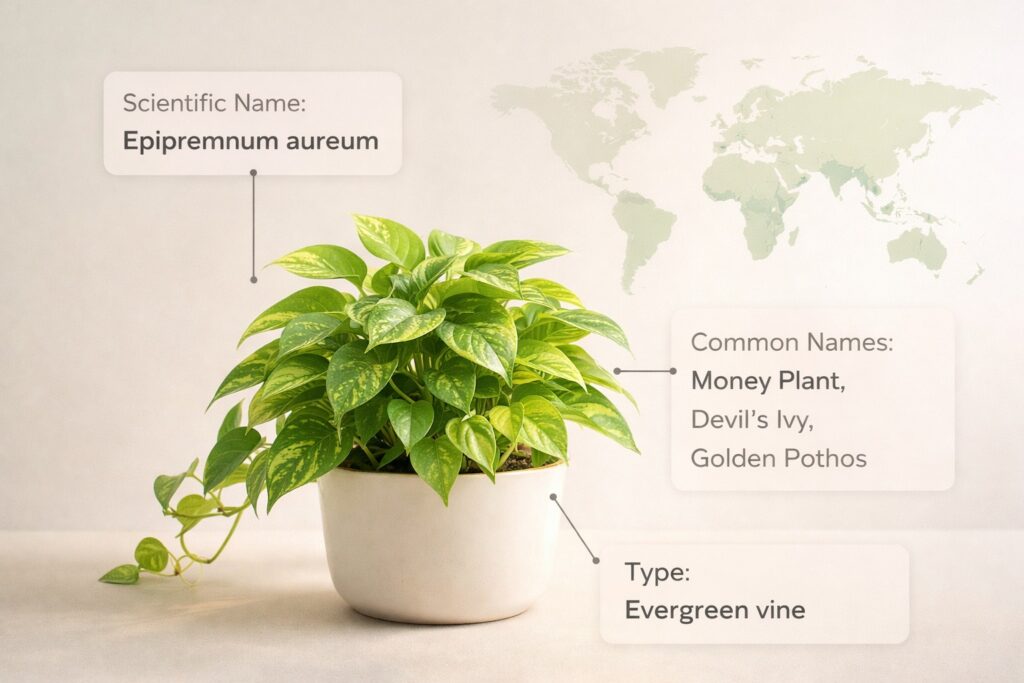
Money Plant: Key Facts, Names, and What You Should Know
A plant so hardy it earned the nickname “devil’s ivy” — because it stays green even in the dark and refuses to die — is probably not what most people picture when they think of a Vastu-auspicious prosperity symbol. Yet money plant (Epipremnum aureum) is both, and that contradiction is part of what makes it the most widely kept houseplant on the Indian subcontinent.
See also: Money Plant plant profile, how to grow it, common problems, its flowering season, and its benefits.
Names in Different Languages
| Language | Name |
|---|---|
| English | Money plant, Golden pothos, Devil’s ivy, Hunter’s robe |
| Hindi | मनी प्लांट (Money Plant), शतपत्र (Shatpatra) |
| Bengali | মানি প্লান্ট (Mani Plant), শতমূলী (Shatmuli) |
| Tamil | பணச்செடி (Panachcheti), நிதிச்செடி (Nidichcheti) |
| Telugu | మనీ ప్లాంట్ (Mani Plant), ధనచెట్టు (Dhanachettu) |
| Marathi | मनी प्लांट (Money Plant), शतपत्री (Shatpatri) |
| Kannada | ಹಣದ ಸಸಿ (Hanada Sasi), ಲಕ್ಷ್ಮೀ ಬಳ್ಳಿ (Lakshmi Balli) |
| Malayalam | മണി പ്ലാന്റ് (Mani Plant), ധനപത്രം (Dhanapathram) |
| Gujarati | મની પ્લાન્ટ (Money Plant), સત્યમૂળી (Satyamuli) |
| Punjabi | ਮਨੀ ਪਲਾਂਟ (Mani Plant), ਧਨ ਪੌਦਾ (Dhan Pauda) |
| Scientific name | Epipremnum aureum |
| Family | Araceae |
Most searched name in India: “Money plant” in English is overwhelmingly the most common search term, used across all Hindi, Bengali, and regional-language searches.
Recommended Products
Disclosure: As an Amazon Associate, PlantsInfo may earn from qualifying purchases.
🌱 Growing Essentials
The following products can help with container gardening, potting, root development, soil management, and healthy plant growth.
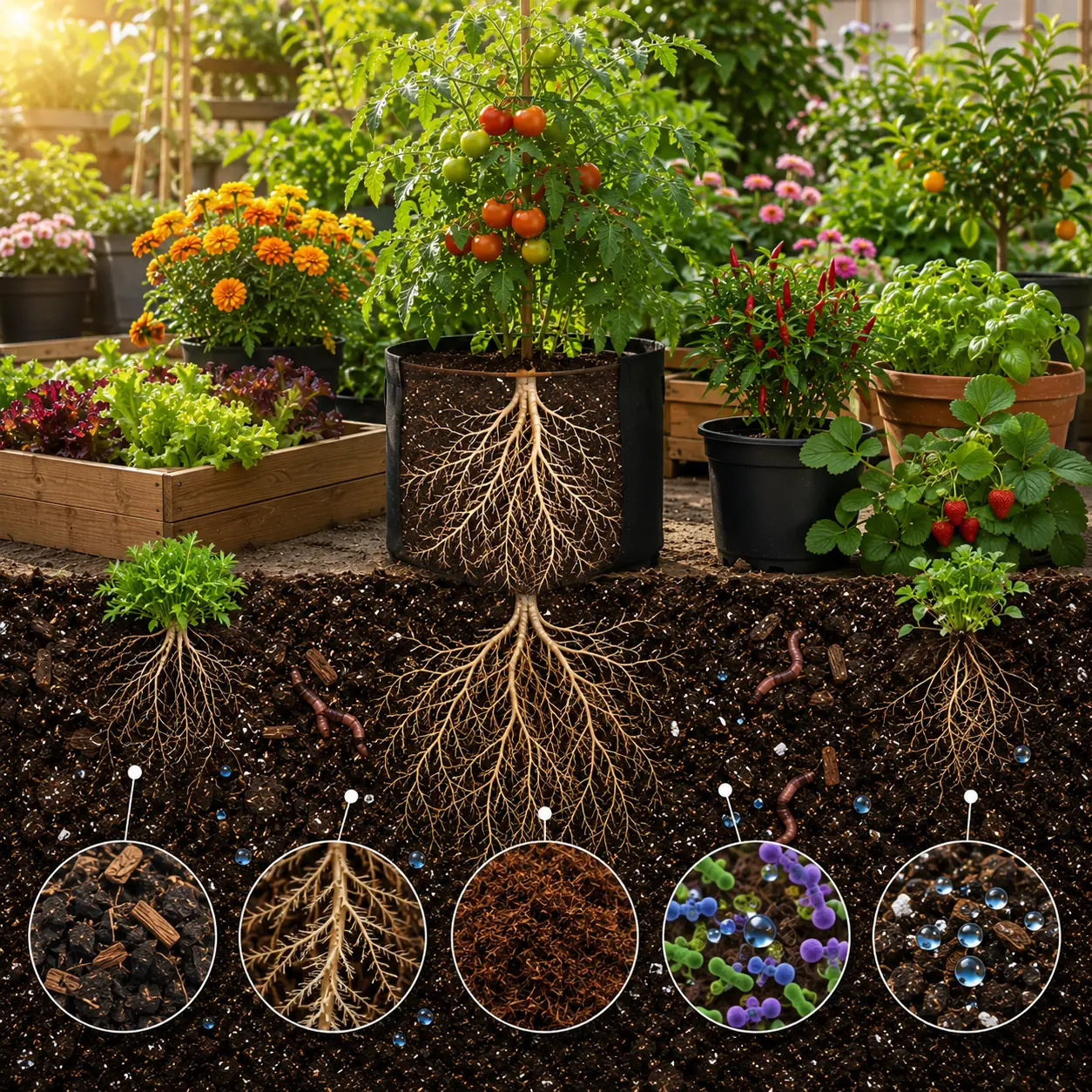
Organic Potting Soil Mix
Provides nutrients, structure, and healthy growing conditions for container plants.
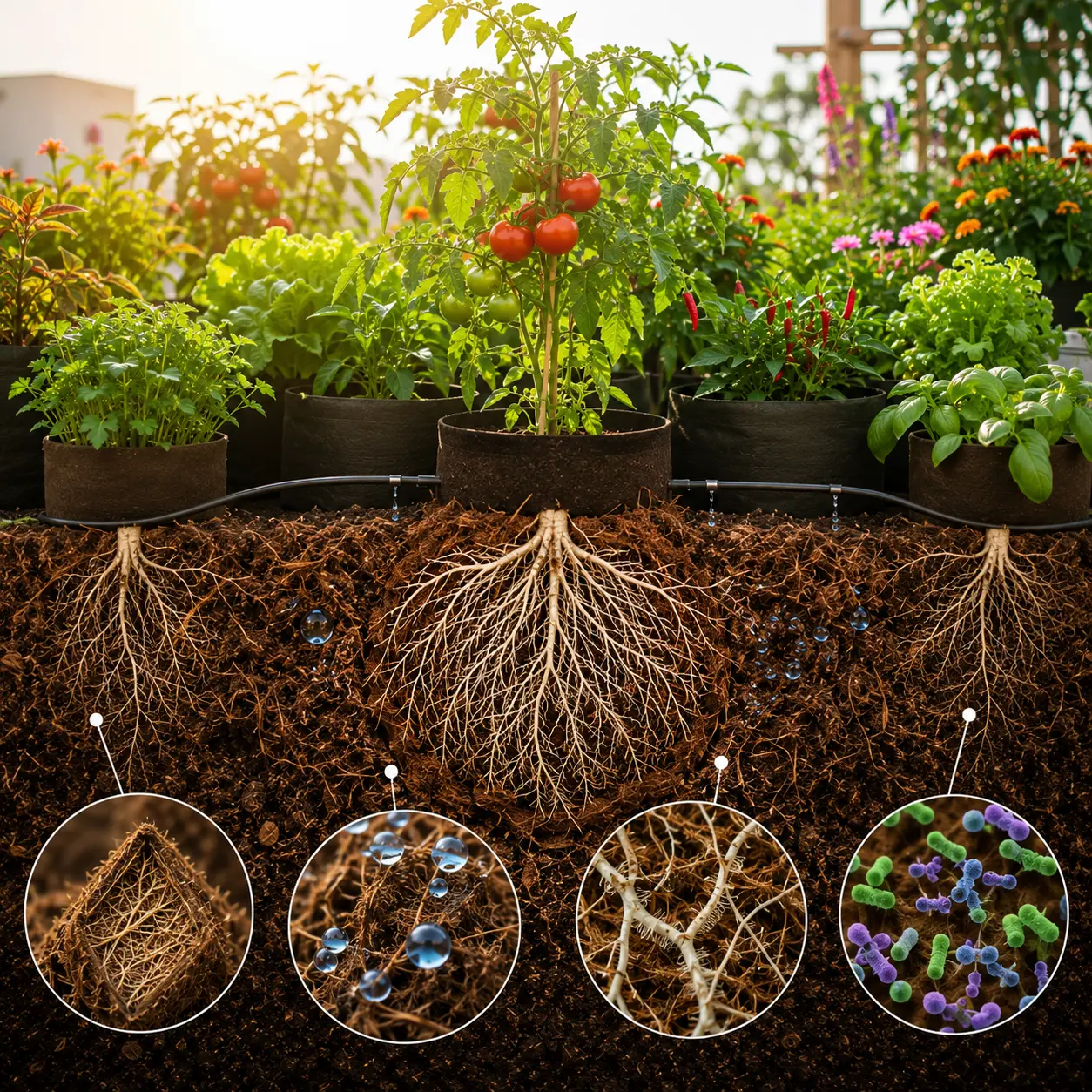
Coco Peat Growing Medium
Enhances moisture retention while maintaining excellent root-zone aeration.

Grow Bags for Plants
Improve drainage, root aeration, and vegetable production in limited spaces.

Plastic Pots for Plants
Ideal containers for seedlings, ornamentals, herbs, and balcony gardens.
What Does It Look Like?
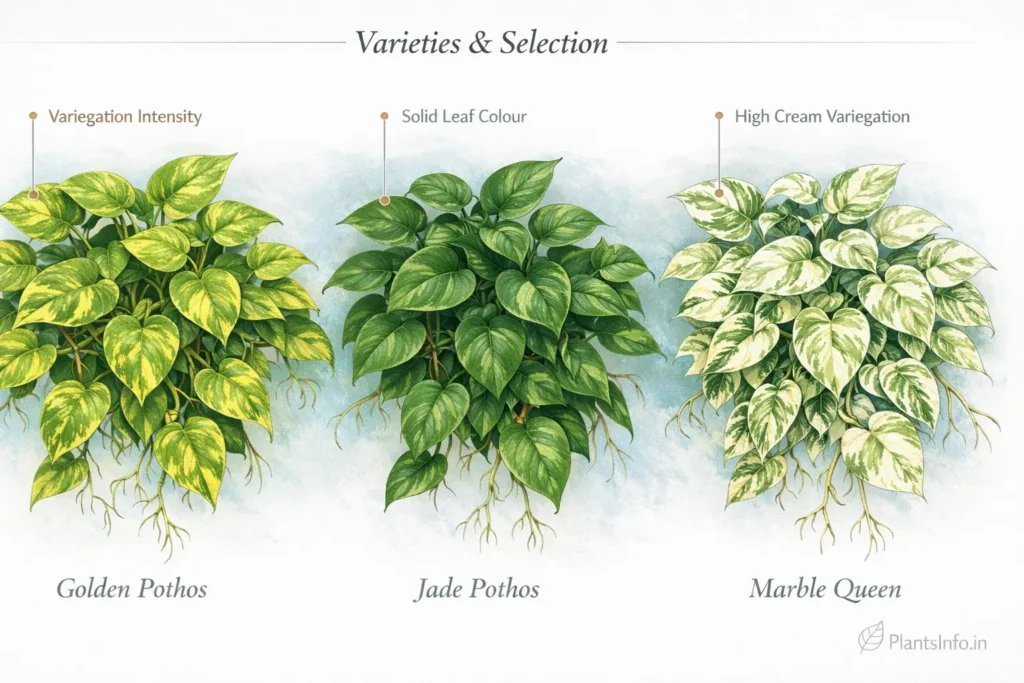
Money plant has glossy, heart-shaped leaves — deep green with splashes of yellow or gold in the most common golden pothos variety. The surface of the leaves is waxy and smooth. Juvenile leaves (as seen on most indoor plants) are typically 5–15 cm long; in large outdoor plants, climbing trees, leaves can grow much larger and may develop irregular lobed edges.
The vines are pale green and produce small aerial roots at their nodes — the bumpy joints you can see on any stem. These roots allow the plant to cling to surfaces, which is why it climbs walls and tree trunks in the wild.
One unmistakable detail: if you pull a leaf from a healthy plant, the stem produces a clear, slightly sticky sap. This sap contains calcium oxalate crystals, which is what makes it mildly irritating if it contacts skin or mucous membranes.
Where Does It Grow in India?
Money plant is not native to India — it originates from Mo’orea in French Polynesia. It has, however, thoroughly naturalised across tropical and subtropical India and is now found growing semi-wild in moist, shaded areas across Kerala, West Bengal, Karnataka, Tamil Nadu, Maharashtra, Goa, and the northeastern states.
As a cultivated plant, it grows everywhere in India — from Leh to Kanyakumari — when kept indoors. Outdoors, it performs best in areas with year-round warmth and humidity (roughly below 1500 m altitude). It is found in urban homes, offices, hospitals, shopping centres, and roadside gardens across the country.
What Is It Used For?
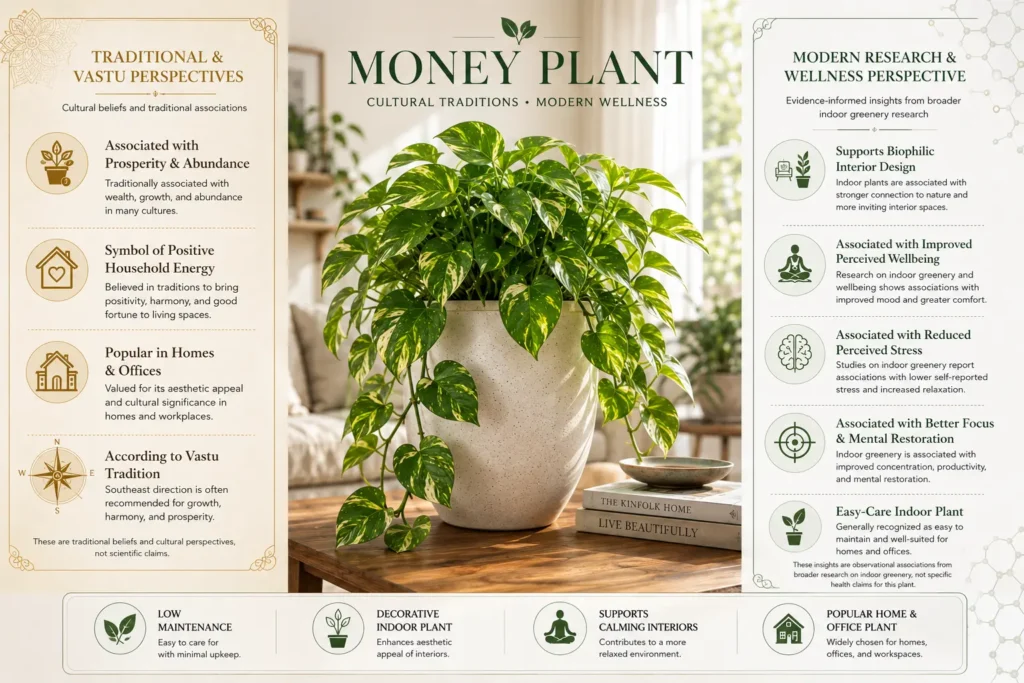
Money plant is grown primarily for five reasons in India: as a Vastu and Feng Shui prosperity plant, as an indoor air purifier (it absorbs VOCs, including formaldehyde and benzene), as an ornamental trailing or climbing vine for home décor, as an exceptionally easy beginner plant for children and new gardeners, and as a propagation gift — cuttings are shared widely as gestures of goodwill.
Is It Easy to Grow?
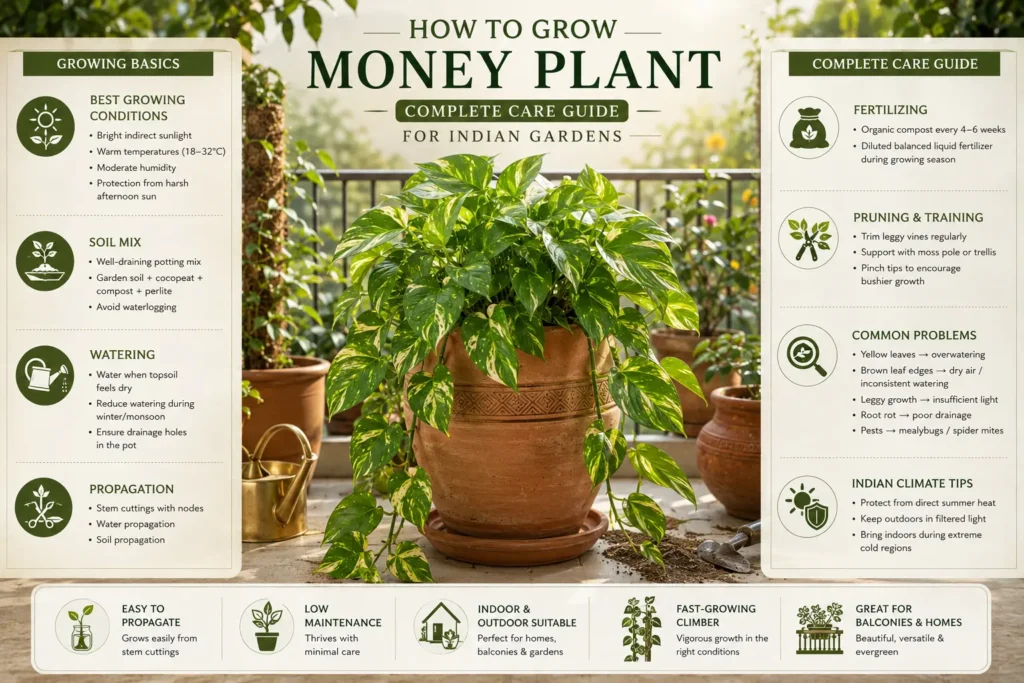
Very easy — one of the easiest houseplants available in India. It tolerates low light, irregular watering, and most temperatures found in Indian homes. It grows in soil or plain water. Cuttings root in days. The only reliable way to harm it is to overwater it consistently, or to leave it in waterlogged soil with no drainage. If you have never grown a plant before, the money plant is where to start. Full growing guide →(#).
⚠ Toxicity: Money plant is mildly toxic to pets (cats and dogs) and harmful if ingested by children. The calcium oxalate crystals in the sap and leaves cause mouth irritation, excessive drooling, and nausea if swallowed. Keep it out of reach of animals and young children.
⚠ Commonly confused with: Money plant (pothos/Epipremnum aureum) is frequently confused with Money Tree (Pachira aquatica), a completely different species with braided trunks and a distinct appearance. In nurseries, they may be sold side by side under similar names. The two plants have different care needs.
Money plant is one of the most documented, well-understood, and widely tested houseplants in the world — and one of the few where the popular belief (good luck, prosperity) and the scientific finding (air purification, psychological well-being benefits) point in the same direction.