Introduction
Bhringraj, scientifically accepted as Eclipta prostrata (L.) L., is a herbaceous species of the daisy family (Asteraceae) widely recognized in traditional medicine and pharmacognosy. Although commonly published as Eclipta alba in older botanical and Ayurvedic literature, current taxonomic authorities recognize E. prostrata as the accepted name. The species is native to temperate and subtropical America and is now naturalized throughout tropical and subtropical regions worldwide.
Classification
- Plant Type
- Herb
- Lifecycle
- Annual
- Leaf Habit
- Deciduous
- Native Region
- Caribbean, Central America, South America
- Plant Family
- Asteraceae
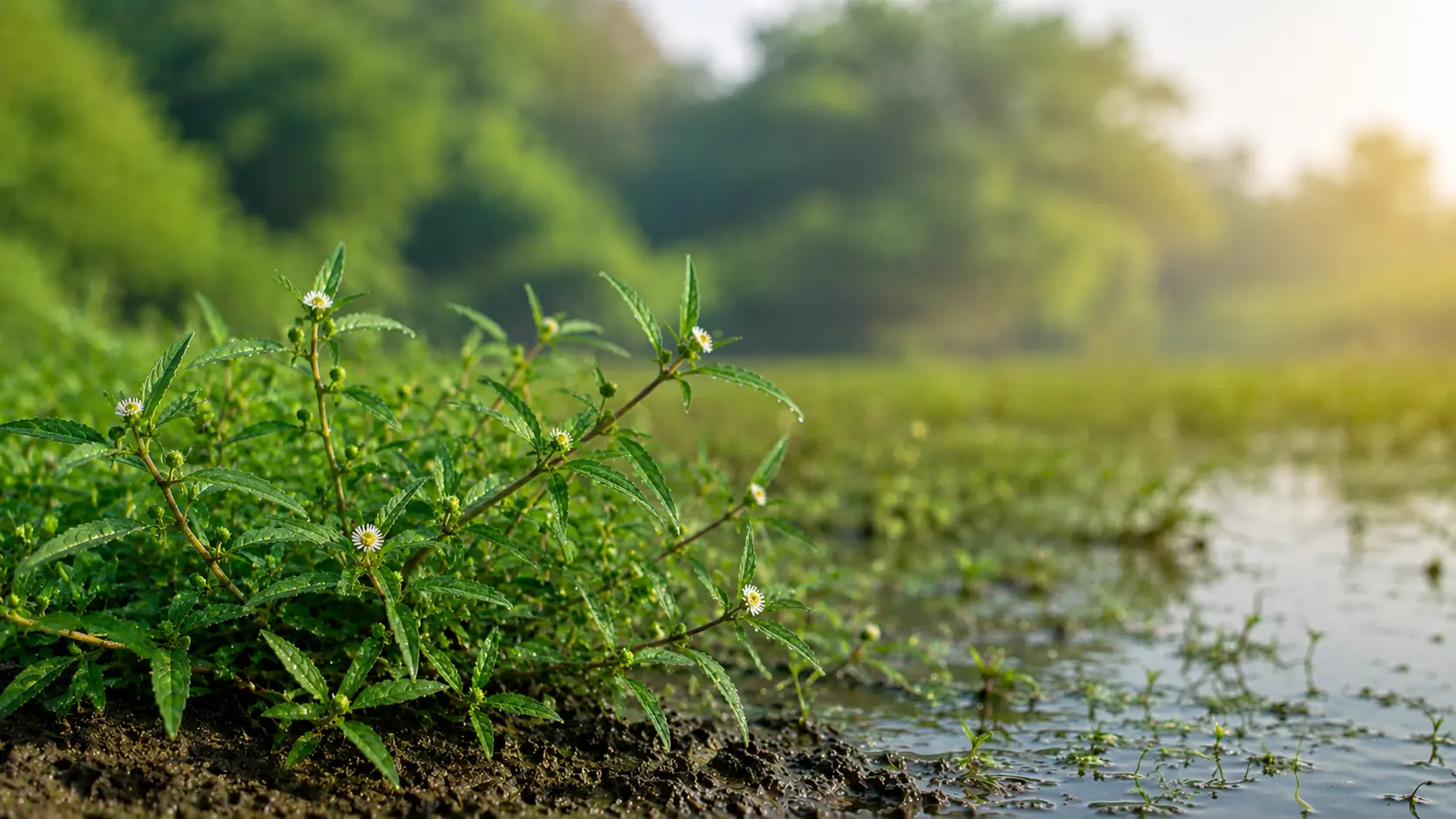
The species is characteristically associated with moist and seasonally wet habitats, where it commonly occupies disturbed ground, wet agricultural margins, riverbanks, marsh edges, and similar environments. As a rapidly colonizing herb, it contributes to vegetation dynamics in open wetlands and periodically inundated sites.
Bhringraj has a long history of cultivation and utilization in traditional medicinal systems, particularly in South Asia, where it is valued as an important medicinal herb. Although globally widespread, current evidence indicates that the species is not considered globally threatened. This profile presents an evidence-based botanical synthesis of its identity, taxonomy, biology, and documented scientific knowledge.
Quick Plant Information
| Characteristic | Information |
|---|---|
| Accepted Scientific Name | Eclipta prostrata (L.) L. |
| Historical Synonym | Eclipta alba (L.) Hassk. |
| Primary Common Name | Bhringraj |
| Other Common Names | False Daisy, Trailing Eclipta |
| Family | Asteraceae |
| Genus | Eclipta |
| Plant Type | Annual to short-lived perennial herb |
| Growth Habit | Erect, decumbent, or mat-forming herb |
| Native Range | Temperate and subtropical America |
| Current Distribution | Pantropical and widely naturalized in warm temperate regions |
| Principal Traditional Use | Medicinal herb |
| IUCN Global Status | Least Concern (where assessed) |
| Accepted Taxonomic Status | Accepted species |
Classification and Taxonomy
| Rank | Taxon |
|---|---|
| Kingdom | Plantae |
| Clade | Tracheophytes |
| Clade | Angiosperms |
| Clade | Eudicots |
| Clade | Asterids |
| Order | Asterales |
| Family | Asteraceae |
| Tribe | Heliantheae |
| Genus | Eclipta L. |
| Species | Eclipta prostrata (L.) L. |
| Basionym | Verbesina prostrata L. |
| Important Synonym | Eclipta alba (L.) Hassk. |
Related Species of Significance
| Species | Relationship | Significance |
|---|---|---|
| Eclipta angustifolia | Congeneric species | Morphologically similar in some regional floras but taxonomically distinct. |
| Eclipta platyglossa | Congeneric species | Shares generic characteristics but differs in reproductive morphology and distribution. |
| Eclipta thermalis | Congeneric species | A geographically restricted member of the genus with limited likelihood of confusion in routine botanical work. |
| Eclipta alba (L.) Hassk. | Homotypic synonym of E. prostrata | Historically the most widely used scientific name in medicinal, Ayurvedic, pharmacognostic, and horticultural literature; not a separate accepted species. |
Taxonomic Context
The principal source of nomenclatural confusion for researchers is not confusion with another biological species, but the continued use of the historical name Eclipta alba in books, pharmacopoeias, research articles, and commercial herbal products. Modern taxonomic authorities recognize Eclipta alba as a synonym of Eclipta prostrata, while much twentieth-century literature—and some contemporary medicinal publications—retain the older name. Consequently, literature searches should include both names to ensure comprehensive retrieval of taxonomic, phytochemical, and pharmacological studies.
Within Eclipta, currently accepted species are comparatively few, and the circumscription of E. prostrata is considered stable in contemporary taxonomic treatments. No significant species-complex or hybridization issues currently affect its accepted nomenclature.
Cytogenetics
| Characteristic | Verified Information |
|---|---|
| Chromosome Number (2n) | 22 |
| Ploidy Level | Diploid |
Cytogenetic Note
Species-specific cytogenetic information is relatively limited compared with the extensive medicinal and phytochemical literature. The diploid chromosome number (2n = 22) has been reported in cytological studies, but species-specific genome size has not been consistently documented in authoritative sources reviewed. Consequently, genome size is not included pending verified evidence.
Scientific Stability and Nomenclature
| Aspect | Status |
|---|---|
| Accepted Name | Eclipta prostrata (L.) L. |
| Naming Authority | Carl Linnaeus (basionym) and Linnaeus (1771 combination) |
| Current Taxonomic Status | Accepted species |
| Historical Synonym | Eclipta alba (L.) Hassk. |
| Nomenclatural Stability | Stable under current international taxonomic authorities |
The accepted name Eclipta prostrata (L.) L. is consistently recognized by contemporary taxonomic authorities. The name Eclipta alba originated as an alternative combination based on the same type and was widely adopted in botanical and medicinal literature before subsequent taxonomic standardization favored E. prostrata. Researchers reviewing historical publications should therefore search both names, as important pharmacognostic, ethnobotanical, and phytochemical studies remain indexed under the synonym.
Form
Growth Habit and Architecture
| Characteristic | Verified Information |
|---|---|
| Life Form | Annual to short-lived perennial herb |
| Mature Height | 5–90 cm |
| Canopy Spread | Mat-forming to spreading; individual plants may extend to about 1 m under favourable conditions |
| Stem Type | Herbaceous, erect, ascending, decumbent, or occasionally prostrate |
| Stem Surface | Appressed pubescent to scabrid-pubescent; fleshy or sappy |
| Branching Pattern | Basally branched to freely branched |
| Root Morphology Overview | Fibrous root system |
| Growth Rate | Rapid during favourable warm, moist conditions |
| Longevity | Annual or short-lived perennial |
| Distinguishing Architectural Feature | Low-growing, freely branching herb with solitary white capitula borne on slender peduncles arising from leaf axils and shoot tips. |
The architecture of Eclipta prostrata is adapted to rapidly occupy open, disturbed, and seasonally wet habitats. Its flexible growth form—ranging from erect to decumbent or mat-forming—allows the plant to exploit available light while maintaining contact with moist substrates. This combination of prolific branching and numerous small flowering heads produces a distinctive field gestalt that readily distinguishes the species from most co-occurring herbaceous Asteraceae.
Stem
| Characteristic | Verified Information |
|---|---|
| Stem Type | Herbaceous |
| Cross-section Shape | Cylindrical (terete) |
| Mature Diameter | Not consistently reported in species-specific literature |
| Surface Texture | Appressed pubescent to scabrid-pubescent; strigose in some floras |
| Young Colour | Green, often tinged reddish or purplish |
| Mature Colour | Green to purplish-brown |
| Internode Length | Variable; not consistently quantified in species-specific references |
| Thorn/Spine/Wing Status | None |
| Internal Structure | Succulent to sappy herbaceous stem; woody tissues absent. |
The stem provides structural support for an extended branching system while remaining sufficiently flexible to permit erect, ascending, or decumbent growth. Dense pubescence is a useful diagnostic character in combination with the opposite leaves and solitary capitula. The absence of spines, wings, or woody tissues further separates the species from superficially similar herbs occupying the same habitats.
Leaves
| Characteristic | Verified Information |
|---|---|
| Presence | Present |
| Leaf Type | Simple |
| Leaf Size | Approximately 2–10 cm long × 0.5–3 cm wide |
| Shape | Lanceolate to narrowly elliptic or oblanceolate |
| Apex | Acute to acuminate |
| Base | Attenuate to cuneate |
| Margin | Entire to sparsely serrulate |
| Arrangement | Opposite, decussate |
| Petiole | Sessile or subsessile |
| Upper Surface | Green with appressed hairs |
| Lower Surface | Slightly paler, pubescent, with prominent midrib |
| Venation | Pinnate |
| Special Features | Opposite sessile leaves with conspicuous pubescence provide important field characters. |
The foliage is one of the most reliable diagnostic features of Eclipta prostrata. The combination of opposite, nearly sessile leaves and dense pubescence distinguishes the species from many superficially similar herbaceous Asteraceae. Considered together with the small white flower heads, the leaves provide rapid field recognition without requiring detailed floral examination.
Flowers
| Characteristic | Verified Information |
|---|---|
| Inflorescence Type | Solitary axillary or terminal capitulum |
| Capitulum Diameter | Approximately 6–8 mm |
| Ray Florets | White, pistillate |
| Disc Florets | Numerous, tubular, bisexual |
| Corolla Colour | White |
| Involucre | Campanulate with two series of green phyllaries |
| Stamens | Five, syngenesious (disc florets) |
| Pistil | Inferior ovary with bifid style |
| Fragrance | Not prominently documented |
| Anthesis | Flowers produced over an extended growing season under favourable conditions |
| Primary Pollinator Type | Small insects |
The compact white capitula are the principal reproductive structures used for identification. Their distinct differentiation into marginal ray florets and central disc florets is characteristic of Asteraceae and contributes substantially to species recognition.
Fruit
| Characteristic | Verified Information |
|---|---|
| Fruit Type | Cypsela (achene) |
| Shape | Oblong to wedge-shaped, slightly compressed |
| Length | Approximately 2–3 mm |
| Surface Features | Black, tuberculate, glabrous |
| Colour at Maturity | Black |
| Seed Count | One seed per fruit |
The small cypselae are adapted for efficient seed production rather than investment in individual fruit size. Their dark colour and characteristic tuberculate surface provide useful diagnostic characters when flowering material is absent.
Seeds
| Characteristic | Verified Information |
|---|---|
| Size | Approximately 2–3 mm |
| Shape | Oblong |
| Colour | Brown to black at maturity |
| Seed Coat | Smooth to finely textured, enclosed within the cypsela |
The seeds are small and numerous, facilitating rapid establishment following dispersal. Their morphology closely reflects that of the enclosing cypsela, making mature fruits the preferred structures for identification during field examination.
Root System
| Characteristic | Verified Information |
|---|---|
| Root Type | Fibrous |
| Rooting Depth | Shallow to moderately deep, depending on substrate conditions |
| Lateral Spread | Moderately spreading fibrous network |
| Structural Organization | Numerous fine lateral roots arising from a short primary axis |
| Anchorage Significance | Provides effective anchorage in moist and periodically disturbed soils |
| Field-observable Characteristics | Fine, pale fibrous roots lacking swollen storage organs |
The root system is characteristic of an herbaceous annual or short-lived perennial adapted to moist, open habitats. Its fibrous architecture provides secure anchorage while allowing rapid establishment after germination or disturbance. No specialized storage roots, woody structures, or other conspicuous morphological modifications have been documented for the species.
Field Identification
The combination of a low-growing, freely branching herb, opposite sessile to subsessile pubescent leaves, and small solitary white flower heads (capitula) borne in the leaf axils and at shoot termini provides the most reliable field recognition of Eclipta prostrata. Mature plants are readily recognized by their black, tuberculate cypselae after flowering.
The principal source of field confusion is not another accepted Eclipta species but historical identification under the synonymous name Eclipta alba. In vegetative condition, the species may superficially resemble several small wetland Asteraceae; however, the opposite leaves combined with solitary white capitula remain the most dependable distinguishing characters.
Best Diagnostic Character: Opposite pubescent leaves combined with solitary white axillary and terminal capitula.
Normal vs. Concerning Observations
| Observation | Status | Interpretation |
|---|---|---|
| Freely branched herb with erect or decumbent stems | Normal | Typical growth architecture. |
| Dense pubescence on stems and leaves | Normal | Characteristic morphological feature. |
| White solitary capitula during flowering | Normal | Normal reproductive morphology. |
| Black mature cypselae | Normal | Indicates normal fruit maturation. |
| Marked chlorosis or severe leaf distortion | Investigate | May indicate nutritional deficiency, herbicide exposure, disease, or environmental stress. |
| Extensive stem necrosis or collapse | Investigate | May reflect pathogen infection or prolonged adverse environmental conditions. |
| Slight reduction in stature during seasonal moisture limitation | Monitor | Can occur under less favorable growing conditions without indicating structural abnormality. |
Cultivar Summary
No documented cultivars or named selections identified.
The species is cultivated primarily as the wild botanical taxon for medicinal use. Although regional landraces and locally adapted populations may exist, no formally recognized cultivars or commercially established breeding selections were identified in the botanical and horticultural literature reviewed.
Functional Traits
| Functional Trait | Species-Specific Evidence | Physiological Mechanism |
|---|---|---|
| Photosynthetic Pathway | C3 photosynthesis | Carbon fixation occurs through the Calvin–Benson cycle, supporting efficient growth under moderate temperatures and adequate soil moisture. |
| Water-use Strategy | Mesophytic | Water balance is maintained primarily through stomatal regulation and a relatively shallow fibrous root system adapted to moist habitats rather than prolonged drought. |
| Nutrient Acquisition | Root-mediated mineral uptake | Fine fibrous roots absorb dissolved mineral nutrients from moist soils, supporting rapid vegetative growth during favorable conditions. |
| Growth-form Strategy | Rapid colonizing annual to short-lived perennial herb | Fast vegetative development and continuous branching enable rapid occupation of disturbed, open habitats and efficient resource capture. |
| Reproductive Strategy | Prolific sexual reproduction by seed | Extended flowering and abundant seed production facilitate persistence and colonization across seasonally disturbed environments. |
| Dispersal Mechanism | Seed dispersal by water, animals, and human-mediated disturbance | Small cypselae are readily transported by surface water, attached soil, agricultural activities, and other passive vectors. |
| Stress-response Mechanism | Physiological tolerance of temporary waterlogging | Maintenance of metabolic activity under periodically saturated soil conditions enables persistence in wetlands and seasonally flooded habitats. |
| Chemical Defence | Secondary metabolite production | Coumestans, flavonoids, triterpenoids, and related metabolites contribute to defense against herbivores, pathogens, and environmental stress while participating in normal plant metabolism. |
| Distinctive Functional Trait | High metabolic investment in specialized secondary metabolites | Considerable biosynthetic allocation to diverse bioactive metabolites distinguishes the species chemically and contributes to its strong chemotaxonomic identity. |
The physiological strategy of Eclipta prostrata integrates rapid vegetative growth with efficient resource acquisition in moist, frequently disturbed habitats. Continuous branching, extended reproductive activity, and sustained photosynthetic performance allow the species to exploit transient ecological opportunities while maintaining stable populations across a broad geographic range. Rather than relying on structural adaptations for drought resistance, its physiology is optimized for environments where water availability is generally reliable but may fluctuate seasonally.
This strategy is reinforced by substantial investment in specialized secondary metabolism. The production of diverse coumestans, flavonoids, triterpenoids, and other metabolites supports ecological functions including defense against herbivory, microbial challenge, and oxidative stress. Although phytochemical characterization of the species is extensive, comparatively fewer investigations have examined whole-plant physiological responses under natural environmental conditions, resulting in stronger evidence for metabolite composition than for integrated physiological ecology.
Physiology and Phytochemistry
Physiological Integration
The physiological performance of Eclipta prostrata is based on the coordinated interaction of rapid carbon assimilation, continuous vegetative growth, prolific seed production, and extensive secondary metabolite biosynthesis. These processes collectively support persistence in moist, frequently disturbed habitats where rapid establishment and repeated reproduction provide a competitive advantage.
Current species-specific evidence indicates that secondary metabolism is closely integrated with normal physiological function rather than representing an isolated defensive response. Coumestans, flavonoids, triterpenoids, and phenolic compounds contribute to protection against oxidative stress, herbivory, and microbial challenge while remaining integral components of cellular metabolism. However, direct experimental studies examining system-level interactions among photosynthesis, nutrient allocation, stress physiology, and metabolite production remain comparatively limited. Consequently, much of the available evidence emphasizes metabolite characterization rather than whole-plant physiological integration.
Phytochemistry
| Compound Class | Representative Compounds | Primary Location | Ecological or Biological Function |
|---|---|---|---|
| Coumestans | Wedelolactone, Demethylwedelolactone | Leaves, stems, roots | Defensive secondary metabolites; contribute to protection against herbivores, microbial pathogens, and oxidative stress. |
| Flavonoids | Luteolin, Apigenin, Apigenin-7-O-glucoside | Leaves and aerial tissues | UV protection, antioxidant activity within plant tissues, and regulation of stress responses. |
| Triterpenoid Saponins | Eclalbasaponins I–X, Eclalbatin | Roots and aerial parts | Chemical defence and membrane interactions associated with protection against herbivores and pathogens. |
| Triterpenes | β-Amyrin, Oleanolic acid, Ursolic acid | Whole plant, especially aerial tissues | Structural and defensive metabolites involved in surface protection and stress adaptation. |
| Phytosterols | β-Sitosterol, Stigmasterol | Leaves and stems | Components of cellular membranes that contribute to membrane stability and physiological regulation. |
| Phenolic Acids | Protocatechuic acid, Caffeic acid, Ferulic acid | Leaves and stems | Antioxidant functions and protection against oxidative damage induced by environmental stress. |
| Alkaloids | Ecliptine (reported) | Whole plant | Minor nitrogen-containing secondary metabolites; ecological function remains incompletely characterized. |
| Polyacetylenes | Reported in aerial tissues | Aerial parts | Defensive metabolites with probable roles in protection against herbivores and microorganisms. |
Eclipta prostrata possesses one of the most extensively characterized phytochemical profiles among medicinal herbs in the family Asteraceae. Research has identified numerous secondary metabolites spanning several chemically distinct classes, with coumestans serving as the principal chemotaxonomic markers of the genus. Wedelolactone and demethylwedelolactone are consistently reported across multiple phytochemical investigations and are regarded as the species’ characteristic marker compounds.
Current phytochemical knowledge is strongest for aerial tissues collected from South Asian populations. While the qualitative composition of the major metabolite classes is well established, quantitative variation associated with geography, developmental stage, genotype, and environmental conditions remains incompletely resolved. Consequently, published concentration values should be interpreted within the context of individual analytical studies rather than as universal species characteristics.
Phytochemical Organ Distribution
| Organ | Compound Class | Representative Compounds | Concentration | Source |
|---|---|---|---|---|
| Leaves | Coumestans | Wedelolactone, Demethylwedelolactone | Variable among published studies | Singh et al. (2012); Jahan et al. (2014) |
| Leaves | Flavonoids | Luteolin, Apigenin | Variable among published studies | Jahan et al. (2014) |
| Leaves | Phenolic Acids | Protocatechuic acid, Caffeic acid | Not consistently quantified in available literature | Singh et al. (2012) |
| Stems | Coumestans | Wedelolactone | Presence confirmed; quantitative values vary | Singh et al. (2012) |
| Roots | Triterpenoid Saponins | Eclalbasaponins | Presence confirmed; concentration varies | Zhang et al. (2011) |
| Roots | Coumestans | Wedelolactone | Presence confirmed | Zhang et al. (2011) |
| Whole Plant | Phytosterols | β-Sitosterol, Stigmasterol | Variable among studies | Khare (2007) |
| Whole Plant | Triterpenes | β-Amyrin, Oleanolic acid, Ursolic acid | Variable among studies | Khare (2007) |
The available evidence demonstrates that secondary metabolites are distributed across multiple plant organs rather than being confined to a single tissue. Leaves represent the best-characterized organ because they are the principal focus of phytochemical investigations, whereas comparatively fewer studies have quantified compounds in roots or stems. Organ-specific presence is generally well documented for major metabolite classes, but standardized concentration data remain limited due to differences in extraction methods, analytical techniques, developmental stage, and geographic origin of study material.
Phytochemical Significance
| Aspect | Assessment |
|---|---|
| Dominant Chemotaxonomic Markers | Coumestans, particularly wedelolactone and demethylwedelolactone |
| Major Secondary Metabolite Classes | Coumestans, flavonoids, triterpenoid saponins, triterpenes, phytosterols, phenolic acids, thiophenes/polyacetylenes |
| Best-characterized Plant Organs | Leaves and aerial parts |
| Characterization Maturity | High for qualitative compound identification; moderate for quantitative metabolomics |
| Synergistic Relationships | Coumestans, flavonoids, and phenolic compounds frequently co-occur, indicating coordinated secondary-metabolite biosynthesis rather than isolated compound production. |
| Antagonistic Relationships | No species-specific antagonistic interactions among major phytochemical classes have been conclusively demonstrated. |
| Literature Concentration Bias | Research is disproportionately focused on aerial tissues collected from South and East Asia, emphasizing qualitative compound isolation and pharmacognostic chemistry. Comparative metabolomics, ecological phytochemistry, root-specific chemistry, developmental variation, and native-range populations remain comparatively underrepresented. |
Eclipta prostrata possesses one of the most comprehensively characterized phytochemical profiles within the genus Eclipta. Coumestans—especially wedelolactone and demethylwedelolactone—are consistently recognized as its principal chemotaxonomic markers, while flavonoids, triterpenoid saponins, triterpenes, phytosterols, and phenolic acids contribute to a chemically diverse secondary metabolite profile.
Current knowledge is strongest for qualitative compound identification and structural characterization. Numerous compounds have been isolated and chemically confirmed, but quantitative metabolomic studies examining environmental, developmental, and geographic variation remain comparatively limited. Consequently, the species is chemically well characterized, whereas its metabolite dynamics under natural ecological conditions are less completely understood.
Evidence, Nutrition, Soil Ecology, and Safety
Evidence Hierarchy for Medicinal Use
| Evidence Layer | Status | Notes |
|---|---|---|
| Traditional Use | Documented | Extensive historical documentation exists in Ayurveda, Siddha, Traditional Chinese Medicine, and Unani, with continuous recorded use over several centuries. |
| Nutritional Evidence | Partial | The species has limited documented use as a leafy vegetable in some regions, but nutrition is not the primary basis of medicinal use and comprehensive nutritional evidence remains limited. |
| In Vitro Studies | Documented | Numerous peer-reviewed laboratory studies have investigated phytochemical activity and biological mechanisms under controlled experimental conditions. |
| Animal Studies | Documented | Multiple experimental animal studies have evaluated pharmacological effects across several physiological systems. |
| Human Clinical Studies | Partial | Human clinical investigations have been reported, but the overall evidence base remains limited in size, methodological quality, and independent replication. |
| Regulatory Recognition | Documented | Recognized in official pharmacopoeias and traditional medical systems, including the Ayurvedic Pharmacopoeia of India and the Pharmacopoeia of the People’s Republic of China. Recognition does not constitute proof of clinical efficacy. |
| Unsupported Commercial Claims | Documented | Commercial marketing frequently includes broad therapeutic claims that extend beyond the strength of currently available clinical evidence. Several promoted benefits remain insufficiently supported by robust human trials. |
Evidence Assessment
The medicinal evidence supporting Eclipta prostrata demonstrates a clear gradient from extensive traditional knowledge to comparatively limited modern clinical validation. The strongest body of evidence consists of centuries of documented use within Ayurveda, Siddha, Traditional Chinese Medicine, and Unani, complemented by a substantial volume of in vitro and experimental animal research investigating biological mechanisms and pharmacological activity.
In contrast, the clinical evidence base remains considerably less mature. Although human studies have been published, they are relatively few compared with the extensive preclinical literature, and many are limited by modest sample sizes, heterogeneous methodologies, or insufficient independent replication. Consequently, traditional use and experimental evidence currently provide stronger support than clinical evidence for many investigated applications.
The greatest evidentiary strength therefore lies in traditional documentation, pharmacognostic research, and experimental laboratory investigations. The weakest tier is high-quality human clinical evidence, where additional well-designed randomized controlled trials are required before many commercially promoted claims can be considered adequately substantiated.
Commercial promotion of Eclipta prostrata occasionally presents therapeutic claims that exceed the available clinical evidence. Such claims should be interpreted cautiously unless supported by rigorous human clinical research and appropriate regulatory evaluation. This distinction between traditional knowledge, experimental evidence, and clinical validation is essential for evidence-based interpretation of the species’ medicinal literature.
Nutritional Composition
Applicability Assessment
Eclipta prostrata is not generated as a food-use species within this Hub Profile. Although young shoots and leaves are consumed locally in parts of South and Southeast Asia, its primary botanical and commercial identity is that of a medicinal species rather than a food or functional food. Comprehensive, authoritative species-specific nutritional composition datasets meeting the framework’s eligibility requirements were not identified during the current evidence audit.
Nutritional Significance
The available evidence indicates that Eclipta prostrata has limited regional dietary use, primarily as a leafy vegetable in selected communities, but nutritional composition has not been investigated to the same extent as its medicinal phytochemistry.
Current authoritative literature does not provide a sufficiently complete, species-specific nutritional profile suitable for publication under the framework’s nutritional eligibility requirements. Consequently:
| Aspect | Assessment |
|---|---|
| Exceptional nutrients | No verified species-specific evidence identified during the current audit. |
| Nutritionally unremarkable components | Insufficient authoritative compositional data for assessment. |
| Bioavailability | Species-specific evidence not identified. |
| Processing effects | No verified comparative studies identified for fresh versus processed material. |
| Fresh vs. dried material | No authoritative nutritional comparison identified. |
| Cultivated vs. wild material | No verified nutritional comparison identified. |
| Ecotype or cultivar variation | No documented nutritional variation identified in eligible sources. |
The absence of a quantitative nutritional assessment should not be interpreted as evidence that the species lacks nutritional value. Rather, it reflects the current state of published evidence, where medicinal chemistry has received substantially greater scientific attention than food composition.
Soil Ecology and Mycorrhizal Associations
Evidence Level: Low to Moderate
Current published evidence addressing the soil biology of Eclipta prostrata is comparatively limited. Consistent with the framework’s evidence-scaling rule, this section is presented as a summary rather than an expanded treatment.
| Component | Evidence Status | Summary |
|---|---|---|
| Mycorrhizal Association | Partial | Arbuscular mycorrhizal (AM) associations have been reported for the species or closely examined field populations, but species-specific experimental characterization remains limited. |
| Mycorrhizal Type | Supported | Arbuscular mycorrhiza (Glomeromycota) is the only association supported by currently available evidence. |
| Fungal Taxa | Genus-level only | Species-level fungal partners have not been consistently documented; reported associations are generally limited to common AM fungal genera such as Glomus. |
| Rhizosphere Bacteria | Limited evidence | Species-specific bacterial community characterization remains poorly documented. |
| Functional Bacterial Roles | Limited evidence | General nutrient cycling and plant-growth promotion are plausible but have not been comprehensively demonstrated for this species. |
| Allelopathy | Limited evidence | No conclusive ecological evidence demonstrates biologically significant allelopathic effects under natural conditions. |
| Phytochemical Basis of Allelopathy | Not verified | No verified species-specific compounds have been demonstrated as ecological allelochemicals. |
| Agronomic Implications | Supported | Occupation of moist, biologically active soils suggests compatibility with functioning soil microbial communities, but species-specific agronomic soil interactions remain incompletely studied. |
| Conservation Implications | Supported | Maintenance of healthy wetland soils and natural microbial communities is likely to support long-term persistence of wild populations, although direct evidence remains limited. |
Current knowledge of soil ecology for Eclipta prostrata is substantially less developed than its taxonomy, phytochemistry, or medicinal literature. Existing studies provide evidence for arbuscular mycorrhizal association but do not yet support detailed characterization of fungal specificity, rhizosphere microbiomes, or allelopathic interactions. Accordingly, no unsupported ecological mechanisms or cultivation-related soil recommendations are introduced in this profile, consistent with the framework’s ownership and evidence-scaling requirements.
Toxicity and Safety
| Subject | Toxic Compounds | Clinical Effects | Source |
|---|---|---|---|
| Humans | No verified toxicity data identified during current audit. | No well-documented species-specific toxicity syndrome identified in authoritative toxicological literature. This represents an absence of verified evidence, not confirmation of safety. | World Health Organization (WHO) Monographs; European Medicines Agency (EMA) Herbal Monographs; peer-reviewed toxicology reviews |
| Cats | No verified toxicity data identified during current audit. | No documented species-specific veterinary toxicity reports identified during the current evidence audit. | ASPCA Animal Poison Control; peer-reviewed veterinary literature |
| Dogs | No verified toxicity data identified during current audit. | No documented species-specific veterinary toxicity reports identified during the current evidence audit. | ASPCA Animal Poison Control; peer-reviewed veterinary literature |
| Livestock | No verified toxicity data identified during current audit. | No verified reports identifying Eclipta prostrata as an economically important poisonous pasture species were identified. | Merck Veterinary Manual; veterinary toxicology literature |
Toxicity Context
Current evidence does not identify Eclipta prostrata as a species associated with a well-defined toxicity syndrome in humans or domestic animals. However, the absence of documented toxicity should not be interpreted as evidence of confirmed safety under all circumstances.
| Consideration | Assessment |
|---|---|
| Dose Dependency | Species-specific toxic dose thresholds have not been established. Biological effects may vary with preparation, concentration, and exposure. |
| Whole Plant vs. Isolated Compounds | Experimental studies frequently investigate isolated phytochemicals at concentrations that differ substantially from those naturally present in the whole plant. These findings should not be interpreted as equivalent to whole-plant exposure. |
| Pregnancy Considerations | Insufficient high-quality clinical evidence was identified to establish safety during pregnancy. |
| Lactation Considerations | Species-specific clinical safety data remain insufficient. |
| Drug Interactions | Potential herb–drug interactions have been discussed in review literature, but clinically confirmed interaction data remain limited. |
| Hepatic Considerations | No verified species-specific hepatotoxicity syndrome identified; however, clinical evidence remains insufficient for definitive safety conclusions. |
| Renal Considerations | No verified species-specific nephrotoxicity syndrome identified; evidence remains limited. |
| Veterinary Considerations | Published veterinary toxicology data are insufficient to establish comprehensive safety profiles for companion animals or livestock. |
This profile does not constitute medical or veterinary advice.
Distribution, Habitat, Climate, and Stress Tolerance
Biogeographic Context
Eclipta prostrata is a widely distributed species whose present-day range reflects both natural dispersal and extensive human-mediated expansion. Although traditionally regarded in many regional floras as native to tropical Asia because of its long history of cultivation and medicinal use, current global taxonomic authorities, including the Royal Botanic Gardens, Kew’s Plants of the World Online (POWO), recognize the species as native to temperate and subtropical regions of the Americas. It has subsequently become naturalised throughout tropical, subtropical, and warm-temperate regions worldwide through a combination of natural dispersal and human-assisted introduction.
Its broad geographic expansion has been facilitated by efficient seed dispersal, adaptation to disturbed wetlands and agricultural landscapes, and frequent accidental transport through farming activities and water movement. The species readily establishes in seasonally wet habitats, enabling successful colonization wherever climatic conditions resemble its ecological requirements.
Research effort is unevenly distributed across its range. Taxonomy and distribution are globally well documented, whereas ecological investigations are concentrated primarily in India, China, Bangladesh, Thailand, and neighboring regions, reflecting the species’ economic and medicinal importance rather than its native biogeographic history.
Native Range and Distribution
| Region | Countries or Sub-regions | Notes |
|---|---|---|
| North America | Southern United States, Mexico | Recognized as part of the native range by contemporary taxonomic authorities. |
| Central America | Belize, Costa Rica, El Salvador, Guatemala, Honduras, Nicaragua, Panama | Native in tropical and subtropical lowlands. |
| Caribbean | Cuba, Dominican Republic, Haiti, Jamaica, Puerto Rico, Trinidad and Tobago, Lesser Antilles | Native across much of the Caribbean Basin. |
| South America | Argentina, Bolivia, Brazil, Colombia, Ecuador, Guyana, Paraguay, Peru, Suriname, Uruguay, Venezuela | Widespread native distribution across tropical and subtropical regions. |
The native-range circumscription adopted here follows current taxonomic authorities. Earlier literature frequently implied an Asian origin because the species has been cultivated and used medicinally there for centuries, but this reflects historical utilization rather than accepted native biogeography.
Global Cultivation and Naturalisation
| Region | Countries or Areas | Cultivation Status | Notes |
|---|---|---|---|
| South Asia | India, Bangladesh, Sri Lanka, Nepal, Pakistan | Commercially established | Extensively cultivated and collected for traditional medicinal systems; favorable warm, humid climates support continuous production. |
| Southeast Asia | Thailand, Vietnam, Myanmar, Cambodia, Laos, Malaysia, Indonesia | Commercially established | Commonly cultivated and widely naturalized in disturbed wetlands and agricultural landscapes. |
| East Asia | China, Taiwan, Japan | Commercially established | Cultivated for medicinal use and naturalized in suitable habitats. |
| Tropical Africa | Nigeria, Ghana, Kenya, Tanzania, Uganda and neighboring countries | Naturalised | Widely established in moist disturbed habitats; cultivation occurs locally but is less extensively documented. |
| Australia | Northern and eastern Australia | Naturalised | Established in tropical and subtropical regions without widespread commercial cultivation. |
| Pacific Islands | Fiji, Samoa, Papua New Guinea and other tropical islands | Naturalised | Successfully established in warm, humid island ecosystems. |
| Southern Europe | Mediterranean localities | Experimental | Cultivation limited by cooler seasonal conditions and localized demand. |
| North America | Southern United States | Commercially established | Cultivated on a limited scale for herbal production in addition to naturally occurring populations. |
The current global distribution reflects a combination of naturalized populations and intentional cultivation. Commercial production is concentrated in South and East Asia, where sustained medicinal demand has driven cultivation, while naturalized populations dominate much of Africa, Oceania, and other tropical regions. Existing literature is strongly biased toward Asian cultivation systems, whereas cultivation performance in Africa and the Americas is comparatively less documented.
Cultivation Range Note
Commercial cultivation of Eclipta prostrata is concentrated in India, China, Bangladesh, Sri Lanka, Thailand, and other parts of South and Southeast Asia, where long-established medicinal use, favorable warm climates, and established herbal industries have supported sustained production. Smaller-scale cultivation occurs in East Asia and selected areas of North America, while much of tropical Africa and Oceania relies primarily on naturalized populations rather than organized commercial production.
Emerging cultivation has been reported in regions with expanding herbal-product markets, but commercial expansion remains constrained by climatic suitability, regulatory requirements governing medicinal plant production, and comparatively limited market demand outside Asia. Published agronomic literature is strongly concentrated on South Asian production systems, whereas cultivation performance under African, American, and Mediterranean conditions remains comparatively underrepresented.
Natural Habitat
| Habitat Characteristic | Verified Information |
|---|---|
| Primary Biomes | Tropical and subtropical wetlands, floodplains, freshwater marshes, riparian habitats, and disturbed grasslands |
| Elevation Range | Sea level to approximately 2,000 m |
| Typical Soil Types | Moist alluvial soils, loams, silty soils, clay loams, and other periodically wet mineral soils |
| Soil Moisture Regime | Moist to seasonally waterlogged |
| Vegetation Associations | Wet grasslands, paddy-field margins, irrigation channels, riverbanks, pond margins, roadside ditches, and disturbed ruderal vegetation |
| Disturbance Response | Strong colonizer of disturbed, open habitats created by flooding, cultivation, grazing, or human activity |
| Habitat Specialization | Habitat generalist with preference for moist, open environments |
Eclipta prostrata is characteristically associated with environments where soil moisture remains consistently available for much of the growing season. Although frequently encountered in natural wetlands, it is equally successful in anthropogenic habitats including rice fields, irrigation systems, roadside depressions, and other disturbed landscapes. This ecological flexibility contributes substantially to its extensive naturalized distribution while remaining closely tied to habitats that experience periodic or persistent moisture.
Ecological Role
| Role Type | Species or Agent Involved | Notes |
|---|---|---|
| Primary Producer | Wetland and ruderal plant communities | Contributes to primary productivity in disturbed and seasonally wet ecosystems. |
| Early Colonizer | Disturbed floodplain and agricultural habitats | Rapid establishment stabilizes newly disturbed vegetation during early successional stages. |
| Floral Resource | Small bees (Halictidae), hoverflies (Syrphidae), and other small generalist insects | White capitula provide pollen and nectar resources for diverse insect visitors; |
| Seed Dispersal | Surface water and human-mediated transport | Passive dispersal contributes to local expansion and long-distance colonization. |
The ecological role of Eclipta prostrata is best documented as a common component of disturbed wetland vegetation rather than as a keystone or indicator species. Its greatest ecological contribution derives from rapid colonization of open habitats, maintenance of vegetation cover following disturbance, and provision of floral resources for small generalist insects. Species-specific studies describing broader ecological networks remain comparatively limited, and ecosystem-level interactions outside agricultural wetlands are less thoroughly investigated.
Invasive Status
| Region | Status | Impact | Management |
|---|---|---|---|
| Australia | Naturalised | Generally regarded as a widespread naturalized herb with localized weed potential in disturbed wetlands; major ecosystem impacts are limited. | Local weed management where necessary. |
| Pacific Islands | Naturalised | Common in disturbed habitats without widespread evidence of severe ecological displacement. | Site-specific vegetation management. |
| Tropical Africa | Naturalised | Frequently established in agricultural and ruderal habitats; generally not classified among major invasive weeds. | Managed through routine agricultural weed control where required. |
| Southern United States (outside native range where applicable) | Naturalised | Localized establishment in disturbed habitats with limited documented ecological impact. | Conventional vegetation management. |
Current evidence indicates that Eclipta prostrata is widely naturalized but only locally invasive. Although capable of rapid establishment in disturbed, moist environments, it has not been consistently associated with severe ecosystem transformation or major biodiversity loss across most of its introduced range. Legislative restrictions are uncommon, and management typically occurs as part of routine agricultural or wetland vegetation control rather than through dedicated invasive-species eradication programs.
Optimal Climate Parameters
| Parameter | Optimal Range | Tolerance Range | Notes |
|---|---|---|---|
| Mean Annual Temperature | 20–30 °C (68–86 °F) | Approximately 15–35 °C (59–95 °F) | Based on the species’ global distribution and successful cultivation across tropical and subtropical regions. |
| Annual Rainfall | 1,000–2,500 mm (39–98 in) | Approximately 700–3,500 mm (28–138 in) | Reflects occurrence in humid climates and seasonally wet environments; supplemental moisture may compensate where rainfall is lower. |
| Relative Humidity | 60–90% | Approximately 40–100% | Best growth occurs under humid atmospheric conditions typical of monsoonal climates. |
| Dry Season Duration | Short to moderate (<4 months) | Up to approximately 6 months where soil moisture persists | Extended drought limits natural persistence despite temporary survival. |
| Solar Radiation | Full sun to light partial shade | Moderate shade tolerated | Reproductive performance is generally greatest under high light availability. |
Climate Interpretation
Eclipta prostrata is primarily adapted to warm, humid climates characterized by reliable soil moisture and prolonged growing seasons. Its current cultivated distribution closely mirrors its natural ecological envelope, indicating relatively little climatic divergence between native and cultivated populations. Successful establishment is strongly associated with tropical and subtropical climates where seasonal water availability remains adequate for sustained vegetative growth.
The principal climatic limitations are prolonged frost, persistent low temperatures, and extended drought. While the species can tolerate temporary reductions in soil moisture, long periods of aridity substantially reduce establishment and reproductive success. Conversely, periodic flooding and temporary waterlogging are generally well tolerated, contributing to the species’ success in wetlands and irrigated agricultural systems.
Stress Tolerance Profile
| Stress Type | Tolerance Level | Physiological Response | Notes |
|---|---|---|---|
| Temporary Waterlogging | Verified | Maintenance of metabolic activity and continued growth under periodically saturated soils. | Consistent with the species’ frequent occurrence in wetlands and flood-prone habitats. |
| Short-term Drought | Supported | Stomatal regulation and reduced vegetative growth conserve water during temporary moisture limitation. | Prolonged drought tolerance has not been demonstrated. |
| Heat Stress | Supported | Sustained photosynthetic activity and antioxidant responses under typical tropical temperatures. | Well adapted to warm-season environments. |
| Disturbance Stress | Verified | Rapid vegetative regeneration and prolific seed production facilitate recolonization following habitat disturbance. | Supported by ecological observations across the species’ global range. |
The current evidence supports physiological tolerance to waterlogging, seasonal moisture fluctuation, elevated temperatures, and recurrent habitat disturbance. Species-specific experimental evidence for salinity tolerance, prolonged freezing, or severe drought remains comparatively limited; these stress categories are therefore omitted from the table rather than inferred from family-level characteristics.
Compound Stress Assessment
Experimental investigations evaluating the combined effects of multiple simultaneous environmental stresses remain limited for Eclipta prostrata. Most available studies examine individual stress factors—particularly water availability or temperature—rather than interactions such as drought combined with heat or waterlogging combined with salinity.
Consequently, the integrated physiological consequences of compound stress cannot presently be characterized with confidence. This represents a significant knowledge gap despite the species’ broad environmental distribution and ecological versatility.
Adaptations, Phenology, Pollination, and Reproductive Biology
Structural and Physiological Adaptations
| Adaptation | Mechanism Description | Ecological Context |
|---|---|---|
| Decumbent to ascending branching habit | Flexible stems maintain contact with the substrate while supporting continued lateral expansion into newly available open space. | Enhances persistence in disturbed wetlands, floodplains, agricultural margins, and seasonally inundated habitats. |
| Opposite leaf arrangement | Paired leaves distribute photosynthetic surfaces efficiently along the stem while minimizing self-shading in low-growing shoots. | Favors efficient light interception within open herbaceous communities. |
| Pubescent vegetative surfaces | Dense surface hairs form a protective boundary over stems and leaves, reducing direct surface exposure and mechanical damage. | Beneficial in exposed habitats subject to fluctuating moisture, wind, and sediment deposition. |
| Solitary pedunculate capitula | Elevated flower heads project above surrounding foliage, improving visibility and accessibility to small insect visitors. | Increases opportunities for successful pollinator visitation within dense herbaceous vegetation. |
| Small, lightweight cypselae | Compact fruits are readily transported by surface water and disturbed soils without requiring specialized dispersal structures. | Facilitates rapid colonization of newly disturbed wetlands and agricultural environments. |
The adaptive strategy of Eclipta prostrata is characterized by morphological features that promote rapid establishment, persistence, and reproduction in frequently disturbed, moisture-rich environments. Rather than relying on specialized structural modifications for extreme habitats, the species exhibits a suite of generalized adaptations that function effectively across wetlands, riparian margins, floodplains, and cultivated landscapes.
Structural flexibility, efficient floral presentation, and effective seed dispersal collectively enhance ecological resilience while allowing the species to exploit transient habitat opportunities generated by flooding, cultivation, and other recurrent disturbances.
Climate Change Vulnerability
| Factor | Assessment | Notes |
|---|---|---|
| Primary Climate Sensitivity Factors | Moderate | Dependent on reliable seasonal soil moisture and susceptible to prolonged drought and altered hydrological regimes. |
| Key Threatening Climate Processes | Altered precipitation patterns, extended drought, wetland degradation | Hydrological change is likely to influence habitat availability more strongly than gradual warming within the current climatic range. |
| Resilience Factors | High ecological plasticity and broad geographic distribution | Extensive naturalization, prolific seed production, and occupation of diverse disturbed habitats contribute to resilience. |
| Confidence Level | Moderate | Based primarily on documented habitat preferences and ecological observations; species-specific climate modelling remains limited. |
Climate Vulnerability Assessment
Current assessment of climate vulnerability is based principally on ecological distribution, habitat preference, and observed environmental tolerance rather than dedicated species-specific climate projection models. No comprehensive predictive modelling assessing future range shifts under alternative climate scenarios was identified during the current evidence audit.
Available evidence suggests that Eclipta prostrata is likely to remain comparatively resilient where warm temperatures persist, and seasonal moisture remains available. The principal climate-related vulnerability is expected to arise from changes in wetland hydrology, prolonged drought, and degradation of freshwater habitats rather than direct thermal stress. Confidence in this assessment is moderate, reflecting the availability of ecological evidence but the absence of dedicated climate-vulnerability modelling for the species.
Phenological Calendar
| Event | Native Range Timing | Cultivated Range Timing | Environmental Triggers |
|---|---|---|---|
| Vegetative Growth Onset | Spring to early rainy season | Beginning of warm growing season | Sustained soil moisture and mean temperatures above approximately 18–20 °C (64–68 °F). |
| Flower Bud Initiation | Late spring to summer | Throughout warm growing periods | Increasing temperature and adequate soil moisture; specific photoperiod threshold not documented. |
| Anthesis or Peak Flowering | Summer through autumn | Extended or nearly continuous in frost-free tropical climates | Warm temperatures with continued moisture availability. |
| Fruit Development | Shortly after flowering | Continuous where flowering persists | Successful fertilization; continued resource availability. |
| Fruit Maturation | Late summer through autumn | Progressive throughout flowering season | Physiological maturation following seed development. |
| Seed Dispersal | Late summer to autumn | Throughout the reproductive season | Fruit maturation combined with rainfall, surface-water movement, and mechanical disturbance. |
| Dormancy or Rest Period | Winter in seasonal climates | Minimal or absent in frost-free tropical regions | Declining temperature and reduced growing conditions; no specific physiological threshold documented. |
Phenological Notes
The phenology of Eclipta prostrata is highly responsive to local climatic conditions, particularly temperature and moisture availability. In tropical and subtropical regions, the species may flower and fruit over much of the year, whereas populations in seasonal climates exhibit a more distinct annual growth cycle.
Phenological plasticity is one of the species’ defining ecological characteristics. Populations growing under irrigation or in regions with extended rainy seasons often maintain prolonged flowering and fruiting periods compared with populations experiencing pronounced dry or cool seasons. Current literature provides good descriptive information on seasonal timing but comparatively few long-term studies examining phenological responses to interannual climatic variation.
Pollination Ecology
The reproductive biology of Eclipta prostrata is characteristic of many small-flowered members of the Asteraceae. Numerous compact capitula, abundant pollen production, and readily accessible floral resources support pollination by a broad assemblage of small generalist insects rather than by highly specialized pollinators. Existing evidence indicates a generalized insect-pollination strategy with limited specialization.
| Parameter | Value | Notes |
|---|---|---|
| Primary Pollinators | Small bees (Halictidae) | Family-level identification is consistently documented; species-level records remain limited. |
| Secondary Pollinators | Hoverflies (Syrphidae) and other small bees | Genus- or family-level observations predominate. |
| Pollination Syndrome | Generalized entomophily | White capitula, exposed pollen, and accessible floral rewards attract a diverse insect assemblage. |
| Floral Mechanism | Open capitula with exposed disc florets surrounded by ray florets | Floral architecture provides accessible landing surfaces and direct access to pollen and nectar. |
| Reproductive System | Predominantly sexual reproduction | Seed production follows successful insect-mediated pollination; complete self-compatibility has not been comprehensively resolved. |
| Seed Dispersal Agent | Surface water and passive mechanical transport | Water movement and habitat disturbance contribute substantially to dispersal. |
| Reproductive Evidence Status | Partial | General pollination biology is documented, but detailed species-specific pollinator inventories remain limited. |
| Human Intervention | Biologically feasible but generally unnecessary | Natural insect pollination is ordinarily sufficient; no routine human intervention is required for reproductive success. |
Pollination Context
Current evidence supports a generalist pollination system rather than dependence on a narrow group of pollinating species. This strategy likely contributes to the species’ extensive geographic distribution and successful establishment across diverse habitats. Although insect visitation is well documented, detailed quantitative studies comparing rates of self-fertilization and outcrossing remain limited.
Because reproduction depends on a wide range of common insect visitors rather than specialized pollinators, the species is considered less vulnerable to declines affecting individual pollinator taxa than plants exhibiting highly specialized pollination systems. Assisted pollination is biologically feasible but is not considered an important component of the species’ natural reproductive ecology.
Seed Biology and Germination
| Parameter | Value | Notes |
|---|---|---|
| Seed Type | Orthodox seed enclosed within a cypsela | Verified — Seeds tolerate drying at maturity and are dispersed as single-seeded cypselae. |
| Dormancy Class | Little or no primary dormancy reported | Supported — Fresh seed commonly germinates under favorable environmental conditions; comprehensive dormancy classification remains limited. |
| Dormancy-Breaking Requirement | No consistently documented requirement | Conditional — No species-specific pretreatment has been demonstrated as universally necessary. |
| Optimal Germination Temperature | Approximately 25–30 °C (77–86 °F) | Supported — Reported in experimental germination studies; responses vary with seed source and environmental conditions. |
| Germination Rate | Generally high under favorable conditions | Supported — Quantitative values vary among studies and are influenced by seed quality and environmental conditions. |
| Germination Period | Commonly 5–14 days | Supported — Reported under controlled laboratory conditions; field emergence may differ. |
| Storage Behaviour | Orthodox | Supported — Dry mature seed retains viability under suitable storage conditions, although long-term studies remain limited. |
| Seed Longevity | Months to several years under appropriate dry storage | Conditional — Species-specific long-term longevity data are comparatively limited. |
Germination Notes
Available evidence indicates that Eclipta prostrata possesses relatively low innate seed dormancy, allowing rapid germination when adequate moisture and suitable temperatures coincide. This characteristic supports the species’ ability to colonize disturbed habitats soon after favorable environmental conditions develop.
Seed performance is influenced by provenance, maturity at harvest, storage history, and prevailing environmental conditions. Although laboratory studies provide useful estimates of germination temperature and timing, comparatively few investigations have evaluated long-term seed-bank dynamics or differences between naturally dispersed and cultivated seed populations. Consequently, current knowledge of germination ecology is stronger than knowledge of persistent soil seed-bank behavior.
Vegetative Reproduction
| Parameter | Value | Notes |
|---|---|---|
| Vegetative Regeneration Capacity | Moderate | Vegetative regeneration may occur from stem nodes that remain in contact with moist substrates. |
| Primary Regeneration Mechanism | Adventitious rooting at stem nodes | Documented in naturally decumbent shoots under favorable moisture conditions. |
| Minimum Propagule Size | Not documented | No species-specific quantitative minimum has been identified in the reviewed literature. |
| Ecological or Invasive Significance | Supports local persistence following disturbance | Secondary to seed reproduction, but contributes to survival in moist disturbed habitats. |
Vegetative regeneration plays a supplementary role in the life history of Eclipta prostrata. While sexual reproduction through abundant seed production remains the dominant reproductive strategy, the ability of decumbent stems to root at nodes provides an additional mechanism for local persistence and recolonization after disturbance. Current evidence does not indicate that vegetative regeneration is the principal driver of the species’ broad geographic distribution.
Human Interaction and Applied Cultivation Knowledge
Economic Importance
Economic Context
Eclipta prostrata is an economically important medicinal plant within the global herbal-products sector, particularly in South Asia. India represents the principal center for cultivation, processing, and commercial utilization, supplying domestic pharmaceutical manufacturers as well as international markets for Ayurvedic raw materials and finished herbal products. Commercial demand is driven primarily by the medicinal-plant industry rather than by food, ornamental, or industrial applications.
Supply chains rely on both cultivated material and wild-collected populations, with the relative contribution varying among regions and production systems. Because the plant is marketed under multiple common and scientific names—including the historical synonym Eclipta alba—authentication and quality assurance remain important commercial considerations. Substitution, admixture with morphologically similar herbs, and inconsistent botanical identification have been documented as quality-control concerns in herbal raw-material markets.
Published evidence confirms sustained commercial importance, although comprehensive global production statistics and standardized international trade data remain comparatively limited. Most economic analyses focus on regional medicinal-plant industries rather than worldwide market valuation.
Economic Importance Table
| Use Category | Description | Economic Impact |
|---|---|---|
| Herbal Raw Material | Major ingredient in Ayurvedic, Siddha, and other traditional herbal formulations | High — Primary commercial use worldwide. |
| Botanical Extract Industry | Source material for standardized herbal extracts used in nutraceutical and phytopharmaceutical manufacturing | High — Significant value-added processing sector. |
| Traditional Medicine Supply Chain | Dried whole herb and processed plant material supplied to traditional medicine manufacturers | High — Established domestic and export markets, particularly in South Asia. |
| Research Material | Used in pharmacognostic, phytochemical, and botanical research | Moderate — Sustained academic and industrial demand. |
| Horticultural Production | Limited cultivation outside medicinal production systems | Low — Minor commercial importance. |
| Summary Economic Assessment | Economically significant medicinal species with established international demand, although comprehensive global production and trade statistics remain limited. | High |
Traditional Uses
| Use Category | Knowledge System | Region or Cultural Group | Practice Summary | Documentation Level | Source |
|---|---|---|---|---|---|
| Hair and scalp care | Ayurveda | Indian subcontinent | Traditionally incorporated into formulations intended to maintain hair and scalp health. | Extensive historical and contemporary documentation | Bhāvaprakāśa, Ayurvedic Pharmacopoeia of India |
| Hepatic health | Ayurveda | Indian subcontinent | Traditionally employed in formulations supporting liver health and physiological balance. | Extensive | Charaka Saṃhitā; Ayurvedic Pharmacopoeia of India |
| Dermatological applications | Siddha | Tamil Nadu and Sri Lankan Tamil traditions | Applied in traditional preparations for maintaining skin health. | Extensive | Siddha Materia Medica |
| General wellness | Unani | South Asia | Included in compound herbal formulations for systemic health according to Unani principles. | Moderate | National Unani Formulary |
| Hepatobiliary support | Traditional Chinese Medicine | China | Recorded as Mò Hàn Lián (墨旱莲) and used within multi-herb prescriptions according to traditional diagnostic principles. | Extensive | Pharmacopoeia of the People’s Republic of China |
| Nutritional tonic | Regional ethnobotanical traditions | Bangladesh and northeastern India | Traditionally consumed as a leafy herb or incorporated into local preparations in selected communities. | Moderate | Regional ethnobotanical surveys |
| Veterinary ethnomedicine | Indigenous agricultural knowledge | Rural South Asia | Occasionally incorporated into traditional livestock-care practices. | Limited to moderate | Documented ethnoveterinary literature |
The documented traditional uses of Eclipta prostrata are among the most extensive recorded for any species within the genus. The strongest and most continuous evidence originates from Ayurveda, Siddha, Traditional Chinese Medicine, and Unani, where the plant has remained in continuous medicinal use for centuries.
Traditional Use Summary
The documented traditional use of Eclipta prostrata is centered on well-established codified medical systems rather than isolated or poorly documented folk practices. The strongest historical continuity is found within Ayurveda, Siddha, Traditional Chinese Medicine (TCM), and Unani, where the species has been incorporated into formal materia medica for centuries.
Geographically, the greatest depth of documentation originates from the Indian subcontinent and China. These knowledge systems have remained continuously practiced through major cultural, political, and agricultural transitions, allowing E. prostrata to retain both medicinal and commercial importance. Contemporary commercialization has largely evolved from these traditional knowledge systems, with modern herbal industries utilizing historical botanical knowledge as the foundation for cultivation, processing, and product development.
Traditional-use documentation presented in this profile reflects recorded cultural practice and historical ethnobotanical evidence.
Regional Ethnobotanical Context
The ethnobotanical history of Eclipta prostrata demonstrates remarkable continuity across multiple Asian medical traditions. In the Indian subcontinent, the species has been transmitted through classical Ayurvedic and Siddha literature, institutional medical education, household practice, and commercial herbal production. In China, its incorporation into Traditional Chinese Medicine reflects an independent yet comparably well-documented medicinal tradition.
Knowledge transmission has occurred through a combination of written pharmacopoeias, practitioner lineages, regional herbal traditions, and continued cultivation. As medicinal plant production expanded during the twentieth and twenty-first centuries, traditional ethnobotanical knowledge increasingly became integrated with commercial cultivation and pharmaceutical manufacturing rather than being displaced by them.
Although the species is now naturalized across much of the tropics, comparable ethnobotanical documentation from Africa, Oceania, and the Americas remains relatively limited. Consequently, published knowledge is strongly weighted toward South and East Asian traditions.
Traditional Ecological Knowledge
| TEK Aspect | Documentation Status | Notes |
|---|---|---|
| Integration into traditional agricultural landscapes | Documented | Frequently maintained within mixed agricultural systems where medicinal plants are retained as useful spontaneous vegetation. |
| Harvest timing based on plant developmental stage | Documented | Traditional harvesting commonly recognizes plant maturity and seasonal growth stages rather than fixed calendar dates. |
| Wetland and moist-landscape association | Documented | Traditional knowledge consistently associates the species with moist soils, paddy margins, irrigation channels, and seasonally wet habitats. |
| Ecological indicator role | Limited documentation | Presence is occasionally associated with moist or periodically flooded soils, but formal indicator use is not extensively documented. |
| Agroforestry integration | Limited documentation | No widespread evidence for deliberate incorporation into structured agroforestry systems was identified. |
| Living-fence use | No verified documentation identified | No reliable ethnobotanical evidence supporting routine living-fence use was identified during this review. |
| Community resource-management practices | Limited documentation | Sustainable harvesting practices are mentioned regionally but remain incompletely documented in the peer-reviewed literature. |
Traditional ecological knowledge surrounding Eclipta prostrata is primarily associated with recognition of its preferred habitats and seasonal availability rather than with intensive landscape management. Existing documentation emphasizes observation of naturally occurring populations within agricultural landscapes instead of deliberate ecological engineering or domestication. Several commonly repeated internet claims regarding specialized ecological roles could not be verified from authoritative ethnobotanical sources and are therefore excluded.
Ethical Considerations
| Consideration | Assessment | Notes |
|---|---|---|
| Recognition of traditional knowledge holders | Essential | Traditional medical systems and Indigenous knowledge should receive appropriate attribution in research and commercial communication. |
| Benefit sharing | Important | Commercial utilization should align with applicable national and international frameworks governing equitable use of traditional knowledge and biological resources. |
| Botanical authentication | High priority | Accurate species identification is essential because historical synonymy and raw-material substitution have been documented within herbal supply chains. |
| Cultural attribution | Required | Traditional practices should be attributed to the specific knowledge system (e.g., Ayurveda, Siddha, TCM, Unani) rather than generalized as “traditional medicine.” |
| Intellectual and cultural heritage | Important | Historical medicinal knowledge represents enduring cultural heritage that should be represented accurately and without exaggeration. |
The widespread commercial use of Eclipta prostrata highlights the importance of ethical engagement with traditional knowledge systems. Accurate attribution, responsible documentation, and recognition of cultural origins strengthen both scientific integrity and respect for the communities that have maintained these traditions over centuries.
Cultural Significance
| Cultural Domain | Region or Knowledge System | Significance |
|---|---|---|
| Classical Ayurveda | Indian subcontinent | Long-established medicinal species recorded in classical Ayurvedic literature and contemporary pharmacopoeias. |
| Siddha Medicine | Tamil traditions | Recognized medicinal herb with enduring importance in Siddha practice. |
| Traditional Chinese Medicine | China | Known as Mò Hàn Lián (墨旱莲) and incorporated into traditional Chinese materia medica. |
| Unani Medicine | South Asia | Included in documented Unani formulations and traditional therapeutic practice. |
| Modern Herbal Culture | Global | Widely recognized medicinal herb within international herbal-product markets, largely reflecting its historical use in Asian medical traditions. |
The cultural significance of Eclipta prostrata extends beyond its biological characteristics. Its continued presence in multiple codified medical systems, official pharmacopoeias, educational institutions, and contemporary herbal industries illustrates an exceptional continuity of human–plant interaction. Modern commercial recognition has largely developed from these longstanding cultural traditions, reinforcing the species’ enduring ethnobotanical importance while underscoring the need for accurate cultural attribution and evidence-based representation.
Cultivation Summary
| Aspect | Summary | Notes |
|---|---|---|
| Primary Production Regions | India, China, Bangladesh, Sri Lanka, Thailand and neighboring Asian countries | Commercial production is concentrated in regions with established medicinal-plant industries. |
| Production System | Cultivated and wild-collected | Relative dependence on cultivation versus wild harvest varies among regions and supply chains. |
| Principal Commercial Purpose | Medicinal raw material | The species is cultivated primarily for pharmaceutical, herbal, and traditional medicine industries rather than food or ornamental use. |
| Agronomic Characteristics | Fast-growing herb adapted to warm, moist environments | Biological characteristics favor commercial cultivation but do not constitute cultivation recommendations. |
| Harvested Plant Material | Primarily aerial parts; whole plants in some traditional systems | Harvested organs vary according to pharmacopoeial standards and regional traditions. |
| Commercial Constraints | Botanical authentication, raw-material quality, supply consistency, and seasonal variation | Quality assurance is a major consideration because of historical synonymy and occasional substitution within herbal trade. |
The cultivation of Eclipta prostrata is closely linked to the medicinal-plant economy rather than conventional agricultural production. Commercial systems have developed around longstanding traditional demand, particularly within South and East Asia, where cultivation supplements wild collection to ensure a more reliable supply of authenticated raw material.
Pest, Disease and Physiological Burden Summary
| Burden Category | Documentation Status | Summary |
|---|---|---|
| Fungal Diseases | Documented | Leaf spots, damping-off, and root-associated fungal diseases have been reported under cultivation, although comprehensive global disease surveys are limited. |
| Bacterial Diseases | Limited documentation | Few species-specific bacterial disease investigations were identified. |
| Viral Diseases | Limited documentation | No major virus consistently recognized as a defining production constraint. |
| Insect Herbivory | Documented | Generalist chewing and sap-feeding insects have been reported, but no globally dominant pest species has been identified. |
| Physiological Disorders | Documented | Water stress, prolonged drought, and nutrient imbalance may reduce vigor and biomass production under cultivation. |
| Overall Burden Assessment | Moderate | Production constraints are generally manageable but vary substantially with regional environmental conditions and cultivation systems. |
Current evidence indicates that no single pest or disease universally limits production across the species’ cultivated range. Instead, biological burdens are largely determined by local environmental conditions and regional production systems. Published literature emphasizes medicinal chemistry and pharmacology more strongly than comprehensive crop-protection studies, resulting in comparatively limited global synthesis of production constraints.
Failure Points and Commercial Risks
| Risk Category | Assessment | Notes |
|---|---|---|
| Botanical Misidentification | High | Historical synonymy (Eclipta alba vs. E. prostrata) and morphological similarity with related taxa necessitate careful taxonomic authentication. |
| Raw-material Adulteration | High | Substitution or admixture within herbal supply chains has been documented in pharmacognostic investigations. |
| Variable Phytochemical Composition | Moderate | Geographic origin, environmental conditions, and harvest stage contribute to natural variation in secondary-metabolite composition. |
| Supply-chain Dependence | Moderate | Regional dependence on seasonal production and wild collection may influence material availability. |
| Regulatory Compliance | Moderate | Commercial products must satisfy botanical authentication, pharmacopoeial identity, and quality-control requirements in different jurisdictions. |
| Climate-related Production Variability | Moderate | Seasonal drought, flooding, and habitat alteration may influence biomass availability and harvest consistency. |
Commercial risks associated with Eclipta prostrata arise primarily from quality assurance rather than biological rarity. Reliable taxonomic identification, authenticated supply chains, and consistent raw-material quality are more significant commercial challenges than global availability. Existing evidence does not indicate widespread supply shortages, but regional variation in production and quality standards remains an important consideration for medicinal-plant industries.
Conservation, Research, and Synthesis
Conservation Analysis
Eclipta prostrata is a geographically widespread herb with extensive naturalized populations and substantial cultivation for medicinal use. Nevertheless, cultivated abundance should not be interpreted as evidence that wild populations are universally secure. Conservation assessment must remain focused on naturally occurring populations, habitat quality, and long-term genetic resilience rather than commercial availability.
Current evidence indicates that the species occupies a broad ecological range and persists successfully in many disturbed wetlands, floodplains, agricultural margins, and seasonally moist habitats. This extensive distribution reduces the likelihood of immediate global extinction risk. However, localized wild populations may still be affected by wetland drainage, land-use change, agricultural intensification, pollution, and hydrological alteration. These pressures can reduce habitat quality even where the species remains regionally common.
Commercial demand does not currently appear to constitute a primary global conservation threat because cultivated production supplements wild harvesting in many regions. Nevertheless, continued reliance on locally collected wild material without appropriate resource management could contribute to localized genetic erosion or population decline. Existing evidence is insufficient to conclude that such impacts are occurring at a global scale.
Overall, the available evidence supports the interpretation that E. prostrata is not presently considered a globally threatened species, while also indicating that long-term conservation monitoring of wild populations remains comparatively limited.
Conservation Status
| Parameter | Value | Notes | Source |
|---|---|---|---|
| IUCN Red List Category | Not Globally Assessed | No verified species-level global Red List assessment was identified during this review. | IUCN Red List |
| Population Trend | Unknown | Comprehensive global monitoring data are unavailable. | IUCN Red List / botanical literature |
| Primary Conservation Concern | Local habitat degradation | Wetland alteration and land-use change represent the principal documented concerns. | Peer-reviewed ecological literature |
| Major Conservation Approach | Habitat conservation and sustainable utilization | Protection of wetland habitats and maintenance of genetically diverse wild populations remain the principal conservation strategies. | Conservation literature |
| IUCN URL | https://www.iucnredlist.org | Global Red List database consulted; no confirmed species assessment identified. | IUCN Red List |
| Access Date | 4 August 2026 | Date of verification for this profile. | Current review |
Conservation Risk Factors
| Risk Factor | Severity | Evidence Status |
|---|---|---|
| Wetland habitat degradation | Moderate | Documented |
| Agricultural land-use change | Moderate | Documented |
| Hydrological alteration | Moderate | Supported |
| Localized overharvesting of wild populations | Low | Limited evidence |
| Genetic erosion through dependence on cultivated material | Potential | Limited evidence |
| Climate-driven habitat alteration | Moderate | Supported |
Conservation Assessment
Based on currently available evidence, Eclipta prostrata does not exhibit the characteristics of a globally threatened medicinal plant. Its exceptionally broad distribution, ecological adaptability, and successful naturalization across tropical and subtropical regions provide substantial resilience against global extinction risk.
Despite this favorable outlook, several evidence gaps remain. Dedicated population monitoring, genetic diversity assessments, and long-term conservation studies are relatively uncommon compared with the extensive phytochemical and medicinal literature. Consequently, conservation confidence derives primarily from widespread occurrence rather than from comprehensive demographic analyses.
The principal conservation priority is therefore maintenance of healthy wild populations and wetland habitats, rather than emergency species-recovery measures. Continued habitat protection, accurate taxonomic documentation, and sustainable use of wild genetic resources remain appropriate long-term conservation objectives without implying that the species is presently at high global risk.
Research Coverage and Knowledge Gaps
| Research Topic | Coverage Level | Key Gaps | Priority |
|---|---|---|---|
| Taxonomy and Nomenclature | High | Historical synonym usage in legacy literature | Medium |
| Morphology and Identification | High | Geographic morphometric variation | Medium |
| Phytochemistry | Very High | Comparative metabolomics; environmental metabolite variation | High |
| Pharmacology and Experimental Medicine | Very High | Standardized multicenter validation; mechanism integration | High |
| Clinical Research | Moderate | Large randomized controlled trials; long-term safety evaluation | High |
| Ecology | Moderate | Population ecology; ecosystem interactions | High |
| Conservation Biology | Low | Population monitoring; genetic diversity; demographic studies | Very High |
| Climate Response | Low | Predictive climate modelling; compound-stress ecology | High |
| Reproductive Ecology | Moderate | Species-level pollinator inventories; reproductive success under environmental change | Medium |
| Seed Biology | Moderate | Long-term seed-bank dynamics; longevity under natural conditions | Medium |
| Ethnobotany | High | Comparative documentation outside South and East Asia | Medium |
| Agricultural Production Systems | Moderate | Global production statistics; comparative cultivation systems | Medium |
Research Landscape
Research on Eclipta prostrata has expanded substantially over the past three decades, driven primarily by interest in medicinal chemistry, pharmacognosy, and experimental pharmacology. Consequently, the available scientific literature is heavily concentrated on phytochemical characterization and laboratory-based biomedical investigations, while ecological and conservation research remain comparatively limited.
Geographically, research activity is strongly centered in India, China, and other parts of South and East Asia. This concentration reflects the species’ long history in Ayurveda, Siddha, Traditional Chinese Medicine, and related medicinal systems, together with sustained institutional investment in medicinal-plant research. By contrast, comparatively few studies originate from the species’ accepted native range in the Americas, resulting in an uneven global understanding of its ecology and population biology.
Funding patterns likewise favor medicinal and pharmaceutical investigations over conservation biology, long-term ecological monitoring, or climate-change research. This concentration has produced an exceptionally well-developed understanding of the species’ chemistry but leaves important questions regarding natural population dynamics, genetic diversity, and environmental resilience incompletely resolved.
Priority Knowledge Gaps
Population Biology and Long-term Monitoring
Despite the species’ broad distribution, comprehensive monitoring of wild populations remains uncommon. Improved demographic studies would strengthen conservation assessments and provide greater confidence in long-term population stability across different regions.
Genetic Diversity Across the Global Range
Comparative population-genetic studies are needed to distinguish patterns of diversity among native, cultivated, and naturalized populations. Such work would improve understanding of germplasm conservation, evolutionary history, and sustainable utilization.
Climate-change Response
Species-specific modelling of future climatic suitability, hydrological change, and habitat connectivity remains limited. Addressing this gap would improve predictions of future distribution and conservation priorities.
Integrated Ecophysiology
Most physiological research has focused on isolated biochemical pathways rather than whole-plant responses under natural environmental conditions. Integrating ecophysiology with metabolomics would improve understanding of environmental adaptation.
Global Ethnobotanical Comparisons
Traditional knowledge is well documented in South and East Asia but comparatively underrepresented elsewhere. Broader comparative ethnobotanical documentation would provide a more complete picture of the species’ historical human use.
Interesting Facts
- The accepted scientific name is Eclipta prostrata, although Eclipta alba remains one of the most frequently encountered historical synonyms in medicinal literature.
- Wedelolactone, one of the species’ characteristic coumestans, is regarded as a principal chemotaxonomic marker for the genus Eclipta.
- The species is naturally distributed in the Americas but has become naturalized throughout much of the tropical and subtropical world.
- Eclipta prostrata is recognized in several independent codified medical systems, including Ayurveda, Siddha, Traditional Chinese Medicine, and Unani.
- The plant commonly colonizes wetlands, rice-field margins, irrigation channels, and other seasonally moist disturbed habitats, contributing to its exceptionally broad global distribution.
- Scientific research on Eclipta prostrata is considerably more extensive in phytochemistry and pharmacognosy than in conservation biology or ecological population studies.
Frequently Asked Questions
Identity and Taxonomy
What is the accepted scientific name of Bhringraj?
The currently accepted scientific name is Eclipta prostrata (L.) L. The historical name Eclipta alba is now treated as a synonym under contemporary taxonomic authorities.
Why do many publications still use Eclipta alba?
Much of the older botanical, pharmacognostic, and Ayurvedic literature was published before nomenclatural standardization adopted Eclipta prostrata as the accepted name. Both names therefore remain important when searching historical literature.
Distribution and Ecology
Where does Eclipta prostrata naturally occur?
The accepted native range is the temperate and subtropical Americas, although the species is now widely naturalized across tropical and subtropical regions worldwide.
What habitats does the species prefer?
It is most commonly associated with moist, disturbed environments such as wetlands, floodplains, paddy-field margins, irrigation channels, riverbanks, and other seasonally wet habitats.
Biology
How does the species reproduce?
The species reproduces primarily through seed production following generalized insect pollination. Limited vegetative regeneration may also occur through adventitious rooting at stem nodes.
Is Eclipta prostrata adapted to drought?
It tolerates short periods of moisture limitation but is principally adapted to warm environments where soil moisture remains consistently available.
Human Interaction
Which traditional knowledge systems recognize Bhringraj?
Documented traditional use is strongest in Ayurveda, Siddha, Traditional Chinese Medicine, and Unani, with additional regional ethnobotanical documentation from parts of South Asia.
Is the plant commercially important?
Yes. Its principal economic importance lies in the global medicinal-plant sector, particularly within South and East Asia, where it is cultivated and processed for traditional herbal industries.
Conclusion
Eclipta prostrata (Bhringraj) is a botanically well-defined member of the Asteraceae distinguished by stable modern taxonomy, broad ecological adaptability, and exceptional significance within multiple codified traditional medical systems. Across the completed profile, the strongest evidence supports its taxonomy, morphology, phytochemistry, distribution, and ethnobotanical history, while ecological and conservation knowledge remains comparatively less developed.
The assembled evidence demonstrates a clear imbalance in research emphasis. Phytochemical characterization, pharmacognosy, and experimental biomedical investigations are extensive, whereas long-term population monitoring, conservation genetics, climate-response modelling, and ecological studies remain comparatively underrepresented. Addressing these research gaps would substantially strengthen future understanding of the species’ biology and conservation.
Recommended Products
Disclosure: As an Amazon Associate, PlantsInfo may earn from qualifying purchases.
🌱 Plant Care Essentials
The following tools can help with pruning, plant health, soil management, and fruit garden maintenance.

Neem Oil for Plant Care
Natural plant protection against aphids, whiteflies, mites, and other common garden pests.

Fungicide for Root Care
Helps suppress soil-borne fungal diseases and supports healthier root systems.

Spray Bottle for Plants
Ideal for applying foliar sprays, neem oil solutions, and liquid plant treatments.

Rubber Hand Gloves
Protects hands during pruning, planting, soil preparation, and garden maintenance.
References
A. Primary Taxonomic Sources
- International Plant Names Index (IPNI): *Eclipta prostrata* (L.) L.
- International Plant Names Index (IPNI): *Eclipta alba* (L.) Hassk.
- Royal Botanic Gardens, Kew. *Plants of the World Online (POWO): Eclipta prostrata* (L.) L.
B. Peer-Reviewed Literature
- Feng, L., Zhai, Y.-Y., Xu, J., Yao, W.-F., Cao, Y.-D., Cheng, F.-F., Bao, B.-H., & Zhang, L. (2019). A review on traditional uses, phytochemistry and pharmacology of Eclipta prostrata (L.) L. Journal of Ethnopharmacology, 245, 112109. https://doi.org/10.1016/j.jep.2019.112109
- Timalsina, D., & Devkota, H. P. (2021). Eclipta prostrata (L.) L. (Asteraceae): Ethnomedicinal uses, chemical constituents, and biological activities. Biomolecules, 11(11), 1738. https://doi.org/10.3390/biom11111738
- Jahan, R., Al-Nahain, A., Majumder, S., & Rahmatullah, M. (2014). Ethnopharmacological significance of Eclipta alba (L.) Hassk. (Asteraceae). International Scholarly Research Notices, 2014, 385969. https://doi.org/10.1155/2014/385969
- Liu, Q.-M., Zhao, H.-Y., Zhong, X.-K., & Jiang, J.-G. (2012). Eclipta prostrata L. phytochemicals: Isolation, structure elucidation, and their antitumor activity. Food and Chemical Toxicology, 50(11), 4016–4022. https://doi.org/10.1016/j.fct.2012.08.007
C. Monographs, Books, and Technical References
- Baskin, C. C., & Baskin, J. M. (2014). Seeds: Ecology, Biogeography, and Evolution of Dormancy and Germination (2nd ed.). Academic Press.
- Flora of North America Editorial Committee (Eds.). (2006). Flora of North America North of Mexico (Vol. 21: Magnoliophyta—Asteridae, Part 8: Asteraceae, Part 3). Oxford University Press.
- Khare, C. P. (2007). Indian Medicinal Plants: An Illustrated Dictionary. Springer.
- Darlington, C. D., & Wylie, A. P. (1955). Chromosome Atlas of Flowering Plants. George Allen & Unwin.
- Flora of China Editorial Committee. *Flora of China* (eFloras). Missouri Botanical Garden & Harvard University Herbaria.
D. Databases and Online Resources
- CABI. *Invasive Species Compendium.*
- GBIF Secretariat. *Global Biodiversity Information Facility (GBIF).*
- International Union for Conservation of Nature (IUCN). *The IUCN Red List of Threatened Species.*
- National Medicinal Plants Board (Government of India).
E. Pharmacopoeias and Government Publications
- Government of India, Ministry of AYUSH. The Ayurvedic Pharmacopoeia of India. New Delhi: Pharmacopoeia Commission for Indian Medicine & Homoeopathy.
- Government of India, Ministry of AYUSH. The Ayurvedic Formulary of India. New Delhi: Pharmacopoeia Commission for Indian Medicine & Homoeopathy.
- National Pharmacopoeia Commission of the People’s Republic of China. Pharmacopoeia of the People’s Republic of China (中华人民共和国药典). Beijing: China Medical Science Press.