Introduction
Achyranthes aspera L. is an accepted species of the family Amaranthaceae, commonly known as devil’s horsewhip. The species is characterized by terminal flowering spikes and persistent, spinous bracteoles. Its recorded native range extends from southeastern Mexico to Venezuela and southern Florida and the Caribbean, and across tropical and subtropical Asia to northern Australia.
Classification
- Plant Type
- Herb
- Plant Family
- Amaranthaceae
The species occurs across a broad geographic range spanning tropical and subtropical regions. Its taxonomic identity and nomenclature are therefore important when interpreting records from different geographic areas and periods. Historical names associated with the species may also remain relevant when consulting older botanical and taxonomic literature.
This profile-series treatment establishes the species’ identity, classification, nomenclature, cytogenetic evidence, and associated foundational taxonomic context. The available evidence supports recognition of A. aspera L. as the accepted species name while indicating that some aspects of its taxonomic history and geographic records require careful interpretation.
Evidence-status definitions
| Label | Meaning |
|---|---|
| Verified | Directly supported by a reliable species-specific primary or authoritative source |
| Supported | Supported by credible evidence but with limitations |
| Conditional | Supported only under specified experimental/geographic conditions |
| Not established | Evidence exists but does not permit a reliable general conclusion |
| Not documented | No sufficiently reliable species-specific evidence identified |
Quick Plant Information
| Field | Value |
|---|---|
| Accepted name | Achyranthes aspera L. |
| Family | Amaranthaceae |
| Common names | Devil’s horsewhip; Latjeer |
| Life form | Perennial herb, sometimes woody below; may flower in the first year |
| Native range | Southeastern Mexico to Venezuela; southern Florida to the Caribbean; tropical and subtropical Asia to northern Australia |
| Conservation status | Not documented in available literature. |
| Uses category | Environmental uses; social uses; animal food; medicine; food |
Classification and Taxonomy
| Rank | Taxon |
|---|---|
| Kingdom | Plantae |
| Phylum | Streptophyta |
| Class | Equisetopsida |
| Subclass | Magnoliidae |
| Order | Caryophyllales |
| Family | Amaranthaceae |
| Genus | Achyranthes |
| Species | Achyranthes aspera L. |
Kew currently accepts Achyranthes aspera L. and recognizes four accepted infraspecific taxa: A. aspera var. aspera, var. late-ovata, var. pubescens, and var. rubrofusca.
Related Species of Significance
| Species | Relationship | Distinguishing Note |
|---|---|---|
| Achyranthes bidentata Blume | Congeneric species of direct comparative significance | It is a closely related species within Achyranthes and occurs with A. aspera in parts of its range; species-level identification therefore requires attention to diagnostic characters rather than genus-level identification alone. |
Taxonomic Context
A principal nomenclatural consideration is the continued occurrence of the homotypic synonyms Centrostachys aspera (L.) Standl. and Stachyarpagophora aspera (L.) M.Gómez in historical literature. Researchers searching older sources should therefore include these names when retrieving taxonomic or specimen records.
A further taxonomic issue concerns the historical circumscription of the Achyranthes aspera aggregate. Recent revisionary work concluded that material historically treated broadly as A. aspera in Africa includes several distinct species. This has direct implications for interpreting older African records and means that geographic provenance should be considered when using historical species determinations.
Cytogenetics
| Parameter | Value | Source |
|---|---|---|
| Chromosome number | 2n = 28 and 2n = 42 cytotypes documented in North Indian populations | Bhat, Tantray & Gupta (2019) |
| Ploidy level | 4x and 6x cytotypes corresponding to the documented 2n = 28 and 2n = 42 populations | Bhat, Tantray & Gupta (2019) |
The species has documented cytogenetic variation rather than one universally applicable chromosome number. A species-specific North Indian study identified 4x plants with 2n = 28 and 6x plants with 2n = 42; the authors noted that 2n = 28 was newly reported in that study. Other chromosome counts have also been reported in the literature, so a single chromosome value should not be treated as representative of the entire species.
Scientific Stability and Nomenclature
Achyranthes aspera L. is currently accepted, with the authority L. and an original publication in Species Plantarum in 1753. The principal documented nomenclatural change relevant to researchers is the synonymisation of Centrostachys aspera and Stachyarpagophora aspera with the accepted name.
The recent revision of the A. aspera aggregate is also relevant to interpretation of older literature. It separated several African taxa that had historically been included within a broadly circumscribed A. aspera, so older African records should not automatically be treated as records of A. aspera sensu stricto.
Growth Habit and Architecture
| Field | Value |
|---|---|
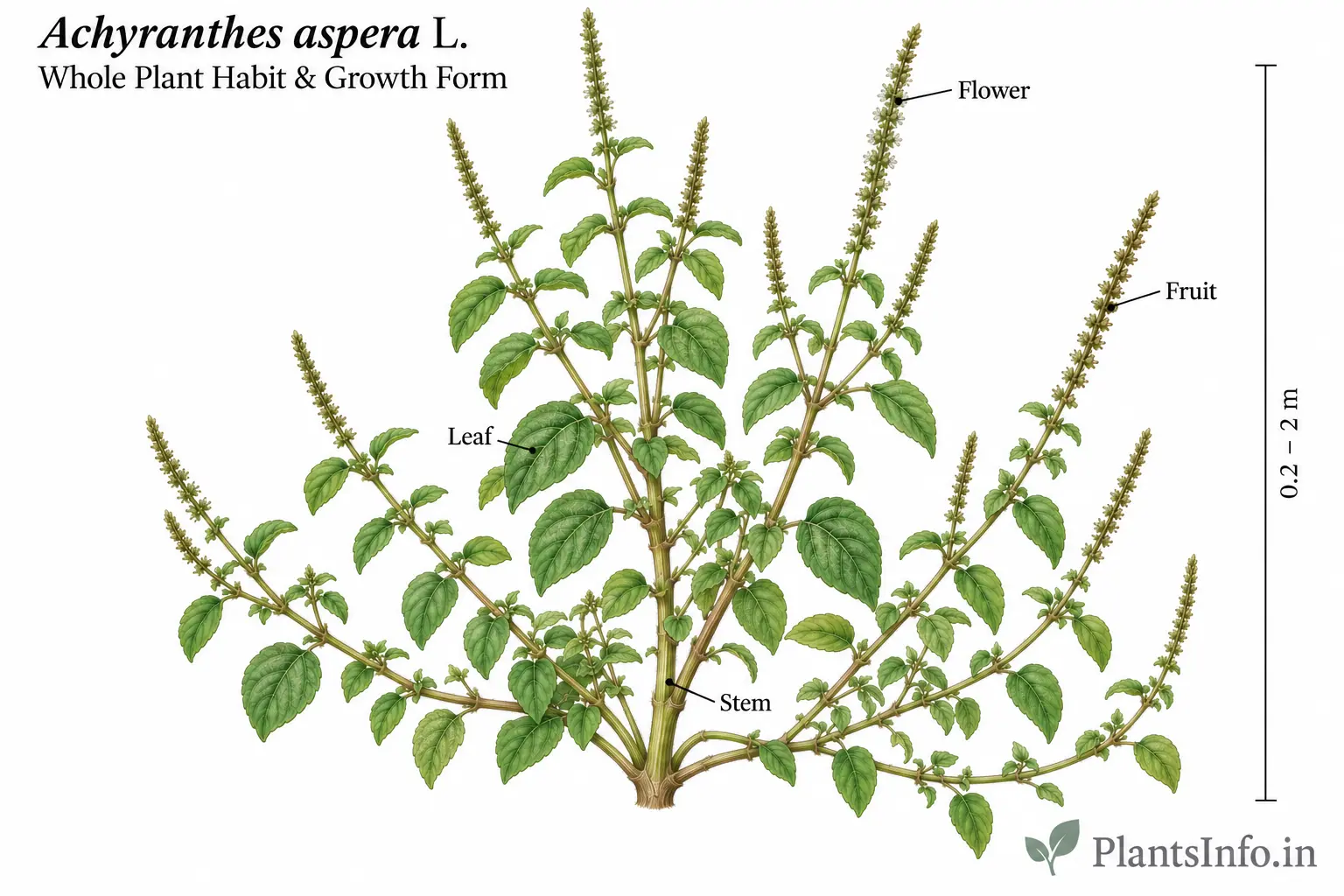
| Life form | Perennial herb, sometimes woody below; occasionally flowering in the first year and appearing annual |
| Mature height | 0.2–2 m |
| Stem type | Erect to straggling or ± prostrate; simple to much-branched |
| Surface texture | Subglabrous to densely tomentose |
| Branching pattern | Simple to considerably branched |
| Root morphology overview | Not documented in sufficient species-specific detail in the sources reviewed |
| Distinguishing architectural feature | Long terminal spikes bearing persistent, spinous bracteoles |
The species has a highly variable architecture, ranging from stiffly erect plants to straggling or somewhat prostrate forms. The combination of conspicuous nodes, angular or striate stems, variable pubescence, and elongated terminal spikes provides a recognizable overall gestalt. Its persistent spinous bracteoles become particularly conspicuous around the fruiting structures.
Recommended Products
Disclosure: As an Amazon Associate, PlantsInfo may earn from qualifying purchases.
🌱 Plant Care Essentials
The following tools can help with pruning, plant health, soil management, and fruit garden maintenance.

Neem Oil for Plant Care
Natural plant protection against aphids, whiteflies, mites, and other common garden pests.

Fungicide for Root Care
Helps suppress soil-borne fungal diseases and supports healthier root systems.

Spray Bottle for Plants
Ideal for applying foliar sprays, neem oil solutions, and liquid plant treatments.

Rubber Hand Gloves
Protects hands during pruning, planting, soil preparation, and garden maintenance.
Stem
| Field | Value |
|---|---|
| Stem type | Herbaceous, sometimes woody below |
| Cross-section shape | Four-angled to angular |
| Surface texture | Striate or sulcate; subglabrous to densely tomentose |
| Young/mature colour | Not documented in sufficient species-specific detail |
| Internode length | Not documented in available literature |
| Thorn/spine/wing status | Bracteoles are spinose; stem itself is not described as spiny |
| Internal structure | Angular and ridged; species-specific anatomical studies report medullary vascular bundles |
The angular stem and conspicuous nodes are useful diagnostic features, particularly when combined with the opposite leaves and terminal flowering spikes. Stem anatomy has also been investigated at species level, including distinctive medullary vascular bundles, but these anatomical characters are primarily useful for authenticated material rather than routine field recognition.
Leaves
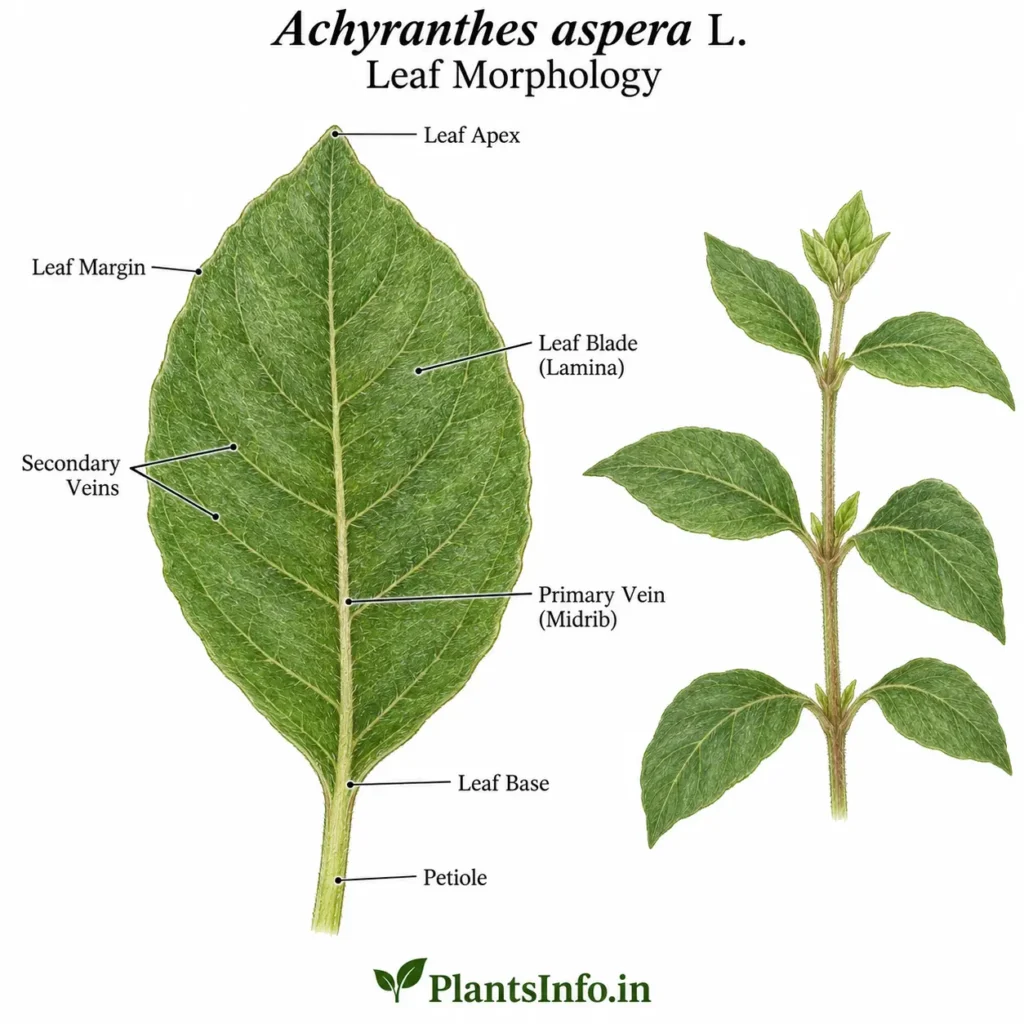
| Field | Value |
|---|---|
| Presence | Present |
| Leaf type | Simple |
| Size | Highly variable; approximately 2–22 cm long and 1.3–8 cm wide in the broad species treatment |
| Colour | Green; indumentum may give the lower surface a pale or greyish appearance |
| Arrangement | Opposite |
| Shape | Elliptic, oblong or ovate to nearly round and obtuse; also reported as obovate or broadly ovate |
| Margin | Entire to somewhat undulate |
| Surface | Subglabrous to densely hairy or tomentose |
| Petiole | Present; approximately 3–25 mm on main-stem leaves |
| Special features | Leaf form and indumentum are markedly variable |
The leaves are diagnostically useful because their shape and degree of hairiness vary substantially within the species. Opposite arrangement combined with a simple blade and the plant’s characteristic terminal spikes provides a useful vegetative-to-reproductive identification combination.
Flowers
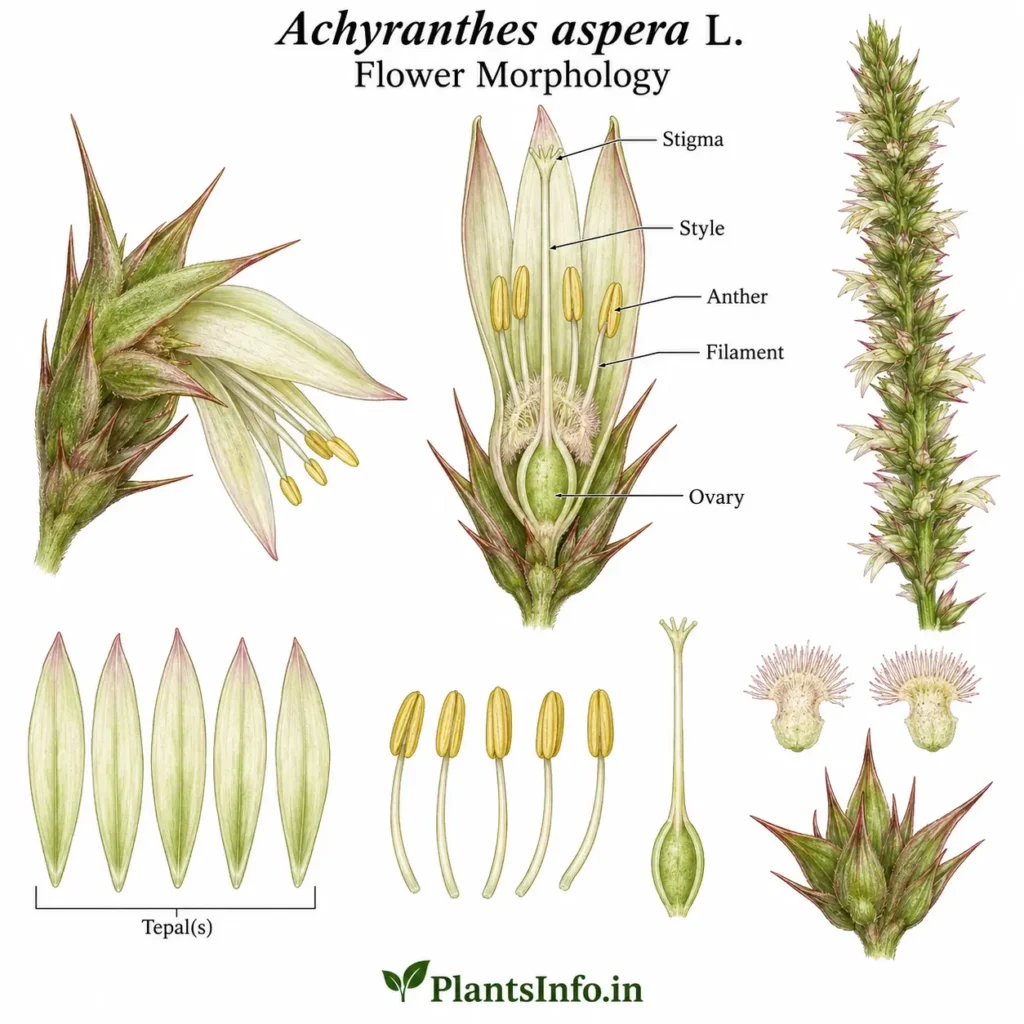
| Field | Value |
|---|---|
| Inflorescence type | Terminal spike |
| Inflorescence length | Approximately 5–40 cm, depending on treatment and specimen |
| Tepals | 5, narrowly lanceolate, approximately 3–7(–10) mm |
| Stamens | 5 |
| Pseudostaminodes | Subquadrate, typically with a fimbriate-ciliate dorsal scale |
| Pistil | Slender style, approximately 1–4(–6) mm |
| Fragrance | Not documented in available literature |
| Anthesis | Not documented as a species-wide timing |
| Primary pollinator identity | Not documented in sufficient species-specific evidence |
The terminal spike and the flowers’ initially reflexed or deflexed orientation are conspicuous reproductive characters. The persistent, spinous bracteoles and rigid perianth become particularly important in distinguishing the reproductive units. No sufficiently verified species-specific evidence was identified for assigning a primary pollinator type, so none is assigned here.
Fruit
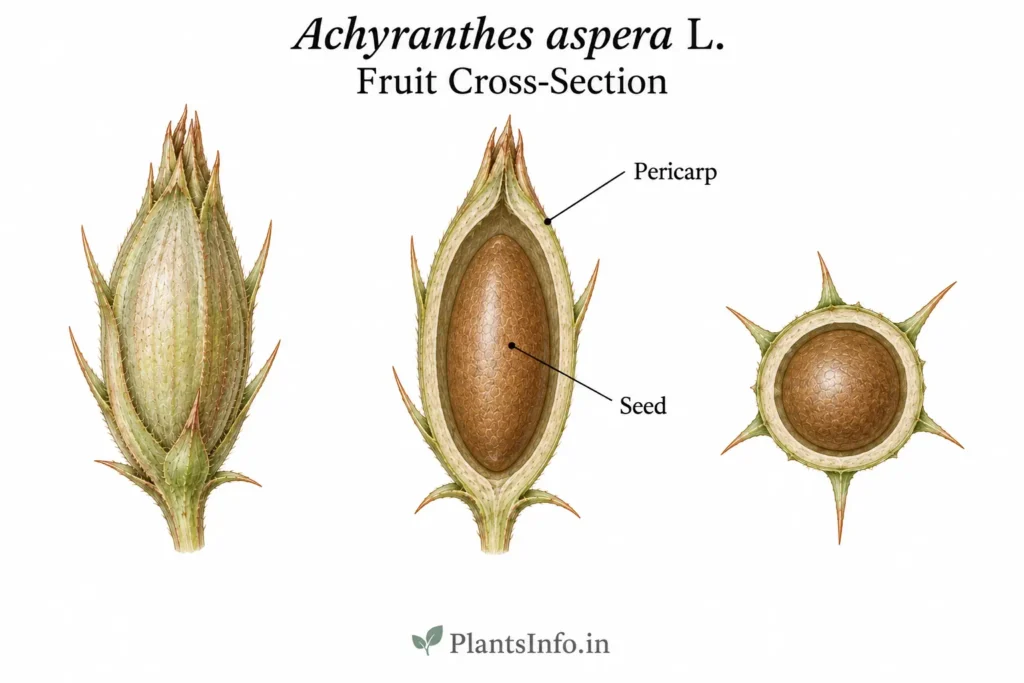
| Field | Value |
|---|---|
| Fruit type | Utricle/capsule |
| Shape | Oblong-ovoid to cylindrical |
| Length | Approximately 1–5 mm |
| Surface features | Enclosed by persistent, hardened perianth and bracteoles |
Seeds
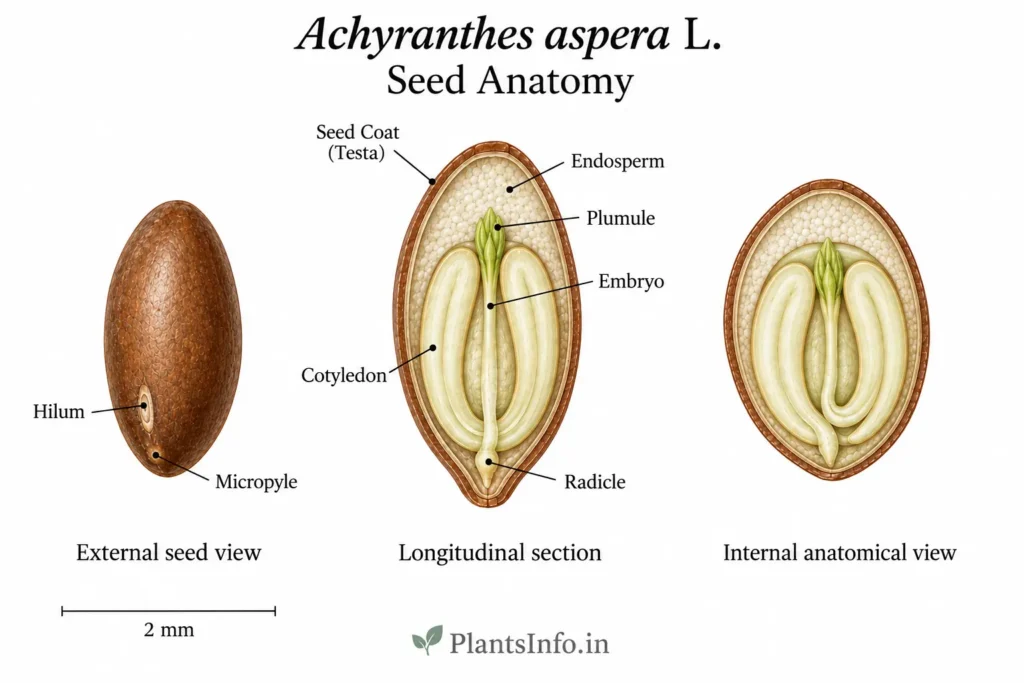
| Field | Value |
|---|---|
| Size | Approximately 2 mm long in regional descriptions |
| Shape | Oblong to ovoid |
| Colour | Brown |
| Seed coat | Smooth in the broad Kew treatment |
Root System
Species-specific sources reviewed do not provide sufficient information to characterize root depth, lateral spread, or detailed structural organization. The available evidence is therefore insufficient to describe a species-wide rooting architecture beyond the existence of a persistent below-ground system in descriptions treating the plant as perennial.
Field Identification
Achyranthes aspera is recognizable in the field by its erect to straggling herbaceous habit, opposite hairy leaves, angular stems, and especially its elongated terminal spikes with flowers that become reflexed or deflexed and persistent spinous bracteoles.
The single best distinguishing feature is the combination of the terminal spike with rigid, spine-tipped bracteoles whose hardened reproductive structures readily attach to clothing, hair, or animal fur.
A genuinely relevant confusable species is Achyranthes bidentata. Identification should therefore rely on the diagnostic reproductive characters rather than habit alone.
Diagnostic Features and Normal Variation
| Observation | Status | Notes |
|---|---|---|
| Opposite, hairy leaves with variable blade shape | Normal | Leaf shape and indumentum are naturally variable in the species |
| Angular or four-angled, hairy stem | Normal | Documented structural character |
| Elongating terminal spike | Normal | Characteristic reproductive architecture |
| Flowers becoming reflexed or deflexed against the rachis | Normal | Documented floral orientation |
| Persistent spinous bracteoles attaching to clothing or animal hair | Normal | Characteristic fruiting structure |
| Marked variation in plant stature or pubescence | Normal | Broad morphological variation is documented |
| Unusual structural deviation from the documented habit or reproductive morphology | Investigate | Species-specific evidence is insufficient to define a broader set of concerning morphological conditions |
Cultivar Summary
No documented cultivars or named selections identified.
Functional Traits
| Trait | Mechanism | Description | Ecological Context |
|---|---|---|---|
| Photosynthetic pathway | Not documented in sufficient species-specific evidence. | A species-specific photosynthetic pathway has not been established from the available evidence. | Not documented in sufficient species-specific evidence. |
| Water-use strategy | Not documented in sufficient species-specific physiological evidence. | A species-specific water-use strategy has not been established from the available evidence. | Not documented in sufficient species-specific physiological evidence. |
| Nutrient acquisition | Not documented in sufficient species-specific physiological evidence. | A species-specific nutrient-acquisition mechanism has not been established from the available evidence. | Not documented in sufficient species-specific physiological evidence. |
| Growth-form strategy | Species-specific physiological integration of the growth form is not sufficiently documented. | The species has been described with herbaceous or subshrub growth forms, but a specific physiological strategy associated with this variation has not been established. | The species occurs across open and disturbed habitats, but the physiological basis of this distribution remains insufficiently documented. |
| Stress-response mechanism | Not documented in sufficient species-specific physiological evidence. | A species-specific physiological stress-response mechanism has not been established from the available evidence. | Not documented in sufficient species-specific physiological evidence. |
| Chemical defence | Species-specific secondary metabolites have been documented, but their ecological defensive role has not been sufficiently demonstrated. | The presence of documented secondary metabolites does not by itself establish a demonstrated defensive function. | The ecological function of the documented compounds remains incompletely characterized. |
Physiological Integration
The available literature does not establish a sufficiently detailed species-specific model linking water relations, nutrient acquisition, photosynthetic physiology, and stress responses in Achyranthes aspera. The best-supported functional interpretation concerns reproduction and dispersal: persistent reproductive structures provide a mechanism for external transport, but the contribution of this mechanism to population establishment and geographic spread has not been quantified.
The documented phytochemical diversity may represent biologically active secondary metabolism, but direct evidence connecting particular compounds with ecological defence or other physiological functions remains limited. Accordingly, broader mechanistic integration would exceed the available species-specific evidence.
Phytochemistry
| Compound Class | Representative Compounds | Primary Location | Ecological or Biological Function |
|---|---|---|---|
| Triterpenoid saponins | Oleanolic acid; ecdysterone-related compounds | Not consistently established at organ level | Biological activity is documented experimentally, but an ecological function in the living plant is not established. |
| Steroidal compounds | Ecdysterone; inokosterone | Not consistently established at organ level | Documented secondary metabolites; species-specific ecological function is not established. |
| Phenolic compounds | Gallic acid; ferulic acid; vanillic acid | Extract-dependent; organ-specific distribution not consistently established | Secondary-metabolite activity is documented, but ecological function in A. aspera remains insufficiently demonstrated. |
| Flavonoids | Quercetin; kaempferol; rutin | Extract-dependent; organ-specific distribution not consistently established | Documented secondary metabolites; species-specific defensive or other ecological function is not established. |
| Alkaloids | Achyranthine; betaine | Plant extracts; precise organ distribution varies among studies | Biological activity has been reported, but ecological function is not established. |
The phytochemical literature on Achyranthes aspera is substantial but heterogeneous. Studies have reported triterpenoids, steroidal compounds, phenolics, flavonoids, alkaloids, and other secondary metabolites from different extracts and plant materials. Characterization therefore should not be interpreted as a complete metabolomic inventory of the species. Extraction method, geographic provenance, plant organ, and analytical methodology contribute to differences among reported profiles.
Phytochemical Organ Distribution
| Organ | Compound Class | Representative Compounds | Concentration | Source |
|---|---|---|---|---|
| Seeds | Saponins | Oleanolic acid-related saponins | Not documented in available literature. | Gokhale et al. (2002) |
| Leaves | Flavonoids | Quercetin-related compounds | Not documented in available literature. | Srivastava et al. (1973) |
| Roots | Triterpenoids | Oleanolic acid | Not documented in available literature. | Gokhale et al. (2002) |
The available organ-specific evidence is fragmented and does not provide a sufficiently standardized quantitative distribution profile across the plant. Reported compound presence should therefore not be interpreted as evidence that a compound is restricted to the listed organ.
Phytochemical Significance
Several constituents of A. aspera have attracted pharmacological research interest, particularly triterpenoid, steroidal, phenolic, flavonoid and alkaloid constituents. Their significance is chemical and biological rather than therapeutic: the literature demonstrates that the species contains a chemically diverse secondary-metabolite profile, but it does not establish that any one compound constitutes a universal dominant metabolite across all populations or organs.
Characterization is therefore moderate rather than complete. Research has disproportionately focused on extracts of roots, leaves and seeds from South Asian material, while standardized cross-population comparisons and systematic organ-by-organ metabolomic profiling remain comparatively limited. The available evidence does not establish specific synergistic or antagonistic relationships among the compounds in the intact plant. Reported interactions in experimental extract systems should not be generalized to naturally occurring plant chemistry without direct evidence.
Evidence Hierarchy for Medicinal Use
| Evidence Layer | Status | Notes |
|---|---|---|
| Traditional Use | Documented | Achyranthes aspera has documented traditional medicinal use across multiple regions, including treatment of inflammatory, gastrointestinal, respiratory, wound, and other conditions. |
| Nutritional Evidence | Documented | Nutritional analyses have been published for A. aspera-based plant material and preparations, although the available quantitative study concerns a plant-based supplement rather than a standardized raw-food composition. |
| In Vitro Studies | Documented | Species-specific extracts have been investigated for antimicrobial, anthelmintic, anti-inflammatory and other biological activities in experimental systems. |
| Animal Studies | Documented | Multiple animal studies have investigated pharmacological activity, including wound healing, gastrointestinal effects, inflammation and tumor models. |
| Human Clinical Studies | Documented | Human clinical studies have evaluated A. aspera-containing preparations, including a periodontal gel and a combined herbal mouthwash; these do not establish efficacy for the plant across its traditional indications. |
| Regulatory Recognition | No documented studies at this evidence level. | No species-specific regulatory authorization establishing therapeutic efficacy was identified in the reviewed evidence. |
| Unsupported Commercial Claims | Disputed | Commercial and traditional claims extend beyond the clinical evidence; the scientific review specifically notes the need for further studies to confirm some ethnomedicinal uses. |
Evidence Assessment
The medicinal evidence base is substantially stronger for traditional use and experimental research than for clinical validation. Traditional applications are extensively documented, while in-vitro and animal studies provide mechanistic or pharmacological evidence for selected activities. Human evidence is narrower and concerns specific preparations or formulations rather than the broad range of traditional indications.
The strongest evidence categories are therefore traditional-use documentation and experimental pharmacology. The weakest category is broad clinical validation: existing human studies do not establish general efficacy, dosing, or safety for the many conditions for which the plant is traditionally used. A 2017 review likewise concluded that further studies are needed to confirm some ethnomedicinal uses.
Nutritional Composition
The following values were reported for an A. aspera-based plant supplement evaluated by Fatima et al. (2014). They are presented on the reported 100-g basis of the supplement preparation and should not be interpreted as a standardized nutritional composition profile for fresh or raw A. aspera tissues.
| Nutrient | Reported value per 100 g of supplement preparation | Evidence qualification | Source |
|---|---|---|---|
| Moisture | 4.05 g | Reported for the supplement preparation; not directly equivalent to moisture content of fresh or raw plant material | Fatima et al. (2014) |
| Protein | 20.54 g | Reported for the supplement preparation; not directly equivalent to raw-leaf composition | Fatima et al. (2014) |
| Fat | 0.903 g | Reported for the supplement preparation | Fatima et al. (2014) |
| Ash | 20.25 g | Reported for the supplement preparation | Fatima et al. (2014) |
| Carbohydrate | 54.26 g | Reported for the supplement preparation | Fatima et al. (2014) |
| Energy | 294 kcal | Reported for the supplement preparation | Fatima et al. (2014) |
| Vitamin B1 | 0.27 mg | Reported for the supplement preparation | Fatima et al. (2014) |
| Vitamin B2 | 0.28 mg | Reported for the supplement preparation | Fatima et al. (2014) |
| Vitamin B3 | 0.58 mg | Reported for the supplement preparation | Fatima et al. (2014) |
| Vitamin B6 | 0.27 mg | Reported for the supplement preparation | Fatima et al. (2014) |
| Folate (B9) | 39 µg | Reported for the supplement preparation | Fatima et al. (2014) |
Interpretation
These values provide composition data for the specific A. aspera-based supplement preparation studied by Fatima et al. (2014). They do not establish a standardized food-composition profile for the species. Preparation method, formulation, processing, and the contribution of ingredients other than A. aspera may affect the reported values; therefore, direct extrapolation to intact fresh or raw plant tissues is not supported by this evidence.
Nutritional Significance
The available quantitative evidence indicates substantial protein, carbohydrate, and mineral content in the investigated preparation, but it does not establish that A. aspera is nutritionally exceptional relative to other edible plants. Bioavailability and processing effects are not sufficiently characterized in the evidence reviewed here.
Fresh-versus-dried comparisons, cultivated-versus-wild differences, and ecotype-specific nutritional variation are not sufficiently documented to support species-wide conclusions.
Soil Ecology and Mycorrhizal Associations
Species-specific soil-biology evidence is moderate but fragmented.
A. aspera has been investigated in relation to rhizosphere and endophytic bacteria. Bacterial isolates associated with its tissue, rhizoplane, and rhizosphere have included genera such as Acinetobacter, Citrobacter, Enterobacter, Pseudomonas, and Serratia, with reported phosphate-solubilizing and indole-3-acetic-acid-producing activities. Some isolates have also been investigated for effects on pearl millet growth.
Mycorrhizal evidence is more specific: a recent synthesis classifies A. aspera among nonhost weeds in an experiment involving native-soil arbuscular mycorrhizal fungi, reporting hyphal/vesicular structures but no arbuscules and no demonstrated response. This evidence supports a nonhost interpretation under the cited experimental conditions rather than a universal statement that the species can never associate with mycorrhizal fungi.
Allelopathic activity has also been experimentally investigated using plant residues and aqueous extracts against weeds. These experiments demonstrate allelopathic potential under test conditions, but they do not establish the magnitude or ecological importance of allelopathy in natural A. aspera populations.
The available evidence does not establish a sufficiently complete species-specific rhizosphere microbiome, a definitive fungal-association profile, or a quantified natural-soil allelopathic mechanism.
Toxicity and Safety
| Subject | Toxic Compounds | Clinical Effects | Source |
|---|---|---|---|
| Humans | Specific causal toxic compound not established in the reported case | A case involving ingestion of more than 1 L of A. aspera decoction reported unconsciousness, hypotension and bradycardia; recovery occurred with supportive treatment. | Han & Un (2003) |
| Cats | No verified toxicity data identified during current audit. | No species-specific clinical toxicity evidence identified. | Current literature audit |
| Dogs | No verified toxicity data identified during current audit. | No species-specific clinical toxicity evidence identified. | Current literature audit |
| Livestock | Species-specific evidence is insufficient to establish a livestock toxicity profile. | A recent ethnobotanical livestock-poisoning survey recorded A. aspera as a plant reported by informants to affect rodents, but this does not establish livestock toxicity. | Hussain et al. (2024) |
The human case report provides an important safety signal because the reported exposure was associated with acute cardiovascular effects. Separately, experimental studies have reported no acute toxicity or mortality at particular high oral doses of aqueous or ethanolic extracts in laboratory animals. These findings cannot be converted into a general declaration of safety because preparation, route, dose, and experimental model differ.
Toxicity Context
Evidence indicates that toxicity may be dose- and preparation-dependent. The reported human poisoning involved a very large quantity of decoction and produced transient cardiovascular toxicity, whereas several controlled animal studies reported no acute toxicity at specified experimental doses.
Whole-plant extracts and isolated constituents should not be assumed to have equivalent safety profiles. The available evidence does not establish a sufficiently reliable clinical threshold separating therapeutic and toxic exposure for the species as a whole.
This profile does not constitute medical or veterinary advice.
Biogeographic Context
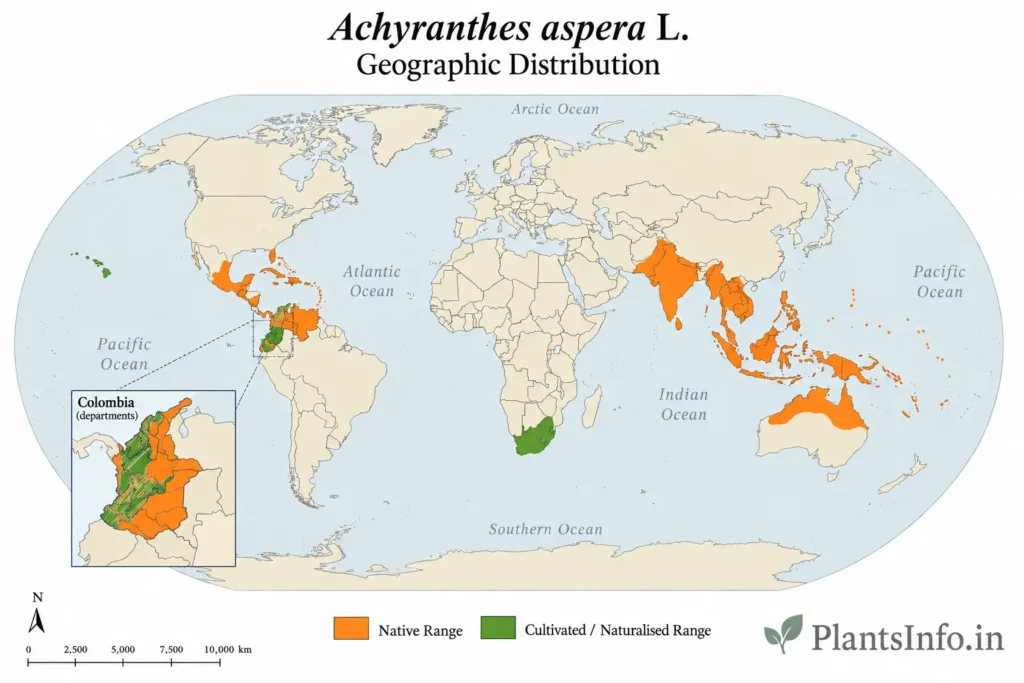
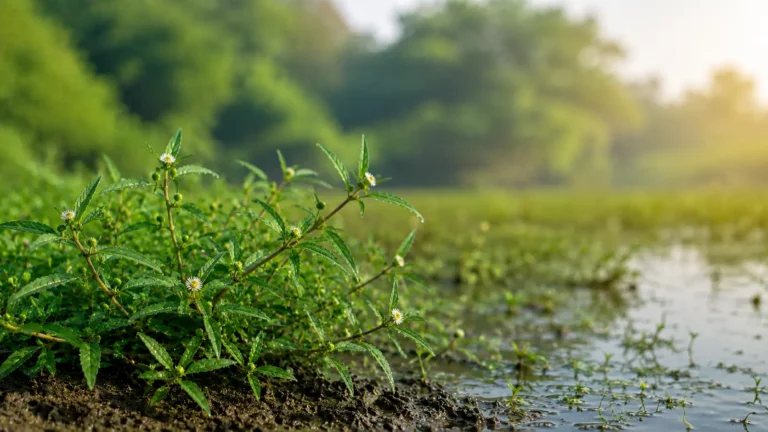
Achyranthes aspera has a broad tropical and subtropical distribution spanning the Americas, the Caribbean, tropical and subtropical Asia, and northern Australia. Current Kew distribution data distinguish native records from introduced records rather than treating its pantropical occurrence as uniformly native. The species is strongly associated with open, disturbed environments and is documented across a wide climatic envelope, from semi-arid regions to high-rainfall savannas.
The geographic pattern is therefore consistent with a combination of broad climatic tolerance, ruderal habitat affinity, and passive zoochorous dispersal. Research and herbarium coverage are uneven geographically; recent taxonomic work particularly identifies uncertainty surrounding historical African applications of the A. aspera name, where some material formerly included under the species represents other taxa.
| Region | Countries or Sub-regions | Notes |
|---|---|---|
| Mesoamerica | Southeastern Mexico, Belize, Guatemala, Costa Rica | Documented within the current native-range treatment |
| Caribbean and southern Florida | Florida; Cuba; Haiti; Dominican Republic; Puerto Rico; Trinidad and Tobago; Windward and Leeward Islands | Documented as part of the native range |
| Northern South America | Colombia; Venezuela | Documented as native in the current Kew treatment |
| Tropical South America | Selected areas of tropical South America | Current Kew treatment includes documented native and introduced records; status is geographically specific |
| Tropical South Asia | India, Bangladesh, Sri Lanka, Pakistan, Nepal | Broad native distribution |
| Southeast Asia | Myanmar, Thailand, Laos, Cambodia, Vietnam, Malaya, Sumatera, Jawa, Sulawesi, Philippines | Broad native distribution |
| Malesia and western Pacific | Borneo, Lesser Sunda Islands, Maluku, New Guinea, Solomon Islands, Caroline Islands, Marianas | Documented native distribution |
| Northern Australia | Northern Territory, Queensland, Western Australia | Documented native distribution |
The current Kew database provides the underlying country- and territory-level native distribution.
Global Cultivation and Naturalisation
| Region | Countries or Areas | Cultivation Status | Notes |
|---|---|---|---|
| Colombia | Multiple departments including Antioquia, Atlántico, Bolívar, Caldas, Cauca, Chocó, Cundinamarca, Huila, Magdalena, Meta, Nariño, Sucre, Tolima and Valle del Cauca | Naturalised | Documented as naturalised; recorded from sea level to approximately 1600 m |
| Hawaii | Hawaiian Islands | Naturalised | Documented in low-elevation, open and disturbed habitats |
| Southern Africa | South Africa and adjoining regions | Naturalised | Regional floristic sources treat it as a widespread disturbed-site species |
| Tropical Africa | Multiple countries and island groups | Naturalised | Current Kew data record numerous introduced occurrences; the status is not necessarily equivalent across every listed territory |
The documented global pattern is dominated by naturalisation rather than evidence for a standardized commercial cultivation range. The literature is particularly concentrated on South and Southeast Asian uses and African weed ecology; comparable cultivation data from the Americas and Pacific are much less consistently reported.
Natural Habitat
| Habitat parameter | Documented condition |
|---|---|
| Biome | Primarily subtropical; also widespread across tropical environments |
| Habitat type | Open habitats, roadsides, waste places, pastures, fallows, cultivated areas, savanna and other disturbed sites |
| Elevation | Documented from sea level to approximately 2500–2600 m in regional sources |
| Soil context | Occurs on a wide variety of soils; regional evidence includes sandy, alluvial, rocky and cultivated substrates |
| Moisture regime | Recorded from dry and semi-arid environments to humid and high-rainfall environments |
| Habitat specialization | Broad habitat tolerance; strongly associated with open and disturbed environments |
| Disturbance response | Frequently associated with roadsides, waste ground, cultivated land, pastures and recently disturbed sites |
Regional sources describe A. aspera as a ruderal plant occurring from sea level to approximately 2500–2600 m, including semi-arid areas receiving roughly 250 mm annual rainfall and high-rainfall savannas exceeding 2000 mm. Other floristic sources document occurrence in dry, humid, shaded, sunny, cultivated, and waste environments.
Ecological Role
| Role Type | Species or Agent Involved | Notes |
|---|---|---|
| Ruderal colonizer | Achyranthes aspera | Regional floristic sources document occurrence on disturbed ground, including roadsides, waste places, fallows, and cultivated environments. |
| Passive seed/fruit dispersal | Animals and humans | Persistent spiny fruiting structures can attach externally to animal hair and passing clothing, providing a mechanism for external transport. |
| Weed component of disturbed vegetation | Achyranthes aspera | Regional sources identify the species as a weed occurring in agricultural and disturbed landscapes. |
The strongest ecological evidence concerns the species’ occurrence in disturbed habitats and its capacity for passive external dispersal through persistent fruiting structures. These observations support characterization as a ruderal and weed component of disturbed vegetation, but they do not by themselves establish a quantified competitive effect on other plant species.
A keystone or indicator-species role has not been established from the available evidence. Likewise, no species-specific evidence identified here establishes a globally defined role within a pollination network.
Invasive Status
Naturalisation outside the accepted native range is documented, so the species cannot be treated solely as a native-range taxon. Current Kew records list numerous introduced regions, while regional floras describe it as a weed in disturbed environments. However, introduction status does not by itself establish severe ecological impact in every region.
| Region | Status | Impact | Management |
|---|---|---|---|
| Hawaii | Naturalised | Associated with open, dry, disturbed habitats; species-specific quantified impact not established here | Not documented in available literature |
| Colombia | Naturalised | Broad occurrence across multiple departments; ecological impact not quantitatively established here | Not documented in available literature |
| South Africa | Naturalised / weed | Recorded in multiple disturbed and natural vegetation types; regional source identifies it as a weed | Not documented in available literature |
| Tropical Africa | Naturalised in numerous regions | Frequently associated with agricultural and disturbed habitats; impact varies geographically | Not documented in available literature |
Climate Envelope
| Parameter | Optimal Range | Tolerance Range | Notes |
|---|---|---|---|
| Mean Annual Temperature | Not documented in available literature | Not documented in available literature | No sufficiently verified species-specific quantitative evidence was identified for a global temperature optimum or physiological temperature tolerance range. Temperature should not be inferred from geographic occurrence alone. |
| Annual Rainfall | Not established as an optimum | Approximately 250 mm to >2,000 mm (>9.8 in to >78.7 in) documented occurrence envelope | These values represent documented geographic occurrence rather than a controlled physiological optimum or experimentally established tolerance range. They should not be interpreted as a cultivation recommendation or as species-wide physiological thresholds. |
The available evidence does not establish a defensible species-specific numerical temperature optimum or physiological temperature tolerance range. Documented distribution data indicate occurrence across regions receiving approximately 250 mm to more than 2,000 mm of annual rainfall (>9.8 in to >78.7 in). This is an observed geographic occurrence envelope, not a controlled determination of optimal rainfall or physiological tolerance.
No sufficiently verified species-specific quantitative evidence was identified for separate day-temperature, night-temperature, humidity, dry-season, or solar-radiation parameters. These parameters are therefore not presented as climate ranges in this profile.
Climate Interpretation
The documented distribution indicates substantial climatic breadth, particularly with respect to rainfall. Achyranthes aspera occurs in semi-arid environments as well as regions receiving more than 2000 mm annual rainfall, and it is reported from sea level to elevations above 2500 m. This breadth supports interpretation of the species as climatically broad rather than narrowly specialized.
A precise comparison between native and cultivation climate envelopes cannot currently be made because a globally validated cultivation dataset and species-specific temperature thresholds were not identified. The major evidence gap is therefore quantitative climate physiology rather than evidence of restricted geographic occurrence.
Stress Tolerance Profile
No stress category is assigned a Verified, Supported, or Conditional tolerance level because the reviewed evidence does not provide sufficiently direct species-specific physiological experiments establishing a quantified tolerance response.
Compound Stress Assessment
No species-specific experimental evidence was identified establishing how combined stresses such as drought plus heat, salinity plus drought, or waterlogging plus heat interact physiologically in Achyranthes aspera. Any mechanistic description of combined-stress responses would therefore be speculative.
Structural and Physiological Adaptations
| Adaptation | Mechanism | Description | Ecological Context |
|---|---|---|---|
| Persistent, reflexed fruiting structures | Hardened, persistent bracteoles and perianth surround the fruit and can catch on passing surfaces. | These structures facilitate external transport of the diaspores when they adhere to animal hair or clothing. | Consistent with movement of diaspores through disturbed and human-influenced environments. |
| Autogamous reproductive assurance | Experimental bagging evidence indicates that self-pollination can produce substantial seed set without access to floral visitors. | Self-pollination can provide reproductive assurance where successful pollen transfer between individuals is limited or unpredictable. | The documented mechanism reduces dependence on regular floral visitation, although its contribution to population persistence under particular field conditions has not been quantified. |
The available evidence supports interpretation of persistent fruiting structures as a dispersal-related structural trait and autogamy as a reproductive-assurance mechanism. Evidence is insufficient to classify variable life-history expression or high seed production as demonstrated species-specific adaptations without stronger evidence linking those traits to selection or fitness under defined environmental conditions.
Climate Change Vulnerability
| Factor | Assessment | Notes |
|---|---|---|
| Primary Climate Sensitivity Factors | Broad climatic sensitivity; specific limiting variables unresolved | The species occurs across humid and drier climates and a broad geographic range, but species-specific climate-vulnerability modelling was not identified. |
| Key Threatening Climate Processes | Potential alteration of rainfall seasonality and increasing climatic extremes | These are plausible pressures given the species’ dependence on environmental conditions for growth and regeneration, but their population-level effects have not been quantified for A. aspera. |
| Resilience Factors | Broad environmental distribution and reproductive assurance | Wide occurrence and documented autogamy may provide resilience, but this is a qualitative interpretation rather than a quantified climate-resilience assessment. |
| Confidence Level | Low to moderate | Based mainly on broad distribution, life-history evidence, and reproductive studies; species-specific climate-change modelling was not identified. |
The available evidence supports a qualitative assessment rather than a numerical climate-vulnerability score. No species-specific population model was identified that separates temperature, precipitation, extreme-event, and atmospheric effects.
Phenological Calendar
| Event | Native Range Timing | Cultivated Range Timing | Environmental Triggers |
|---|---|---|---|
| Vegetative Growth Onset | Not documented as a single species-wide season | Not documented as a single species-wide season | Specific trigger not documented |
| Flower Bud Initiation | Not documented as a fixed seasonal period | Not documented as a fixed seasonal period | Adequate water availability is associated with continued flowering; a specific threshold is not documented |
| Anthesis or Peak Flowering | Flowering can occur throughout the year where sufficient water is available | Flowering can occur throughout the year where sufficient water is available | Water availability documented; no quantitative threshold established |
| Fruit Development | Not documented as a fixed species-wide period | Not documented as a fixed species-wide period | Specific trigger not documented |
| Fruit Maturation | Not documented as a fixed species-wide period | Not documented as a fixed species-wide period | Specific trigger not documented |
| Seed Dispersal | Not documented as a fixed seasonal period | Not documented as a fixed seasonal period | Fruit attachment to animals and people provides the documented dispersal mechanism; specific environmental trigger not established |
| Dormancy or Rest Period | Not documented as a species-wide fixed period | Not documented as a species-wide fixed period | Distinct dormancy/rest period not established |
The available evidence indicates considerable phenological plasticity. PROSEA reports flowering throughout the year when sufficient water is available and describes annual behaviour in arable land and distinct monsoon environments, while plants in shaded and protected situations may persist as perennials. A precise month-by-month calendar would therefore exceed the evidence.
Phenological Notes
Phenology appears to be strongly associated with water availability, but the evidence does not establish a quantitative rainfall or soil-moisture threshold controlling flowering. Geographic and habitat differences can alter the apparent annual-versus-perennial life cycle. The available sources do not provide sufficiently standardized datasets to quantify phenological shifts between native and cultivated populations.
Pollination Ecology
The strongest species-specific reproductive evidence identified here concerns autogamy rather than a particular pollinator species. Experimental work that included Achyranthes aspera reported autogamous self-pollination with high seed set. The available evidence does not establish a sufficiently verified pollinator identity for A. aspera; consequently, no pollinator species, genus, or family is assigned.
| Parameter | Value | Notes |
|---|---|---|
| Primary Pollinators | Not documented in available literature. | No species-level primary pollinator identity was sufficiently verified. |
| Secondary Pollinators | Not documented in available literature. | No sufficiently verified secondary pollinator identity was identified. |
| Pollination Syndrome | Not conclusively established. | Floral morphology alone is insufficient to assign a species-specific syndrome without verified visitor evidence. |
| Floral Mechanism | Not documented in sufficient detail. | A specific physical pollinator-guidance mechanism was not established in the evidence reviewed. |
| Reproductive System | Autogamous self-pollination documented. | Experimental bagging work reported reproductive assurance through autogamy and high seed set. |
| Seed Dispersal Agent | Not sufficiently documented at species level. | Available evidence indicates that the persistent fruiting structures can adhere to animal fur and human clothing, but the relative contribution of particular dispersal agents to natural population dynamics is not established. |
| Reproductive Evidence Status | Partial | Species-specific evidence supports autogamy, while pollinator identity and broader mating-system parameters remain incompletely characterized. |
| Human Intervention | Not established as necessary. | No evidence identified here establishes a requirement for human-mediated pollination for normal seed production. |
The documented occurrence of autogamy demonstrates that self-pollination is an established reproductive pathway in A. aspera. However, the available evidence does not establish the relative contribution of autogamy, animal-mediated pollination, or other reproductive pathways to natural population dynamics.
Pollination Context
Available evidence supports self-pollination as an important reproductive pathway. A North Indian cytogenetic study also documented viable pollen in both tetraploid and hexaploid cytotypes, although pollen fertility varied among sampled plants and some tetraploid individuals showed meiotic abnormalities. This establishes reproductive cytological variation but does not by itself determine the frequency of outcrossing in natural populations.
Evidence for pollinator-decline effects is absent. Biological feasibility of assisted pollination is therefore not a demonstrated limiting factor for the species.
Seed Biology and Germination
| Parameter | Value | Notes |
|---|---|---|
| Seed Type | Not conclusively classified. | Seeds have been handled under dried-seed conditions in comparative germination research, but the available evidence does not establish a formal species-specific storage classification such as orthodox or recalcitrant. |
| Dormancy Class | Supported — physiological dormancy has been reported. | Historical seed-biology literature reports physiological dormancy and improved germination following after-ripening or washing treatments. |
| Dormancy-Breaking Requirement | Conditional — after-ripening and washing have been reported to improve germination. | The magnitude of the response varies among experimental conditions; no single universal dormancy-breaking requirement is established. |
| Optimal Germination Temperature | Not documented in sufficient species-specific evidence. | A controlled comparative study evaluated A. aspera at 20°C (68°F) and 25°C (77°F), but comparison of these two temperatures does not establish a universal species-wide optimum. |
| Germination Rate | Conditional — values vary with experimental treatment. | Comparative and in-vitro studies report different germination outcomes; no single species-wide germination rate is defensible. |
| Germination Period | Verified — approximately 14–53 days in an Australian botanical treatment. | Comparative seed-bank experiments also found substantially longer mean germination times under some experimental conditions. |
| Storage Behaviour | Supported — tolerance of dried storage has been demonstrated under experimental conditions. | The evidence supports storage tolerance but does not establish a definitive long-term longevity class. |
| Seed Longevity | Not documented in sufficient species-specific evidence. | A precise storage-life value is not established. |
Seed germination varies substantially among experimental systems. An Australian botanical treatment records emergence over approximately 14–53 days, while a comparative Amaranthaceae study reported mean germination times of 79.6 days at 20°C (68°F) and 156.6 days at 25°C (77°F) under its particular seed-bank experimental conditions. These results should not be interpreted as contradictory universal values because the experiments differed in seed source, storage history, and methodology.
The available evidence therefore supports physiological dormancy and experimental responses to after-ripening or washing, while leaving the formal seed-storage classification, species-wide optimum germination temperature, and longevity unresolved.
Germination Notes
Evidence indicates that germination behaviour is sensitive to seed condition and treatment history. Historical work has reported increased germination after dry after-ripening, while other evidence indicates that washing can substantially improve germination. Comparative seed-bank research further demonstrates unusually slow germination under some controlled conditions.
Wild-versus-cultivated differences in germination behaviour are not sufficiently characterized. No single dormancy-breaking condition can therefore be assigned as universally required.
Vegetative Reproduction
| Parameter | Value | Notes |
|---|---|---|
| Vegetative Regeneration Capacity | Verified — demonstrated under controlled in-vitro conditions | Leaf, root, internode, and nodal explants have produced regenerated plantlets in tissue-culture studies. |
| Primary Regeneration Mechanism | Adventitious shoot regeneration from nodal and other explants under culture conditions | This is experimentally demonstrated micropropagation capacity, not evidence that vegetative reproduction is a major natural population mechanism. |
| Minimum Propagule Size | Not documented in available literature. | No species-specific minimum naturally viable vegetative propagule size was identified. |
| Ecological or Invasive Significance | Conditional | Naturalisation is documented, but the contribution of vegetative reproduction to naturalised population spread has not been established. |
The available evidence demonstrates considerable in-vitro regenerative capacity, including regeneration from nodal, leaf, root, and internodal material. It does not establish that comparable vegetative regeneration commonly drives natural populations.
Economic Importance
| Use Category | Description | Economic Impact |
|---|---|---|
| Medicinal raw material | Achyranthes aspera is documented as a medicinal plant used in Indian and other South Asian traditional medical contexts. | Medicinal-resource use is documented, but no reliable species-specific production, export, market-size, or monetary dataset was identified in the current evidence review. |
| Wild-collected ethnobotanical resource | Ethnobotanical studies document collection and use by rural and Indigenous communities in India. | Local use is documented, but the quantitative economic contribution of A. aspera collection has not been established. |
| Commercial cultivation | Literature discusses cultivation of the species, but the evidence reviewed does not establish a standardized large-scale commercial production sector. | Commercial production scale and geographic concentration remain unresolved. |
Economic Assessment
Partial
The available evidence establishes medicinal and ethnobotanical use of A. aspera, but it does not establish the scale of its economic contribution. Species-specific production volumes, export structure, market size, supply-chain statistics, and monetary value remain insufficiently documented.
No government agricultural dataset or international trade dataset establishing a species-specific global production or export market was identified during this assessment. Accordingly, the existence of medicinal or ethnobotanical use is not treated as evidence of a defined commercial market.
Traditional Uses
| Use Category | Knowledge System | Region or Cultural Group | Practice Summary | Documentation Level | Source |
|---|---|---|---|---|---|
| Medicinal use | Ayurveda | India | A. aspera is identified as Apamarga and is documented in Ayurvedic literature as a medicinal plant; roots, seeds, shoots and other parts are described as therapeutically used. | Documented | Sharma (2013/2015), Medicinal Properties of Apamarg |
| Ethnomedicinal use | Tribal ethnobotanical knowledge | Odisha, India | The plant is documented among tribal ethnodrugs for reproductive disorders, dental problems, diarrhea, fractures, cuts and boils. | Documented | Girach & Khan (1992) |
| Ethnomedicinal use | Rural and tribal ethnobotanical knowledge | Terai belt, northeastern Uttar Pradesh, India | Local communities including Tharu and other identified groups document uses involving skin disorders, toothache, piles, insect and scorpion stings, fever and other conditions. | Documented | Kumar, Tewari & Pandey (2005) |
| Ethnomedicinal use | Rural and tribal ethnobotanical knowledge | Western Uttar Pradesh, India | Interviews with traditional healers, particularly women, documented multiple uses associated with gynecological disorders. | Documented | Khan & Khan (2005) |
| Ethnobotanical use | Rural and tribal ethnobotanical knowledge | Saurashtra, Gujarat, India | Rural and tribal communities have documented longstanding medicinal use of the plant, including applications associated with gynecological disorders. | Documented | Gor et al. (2007) |
Traditional Use Summary
The principal documented knowledge systems are Ayurveda and regionally specific rural and tribal ethnobotanical traditions of India. The evidence is geographically concentrated in South Asia, particularly India, with separate ethnobotanical documentation from Odisha, Uttar Pradesh, and Gujarat. The species therefore has a substantial historical medicinal-use record, but the degree to which these traditions have translated into standardized commercial supply is not established by the economic evidence reviewed.
Regional Ethnobotanical Context
Ethnobotanical documentation indicates continuity of knowledge across rural and tribal communities, with practices recorded through interviews with traditional healers and community informants. The evidence is heterogeneous rather than representing one uniform Indian tradition. Some regional literature also explicitly notes erosion of traditional knowledge associated with social and cultural change, indicating that documentation itself may be important for preserving historically transmitted plant knowledge.
Traditional Ecological Knowledge
Documented evidence for A. aspera-specific traditional ecological knowledge concerning agroforestry, living fences, ecological indicators, or formal landscape-management practices was not sufficiently established in the current audit.
Ethical Considerations
Community-origin knowledge is explicitly represented in several ethnobotanical studies, particularly those based on interviews with tribal, rural, and traditional-healer informants. Attribution of the relevant communities is therefore important when such knowledge is reused.
No species-specific biopiracy or intellectual-property dispute was sufficiently verified for inclusion. No quantitative evidence was identified demonstrating overharvesting pressure specifically attributable to traditional or commercial demand.
Cultural Significance
Beyond utilitarian medicinal use, A. aspera has documented cultural and historical significance in the Indian tradition. Ayurvedic literature identifies the plant as Apamarga, and published Ayurvedic commentary describes its presence in older Indian textual traditions. The evidence supports historical cultural significance, although this profile does not infer a broader religious or ceremonial role where species-specific documentation is insufficient.
Cultivation Summary
Achyranthes aspera is biologically suited to disturbed, open environments and is capable of occurring as an annual or subshrub depending on environmental context. Its broad distribution, ruderal ecology, seed production, autogamous reproductive capacity, and documented in-vitro regeneration indicate substantial biological establishment capacity.
The species has also been subjected to experimental cultivation and tissue-culture research, demonstrating feasibility of controlled plant production at the research level. However, the available evidence does not establish a single standardized commercial cultivation system or a globally uniform production model.
Pest, Disease and Physiological Burden Summary
Species-specific disease evidence includes phytoplasma-associated yellows and small-leaf symptoms reported in A. aspera growing as a roadside weed in Uttar Pradesh, India. The associated phytoplasma was reported as ‘Candidatus Phytoplasma asteris’ within the 16SrI group.
The current evidence base is insufficient to establish a comprehensive ranking of major pests, diseases, or physiological disorders for the species. Accordingly, no broader pest or disease burden is inferred from studies of other crops or Achyranthes species.
Failure Points and Commercial Risks
The species has documented medicinal and ethnobotanical value, but the principal commercial uncertainties are structural rather than demonstrated production failures. Species-specific production volume, international trade, market concentration, and standardized commercial supply-chain data remain insufficiently resolved.
A further risk is taxonomic identity control. Recent revisionary work on the Achyranthes aspera aggregate demonstrated that historical identifications, particularly in Africa, can encompass other species. Commercial or medicinal supply chains relying on historical names could therefore face authentication and substitution issues.
Conservation Analysis
Achyranthes aspera is not presently supported by the available evidence as a species for which cultivated abundance can substitute for assessment of wild populations. Its broad distribution and occurrence in disturbed habitats indicate substantial ecological persistence, but these characteristics do not establish secure population status. The conservation picture is further complicated by recent taxonomic revision: many African specimens historically identified as A. aspera have been reassigned to other species, meaning that historical distribution records and population-level assessments based on those records require taxonomic review.
Genetic diversity is also not adequately characterized at the species-wide level. Cytogenetic work has documented both tetraploid and hexaploid cytotypes in North India, while broader population-genetic structure has not been sufficiently established in the evidence assembled for this profile. Germplasm security is therefore better regarded as a research need than as a demonstrated conservation deficiency.
Conservation Status
| Parameter | Value | Notes | Source |
|---|---|---|---|
| IUCN Red List Category | Not formally verified as assessed | No species-specific current IUCN assessment was identified during the present audit. | IUCN Red List of Threatened Species; species assessment not located during audit |
| Population Trend | Not established | No reliable species-wide population-trend dataset was identified. | Current conservation audit |
| Primary Conservation Concern | Taxonomic and population-assessment uncertainty | The 2024 revision identified substantial historical misidentification within the A. aspera aggregate, particularly among African specimens. | Sukhorukov et al. (2024) |
| Major Conservation Approach | Taxonomic verification and population monitoring | Species-level distribution and population assessments should use the revised circumscription rather than relying uncritically on historical records. | Sukhorukov et al. (2024) |
| IUCN URL | Species-specific assessment not located | The IUCN Red List was consulted for assessment context; the generic resource is not presented as a species assessment. | IUCN Red List of Threatened Species |
| Access Date | 2026-09-08 | Date of the present conservation audit. | IUCN Red List consultation |
NatureServe lists a global G5 status, but the record states that this status was last reviewed on 20 November 1996 and explicitly indicates that the global status needs review. This record is therefore treated as historical conservation context rather than as a current substitute for a formal species assessment.
Conservation Risk Factors
| Risk Factor | Severity | Evidence Status |
|---|---|---|
| Taxonomic misidentification | Moderate | Verified — the 2024 revision found that most African herbarium specimens labelled A. aspera belonged to other taxa. |
| Inadequate population monitoring | Unresolved | Supported — no current species-wide population-trend dataset was identified. The absence of such a dataset does not establish a quantified population risk. |
| Habitat transformation | Unresolved | Conditional — the species is associated with disturbed habitats, but species-specific population consequences of habitat transformation are not established across its range. |
| Genetic-structure uncertainty | Unresolved | Supported — multiple cytotypes are documented, but species-wide genetic structure remains poorly resolved. |
| Unresolved conservation status | Unresolved | Verified — the available NatureServe global record is historical and explicitly flagged for review; a current species-specific IUCN assessment was not located. |
Conservation Assessment
The available evidence does not justify assigning A. aspera a current global threat category by inference alone. Its extensive distribution and ability to occur in disturbed environments indicate ecological persistence, while the absence of a current species-specific population assessment leaves genuine uncertainty about regional population trajectories.
The most immediate conservation requirement is therefore better species-level resolution. The 2024 revision demonstrates that historical A. aspera records can encompass several taxa, particularly in Africa and Arabia. Conservation inventories, range estimates, and future population studies based on those records should consequently be interpreted with taxonomic caution.
At present, the evidence supports a conclusion of unresolved current conservation status, rather than either secure status or demonstrated global threat.
Research Coverage and Knowledge Gaps
| Research Topic | Coverage Level | Key Gaps | Priority |
|---|---|---|---|
| Taxonomy and distribution | High, but recently revised | Post-revision range reconciliation; historical-record correction | High |
| Cytogenetics | Moderate | Geographic distribution of cytotypes; relationship to population structure | Medium |
| Population genetics | Low | Genetic diversity, connectivity, differentiation | High |
| Population trends | Low | Long-term abundance and demographic datasets | High |
| Conservation assessment | Low | Current formal global assessment | High |
| Phenology | Moderate | Standardized multi-region datasets and climate-linked variation | Medium |
| Pollination and mating system | Partial | Natural pollinator identity and outcrossing frequency | Medium |
| Seed ecology | Moderate | Population-level dormancy and longevity variation | Medium |
| Soil and below-ground ecology | Low | Species-specific field studies of microbial associations and regeneration | Medium |
| Ethnobotanical knowledge | Moderate to high | Comparative documentation of knowledge continuity and regional change | Medium |
| Pharmacological research | High in experimental literature | Standardization, long-term safety, and robust human validation | High |
Research Landscape
Research on Achyranthes aspera is active but unevenly distributed. A substantial proportion of the literature concerns ethnomedicine, phytochemistry, pharmacology, and laboratory bioactivity, whereas population ecology, conservation biology, genetics, and long-term field demography are less well represented in the evidence assembled for this profile. Recent reviews continue to identify the need for deeper mechanistic, safety, and clinical research.
The available literature is particularly well represented by studies from South Asia and by laboratory research concerning medicinal applications. The 2024 African revision demonstrates that botanical field and herbarium research can materially change the understanding of species limits and distribution. The resulting evidence base is therefore asymmetric: literature on medicinal characterization is comparatively extensive, while evidence for global population assessment, conservation status, and species-wide population structure remains limited.
Priority Knowledge Gaps
- Post-revision distribution audit — reconcile historical African and Arabian records with the species circumscriptions established by the 2024 revision.
- Current population assessment — establish geographically replicated abundance and demographic datasets.
- Population genetics — determine whether documented cytotype variation corresponds to meaningful population-level genetic structure.
- Species-specific climate response — distinguish broad ecological occurrence from population-level climate vulnerability.
- Natural reproductive ecology — determine the relative contribution of autogamy and animal-mediated pollination under field conditions.
- Seed-bank ecology — quantify seed persistence and recruitment across contrasting native and naturalized populations.
- Conservation baseline — establish the evidence required for a contemporary formal global conservation assessment.
Interesting Facts
- The A. aspera aggregate was substantially revised in 2024: historical African material treated as A. aspera was shown to include multiple distinct taxa.
- North Indian material has documented tetraploid and hexaploid cytotypes.
- Experimental work has documented autogamous self-pollination in A. aspera.
- The species has a documented Ayurvedic identity under the name Apamarga.
- NatureServe lists a global G5 designation, but the record was last reviewed in 1996 and explicitly states that the global status needs review.
Frequently Asked Questions
Is Achyranthes aspera currently considered threatened?
A current formal global threat category was not verified. Historical NatureServe information gives G5, but that assessment was last reviewed in 1996 and is explicitly flagged for review.
Does cultivated or naturalized abundance prove conservation security?
No. Cultivated or naturalized occurrence does not by itself establish the status or security of wild populations.
Why is the African distribution uncertain?
A 2024 taxonomic revision found that many African herbarium specimens historically labelled A. aspera actually belonged to other species. Historical distribution records therefore require taxonomic review.
Are different chromosome cytotypes known?
Yes. North Indian material has documented tetraploid and hexaploid cytotypes.
Is the species well studied?
The species is well represented in ethnobotanical, phytochemical, and pharmacological literature, but population ecology, conservation monitoring, and species-wide genetic structure are less well developed in the evidence assembled for this profile.
Does the profile establish medicinal efficacy?
No. Earlier sections distinguish documented traditional use and experimental evidence from clinical efficacy.
Conclusion
Achyranthes aspera is a widely distributed and ecologically persistent species with substantial ethnobotanical importance, broad habitat occurrence, documented reproductive flexibility, and a comparatively large experimental medicinal literature. Its apparent ecological security should nevertheless not be equated with a formally demonstrated conservation-secure status.
The strongest conservation issue identified by this profile is knowledge quality rather than demonstrated global decline. Recent taxonomic revision has shown that historical records can substantially overstate the range of A. aspera by combining it with other members of the aggregate, while current population trends and genetic structure remain insufficiently documented.
Across the full profile, the evidence is strongest for taxonomy, morphology, distribution, ethnobotany, phytochemistry, and experimental biology, and weaker for population monitoring, conservation assessment, natural pollination ecology, species-wide genetics, and climate vulnerability. The resulting profile therefore supports a partial but evidence-rich species assessment, with explicit boundaries where the available evidence does not justify stronger conclusions.
References
A. Primary Taxonomic Sources
- Royal Botanic Gardens, Kew. Achyranthes aspera L. Plants of the World Online. Accepted name, classification, native range, synonyms, infraspecific taxa, and distribution.
https://powo.science.kew.org/taxon/2468-2 - Royal Botanic Gardens, Kew. Achyranthes aspera — General Information. Morphology, ecology, habitat, and distribution context.
https://powo.science.kew.org/taxon/urn%3Alsid%3Aipni.org%3Anames%3A2468-2/general-information - Sukhorukov, A.P., Kushunina, M., Nilova, M.V., Baider, C. & Sennikov, A.N. (2024). Africa and Arabia encompass a much greater species diversity in the Achyranthes aspera aggregate (Amaranthaceae, achyranthoid clade): Evidence from morphological and chorological data. PhytoKeys, 250, 21–94.
https://doi.org/10.3897/phytokeys.250.136139
B. Peer-Reviewed Literature
- Bhat, N.F., Tantray, Y.R. & Gupta, R.C. (2019). Morphometric Analysis and Meiotic Behavior in 4x and 6x Cytotypes of Achyranthes aspera L. from North India. Cytologia, 84, 373–377.
https://doi.org/10.1508/cytologia.84.373 - He, X., et al. (2017). The genus Achyranthes: A review on traditional uses, phytochemistry, and pharmacological activities. Journal of Ethnopharmacology, 203, 260–278.
https://doi.org/10.1016/j.jep.2017.03.035 - Luo, H., Wei, S., Fu, S., & Han, L. (2025). Role of Achyranthes aspera in neurodegenerative diseases: Current evidence and future directions. Frontiers in Pharmacology, 16, 1511011.
https://doi.org/10.3389/fphar.2025.1511011 - Nargatti, P., Patil, S. & Wadkar, K. (2021). Phytochemical Profile and Pharmacological Aspects of Achyranthes aspera Linn—An Overview. Journal of Pharmaceutical Research International, 33(34B), 187–206.
https://doi.org/10.9734/jpri/2021/v33i34B31860 - Sen, M.K., et al. (2014). In vitro callus induction and plantlet regeneration of Achyranthes aspera L. PubMed PMID 24144129.
https://pubmed.ncbi.nlm.nih.gov/24144129/ - Gnanaraj, W.E., et al. (2013). In vitro clonal propagation of Achyranthes aspera L. and Achyranthes bidentata Blume using nodal explants. PubMed PMID 23569824.
https://pubmed.ncbi.nlm.nih.gov/23569824/ - Schütz, W., et al. (2017). Evolutionary ecology of fast seed germination—A case study in Amaranthaceae/Chenopodiaceae. Comparative seed-germination evidence.
- Girach, R.D. & Khan, S.A. (1992). Ethnomedicinal Uses of Achyranthes aspera L. in Orissa (India). Regional ethnobotanical documentation.
- Kumar, A., Tewari, D.D. & Pandey, V.C. (2005). Folk Botany of Achyranthes aspera in Terai Belt of North Eastern U.P. Regional ethnobotanical documentation.
- Khan, A.V. & Khan, A.A. (2005). Ethnomedicinal Uses of Achyranthes aspera L. in Management of Gynaecological Disorders in Western Uttar Pradesh (India). Regional traditional-use documentation.
- Gor, S.H., et al. (2007). Ethnobotanical Uses of Achyranthes aspera L. in Saurashtra Region of Gujarat, India. Regional ethnobotanical documentation.
- Human cardiac toxicity case report. PubMed PMID 12882494. Species-specific human exposure evidence.
https://pubmed.ncbi.nlm.nih.gov/12882494/ - Acute toxicity study. PubMed PMID 23661870; PMC3657964. Species-specific animal toxicity evidence.
https://pubmed.ncbi.nlm.nih.gov/23661870/
https://pmc.ncbi.nlm.nih.gov/articles/PMC3657964/ - Nutritional and subacute supplement study. PubMed PMID 25176360. Composition and safety context for an A. aspera-containing supplement.
https://pubmed.ncbi.nlm.nih.gov/25176360/ - Periodontal gel clinical study. PubMed PMID 37654350. Human clinical evidence.
https://pubmed.ncbi.nlm.nih.gov/37654350/ - Herbal mouthwash clinical study. PubMed PMID 39055999. Human clinical evidence.
https://pubmed.ncbi.nlm.nih.gov/39055999/
C. Monographs, Books, and Technical Sources
- PROSEA. Achyranthes. Ecology, flowering, life history, seed, propagation, and dispersal context.
https://prosea.prota4u.org/view.aspx?id=886 - Food and Agriculture Organization of the United Nations. Plant Production and Protection Paper / technical treatment of tropical weeds. Distribution, habitat, and ecological-range information concerning A. aspera.
https://www.fao.org/4/an797e/an797e00.pdf - Bishop Museum. Plants of Hawai‘i. Achyranthes aspera. Naturalized habitat and morphological context.
https://plantsofhawaii.org/detail/%7B64BDF143-5014-4C71-BFC0-3B334174FC49%7D
D. Databases and Online Resources
- World Flora Online. Achyranthes aspera. Taxonomic and botanical reference.
https://www.worldfloraonline.org/taxon/wfo-0000516177 - NatureServe Explorer. Achyranthes aspera. Historical global G5 status and status-review note.
https://explorer.natureserve.org/Taxon/ELEMENT_GLOBAL.2.137038/Achyranthes_aspera - International Union for Conservation of Nature. IUCN Red List of Threatened Species. Species-specific assessment search conducted 8 September 2026; no current species-specific assessment was identified in the evidence reviewed.
- India Flora Online. Achyranthes aspera. Regional botanical and morphological information.
https://indiaflora-ces.iisc.ac.in/herbsheet.php?cat=13&id=152
E. Grey Literature and Evidence Gaps
No additional government or international-organization source was sufficiently verified as a species-specific conservation assessment for inclusion beyond the sources listed above.