Kalmegh Flowering Season: When and What to Expect in India
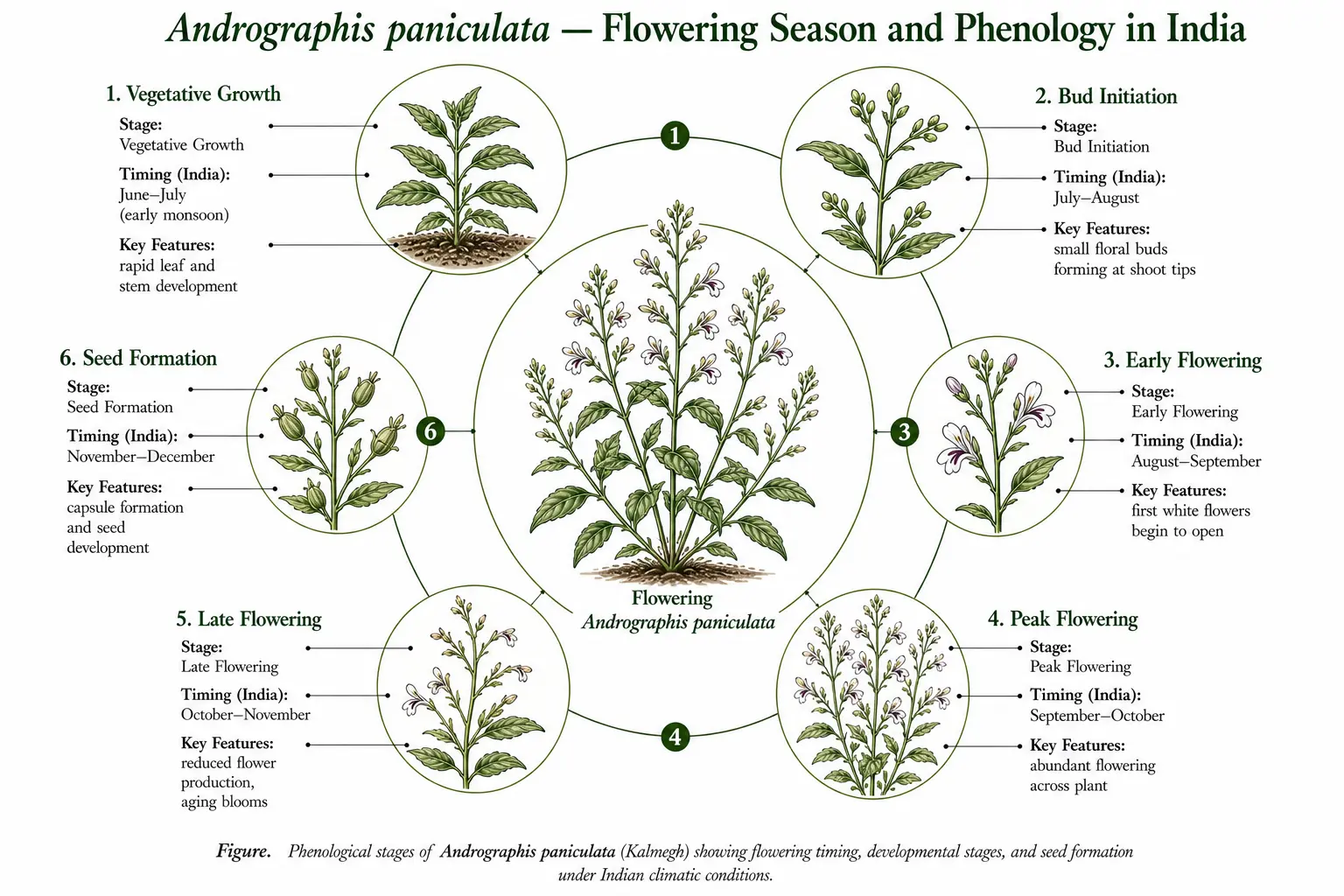
Quick Answer: Kalmegh flowers from September through November across most of India, following monsoon sowing in June to July. The flowering period marks the plant’s peak medicinal value — leaves and stem tips harvested just before or at early flowering have the highest concentration of active compounds. After full flowering and seed set, the plant declines and completes its annual cycle.
See also: Kalmegh plant profile, how to grow it, common problems, its benefits, and its varieties.
Sow kalmegh at the first monsoon rain, and it follows India’s seasons with quiet reliability — establishing through the wet months, flowering as the rains withdraw, and setting seed as the air cools. The rhythm is almost calendrical, and knowing it makes timing every decision about this plant straightforward.
Recommended Products
Disclosure: As an Amazon Associate, PlantsInfo may earn from qualifying purchases.
🌱 Growing Essentials
The following products can help with container gardening, potting, root development, soil management, and healthy plant growth.
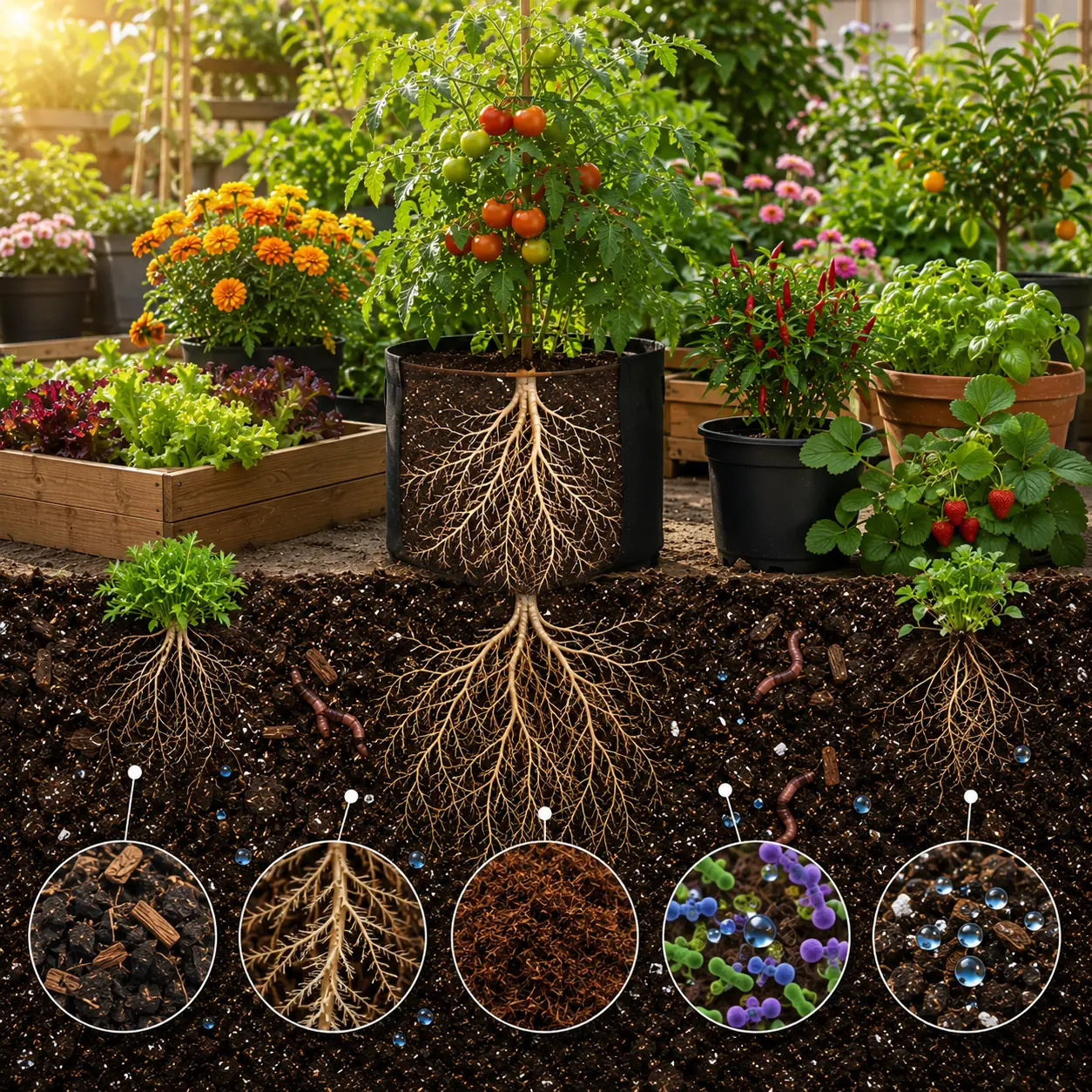
Organic Potting Soil Mix
Provides nutrients, structure, and healthy growing conditions for container plants.
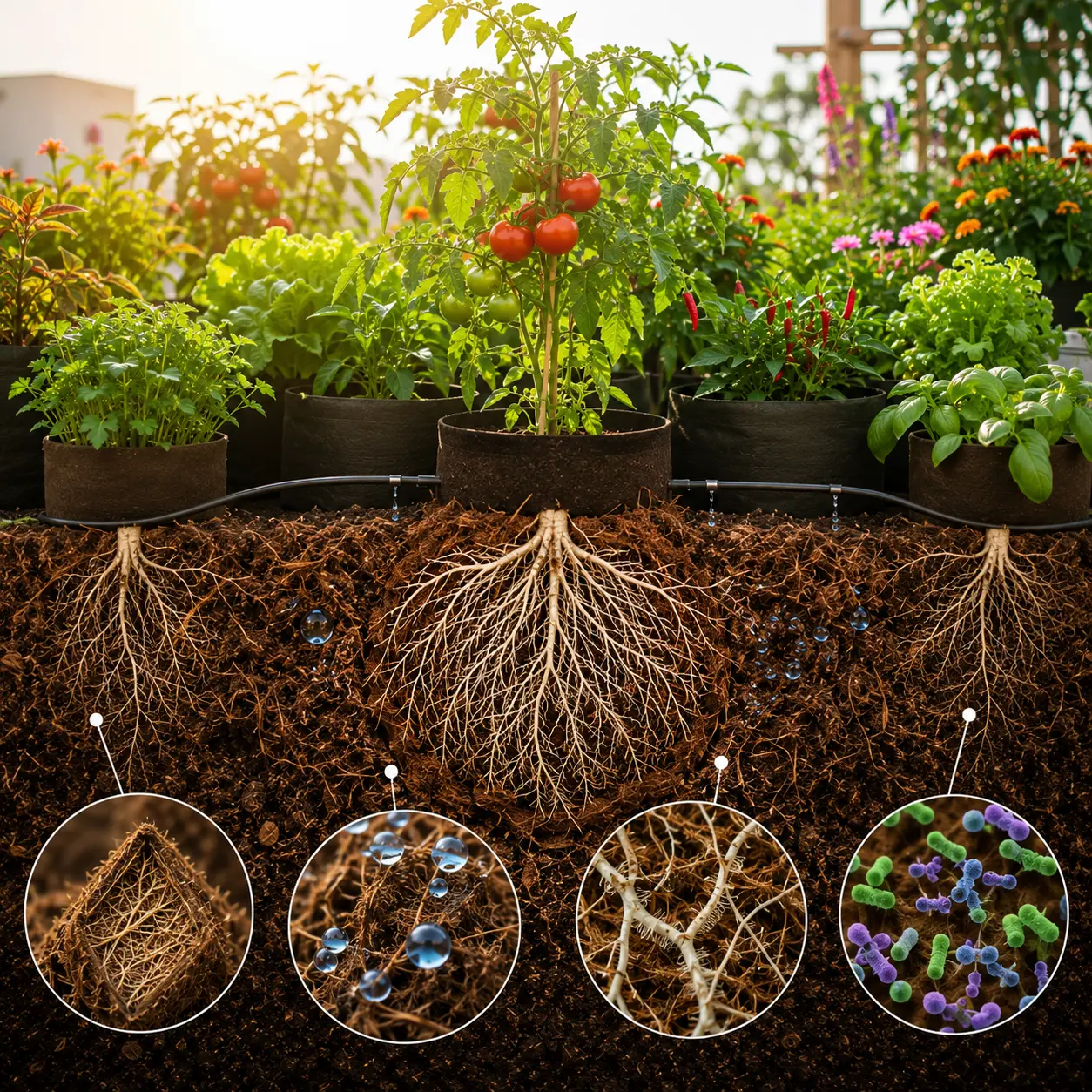
Coco Peat Growing Medium
Enhances moisture retention while maintaining excellent root-zone aeration.

Grow Bags for Plants
Improve drainage, root aeration, and vegetable production in limited spaces.

Plastic Pots for Plants
Ideal containers for seedlings, ornamentals, herbs, and balcony gardens.
India’s Seasons and This Plant
| Season (months) | What the plant is doing |
|---|---|
| Pre-monsoon (Mar–May) | Dormant in most regions; seeds can be sown under irrigation in South India from late February |
| Monsoon (Jun–Sep) | Primary growing season; germination, rapid vegetative growth, branching, leaf production |
| Post-monsoon (Oct–Nov) | Flowering and early fruiting; peak medicinal value; primary harvest window |
| Winter (Dec–Feb) | Seed maturation, plant decline and die-back; seed collection; no new growth in most regions |
Flowering Season in Detail
Flower buds first appear as small, tight clusters at the tips of branches — typically in late September in most Indian states, slightly earlier in South India and the Northeast, where warmth and humidity persist longer into the post-monsoon period.
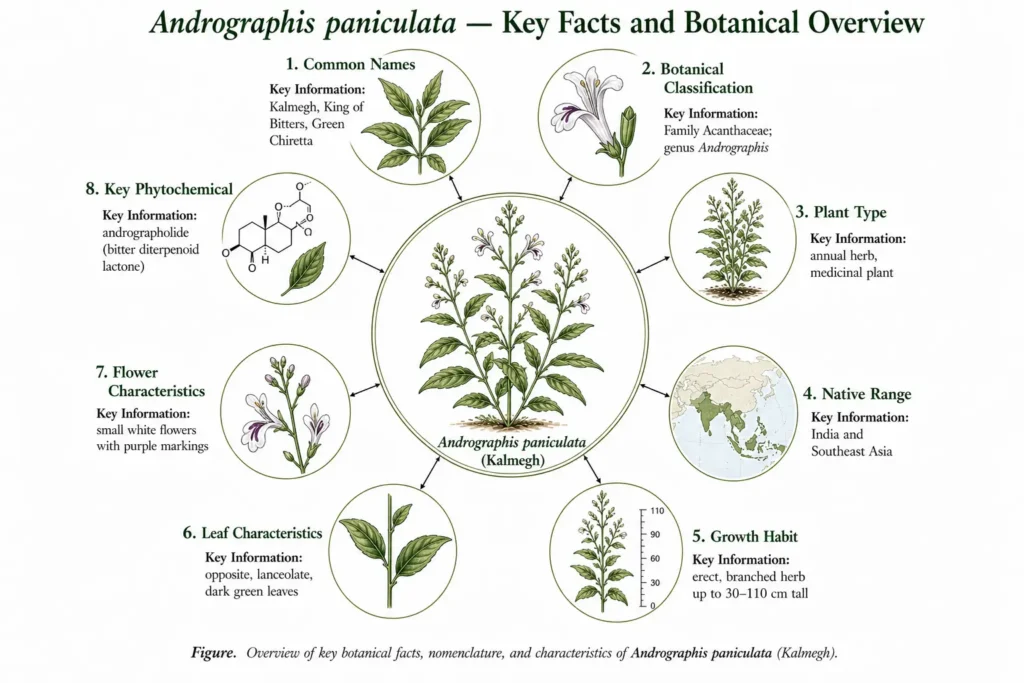
Peak flowering occurs through October, with most plants carrying open flowers and developing seed capsules simultaneously by mid-October. The flowers are small — white with purple veining on the lower lip — and individually modest, but a well-branched plant carries dozens of flower clusters simultaneously and has a quiet, delicate appearance during peak bloom.
Each flower lasts one to two days. The flowering period as a whole extends for three to six weeks per plant, with new buds continuing to open as earlier ones set seed. In warmer southern and coastal regions, flowering can extend into early December.
Flowering is triggered primarily by shortening day length — kalmegh is a short-day plant, meaning the transition from the long days of the monsoon season to the shorter days of post-monsoon triggers the shift from vegetative to reproductive growth. This is why transplanting kalmegh indoors under artificial long-day lighting can delay flowering and extend the vegetative harvest period — a technique used in some commercial production but rarely relevant for home growers.
Regional variation is moderate: Tamil Nadu and Kerala typically see flowering begin two to three weeks earlier than North Indian states, reflecting the earlier onset of post-monsoon conditions in the south.
Fruiting Season
Seed capsules begin forming immediately after pollination, typically from mid-October onward. Each capsule is narrow, oblong, and about 1.5–2 cm long, initially green and progressively darkening to brown as it matures.
Ripening is indicated by colour change from green to yellow-brown, followed by a slight drying and stiffening of the capsule wall. Fully ripe capsules split explosively along two seams when disturbed or on a warm, dry afternoon — this is the plant’s primary seed dispersal mechanism.
The harvest window for seed collection is narrow. Capsules split and scatter seeds within hours of reaching maturity. Check plants daily from late October onward. Collecting capsules when they are yellow-brown but not yet splitting — or placing paper bags loosely over seed heads — prevents loss. Seed maturation continues progressively across the plant, so multiple passes over two to three weeks are often necessary for complete collection.
If the harvest window is missed, seeds scatter into surrounding soil and may produce a volunteer crop the following monsoon — a practical benefit in garden beds even when deliberate collection fails.
Best Time to Plant
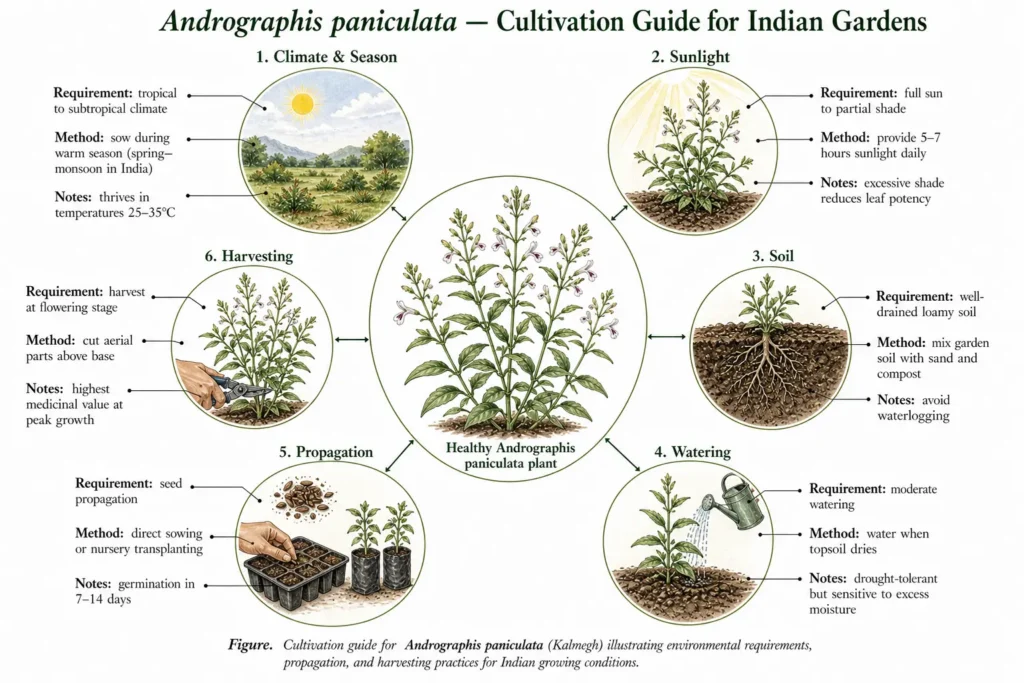
The primary planting window is June, at or just after monsoon onset across most Indian states. This uses natural rainfall for establishment, aligns vegetative growth with the warmest and most humid period, and delivers plants to the post-monsoon flowering and harvest window at peak readiness.
Why this window works: warm soil temperatures (typically 25–32°C) promote rapid germination and establishment. The consistent moisture of the early monsoon removes the need for careful irrigation management during the vulnerable seedling stage.
The secondary planting window is February to March in South India and coastal states. This pre-monsoon sowing under light irrigation produces plants that flower in June to August — an earlier crop cycle used in Tamil Nadu and Kerala for commercial production. In North India, this window is less reliable due to late winter cold affecting early seedling growth.
Container versus ground timing is the same — monsoon onset is the correct window regardless of growing method.
Month-by-Month Calendar
| Month | Season | What to Do |
|---|---|---|
| January | Winter | Seeds maturing and scattering; collect and store remaining seeds; plant completing life cycle |
| February | Late winter | Store seeds in cool, dry conditions; prepare beds for early sowing in South India |
| March | Pre-monsoon | Sow under irrigation in South India and coastal states; no action needed in North India |
| April | Pre-monsoon | Monitor early South India sowings; plants in early vegetative growth in south |
| May | Pre-monsoon | Plants approaching harvest in South India early cycle; prepare seed stock and beds elsewhere |
| June | Monsoon onset | Primary sowing window across all Indian regions; sow at first significant rain |
| July | Monsoon | Germination and early establishment; thin seedlings to correct spacing if direct-sown |
| August | Monsoon | Rapid vegetative growth; plants branching actively; ideal time for first leaf harvest if needed |
| September | Late monsoon / post-monsoon | Watch for first flower buds, especially in South India; primary pre-flowering harvest window |
| October | Post-monsoon | Peak flowering across most regions; primary medicinal harvest window; begin monitoring seed capsules |
| November | Post-monsoon | Seed capsules maturing; collect seeds regularly as capsules begin turning brown |
| December | Early winter | Plant declining after seed set; final seed collection; clear spent plants from beds |
What Can Go Wrong Seasonally?
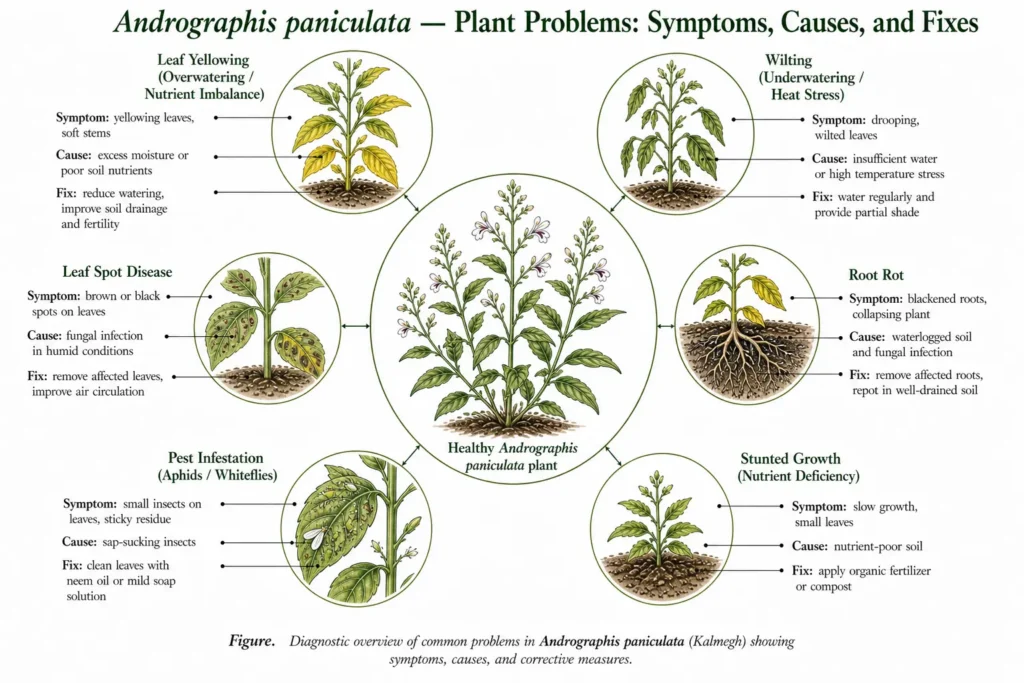
Sowing too late in the monsoon: Plants sown after August in most North Indian states do not complete sufficient vegetative growth before day length shortens and triggers early flowering. These plants flower at 20–30 cm rather than 60–90 cm, producing a much smaller harvest. Sow in June to July — do not delay past early August.
Missing the seed harvest window: The most common seasonal frustration with kalmegh is arriving at the plant after capsules have already split and finding empty husks. Begin daily monitoring from the last week of October. This timing mistake is easily avoided once you know the capsule splits without warning.
Monsoon waterlogging of container plants: Container-grown kalmegh on balconies during a heavy monsoon can sit in saturated soil for extended periods if the pot drainage is impaired. Yellowing and wilting in August, despite rain, is almost always due to waterlogging. Ensure containers drain freely and do not sit in accumulated water.
Post-Harvest Care
After the primary harvest — whether a full cut-back or progressive leaf harvest — plants that are cut above the lowest branching nodes will attempt to regrow and flower again in South India and coastal regions where temperatures remain warm. In North India, post-harvest regrowth is limited by the onset of cold and short days in November and is generally not worth managing.
Allow plants harvested for seed to complete their cycle undisturbed. Clear spent plant material from beds after seed collection and incorporate it as green mulch or compost — the dried stems and leaves break down readily.
Kalmegh follows India’s monsoon calendar more faithfully than almost any other medicinal herb. Work with the rhythm — sow at the first rain, harvest before the flowers open fully, collect seeds before the capsules crack — and the plant rarely disappoints.