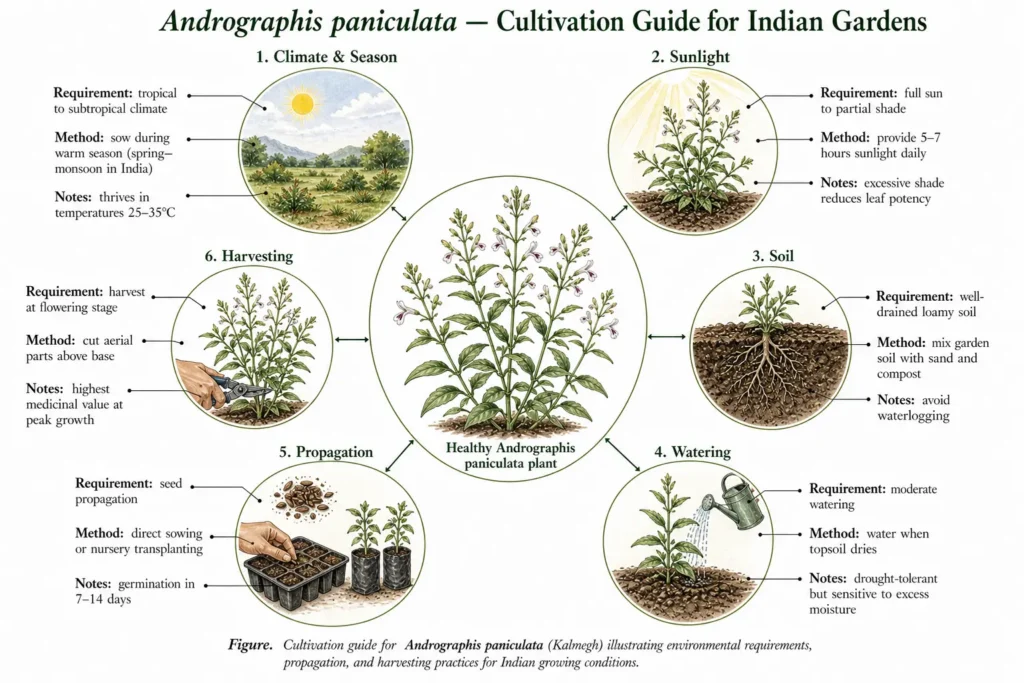
Kalmegh Plant Problems: Symptoms, Causes, and Fixes

Kalmegh Plant Problems: Symptoms, Causes, and Fixes
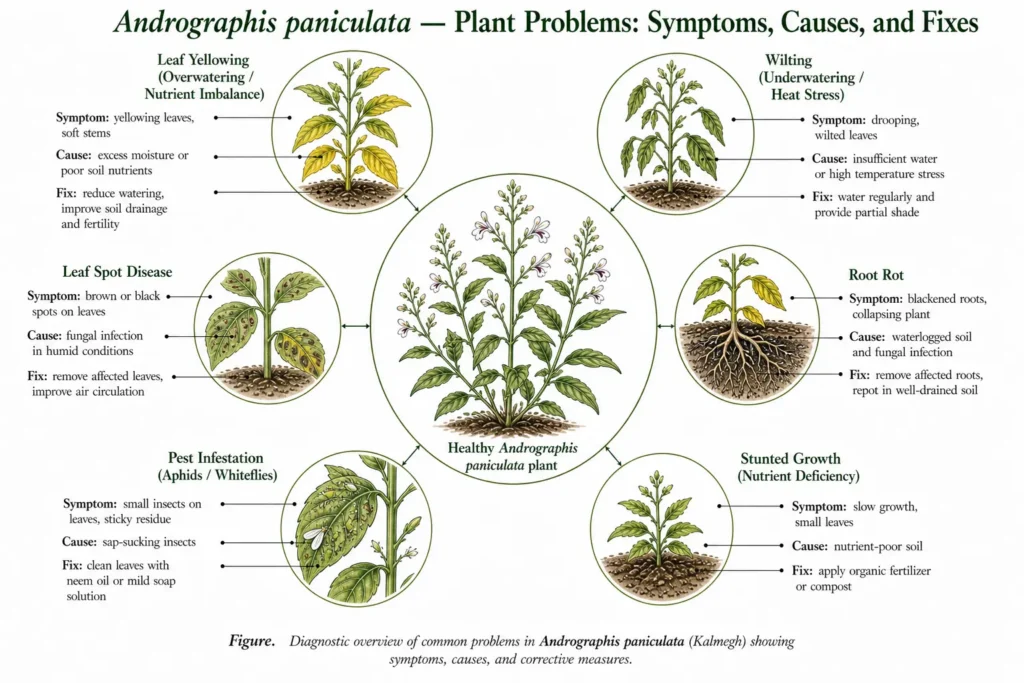
Quick Answer: Kalmegh is one of the more resilient medicinal herbs in the Indian home garden, but it has a predictable set of vulnerabilities: damping off in seedlings, fungal leaf spot during the monsoon, and aphid pressure in post-monsoon conditions. Almost every serious problem traces back to excess moisture or poor airflow. Catch issues at first appearance and recovery is straightforward.
See also: Kalmegh plant profile, how to grow it, its flowering season, its benefits, and its varieties.
Walk through a field of kalmegh in October, and the plants are dense, branching, and almost entirely pest-free — this is a herb that has evolved alongside India’s monsoon climate and handles it well. Problems emerge most often at the edges: the seedling stage, the peak of monsoon humidity, and the transition into post-monsoon. Know that most issues are preventable before they begin.
Recommended Products
Disclosure: As an Amazon Associate, PlantsInfo may earn from qualifying purchases.
🌱 Growing Essentials
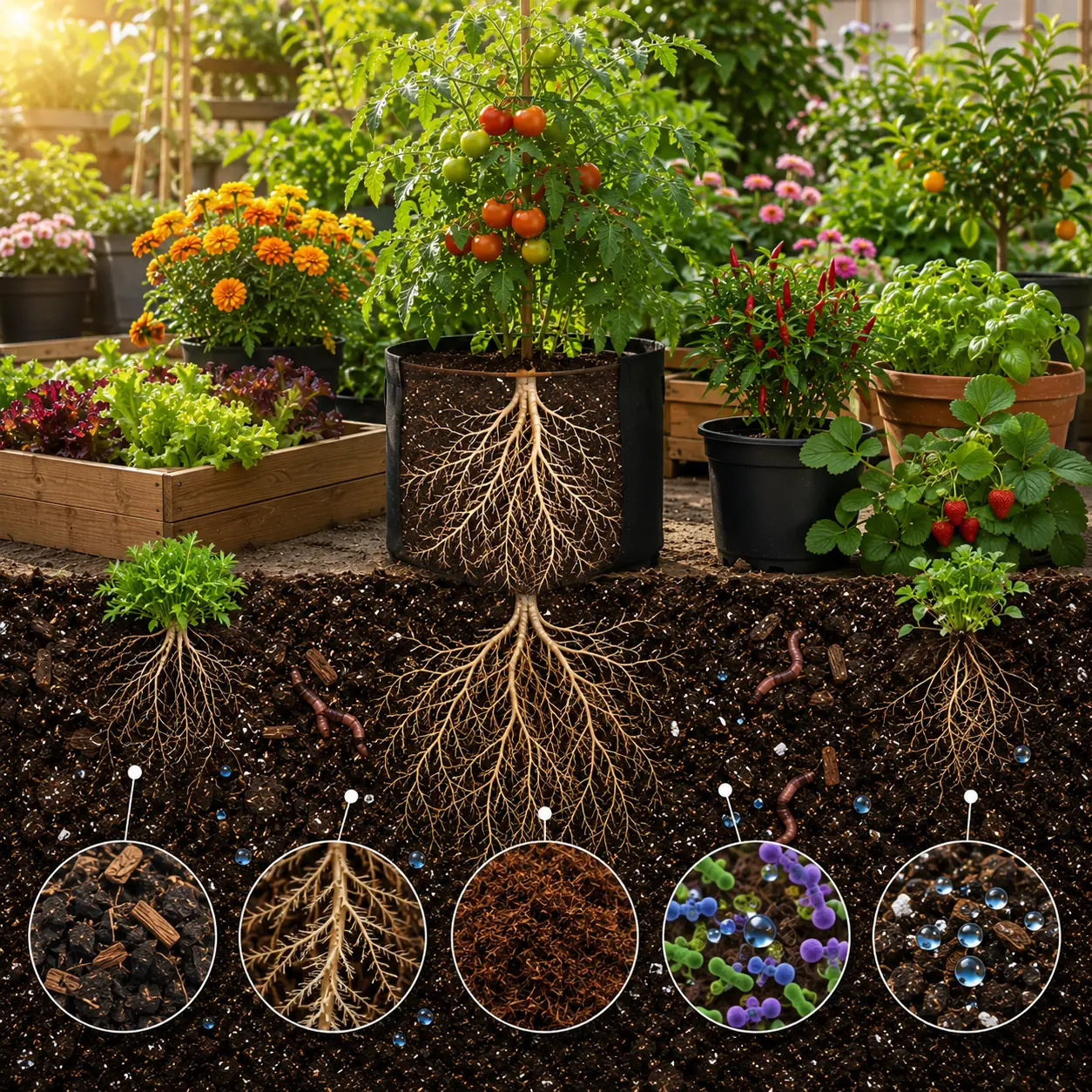
The following products can help with container gardening, potting, root development, soil management, and healthy plant growth.
Organic Potting Soil Mix
Provides nutrients, structure, and healthy growing conditions for container plants.
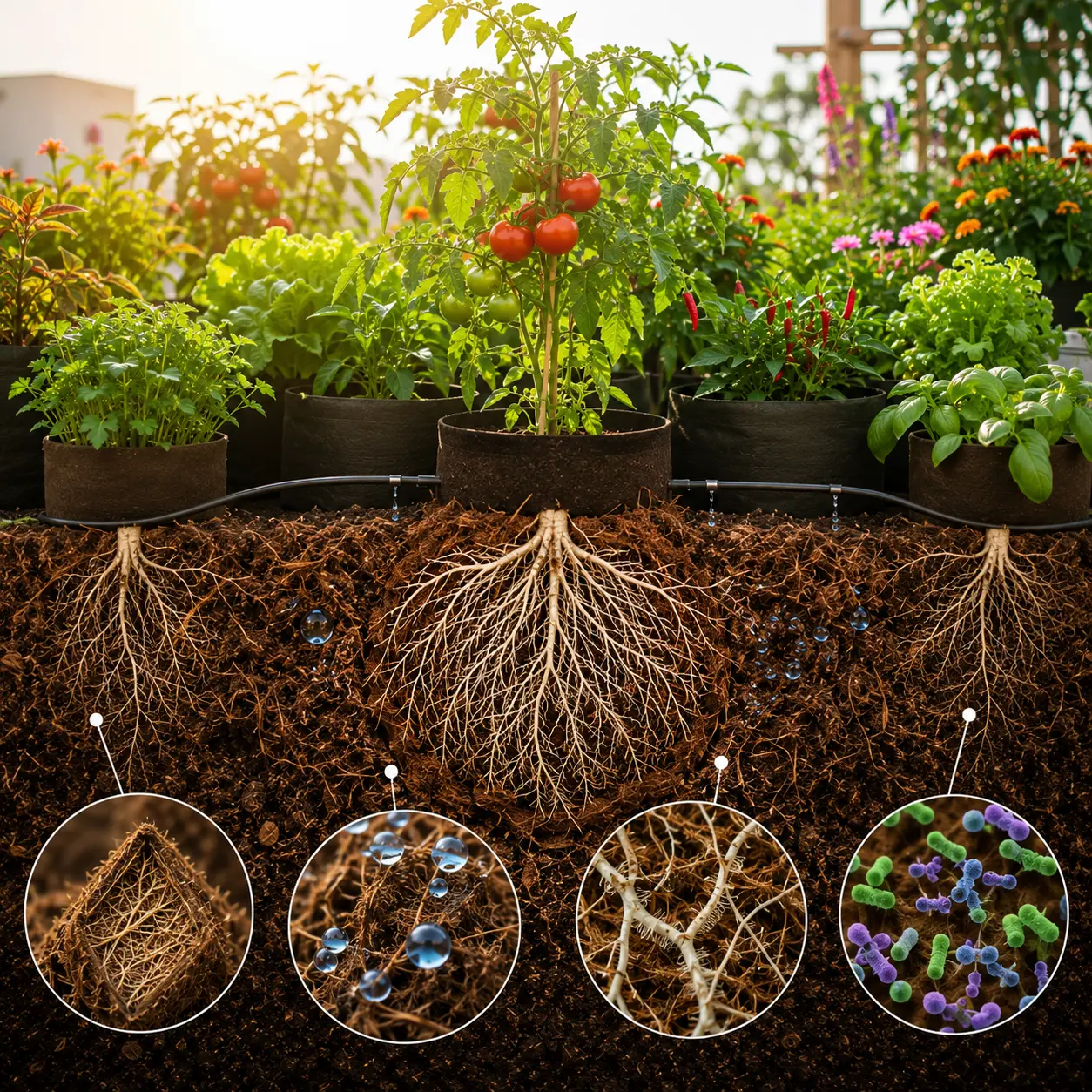
Coco Peat Growing Medium
Enhances moisture retention while maintaining excellent root-zone aeration.

Grow Bags for Plants
Improve drainage, root aeration, and vegetable production in limited spaces.

Plastic Pots for Plants
Ideal containers for seedlings, ornamentals, herbs, and balcony gardens.
Quick Diagnosis
| Symptom | Most Likely Cause | First Action |
|---|---|---|
| Seedlings collapsing at soil level | Damping off (fungal) | Improve drainage; reduce watering immediately |
| Dark water-soaked spots on leaves | Bacterial leaf blight | Remove affected leaves; stop overhead watering |
| Brown dry spots with yellow halo | Fungal leaf spot | Remove affected leaves; apply copper fungicide |
| Stunted, yellowed young growth | Aphid infestation | Check undersides of leaves; apply neem spray |
| Sticky residue on stems and leaves | Aphids or scale insects | Wipe with neem oil solution |
| Wilting despite moist soil | Root rot or waterlogging | Check roots; improve drainage immediately |
| Pale, washed-out leaf colour | Excess direct sun or nitrogen deficiency | Move to partial shade; check soil fertility |
| Leaves with white powdery coating | Powdery mildew (rare, dry season) | Improve airflow; apply diluted neem oil |
Diseases
Kalmegh’s disease resistance is genuine — well-grown plants in appropriate conditions rarely develop significant disease problems. When disease does appear, the cause is almost always environmental: too much moisture, too little airflow, or stressed plants weakened by waterlogging or nutrient imbalance.
Damping Off (Pythium and Rhizoctonia species)
Damping off is the most serious disease threat to kalmegh, and it strikes only at the seedling stage — typically in the first two to three weeks after germination. Affected seedlings develop a pinched, water-soaked constriction at the soil line and collapse suddenly, often overnight.
The fungal pathogens responsible are soil-borne and activate when soil stays consistently wet and warm — conditions that are easy to create accidentally when gardeners water seedlings too frequently. Once damping off appears in a seedbed, it spreads laterally and can take out entire rows. There is no treatment for affected seedlings — remove them immediately.
For the remaining seedlings, reduce watering sharply, improve drainage, and allow the soil surface to dry slightly between waterings. Dusting the soil surface with dry wood ash or fine sand after sowing reduces surface moisture and suppresses damping off pathogens significantly. This disease is almost entirely preventable with correct watering from the start.
Cercospora Leaf Spot (Cercospora andrographidis)
Cercospora leaf spot is the most commonly encountered foliar disease in kalmegh cultivation across India, appearing as circular to irregular brown spots with a yellow halo on older leaves, typically during the peak monsoon months of July to September. In mild cases, it is a cosmetic problem — leaves are disfigured, but the plant continues growing.
In severe cases, defoliation of lower leaves occurs, and yield is reduced. The disease spreads through water splash and humid air. Remove affected leaves at first appearance, improve spacing between plants to increase airflow, and avoid overhead irrigation.
A copper-based fungicide applied every ten to fourteen days controls the spread effectively. Plants in crowded or poorly drained positions are consistently more affected than those with adequate spacing and airflow.
Bacterial Leaf Blight (Pseudomonas species)
Bacterial blight presents as dark, water-soaked patches that spread rapidly — sometimes consuming a large portion of a leaf within two to three days. Unlike Cercospora spots, which have defined borders, bacterial blight patches are irregular and often appear greasy or translucent.
There is no chemical cure once the infection is established in leaf tissue. Remove all affected leaves immediately using sterilised tools, isolate the plant from others, and eliminate overhead watering.
Bacterial blight typically enters through physical damage — insect feeding wounds, mechanical damage from handling, or water splash carrying contaminated soil onto leaves. Prevention is straightforward: minimise leaf wetting, handle plants carefully, and control leaf-feeding insects promptly.
Powdery Mildew
Powdery mildew is uncommon on kalmegh in the monsoon season but can appear on plants growing in warm, dry conditions with poor air circulation — occasionally in post-monsoon conditions or on plants growing in sheltered spots. It appears as a white powdery coating on leaf surfaces, beginning on older leaves and spreading upward.
Unlike most fungal diseases, powdery mildew prefers lower humidity. A diluted neem oil spray applied twice a week is effective for mild cases. Improve airflow around plants. Powdery mildew on kalmegh is manageable and rarely severe.
Pest Problems
Aphids are the most frequently encountered kalmegh pest in Indian gardens, typically appearing from September onward as the post-monsoon season reduces natural rainfall that previously washed colonies from plants. They cluster on new growth, stem tips, and flower buds — soft, small, green or pale yellow insects that are easy to miss individually but obvious in a colony.
They cause yellowing, curling of new growth, and a sticky residue from honeydew excretion that leads to secondary sooty mould. For small infestations, a strong jet of water directed at colonies knocks them off effectively and is sufficient when repeated every two to three days.
For established infestations, neem oil spray (5 ml neem oil + 2 ml liquid soap per litre of water) applied every five to seven days for three weeks manages populations well. Since kalmegh is a medicinal herb often used internally, avoid synthetic insecticide use on plants intended for consumption — neem oil is the appropriate intervention.
Whitefly infestations are less common than aphids on kalmegh but occur in sheltered positions with poor airflow, particularly in garden plots or on balconies with reduced wind movement. Whiteflies are tiny white-winged insects that rise in a cloud when disturbed from the leaf undersides where they feed.
Damage is similar to aphid feeding — yellowing, sticky residue, sooty mould. Yellow sticky traps reduce adult populations effectively. Neem oil spray handles nymph stages. Whitefly is commonly mistaken for a disease by gardeners who see yellowing leaves without looking at the undersides, where the insects are present.
Caterpillars and Leaf Rollers
In some regions — particularly in Kerala and the Northeast — leaf-rolling caterpillars occasionally affect kalmegh, drawing leaf edges together with silk threads and feeding within. The damage is visible as rolled or folded leaves with feeding holes and frass inside. Hand-pick and destroy affected leaves.
Bacillus thuringiensis (Bt) spray is effective for caterpillar control on medicinal herbs where chemical pesticide use is undesirable. This pest is sporadic rather than consistent and rarely causes significant harm to established plants.
This information is for general guidance only. Always read product labels before applying any pesticide or fungicide. Follow state agriculture department guidelines for food crops. Keep children and pets away during and after application.
Environmental and Care Mistakes
Overwatering Seedlings. The most universal mistake with kalmegh is watering seedlings on the same schedule as moisture-loving vegetables. Kalmegh seeds germinate in warm, moist soil — but once the seed coat cracks and the root emerges, the seedling needs the soil surface to dry slightly between waterings.
Gardeners who keep the soil consistently wet through the first two weeks reliably trigger damping off. The correct approach: water when the soil surface appears dry, not on a fixed daily schedule.
Overcrowded Planting Kalmegh planted too closely — less than 25–30 cm apart — creates the humid, still microclimate that Cercospora leaf spot and bacterial blight require. Crowded plants also compete for light, producing taller, weaker growth with fewer branches and lower leaf yield. Thinning to correct spacing at the two-leaf stage, before plants establish a root tangle, is far more effective than thinning later.
Growing in Heavy Waterlogged Soil Planting kalmegh in the same dense soil used for water-demanding crops causes chronic root stress that manifests as slow growth, yellowing leaves, and susceptibility to every disease that opportunistic pathogens can exploit.
The plant may survive for weeks before the cumulative stress becomes visible, by which point root damage is significant. This is almost universally the situation when a gardener reports that their kalmegh “seemed fine for a month and then suddenly collapsed.” Amend the soil with coarse sand or grow in a raised bed or container with an appropriate mix.
Harvesting too late, leaving kalmegh unharvested until after full flowering, produces a dramatic reduction in leaf quality. The plant redirects energy to seed production after flowering, and leaves on a fully flowering plant are noticeably thinner, less bitter, and lower in active compounds than those harvested at the pre-flowering or early flowering stage.
This is not a disease or pest problem, but it is frequently misdiagnosed as a nutrient deficiency by first-time growers who see the leaves declining and assume something is wrong with the soil.
Prevention Protocol
At sowing time, dust the soil surface lightly with fine dry wood ash — this reduces the moisture at the immediate soil surface where damping-off pathogens operate, without affecting soil moisture at root depth.
Space plants at a minimum of 30 cm apart at thinning. If seedlings have already been planted closer together, remove alternates at the two-leaf stage rather than allowing overcrowding to develop. Airflow between plants prevents the vast majority of monsoon fungal disease.
For container plants on enclosed balconies, ensure pots are not standing in pooled water at any point during the monsoon. Empty drainage trays within thirty minutes of watering or rainfall reaching the pot.
Begin monitoring for aphids from the first week of September — weekly checks of stem tips and the undersides of new leaves catch colonies before they establish. Early detection is the difference between a single neem oil application and a three-week treatment course.
If growing kalmegh for internal medicinal use, do not apply any synthetic pesticide after the six-week stage. Use only neem-based organic treatments on plants intended for consumption, and observe a ten-day gap between any treatment and leaf harvest.
Frequently Asked Questions
Can I use kalmegh leaves for decoctions if I’ve treated the plant with neem oil?
Yes, with a waiting period. Allow at least ten days between the last neem oil application and harvesting leaves for consumption. Rinse harvested leaves thoroughly in clean water before use.
My kalmegh plants died suddenly in September — the leaves were green, but the stems collapsed. What happened?
This pattern — green leaves, sudden stem collapse — in September is almost always bacterial soft rot or advanced root rot following monsoon waterlogging. Check the stem at soil level: if it is dark, soft, and smells unpleasant, the cause is bacterial or fungal rot from prolonged soil saturation during the monsoon. Improve drainage before the next planting.
Is the bitterness decreasing in my kalmegh leaves a sign of disease?
Not usually. Decreasing bitterness in kalmegh leaves is most commonly a sign that the plant has begun or completed flowering, which shifts its energy from producing andrographolide to producing seeds. It can also indicate high nitrogen fertilisation. Check whether the plant is flowering — if it is, harvest immediately for the best remaining quality.
Kalmegh rarely poses serious problems for the attentive gardener. The two most important habits are not overwatering at the seedling stage and harvesting before the plant has finished flowering. Everything else in this guide is secondary to those two actions.