Kalmegh Benefits: What Ayurveda and Modern Research Say
Kalmegh Benefits: What Ayurveda and Modern Research Say
Quick Answer: Kalmegh is one of Ayurveda’s most documented bitter herbs, used primarily for liver support, fever management, and immune function. Modern research has focused on andrographolide — its primary active compound — with findings that broadly support traditional use, particularly for upper respiratory infections and liver protection. It is a potent herb and should be used with appropriate caution, not casually.
See also: Kalmegh plant profile, how to grow it, common problems, its flowering season, and its varieties.
Break open a kalmegh leaf and touch the broken edge to your tongue. The bitterness hits immediately and lingers — one of the most intense bitter tastes in the Indian medicinal herb repertoire. That bitterness is not incidental; it is the compound andrographolide, and it is the reason this plant has been in continuous use in Indian, Thai, and Chinese medicine for centuries while remaining the subject of active pharmacological research today.
Recommended Products
Disclosure: As an Amazon Associate, PlantsInfo may earn from qualifying purchases.
🌱 Growing Essentials
The following products can help with container gardening, potting, root development, soil management, and healthy plant growth.
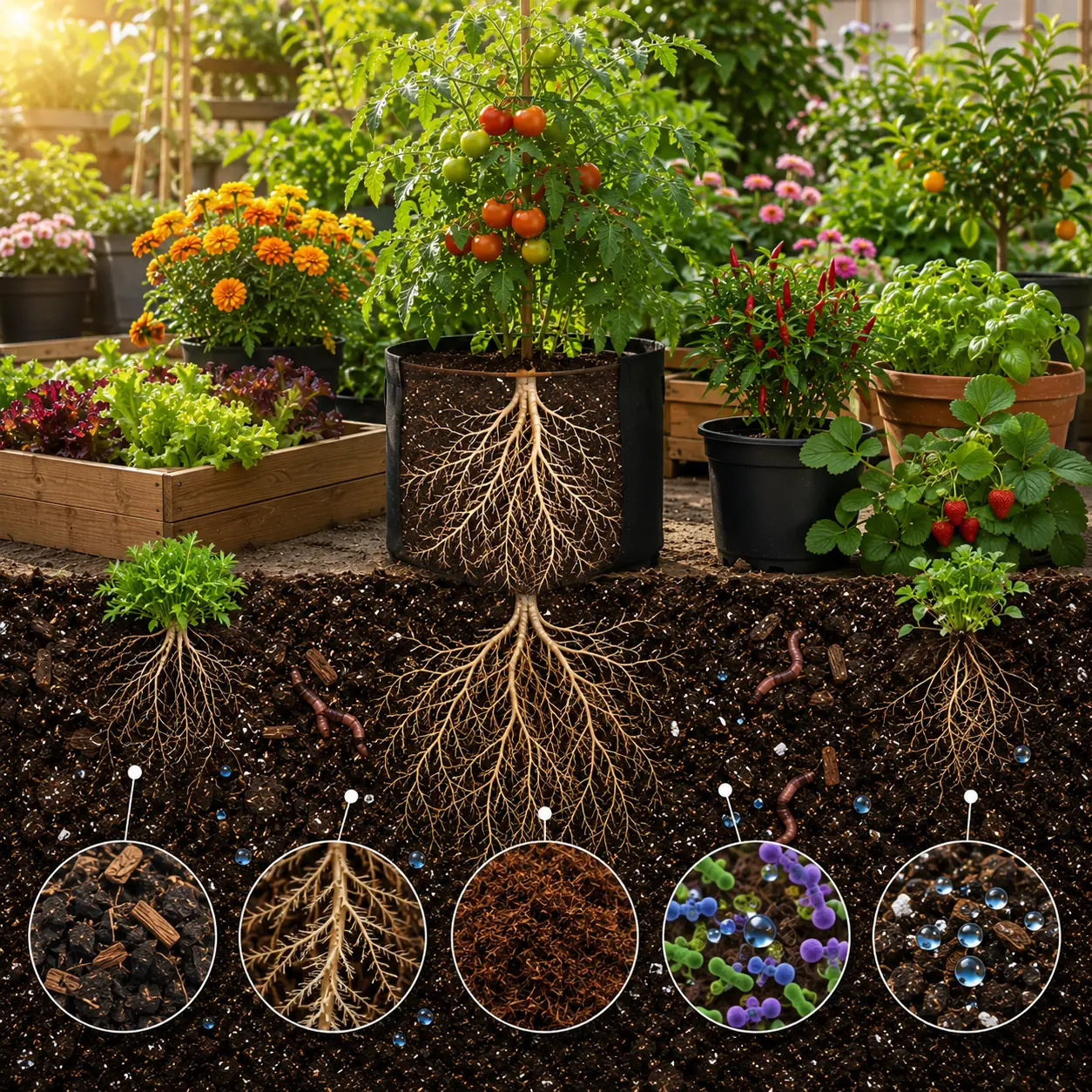
Organic Potting Soil Mix
Provides nutrients, structure, and healthy growing conditions for container plants.
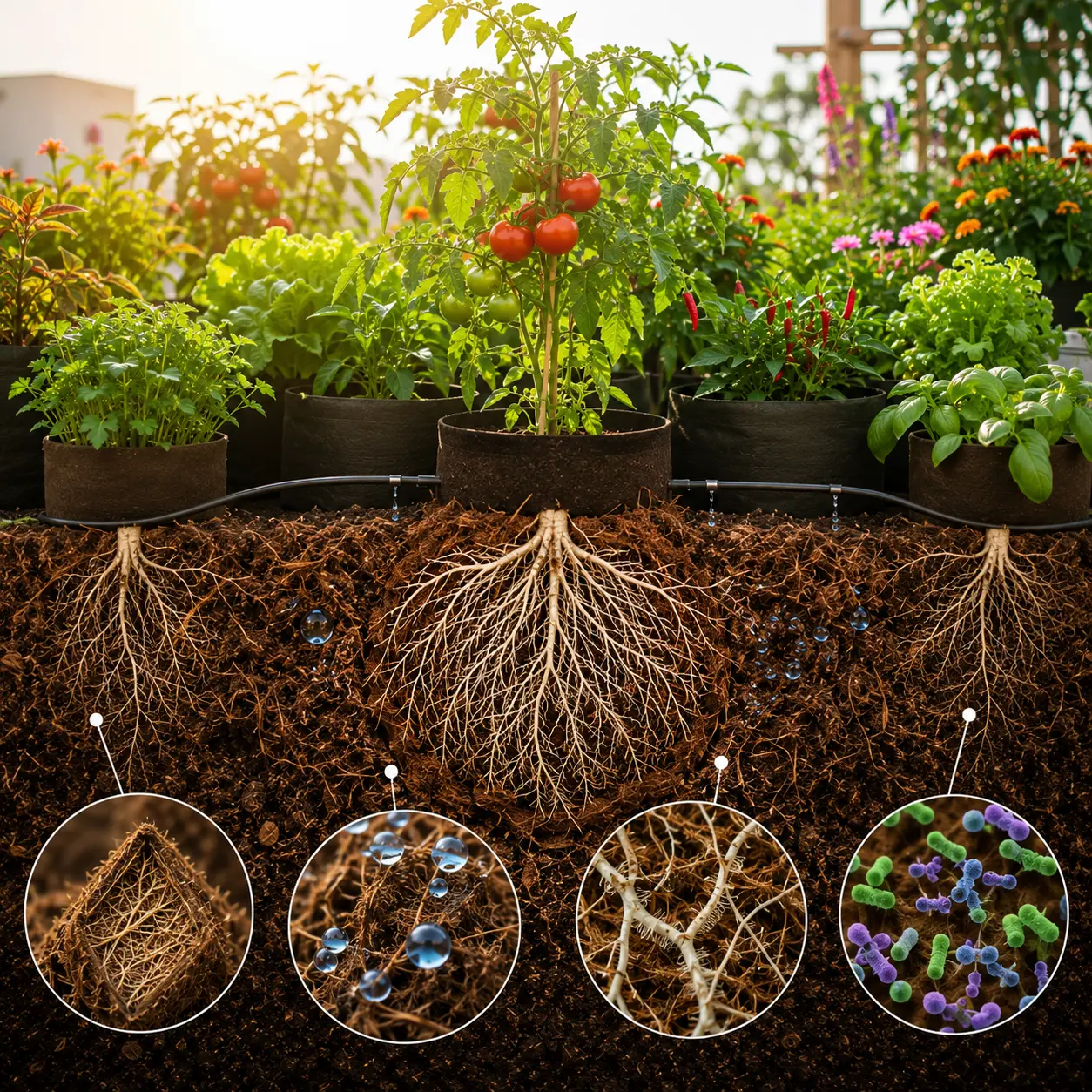
Coco Peat Growing Medium
Enhances moisture retention while maintaining excellent root-zone aeration.

Grow Bags for Plants
Improve drainage, root aeration, and vegetable production in limited spaces.

Plastic Pots for Plants
Ideal containers for seedlings, ornamentals, herbs, and balcony gardens.
Ayurvedic and Traditional Medicinal Uses
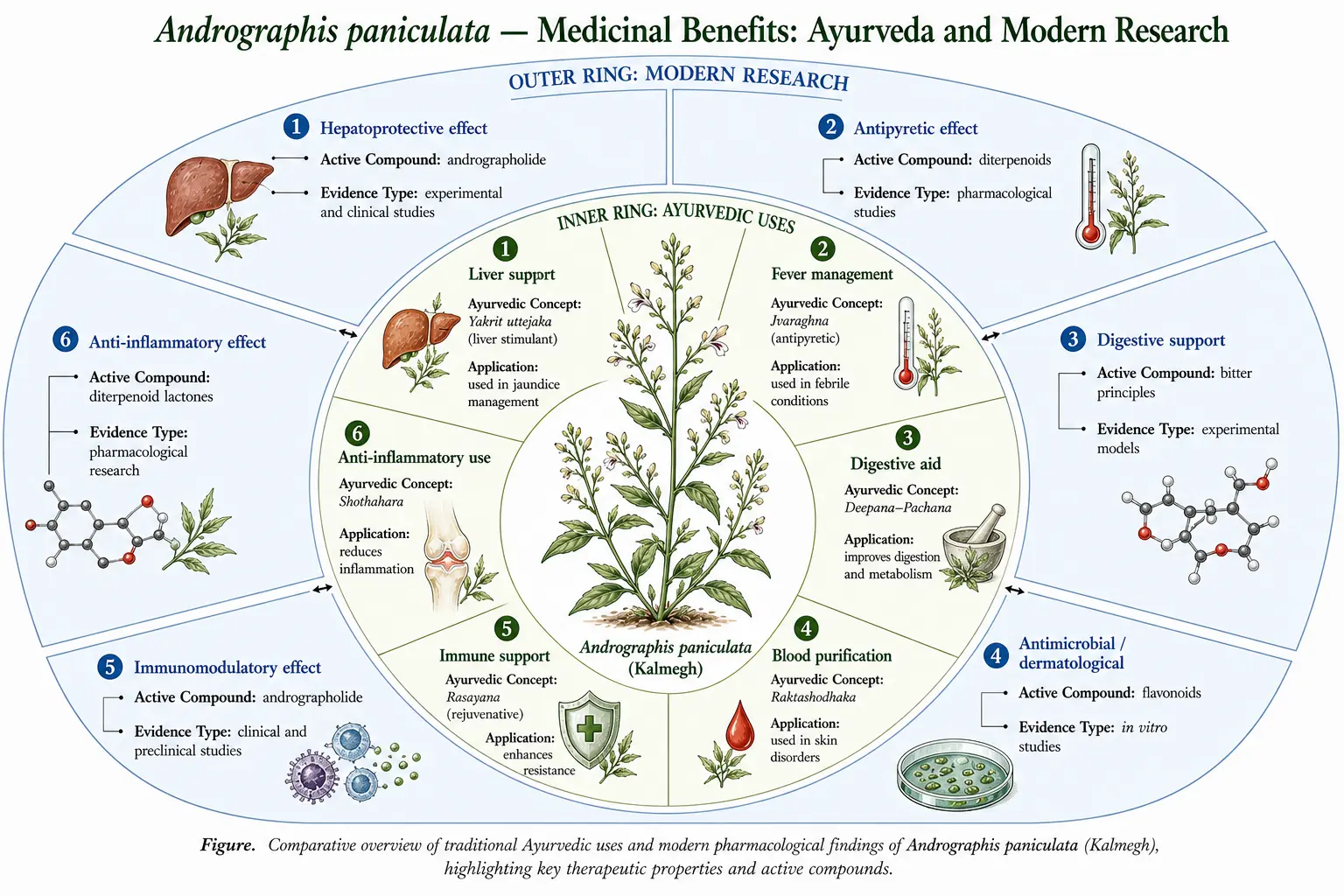
Kalmegh holds a significant place in Ayurvedic medicine under the name Bhunimba, meaning “earth neem” — a reference to its bitter taste paralleling neem’s therapeutic profile at ground level. Classical Ayurvedic texts describe it as tikta (bitter) and katu (pungent) in taste, with cooling, light, and dry qualities. It is classified as a herb that pacifies pitta and kapha doshas.
Traditional Ayurvedic applications centre on the liver and digestive system. Kalmegh is described in texts including the Charaka Samhita as useful for liver disorders, jaundice, and conditions associated with accumulated toxins — a category broadly corresponding to what modern medicine identifies as hepatoprotective function. It is a component of the classical Ayurvedic formulation Kalmeghāsava and appears in numerous compound preparations for fever and digestive complaints.
Traditional medicine across India uses kalmegh leaf decoctions for intermittent fevers, including malarial fevers, a use documented across Bengali folk medicine, Siddha practice in Tamil Nadu, and tribal medicinal traditions in Odisha and Jharkhand. The consistent cross-regional convergence on this application is notable — independent traditional systems reaching the same conclusion suggests a genuine pharmacological basis rather than cultural borrowing alone.
In Siddha medicine, kalmegh — known as Nilavembu — is one of the primary herbs in the formulation Nilavembu Kudineer, a widely used fever decoction that gained significant institutional attention during dengue and chikungunya outbreaks in Tamil Nadu, where state health authorities distributed it alongside conventional treatment.
This information is based on traditional Ayurvedic knowledge and published research. It is not a substitute for medical advice. Consult a qualified healthcare professional before using any plant-based remedy for health conditions.
What Modern Research Shows
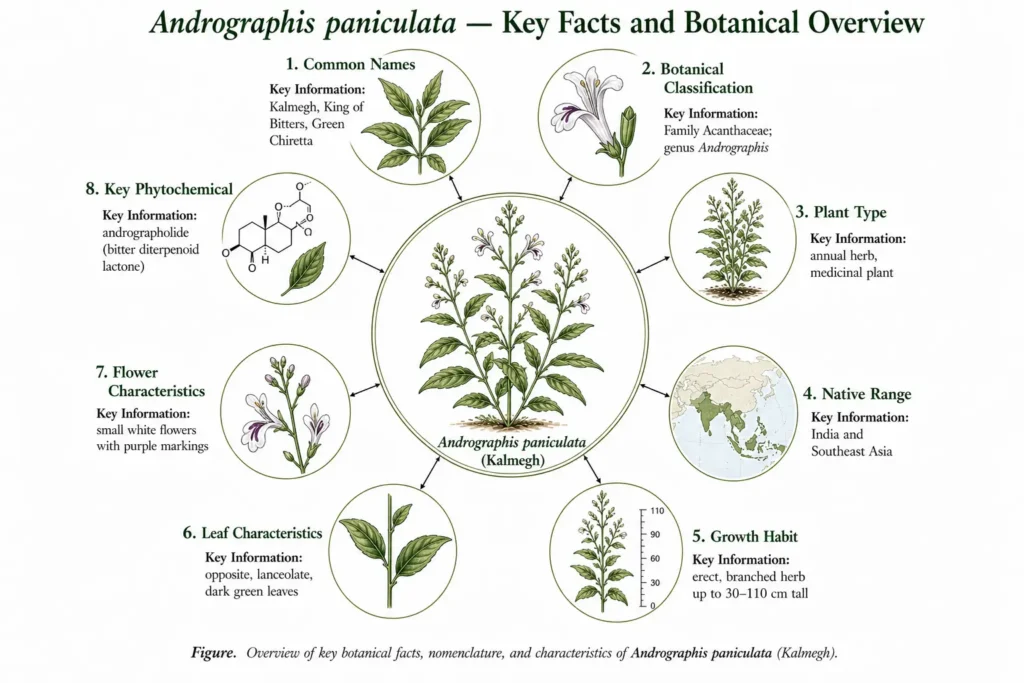
Research on kalmegh has focused most intensively on andrographolide, the primary diterpenoid lactone responsible for its bitterness and most of its documented biological activity. Secondary compounds, including neoandrographolide and 14-deoxyandrographolide, have also received research attention.
Hepatoprotective activity is among the most consistently demonstrated properties in laboratory and clinical research. Studies suggest that andrographolide supports liver cell function and may reduce markers of liver stress, broadly validating the traditional use for jaundice and liver conditions.
Immunomodulatory effects have attracted significant research interest. Studies suggest kalmegh extracts can modulate both innate and adaptive immune responses, with particular attention to anti-inflammatory pathways. This provides a mechanistic basis for its traditional use in fever and infection.
For upper respiratory infections — the common cold, throat infections, and influenza-like illness — clinical research has produced some of the more robust human trial data for any Indian medicinal herb. Research suggests standardised kalmegh preparations reduce symptom severity and duration of uncomplicated upper respiratory infections when taken at early onset. The evidence is strong enough that kalmegh extract has been evaluated in several countries as a complementary treatment for respiratory infections.
Antimicrobial and antiparasitic properties have been demonstrated in laboratory settings against a range of pathogens, supporting the traditional use for intestinal infections and malaria, though clinical translation requires careful interpretation.
Ecological Role
Kalmegh is a plant of disturbed habitats — roadsides, field margins, forest edges, and secondary growth. It colonises quickly, fixes in place during the monsoon, and completes its life cycle before the dry season reduces available moisture.
Its small white-pink flowers, borne in loose panicles from September onward, attract small bees, hoverflies, and solitary wasps. It is not a major nectar source but contributes to late-season pollinator diversity in agricultural landscapes where many other herbs have been harvested.
As a fast-growing annual, it contributes organic matter to soil when it dies back — a modest but real contribution in degraded agricultural margins where it is often found. Its presence in forest edges alongside taller vegetation suggests some tolerance for root competition, which partly explains its resilience in home garden conditions.
Practical Value for Home Gardeners
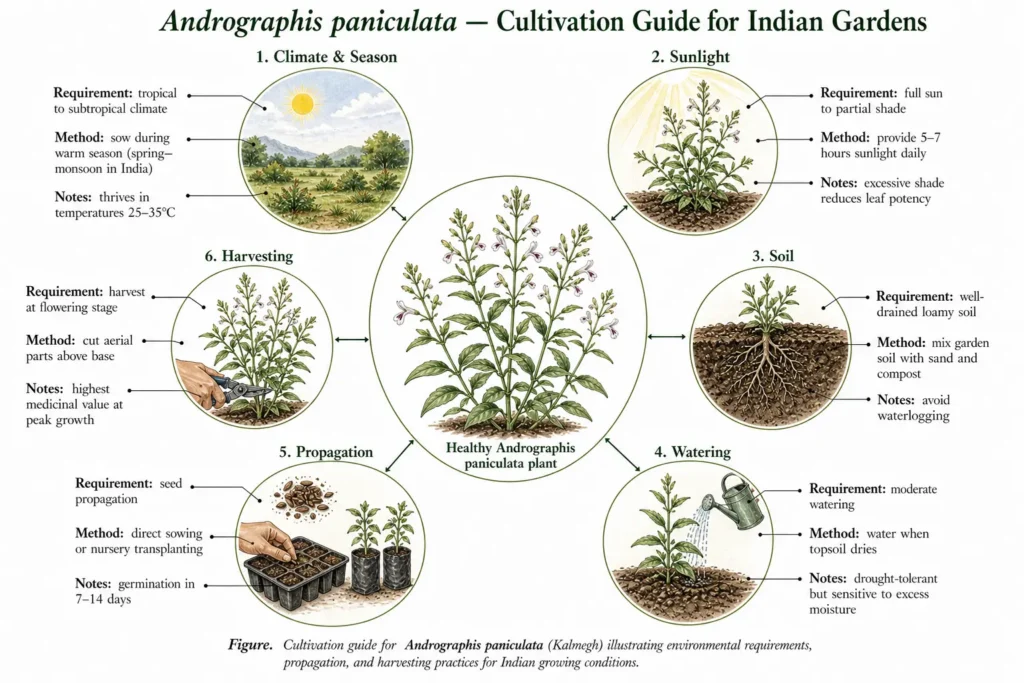
Kalmegh is one of the more genuinely useful medicinal herbs an Indian home gardener can grow, for the simple reason that its primary traditional applications — fever support, liver support, minor infections — are common household health concerns.
A few leaves added to a simple decoction with ginger and tulsi, used at the onset of a cold or fever, is consistent with both traditional practice and the direction of current research. The plant is seasonal but prolific, and a single monsoon planting produces enough material to dry and store through the rest of the year.
It also functions well as a companion plant near vegetables — neem cake around the root zone, combined with the plant’s own volatile compounds, may contribute to a reduced pest environment in the kitchen garden, though this is based on traditional practice rather than controlled research.
How to Prepare or Use at Home
Basic leaf decoction: Boil five to seven fresh leaves or the equivalent in dried material in 300 ml of water for ten minutes. Strain and drink while warm, typically once or twice daily at the onset of fever or respiratory symptoms. The taste is extremely bitter — adding a small piece of jaggery after straining is traditional and does not significantly affect the preparation.
Dried powder: Dry leaves in shade, powder finely, and store in an airtight container. Traditional texts and current practice suggest doses in the range of 1–3 grams of dried powder taken with warm water or honey, once to twice daily for short periods. Do not use continuously for more than two to three weeks without a break.
Juice: Fresh leaf juice extracted by grinding and straining is used in traditional practice for liver complaints. This preparation is more potent than a decoction and should be used in small quantities — traditional practice records doses in the range of 10–15 ml of fresh juice diluted in water.
What to Avoid
Kalmegh is contraindicated during pregnancy — traditional texts consistently flag it as an emmenagogue and uterine stimulant, and this caution is supported by modern research. It should not be used during pregnancy under any circumstances.
People with autoimmune conditions should consult a physician before use, as immunomodulatory herbs can interact unpredictably with conditions where immune regulation is already compromised.
Kalmegh may potentiate the effects of antihypertensive medications — those on blood pressure medication should not use it regularly without medical supervision. Similarly, its effect on blood glucose levels means people on diabetes medication should exercise caution with regular use.
Extended continuous use — beyond three to four weeks — is not recommended in traditional practice or in the research literature. Kalmegh is a therapeutic herb intended for short, specific use, not a daily tonic.
Key Takeaways
- Kalmegh’s primary active compound, andrographolide, has some of the strongest research support of any Indian medicinal herb for upper respiratory infections and liver protection.
- Traditional applications across Ayurveda, Siddha, and tribal medicine converge remarkably consistently — independent systems using it for the same indications strengthen the case for genuine efficacy.
- It is a potent herb, not a mild daily tonic — short courses for specific conditions, not continuous supplementation.
- Contraindicated in pregnancy; caution warranted with antihypertensive and antidiabetic medications.
- Home cultivation is practical and seasonal — a single monsoon planting provides enough dried material for a year of occasional household use.
Kalmegh earns its title as King of Bitters. Use it purposefully, respect its potency, and grow it for the seasons when it is genuinely needed.