
Aloe Vera Varieties: Which One Should You Grow in India?

Aloe Vera Varieties: Which One Should You Grow in India?
Quick Answer: Most Indians grow just one aloe without knowing its name — Aloe barbadensis Miller, the standard medicinal variety. But there are dozens of aloe species and cultivars available in Indian nurseries, and the differences in size, gel yield, cold tolerance, and ornamental value are significant enough to matter for a home gardener with limited space.
See also: Aloe Vera (Ghritkumari) Plant plant profile, how to grow it, common problems, its flowering season, and its benefits.
The plant labelled “aloe vera” at your local nursery is almost certainly the right one for your kitchen — but if you want something smaller for a windowsill, more striking for a balcony arrangement, or better suited to a cold North Indian winter, the choice deserves more thought than most nursery labels allow.
Recommended Products
Disclosure: As an Amazon Associate, PlantsInfo may earn from qualifying purchases.
🌱 Growing Essentials
The following products can help with container gardening, potting, root development, soil management, and healthy plant growth.
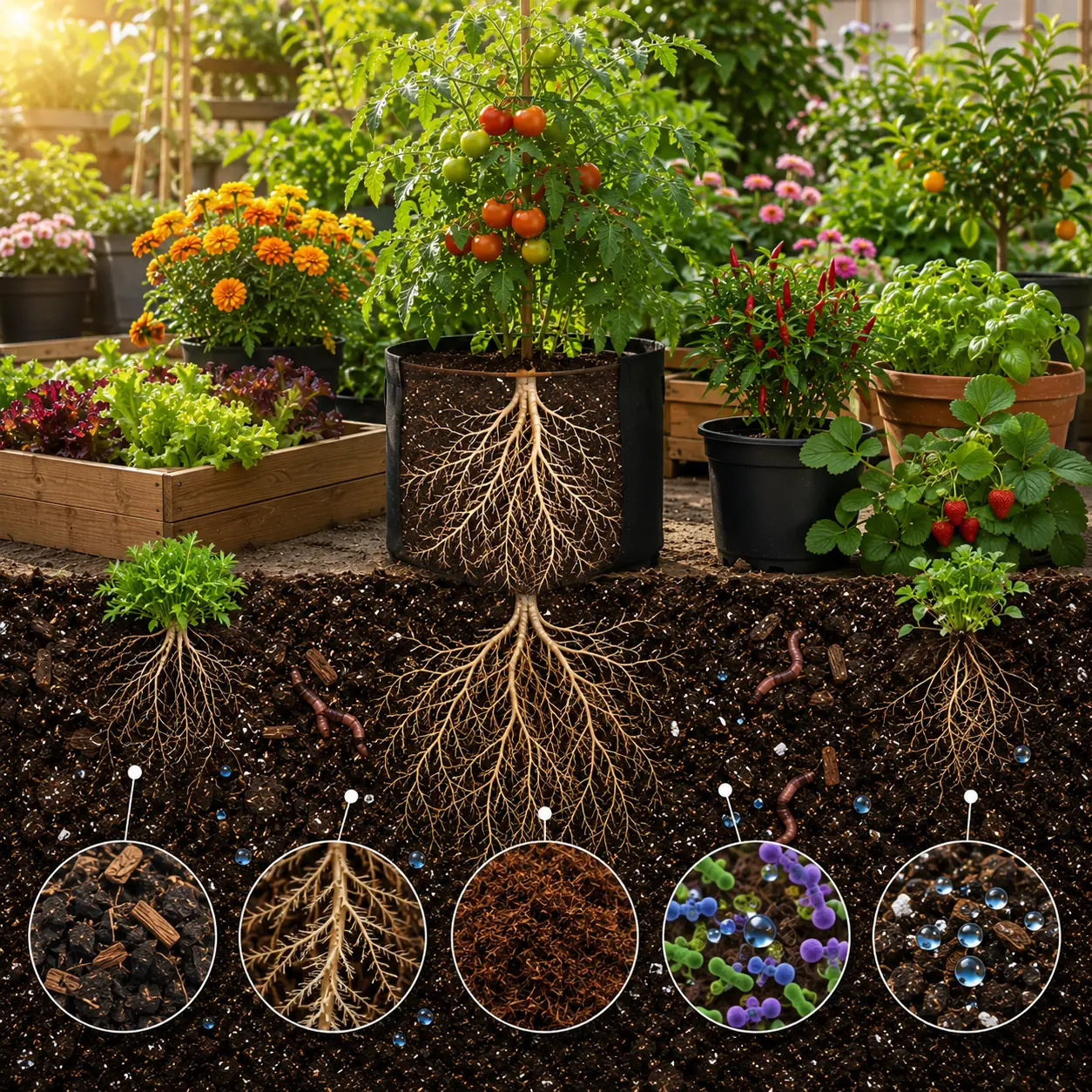
Organic Potting Soil Mix
Provides nutrients, structure, and healthy growing conditions for container plants.
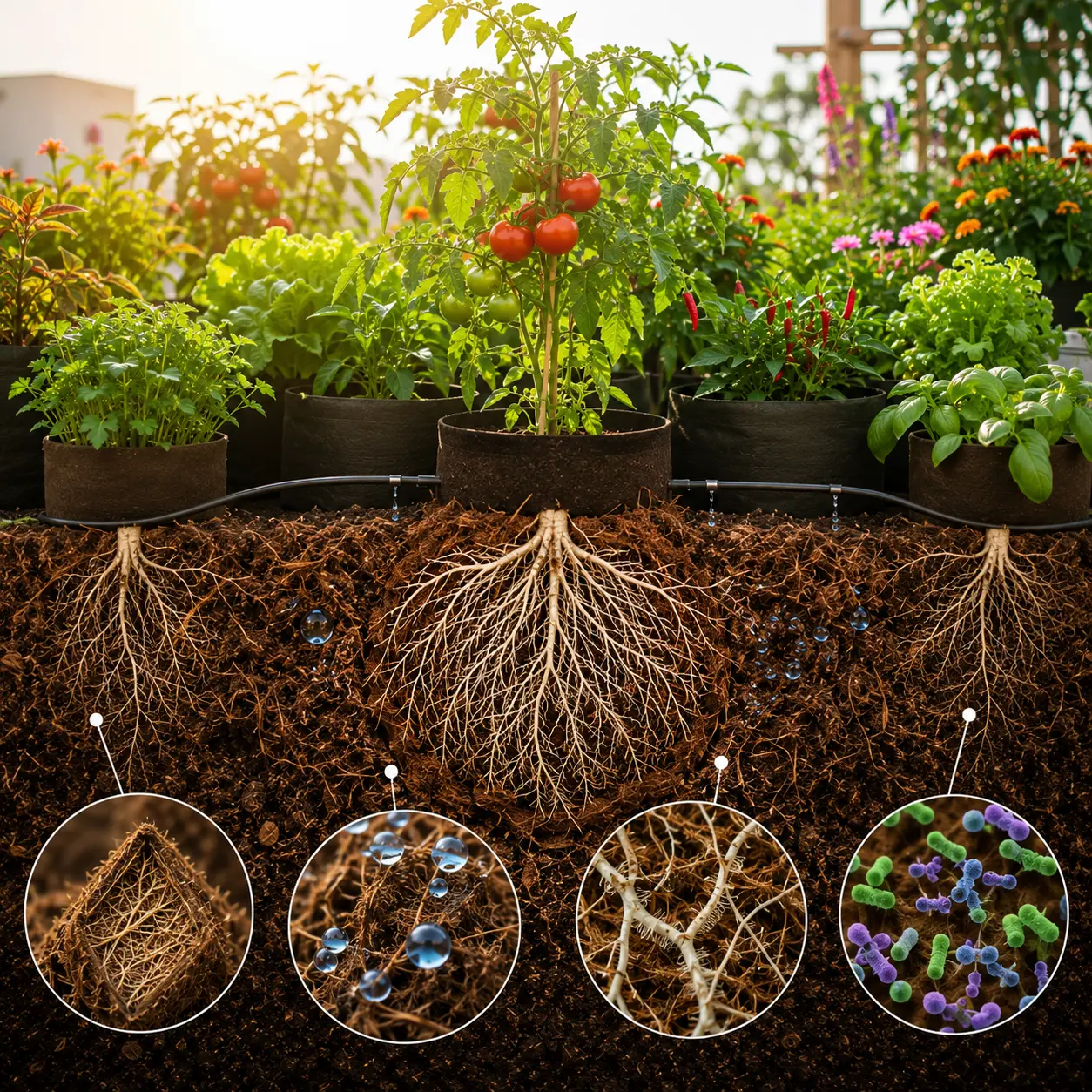
Coco Peat Growing Medium
Enhances moisture retention while maintaining excellent root-zone aeration.

Grow Bags for Plants
Improve drainage, root aeration, and vegetable production in limited spaces.

Plastic Pots for Plants
Ideal containers for seedlings, ornamentals, herbs, and balcony gardens.
Quick Variety Selector
| Variety | Type | Plant Size | Best For | Suited To |
|---|---|---|---|---|
| Aloe barbadensis Miller (True Aloe Vera) | Species | Medium–large | Medicinal use, gel harvest | All Indian regions |
| Aloe vera ‘Chinensis’ | Cultivar | Compact | Small pots, windowsills, beginners | All regions; especially North India |
| Aloe arborescens (Torch Aloe) | Species | Large–very large | Garden beds, ornamental, folk medicine | South India, coastal, frost-free regions |
| Aloe aristata (Lace Aloe) | Species | Compact | Indoor ornamental, low-light spots | All regions; tolerates cooler winters |
| Aloe ferox (Cape Aloe) | Species | Large | Landscape, commercial bitters | South India, Deccan Plateau |
| Aloe humilis (Spider Aloe) | Species | Very compact | Container collections, rock gardens | All regions |
| Aloe maculata (Soap Aloe) | Species | Medium | Ornamental, garden borders | South India, coastal regions |
| Aloe ‘Christmas Carol’ | Hybrid cultivar | Compact | Decorative pots, gifts | All regions; bright indirect light |
Varieties in Detail
True Aloe Vera (Aloe barbadensisMiller) This is the plant most Indians mean when they say “aloe vera” — the one with thick, fleshy, grey-green leaves edged with soft teeth, producing abundant clear gel used in skin care, hair care, and traditional home remedies. It is the only variety grown commercially in India, with significant cultivation in Rajasthan, Gujarat, and Andhra Pradesh for the cosmetics and Ayurvedic industries.
For home use, it is the correct choice if gel harvest is the primary goal. Its weakness is size — it becomes a substantial plant over two to three years and is not well-suited to very small containers. It also tends to produce pups aggressively, which either expands your collection quickly or clutters a pot, depending on your perspective.
Aloe vera ‘Chinensis’ Often sold in Indian nurseries simply as “Chinese aloe” or “small aloe,” this compact cultivar is widely believed to be a variant or distinct form of A. barbadensis, though its exact taxonomy is debated. It stays noticeably smaller than the standard variety, making it the practical choice for windowsills, apartment balconies, and single pots where space is limited.
Its gel yield is lower than the standard variety, but the gel is present and usable. It tolerates North Indian winters marginally better than the standard variety, though it still dislikes frost. This is the most forgiving aloe for beginners who may occasionally overwater or underestimate size.
Torch Aloe (Aloe arborescens) Torch aloe is a dramatic, branching, shrub-forming species that can reach two metres in favourable conditions. Its claim to particular attention is its flowering: it produces spectacular orange-red torch-shaped flower spikes in winter, typically January to February across South India, that attract sunbirds and bees with notable enthusiasm.
It is used extensively in traditional medicine across southern Africa and has growing recognition in Indian folk medicine as well, though its gel is more bitter and less abundant than A. barbadensis. It is cold-sensitive — not suited to North Indian winters without shelter — but thrives in coastal and south Indian gardens with minimal intervention.
Lace Aloe (Aloe aristata) Lace aloe is small, stemless, and covered in white-toothed, dark green leaves arranged in a tight rosette — visually it resembles a haworthia more than a typical aloe. It is one of the best aloes for indoor growing in India because it tolerates lower light levels than most other species and handles the temperature range of a North Indian winter without damage.
It does not produce a significant gel. Its value is entirely ornamental: it is an extremely attractive, slow-growing plant for a desk or shelf that requires almost no care beyond monthly watering. It flowers in autumn with small orange tubular flowers on a slender spike.
Cape Aloe (Aloe ferox) Cape aloe is a single-stemmed, tree-forming species that eventually grows a visible trunk as lower leaves die away — at maturity it resembles a small, solitary palm topped with a dense rosette of large, spiny leaves. It is commercially cultivated in South Africa for its bitter sap, which is used in laxative preparations and Ayurvedic bitters.
In Indian home gardens, it is primarily a landscape specimen. Its size makes it unsuitable for containers beyond the first two years. It grows well on the Deccan Plateau and in South India; its drought tolerance is exceptional.
Spider Aloe (Aloe humilis) Spider aloe is one of the smallest aloe species, forming a tight, stemless rosette rarely exceeding 15 cm across. Its leaves are blue-green with white teeth and a slightly curved appearance. It is ideal for collector trays, rock gardens, and small ornamental pots.
It produces orange-red flowers in late winter on a slender spike disproportionately tall for its size. It is not a medicinal plant in common Indian use. Its strength is its compact permanence — it stays small reliably, unlike ‘Chinensis’, which can grow larger than expected.
Soap Aloe (Aloe maculata) Soap aloe gets its name from the gel in its leaves producing a lather when rubbed with water — a property used historically for washing. Its leaves are distinctively spotted with white markings, making it one of the more visually interesting species for a garden border. It offsets freely and spreads into an attractive clump over a few years. Its flower spikes in orange and yellow appear in winter. It is not commonly used medicinally in India but is increasingly available in Indian nurseries as an ornamental species.
Aloe ‘Christmas Carol’ ‘Christmas Carol’ is a compact hybrid cultivar with dark green leaves marked by red teeth along the margins and reddish tips — the colouring intensifies in bright light or mild stress conditions, which makes it visually striking in a way that plain green aloes are not.
It does not produce gel in useful quantities. It is grown purely for decoration, is well-suited to small pots and gifting, and is widely available in urban Indian nurseries and online plant shops. Its strength is visual drama in a very small footprint; its weakness is that it needs consistent bright indirect light to maintain its red colouring — in low light it reverts to plain green.
Head-to-Head Comparisons
True Aloe Vera (A. barbadensis) vs. ‘Chinensis’ If gel harvest for skin, hair, or home remedies is your goal, A. barbadensis is the only real choice — it produces significantly more gel per leaf, and the gel quality is superior. ‘Chinensis’ is the correct choice if space is the constraint: it stays compact reliably, tolerates slightly colder temperatures, and is marginally more forgiving of imperfect care.
Neither is difficult to grow; the decision is almost entirely about what you want from the plant. For most Indian home gardeners growing a single aloe on a balcony or windowsill, ‘Chinensis’ is the more practical fit. For anyone with garden space or a dedicated pot large enough to accommodate a mature rosette, the standard variety rewards the space with far more usable gel.
Lace Aloe (A. aristata) vs. ‘Christmas Carol’ Both are compact ornamental aloes for indoor spaces. Lace aloe is the better choice for genuinely low-light interiors — a bedroom, a corridor, or a north-facing room — because it tolerates indirect and diffuse light without losing its form. ‘Christmas Carol’ needs more light to hold its red colouring and reverts to an unremarkable green in dim conditions. For a well-lit shelf or windowsill, ‘Christmas Carol’ is the more visually striking of the two. For adaptability across different indoor conditions, lace aloe wins.
How to Choose for Your Space
Container or apartment balcony: Aloe vera ‘Chinensis’ or A. aristata. Both stay manageable in containers for years without outgrowing a modest pot. ‘Chinensis’ gives you usable gel; A. aristata gives you a handsome indoor ornamental. For something more decorative, ‘Christmas Carol’ works well in a bright spot.
Small to medium garden plot or ground bed: True A. barbadensis or A. maculata. Both naturalise well in Indian garden soil, offset into attractive clumps, and look appropriate in a ground setting. A. barbadensis serves both ornamental and practical purposes; A. maculata offers more visual interest with its spotted leaves.
Larger garden or landscape feature: Aloe arborescens in South India and coastal regions, or A. ferox on the Deccan Plateau. Both form impressive specimen plants over time. A. arborescens is particularly rewarding in coastal gardens for its winter flowering and wildlife value.
Collector or enthusiast: A. humilis for a rock garden or tray arrangement alongside other compact succulents. It is slow-growing, stays small permanently, and flowers reliably.
Regional Suitability
North India (Delhi, UP, Punjab, Rajasthan): True A. barbadensis and ‘Chinensis’ are the dependable choices; bring both under cover or indoors between December and February in frost-prone areas. A. aristata is the most cold-tolerant of the ornamental aloes and handles North Indian winters without special protection in most cities. Avoid A. arborescens and A. ferox in frost-prone northern locations unless winter protection is possible.
South India and coastal regions (Tamil Nadu, Kerala, Karnataka coast, Andhra Pradesh): All species covered here grow well. A. arborescens and A. ferox reach their best form in southern and coastal conditions. A. maculata thrives in coastal gardens. True A. barbadensis is commercially cultivated in Andhra Pradesh, confirming the suitability.
Rajasthan and Gujarat: True A. barbadensis is commercially cultivated here on a large scale, confirming that its exceptional drought tolerance makes it the natural choice. The dry, hot summers and relatively cool winters suit it better than more humidity-dependent species.
Northeast India and West Bengal: High humidity suits aloes less than drier climates; ensure excellent drainage and avoid any situation where water can pool around roots. True A. barbadensis and ‘Chinensis’ both grow here, but drainage management is the critical factor.
Desi vs. Hybrid — What Nobody Tells You
The aloe you find in Indian nurseries is almost always a species plant — A. barbadensis or one of the other named species — rather than a complex hybrid. This is actually an advantage: species aloes can be propagated freely from offsets, require no special tissue culture, and breed true. The exception is ornamental hybrid cultivars like ‘Christmas Carol’, which are propagated vegetatively and cannot be grown from seed reliably.
The practical implication: if you want to expand your aloe collection for free, the standard species varieties give you an endless supply of pups that you can pot up, share, or sell. Hybrid cultivars must be purchased again if lost.
Watch Out for Mislabelling
Mislabelling is particularly common with aloe in Indian nurseries. ‘Chinensis’ is frequently sold as “true aloe vera” or “medicinal aloe” without distinction, which matters if you are buying specifically for gel yield. A. arborescens is sometimes sold simply as “aloe” with no species name, and its significantly different growth habit — branching, shrubby, eventually very large — surprises buyers expecting a compact rosette.
The simplest verification: ask to see a mature specimen or photograph. True A. barbadensis has thick, fleshy, upright grey-green leaves up to 60–90 cm long at maturity, with a single rosette form. ‘Chinensis’ is similar but noticeably smaller. A. arborescens has narrower, more curved leaves on branching stems — it looks distinctly different from the standard variety once you have seen both.
State horticulture department nurseries and Krishi Vigyan Kendras (KVKs) in aloe-producing states — particularly Rajasthan and Andhra Pradesh — are reliable sources for correctly identified A. barbadensis planting material. For ornamental species, established urban nurseries with knowledgeable staff or verified online sellers are more reliable than roadside vendors.
For most Indian homes, one well-chosen aloe serves every purpose a home gardener needs. The decision is simpler than the variety list suggests: if you want gel, grow A. barbadensis; if you want beauty in a small space, grow A. aristata or ‘Christmas Carol’; if you have a garden and want a statement plant, grow A. arborescens. Everything else is a bonus.


