Complete Aloe Vera (Ghritkumari) Plant Guides
Problems & Diseases
Flowering Season
Quick Facts
Introduction
Aloe vera (L.) Burm.f. is a stemless or very short-stemmed succulent perennial belonging to the family Asphodelaceae, native to the Arabian Peninsula and now cultivated and naturalised across tropical, subtropical, and warm-temperate regions worldwide. The species is distinguished by its rosette of thick, fleshy, lance-shaped leaves with serrated margins and a clear internal gel of high water content, adaptations that underlie its exceptional tolerance of arid and semi-arid conditions.
Classification
- Plant Type
- Succulent
- Lifecycle
- Perennial
- Leaf Habit
- Evergreen
- Native Region
- North Africa, West Africa, West Asia
- Plant Family
- Asphodelaceae
It thrives in rocky, free-draining soils and is among the most widely cultivated succulents on the planet, grown both for ornamental purposes and for its commercially harvested leaf products. The species has been known in cultivation for thousands of years and appears in botanical literature extending back to classical antiquity, with early references recorded across the Mediterranean, Arabian, and South Asian worlds.
Taxonomic Synonyms
| Field | Information |
|---|---|
| Accepted Scientific Name | Aloe vera (L.) Burm.f. |
| Known Synonyms | Aloe barbadensis Mill.; Aloe vulgaris Lam.; Aloe perfoliata var. vera L.; Aloe flava Pers. |
| Taxonomic Authority Source | Kew Plants of the World Online (POWO) |
Quick Plant Information
| Field | Information |
|---|---|
| Common Name(s) | Aloe Vera; Ghritkumari; Barbados Aloe; True Aloe; Burn Plant |
| Scientific Name | Aloe vera (L.) Burm.f. |
| Family | Asphodelaceae |
| Plant Type | Succulent perennial herb |
| Lifespan | Perennial; individual rosettes persist for many years |
| Growth Habit & Form | Rosette-forming, stemless to very short-stemmed succulent; clump-forming by offset production |
| Native Range | Arabian Peninsula (Yemen, Oman, Saudi Arabia); Canary Islands |
| Climate Adaptation & Habitat Type | Arid and semi-arid; rocky slopes, desert margins, dry scrubland, coastal cliffs |
| Leaf Type | Simple; succulent; lanceolate; grey-green with pale spots; serrated margins |
| Flower Color(s) | Yellow to orange-yellow; occasionally reddish-orange |
| Fruit Type | Capsule (loculicidal) |
| Evergreen or Deciduous | Evergreen |
Botanical Description
Stem
Aloe vera is typically described as stemless or nearly so, with the rosette of leaves arising directly at or just above ground level. In older specimens, a short, stout stem up to approximately 30 cm in length may develop, clothed with the persistent dried bases of old leaves. The stem does not produce significant secondary woody growth, remaining herbaceous-succulent throughout the plant’s life.
Leaves
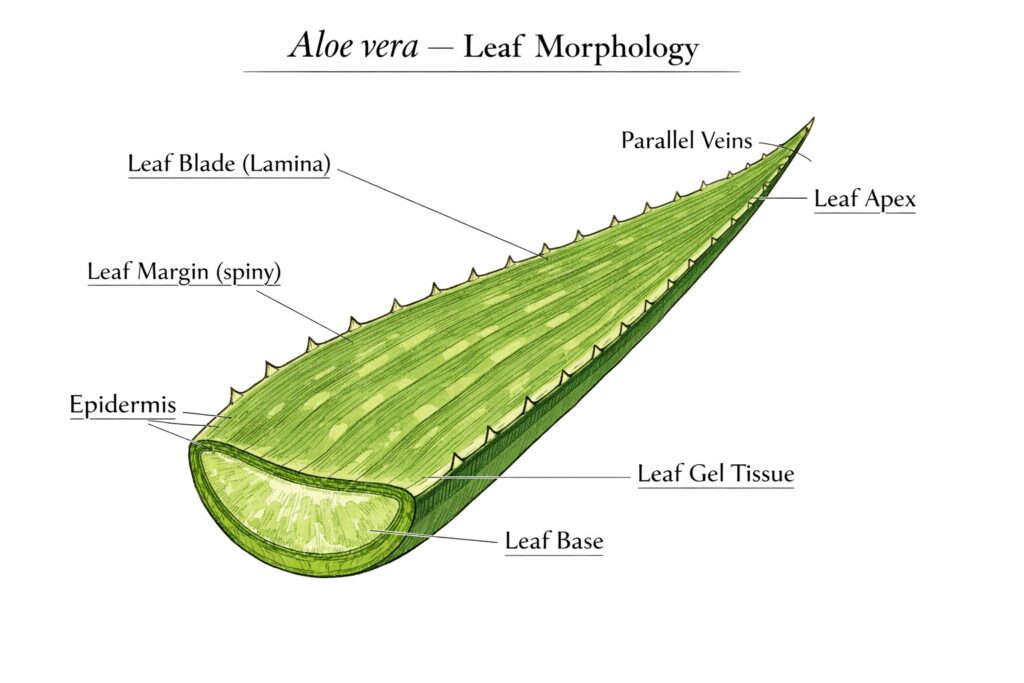
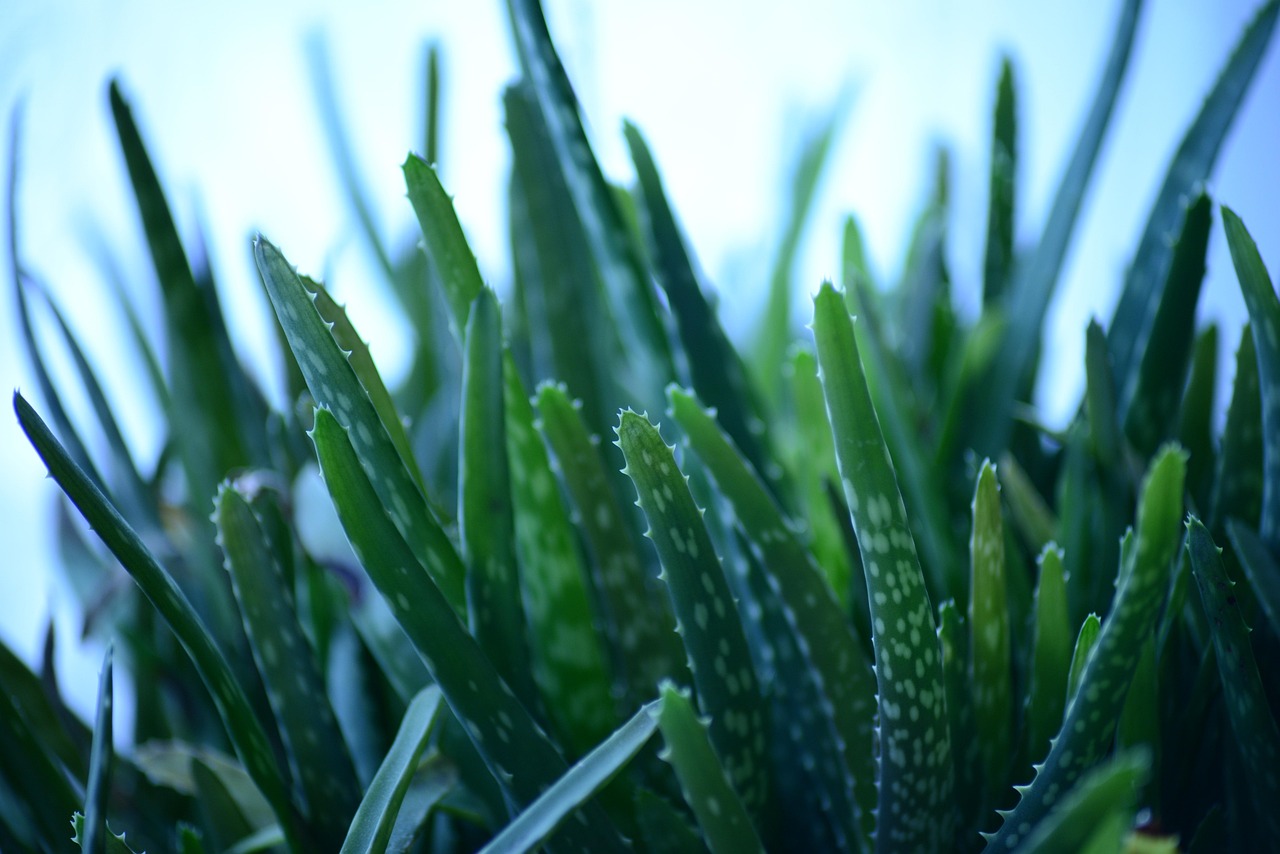
The leaves are produced in a dense basal rosette of 12–20 per plant, each leaf lanceolate to linear-lanceolate, 40–80 cm long and 5–10 cm wide at the base, tapering to a pointed tip. The leaf surface is grey-green to blue-green, often with pale whitish flecking in younger plants; older leaves become uniformly grey-green.
The margin bears cream-coloured, deltoid teeth spaced at intervals of approximately 1–2 cm. The leaf is highly succulent, comprising a thin green rind enclosing a central parenchyma of colourless, mucilaginous gel and a thin layer of latex-containing cells (pericycle) immediately beneath the rind. The gel layer is composed largely of water (>98%) along with polysaccharides, enzymes, and other solutes.
Flowers
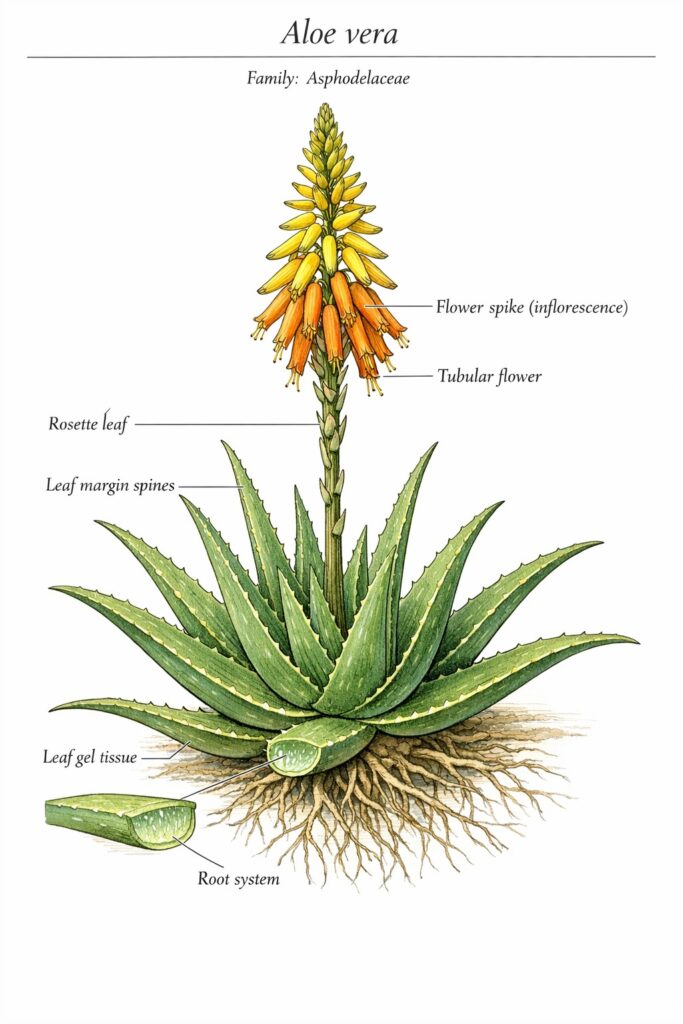
A rosette of succulent, serrated leaves and the tall flowering spike bearing
tubular yellow to orange flowers.
The inflorescence is an erect, simple or sometimes branched raceme arising from the centre of the rosette on a scape 60–120 cm tall. Flowers are tubular, pendulous, 2.5–3.5 cm long, yellow to orange-yellow in colour, and arranged in a dense terminal raceme.
The perianth is composed of six fused tepals forming a cylindrical tube, slightly constricted at the base and slightly flared at the mouth, with the six stamens and style slightly exserted. Flowering is triggered by seasonal temperature and photoperiod cues, occurring primarily in late winter to early spring in cultivated conditions in the Northern Hemisphere.
Fruit
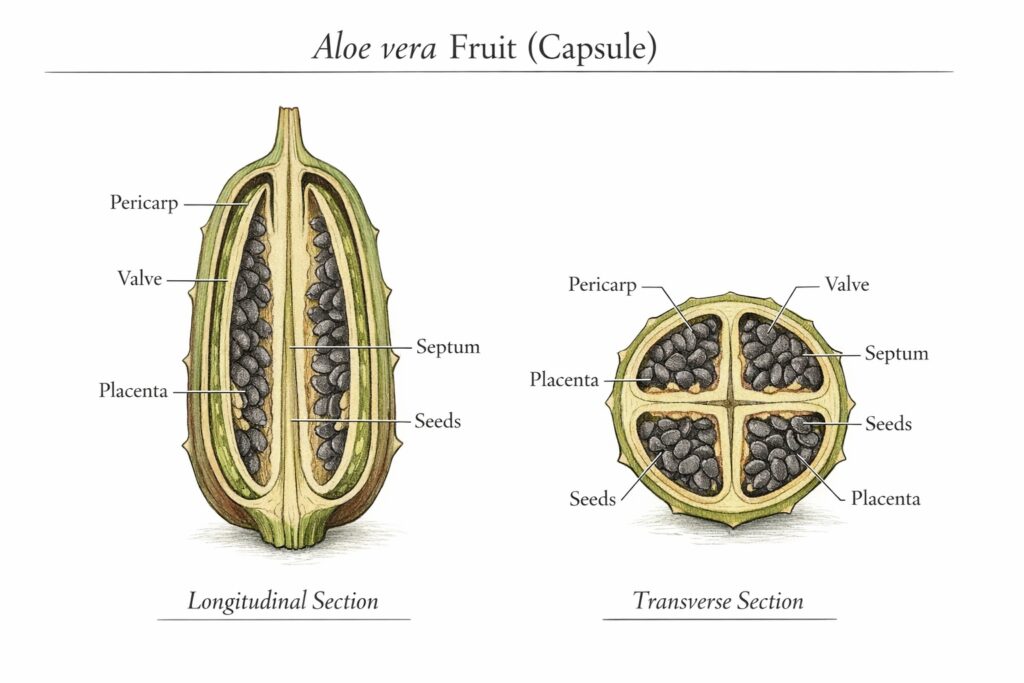
The fruit is an oblong, loculicidal capsule, 2–3 cm long, ripening from green to pale brown upon maturity. Each capsule contains numerous flat, winged seeds arranged in three locules. The capsule dehisces along the dorsal sutures of each locule at maturity, releasing the seeds. Fruit set under cultivation is variable and dependent on successful pollination; many cultivated populations rarely produce seed owing to limited pollinator access.
Roots
The root system is shallow and fibrous, radiating laterally just below the soil surface, well adapted to rapid uptake of episodic rainfall in arid environments. Roots are moderately drought-resistant and highly sensitive to waterlogging, which rapidly induces root rot. No taproot development is documented.
Growth Architecture & Life Strategy
Aloe vera is a succulent hemicryptophyte to geophyte intermediate in the Raunkiær classification; its perennating buds and meristematic tissue are located at or very near ground level within the protected rosette centre and at the base of the stem, allowing the plant to survive seasonal drought and mild frost events while the aerial leaf mass remains active year-round. The species grows as a rosette-forming succulent with a compact, clump-building architecture driven by prolific offset (pup) production at the base of the parent rosette.
Growth rate is moderate under optimal conditions, with individual rosettes reaching mature size in 3–4 years from offset propagation. The plant employs crassulacean acid metabolism (CAM), opening stomata at night to fix CO₂ as malic acid and minimising daytime water loss through closed stomata; this pathway is central to its success in low-rainfall environments. Biomass allocation strongly favours the leaf parenchyma, which serves as the primary water reservoir supporting survival through extended dry periods.
The clonal spread strategy — producing numerous offsets around the parent rosette — is ecologically significant, enabling dense colony formation on stable substrates in the absence of seed-based recruitment. Individual rosettes are monocarpic in the sense that a rosette dies after flowering, but the clonal colony persists indefinitely through offset growth.
Common Types / Varieties
Aloe vera as a species is primarily represented in commerce and cultivation by the straight species rather than a broad range of formally named cultivars; however, several selections and forms are recognised.
‘Chinensis’ is a Chinese selection characterised by smaller stature, narrower leaves, and more prominent white spotting on the leaf surface that tends to persist into maturity rather than fading as in typical A. vera. It is widely grown as a houseplant across East Asia and is sometimes treated as a distinct variety.
‘Miller’ refers to plants propagated from the clonal lineages historically associated with Caribbean and Barbados cultivation, particularly those used in the early commercial gel industry. These plants typically produce broad, fleshy leaves of high gel content and are selected for maximal parenchyma yield per leaf.
The true spineless form occasionally listed in horticultural catalogues refers to selections in which the marginal teeth are reduced to soft, pliable points rather than the firm, sharp teeth of wild-type plants. These are horticultural selections without formal cultivar designation.
Native Range & Distribution

Orange: native range.
Green: major cultivation and naturalised regions.
| Country / Territory | Range Status | Notes |
|---|---|---|
| Yemen | Native | Core native range on the Arabian Peninsula; rocky hillsides and dry coastal scrub |
| Oman | Native | Rocky arid slopes; confirmed native populations |
| Saudi Arabia | Native | Arid and semi-arid rocky habitats in western and southern regions |
| Canary Islands (Spain) | Native | Macaronesian native; dry coastal cliffs and rocky slopes |
| Madeira (Portugal) | Cultivated; naturalised locally | Historically cultivated; naturalised in disturbed coastal habitats |
| Cape Verde | Cultivated; naturalised locally | Long-established cultivation; naturalised populations in dry habitats |
| Sudan | Cultivated; naturalised locally | Widespread in cultivation; naturalised in dry disturbed sites |
| Ethiopia | Cultivated; naturalised locally | Cultivated and locally naturalised at lower dry altitudes |
| India | Cultivated; naturalised locally | Widely cultivated across tropical and subtropical zones; naturalised in rocky dry habitats across the Deccan Plateau and Rajasthan |
| Mexico | Cultivated; naturalised locally | Cultivated extensively; naturalised in dry tropical scrub in several states |
| United States | Cultivated; naturalised locally | Cultivated in warm states; naturalised in Florida, Texas, and southern California |
| Australia | Naturalised; invasive concern | Listed as a weed of national significance in parts of Queensland; naturalised in tropical and subtropical dry areas |
| Mediterranean Basin (widespread) | Cultivated; naturalised locally | Long history of cultivation across the Mediterranean; naturalised in disturbed dry coastal habitats |
Distribution records derived from GBIF occurrence datasets and regional botanical surveys. Distribution maps for this species can be generated from GBIF occurrence data at gbif.org.
Habitat & Ecology
Aloe vera occupies arid and semi-arid habitats characterised by shallow, rocky, free-draining soils, high solar radiation, and seasonal or chronic moisture deficit. In its core native range on the Arabian Peninsula and Macaronesian islands, it colonises exposed rocky slopes, dry coastal cliffs, desert margins, and disturbed ground, often co-occurring with other CAM succulents and drought-tolerant shrubs. It is adapted to substrates ranging from calcareous coastal outcrops to volcanic soils, tolerating high-pH, low-nutrient conditions poorly suited to most mesophytic vegetation.
Rainfall tolerance is extremely broad; established plants survive prolonged dry seasons lasting six months or more, but require reliable warm temperatures and cannot tolerate frost below approximately −2 °C for extended periods. The species is generally intolerant of high humidity combined with poor drainage, conditions that promote pathogenic root and stem rot. At higher elevations within its native range, it is restricted to south-facing exposures with maximal solar warming.
In cultivated and naturalised contexts, the species colonises disturbed, degraded, and overgrazed dry habitats with opportunistic efficiency, establishing dense clonal colonies on road margins, degraded pasture margins, and abandoned agricultural land. Soil binding by the fibrous root system reduces surface erosion on steep, rocky substrates.
Ecological Role
Aloe vera provides nectar resources to a range of avian and invertebrate visitors in both native and introduced ranges, with the tubular orange-yellow flowers suited to nectivorous birds including sunbirds (Nectariniidae) in African and Arabian regions and to bees (Apidae) and wasps (Vespidae) visiting for nectar and pollen.
The dense rosette architecture creates a microhabitat at the base and axils, supporting invertebrate communities in otherwise exposed, sparse desert scrub environments. The clonal colony structure stabilises rocky substrates and contributes to reduced soil loss on exposed slopes where competing plant cover is minimal.
Recommended Products
Disclosure: As an Amazon Associate, PlantsInfo may earn from qualifying purchases.
🌱 Plant Care Essentials
The following tools can help with pruning, plant health, soil management, and fruit garden maintenance.

Neem Oil for Plant Care
Natural plant protection against aphids, whiteflies, mites, and other common garden pests.

Fungicide for Root Care
Helps suppress soil-borne fungal diseases and supports healthier root systems.

Spray Bottle for Plants
Ideal for applying foliar sprays, neem oil solutions, and liquid plant treatments.

Rubber Hand Gloves
Protects hands during pruning, planting, soil preparation, and garden maintenance.
Functional Traits
| Trait | Value |
|---|---|
| Growth Form | Rosette succulent; clump-forming |
| Leaf Type | Simple; succulent; lanceolate; CAM pathway |
| Photosynthetic Pathway | CAM (Crassulacean Acid Metabolism) |
| Seed Type | Orthodox |
| Rooting Depth | Shallow; 15–30 cm; lateral fibrous root mat |
| Wood Density | Not applicable (herbaceous species) |
Phenological Calendar
| Event | Tropical & Subtropical Regions | Regional Qualifiers & Seasonal Deviations |
|---|---|---|
| Leaf Flush | Year-round offset production; active leaf growth during warm humid periods | Slowed during prolonged cool-dry periods; paused below 10 °C |
| Primary Flowering Onset | January–March (cooler-dry season transition) | Northern Hemisphere greenhouse populations peak in March–April; Southern Hemisphere June–August |
| Peak Flowering | February–April | Northern Hemisphere greenhouse populations peak March–April; Southern Hemisphere June–August |
| Secondary Flowering | Occasional in long growing seasons; not consistent | Not documented as reliable in most cultivated populations |
| Fruit Development | 4–6 weeks post-pollination | Capsules develop slowly; often poorly set in cultivation without pollinators |
| Fruit Maturity | March–June (dependent on onset) | Capsules ripen to pale brown; dehiscence in dry conditions |
| Seed Dispersal | During and after capsule dehiscence; passive wind dispersal | Seed dispersal limited in cultivation; vegetative propagation dominant |
| Dormancy or Rest Period | Minimal; growth slows rather than ceases during coolest months | Full dormancy not documented; water use reduced during cool dry periods |
Flowering onset in Aloe vera is primarily responsive to thermoperiod reduction and is associated with the onset of cooler nighttime temperatures, advancing or delaying by several weeks depending on microclimate; photoperiod interaction with temperature has been suggested but is not fully characterised in the literature.
Reproductive Biology
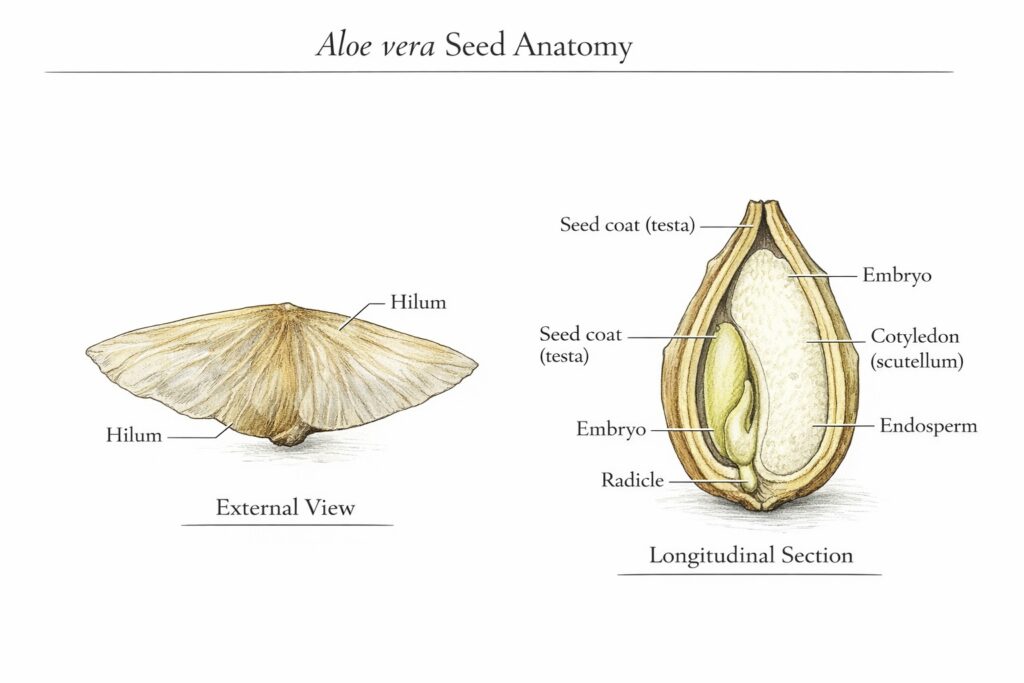
Aloe vera reproduces both sexually through seed and clonally through offset (pup) production, though vegetative reproduction dominates strongly in most natural and cultivated populations. The inflorescence is a raceme bearing tubular, protandrous flowers in which pollen is shed before the stigma of the same flower becomes receptive, a mechanism promoting cross-pollination. Floral anthesis proceeds from the base of the raceme upward over a period of several weeks, extending the period of pollen availability and receptivity.
Seed production in cultivated populations is variable and often limited by the absence of effective pollinators; hand pollination is used in breeding programmes to achieve reliable seed set. The orthodox seeds retain viability under dry storage conditions for extended periods, though natural regeneration from seed is rarely documented in cultivated environments where vegetative multiplication dominates.
Pollination Ecology
| Field | Information |
|---|---|
| Pollination Mechanism | Insect and bird |
| Primary Pollinator Groups | Sunbirds (Nectariniidae); bees (Apidae) |
| Pollination Syndrome | Ornithophily (primary); entomophily (secondary) |
| Floral Reward | Nectar and pollen |
Seed Biology & Germination Ecology
| Field | Information |
|---|---|
| Seed Type | Orthodox |
| Seed Viability Period | Several years under cool, dry storage conditions |
| Dormancy Type | None documented |
| Dormancy Breaking Mechanism | None documented; seeds germinate readily without pretreatment |
| Germination Temperature Range | 20–30 °C (68–86 °F) |
| Light Requirement for Germination | Light-neutral; germination proceeds in darkness and light |
| Seed Bank Classification | Transient |
| Dispersal Unit | Seed (winged; wind-dispersed from capsule) |
Seeds of Aloe vera are flat, winged, and light, adapted for short-range wind dispersal following capsule dehiscence; however, natural regeneration from seed in the wild is infrequently documented, and vegetative propagation via offsets is the dominant mode of population spread.
Vegetative Regeneration & Clonal Biology
| Field | Information |
|---|---|
| Vegetative Regeneration Capacity | High |
| Primary Regeneration Mechanism | Offset (pup) production from axillary buds at the base of the parent rosette |
| Tissue Types Capable of Regeneration | Basal meristem; stem base tissue |
| Apomixis Status | Not documented in available literature |
| Bulbil or Propagule Production | Offsets produced prolifically; 5–20+ per established rosette annually under optimal conditions |
| Layering Capacity | Not documented in available literature |
| Root Sprouting from Fragments | Not documented in available literature |
| Clonal Spread Rate | Moderate; colony expansion of 10–30 cm per year under favourable conditions |
| Coppicing Response | Not documented; herbaceous growth habit |
| Ecological or Invasive Significance of Clonal Biology | Dense offset colonies exclude competing vegetation in arid habitats; documented invasive concern in Queensland, Australia |
The vigorous offset production of Aloe vera is both its primary horticultural propagation mechanism and a key driver of its naturalisation success in introduced dry-tropical and subtropical habitats, where clonal colonies can expand to exclude native ground flora over years to decades.
Soil Ecology & Rhizosphere Interactions
| Field | Information |
|---|---|
| Mycorrhizal Association Type | AM (arbuscular mycorrhizal) |
| Documented Fungal Partners | Not documented to species level in available literature |
| Nitrogen Fixation | Absent |
| Allelopathic Properties | Not documented in available literature |
| Documented Allelopathic Targets | Not documented in available literature |
| Rhizosphere pH Modification | Not documented in available literature |
| Root Exudate Compounds | Not documented in available literature |
| Soil Microbiome Influence | Not documented in available literature |
Biochemical Profile
| Compound Class | Compounds Documented | Primary Location in Plant | Ecological Function |
|---|---|---|---|
| Anthraquinones | Aloin A (barbaloin); aloin B (isobarbaloin); aloe-emodin; chrysophanol; rhein | Pericyclic latex layer (exudate) | Herbivore deterrence; antimicrobial defence in plant tissues |
| Polysaccharides | Acemannan; glucomannans; galactans | Leaf parenchyma gel | Structural matrix of water-storage parenchyma; desiccation resistance |
| Chromones | Aloesin (aloeresin B); aloeresin A | Pericyclic latex | Defensive secondary metabolites |
| Flavonoids | Apigenin; luteolin; kaempferol; quercetin | Leaves | UV photoprotection; pollinator attraction |
| Sterols | Lophenol; 24-methylcholesterol; cycloartanol | Leaves | Membrane structural components |
| Enzymes | Bradykinase; carboxypeptidase; catalase | Leaf gel | Metabolic activity in gel parenchyma |
| Saponins | Saponins (uncharacterised mixtures) | Leaves | Herbivore deterrence |
Research Coverage
| Field | Information |
|---|---|
| Research Coverage Level | High |
| Primary Research Fields | Phytochemistry; plant physiology (CAM); agronomy and cultivation; taxonomy and molecular systematics; cosmetic and material science applications |
| Earliest Published Study | Dioscorides, 1st century CE (classical reference); modern peer-reviewed literature from mid-20th century onward |
| Most Active Research Regions | India; United States; China; Mexico; Spain; South Africa |
| Key Knowledge Gaps | Native-range ecology and population dynamics poorly characterised; pollination biology quantitative data limited; allelopathy not studied; wild population genetics understudied relative to cultivated germplasm |
Phytochemical Organ Distribution
| Plant Organ | Compound Class | Compounds Documented | Source |
|---|---|---|---|
| Leaves (latex layer) | Anthraquinones | Aloin A; aloin B; aloe-emodin; chrysophanol | Harborne, J.B. & Baxter, H., 1993 |
| Leaves (latex layer) | Chromones | Aloesin; aloeresin A | Harborne, J.B. & Baxter, H., 1993 |
| Leaves (gel parenchyma) | Polysaccharides | Acemannan; glucomannans; galactans | Harborne, J.B. & Baxter, H., 1993 |
| Leaves (gel parenchyma) | Enzymes | Bradykinase; carboxypeptidase; catalase | Harborne, J.B. & Baxter, H., 1993 |
| Leaves (whole) | Flavonoids | Apigenin; luteolin; kaempferol; quercetin | Harborne, J.B. & Baxter, H., 1993 |
| Leaves (whole) | Sterols | Lophenol; 24-methylcholesterol; cycloartanol | Harborne, J.B. & Baxter, H., 1993 |
| Leaves (whole) | Saponins | Saponins (uncharacterised) | Harborne, J.B. & Baxter, H., 1993 |
The leaf tissue of Aloe vera is the best-documented organ for phytochemical composition, with the latex layer and gel parenchyma representing two chemically distinct compartments characterised in the greatest detail.
Climate Adaptation & Stress Tolerance
Aloe vera is adapted to warm arid and semi-arid climates, growing optimally between 15–35 °C (59–95 °F) and tolerating maximum temperatures above 40 °C (104 °F) without damage when soil moisture is adequate. Its CAM photosynthetic pathway, combined with the leaf water-storage parenchyma, confers exceptional drought tolerance; established plants survive several months of zero rainfall by drawing on internal water reserves while keeping stomata closed during the day.
Cold tolerance is limited. Mature plants tolerate brief temperature drops to approximately −2 °C (28 °F) without lethal damage, but sustained frost below this threshold causes cell rupture in the succulent leaf tissue and can be fatal to unprotected plants. Young plants and newly separated offsets are considerably more frost-sensitive. In humid equatorial climates without a dry season, Aloe vera performs poorly due to elevated risk of fungal and bacterial root and stem diseases in permanently moist soils.
Salt tolerance is moderate; the species colonises coastal rocky habitats and performs adequately in soils of moderate salinity but shows growth reduction under prolonged high-salinity conditions. Wind tolerance is high when plants are established in well-anchored, rocky substrates.
Climate Vulnerability & Range Dynamics
| Field | Information |
|---|---|
| IUCN Climate Vulnerability Assessment | Not Evaluated |
| Primary Climate Sensitivity Factors | Increased frequency of frost events at range margins; altered rainfall timing affecting offset establishment; elevated humidity and temperature co-occurrence promoting pathogen activity |
| Projected Range Shift Direction | Not documented in available literature |
| Projected Range Shift Magnitude | Not documented in available literature |
| Key Threatening Processes | Habitat conversion in native Arabian Peninsula range; overexploitation of wild populations for commercial harvest in some regions |
| Resilience Factors | CAM physiology; clonal regeneration capacity; broad thermal tolerance above 0 °C; extensive cultivated global distribution providing ex-situ reservoir |
| Published Modelling Studies | No study identified |
| Confidence Level | Low |
Cytogenetics
| Field | Information |
|---|---|
| Chromosome Number (2n) | 14 (2n = 2x = 14) |
| Ploidy Level | Diploid |
| Genome Size (1C value) | Not documented in available literature |
| Karyotype Notes | Seven chromosome pairs; karyotype documented as relatively stable across cultivated populations; minor variation in satellite chromosome morphology reported |
| Source | Darlington, C.D. & Wylie, A.P., 1955 |
Cultivation Requirements
| Field | Information |
|---|---|
| Light Requirements | Full sun to partial shade; minimum 6 hours direct sunlight preferred for robust growth; tolerates bright indirect light indoors |
| Watering | Low; deep, infrequent irrigation; allow substrate to dry completely between waterings; susceptible to overwatering and root rot |
| Soil Type | Sandy, gritty, or rocky loam; free-draining; low organic matter; cactus/succulent mix suitable for container cultivation |
| Soil pH | 6.5–8.0 |
| Humidity | Low to moderate; high humidity combined with poor air circulation promotes fungal disease |
| Temperature Range | Optimal 15–35 °C (59–95 °F); minimum tolerated −2 °C (28 °F) for brief periods only |
| USDA Hardiness Zone | Zones 9–12 (outdoor cultivation); grown as a container plant in cooler zones |
| Fertilization | Low demand; dilute balanced fertiliser once or twice during active growing season; excess nitrogen promotes soft, disease-susceptible growth |
| Container Suitability | Excellent; shallow wide containers preferred to accommodate lateral root system; terracotta pots recommended for improved drainage |
Propagation Methods
Aloe vera is most reliably propagated by separation of offsets (pups) from the base of established parent rosettes, ideally when the offsets have developed at least 3–4 leaves of their own and a rudimentary root system; separated offsets are potted into dry, gritty substrate and withheld from irrigation for 7–10 days to allow cut surfaces to callus and reduce rot risk.
Leaf-cutting propagation is not effective in Aloe vera, as detached leaves do not produce adventitious roots or shoots reliably, distinguishing it from many other succulent genera. Propagation from seed is practised in breeding programmes and commercial large-scale production, sowing into a warm (22–28 °C / 72–82 °F), well-drained seedling mix at shallow depth, with germination occurring within 2–4 weeks; however, seedlings grow slowly and take 3–4 years to reach harvestable size, making offset propagation the dominant commercial and horticultural method.
Pests & Diseases
| Issue | Notes |
|---|---|
| Root and stem rot | Phytophthora spp. and Fusarium spp.; brown to black discolouration at the stem base and root crown; associated with waterlogged, poorly drained substrates or chronic overwatering |
| Aloe rust | Phakopsora pachyrhizi-related rust fungi; orange-brown pustules on the lower leaf surface; prevalent under warm, humid conditions with restricted airflow |
| Aloe mite (Eriophyid gall mite) | Aceria aloinis; induces abnormal, warty, proliferating galls at the growing tip and young leaf bases; growth distortion most apparent on actively elongating tissue |
| Scale insects | Soft scale (Coccus spp.) and armoured scale (Diaspis spp.); flat to hemispherical encrustations on leaf undersides and stem; associated with dry, dust-prone environments and poor plant vigour |
| Anthracnose | Colletotrichum spp.; water-soaked lesions on leaves that expand to irregular dark-brown necrotic patches; most prevalent during warm, humid conditions |
Toxicity & Safety
| Field | Information |
|---|---|
| Humans | Anthraquinones (aloin, aloe-emodin) in the latex layer are associated with gastrointestinal cramping, catharsis, and electrolyte disturbance; dermal contact with latex produces irritant and sensitisation reactions in susceptible individuals |
| Cats | Aloin and anthraquinone glycosides are associated with vomiting, lethargy, and changes in urine colour in cats |
| Dogs | Aloin and anthraquinone glycosides are associated with vomiting, diarrhoea, lethargy, and tremors in dogs |
| Toxic Compounds | Aloin A (barbaloin); aloin B; aloe-emodin; anthraquinone glycosides |
| Source | ASPCA Animal Poison Control Center (aspca.org/pet-care/animal-poison-control) |
The toxicological risk of Aloe vera is concentrated in the yellowish latex layer immediately beneath the green rind, which is distinct from the clear inner parenchyma gel; the gel fraction has a substantially different compound profile, though both fractions may be present in whole-leaf preparations.
Invasive Status
Aloe vera is not globally classified as a major invasive species, but naturalised populations in northern Queensland (Australia) have been assessed as an invasive weed of environmental concern, with dense clonal colonies suppressing native ground flora in dry tropical scrub. In other warm-region countries where it is widely naturalised — including parts of India, Mexico, and the Mediterranean Basin — it is regarded as a locally naturalised cultivated escape rather than a documented environmental threat.
Conservation Status
| Field | Information |
|---|---|
| IUCN Red List Status | Not Evaluated |
| Assessment Year | Not applicable |
| Population Trend | Not documented in available literature |
| Source | IUCN Red List of Threatened Species — https://www.iucnredlist.org (Accessed: 2026-03-13). |
Economic Importance
Aloe vera is one of the commercially highest-value succulent crops globally, with the gel extracted from the leaf parenchyma used as a primary ingredient in cosmetics, personal care products, beverages, dietary supplements, and pharmaceutical preparations across a multi-billion-dollar industry.
Major production areas are concentrated in Mexico, the Dominican Republic, India, South Africa, and the United States (Texas, Florida), with cultivation in dedicated plantations ranging from small-scale farms to large mechanised commercial operations harvesting leaves on multi-year rotational schedules. The latex fraction has historically been exploited as a natural laxative compound and remains a regulated ingredient in several national pharmaceutical pharmacopoeias, though its use has declined relative to the gel industry.
Downstream processing of Aloe vera leaf generates whole-leaf juice, inner-fillet gel, powdered extracts, and concentrated dry preparations supplying the cosmetic, nutraceutical, and food ingredient sectors. The global Aloe vera raw material market is driven primarily by cosmetic demand, with the personal care sector accounting for the largest share of leaf gel consumption.
India is the largest single-cultivated-area country for Aloe vera by planted area, with Rajasthan, Andhra Pradesh, and Gujarat representing major cultivation hubs supplying both domestic processing and export markets.
Ethnobotanical Uses
Aloe vera has one of the most extensively documented ethnobotanical histories of any plant, with recorded use spanning multiple continents and millennia. In traditional South Asian systems, including Ayurveda, the species is known as Ghritkumari or Kumari, and the leaf gel has been applied topically for skin conditions, burns, and wound care, while the latex has been employed as a purgative preparation regulated within classical formularies. The plant is listed in the Ayurvedic Pharmacopoeia of India.
In traditional use across the Arabian Peninsula, North Africa, and East Africa — regions coinciding with the native or long-naturalised range — the leaf gel is applied to thermal and sunburn injuries, and the plant features in local wound management practices documented in ethnobotanical surveys from Yemen, Oman, Sudan, and Ethiopia. The latex is used in traditional purgative and digestive preparations across these regions, with practices recorded in Arabic materia medica texts from the medieval period onward.
In Latin America and the Caribbean, particularly in Mexico, Cuba, and Venezuela, Aloe vera features prominently in domestic and folk botanical practice, where the leaf gel is applied to skin irritations, and the latex fraction has traditional digestive use. Mesoamerican cultivation of the plant predates European contact, suggesting pre-Columbian introduction or independent establishment of use practices. The species also appears in traditional Chinese herbal records, where it is known as Luhui (芦荟), with gel and latex preparations documented in the Bencao Gangmu (Compendium of Materia Medica) of the 16th century.
Cultural & Traditional Context
Aloe vera occupies a prominent position in the botanical history of the ancient Mediterranean and Near Eastern worlds; it appears in the texts of Dioscorides (1st century CE) in De Materia Medica and is referenced in Pliny the Elder’s Naturalis Historia, establishing it as one of the earliest botanical subjects with a continuous documented record extending over two thousand years.
The island of Socotra, historically known as a source of high-quality aloe latex traded across the Arabian Sea and Indian Ocean trade networks, was a significant node in the pre-modern commerce of aloe products connecting Arabian, Indian, and Mediterranean markets.
In Indian cultural and religious practice, Aloe vera (Ghritkumari) holds a place in domestic ritual and auspicious planting traditions; it is commonly grown at household entrances and courtyards across Rajasthan, Gujarat, and other states as a protective plant, and its cultivation is associated with household prosperity in several regional traditions.
The plant is also referenced in classical Sanskrit texts on plant cultivation and plant-human relationships, establishing its integration into South Asian material culture well before the modern commercial era.
The association of Aloe vera with Cleopatra’s legendary beauty regimen, though often cited in popular writing, is of uncertain historical documentation; however, the presence of aloe preparations in ancient Egyptian cosmetic contexts is supported by some archaeobotanical and textual evidence, including references in the Ebers Papyrus (c. 1550 BCE), which names an aloe-type preparation among botanical compounds used in dermal applications.
Interesting Facts
Aloe vera employs crassulacean acid metabolism (CAM), a photosynthetic pathway in which CO₂ is fixed at night and stored as malic acid for daytime use with closed stomata — a strategy that can reduce water loss by up to 90% compared to C3 plants under equivalent drought conditions.
The two chemically distinct fractions within the leaf of Aloe vera — the yellow latex layer and the clear parenchyma gel — are produced by entirely different cell types; the latex originates in specialised pericyclic cells containing anthraquinone compounds, while the gel is produced by large parenchyma cells filled primarily with water and polysaccharides.
Aloe vera is among the very few plants documented with commercial cultivation records spanning more than 3,500 years, with references to aloe-derived preparations appearing in the Ebers Papyrus of ancient Egypt (c. 1550 BCE) and in Near Eastern trade records from the ancient Arabian Sea trade network.
The species has a chromosome number of 2n = 14, placing it in the diploid category within the genus Aloe, which contains species across a wide ploidy range; this relatively small genome has facilitated its use in cytogenetic reference studies of the Asphodelaceae.
A single mature Aloe vera rosette can produce 5–20 offsets per growing season under optimal warm-season conditions, enabling a single plant to colonise a several-square-metre area within a few years entirely through clonal expansion without any seed-based recruitment.
FAQs
How long does it take for Aloe vera to reach a harvestable leaf size from an offset?
Aloe vera propagated from offsets typically requires 3–4 years of growth under optimal warm, sunny, free-draining conditions before the leaves reach a mature size suitable for gel harvest, generally defined as leaves of 40 cm or more in length with a substantial gel-bearing parenchyma zone. Offset plants grown in optimal tropical conditions (temperatures consistently above 20 °C and high light) may reach this stage slightly faster than those grown in marginal warm-temperate conditions.
Why does Aloe vera produce two different substances within the same leaf?
The leaf of Aloe vera is anatomically divided into a thin outer rind, a narrow ring of pericyclic cells producing the yellow anthraquinone-rich latex, and a large central parenchyma zone containing the clear mucilaginous gel. These are functionally distinct tissues produced by cells with different biosynthetic programmes; the latex layer is thought to function primarily in herbivore deterrence owing to its bitter, irritant anthraquinone compounds, while the gel parenchyma functions as the plant’s primary water storage reservoir supporting survival through drought.
What causes Aloe vera leaves to turn brown or mushy at the base?
Browning and soft rot at the leaf base and stem of Aloe vera are the characteristic presentation of root and basal stem rot, typically associated with overwatering or poorly drained substrate that maintains excessive soil moisture. Phytophthora and Fusarium fungi are the principal causal agents under these conditions. Cool temperatures combined with wet substrate accelerate pathogen activity in affected plants.
Can Aloe vera survive outdoors year-round in a temperate climate?
Aloe vera is reliably cold-hardy only to approximately −2 °C (28 °F) for brief periods; sustained frost or repeated freeze-thaw cycling ruptures the succulent leaf cells and can kill the plant to the root zone. In temperate climates with regular winter frost, outdoor year-round cultivation is not feasible without protective structures; the species is grown successfully as a container plant moved under glass or indoors during the cold season in USDA Hardiness Zones below 9.
Does Aloe vera flower regularly in cultivation, and what triggers blooming?
Aloe vera flowers annually under favourable conditions in warm subtropical and tropical climates, typically producing the inflorescence in winter to early spring in response to a period of reduced temperatures and shortened days. In indoor or greenhouse cultivation in temperate climates, flowering is less consistent and often occurs in late winter to spring when the plant has received sufficient cumulative cool and bright conditions during the preceding autumn. Rosettes typically need to reach a minimum size and maturity — usually 3–4 years of age — before they produce their first inflorescence.
Conclusion
Aloe vera (L.) Burm.f. is a succulent perennial of the family Asphodelaceae, native to the arid zones of the Arabian Peninsula and Macaronesian islands, that has achieved a global distribution through both deliberate cultivation and naturalisation across warm tropical, subtropical, and Mediterranean climates.
Its CAM photosynthetic pathway, leaf water-storage parenchyma, and clonal offset biology underpin the species’ exceptional adaptability to drought conditions and its capacity to form persistent naturalised colonies across a broad range of disturbed and natural arid habitats.
The biochemical complexity of the leaf — particularly the anthraquinone-rich latex and polysaccharide-rich gel fractions — is reflected in one of the longest and most geographically extensive records of plant use in recorded history, with references spanning from ancient Egyptian papyri and classical Graeco-Roman botanical texts through medieval Arabic and South Asian botanical pharmacopoeias to the contemporary global cosmetic and nutraceutical industries.
This sustained human interest has resulted in Aloe vera being among the most intensively studied succulent species, with a research literature extending across phytochemistry, agronomy, molecular systematics, and material science.
Despite its extensive documentation in cultivation and commerce, fundamental aspects of Aloe vera’s native ecology, wild population dynamics, and pollination biology remain poorly characterised relative to its agronomic literature, representing a gap in the botanical knowledge base for a species of such global cultural and economic significance.
Common Cultivation Observations
| Observation | Associated Condition |
|---|---|
| Leaves become pale green, yellow-green, or develop reddish-orange pigmentation under high light | Chlorophyll dilution and anthocyanin/carotenoid accumulation associated with excess light or UV exposure stress |
| Leaves become elongated, thin, and curve toward a light source | Etiolation associated with insufficient light intensity |
| Leaf bases and stem appear brown, water-soaked, and collapse | Root and basal stem rot associated with excess soil moisture, poor drainage, or Phytophthora/Fusarium infection |
| Leaves develop white to cream-coloured crusty deposits on the surface | Salt accumulation on leaf surface from hard irrigation water and evaporation under dry conditions |
| Plant produces numerous small offsets but parent rosette leaves remain small and pale | Nutrient-limiting conditions associated with root-bound or depleted substrate in container cultivation |
| Warty, proliferating galls at the growing tip and young leaf bases | Eriophyid gall mite (Aceria aloinis) infestation associated with entry through damaged tissue or infested propagation material |
Scientific Stability Note
The accepted name Aloe vera (L.) Burm.f. is taxonomically stable under the current circumscription, with the authority of Nicolaas Laurens Burman (Burm.f., 1768) accepted by Kew Plants of the World Online (POWO). The widely encountered synonym Aloe barbadensis Mill. (Philip Miller, 1768) was applied to the same taxon in European botanical literature, particularly in connection with Barbadian cultivated populations, and persists in commercial and popular usage; it is treated as a heterotypic synonym under the accepted name.
The synonymy has been unambiguous in the modern taxonomic literature since the late 20th century, and no current reclassification proposals or generic boundary revisions affecting Aloe vera are under active consideration. The placement of the genus Aloe within Asphodelaceae (sensu APG IV) is accepted, superseding the earlier placement within Liliaceae and Aloaceae.
Reference Summary
A. Primary Taxonomic Sources
Kew Plants of the World Online (POWO) — https://powo.science.kew.org (Accessed: 2026-03-13). GBIF Backbone Taxonomy — https://www.gbif.org (Accessed: 2026-03-13).
B. Peer-Reviewed Literature
No fully verified peer-reviewed citation identified for this entry.
C. Monographs and Books
Harborne, J.B. & Baxter, H. (1993). Phytochemical Dictionary: A Handbook of Bioactive Compounds from Plants. Taylor & Francis, London.
Darlington, C.D. & Wylie, A.P. (1955). Chromosome Atlas of Flowering Plants. George Allen & Unwin, London.
D. Herbarium and Specimen Records
Royal Botanic Gardens Kew Herbarium (K) — specimens of Aloe vera held; consult Kew herbarium catalogue for accession details. JSTOR Global Plants — digitised type and reference specimens accessible via jstor.org/plants.
E. Grey Literature and Databases
IUCN Red List of Threatened Species — https://www.iucnredlist.org (Accessed: 2026-03-13). USDA FoodData Central — https://fdc.nal.usda.gov (Accessed: 2026-03-13). ASPCA Animal Poison Control Center — https://www.aspca.org/pet-care/animal-poison-control (Accessed: 2026-03-13).