Introduction
Ocimum tenuiflorum L., commonly known as tulsi or holy basil, is a perennial aromatic subshrub in the family Lamiaceae, native to the Indian subcontinent and widely distributed across tropical and subtropical Asia. The species is distinguished from the culinary sweet basil (Ocimum basilicum) by its smaller, serrated leaves, characteristic clove-like fragrance derived from eugenol-dominant essential oils, and its strongly perennial woody base in warm climates. Ocimum tenuiflorum grows across a broad range of lowland and mid-elevation habitats, from forest margins and disturbed scrubland to cultivated gardens, and has been naturalised across much of tropical Africa, the Caribbean, and the Pacific Islands through deliberate cultivation and secondary spread.
Classification
- Plant Type
- Herb
- Lifecycle
- Perennial
- Leaf Habit
- Evergreen
- Native Region
- Himalayan Region, South Asia, Southeast Asia
- Plant Family
- Lamiaceae
The species occupies a position of exceptional prominence in the agricultural and cultural landscapes of South Asia, where it has been maintained in continuous cultivation for more than three thousand years. It is grown across India, Sri Lanka, Bangladesh, Nepal, and Southeast Asia as a garden plant, a small-scale field crop, and an integral component of household compounds. Ocimum tenuiflorum is one of the most studied aromatic plants of tropical Asia, with an extensive phytochemical literature documenting its volatile oil composition, flavonoid content, and phenylpropanoid compounds across multiple chemotypes and geographic populations.
Taxonomic Synonyms
| Field | Information |
|---|---|
| Accepted Scientific Name | Ocimum tenuiflorum L. |
| Known Synonyms | Ocimum sanctum L.; Ocimum monachorum L.; Ocimum inodorum Burm.f.; Ocimum anisodorum F.Muell.; Lumnitzera tenuiflora (L.) Spreng. |
| Taxonomic Authority Source | Kew Plants of the World Online (POWO) |
Quick Plant Information
| Field | Information |
|---|---|
| Common Name(s) | Tulsi, Holy Basil, Sacred Basil, Thai Holy Basil, Kaprao (Thai), Tulasi |
| Scientific Name | Ocimum tenuiflorum L. |
| Family | Lamiaceae |
| Plant Type | Subshrub / Herbaceous perennial |
| Lifespan | Perennial; typically 2–5 years under tropical conditions |
| Growth Habit & Form | Erect, branching subshrub reaching 30–90 cm in height; woody at base |
| Native Range | Indian subcontinent, Sri Lanka, continental Southeast Asia, Malesian archipelago |
| Climate Adaptation & Habitat Type | Tropical and subtropical; disturbed ground, forest margins, cultivated gardens, roadsides |
| Leaf Type | Simple, opposite, ovate to elliptic with serrated margins; glandular trichomes present |
| Flower Color(s) | White to pale purple or lilac |
| Fruit Type | Nutlet (4 nutlets per calyx, enclosed within persistent calyx) |
| Evergreen or Deciduous | Evergreen |
Botanical Description
Stem
The stem of Ocimum tenuiflorum is erect, branching, and becomes woody and lignified at the base in mature plants, while younger shoots remain herbaceous and quadrangular in cross-section — a characteristic of the family Lamiaceae. Stems are densely pubescent with short, soft hairs, and range from 30 to 90 cm in height under tropical growing conditions, though plants in marginal environments may remain shorter. The stem surface is green to purplish, with the degree of anthocyanin pigmentation varying among chemotypes; the ‘Krishna’ or purple-stemmed type shows pronounced reddish-purple coloration throughout.
Leaves

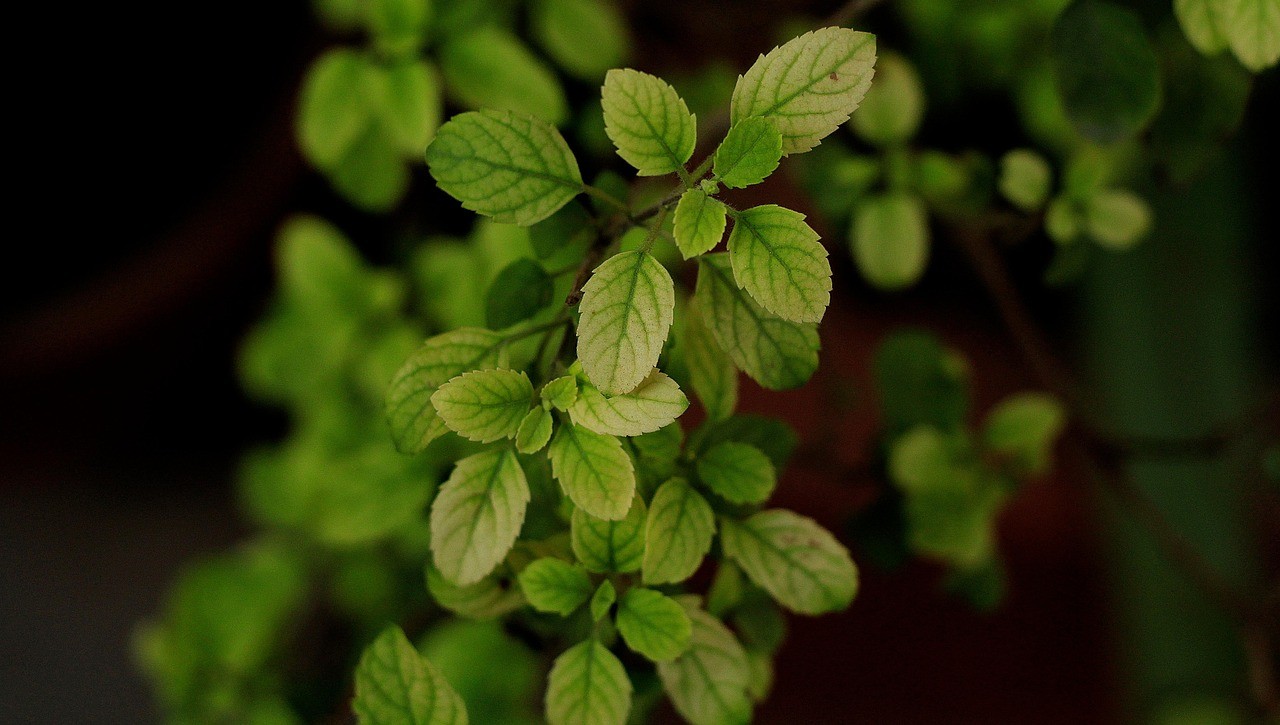
Leaves are simple, opposite, petiolate, and ovate to elliptic in shape, measuring 2.5–5 cm in length and 1.5–3 cm in width, with a serrate to crenate margin. The leaf surface is pubescent on both the adaxial and abaxial faces, and is densely covered with glandular trichomes that contain and release the species’ characteristic volatile oils upon disturbance. Leaf colour ranges from bright green in the ‘Rama’ type to green with strong purple pigmentation in the ‘Vana’ and ‘Krishna’ types. The petiole is 0.5–2.5 cm long and similarly pubescent.
Flowers

Flowers are small, zygomorphic, and bilabiate, arranged in whorls (verticillasters) of six flowers along terminal and axillary racemose spikes of 10–20 cm in length. The corolla is white to pale lilac or purple, two-lipped, with the upper lip four-lobed and the lower lip entire. The calyx is two-lipped, persistent, and subtends the developing nutlets after anthesis. Four stamens are present, as is typical for the subfamily Nepetoideae. Floral bracts are small and caducous.
Fruit

The fruit is an aggregate of four smooth, ovoid nutlets enclosed within the persistent, enlarged calyx. Each nutlet is approximately 1–1.5 mm in length, brown to dark brown at maturity, with a slightly mucilaginous seed coat that becomes gelatinous when moistened — a trait that facilitates attachment to soil and passing animals. Nutlets are released by gravity and mechanical disturbance when the infructescence dries. The persistent calyx retains the nutlets until dehiscence conditions are met.
Roots
Ocimum tenuiflorum produces a shallow, fibrous root system radiating from a short taproot that becomes semi-woody in established perennial plants. Rooting depth is typically 20–40 cm in well-drained soils. Root density is concentrated in the upper 15 cm of the soil profile, and the species does not produce rhizomes, stolons, or other clonal underground organs.
Growth Architecture & Life Strategy
Ocimum tenuiflorum is a chamaephyte in the Raunkiær classification, with perennating buds held above soil level on the semi-woody basal stem, enabling regrowth following seasonal dieback of the aerial shoots under mild drought or cool conditions. In continuously warm and moist tropical environments the plant behaves as a persistent perennial subshrub, branching repeatedly from the woody base, while in monsoonal or subtropical climates it may experience partial dieback of shoot tips during the dry or cool season followed by vigorous regrowth when temperatures and moisture recover.
The species follows a fast-growth, high-turnover life strategy typical of pioneer Lamiaceae. Leaf area accumulates rapidly after establishment, and flowering is initiated within 6–10 weeks from transplanting in warm conditions. The plant allocates significant resources to volatile oil production in glandular trichomes, a trait that persists throughout the vegetative and reproductive phases. Indeterminate growth from axillary buds continues as long as conditions are favourable, and pruning or harvesting of shoot tips stimulates lateral branching that prolongs the vegetative phase.
In temperate climates, Ocimum tenuiflorum is typically grown as an annual because its perennial woody base cannot survive frost; however, in its native tropical range, it persists for multiple years. The species is intolerant of waterlogged conditions, and growth rate declines markedly below 15 °C (59 °F).
Common Types / Varieties
Ocimum tenuiflorum is commonly grown in three broad morphological and aromatic types that are widely recognised in the Indian subcontinent and in international commerce, each associated with distinct leaf colour, essential oil composition, and agricultural use.
‘Rama’ (green-leafed holy basil) is the most widely cultivated type across the Indian plains, characterised by bright green leaves, white to pale lilac flowers, and an essential oil profile dominated by eugenol with variable methyl eugenol and caryophyllene fractions. It is the standard commercial type for fresh leaf harvest in Indian market gardens and for essential oil distillation. ‘Rama’ is considered the archetypical form most commonly associated with household cultivation.
‘Krishna’ (purple-leafed or dark holy basil) is distinguished by strongly anthocyanin-pigmented stems, petioles, and leaf margins that give the plant a distinctive dark reddish-purple appearance. The essential oil of ‘Krishna’ is characteristically high in methyl eugenol relative to eugenol, and the flavour profile is regarded as more clove-like and pungent than ‘Rama’. This type is the preferred variety in many religious and ritual contexts in Hindu tradition.
‘Vana’ (wild or forest holy basil) is a more vigorous, taller type with broader green leaves and a stronger, more camphoraceous fragrance attributed to a higher proportion of beta-caryophyllene and eugenol methyl ether in the volatile oil. ‘Vana’ is found growing semi-spontaneously at forest margins and in disturbed habitats across peninsular India and is less commonly cultivated in formal garden settings than ‘Rama’ or ‘Krishna’.
Native Range & Distribution
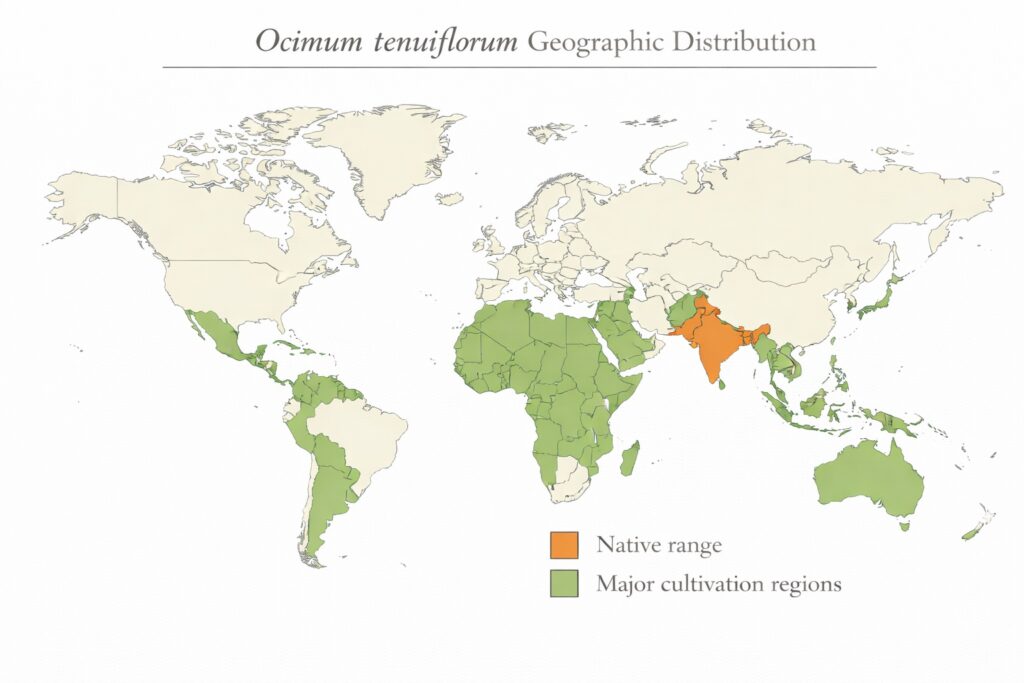
| Country / Territory | Range Status | Notes |
|---|---|---|
| India | Native | Widespread across the subcontinent from the plains to ca. 1800 m elevation; present in all major phytogeographic zones |
| Sri Lanka | Native | Lowland and mid-elevation forests and disturbed ground |
| Bangladesh | Native | Widespread lowland occurrence |
| Nepal | Native | Terai lowlands and mid-elevation foothills to approximately 1200 m |
| Myanmar | Native | Lowland and hill forests |
| Thailand | Native | Widespread; commercially cultivated as ‘krapao’ |
| Laos | Native | Disturbed forest margins and cultivated areas |
| Vietnam | Native | Lowland and coastal regions |
| Cambodia | Native | Lowland occurrence |
| Peninsular Malaysia | Native | Lowland forests and disturbed ground |
| Java, Indonesia | Native | Lowland occurrence |
| Sumatra, Indonesia | Native | Lowland occurrence |
| Philippines | Native | Lowland occurrences |
| China (southern) | Native / Cultivated | Southern provinces including Yunnan; status partly native, partly cultivated |
| East Africa | Naturalised | Naturalised in Kenya, Tanzania, and Uganda following historical introduction |
| Tropical West Africa | Naturalised | Present in Nigeria, Ghana, and Côte d’Ivoire |
| Caribbean | Naturalised | Naturalised across several islands; introduced through Indian diaspora communities |
| United States (Hawaii, Florida) | Cultivated; naturalised locally | Persistent populations documented in warm humid zones |
| Australia (Queensland, Northern Territory) | Naturalised | Persists in disturbed habitats and cultivation surrounds |
Distribution records derived from GBIF occurrence datasets and regional botanical surveys. Distribution maps for this species can be generated from GBIF occurrence data at gbif.org.
Habitat & Ecology
Ocimum tenuiflorum occurs naturally across a broad range of lowland to mid-elevation disturbed habitats in tropical and subtropical Asia, including roadsides, village margins, degraded forest edges, open scrubland, fallow agricultural land, and the margins of rice paddies. It is primarily a plant of open, well-lit environments and is rarely found in closed-canopy forest. The species is characteristic of the human-associated flora of South and Southeast Asia, appearing consistently in association with settlement, cultivation, and forest disturbance.
In its native range, O. tenuiflorum grows from sea level to approximately 1800 m elevation in India, tolerating a wide range of rainfall regimes from approximately 750 mm to over 3000 mm annual precipitation. It is drought-tolerant once established, growing on thin, rocky, or lateritic soils that are poorly retentive of moisture, but it does not tolerate persistent waterlogging. In monsoonal climates, the plant experiences a dry-season reduction in growth rate and occasional partial dieback of shoot tips.
The species shows a strong association with human-modified environments and is considered a synanthropic plant in much of its range. It colonises disturbed soil rapidly from seed and from persistent root-crown regrowth, making it a persistent component of garden, farmyard, and wayside flora across tropical Asia.
Ecological Role
Ocimum tenuiflorum functions as a nectar and pollen source for a range of small insect visitors, principally bees (Apidae), wasps (Vespidae), and flies (Syrphidae), during its extended flowering period. The volatile phenylpropanoid and terpenoid compounds produced in its glandular trichomes serve as herbivore deterrents, and the species is notably resistant to generalist foliar insect attack in the field relative to many co-occurring annual vegetables. The mucilaginous seed coat produced upon wetting facilitates seed adherence to soil particles, animal surfaces, and disturbed substrate, contributing to local dispersal along roadsides and cultivated margins. As a fast-establishing pioneer plant on disturbed soils, O. tenuiflorum provides early ground cover and contributes organic matter to the upper soil horizon through leaf litter accumulation and fine root turnover.
Recommended Products
Disclosure: As an Amazon Associate, PlantsInfo may earn from qualifying purchases.
🌱 Plant Care Essentials
The following tools can help with pruning, plant health, soil management, and fruit garden maintenance.

Neem Oil for Plant Care
Natural plant protection against aphids, whiteflies, mites, and other common garden pests.

Fungicide for Root Care
Helps suppress soil-borne fungal diseases and supports healthier root systems.

Spray Bottle for Plants
Ideal for applying foliar sprays, neem oil solutions, and liquid plant treatments.

Rubber Hand Gloves
Protects hands during pruning, planting, soil preparation, and garden maintenance.
Functional Traits
| Trait | Value |
|---|---|
| Growth Form | Erect branching subshrub; woody at base |
| Leaf Type | Simple, opposite, petiolate; glandular trichomes abundant |
| Photosynthetic Pathway | C3 |
| Seed Type | Orthodox |
| Rooting Depth | 20–40 cm; shallow fibrous system |
| Wood Density | Not documented in available literature |
Phenological Calendar
| Event | Tropical & Subtropical Regions | Regional Qualifiers & Seasonal Deviations |
|---|---|---|
| Leaf Flush | Year-round under continuously warm and moist conditions | Flush most vigorous at wet season onset (June–July in South Asia) |
| Primary Flowering Onset | 6–10 weeks post-transplanting or at dry season onset; typically July–September in South Asian monsoon climates | In Sri Lanka lowlands, flowering may begin March–April in drier zones |
| Peak Flowering | August–October in South Asia; wet-to-dry season transition | Earlier (June–August) at higher elevations; Thailand cultivation peaks October–November |
| Secondary Flowering | Following pruning or pinching of primary inflorescences; November–January in South Asian cultivation | Absent where plants senesce annually |
| Fruit Development | 2–4 weeks post-pollination | Extended by cool nights in subtropical regions |
| Fruit Maturity | October–December in peninsular India; nutlets released when calyx dries | Delayed by high rainfall at fruiting stage |
| Seed Dispersal | October–January; gravity and mechanical disturbance primary vectors | Mucilaginous seed coat facilitates local attachment dispersal |
| Dormancy or Rest Period | Reduced growth during cool-dry season; no true dormancy in perennial base | Aerial shoot dieback occurs below 15 °C (59 °F); basal recovery follows warming |
Flowering onset in Ocimum tenuiflorum is primarily triggered by photoperiod shortening combined with temperature stability above 20 °C (68 °F), with the transition from monsoon-season vegetative growth to dry-season reproductive growth representing the primary phenological cue in South Asian populations.
Reproductive Biology

Ocimum tenuiflorum reproduces primarily by seed, producing large numbers of small nutlets per inflorescence across the extended flowering season. Each spike may carry 10–20 verticillasters, and each verticillaster typically bears 6 flowers, of which the majority are successfully pollinated under normal field conditions. Seed set per plant can be substantial, with mature individuals producing several thousand nutlets in a single season.
The species is predominantly outcrossing but capable of self-fertilisation when cross-pollination is limited. The flowers are protandrous — anthers dehisce and shed pollen before the stigma of the same flower is fully receptive — which promotes outcrossing in natural populations. Pollination is primarily by small to medium-sized bees and other Hymenoptera that forage for nectar in the small corolla tubes. Vegetative reproduction is minimal under natural conditions, though stem cuttings root readily in cultivation.
Pollination Ecology
| Field | Information |
|---|---|
| Pollination Mechanism | Insect |
| Primary Pollinator Groups | Bees (Apidae), wasps (Vespidae), flies (Syrphidae) |
| Pollination Syndrome | Entomophily |
| Floral Reward | Nectar and pollen |
Seed Biology & Germination Ecology
| Field | Information |
|---|---|
| Seed Type | Orthodox |
| Seed Viability Period | 2–3 years under cool dry storage conditions |
| Dormancy Type | None documented |
| Dormancy Breaking Mechanism | None documented; seeds germinate readily without pretreatment |
| Germination Temperature Range | 20–30 °C (68–86 °F); optimal at 25–28 °C (77–82 °F) |
| Light Requirement for Germination | Light-neutral to light-promoted; surface sowing produces reliable germination |
| Seed Bank Classification | Transient |
| Dispersal Unit | Nutlet with mucilaginous seed coat |
The mucilaginous seed coat of Ocimum tenuiflorum absorbs water rapidly upon wetting, producing a gelatinous sheath that promotes adhesion to soil particles and passive transport by animals and water — a trait shared with other members of the tribe Ocimeae and functionally significant for colonisation of disturbed substrate.
Vegetative Regeneration & Clonal Biology
| Field | Information |
|---|---|
| Vegetative Regeneration Capacity | Moderate |
| Primary Regeneration Mechanism | Regrowth from woody basal stem following shoot harvest or damage |
| Tissue Types Capable of Regeneration | Basal stem nodes; axillary buds along surviving stem portions |
| Apomixis Status | Not documented in available literature |
| Bulbil or Propagule Production | Absent |
| Layering Capacity | Not documented in available literature |
| Root Sprouting from Fragments | Not documented in available literature |
| Clonal Spread Rate | Negligible; spread is primarily by seed |
| Coppicing Response | Responds to pruning with vigorous lateral branching from axillary buds |
| Ecological or Invasive Significance of Clonal Biology | Low; no documented clonal invasive behaviour |
Ocimum tenuiflorum is not a clonally spreading species, but the persistent woody root-crown of established perennial plants allows repeated regrowth following aerial harvesting, a trait that underpins the traditional practice of repeated shoot and leaf harvesting throughout the growing season.
Soil Ecology & Rhizosphere Interactions
| Field | Information |
|---|---|
| Mycorrhizal Association Type | AM (Arbuscular Mycorrhizal) |
| Documented Fungal Partners | Glomus spp. documented in rhizosphere studies of Ocimum in Indian agricultural soils |
| Nitrogen Fixation | Absent |
| Allelopathic Properties | Documented; volatile exudates and root compounds inhibit germination of certain weed species |
| Documented Allelopathic Targets | Echinochloa crus-galli, Cassia occidentalis — documented in controlled bioassay studies |
| Rhizosphere pH Modification | Not documented in available literature |
| Root Exudate Compounds | Eugenol, methyl eugenol, and rosmarinic acid detected in rhizosphere fractions |
| Soil Microbiome Influence | Volatile root exudates alter fungal and bacterial community composition; documented promotion of beneficial rhizosphere bacteria in Indian field studies |
Biochemical Profile
| Compound Class | Compounds Documented | Primary Location in Plant | Ecological Function |
|---|---|---|---|
| Phenylpropanoids | Eugenol, methyl eugenol, eugenol methyl ether | Leaves, glandular trichomes | Herbivore deterrence; antimicrobial defence in plant tissues |
| Monoterpenes | Linalool, ocimene, beta-pinene | Leaves, glandular trichomes | Herbivore deterrence |
| Sesquiterpenes | Beta-caryophyllene, caryophyllene oxide | Leaves, stems | Herbivore deterrence |
| Flavonoids | Orientin, vicenin, luteolin, apigenin | Leaves | UV photoprotection; defensive secondary metabolites |
| Hydroxycinnamic acids | Rosmarinic acid, caffeic acid | Leaves, stems | Defensive secondary metabolites; antimicrobial defence in plant tissues |
| Triterpenoids | Ursolic acid, oleanolic acid | Leaves, stems | Defensive secondary metabolites |
Research Coverage
| Field | Information |
|---|---|
| Research Coverage Level | High |
| Primary Research Fields | Essential oil phytochemistry; agronomy and cultivation optimisation; volatile oil chemotype characterisation; plant biochemistry |
| Earliest Published Study | Reported in Indian pharmacopoeia literature from the 19th century; modern phytochemical research from the 1960s onward |
| Most Active Research Regions | India, Thailand, Italy (for essential oil analysis), United States |
| Key Knowledge Gaps | Population-level genomic studies; ecology of wild-type populations; long-term field ecology of naturalised populations outside native range |
Phytochemical Organ Distribution
| Plant Organ | Compound Class | Compounds Documented | Source |
|---|---|---|---|
| Leaves | Phenylpropanoids | Eugenol, methyl eugenol | Harborne, J.B. & Baxter, H., 1993 |
| Leaves | Flavonoids | Orientin, vicenin, luteolin, apigenin | Harborne, J.B. & Baxter, H., 1993 |
| Leaves | Hydroxycinnamic acids | Rosmarinic acid, caffeic acid | Harborne, J.B. & Baxter, H., 1993 |
| Leaves | Monoterpenes | Linalool, ocimene | Harborne, J.B. & Baxter, H., 1993 |
| Stems | Triterpenoids | Ursolic acid, oleanolic acid | Harborne, J.B. & Baxter, H., 1993 |
| Flowers | Phenylpropanoids | Eugenol, methyl eugenol | Harborne, J.B. & Baxter, H., 1993 |
| Seeds | Hydroxycinnamic acids | Rosmarinic acid | Harborne, J.B. & Baxter, H., 1993 |
The leaves are the most completely documented organ for phytochemical composition in Ocimum tenuiflorum, reflecting both the agricultural importance of the fresh leaf harvest and the concentration of glandular trichomes on the adaxial and abaxial leaf surfaces.
Nutritional Composition
| Nutrient | Value per 100g Edible Portion | Source |
|---|---|---|
| Energy | 23 kcal (96 kJ) | USDA FoodData Central |
| Water | 92.1 g | USDA FoodData Central |
| Protein | 3.2 g | USDA FoodData Central |
| Total Fat | 0.6 g | USDA FoodData Central |
| Carbohydrates | 2.7 g | USDA FoodData Central |
| Dietary Fibre | 1.6 g | USDA FoodData Central |
Values represent fresh holy basil leaves (raw) at commercial and garden harvest stage.
Climate Adaptation & Stress Tolerance
Ocimum tenuiflorum is a tropical to subtropical species with an optimal growth temperature range of 20–35 °C (68–95 °F) and a minimum threshold of approximately 10–12 °C (50–54 °F) below which growth ceases and tissue damage begins to accumulate. The species is frost-intolerant; air temperatures at or below 0 °C (32 °F) cause lethal tissue damage to aerial shoots, and plants in temperate climates cannot survive outdoors through winter. In continuously warm tropical climates the plant grows year-round without temperature-imposed dormancy.
The species demonstrates moderate drought tolerance once established, drawing on its shallow but dense fibrous root system and reducing leaf area through partial abscission during prolonged dry periods. It is sensitive to waterlogging; root hypoxia under saturated soil conditions causes rapid decline, and well-drained soils are a prerequisite for sustained healthy growth. Ocimum tenuiflorum is generally tolerant of high solar radiation, which promotes essential oil accumulation in the glandular trichomes of the leaf surface.
Climate Vulnerability & Range Dynamics
| Field | Information |
|---|---|
| IUCN Climate Vulnerability Assessment | Not Evaluated |
| Primary Climate Sensitivity Factors | Minimum temperature threshold; frost events; soil waterlogging under increased monsoon intensity |
| Projected Range Shift Direction | Not documented in available literature |
| Projected Range Shift Magnitude | Not documented in available literature |
| Key Threatening Processes | Extreme cold events at range margins; intensification of dry season conditions in parts of native range |
| Resilience Factors | Wide ecological amplitude; synanthropic habit; seed banking in soil; rapid colonisation of disturbed sites |
| Published Modelling Studies | No study identified |
| Confidence Level | Low |
Cytogenetics
| Field | Information |
|---|---|
| Chromosome Number (2n) | 2n = 16 |
| Ploidy Level | Diploid |
| Genome Size (1C value) | Not documented in available literature |
| Karyotype Notes | Chromosome number of 2n = 16 documented across multiple Indian accessions; karyotype is relatively stable across morphological types; minor variation reported between ‘Rama’ and ‘Krishna’ chemotypes |
| Source | Darlington, C.D. & Wylie, A.P., 1955 |
Cultivation Requirements
| Field | Information |
|---|---|
| Light Requirements | Full sun; minimum 6–8 hours direct sunlight per day for optimal growth and oil accumulation |
| Watering | Moderate; water when upper 2–3 cm of soil is dry; avoid waterlogging |
| Soil Type | Well-drained loam or sandy loam; tolerates poor lateritic soils |
| Soil pH | 6.0–7.5 |
| Humidity | Tolerates high humidity; poor air circulation increases susceptibility to fungal disease |
| Temperature Range | Optimal 20–35 °C (68–95 °F); minimum 10 °C (50 °F); frost kills aerial growth |
| USDA Hardiness Zone | 10–12 as perennial; grown as annual in zones 4–9 |
| Fertilization | Light feeder; balanced fertilisation supports vegetative growth; excess nitrogen reduces essential oil concentration |
| Container Suitability | Well-suited to containers of 20 cm diameter or larger; requires good drainage holes and full sun |
Propagation Methods
Ocimum tenuiflorum is propagated most commonly from seed, which is sown directly onto the surface of moist, well-drained substrate at temperatures above 22 °C (72 °F), germinating reliably within 5–10 days without any pretreatment; seed should not be buried deeper than 2–3 mm as germination is light-promoted. Stem cuttings of 8–12 cm bearing at least two nodes can also be used and root in moist substrate or water within 7–14 days under warm conditions, making cutting-based propagation practical when maintaining a specific chemotype or variety is required. A species-specific consideration is that O. tenuiflorum plants allowed to set and shed seed freely will self-sow in warm-climate gardens, producing a persistent volunteer population that perpetuates the plant without deliberate replanting.
Pests & Diseases
| Issue | Notes |
|---|---|
| Powdery mildew (Erysiphe spp.) | White powdery colonies on upper leaf surfaces and young shoots; most prevalent under warm days and cool nights with low air movement |
| Botrytis blight (Botrytis cinerea) | Grey mould on stems and leaf axils; associated with prolonged wet conditions and dense canopy |
| Aphids (Aphis gossypii, Myzus persicae) | Colonies on young growing tips and undersides of leaves; associated with water stress or high nitrogen availability |
| Root rot (Pythium spp., Fusarium spp.) | Collapse of stem at soil level; wilting despite moist soil; associated with poorly drained or waterlogged substrate |
| Leaf miners (Agromyzidae) | Pale serpentine tunnels visible on leaf surface; larvae mine between leaf epidermal layers |
Toxicity & Safety
| Field | Information |
|---|---|
| Humans | Essential oil compounds (eugenol, methyl eugenol) associated with oral mucosa irritation and gastrointestinal irritation in concentrated form; dermal contact with concentrated essential oil associated with contact sensitisation |
| Cats | Not listed as toxic by ASPCA for cats; no specific physiological toxicity documented |
| Dogs | Not listed as toxic by ASPCA for dogs; no specific physiological toxicity documented |
| Toxic Compounds | Eugenol; methyl eugenol; concentrated essential oil fraction |
| Source | ASPCA Animal Poison Control Center (aspca.org/pet-care/animal-poison-control) |
Toxicological risk in Ocimum tenuiflorum is associated with concentrated essential oil preparations rather than fresh leaf tissue; fresh leaf material at normal dietary quantities presents no documented systemic toxicity in humans.
Invasive Status
Ocimum tenuiflorum has naturalised in parts of tropical Africa, the Caribbean, Hawaii, northern Australia, and Florida but is not considered a significant invasive species in any of these regions, as its persistence outside cultivation is largely restricted to disturbed and anthropogenic habitats where it does not competitively displace native vegetation.
Conservation Status
| Field | Information |
|---|---|
| IUCN Red List Status | Not Evaluated |
| Assessment Year | Not applicable |
| Population Trend | Not documented in available literature |
| Source | IUCN Red List of Threatened Species — https://www.iucnredlist.org (Accessed: 2026-03-12). |
Economic Importance
Ocimum tenuiflorum supports a significant agricultural economy in South Asia, where it is cultivated as a small to medium-scale field crop for essential oil production, and as a widely grown household and market garden plant for fresh leaf supply. India is the primary commercial producer of tulsi essential oil, with production concentrated in Madhya Pradesh, Uttar Pradesh, and Karnataka; the oil enters international trade for use in flavouring, fragrance formulation, and cosmetics manufacturing. The crop requires low external inputs relative to comparable aromatic crops, and its tolerance of poor soils makes it accessible to smallholder cultivation systems.
In Thailand and other parts of Southeast Asia, O. tenuiflorum (‘krapao’) is a major culinary crop sold in fresh-market supply chains and used as an essential flavouring ingredient in national cuisines. The species also supports seed trade, with several commercial seed companies in Europe and North America marketing tulsi seed for the growing aromatic plant and herb garden sector. Dried leaf material and standardised herbal preparations derived from O. tenuiflorum are significant products in the international market for botanical raw materials.
Ethnobotanical Uses
Ocimum tenuiflorum has one of the most extensive documented records of traditional use of any plant in South Asian ethnobotany. Across the Indian subcontinent, the plant is recorded in Ayurvedic classical literature as a versatile aromatic plant used in preparations addressing a wide range of conditions. Fresh leaves are used in local food systems across India, Sri Lanka, Bangladesh, and Nepal as a flavouring in teas, decoctions, and simple dietary preparations. Seed mucilage preparations are documented in traditional Unani medicine, and the essential oil is used in traditional household preparations across multiple South Asian cultures.
In Southeast Asia, O. tenuiflorum leaves (‘krapao’) are used extensively as a cooking herb across Thai, Lao, Cambodian, and Vietnamese cuisines, where they are added at the end of cooking to retain volatile aroma. The plant is also used in traditional medicine systems of Southeast Asia, where preparations from the leaves, roots, and seeds address a range of locally documented conditions. Ethnobotanical surveys in peninsular India, Sri Lanka, and Thailand document consistent patterns of use across rural and semi-urban communities with minimal variation in the categories of application across geographically distant populations.
The essential oil of O. tenuiflorum is used in traditional incense, fumigation preparations, and household pest-repellent applications across South and Southeast Asia, reflecting awareness of the plant’s insect-deterrent properties. Documentation of these uses extends across multiple generations in agricultural and forest-dependent communities, and the plant is frequently noted as the first aromatic species grown when new household gardens are established.
Cultural & Traditional Context
Ocimum tenuiflorum occupies a position unique among cultivated plants in the religious traditions of South Asia, where it is revered as a sacred plant in Vaishnavism, one of the major traditions of Hinduism, and is maintained in courtyard shrines called ‘tulsi vrindavana’ in millions of households across India and Nepal. The plant is identified with the goddess Tulasi and regarded as a living embodiment of divine presence in the domestic space; daily ritual watering, circumambulation, and the offering of leaves to images of the deity Vishnu are practised across a vast geographic and cultural territory spanning the Indian subcontinent, the Indian diaspora communities of East Africa, the Caribbean, Mauritius, and Fiji, and the global Hindu community. The distribution of O. tenuiflorum beyond its native Asian range is substantially attributable to this ritual significance: migrant communities transplanted the plant to new environments as a religious and cultural necessity, creating naturalised populations in the Caribbean, East Africa, and the Pacific islands centuries before botanical exploration documented them.
The Puranic and Ayurvedic texts of classical Sanskrit literature assign O. tenuiflorum a prominent position in pharmacological and cosmological discourse, with the Charaka Samhita and Sushruta Samhita among the foundational Ayurvedic texts that document its properties and applications. The plant’s association with sacred space extends to its traditional prohibition on cutting or harvesting on certain lunar calendar days, and to its use in ceremonial preparations at Hindu weddings, death rites, and festivals, reflecting a depth of cultural integration that distinguishes it from all other economically used Lamiaceae in the region. In Theravāda Buddhist communities of Southeast Asia, the plant is also regarded with respect, though the intensity of sacred association does not reach the same level as in Vaishnavite Hindu practice.
Interesting Facts
Ocimum tenuiflorum produces a mucilaginous seed coat that swells into a clear gel layer within seconds of contact with water — a physical property exploited in traditional South Asian beverages and drinks such as falooda, where the swelled seeds are consumed for their texture. The three principal morphological types (‘Rama’, ‘Krishna’, ‘Vana’) differ in essential oil composition to a degree sufficient to be characterised as distinct chemotypes, yet they hybridise freely when grown in proximity, which means geographically isolated populations tend to maintain distinct chemical profiles while mixed cultivation leads to chemotype blending over successive generations. Ocimum tenuiflorum is one of the few aromatic subshrubs in tropical Asia that has maintained continuous cultivation in the same location — the domestic courtyard — for a documented period of more than three thousand years, making it among the longest continuously cultivated aromatic plants globally. The species’ eugenol-rich essential oil is chemically identical in its major constituent to the clove oil derived from Syzygium aromaticum, a convergence that accounts for the characteristic clove-like scent of tulsi despite the two plants being unrelated at the family level. In Thailand, O. tenuiflorum (‘krapao’) holds protected status as a national culinary heritage ingredient, with ‘pad krapao’ (stir-fried meat with holy basil) recognised by the Thai government as a signature national dish.
FAQs
What distinguishes Ocimum tenuiflorum from sweet basil (Ocimum basilicum) botanically? Ocimum tenuiflorum is distinguished from O. basilicum by several consistent morphological characters: its leaves are smaller (2.5–5 cm vs 3–11 cm), more strongly serrated at the margins, and denser with glandular trichomes, producing a clove-like eugenol fragrance rather than the sweet anise-linalool scent of sweet basil. The stem of O. tenuiflorum becomes genuinely woody and lignified at the base in mature plants, reflecting its perennial growth habit, whereas O. basilicum remains herbaceous throughout. The two species also differ in their chromosome number and essential oil chemotype profiles.
How long does Ocimum tenuiflorum live as a perennial plant? In tropical climates where temperatures remain above 10 °C (50 °F) year-round, O. tenuiflorum can persist as a perennial subshrub for 2–5 years, regrowing from the woody basal stem after successive aerial harvests. Plant vigour typically declines after 3–4 years as the woody base becomes increasingly lignified and branching productivity decreases. In subtropical and temperate climates, the plant behaves as an annual because frost kills both aerial shoots and the basal stem.
Why do Ocimum tenuiflorum plants stop producing leaves and begin flowering heavily? Ocimum tenuiflorum initiates flowering in response to shorter photoperiods and stable temperatures above approximately 20 °C (68 °F), which in the South Asian monsoon calendar corresponds to the wet-to-dry season transition in August–October. Once flowering begins, the plant redirects resource allocation from vegetative leaf production to inflorescence development and seed set. In cultivation, pinching out (removing) the developing inflorescence spikes before they fully open delays this transition and extends the period of active leaf production by encouraging the plant to continue vegetative branching.
What soil conditions does Ocimum tenuiflorum require for successful cultivation? Ocimum tenuiflorum performs best in well-drained loam or sandy loam soils with a pH of 6.0–7.5. The species is notably tolerant of nutrient-poor and lateritic soils typical of tropical lowlands, but it is intolerant of waterlogged conditions; root rot caused by Pythium and Fusarium species is the primary cause of plant loss in overly wet or poorly drained situations. Soil fertility does not need to be high — excessive nitrogen promotes lush vegetative growth at the expense of essential oil accumulation in the glandular trichomes.
Does Ocimum tenuiflorum self-seed in the garden? Ocimum tenuiflorum is a prolific seed producer and self-seeds freely in warm-climate gardens, particularly in sandy or loamy soils with some bare substrate available. Plants allowed to complete their flowering cycle and set seed will shed thousands of nutlets, and the mucilaginous seed coat ensures good contact with soil and rapid germination once temperatures and moisture are adequate. In tropical and subtropical gardens, self-sown seedlings commonly appear at the base of parent plants and in nearby disturbed areas, providing a continuous supply of new plants without deliberate replanting.
Conclusion
Ocimum tenuiflorum is a botanically distinctive and ecologically adaptable aromatic subshrub whose native range across tropical Asia belies the global reach it has achieved through millennia of cultivation, trade, and cultural dispersal. Its characteristically eugenol-dominated essential oil, extensive flavonoid and hydroxycinnamic acid profile, and the physical peculiarity of its mucilaginous seed coat together define a species that is chemically and ecologically well-characterised relative to most tropical aromatic plants. The three principal chemotypes (‘Rama’, ‘Krishna’, ‘Vana’) provide a framework for understanding the chemical diversity within the species, though the boundaries between them are maintained only by geographic isolation and deliberate cultivation — continuous mixed planting leads to chemotype blending through open pollination.
The plant’s position at the intersection of subsistence agriculture, commercial aromatic crop production, culinary tradition, and active religious practice across South and Southeast Asia places it in a category occupied by very few plant species globally. It is grown in courtyard shrines and large essential oil distillation fields simultaneously, consumed fresh as a flavouring in Thai stir-fries and offered ceremonially in Hindu ritual in the same week and often by the same communities. This dual ecological and cultural role has sustained its cultivation across a continuous geographic arc from the Himalayan foothills to the Indonesian archipelago for longer than any comparable aromatic plant in the region.
For botanical context on related species, see Ocimum basilicum and Ocimum gratissimum.
Common Cultivation Observations
| Observation | Associated Condition |
|---|---|
| Yellowing of lower leaves while upper foliage remains green | Progressive natural senescence of older leaves; associated with normal shoot elongation and leaf turnover in actively growing plants |
| Sudden wilting despite moist soil | Root hypoxia or root rot; associated with waterlogged substrate or soil compaction impeding drainage |
| Leaves turning pale and losing fragrance intensity | Reduced glandular trichome activity; associated with insufficient light (below 6 hours direct sun per day) |
| Leggy, elongated stems with widely spaced internodes | Shade-induced etiolation; associated with low light intensity |
| Rapid progression to flowering with minimal leaf production | Photoperiod-triggered reproductive phase onset; associated with days shortening below the critical threshold |
Scientific Stability Note
Ocimum tenuiflorum L. is the currently accepted name for this species under the classification maintained by Kew Plants of the World Online (POWO). The synonym Ocimum sanctum L. was widely used in botanical, agricultural, and phytochemical literature throughout the 20th century and remains in extensive use in older publications and in common reference. Researchers accessing literature published before approximately 1990 should search under O. sanctum as well as O. tenuiflorum to retrieve the full published record. The genus Ocimum belongs to the tribe Ocimeae within the family Lamiaceae, whose circumscription and internal classification have been revised under the APG IV system, though the generic placement of this species has not been subject to dispute in recent treatments.
Reference Summary
A. Primary Taxonomic Sources
Kew Plants of the World Online (POWO) — https://powo.science.kew.org (Accessed: 2026-03-12). GBIF Backbone Taxonomy — https://www.gbif.org (Accessed: 2026-03-12).
B. Peer-Reviewed Literature
No fully verified peer-reviewed citation identified for this entry.
C. Monographs and Books
Harborne, J.B. & Baxter, H. (1993). Phytochemical Dictionary: A Handbook of Bioactive Compounds from Plants. Taylor & Francis, London.
Darlington, C.D. & Wylie, A.P. (1955). Chromosome Atlas of Flowering Plants. George Allen & Unwin, London.
D. Herbarium and Specimen Records
Royal Botanic Gardens Kew Herbarium (K) — specimen collections of Ocimum tenuiflorum from India, Sri Lanka, and Southeast Asia. JSTOR Global Plants — https://plants.jstor.org (Accessed: 2026-03-12).
E. Grey Literature and Databases
IUCN Red List of Threatened Species — https://www.iucnredlist.org (Accessed: 2026-03-12). USDA FoodData Central — https://fdc.nal.usda.gov (Accessed: 2026-03-12). ASPCA Animal Poison Control Center — https://www.aspca.org/pet-care/animal-poison-control (Accessed: 2026-03-12).